
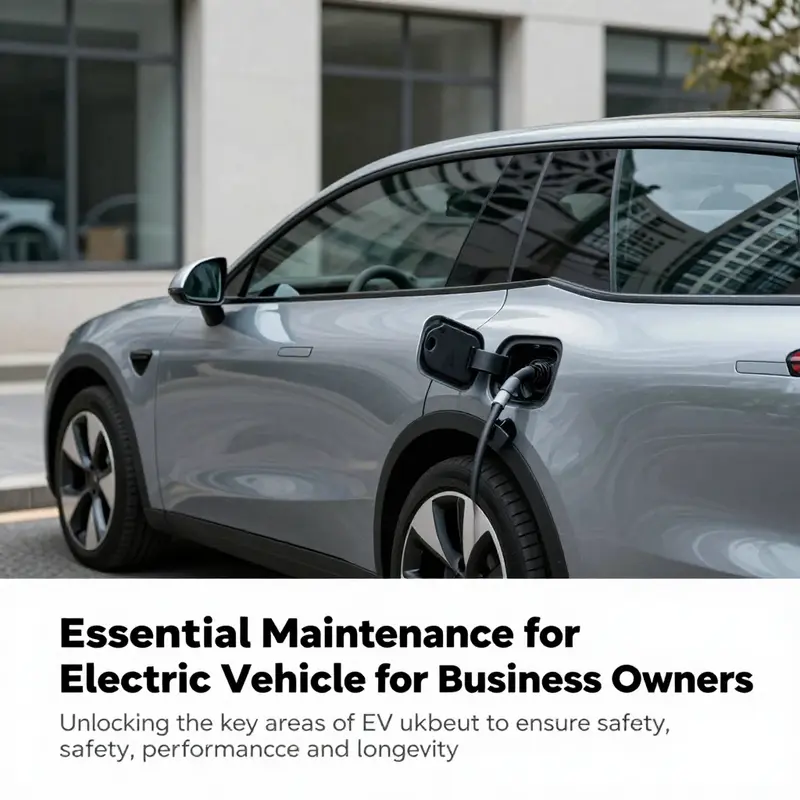
For business owners embracing electric vehicles (EVs), understanding the intricacies of maintenance is crucial for maximizing efficiency and extending lifespan. While EVs simplify many traditional maintenance concerns—like eliminating oil changes—they introduce unique responsibilities that must be managed effectively. This article explores the essential maintenance areas of EVs, focusing on battery health and management, electric motor and transmission lubrication, and brake system care. By delving into these areas, business owners will gain a comprehensive view of how to keep their electric fleet running smoothly and safely, ultimately enhancing business operations.
Battery Health as the Pulse of the EV: Integrated Management for Longevity, Safety, and Performance

Battery Health as the pulse of an electric vehicle is not a single metric but a tapestry woven from chemistry, electronics, software, and driving habits. In the broader question of what maintenance means for an EV, the battery sits at the center. It is both the source of propulsion and the most significant determinant of how long a vehicle remains reliable and efficient. The overarching aim of Battery Health and Management is to monitor, predict, and preserve the state of health (SOH) of lithium-ion cells—the common core in most modern EVs—so that drivers experience consistent performance while preventing abrupt degradation that could compromise safety or range. To begin with, SOH is not the same as state of charge (SOC). SOC tells you how much energy is currently in the pack, while SOH indicates how much energy capacity the pack can hold relative to when it was new and how the cells are aging over time. A healthy battery stores and delivers energy with minimal surprise, but aging cells gradually drift from the equilibrium, which can manifest as reduced range, longer charging times, or uneven performance across temperature swings. This is where the Battery Management System, or BMS, plays its central role as the pack’s brain and guardian, orchestrating a careful balance among thermal regulation, cell balancing, safety controls, and data-driven decision making that informs maintenance schedules in real time rather than at a distant dealer visit.
The BMS is a multi-faceted control system designed to keep the battery within safe and optimal operating boundaries. It constantly monitors cell voltages, currents, temperatures, and sometimes impedance, translating this stream of data into actionable commands. One of its most elementary yet vital tasks is thermal management. Batteries are sensitive to temperature: too hot and degradation accelerates; too cold and internal resistance rises, reducing available power and slowing charging. In many EVs, liquid cooling circulates a coolant through the pack to maintain a narrow temperature window. The BMS modulates this cooling with pumps, fans, and refrigerant circuits to ensure a stable thermal environment during charging, discharging, or high-demand driving. It is not a passive observer but an active regulator. When temperatures cross thresholds, the BMS can alter charging speeds, throttle power delivery, or activate preconditioning to bring the pack to a healthier temperature before use. Regular coolant checks and occasional coolant replacement, usually on a schedule recommended by the manufacturer (often every 3–5 years for liquid-cooled systems), are thus a direct line of maintenance to long-term health.
Cell balancing is another keystone function. Within a pack, hundreds or thousands of individual cells must work together. If some cells age more quickly than others, the pack can become imbalanced, leading to inefficient charging, reduced performance, and accelerated degradation of the healthiest cells as the system compensates for weaker ones. The BMS monitors cell voltages and, through gentle balancing operations, helps bring all cells into harmony. In many designs, balancing is a continuous background process, but the effectiveness of this balancing is amplified by thoughtful maintenance: ensuring connectors stay clean and tight, and that the pack’s thermal regime supports uniform cell behavior. The goal is not to keep every cell perfectly equal in real time—rather, it is to prevent outliers from dragging down the entire pack’s health and to preserve the usable capacity over time.
The state of health is not a fixed destination but a trajectory shaped by many drivers: how often the car is charged to high SOC, how frequently fast charging is used, ambient temperatures, and driving profiles. Advanced approaches to SOH prediction are increasingly relying on data-driven methods that learn from vast streams of sensor data gathered by the BMS and the vehicle’s other systems. Machine learning models can deduce subtle patterns of degradation that traditional physics-based methods might miss, allowing early warnings before noticeable performance loss becomes apparent. This predictive capability is especially valuable for fleet operators or owners who depend on consistent range and uptime. In practice, a BMS guided by predictive analytics can indicate when a battery’s health has drifted beyond a safe margin and suggest, or even schedule, maintenance actions such as a targeted diagnostic, cooling system check, or specialized charging strategy to attenuate impending decline.
Alongside these functional capabilities, an emergent layer is the integration of Internet of Things (IoT) based Battery Health Management and Fault Predictive Systems (BHMFPS). In modern, data-rich vehicles, sensors and subsystems feed a continuous data stream into a centralized health framework. That stream enables remote diagnostics and the possibility of predictive maintenance scheduling that minimizes downtime and service costs. The value here is twofold: first, operators gain early visibility into issues that could otherwise surprise a driver; second, service centers can prepare targeted interventions with the right replacement parts and tools before a fault manifests as a failure on the road. The Bayesian logic of fault prediction—recognizing the probability of a future fault given current trends—complements traditional diagnostics, turning maintenance from a reactive practice into a proactive discipline. When coupled with Explainable Artificial Intelligence (XAI), engineers and technicians gain visibility into why a particular health assessment was made, which builds trust and supports more precise decision making. The interpretability of AI decisions matters because it helps technicians explain the rationale to customers and ensures that maintenance actions align with real, observable conditions rather than generic warnings.
All of these layers—thermal management, cell balancing, SOH prediction, BHMFPS, and XAI—converge into a practical maintenance philosophy that still respects the most important rule of EV care: prevent instead of repair after the fact. This requires a combination of routine checks and data-informed responsiveness. From a day-to-day perspective, regular monitoring is becoming as routine as visual inspections, but with a framework that reads the pack’s health in the background and translates it into guidance. In most modern EVs, the battery’s health is assessed during routine diagnostics, often leveraging onboard data logs and manufacturer-provided diagnostic tools. The frequency of this check is typically calibrated to the vehicle’s mileage and environmental exposure, with common guidance suggesting a health review every 10,000–20,000 kilometers or annually. Where such checks are performed may vary by manufacturer, but the principle remains constant: the health of the pack should be tracked alongside the vehicle’s other critical systems, not treated as a one-time purchase of a large battery that simply “runs forever.”
With the battery health lens in view, several practical maintenance actions emerge as particularly influential. First, avoid habitual deep discharges. Regularly letting the pack drop to very low states of charge can stress cells and accelerate aging, particularly in extreme temperatures. Instead, aim to keep the SOC within a healthy window that suits your daily usage and the vehicle’s charging regime. Second, be mindful of fast charging. While fast charging is a convenient capability, frequent exposure to high-rate charging is associated with faster capacity fade over time in many chemistries. If your daily routine allows, a mix of slower, more gradual charging tends to be gentler on the cells and can help preserve long-term capacity. This is not a rigid rule but a balancing act; the BMS can mitigate some stress by optimizing charge pulses and controlling temperature, yet the overarching pattern of charging behavior remains a driver of battery aging.
Thermal management also deserves focused attention. The BMS modulates cooling not only to protect the battery during heavy use but also to stabilize it during charging. A healthy cooling loop depends on clean radiator fins, proper coolant levels, and timely fluid replacement. Routine checks—leaks, level, and temperature readings—are simple preventive steps that can avert cascading issues. In liquid-cooled packs, coolant replacement schedules are typically defined by the manufacturer, but the pattern of maintenance in practice is informed by how the vehicle operates in heat and high-demand driving. In hot climates or during repeated fast charging sessions, more frequent attention to the cooling circuit can help maintain not just battery health but also consistent charging performance.
Beyond the battery package, the maintenance of high-voltage components and electrical connections deserves careful description. The safety imperative of high-voltage systems governs much of EV maintenance practice. Regular inspections of high-voltage cables, connectors, and grounding points are essential. These components are subject to environmental wear, corrosion, and occasional mechanical stress. Any sign of damage or loose connections warrants prompt attention by a qualified technician. The safety certificate here is simple and non-negotiable: only trained professionals should service high-voltage systems, and all procedures should follow the vehicle’s safety protocols. This is not merely about avoiding shock; it is about preserving the integrity of power delivery, failure modes, and the battery management ecosystem that coordinates the drive system.
Software and diagnostics round out the maintenance picture. EVs rely heavily on software for everything from energy management and thermal regulation to range estimation and safety features. Keeping firmware up to date through over-the-air (OTA) updates is a prudent step, as manufacturers continuously refine battery algorithms, charging strategies, and protection thresholds. Periodic diagnostics using OEM-compatible scan tools help surface early warning signs—cell imbalances, motor inefficiencies, or communication errors—that may not yet translate into a noticeable performance problem but could foreshadow future issues. This software-centric maintenance is not a discount on physical checks; it is a complementary practice that shapes how the hardware ages and how the vehicle behaves over time.
The gentle art of long-term storage also deserves attention in maintenance planning. If a vehicle will sit unused for weeks or months, a mid-range SOC—often around 50 percent—helps minimize stress on the pack while preserving its health. Disconnecting nonessential power draws, and in some cases the 12V auxiliary battery, can prevent parasitic drains that would otherwise gradually undermine readiness. Storage in stable temperatures, away from extreme heat or cold, also reduces the risk of strain on the cells when the car is eventually brought back into service. The idea is to reduce the number of variables the battery must endure when the vehicle is not actively being used, while still preserving readiness for immediate operation when you return to use.
The interplay between battery health and other EV maintenance domains is nuanced but important. Regenerative braking, for example, reduces wear on friction brakes, but it does not remove the need for brake maintenance entirely. Brakes still wear, and hydraulic brake fluid remains susceptible to moisture absorption, necessitating periodic replacement. Tire condition and inflation influence energy efficiency and range, reinforcing the idea that EV maintenance is not exclusively about the battery; it is a systems exercise in which every component, from the tires to the HVAC, contributes to safety, efficiency, and longevity. The climate control system, too, interacts with battery health. Maintaining cabin filters and ensuring refrigerant levels are sound supports comfort and efficiency, but cooling system integrity also plays a role in preventing thermal damage that could hasten degradation in battery components near heat transfer interfaces.
In framing maintenance as a forward-looking discipline, it is helpful to acknowledge the scientific horizon that continues to shape how battery health is understood and managed. Researchers are increasingly exploring predictive models that fuse real-time telemetry with historical drive data to forecast degradation trajectories under diverse driving patterns and environmental conditions. The ability to anticipate a drop in usable capacity before it becomes perceptible to the driver offers a powerful incentive to adopt proactive service strategies and to optimize charging and thermal management for longer life. The field is moving toward greater transparency through Explainable AI, which makes the rationale behind health assessments accessible to technicians and owners alike. Such interpretability helps build trust in automated maintenance recommendations and reduces the friction that can accompany complex, data-driven advice.
For readers who want to explore the cutting edge of this field, a notable scholarly resource examines machine learning approaches to battery health management in electric vehicles, offering a detailed survey of predictive models, data streams, and performance benchmarks. This body of work demonstrates not only that health monitoring can be more precise but also that it can adapt to a wide range of battery chemistries and use patterns. While the practical implications for the everyday driver are clear—more reliable range, better planning for charging, and a safer operating envelope—the research also hints at a future where maintenance could be highly personalized to a specific vehicle’s history and local conditions. Such advances do not replace traditional maintenance; they enrich it, enabling a more proactive and less disruptive relationship with the car’s power source.
In the practical sense, then, the maintenance routine for the battery is a blend of scheduled checks and vigilant, responsive care. Periodic diagnostic reviews—every 10,000–20,000 kilometers or yearly, depending on the manufacturer and climate—provide a structured cadence for battery health assessment. During these checks, technicians look for indicators of degradation, such as reduced capacity, slower charging, or abnormal heat patterns. They verify coolant levels in liquid-cooled systems, confirm that thermal management components operate correctly, and inspect high-voltage connections for signs of wear or corrosion. While many EVs are designed to be maintenance-light compared with internal combustion engines, the battery’s central role means that it consumes a fair amount of attention. The goal is not to chase a myth of “maintenance-free” propulsion but to cultivate a well-calibrated, informed approach that respects the battery’s fragility and capitalizes on the advantages of modern BMS and predictive diagnostics.
If one question keeps reappearing as new owners learn about EVs, it is the balance between convenience and proactivity: can one simply rely on the vehicle’s built-in intelligence, or does a responsible owner still need to schedule regular professional checks? The answer lies in the evolving ecosystem. Most owners can manage routine battery health through regular software updates, vigilant driving habits, and adherence to recommended charging practices. Yet as the battery ages and the costs of more intensive interventions rise, the value of factory diagnostics and targeted service becomes more pronounced. Proactive scheduling, guided by data from the BMS and supported by the vehicle’s safety and diagnostic features, helps ensure that issues are identified early, reducing the likelihood of inconvenient failures and preserving performance. In this sense, maintenance becomes an investment in reliability and resilience, not a compliance exercise.
As you consider your own EV, you can begin to visualize battery maintenance as a proactive partnership between you, your vehicle, and the service ecosystem. The BMS and the IoT-enabled health networks keep watch over the pack while the human hand—technician, engineer, or informed owner—acts when data indicate that intervention will extend life, protect safety, or maintain performance. This collaborative model reflects the broader shift in vehicle maintenance toward ongoing, data-informed care, rather than sporadic, event-driven servicing. Even with this progress, some practical guidelines stay constant: observe manufacturer-recommended intervals, use the vehicle’s built-in diagnostics, heed temperature and charging behavior, and seek professional help promptly if you notice abnormal performance, leaks, or warning indicators.”],
Lubrication at the Heart: Essential Care for the EV Motor and Reduction Gear

Electric vehicles (EVs) have reshaped our equation of maintenance by dramatically reducing routine tasks like oil changes and spark plug replacements. Yet they introduce a different kind of precision, focused attention on the powertrain’s moving parts and the fluids that keep them from overheating, seizing, or wearing prematurely. In this chapter, we turn our attention to lubrication—the often unseen but critical lifeblood of the EV’s heart: the electric motor and its single-speed reduction gear. The maintenance story here is not about more parts to grease, but about using the right lubricants in the right places, at the right intervals, and with the discipline that modern diagnostics demands. It is a narrative about how the simplification of the EV’s drivetrain can still demand thoughtful care, because the absence of oil changes does not mean the absence of oil altogether.
To understand why lubrication matters in an electric powertrain, consider what the motor and the reduction gear do. The electric motor delivers torque with remarkable immediacy, translating electrical energy into mechanical work through bearings, shafts, and stators that rotate with precision. The reduction gear, often a single-speed unit, translates that torque into wheel motion while buffering the motor’s high speed from the wheels’ resistance. Even though these components are simpler than a multi-gear ICE transmission, they live in a harsh operating envelope: high temperatures, rapid accelerations, and frequent cycling from cold starts to peak loads. This environment makes specialized lubricants essential. They must form a protective film on bearings, dissipate heat efficiently, withstand electrical interference, and resist degradation from moisture and contaminants. When lubricants do their job well, the powertrain remains quiet, efficient, and durable; when they don’t, the consequences can be costly and performance is compromised.
The transmission fluid in an EV is not a cascading cascade of gears with a thousand transmission modes. It is a precise, high-performance fluid designed for a fixed-ratio reduction gear that couples the motor to the wheels. The fluid must withstand continuous, high-torque operation, maintaining its viscosity under heat so that gears spin smoothly without binding or shifting wear. In some models, this lubrication is handled by a gearbox sealed for life, with only periodic inspections necessary to confirm that seals and hoses are intact and that there are no coolant leaks around the gearbox area. In others, especially performance or older designs, the fluid remains a serviceable item. For these systems, the specified fluid is chosen not only for lubrication but also for thermal stability. The aim is to prevent overheating of tightly packed bearings and gears that operate in a space where heat can accumulate quickly and radiate into surrounding components.
The practical takeaway for owners and technicians is that the right fluid matters as much as the right oil in an ICE car ever did. The EV fluid must tolerate repeated high-torque starts, resist thinning under heat, and maintain a stable lubricating film as the gears and bearings turn. The choice of fluid directly affects how smoothly power is delivered and how long the drivetrain lasts under demanding driving patterns. The need to use manufacturer-recommended fluids cannot be overstated. While some fluids may be marketed with claims of longer life, the manufacturer’s specifications reflect tested compatibility with the motor’s seals, the gearbox’s tolerances, and the cooling scheme used to manage heat. Using the wrong fluid can lead to reduced efficiency, hotter operation, and accelerated wear, undermining the very purpose of the EV’s lightweight, maintenance-light design.
Beyond the transmission fluid, the electric motor itself may rely on specialized lubrication for bearings—a domain where e-greases and advanced e-fluids play the starring role. Bearings in EV motors operate in environments where temperatures swing, moisture can intrude, and electrical currents can interact with lubricants. Modern e-greases are engineered to resist breakdown under high temperatures, to handle moisture without losing protective film, and to endure electric fields without contributing to electrical leakage or corrosion. The trend in lubrication technology is moving toward lubricants that not only lubricate but also support thermal management and acoustic comfort. When properly selected, these lubricants can reduce noise, vibration, and harshness (NVH), contributing to the refined and quiet experience EVs are known for. The result is a drivetrain that remains efficient and reliable over thousands of miles, even as driving patterns push components harder than in typical ICE usage.
Maintenance in this sphere thus centers on understanding where lubrication lives in the EV powertrain and how to monitor it without disturbing the entire ecosystem. A key aspect is regular inspection and fluid replacement when warranted. Although many EVs are designed with sealed-for-life bearings and gear systems, not all designs share this level of permanence. Some require periodic checks of the reduction gear oil and the bearing lubricants, particularly in earlier generations or in higher-demand configurations where thermal load is elevated. Inspection is not a mystery ritual; it involves looking for signs of lubricant degradation, unusual heat, or odd noises that might indicate increased friction. It also involves confirming that seals around the gearbox are intact and that there are no leaks from the cooling system that could be invading the lubrication pathway. In practice, technicians will assess oil clarity, color, and viscosity, and they may use diagnostic routines that monitor gear temperatures, bearing wear, and lubricant condition as part of a broader service interval.
The maintenance schedule for lubrication in EVs often sits alongside the broader maintenance approach that vehicles in general require: periodic checks, diagnostics, and timely replacements. A typical reference point is to monitor transmission fluid every couple of years and at intervals around tens of thousands of kilometers, depending on the model and the operating environment. The logic is straightforward: high-torque operation and sustained heat can gradually degrade lubrication, alter viscosity, and reduce the lubricant’s protective properties. When degradation begins, the risk to bearings and gears increases—risk that translates into friction, heat buildup, and, ultimately, wear. Regular checks give technicians a chance to catch early signs of imbalance or aging in the lubrication system before they escalate into more serious failures.
In the context of high-voltage safety and overall powertrain integrity, maintenance should always be performed by qualified technicians who understand both the mechanical and electrical aspects of the system. The lubricants and greases used in EVs are not mere fillers; they are engineered to interface with electronics, with seals, and with cooling circuits. A misstep—such as incompatible lubricant selection or improper lubrication intervals—can lead to corrosion, accelerated wear, or unanticipated thermal runaway in extreme cases. This is why adherence to manufacturer guidelines is indispensable. It also helps explain why many manufacturers advocate for diagnostic checks using OEM-compatible tools. Such diagnostics can reveal subtle signals that a lubricant is no longer performing as intended, such as abnormal bearing temperatures or changes in power delivery efficiency, long before a failure occurs.
The narrative around maintenance cannot ignore the broader ecosystem in which lubrication operates. The EV’s battery and thermal management system frequently share cooling paths with the motor and the gearbox. Coolant flows, radiator fins, and fans all interact with lubrication by shaping heat transfer and thermal paths. If coolant levels are low or if the heat rejection is compromised, the motor and gear lubricants can heat up more quickly, thinning lubricants and accelerating wear. Regular checks of the cooling system, including coolant levels and leak detection, complement lubrication maintenance. In practice, a technician will inspect both the fluid in the reduction gear and the cooling circuit, looking for leaks, ensuring proper flow, and confirming that the temperature readings stay within expected ranges during operation. The interdependence of cooling and lubrication means a holistic approach yields the best outcomes for longevity and reliability.
For owners who are curious about the broader maintenance picture, it is worth considering how the EV’s maintenance profile compares to that of conventional vehicles. Do electric vehicles require less maintenance? The answer, as many analyses suggest, is nuanced. While routine oil changes and exhaust system repairs disappear, new maintenance tasks emerge—chief among them the care of the powertrain’s lubrication and cooling systems, battery health, and software management. The maintenance footprint shifts from pungent, periodic oil-service events to more targeted, diagnostic-driven checks that can occur at longer intervals with the aid of vehicle telemetry. This shift often translates to lower maintenance costs over time, but it also requires vigilance to ensure the lubrication and cooling systems stay in their optimal range. For readers exploring this topic, a concise discussion can be found in discussions about whether EVs require less maintenance, which helps frame lubrication within the larger maintenance paradigm. Do electric vehicles require less maintenance?
Another practical dimension is the maintenance of the lubrication system in the context of driving conditions and climate. In hot climates or in demanding driving cycles—city stop-and-go traffic, rapid accelerations, or long stretches at high loads—the lubrication system and oil-like fluids are put under more stress. In such environments, technicians may recommend more frequent inspections or shorter service intervals to preserve efficiency and protect component life. Conversely, in milder climates with gentler driving, the lubricants may enjoy a longer service window, although the manufacturer’s guidelines still apply. The objective remains the same: ensure that the lubricants’ protective film remains intact and that the bearings and gears operate without undue friction, heat, or wear. The discipline of monitoring—through onboard diagnostics, oil level checks if applicable, and visual inspections—helps keep the powertrain in its best possible condition.
In addition to the practical mechanics of lubrication, there is a more human element to maintenance that is easy to overlook. The lifecycle of lubricants, particularly e-greases and e-fluids, reflects ongoing advances in materials science. Research in this field aims to extend lubricant life, improve thermal conductivity, and reduce noise without compromising electrical insulation or corrosion resistance. As new formulations emerge, maintenance schedules may evolve to accommodate longer intervals and more precise condition-based replacement strategies. This evolution means that owners and technicians should stay informed about lubricant technology and be open to updates in the recommended service intervals. In many cases, these updates come through over-the-air (OTA) software updates, which—while primarily associated with software and battery management—can also influence how the vehicle monitors and reports the health of its lubrication system. Keeping firmware up to date ensures that the vehicle’s diagnostic routines remain aligned with the latest lubrication technology and powertrain strategies.
An overarching principle in lubrication maintenance is the value of proactive, not reactive, care. The moment a technician notices a change in vibration, a whine that accompanies acceleration, or a rise in bearing temperature, the lubrication story shifts from routine to urgent. These signs can indicate lubricant degradation, improper film formation, or bearing wear that, if left unchecked, will propagate through the gearbox and motor. Proactive care often means preemptive oil or grease replacement, seals inspection, and a recheck of the cooling loop. It also means educating vehicle owners about how to observe subtle cues—unusual warmth in the undercarriage, changes in power delivery smoothness, or occasional stillness in response during throttle input—and to report them promptly. The combination of professional diagnostics and informed owner participation creates a robust defense against drivetrain issues that could otherwise undermine safety, performance, and longevity.
The chapter’s end is not a conclusion but a hinge toward the next phase of our exploration. Lubrication is a core component of a carefully orchestrated maintenance strategy that includes battery health, cooling efficiency, brake wear, tire integrity, and software health. The powertrain’s lubrication layer interacts with all these domains. A failure to maintain it can ripple through the system, affecting efficiency, NVH, and reliability. Conversely, diligent lubrication maintenance reinforces the EV’s promise: efficient performance, long battery life, and a serene, quiet ride. Motor bearings and the reduction gear deserve as much attention as any other high-precision element within the vehicle’s architecture, because their health determines how effectively energy is converted into motion and how long that motion can be sustained without costly repairs.
As the industry continues to advance, the future of lubrication in EVs holds promising prospects. Developments in synthetic base oils, nanolubricants, and advanced grease formulations are aimed at improving high-temperature stability, reducing shear thinning, and enabling even longer lifespans in the harsh thermal environments of electric powertrains. Manufacturers and researchers are also exploring how lubricants can be engineered to complement thermal management strategies, using lubricants that assist in heat transfer or that respond to electrical fields in ways that minimize wear. While these innovations may not require owners to overhaul their routine, they do underscore a growing coherence between lubrication science and overall powertrain reliability. In practice, this means more durable powertrains, lower maintenance windows, and more predictable long-term ownership costs.
In closing the heart of the EV, lubrication remains a disciplined, high-stakes discipline. It is less about the frequency of oil changes and more about the fidelity of the lubricant to the powertrain’s stringent requirements. It is about choosing the right type of fluid for the gearbox and the right grease for bearings, about adhering to the manufacturer’s intervals, and about leveraging diagnostics to confirm that all lubrication links are intact. For the driver, this translates into a simpler, more predictable maintenance routine and a more reliable ride. For the technician, it means applying specialized knowledge to ensure that a high-voltage system remains safe and that the lubricants do their quiet, critical work under every condition. And for the industry, it signals that even as EVs remove many traditional maintenance touchpoints, they create new rhythms of care that keep the technology efficient, resilient, and ready for the miles ahead.
External resource for deeper exploration: Schaeffler’s insights into lubrication technologies for electric vehicles provide a technical complement to this discussion, illustrating how modern lubricants and greases are designed to meet the unique demands of EV powertrains. https://www.schaeffler.com/en/insights/ev-lubrication-technologies.html
Brake Care in the Electric Era: Regenerative Braking, Fluid Health, and Safety
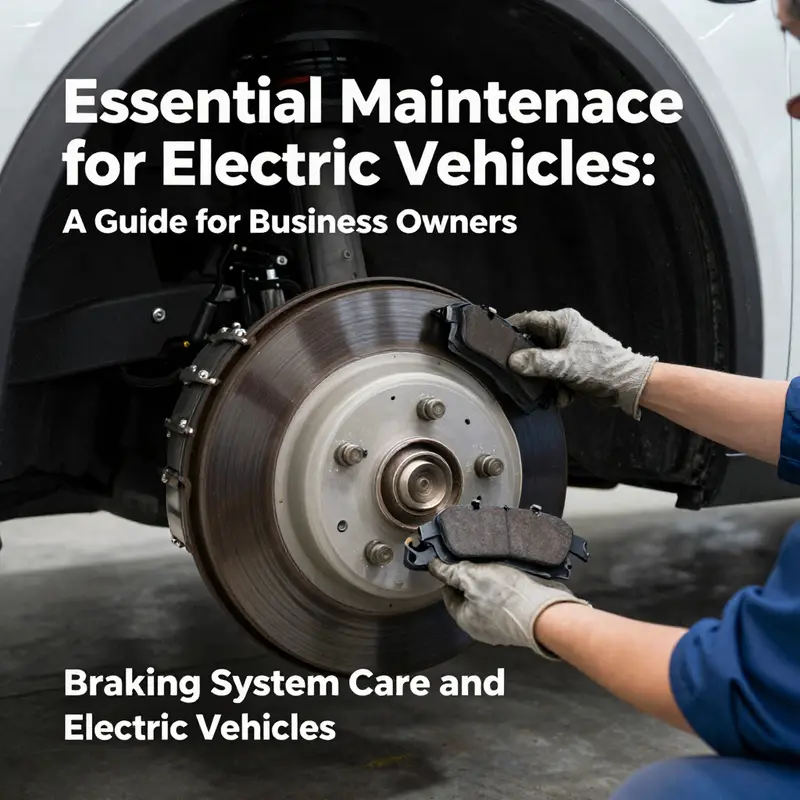
Braking in an electric vehicle is more than a single function. It is the quiet backbone of safety, efficiency, and predictable performance that threads together driving feel, energy recovery, and long-term reliability. In traditional gasoline cars, braking is largely about converting kinetic energy into heat through friction. In electric vehicles, a substantial portion of that energy conversion happens in the electric motor through regenerative braking, which sends energy back to the battery while slowing the car. That arrangement changes how the brakes wear, how often you service components, and what kinds of checks you should perform to keep stopping power dependable. A well-maintained braking system in an EV blends high-tech software with time-tested mechanics, and understanding this blend helps owners approach maintenance with confidence rather than mystery.
Regenerative braking begins every time you lift off the accelerator. The motor switches roles from generator to braking mechanism, converting motion into electrical energy and returning charge to the pack. The effect on wear is real: friction brakes wear less under normal, light-to-moderate braking because part of the stopping force comes from the electric motor. This is especially noticeable in city driving, where frequent stop-and-go cycles favor regen, reducing the pace at which pads and rotors wear down. Yet regenerative braking is not a replacement for friction brakes. The system depends on a balance between the two, and the friction brakes remain essential for rapid deceleration, emergency stops, and at very low speeds when regen is less effective due to low battery state of charge or system limitations. For this reason, EV braking maintenance centers on preserving the health of both subsystems and ensuring the transition between regen and friction braking remains seamless and predictable.
A practical consequence of this dual braking approach is that routine care cannot overlook the hydraulic and mechanical components that engage during friction braking. Brake pads still wear, though often at a slower rate than in ICE vehicles. Rotor surfaces can develop wear patterns, and caliper pistons must slide freely to deliver consistent braking force. The brake fluid, which powers the hydraulic system that actuates the calipers, is equally important. Moisture absorption in the fluid lowers its boiling point and can lead to spongy pedal feel or reduced braking efficiency under heavy use. In EVs, where high-current demands can spike during aggressive braking or prolonged descents, keeping brake fluid in good condition becomes even more critical. Most manufacturers recommend inspecting and replacing brake fluid every 2 years, though exact intervals depend on the vehicle and environmental conditions.
Beyond the fluid itself, the health of the brake system rests on the cleanliness and integrity of the entire hydraulic circuit. Corrosion, leaks, or degraded seals can introduce air into the line, causing a soft pedal or uneven braking response. Moisture in the system also accelerates corrosion inside metal lines and components, which can lead to leaks or erratic brake pressure. Routine inspection should include checks for fluid level, clarity, and signs of moisture in the reservoir. If you notice a darker color, glazing on the fluid, or a change in pedal travel, it’s a signal that the system needs service. Don’t wait for a warning light; a gradual change in pedal feel or braking response can indicate the onset of a more serious condition.
A key distinction in EV maintenance is the role of diagnostic data in brake health. Modern vehicles constantly monitor brake pad thickness, rotor condition, caliper operation, and hydraulic pressures. Diagnostic tools can reveal pad wear that isn’t obvious from sight alone, and they can detect caliper sticking or seized pistons that can compromise braking performance. Some of these checks are part of routine service intervals, while others are triggered by symptoms—noise, vibration, or a change in braking feel. For owners, this means a proactive approach: treat subtle changes in braking behavior, noises, or pedal feedback as early warning signs and have the system evaluated by a technician with experience in electric drive systems.
The Battery Management System (BMS) indirectly shapes braking performance as well. Because regenerative braking relies on the battery accepting energy efficiently, the BMS manages charging, cell balancing, and thermal limits that influence regen strength. If the battery is very hot, very cold, or not properly balanced, the energy recovery profile can shift, sometimes reducing regen on certain drives or demanding more friction braking to achieve the same deceleration. A well-tuned BMS and reliable energy management software help maintain a smooth, predictable brake feel across a broad range of temperatures and battery states. This is why software updates often include refinements to regenerative braking strategies, including how aggressively the system engages regen at different speeds and loads. Regular firmware updates ensure the braking experience remains consistent and safe as the hardware ages.
When approaching maintenance from the user’s side, the emphasis should be on consistency, observation, and timely servicing. Start with a visual inspection during regular wash sessions. Look for signs of fluid leaks around calipers and wheel hubs, which can indicate a compromised hydraulic line. Check for uneven rotor wear by turning the wheels and feeling for pulsations or grabs that aren’t related to road surface. Listen for noises under light braking—squeaks, chirps, or a grinding tone can point to worn pads, glazed rotors, or sticking calipers. Increases in noise or changes in pedal feel under braking are not anomalies to be ignored; they are actionable signals calling for a professional assessment.
An important maintenance practice is maintaining proper pad and rotor health without guessing. Brake pads have a minimum thickness spec, and once they reach that threshold, they must be replaced to preserve braking efficiency and avoid rotor damage. Rotors are more than a surface; they have a minimum thickness and can develop heat-induced glazing, scoring, or warping if heat buildup is excessive or if cooling is inadequate. In EVs with regenerative braking, some customers assume the friction brakes never wear. This is a false assumption: the friction system continues to work under conditions where regen is limited or unavailable, such as when the battery is near empty or during very cold starts. A complete braking service will measure pad thickness, rotor surface condition, and caliper operation, and it will address any issues that could impair stopping power.
Because the braking system involves sophisticated electronic controls, a diagnostic check should be done with the right tools and qualified technicians. Modern EVs send and receive data about brake pressure, regenerative torque, and electronic stability measures. If a vehicle demonstrates unusual brake behavior—like inconsistent deceleration, a delayed response, or unexpected engagement of ABS or ESC—the problem could lie in software calibration, sensor alignment, or hydraulic pressure regulation. In these cases, a technician who specializes in EV systems can perform precise testing, recalibration, and software updates to restore proper function. For readers seeking more practical guidance on these aspects, a focused resource on electronic stability control and braking system service provides deeper insight into how these subsystems interact and how technicians approach diagnostics and calibration. How to Service Electronic Stability Control offers practical perspectives on the integration of braking control with vehicle dynamics.
A broader view of maintaining braking performance also involves considering the vehicle’s overall maintenance schedule. The brake system does not exist in isolation; it functions in concert with the cooling system, wheels, tires, suspension, and software ecosystems. When the cooling system performs well, it helps keep the brake fluid and rotors within safe temperature ranges, reducing the risk of brake fade after repeated use. Tire condition and pressure influence braking distance and pedal feel; underinflated tires can increase stopping distance and raise the thermal load on brakes. Suspension wear can alter brake balance and pitch, affecting how weight shifts under braking and how quickly the braking response returns to a resting state. Software maintenance—keeping firmware current and ensuring the vehicle’s control modules communicate correctly—ensures the brake-by-wire or hydraulic control logic remains responsive and stable. In essence, proper brake maintenance sits at the intersection of mechanical inspection and software health, and a disciplined routine helps sustain both the immediate safety and the long-term reliability of the braking system.
From a practical maintenance cadence, most EVs benefit from a structured approach: a visual inspection of lines, calipers, and hardware at least every 12 months or every 10,000 to 15,000 kilometers, depending on driving conditions. During these checks, technicians assess pad thickness, rotor wear, caliper operation, and brake fluid condition. They confirm there are no leaks, examine brake lines for signs of cracking or damage, and verify that the anti-lock braking system and electronic stability controls are functioning as intended. If the car has a history of heavy braking, frequent high-speed runs, or extended downhill driving, more frequent checks may be warranted to prevent heat-related wear and to catch issues caused by aggressive use.
Owner diligence complements professional service. A simple habit is to listen for changes in braking feel, especially after a software update or a battery pack recalibration. Another good practice is to perform a gentle, controlled braking test in a safe environment after a service to confirm the pedal response and stopping power feel right before resuming normal driving. These steps help ensure that the interaction between regenerative braking and friction braking remains harmonious and that the transition between modes remains imperceptible to the driver. For commercial or fleet use, the stakes are higher. Fleet maintenance programs often implement more rigorous brake inspections and more frequent fluid testing because reliability and predictable braking performance are directly tied to safety and uptime.
The chapter on braking in EV maintenance would be incomplete without acknowledging the broader sources that guide best practices. Vehicle manufacturers publish maintenance manuals that specify service intervals, procedures, and the exact hydraulic specifications for their systems. These manuals reflect model-specific differences in brake hardware, rotor dimensions, pad compositions, and electric control strategies. While the general principles described here apply across most EVs, the exact service windows and methods will vary by make, model, and even by software version. Keeping to the manufacturer’s guidance is the most reliable path to preserving braking performance over the vehicle’s lifecycle.
The way the braking system is treated over time also communicates a larger truth about EV maintenance: the reliance on software means that maintenance is as much about data and calibration as it is about hardware. Regular diagnostic checks, timely firmware updates, and attentive attention to pedal feel and braking response create a feedback loop that keeps the car stopping reliably as it ages. When done well, brake maintenance becomes a quiet form of energy stewardship—preserving the ability to recover energy efficiently while ensuring that stopping power remains consistent and reassuring in every weather condition and driving scenario. And as EVs evolve, new tools and procedures will continue to refine how we monitor, diagnose, and correct braking issues before they become safety risks.
In closing, the care of an EV’s brakes is a microcosm of comprehensive EV maintenance. It requires recognizing the unique role of regenerative braking, respecting the enduring value of friction brakes, and embracing the software-enabled diagnostics that illuminate system health. By pairing routine fluid checks, rotor and pad inspections, and proactive diagnostics with a disciplined adherence to manufacturer guidance, owners can sustain a braking system that is not only safe but also harmoniously integrated with the vehicle’s energy-management philosophy. The goal is straightforward: maintain dependable stopping power, preserve energy recovery, and support the long-term reliability that makes electric driving a practical, everyday reality. For readers who want to dive deeper into the specifics of electronic stability and braking system service, the linked resource provides a practical, technician-focused perspective on maintaining this critical safety interface. How to Service Electronic Stability Control offers a hands-on view of the diagnostics, calibration, and system checks that underpin reliable braking performance. In any EV, brakes are not a passive system; they are a dynamic partnership of mechanical parts, high-voltage components, and intelligent software working in concert to keep you safe on every journey.
External resource: Understanding Commercial Vehicle Braking Systems: Composition, Standards, and Applications
Final thoughts
Effective maintenance of electric vehicles is essential for business owners looking to maximize efficiency and safety. By prioritizing battery health, implementing correct lubrication practices for the electric motor and transmission, and ensuring the braking system is well-maintained, business leaders can protect their investment and enhance the longevity of their fleet. Staying informed and proactive about maintenance will not only contribute to the vehicles’ performance but also support overall operational success. Prioritizing these maintenance areas will ultimately lead to a more reliable, efficient, and successful electric vehicle operation.