
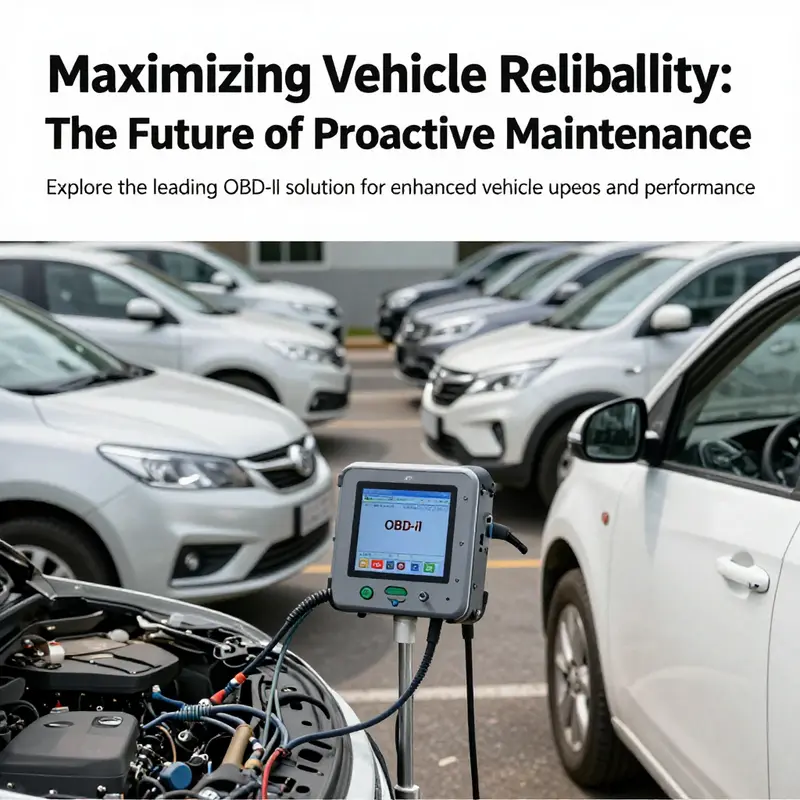
In an era where vehicle reliability is paramount, proactive maintenance stands out as a crucial strategy for business owners. The OBD-II (On-Board Diagnostics) Android Black Box has emerged as the leading solution, seamlessly integrating into vehicles to provide real-time insights that can preemptively signal maintenance needs. This article dives into the components of OBD-II systems, how analytics drive proactive alerts, the economic advantages of implementing this technology, and the trends that will shape its future. By understanding these key areas, business owners can harness the full potential of OBD-II systems to enhance operational efficiency and vehicle longevity.
From Port to Prognosis: How OBD-II Data and Android-Based Monitoring Drive Proactive Vehicle Maintenance
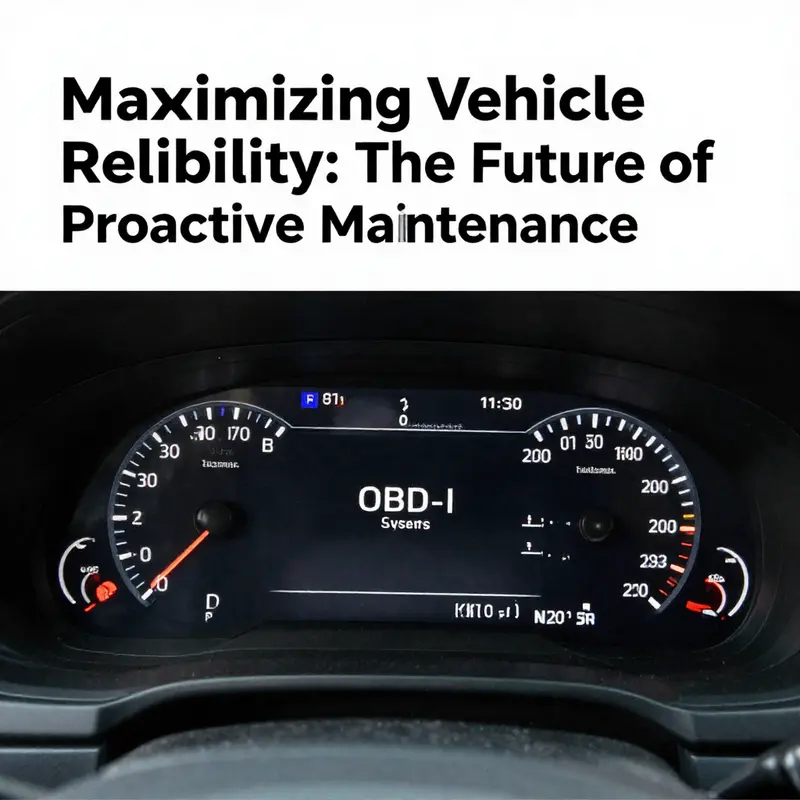
The core promise of proactive vehicle maintenance rests on turning a stream of real-time vehicle data into timely, actionable alerts before a breakdown disrupts the journey. The leading solution in this space is built on a simple yet powerful premise: every modern vehicle is already listening to itself. Since the mid-1990s, Onboard Diagnostics II (OBD-II) has provided a universal interface that lets vehicles continuously monitor critical systems and report back through standardized fault codes and data streams. That standardization matters as much as the data itself. It means a single interface can be used across makes and models, enabling both independent drivers and large fleets to access a common language of health signals. When this diagnostic backbone is paired with Android-powered software that can visualize, analyze, and alert, the result is a proactive maintenance ecosystem that feels almost prescient in its timing. What begins as a quiet, constant watch becomes a chorus of timely alerts that nudge users toward preventive care rather than reactive repairs.
OBD-II’s primary function is deceptively straightforward: monitor, interpret, and report. It tracks engine RPM, coolant temperature, fuel trim, air and fuel pressures, voltage, and a host of emissions-related metrics. It also keeps a tally of diagnostic trouble codes (DTCs) that reveal deviations from normal operation. When the data indicate a fault—say, a misfiring cylinder, a drifting sensor reading, or insufficient fuel pressure—the system stores a DTC and often triggers the Malfunction Indicator Lamp (MIL), the vehicle’s recognizable “Check Engine” signal. This early warning is not a final verdict but a pointer to an area that warrants attention. Modern implementations do more than flash a warning light; they translate raw measurements into intuitive insights. They can show live temperature readings, fuel efficiency trends, or battery voltage fluctuations, and they can convert those signals into maintenance recommendations delivered through a connected smartphone or a fleet dashboard.
The leap from raw data to useful alerts hinges on the software that sits atop the OBD-II interface. When an Android-based monitoring solution taps into the data stream, it becomes capable of real-time streaming, historical data logging, and, crucially, predictive analytics. The device—the “port-to-cloud” conduit—provides continuous visibility into how a vehicle behaves under different conditions. Over weeks and months, software can establish healthy baselines for each vehicle or asset, quantify deviations, and translate those deviations into probabilistic forecasts. A simple oil temperature spike might trigger a one-time alert, but a pattern of rising temperatures combined with fluctuating fuel trims and a gradual increase in RPM under load can foretell an impending oil pump issue or cooling system stress. In this way, the system moves from a diagnostic tool to a maintenance advisor that can preempt costly repairs and avert downtime.
This predictive stance is especially valuable for fleets where uptime is a competitive differentiator. When dozens, hundreds, or thousands of vehicles share a single maintenance framework, the ability to compare trends, set automated maintenance windows, and schedule service before failures occur becomes a strategic asset. Telematics-enabled dashboards extend this capability beyond the individual vehicle. They aggregate health signals, track driver behavior that correlates with wear and tear, and help operators optimize routes, schedules, and maintenance budgets. The promise is more predictable maintenance cycles, better asset utilization, and a reduction in unplanned breaks that disrupt service delivery. Even for private motorists, the same idea holds: a proactive alerting system can shuttle a vehicle from routine checkups to timely component replacements, preserving performance and resale value.
An often underappreciated facet of OBD-II-aware systems is how they handle readiness monitors. After repairs or resets, certain monitors must run through specific drive cycles to verify that emissions control systems are functioning properly. This nuance matters because some tools will report an apparent fault even when no fault exists, simply because the readiness status hasn’t cleared yet. A robust Android-based solution recognizes this regulatory and operational nuance. It presents drivers with clear guidance on how to complete the required drive cycles, ensuring that the system’s health signals remain accurate and emissions-related certifications stay intact. In other words, the technology does not merely flag problems; it clarifies when those signals are meaningful and when they are best interpreted in the context of recent service or driving patterns.
For many users, the practical impact of this approach comes down to trust and ease of use. A well-designed interface translates messy sensor data into digestible indicators: a color-coded health score, a trend chart showing how a parameter evolves over time, and concise, action-oriented alerts. The best experiences feel almost anticipatory. They notify a driver that an engine misfire has occurred in the past two trips, offering steps to reduce risk, such as checking spark plugs or scheduling a diagnostic at the next stop. They alert a fleet manager that tire pressure and fuel economy are drifting in a way that suggests HVAC usage, heavy loads, or an upcoming seasonal route change might be affecting efficiency. They provide a historical ledger of maintenance events, so a technician can see what has already been addressed and what remains outstanding, removing guesswork from the service bay.
The value of this approach extends beyond the car’s immediate health. Because OBD-II data is standardized and highly accessible, it enables a more holistic view of vehicle performance and maintenance economics. When integrated with telematics and fleet-management platforms, it allows operators to tie maintenance to utilization—how many miles were driven, under what conditions, and during which shifts. Such integration makes preventive maintenance not a cost center but a strategic asset that protects service commitments, extends component lifespans, and sustains resale value. It is not merely about preventing breakdowns; it is about preserving reliability and predictability in a system where every minute of downtime translates into real costs.
The narrative of this leading solution would be incomplete without acknowledging its limitations. Older OBD-II implementations may lack some of the higher-fidelity data streams that newer vehicles generate, and some current vehicles use proprietary or manufacturer-specific protocols that can constrain third-party access. These compatibility gaps can temper the breadth of insights available to an app, especially in mixed fleets that include older models. Another practical constraint relates to network connectivity. In areas where cellular coverage is patchy or where networks are in flux due to policy or technology refreshes, timely data transmission and early-warning alerts may be delayed. Yet even in these cases, the system’s core strength remains intact: it builds a proactive maintenance narrative around a universal interface, and it continuously evolves toward deeper analytics and smarter alerts as hardware and software converge.
For readers seeking context beyond the practicalities of device and app design, the regulatory and safety framework surrounding OBD-II provides essential ballast. Standards and requirements established by national authorities ensure that the diagnostic data remains consistent, interpretable, and aligned with emissions compliance. This regulatory backbone underpins both consumer confidence and industry-wide adoption. It also reinforces why the OBD-II approach endures as the leading solution for proactive maintenance alerts: it is grounded in a universal standard, capable of delivering real-time and predictive insights across a wide spectrum of vehicles, with scalable integration to mobile devices and fleet systems. The narrative of progress here is continuous, as vehicles become more connected and as analytics become more sophisticated, turning every mile into a data point that informs smarter maintenance decisions.
To readers who want a practical touchstone for understanding maintenance as a discipline, consider the broader question of what it means to keep a vehicle healthy. Maintenance is not a single event but a continuum of small, timely interventions that prevent larger failures. The OBD-II–driven approach makes this continuum legible. It records the trajectory of engine health over time, highlights deviations that warrant attention, and translates that information into concrete next steps. The result is a maintenance culture that rewards foresight—drivers who know when to replace a sensor before it causes performance degradation, fleets that schedule preventive service around predictable wear patterns, and generic users who receive reminders tailored to their actual driving and usage profiles rather than generic maintenance calendars.
For deeper reflections on the broader purpose and philosophy of vehicle upkeep, you can explore foundational ideas about maintenance and its role in everyday driving. What is Vehicle Maintenance? This resource helps ground the practicalities of OBD-II monitoring in a broader, human-centered view of how a car stays reliable across years and miles. In the end, the leading solution for proactive maintenance alerts is not a single gadget or a single app; it is the seamless integration of standardized diagnostics, real-time analytics, and user-centered design that brings maintenance planning from the back end into the driver’s immediate, daily experience.
What seals the case for the OBD-II–centric approach is its adaptability. It works with a wide array of vehicles, from compact sedans to robust commercial fleets, and it remains compatible with the growing ecosystem of Android-based monitoring tools. The long arc of its value lies not just in fault detection but in the ability to translate that detection into timely, cost-effective maintenance decisions. As sensors become more granular, data streams become richer, and machine learning models grow more precise, the system will increasingly forecast wear and tear with higher confidence and at earlier stages. The road ahead points toward even more proactive care: maintenance alerts that anticipate component fatigue, drive-condition-aware recommendations that optimize fuel economy, and automated maintenance workflows that align service with vehicle utilization. All of this centers on the same foundational insight—the vehicle already knows when it is not operating at peak health, and with the right interface, drivers and technicians can listen, understand, and respond in time to keep the vehicle healthy for the long haul.
External reference: https://www.nhtsa.gov/vehicle-diagnostics
Predictive Pulse: Analytics-Driven Proactive Alerts in OBD-II Android Black Boxes
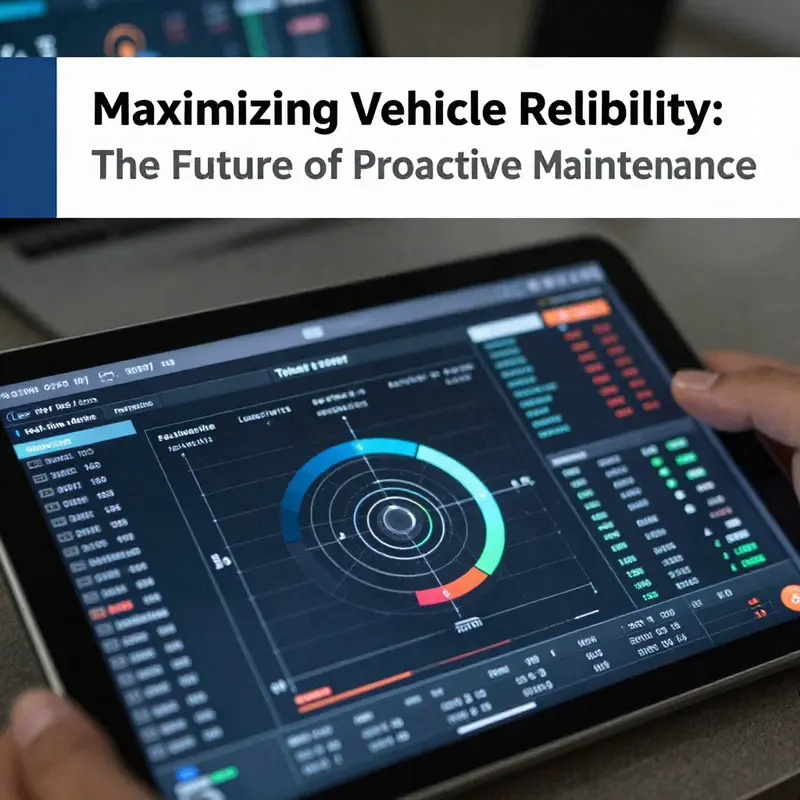
The modern road is a network of potential failures waiting to happen, unless a vehicle’s health is watched as closely as its speed. In this landscape, the leading solution for proactive maintenance alerts emerges from a convergence of hardware access, software intelligence, and human-centered design. An OBD-II Android box, installed directly into the vehicle’s diagnostic port, no longer merely records faults; it becomes a proactive partner that translates streams of sensor data into timely decisions. When this hardware is paired with purpose-built Android software, the device evolves from a passive logger into an intelligent monitoring system that can anticipate trouble before the engine coughs, before a warning light blinks, and long before a breakdown disrupts a schedule. The chapter that follows is not only about what the box sees but about what it can infer when analytics take the wheel. The result is a shift in maintenance from reactive repairs to proactive care that keeps vehicles on the road longer, with less downtime and lower risk exposure for operators and drivers alike.
At the heart of this evolution lies real-time data processing. The vehicle is a moving data center, continuously generating streams of precise measurements: engine load, throttle position, RPM, fuel trim, oxygen sensor readings, temperature, and a cascade of fault codes that may arrive in subtle drips or sudden surges. An OBD-II Android box does not wait for a daily dump of data; it processes information as it arrives. This immediacy matters. Minor deviations, if left unchecked, can propagate into more serious issues. Real-time processing reduces the latency between anomaly detection and alert generation, enabling maintenance actions to be scheduled with minimal disruption. It also supports iterative calibration of predictive models. As more journeys unfold, the system refines its understanding of what “normal” looks like in a given vehicle, under a given load, in a given climate, with a particular driving style.
To turn raw data into actionable insight, the analytics layer must do more than tally averages. It must learn patterns, compare current readings to learned baselines, and distinguish meaningful signals from the noise of everyday operation. Advanced algorithms—encompassing machine learning, time-series forecasting, and robust statistical checks—are embedded in these modern boxes. They look for patterns that humans might miss: a gradual drift in fuel efficiency that remains within a single percent for days, then a slow, insidious climb in inlet air temperature that hints at a cooling system burden; irregular RPM chatter that does not trigger a fault code yet signals drivetrain stress; or recurring minor fault codes that tend to recur around particular operating conditions, suggesting a component wearing unevenly. These subtleties differentiate a system that merely records faults from one that predicts which fault is likely to mature into a failure within the next weeks or months.
Anomalies are not merely detected; they are interpreted within the broader context of the vehicle’s operating environment. The analytics framework tracks a constellation of signals, mapping how one parameter often moves with another under specific loads or speeds. For instance, a decline in throttle response paired with higher engine load and a gradual rise in exhaust gas temperatures could indicate an emerging turbocharger issue, an era of sensor drift, or clogged air routes. The system’s strength is not in spotting a single outlier but in recognizing a consistent, offset pattern that hints at a trend rather than a transient blip. This emphasis on trend detection is critical for proactive maintenance because it shifts the conversation from “fault present” to “fault likely,” enabling preemptive service planning that minimizes downtime and stretches the life of critical components.
The predictive capability rests on what the literature describes as predictive maintenance alerts. These alerts arise not only from monitoring individual metrics but from modeling the expected trajectory of key parameters over time. Throttle position, engine load, and emissions levels become leading indicators of health risk, while fuel efficiency becomes a practical barometer of overall propulsion system integrity. When the model identifies a deviation from projected trajectories—whether a slower-than-expected acceleration response, a creeping increase in idle RPM, or a drift in exhaust analyte readings—the device issues a maintenance alert. The alert is not an alarm to panic; it is a carefully calibrated signal that suggests a check, a service schedule, or a planned component replacement. Crucially, because the alerts are embedded in an Android interface, the user can access context-rich guidance, see historical trends, and compare current readings with prior baselines in a single, intuitive view.
Driving behavior, often overlooked in early diagnostic devices, becomes a meaningful element of the analytics ecosystem. The box tracks patterns of acceleration, braking, cornering, idling, and overall trip quality. This behavioral layer serves multiple purposes. It can identify inefficient driving habits that waste fuel and stress the powertrain, offering coaching prompts to drivers with tangible, data-backed recommendations. It can also surface safety-oriented notifications when aggressive or erratic driving correlates with unusual sensor activity, such as abrupt load changes or unstable RPM fluctuations. The behavioral data do not distract from maintenance priorities; rather, they complement them by painting a holistic picture of how vehicle health interacts with usage. In fleet contexts, this integrated view supports targeted training programs and route optimization that reduce wear and tear while preserving safety margins.
Safety remains a central consideration for analytics-driven maintenance. The system’s capacity to flag potential safety hazards—before they escalate into incidents—adds a protective layer for drivers. For example, a pattern of marginal cooling system performance in conjunction with heavy load can preempt overheating risk, prompting alert and preventative checks. Likewise, anomalies linked to emissions control can trigger alerts aligned with regulatory compliance windows, thus helping operators stay within environmental standards while preserving engine longevity. The value proposition extends beyond the mechanical to the operational: fewer surprises on the road, steadier service intervals, and more consistent uptime across a fleet.
From a fleet operator’s perspective, the benefits of analytics in OBD-II Android boxes are tangible and cumulative. Reduced downtime means vehicles remain productive, which directly impacts service levels and revenue. Early detection of wear compounds translates into lower repair costs, since addressing issues while components are still within tolerable limits is simpler and less expensive than replacing a failed part after a breakdown. These advantages accumulate as predictive maintenance feeds into maintenance scheduling. Maintenance windows can be aligned with off-peak hours or planned downtime, minimizing disruption to operations. With better visibility into vehicle health, operators can optimize maintenance budgets, allocate resources more efficiently, and extend vehicle lifespans. The system helps shift capital planning from reactive cycles to proactive calendars, which improves reliability and predictability across the fleet.
For individual drivers, the experience centers on empowerment. The Android interface converts raw diagnostics into digestible insights: a clear narrative of what the readings imply, what actions to take, and how soon those actions should occur. When an alert appears, it comes with a recommended course of action, whether that means scheduling a routine service, visiting a technician for a specific check, or adjusting driving habits to reduce stress on the propulsion system. The immediacy of mobile notifications—paired with historical data and trend charts—gives drivers a sense of control over their vehicle’s health. In an era where people increasingly rely on smartphones as their primary information hub, this convenience translates to higher adherence to maintenance plans and lower risk of neglectful delays.
Crucially, the analytic OBD-II Android paradigm is integrative rather than insular. It can be layered atop existing maintenance workflows, diagnostics tools, and service records, creating a continuous feedback loop between data capture, decision support, and service delivery. The result is a more resilient vehicle ecosystem where anomalies trigger not just the notification of a fault but the initiation of a coordinated maintenance response. In this sense, analytics function as a bridge—connecting real-time vehicle dynamics with predictive insights, and translating those insights into concrete maintenance actions that keep vehicles reliable and compliant with emissions standards. This approach aligns with broader research on data-driven maintenance, illustrating how smart sensors, mobile computing, and adaptive analytics converge to redefine preventive care in modern mobility.
The overarching narrative is not that sensors are superior to human judgment, but that analytics extend human judgment with scalable, data-backed foresight. The Android platform ensures accessibility; drivers can engage with the data without specialized equipment, while fleet managers can oversee dozens or hundreds of vehicles from a centralized dashboard. The synergy between hardware capability and software intelligence makes the OBD-II Android box with analytics the leading solution for proactive maintenance alerts in today’s market. It is a practical embodiment of a future where maintenance is anticipatory rather than reactive, where data-driven alerts reduce risk, and where the act of keeping a vehicle healthy becomes a routine feature of everyday driving rather than a once-in-a-while repair episode. For readers exploring the practical underpinnings of this approach, a concise articulation of the broader maintenance concept can be found here: What is Vehicle Maintenance.
As this framework evolves, the promise lies in tuning analytics to the realities of diverse fleets and driving contexts. An urban delivery van and a long-haul tractor-trailer operate under different stressors, yet both benefit from real-time processing, anomaly detection, and predictive alerts. The adaptability of embedded analytics—its ability to learn from each vehicle’s unique usage pattern while applying generalizable models—ensures that maintenance alerts remain precise and relevant. The result is not a one-size-fits-all alarm system but a responsive, intelligent maintenance partner that evolves with the vehicle, the driver, and the route. It is in this adaptive quality that analytics justify their place at the core of proactive maintenance, turning data streams into trusted forecasts and meaningful actions.
External reference: https://www.sciencedirect.com/science/article/pii/S235214652600078X
Proactive Pulse: How OBD-II-Driven Alerts Redefine Vehicle Maintenance and Budget Governance
A proactive maintenance posture has moved from a best practice to a default expectation for anyone who relies on a vehicle for work, family, or service delivery. At the center of this transformation is a simple, powerful idea: continuous visibility into a vehicle’s health creates opportunities to act before—even long before—a warning light comes on. The leading solution for proactive maintenance alerts rests on the OBD-II interface, augmented by Android-compatible software that translates streams of raw signals into actionable guidance. When a device plugs into the OBD-II port and pairs with a capable app, it doesn’t merely collect data; it builds a living map of the vehicle’s health, constantly updating with every mile and every engine cycle. Engine diagnostics, fuel efficiency metrics, RPM fluctuations, throttle position, coolant temperature, ignition history, and fault codes all feed into a real-time picture of whether components are performing within their expected envelopes. In practice, this combination delivers a continuous stream of maintenance alerts that are timely, contextual, and increasingly predictive. Rather than waiting for a catastrophic failure or a routine but reactive check, drivers and fleet operators gain a window into the near-term needs of their powertrain and ancillary systems. The result is a governance framework for maintenance that favors planning over panic, budgeting over guesswork, and reliability over downtime. The economic logic is straightforward: earlier detection means smaller repair bills, longer component lifespans, and less disruptive downtime. If a device spots a misfire trend, a shifting fuel trim, or an emerging emissions fault, the user can schedule a service before the issue spreads. This is not a vague inference every few weeks; it is continuous scrutiny that translates to fewer emergency repairs, more predictable service intervals, and a steadier operating tempo. What makes the OBD-II approach especially compelling is its universality. The OBD-II standard ensures broad compatibility across makes and models, enabling a consistent data vocabulary no matter the vehicle. When this data is coupled with a thoughtful Android interface, the result is a portable, scalable solution that individual drivers can use in their daily routines and fleet managers can deploy across dozens or hundreds of vehicles. The value, then, rests not only in the volume of data but in the quality of the interpretation. Real-time diagnostics can surface issues that would otherwise remain hidden until a warning light becomes a true risk. Real-time fuel metrics reveal inefficiencies that erode margins and fuel economy over time. RPM and load patterns reveal drivability concerns or potential sensor faults. Throttle position and temperature data offer early signals of driveline or cooling system stress that, if left unattended, could cascade into more expensive repairs. The magic lies in translating these signals into timely, concrete actions—an alert that suggests a service window, a recommended maintenance task, or a diagnostic pass that a technician can run to confirm a root cause. The best implementations do more than merely alert; they accumulate a longitudinal record of vehicle health. Over months and miles, this record supports better maintenance planning, more accurate life-cycle cost calculations, and smarter renewal or replacement decisions. In the realm of fleet operations, these advantages compound. A fleet that runs with proactive alerts can synchronize maintenance with vehicle availability, aligning service windows with scheduling needs and driver rosters. Downtime is minimized because maintenance windows are pre-planned, not coerced by breakdowns. Spares inventories can be tuned to actual service patterns rather than anticipated, generic worst-case scenarios. And because the data can highlight systemic patterns—such as a specific sensor tending toward failure on a subset of models or a common drive cycle that stresses an exhaust component—the organization can target preventive investments with improved confidence. This is where the economic case becomes even more persuasive: maintenance becomes a disciplined expenditure with measurable return. When a technician preemptively replaces or cleans a component that would have degraded performance and raised fuel consumption, the fuel savings alone can justify the cost of the preventive action several times over over the life of the asset. The improvement in reliability also translates into reduced warranty exposure for fleets and manufacturers and better retention of vehicle value at trade-in. As engines and associated subsystems become more electronics-driven, the value of early, data-grounded intervention increases. The OBD-II alerting framework thrives on patterns and thresholds, but the most effective deployments add a layer of analytics that distinguishes signal from noise. Basic thresholds can tell you when a sensor is out of range; advanced analytics can reveal when a sensor is drifting gradually in a way that suggests impending failure, predicated on the vehicle’s duty cycle, ambient conditions, and operating history. In other words, this is not merely a watchful eye but a reasoning partner that exists inside the vehicle ecosystem, translating raw numbers into a practical maintenance calendar. The affordances extend beyond simple diagnostics. Universal OBD-II interfaces make it possible to pull in a broader suite of metrics—battery condition indicators, charging system health, and even some emissions-related data—creating a holistic view of the vehicle’s readiness for daily work. The smartphone-driven interface is crucial here. It lowers the barrier to entry for non-expert drivers and small operators, turning a technically rich stream of data into intuitive dashboards, bite-sized insights, and actionable steps. It is not enough to know that there is an issue; the system must tell you why it matters in the context of your operations and what you should do next. This is where the discipline of maintenance evolves from a reactive discipline—“fix it when it breaks”—into a proactive discipline of planning, pacing, and prioritizing. The shift also has a social dimension. When drivers and operators can see the rationale behind a suggested service window, they are more likely to accept and adhere to maintenance plans. The perception of maintenance as an expense softens into recognition of it as a strategic investment in reliability, efficiency, and compliance. Emissions and environmental considerations are no longer afterthoughts. By keeping engines operating closer to their optimal efficiency band, OBD-II-based alert systems reduce unnecessary energy burn and limit thermal waste, contributing to lower greenhouse gas emissions. In transportation networks where efficiency and reliability directly impact service levels, even incremental gains compound into meaningful competitive advantages. The technology’s compatibility with a range of software ecosystems further anchors its appeal. Through tools like Universal OBD II software, users can access real-time metrics—RPM, vehicle speed, coolant temperature, and more—and interpret them within a familiar interface. But the true power emerges when data is filtered, normalized, and presented in a way that aligns with human decision-making. The challenge, of course, is to avoid data overload. A steady stream of raw numbers can overwhelm even attentive users. The most effective implementations balance depth with digestibility, offering layered views: a quick-read summary for everyday driving and a deeper diagnostic mode for scheduled maintenance windows. To support this balance, standards-driven data with clear provenance matters. For example, adherence to established automotive data and diagnostic protocols helps ensure that alerts are credible, consistent, and compatible with professional diagnostic tools. This alignment matters not only for individual drivers but also for shop technicians who step in when a service is required. In practice, the leading solution works as an ecosystem rather than a single device or app. The OBD-II interface provides the data backbone, the Android-based software delivers the user experience and analytics, and the maintenance workflows—triggered by alerts, scheduled service reminders, and predictive recommendations—bind the ecosystem into a coherent, financially meaningful practice. As with any technology that turns data into action, there are caveats. Alert fatigue is a real risk if the system is overly sensitive or unclear about urgency. The most responsible designs calibrate alerts to the vehicle’s duty cycle and usage patterns, and they offer tiered notification schemes that distinguish critical faults from minor inefficiencies. Privacy and security considerations also deserve attention. Because the data travels through a smartphone and cloud-connected services, safeguarding access, ensuring secure transmission, and enforcing prudent data governance become part of the value proposition. When these pieces come together, the economic rationale for proactive maintenance alerts grows clearer. Early care for misfires, sensor drift, or catalytic issues preserves engine integrity, protects driveline components, and sustains performance in ways that reactive maintenance cannot easily match. The ongoing refinement of the system—through software updates, improved diagnostic algorithms, and better visualization—means the solution becomes more capable over time, not just more expensive. In this light, the OBD-II-driven alerting framework is less a single product than an operating model for modern vehicle care. It aligns the incentives of drivers, fleet managers, technicians, and even environmental stewards around a shared objective: maintain the vehicle in a state of readiness, minimize unplanned downtime, and optimize the cost of ownership. For readers exploring the economic implications, the practical takeaway is this: the investment in continuous health monitoring pays for itself through repeated cycles of prevention, efficiency, and reliability. It is a shift from a costs-at-risk to a discipline of value preservation, where the data becomes a guide for timely action rather than a passive record of what happened. If you are looking to broaden your understanding of maintenance economics and the role of data-driven practices in daily vehicle care, you may explore insights on how vehicle maintenance saves on gas expenses. That resource offers a grounded look at how attention to efficiency translates into measurable savings, reinforcing the proportional relationship between proactive alerts and long-term budget health. Beyond that, the technical backbone remains anchored in standards that ensure reliability and interoperability. For those seeking deeper technical grounding, the SAE J2534-1 standard provides a reference point for diagnostic communication and programmatic interfaces, underscoring the disciplined, standard-driven approach that makes broad compatibility feasible and trustworthy. External resource: SAE J2534-1 Standard. https://www.sae.org/standards/content/j253412026/
From Fault Codes to Forecasts: Harnessing OBD-II for Proactive Vehicle Maintenance Alerts

Proactive maintenance in modern motoring begins where observation meets prediction. The leading approach today centers on an OBD-II Android Black Box that slips into the vehicle’s OBD-II port and operates as a quiet sentinel beneath the dashboard. It does more than read fault codes; it tracks real-time engine diagnostics, fuel efficiency trajectories, RPM envelopes, throttle position, transmission health signals, emissions indicators, and a rolling history of fault codes. When paired with robust Android software, this setup becomes a decision-support engine that translates raw telemetry into timely maintenance alerts. The benefit is not simply catching problems after they appear; it is about recognizing early warning signals and translating them into actionable steps while the vehicle remains dependable. This shift—from reacting to failures to anticipating them—has already reshaped how drivers and fleets manage uptime, reliability, and long-term costs, creating a new norm where maintenance is a scheduled feature of operation, not a response to breakdowns.
At the heart of this transformation lies data flowing from the vehicle’s control systems into an accessible analytics stack. The OBD-II interface serves as a gateway to the CAN bus and a spectrum of engine and drivetrain measurements. Real-time streams of data—temperature, pressure, voltage, fuel trim, oxygen sensors, and a continuum of sensor statuses—feed predictive models that learn what normal looks like for a given vehicle, under a given climate, and with a given usage pattern. It is this contextual understanding that allows the system to distinguish a temporary anomaly from a genuine wear signal. A small deviation in fuel economy might be a driver habit or a seasonal issue; a sustained drift in transmission temperature, however, could herald pending wear in a torque converter or valve body. The software translates those nuances into clear, prioritized alerts and recommended actions, so maintenance is no longer a distant event but a timely intervention.
This evolution also reframes how drivers experience maintenance. Rather than waiting for a dashboard warning light to illuminate, users receive proactive notifications about potential issues before they become visible problems. The alerts can be tailored to individual risk profiles, driving environments, and vehicle age. For fleet operators, the implications are even more dramatic: automated maintenance scheduling, maintenance windows aligned with duty cycles, and the ability to forecast part replacement needs across dozens or hundreds of vehicles. The result is reduced downtime, better asset utilization, and a more predictable maintenance budget. The integration of these systems with smartphones and cloud analytics further broadens access—owners can receive alerts on the go, service centers can coordinate proactive tune-ups, and managers can monitor fleet health from a central dashboard. In this ecosystem, the value lies not only in the data itself but in the intelligent interpretation that turns data into practical, timely service decisions. For readers seeking a broader grounding in how ongoing upkeep shapes maintenance philosophy, a foundational exploration is available at the article What is vehicle maintenance, which provides a concise map of maintenance concepts and practices that underpin proactive alert systems.
A critical advantage of the OBD-II–driven approach is its potential to forecast wear and degradation that are otherwise difficult to detect until a failure occurs. Modern engines and transmissions produce a constellation of signals that, when analyzed collectively, reveal subtle trends. For example, transmission health indicators—clutch and hydraulic pressures, gear wear patterns, and temperature stability—can signal the approaching need for fluid changes or worn components. Similarly, predictive analytics can identify battery health trajectories by examining charging and parasitic draw patterns, cycle counts, and temperature effects over time. Brake wear, typically inferred through patterns in braking force, pedal feel, and associated temperatures, can also be anticipated by correlating driving style with component load. AI models don’t merely flag a problem; they quantify the likelihood and timing of a potential failure and translate that into a concrete maintenance plan. This predictive capability is what elevates the OBD-II ecosystem from a diagnostic tool to a proactive maintenance partner for both individual drivers and fleet operators.
The practical utility of consumer-friendly diagnostic tools is a pivotal part of this narrative. Over the past decade, OBD-II scanners and companion apps have democratized access to vehicle health information. These devices opened the door to diagnostic visibility for millions of vehicles since 1996, enabling drivers to monitor a broad swath of issues without specialized equipment. The democratization is not just about convenience; it accelerates maintenance literacy and empowers owners to participate in proactive care. When this democratized data is funneled into AI-enabled platforms, the result is a scalable, user-friendly maintenance experience. The software can translate a long list of raw signals into a succinct health score, a prioritized maintenance checklist, and even scheduling reminders that align with the owner’s calendar. Such design choices—clear, actionable guidance built on real-time data—are essential to sustaining engagement and ensuring that alerts translate into timely service.
The fusion of OBD-II data with cloud-based analytics and mobile interfaces represents a major step forward in maintenance strategy. Data captured by the vehicle travels to the cloud, where more powerful computational resources can run sophisticated models, compare current readings with historical baselines, and incorporate contextual factors such as climate and driving patterns. This setup enables models to forecast issues beyond what a single trip could reveal. For instance, by analyzing long-term usage patterns and environmental influences, the system can anticipate battery degradation trajectories in cold-start-dominant climates or predict brake pad wear in fleets with high mileage in urban traffic. The workflow typically includes alerting the vehicle owner or fleet manager, presenting a recommended maintenance action, and, in some configurations, automating a service appointment through connected scheduling. As predictive modeling evolves, developers increasingly employ industry-standard tools and simulation environments to validate wear models before deployment. The idea is to combine rigorous engineering with everyday practicality so that the system remains dependable, explainable, and easy to adopt.
This narrative of predictive maintenance is not merely theoretical. It is grounded in a disciplined approach to data integration, where continuous streams from the CAN bus meet historical usage data, environmental context, and domain knowledge about wear processes. The result is a robust framework that can forecast impending failures with meaningful confidence intervals and translate those forecasts into concrete maintenance actions. The practical implications are substantial: fewer unexpected breakdowns, more stable vehicle uptime, and a maintenance culture that treats care as a continuous, data-guided practice rather than a series of episodic repairs.
For readers who want to explore the broader landscape of predictive and proactive maintenance in motor vehicles, further insights are available in the recent academic synthesis published by Mendel University Press. This work delves into predictive modeling and data integration techniques that inform contemporary OBD-II–driven maintenance ecosystems, helping connect everyday consumer tools with rigorous analytical methods.
What makes the current generation of OBD-II–based alerts compelling is not only the technology itself, but how it is packaged for real-world use. The end-to-end experience—from the moment data leaves the vehicle, through cloud processing, to the moment the user receives a maintenance directive on a smartphone—rests on three pillars. First, data quality and stability: the system must consistently capture accurate signals and resist noise that could lead to false alarms. Second, model accuracy and transparency: the predictions should be credible, with interpretable rationales for why a specific issue is forecasted and when it is likely to occur. Third, user-centric design: alerts must be timely, prioritized, and actionable, offering maintenance steps that are feasible within the owner’s context. When these pillars are aligned, proactive maintenance alerts become a reliable routine rather than a disruptive exception. The practical outcome is a vehicle that spends more time on the road and less time in the shop, a goal that resonates with individual drivers as well as commercial fleets.
While the promise is clear, several challenges accompany this acceleration toward proactive maintenance. Data privacy and security become paramount as vehicles transmit sensitive information to cloud services. Interoperability across different vehicle makes, models, and hardware configurations remains a nontrivial hurdle, demanding standardized data schemas and consistent validation practices. Additionally, the human element matters—drivers must understand and trust the alerts, and service providers must integrate these signals into their scheduling workflows without overwhelming customers with excessive or ambiguous notifications. Addressing these concerns is essential to sustaining the momentum of predictive maintenance, ensuring that the technology remains transparent, reliable, and ethically deployed.
In the broader arc of automotive technology, the OBD-II–driven proactive alert paradigm represents a natural progression from diagnostic tools to predictive health partners. It aligns with a growing ecosystem where data, analytics, and user experience converge to optimize reliability and resource use. The future landscape will likely see more seamless integration with vehicle connectivity, smarter scheduling of preventive services, and increasingly personalized maintenance plans that reflect individual driving habits and environmental exposures. As models become more adept at interpreting wear signals and as data pipelines become more robust and secure, proactive alerts will increasingly feel like a standard feature of vehicle ownership rather than an extraordinary capability.
For readers seeking a deeper dive into the empirical and theoretical foundations of predictive and proactive maintenance in motor vehicles, the Mendel University study offers a rigorous exploration of methods and implications that inform practical implementations. In addition, the ongoing development of consumer-oriented maintenance tools continues to shape how people engage with vehicle health, creating a landscape where education, accessibility, and reliability reinforce one another. If you want to explore a broader treatment of maintenance concepts as they relate to ongoing vehicle care, see the article What is vehicle maintenance for foundational context and practical framing. The integration of these ideas with OBD-II–driven alerts is what makes proactive maintenance both technically compelling and commercially viable in today’s automotive world. External perspective and methodological detail can be found at the linked external resource, which provides a scholarly lens on predictive and proactive maintenance approaches across motor vehicle systems.
External resource: https://www.mendeluniversity.cz/acta/2026/25/2026-25-18.pdf
Final thoughts
The OBD-II Android Black Box represents a significant advancement in vehicle maintenance practices for business owners. With its ability to provide timely alerts and detailed diagnostics, it empowers fleets to minimize downtime and extend vehicle life. Embracing this technology not only enhances operational efficiency but also positions businesses to adapt to emerging trends in vehicle technology. Ultimately, integrating OBD-II systems is not just a choice; it’s a strategic move toward ensuring reliable vehicle performance and maximizing fleet potential.