
For business owners leasing vehicles, understanding maintenance requirements is critical for both operational efficiency and legal compliance. Each lease agreement outlines different service expectations, often echoing the automotive manufacturer’s recommendations. Regular servicing, tire management, and timely repairs are fundamental aspects that can extend the life of your leased vehicle and minimize penalties. This article will dive into four essential chapters: first, covering general servicing guidelines; next, focusing on tire maintenance and safety checks; then, exploring how to interpret and adhere to manufacturer recommendations; and finally, clarifying lessee responsibilities and warranty coverage. By grasping these maintenance essentials, business owners can ensure their leased vehicles remain in top condition while meeting financial and operational goals.
null
null
Tire by Tire: Mastering Required Maintenance for a Leased Vehicle through Tire Care and Safety Checks
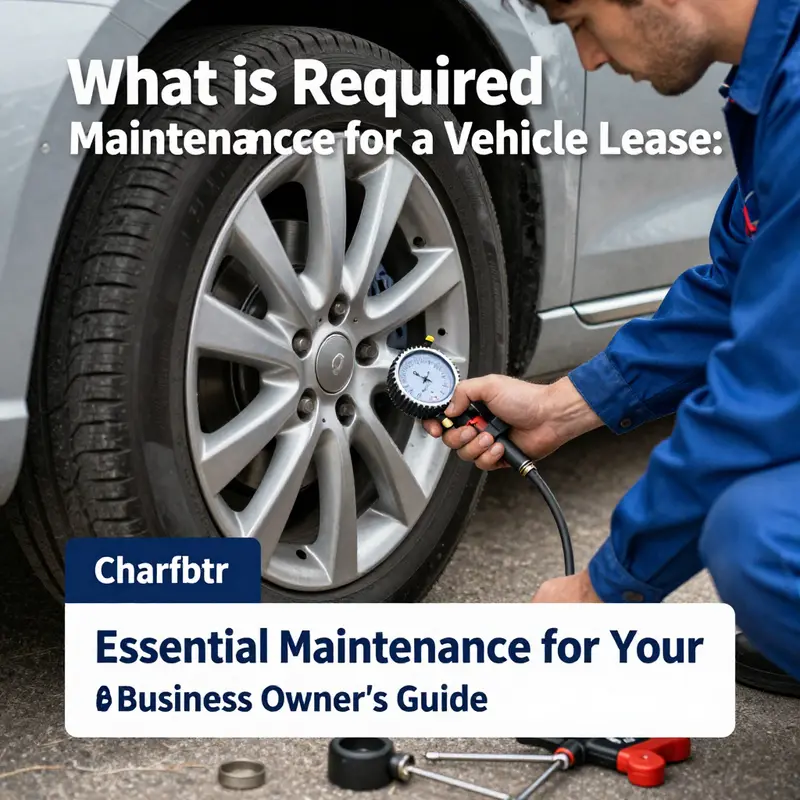
Tires are more than just round armor for a leased vehicle; they are the living, turning proof of your maintenance discipline. In the world of vehicle leasing, where the vehicle’s condition at return can influence your final costs, tire maintenance becomes a visible, measurable standard of compliance. The lease agreement often frames maintenance as a shared responsibility: the manufacturer’s recommendations guide what must be done, while the lessee handles routine upkeep and minor repairs. Tires sit at a unique intersection of safety, performance, cost, and contract terms. When you treat tire care as a continuous practice rather than a checklist item, it becomes a lens through which every other aspect of lease maintenance—oil, brakes, suspension, and end-of-lease expectations—suddenly makes sense. The road, after all, begins with the tire that keeps you in contact with it, and the lease is a compact that rewards attentive stewardship with lower risk of penalties and smoother transitions when the term ends.
A lease typically requires you to observe the manufacturer’s maintenance schedule. This means following intervals for oil changes, fluid checks, brake inspections, battery tests, and the many service items that keep the vehicle performing as designed. Tires are the most frequent touchpoint of these routines, because they wear with use and directly affect handling, braking distance, and fuel efficiency. The practical implication is straightforward: neglect tire care at your own risk, not only of safety but also of the lease’s value at inspection time. A tire in poor condition can raise the cost of wear-and-tear assessments or trigger end-of-lease charges for excessive wear. Conversely, diligent tire maintenance can reduce those risks and support a smoother continuation of your leasing experience.
The first principle of tire maintenance in a lease context is ongoing inspection. Tires should be visually checked for cracks, bulges, embedded debris, and unusual wear patterns. A quick look should become a habit, especially when you refill the gas tank or top up fluids. This daily vigilance helps uncover issues like a slow leak or a small puncture before it becomes a dramatic safety concern. Even if a puncture seems minor and the tire appears to hold air, a qualified technician should assess it promptly. Driving on a compromised tire is not just unsafe; it can lead to damage that extends beyond the tire itself, potentially affecting the wheel, suspension, and alignment. The risk is not something you can safely gamble with, particularly inside a lease’s framework where penalties may apply for non-repair or improper maintenance.
Tire care also extends to the way you drive and how you store the vehicle. Temperature fluctuations, road hazards, and curb impacts all contribute to faster wear or sudden damage. If you find yourself with a damaged tire, don’t delay repair or replacement. A puncture that’s repairable can be fixed by a professional, but once the tire has sustained significant sidewall damage or the puncture is beyond repair, replacement becomes necessary. A damaged tire can fail without warning, leading to loss of control at a moment you can least afford. In lease terms, keeping a vehicle in safe, roadworthy condition is a baseline expectation. Tires are the most immediate and visible barometer of that condition, and the lease agreement will reflect that reality in end-of-lease inspections as well as in any wear-and-tear adjustments.
Beyond basic inspections, tire maintenance includes regular rotation, balancing, and, when needed, wheel alignment. Rotating tires—typically every 5,000 to 8,000 miles, or as recommended by the vehicle manufacturer—helps ensure even tread wear across all four tires. Balanced tires reduce vibrations and promote smoother steering, while a proper wheel alignment keeps the vehicle tracking straight and prevents uneven wear that can masquerade as more serious mechanical issues. While the rotation, balancing, and alignment services may be bundled within maintenance plans offered by lenders or dealers, the responsibility to schedule and execute these services falls to the lessee. The practical impact is that tire wear becomes a predictable, budgetable line item rather than a surprise charge at the end of the lease.
One of the more concrete lease-specific considerations concerns tread depth. Most lease contracts specify a minimum tread depth—commonly around 4/32 of an inch remaining—above which the tires must be maintained or replaced as needed. If tread wears down too far, the leaseholder may face penalties for excessive wear. But tread depth is not the sole criterion; the condition of tires is evaluated in the context of overall wear and tear, including any cuts, bulges, or sidewall damage. Mismatched or incompatible tires can also complicate handling, affect warranties, and potentially impact lease-end conditions. It is prudent to avoid combining tires of different brands or wear levels on the same axle, not only for performance reasons but also to protect the vehicle’s eligibility for end-of-lease inspection outcomes. A careful visual check for cracks, bulges, embedded debris, and other signs of wear should accompany every tire rotation and maintenance appointment.
The tire’s air pressure deserves particular attention. Proper inflation supports even wear, improves fuel efficiency, and enhances safety. Cold-weather or frequent highway driving can cause pressure to fluctuate, so keeping tires inflated to the manufacturer’s recommended pressure is essential. This value is not a guess; it’s a specification that corresponds to the vehicle’s load and performance characteristics. Checking tire pressure should be a regular habit, ideally when the tires are cold and before extensive driving. Underinflated tires are a common contributor to excessive wear and reduced handling capability, while overinflation can lead to a harsher ride and uneven contact with the road. Leasing companies often stress that lessees maintain correct tire pressure as part of routine upkeep because it affects safety and wear, both central to the lease’s value proposition.
The end of a lease heightens the importance of tire care. A vehicle’s residual value, which partly determines lease cost structures, hinges on how well the tires are maintained. Tires that are excessively worn or damaged can lead to additional charges at return and can influence the overall perception of compliance with the lease terms. It is, therefore, prudent to document tire maintenance meticulously: keep service receipts, track rotation dates, tire rotations, balancing, and alignment records. A well-documented tire maintenance history communicates diligence and can mitigate concerns during the vehicle’s return inspection. It also provides a clearer picture if you decide to transfer the lease or purchase the vehicle at end of term.
Within this broader maintenance narrative, the human element matters as much as the mechanical. Tires reveal how the vehicle has been cared for on a day-to-day basis. You can develop a rhythm that reduces risk and builds goodwill with the leasing company and the dealer network. Schedule reminders for service intervals, keep a small notebook or digital log of tire-related activities, and align these records with the lease’s required maintenance schedule. This approach does not only fulfill contractual expectations; it fosters a safer driving environment and can positively influence how the vehicle is assessed when the lease ends.
For those who are navigating this landscape for the first time, a practical reminder helps: tire maintenance is not a separate chapter of the lease. It is integral to every other maintenance decision you make. Oil changes, brake inspections, and suspension checks are optimized when the tires are sound and consistent in wear. Brakes, for example, rely on tires to deliver the stopping force safely. A tire with uneven wear can mask or magnify issues in braking performance, complicating diagnostics and potentially leading to more extensive repairs. This interconnectedness is why tire care frequently appears as a central theme in lease agreements and the guidance that accompanies them. Understanding this interconnectedness helps you act proactively, not reactively, when maintenance issues arise.
From a reader’s perspective, it is helpful to remember that while the lease outline emphasizes who pays for maintenance on a leased vehicle, that question often comes with practical answers embedded in the contract, warranties, and service plans. A broader appreciation of the tire lifecycle—from new tires to rotation, repair, and replacement—frames a coherent maintenance strategy. Adopting that strategy reduces the risk of penalties and ensures safety both on the road and at the vehicle’s return. For readers seeking a concise summary of who bears responsibility in common leasing scenarios, consider this linked discussion on maintenance responsibility: who pays for maintenance on a leased vehicle. This resource helps connect tire care with broader maintenance obligations and clarifies how lease terms translate into everyday decisions on the road.
The chain from tire maintenance to overall lease health is not a vague tutelage; it is a practical discipline. By treating tires as the baseline of safety and performance, you align daily driving habits with the lease’s expectations. When you rotate tires on schedule, monitor tread depth, maintain proper inflation, and promptly repair punctures, you create a reliable pattern of care. This pattern reduces risk, preserves the vehicle’s safety margin, and helps keep end-of-lease costs predictable. It also reduces the cognitive load of lease compliance. Instead of a maze of rules and penalties, you operate within a straightforward framework: care for the tires, and the rest of the maintenance follows with fewer headaches and greater confidence.
As you approach reminders for maintenance entries in your calendar, remember that tire care sits at the heart of the lease’s practical reality. The tires are your first line of defense for traction in rain, snow, and heat; they are the vehicle’s contact patch with the surface that keeps you anchored in braking, cornering, and road sense. By adopting a disciplined tire maintenance routine, you honor the lease agreement, protect your safety, and preserve the vehicle’s value for the end-of-term evaluation. The discipline you apply to tire care inevitably fortifies your approach to all other required maintenance—oil, fluids, brakes, and the thoughtfulness you invest in documentation. In short, tire maintenance is not just a chapter in a lease manual; it is a keystone that supports every other aspect of responsible leasing.
For readers who want a grounded reference outside the vehicle-specific notes, consider consulting official tire-safety guidelines from a national transportation authority, which provide objective safety criteria and testing standards that align with the practical advice found here. These guidelines reinforce the principle that tire health is non-negotiable for safe driving and lease compliance. You can explore these guidelines through the external resource: https://www.transportation.gov/vehicle-safety/tires
Leased Vehicle Maintenance Unveiled: Reading Manufacturer Guidance to Protect Value and Avoid End-of-Term Penalties
Maintaining a vehicle under a lease is less about personal preference and more about meeting a contractual standard while honoring the manufacturer’s guidance. When you lease, the car’s care rests on two connected pillars: the explicit maintenance duties spelled out in your agreement, and the manufacturer’s recommended service schedule. The goal is simple in theory—keep the vehicle in good working condition, preserve its value, and reduce the risk of costly charges when you return the car. In practice, this means treating the owner’s manual as a map rather than a garnish on the glove box. The manual is built on extensive testing and real-world data, and it translates into a practical cadence for service that aligns with safety, performance, and longevity. The lease framework, meanwhile, translates that cadence into obligations so your car remains compliant with the contract you signed. It is this intersection of manufacturer guidance and lease terms that shapes the day-to-day decisions of maintenance, the budgeting for service, and the way you approach the end-of-term inspection. The experience hinges on a single principle: proactive care beats reactive repairs when a vehicle is on lease because the consequences ripple through safety, cost, and the value the lessor sees when the vehicle is returned.
At the core of the guidance is routine maintenance. The owner’s manual provides the schedule for oil changes, tire rotations, brake inspections, fluid checks, and the replacement of filters. These are not arbitrary intervals; they are derived from a combination of lab testing and real-world use. The general pattern most manufacturers follow suggests oil changes every five thousand to ten thousand miles, or roughly every six to twelve months, whichever comes first. Tire rotation typically occurs every five thousand to seven and a half thousand miles to promote even wear and extend tire life. Brake systems require periodic inspection, often with replacements as needed based on wear rather than time alone. Fluid checks cover a broader spectrum than oil—coolant, transmission fluid, brake fluid, and others—all of which must be monitored and topped up as necessary to maintain lubrication, cooling, and hydraulic integrity. Air and cabin filters follow their own replacement rhythm, designed to preserve engine efficiency and cabin air quality. Every one of these tasks matters because neglect can accelerate wear, degrade performance, and create end-of-lease penalties that extend beyond the initial service bill.
To give this some practical texture, consider how these guidelines translate into a typical leasing lifecycle. An oil change every 5,000 to 10,000 miles can define the most frequent touchpoint. Tires need attention not just for tread depth but for even wear, which is crucial for stability and handling. Uneven wear can stem from misalignment or improper inflation, both of which can escalate tire costs and influence the vehicle’s braking performance. Brakes deserve attention before any squeal or grind becomes a safety risk, and that inspection should become a scheduled habit rather than a response to a dashboard warning. Fluids are the quiet custodians of a car’s health; a neglected transmission fluid, for instance, can lead to slipping or poor shifting, which in turn complicates driving safety and long-term reliability. Filters, though often overlooked, play a central role in air quality and engine efficiency, with clogged filters pulling down performance and fuel economy.
Your lease agreement will most likely require that maintenance be performed by authorized dealerships or certified mechanics. The reason is straightforward: genuine parts, factory specifications, and proper diagnostic procedures minimize the risk of missteps that could complicate future warranty claims or end-of-lease inspections. Working with the right technicians ensures that service records reflect work done to factory standards, which becomes essential when the lease comes due and the vehicle is evaluated for excessive wear and tear or other end-of-lease charges. In tandem with this, meticulous recordkeeping becomes a defensive measure. Service receipts, mileage at the time of service, dates, and the scope of work performed should be organized and easily accessible. When you present a clean ledger of proactive care, it can blunt arguments about excessive wear or neglect and support your case for lower end-of-lease charges.
An often overlooked but critical dimension is knowledge of what counts as routine upkeep versus what constitutes major mechanical work. Routine upkeep is typically the responsibility of the lessee; it covers the day-to-day maintenance activities that keep the vehicle running safely and smoothly. Major mechanical failures, by contrast, may be covered under the manufacturer’s warranty or the lease’s protection plan, provided the event isn’t caused by misuse or neglect. This distinction matters not only for your out-of-pocket costs but also for how the vehicle is perceived at return. If a major component fails due to a lack of scheduled maintenance, the lease company may argue that the problem could have been prevented with timely service. Conversely, a properly serviced vehicle that experiences an unexpected major failure could still be covered under warranty, assuming the failure isn’t traced to improper care or unauthorized modifications.
To connect the practical guidance with a more concise reference, you can consult a distilled overview of maintenance concepts at What is Vehicle Maintenance. This resource anchors the wider discussion of routine care to a simple definition, while your lease documents and the owner’s manual carry the specifics that apply to your exact model and contract. The idea is that maintenance is a continuum—from the owner’s manual to the dealership service bay, then to the end-of-lease inspection where the condition of the vehicle is the ultimate scorecard. The task of staying compliant, then, is not about chasing every maintenance tick in isolation but about integrating the manufacturer’s cadence with the lease’s expectations and keeping a comprehensive trail of evidence that you did so.
Seasoned lessees adopt a forward-looking approach. They map out a maintenance calendar that aligns with both mileage milestones and time-based intervals. They place reminders ahead of the due dates for oil changes, brake inspections, and fluid checks, and they preemptively schedule service at a dealership or a certified shop to avoid the scramble that follows a missed appointment. This planning reduces the chance of lapses that could trigger penalties for excessive wear or missed service. It also helps ensure that when the vehicle is visited for service, every relevant system is inspected or refreshed as needed. A proactive schedule is especially valuable when the lease term spans several years, because the cumulative effect of small routine tasks adds up to substantial protection for the vehicle’s condition and the lessee’s financial position at lease end.
The diagnostic logic behind these schedules is not static; it adapts to how the vehicle is used. High-mileage fleets, frequent urban stop-and-go driving, or extreme climates might shift recommended intervals slightly, but the underlying principle remains: follow the manufacturer’s cadence as your baseline, and adjust around it with professional guidance. The internal decision to deviate from the schedule should be made in consultation with the service provider, not in isolation. Deviations must still be documented, justified, and reflected in the vehicle’s maintenance history so that a later inspection can see a coherent narrative of care rather than a patchwork of ad hoc fixes.
End-of-lease considerations anchor this discussion. Vehicles are inspected for wear and tear, and there is a reasonable expectation that routine maintenance was performed according to the terms of the lease and the manufacturer’s guidance. If maintenance has been neglected, lessees may face wear-and-tear charges that can offset the savings achieved during the term of the lease. Conversely, a well-documented maintenance history reduces the likelihood of disputes and can simplify the transition back to the lessor. The value of the vehicle at return is, in large part, a function of its condition, and the condition is a reflection of consistent, appropriate care over the life of the lease. The bigger picture is that careful maintenance is not a cost to be minimized but an investment in preserving value, safety, and the smoothness of the leasing experience from start to finish.
In sum, the required maintenance for a leased vehicle sits at the crossroads of two sources of authority: the manufacturer’s recommendations and the lease contract. The former provides the technical blueprint for keeping the vehicle healthy and performing as designed. The latter translates that blueprint into a contractual duty, with consequences attached to noncompliance. Together, they shape every service decision, from the oil change interval to the choice of service facility, to the way you document and store records. When you treat the owner’s manual as a living document, and you honor the lease’s requirements by sticking to the manufacturer’s cadence, you create a seamless, defensible maintenance history that travels with the car from the first mile to its final return. And as you prepare for that moment, you’ll appreciate that maintenance is less about a single obligation and more about a consistent philosophy of care that protects safety, preserves value, and minimizes uncertainty at the lease’s end.
For broader guidance that situates maintenance within a regulatory context, you can consult official resources such as the U.S. Department of Transportation, which outlines maintenance best practices. Visit https://www.dot.gov for additional context and standards that complement the manufacturer’s schedules and your lease commitments. By keeping a steady rhythm of service, you not only stay compliant but also cultivate a safer, more reliable driving experience throughout the term of your lease.
Lease Maintenance Unpacked: Keeping Your Car Safe, Sound, and Under Warranty
Entering a vehicle lease sets a practical contract that defines who maintains the car and when. The lessor generally bears routine maintenance costs and warranty protections during the term, while the lessee agrees to use the car responsibly, follow service intervals, and report issues promptly. Maintenance aims to keep the vehicle safe and reliable, minimize unexpected costs, and ensure a smooth return at lease end. Typical tasks include oil changes, tire rotations, brake inspections, fluid checks, battery tests, and adherence to manufacturer guidelines, with servicing performed at approved facilities. The end-of-lease process relies on a documented service history to assess wear and determine if charges are appropriate. Battery health diagnostics and charging-system checks may be relevant for electric vehicles. Clear records help support warranty claims and reduce disputes. The key takeaway is to view maintenance as a contract-driven practice that preserves safety, value, and predictability throughout the lease.
Final thoughts
Maintaining a leased vehicle is a multifaceted responsibility that business owners must take seriously. From adhering to specific maintenance schedules to ensuring tire safety and understanding manufacturer guidelines, each aspect plays a critical role in achieving optimal performance and compliance. Failing to meet these requirements can result in financial penalties and premature depreciation of the vehicle. Therefore, regular inspections and timely servicing are non-negotiable for lessees. By actively managing these responsibilities and leveraging the protections offered by warranties, business owners can protect their investments and keep their operations running smoothly.