
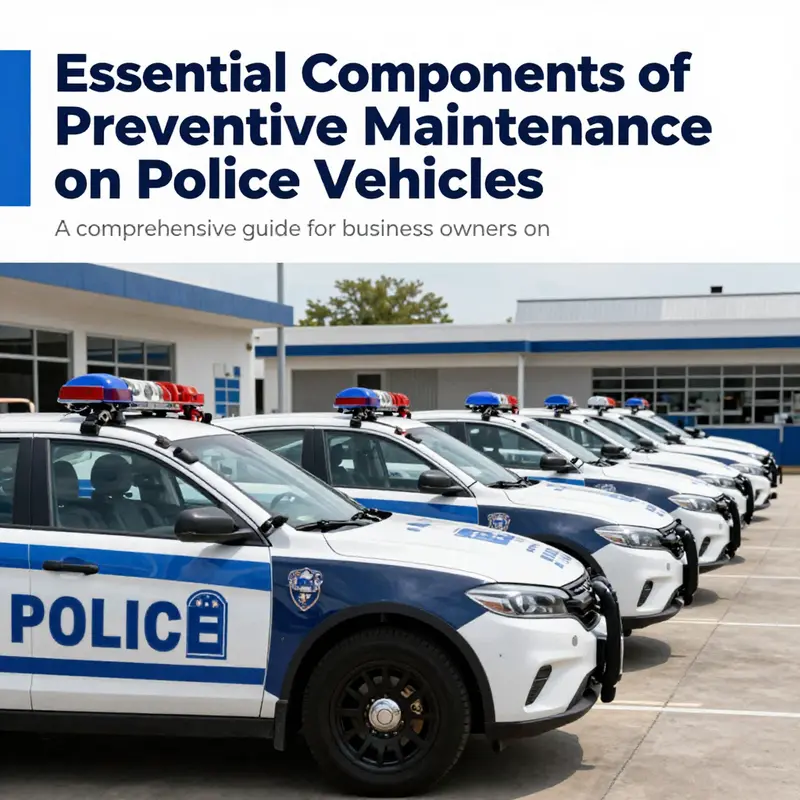
Maintaining the reliability and safety of police vehicles is fundamental to effective law enforcement operations. As business owners in sectors related to public safety, understanding the intricacies of preventive maintenance for police vehicles is crucial. This comprehensive approach goes beyond simple inspections; it ensures that every component of a police vehicle operates optimally, particularly in high-pressure scenarios. The following chapters delve into key areas: essential fluid management to prevent engine wear, inspection of tires and brake systems crucial for safety, and ensuring the functionality of electrical and specialized equipment required for daily operations. Each chapter offers insights that will help you appreciate the complexities and necessities of vehicle maintenance, ultimately supporting your commitment to excellent service.
Fluid First: Essential Fluid Management as the Lifeblood of Police Vehicle Readiness
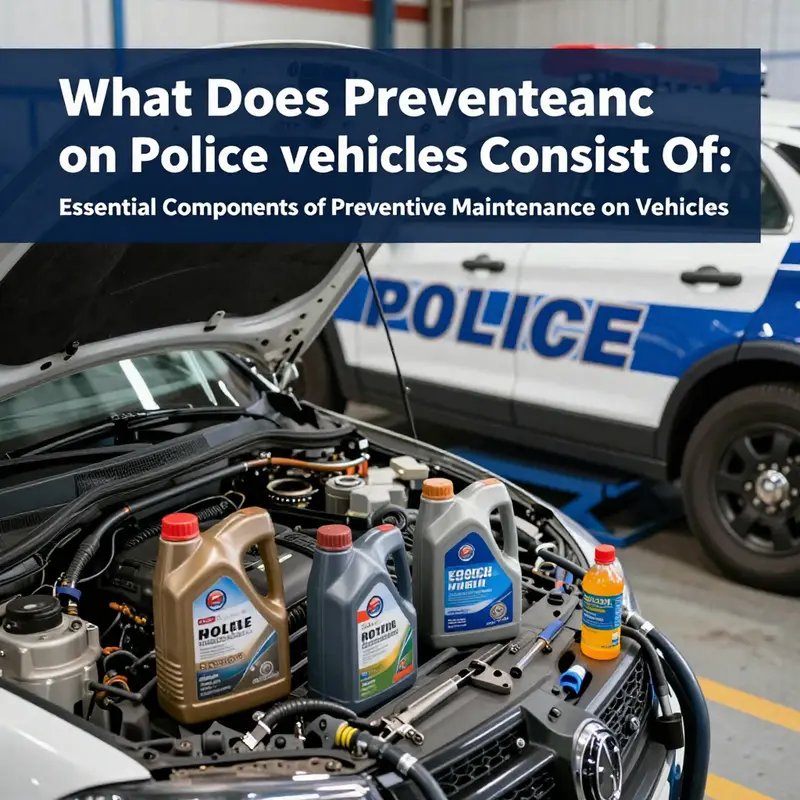
Fluid management is the quiet, continuous rhythm behind every siren, every high-stakes pursuit, and every routine patrol. It is the practice that keeps a police fleet from stalling when every second counts and from succumbing to wear and heat under dutyCycle conditions that push vehicles to their limits. In preventive maintenance, fluids do more than lubricate or cool; they convey power, protect critical systems, and carry signals of trouble before a breakdown becomes an emergency. The focus on engines, coolants, brakes, steering, and transmissions is not merely about avoiding failure. It is about preserving reliability, safety, and operational readiness in environments where the margin for error is razor-thin and the stakes are public safety, rapid response, and the protection of life. In this sense, fluid management is both a science and a discipline that anchors the broader preventive maintenance program designed for police fleets. The day begins with a disciplined routine that every officer, technician, and supervisor understands: the vehicle is not just a tool; it is a mobile platform whose fluids define its heartbeat and its boundaries of performance.
Engine oil is the lifeblood of the internal combustion heart. It lubricates camshafts, crankshafts, and valve trains, reducing friction and heat that, without control, would erode metal and invite failure. But oil does more than lubricate. It carries away heat from the moving parts, suspends abrasive particles, and forms a protective film that shields bearings during rapid accelerations, long idles, and the repeated cycling that police engines endure during shifts. The choice of oil grade, viscosity, and the oil’s condition at every inspection are questions that carry operational consequences. In high-demand situations—pursuits, rapid transits between incidents, or a dawn-to-dusk surveillance mission—the oil must perform consistently across a wide temperature range. That is why part of preventive maintenance is ensuring oil life aligns with manufacturer specifications and mission tempo. A small change—thickened oil, contaminated fluid, or a degraded filter—can cascade into reduced lubrication, increased wear, and, eventually, a dramatic failure that interrupts critical operations.
Coolant, or the cooling system’s lifeblood, operates behind the scenes to keep temperatures in check when the motor is under the heavy overhead load of emergency response. Police vehicles routinely run engines at higher powers for extended periods, whether idle at a scene, idling through a staging area, or idling in a secure perimeter waiting for the next dispatch. Without a properly functioning cooling system, heat accumulates, performance dips, and the risk of overheating rises. Coolant is more than a liquid; it is a carefully engineered mixture that resists boil-off, protects against freeze-thaw cycles, and prevents corrosion within the cooling channels, water pump, and radiator. The consequences of cooling-system neglect are not abstract. Overheating can reduce throttle response, trigger engine safeties, and shorten engine life, jeopardizing the fleet’s availability for the next incident.
Brake fluid is the medium by which hydraulic power becomes stopping force. It transfers pressure from the master cylinder to the calipers, multiplying effort and ensuring the responsiveness that police drivers rely on for controlled deceleration and emergency stops. The properties of brake fluid—its boiling point, its resistance to moisture intrusion, and its ability to transmit consistent pressure—shape how reliably a vehicle can stop in wet, hot, or high-stress conditions. Moisture absorption lowers the fluid’s boiling point, raises the risk of brake fade, and under extreme duress, can compromise braking performance just when it is most needed. Regular checks and timely replacement of brake fluid help keep the hydraulic system resilient, so the vehicle does not surrender stopping power after a long pursuit or during a rapid transition from high-speed travel to a congested intersection.
Power steering fluid, though less glamorous, plays a direct role in handling and maneuverability. In a police fleet, where steering precision can determine the outcome of a pursuit or swerving to avoid a collision, the hydraulic system must respond smoothly to driver input. Contaminants or degraded fluid can impede steering assist, making the wheel heavier and less predictable. In the heat of an operation, where drivers rely on instinct and exact control, fluid integrity supports consistent steering feel, reducing the odds of overcorrection or delayed response. Regular checks for level, clarity, and foaming are part of ensuring that a vehicle’s steering remains responsive under the demands of evasive maneuvers and tight city streets.
Transmission fluid is the conduit for power transfer and gear engagement. In automatic transmissions, reliable fluid pressure maintains gear shifts, torque converter operation, and the thermal envelope that governs long-term transmission health. Transmission fluid degrades with heat, time, and load. In patrol cars that toggle between idling and high-throttle bursts, the fluid must maintain its properties to prevent slipping, shuddering, or delayed engagement when the officer moves from a parked position to a rapid response. The right fluid specification, coupled with clean, correctly filtered fluid, helps preserve shift quality and protects the transmission from wear that could interrupt mission readiness.
The cumulative effect of these fluids is a vehicle that breathes reliability into every shift. Fluid management, in this sense, is both a daily habit and a long-range strategy. The best preventive maintenance program treats fluid health as an early indicator of overall vehicle condition. A routine inspection reveals color changes, unusual odors, or inconsistencies in performance long before a component fails. When a department invests in disciplined fluid management, it does more than reduce maintenance costs. It embeds safety, reduces downtime, and sustains the fleet’s ability to perform in time-sensitive, high-consequence environments.
Alongside the central role of fluids, preventive maintenance stresses the human element—the drivers who are on the front line of safety. In the broader, multi-pronged approach to vehicle management observed by leading public security organizations, drivers bear the responsibility to monitor fluid conditions daily before duty. The High Country Public Security Bureau emphasizes that the driver is the first person responsible for identifying vehicle hazards, and this begins with simple, consistent checks: oil levels, coolant levels, and brake fluid conditions. A driver who notices a low level, a change in color, or a unusual texture is trained to report it for immediate action. This daily vigilance is not a substitute for professional service; it is the essential feedback loop that ensures problems are caught early and resolved before they threaten an operation. Reputable practice holds that a cumulative record of these checks informs maintenance schedules, guides parts ordering, and ensures that a vehicle remains mission-ready rather than a candidate for unscheduled repair.
This human dimension is reinforced by authoritative maintenance guidance across jurisdictions. The Suzhou Municipal Public Security Bureau Traffic Police Brigade, for instance, highlights that proper maintenance preserves a vehicle’s technical performance and reliability, directly affecting safety. The routine schedule underscores timely, correct maintenance as a means to extend life and improve safety. Specific procedures described in their Vehicle Daily Maintenance Guide advocate: replacing engine oil and its filter every six months or according to manufacturer specifications; regularly checking and replacing brake fluid to maintain braking efficiency. While these guidelines originate in a particular municipal context, they embody a universal principle: that fluid management is not optional, but foundational to the police vehicle’s operational integrity.
To translate this into everyday practice, every day begins with a disciplined checklist that blends driver vigilance with technician oversight. The daily oil check is more than a level reading; it is an assessment of color, odor, and viscosity, a quick glance that can reveal coolant leaks, fuel seepage, or contamination. Coolant levels are checked for proper fill and for signs of corrosion or contamination, while brake fluid is observed for clarity and moisture content. In many departments, the procedure is supported by a logbook or digital record that tracks levels, color, and any changes from one shift to the next. The goal is not to chase perfection but to ensure that any deviation is documented and addressed, preserving the vehicle’s readiness to move from maintenance into duty with minimal delay.
Periodic fluid replacement is a core component of the longer-term maintenance strategy. These replacements are not arbitrary; they reflect a balance between protecting components and honoring manufacturer specifications. A typical guideline—often echoed by municipal fleets—recommends changing engine oil and its filter every six months or according to the vehicle maker’s intervals. This practice helps ensure that lubrication remains effective, contaminants are removed, and the oil’s protective film remains robust across temperature extremes. Brake fluid should be replaced on a schedule that acknowledges its propensity to absorb moisture over time. When moisture content rises, the fluid’s boiling point drops, increasing the risk of brake fade during urgent braking in pursuit scenarios. Regularly refreshed brake fluid sustains braking performance and the safe, predictable feel of the brake pedal. The same reasoning applies to coolant and transmission fluid, which must be monitored for deterioration and replaced in line with service intervals or observed performance indicators.
An integrated approach to fluids also means recognizing the links between fluid health and other maintenance domains. For example, air and fuel filtration affect the engine’s thermal balance and combustion efficiency, which in turn influence how hard the cooling system must work and how quickly oil accumulates contaminants. Proper filtration supports cleaner fuel and air, reducing deposits in the engine, which helps maintain optimal oil film and cooling efficiency. Alignment between fluid management and sensor-driven diagnostics enables maintenance teams to anticipate issues before they manifest as breakdowns. This is why preventive maintenance thrives when there is a culture of proactive reporting, rigorous record-keeping, and clear escalation paths for perceived anomalies—whether the issue is a bubbling brake line, a faint coolant leak, or a rising oil consumption signal.
A cohesive program also emphasizes the broader context of vehicle readiness. In the field, the officer’s equipment—radios, dashcams, mobile computers—depends on electrical stability that is, in part, influenced by the health of the vehicle’s fluids. A well-maintained engine and cooling system prevent heat-related failures that could compromise electronic devices or reduce battery efficiency. The preventive mindset therefore treats fluid management as part of a chain of readiness, ensuring that mechanical health supports the mission-critical technologies that officers rely on during patrols, investigations, and emergency operations.
For readers seeking a broader framing of maintenance responsibilities, this chapter sits within a larger conversation about what comprehensive vehicle care entails. To frame this concept within a broader landscape, consider the topic of vehicle maintenance basics and how it applies to a police fleet: What is vehicle maintenance.
Looking ahead, the implications of fluid management extend beyond immediate performance. By maintaining proper oil, coolant, brake fluid, power steering fluid, and transmission fluid, departments reduce the likelihood of unplanned downtime, avoid costly repairs, and preserve the vehicle’s resale and lifecycle value. The net effect is a fleet that remains available whenever duty calls, a fleet that supports officers in performing their duties safely, efficiently, and with the confidence that their transportation is as reliable as their training and tactics. The chapter you have walked through is not merely a checklist; it is a philosophy of readiness grounded in the routine, disciplined care of fluids. When done consistently, this care translates into fewer disruptive breakdowns, smoother shifts, and a higher likelihood that the first response to an incident will be timely and effective.
To close the loop, external authorities emphasize that maintenance standards should be accessible, repeatable, and auditable. The knowledge that daily checks and scheduled replacements matter is reinforced by professional guidelines that connect driver behavior with system integrity. In practice, this means that the person behind the wheel is as important as the person who services the car. The driver’s daily vigilance, the technician’s precision, and the supervisor’s oversight together form a resilient ecosystem that keeps police vehicles ready for duty at any hour. The result is a fleet that not only meets safety and performance standards but also embodies accountability, reliability, and a state of operational readiness that supports the rule of law in everyday life.
External resource for broader maintenance standards: https://www.nhtsa.gov
Tire and Brake Vigilance: The Frontline of Preventive Maintenance for Police Vehicles
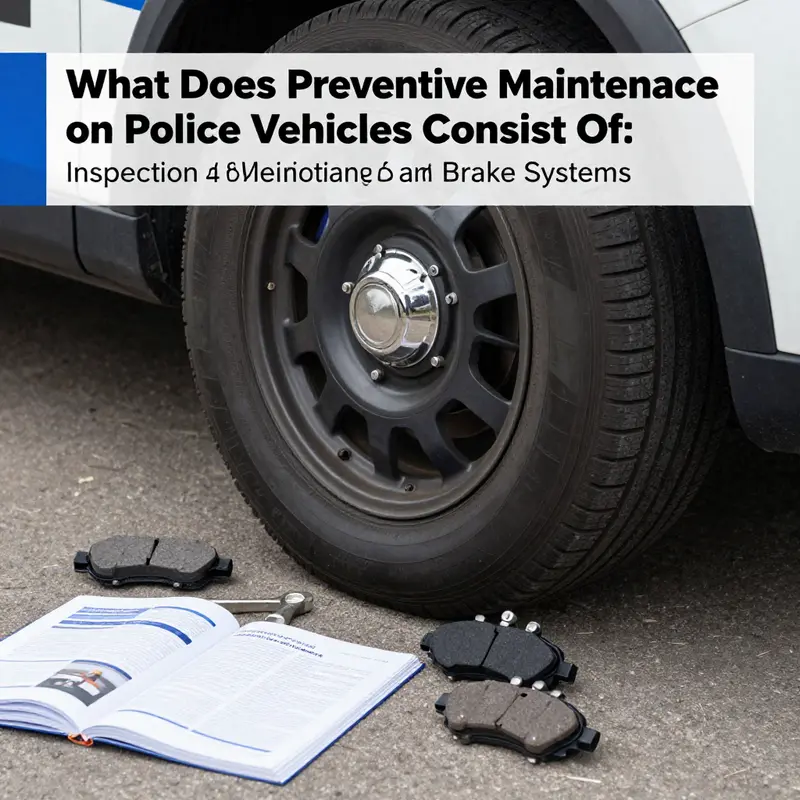
When a police unit rolls onto patrol or responds to an emergency, tires and brakes are the frontline of vehicle reliability. Preventive maintenance treats these systems as essential safety systems: the tires provide the only contact patch with the road and the brakes convert driver inputs into controlled deceleration. A disciplined program focused on these components preserves response capability and reduces risk to officers and the public.
Tire care begins with consistent inspection. Measure tread depth, examine wear patterns, and inspect sidewalls for cuts, bulges, or foreign objects. Uneven wear often signals alignment, balance, or suspension issues and should prompt immediate attention. Regular rotation (commonly every 5,000–8,000 miles for many fleets) promotes even wear, stabilizes handling, and helps prevent premature failures under high-stress driving conditions.
Pressure management is equally important. Tire pressure varies with load and temperature; weekly checks and pre-deployment verification keep the contact patch optimized. Underinflation increases heat and rolling resistance and can precipitate blowouts, while overinflation reduces grip. For police fleets that operate a range of vehicle types and carry additional equipment, correct inflation supports safety and helps control fuel use.
Visual inspections catch many imminent failures: sidewall damage, embedded objects, or tread separation require immediate removal from service. Wheel condition, alignment, and balance affect tire life and vehicle stability; alignment checks every several thousand miles or after significant impacts help preserve predictable handling.
Brake maintenance runs in parallel. Monitor pad thickness against manufacturer limits and replace before pads reach critical minimums (commonly around 3–4 mm for many applications). Inspect rotors for scoring or warping and check for unusual pedal vibration or noise. Brake fluid should be checked and replaced per manufacturer schedules to avoid moisture contamination and brake fade. Hoses, lines, and warning lights all warrant prompt investigation; a brake warning lamp should never be ignored.
Controlled braking tests in safe environments verify system performance and reveal issues not obvious on visual inspection. Repeated, measured stops can identify fading, inconsistent bite, or pedal anomalies that indicate worn pads, warped rotors, or hydraulic problems.
A comprehensive fleet program links these practices into a data-driven workflow: inspection logs, scheduled rotations and alignments, tracked pad and rotor lifecycles, and prompt repairs. Daily pre-shift walk-arounds by officers—checking tire appearance, pressure indicators, wheel condition, and any brake warnings—create early detection points and reinforce a maintenance culture. When anomalies are found, clear reporting procedures ensure technicians can act before a mission is affected.
The result of consistent tire and brake vigilance is measurable: fewer roadside failures, reduced risk in high-speed operations, and a fleet that supports predictable response times. This focus reflects an operational philosophy: readiness is earned through routine care. For background on how tire and brake checks fit into overall vehicle care, see: https://vehicletricks.com/blog/what-is-vehicle-maintenance/.
Authoritative guidance and standardized inspection procedures are available from resources such as the National Highway Traffic Safety Administration: https://www.nhtsa.gov/vehicle-maintenance. Anchoring daily practices in these standards helps ensure that preventive maintenance delivers safety, reliability, and operational readiness.
Electrical and Specialized Systems in Police Vehicle Preventive Maintenance
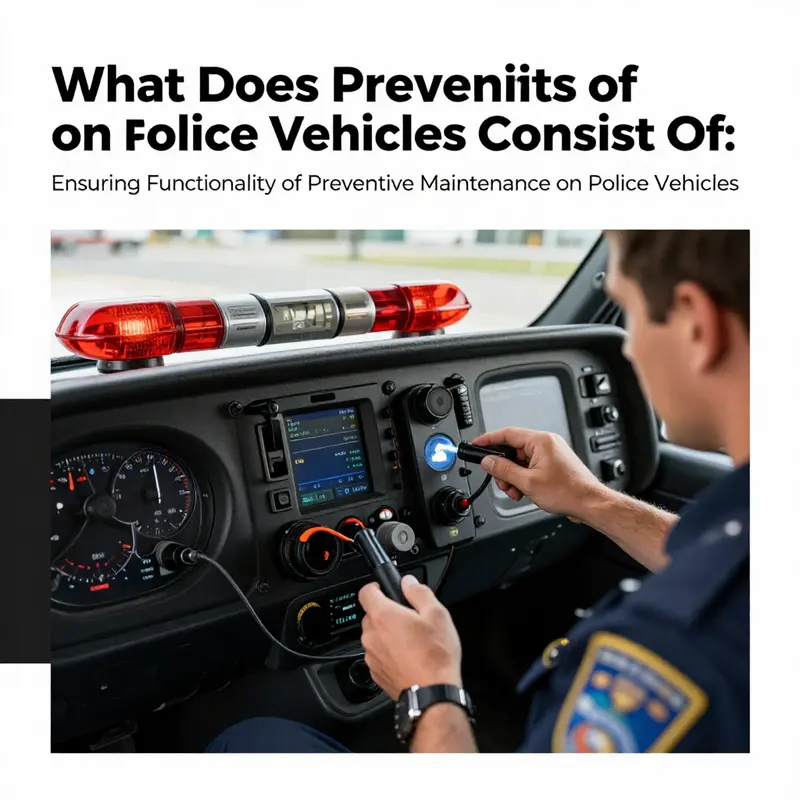
A patrol car is more than a metal shell with wheels; it is a mobile command post where timing, communication, and evidence all hinge on the reliability of electrical and specialized equipment. In this light, preventive maintenance becomes not just a routine but a disciplined practice that preserves officer safety, mission readiness, and the integrity of data relied on in critical moments. The focus on electrical and specialized systems sits at the heart of a broader maintenance philosophy that treats a police vehicle as an integrated platform. When done well, preventive care anticipates failure, reduces downtime, and ensures that every instrument—from the siren to the dash camera—performs exactly when demanded by the street, the courtroom, or the next radio call.
To understand why this facet of preventive maintenance deserves frontline attention, it helps to trace the logic of a well-run program. A modern patrol vehicle carries a suite of systems that must operate in concert under adverse conditions: extreme temperatures, vibrations, long hours of idling, and rapid transitions from quiet streets to high-speed pursuits. Each component has a specific role, and the failure of one can cascade into operational gaps. The siren and emergency lighting, for example, must not only flash and howl but do so with predictable timing and intensity. Their performance communicates intent and priority to motorists, pedestrians, and fellow officers. A degraded light array or inconsistent siren pattern can create confusion in high-stakes environments and erode the situational awareness that officers rely on to stay safe. This is why regular inspection of lighting systems is not a cosmetic check but a lifeline check for visibility and authority on the road.
At the heart of effective preventive maintenance is the discipline of regular inspections and timely maintenance tasks that keep critical electronics robust. The core idea is to identify wear, loosening, corrosion, or software drift before they translate into failures during an incident. In this sense, maintenance becomes a form of risk management, tailored to the unique tempo of police work where a single hour of downtime can have cascading consequences. A practical frame for this approach is a schedule that accounts for mileage, time elapsed, and usage intensity, which aligns with guidelines published by professional bodies and state-level police fleet managers. The aim is not to chase every possible fault after it occurs but to maintain a stable operating baseline where essential tools remain dependable regardless of patrol intensity or surge in operational tempo.
Siren systems, emergency lights, and the associated power management illustrate this approach vividly. Emergency lighting, especially LED arrays, requires regular checks of burn-in patterns, flash rates, synchronization between light heads, and the integrity of wiring harnesses. A mismatch in flash timing or a flicker in one head may signal a loose connector or an aging driver module. Routine checks extend beyond mere eye testing; technicians verify voltage stability, inspect for moisture intrusion in housings, and confirm that the emergency power supply remains charged and readily accessible. Siren systems, by contrast, demand acoustic reliability and precise control over the output waveform. In preventive practice, technicians test the horns, verify tone sequences, confirm audible output at typical road distances, and ensure the siren’s voice can cut through ambient noise even when the vehicle is idling. In both cases, the checks are designed to prevent a situation where a critical alert is not heard or seen at the decisive moment.
The line between equipment and operation is most clearly drawn in communications gear. A police vehicle depends on robust, secure, and intelligible communication with dispatch, other units, and field supervisors. Regularly scheduled testing of transmission and reception quality guards against dead zones and garbled messages when minutes count. Radios must maintain proper squelch levels, channel integrity, and encryption readiness, while also monitoring the vehicle’s power supply to ensure that radio performance is not compromised by a failing alternator or depleted battery. The importance of this cannot be overstated—miscommunications during high-speed pursuits or in complex incident scenes can escalate risk for officers and civilians. Preventive maintenance, therefore, places the communication suite in the same category as life-safety systems, subject to the same vigilance and discipline.
Dash cameras and in-car video systems are another critical focus area. These devices serve as objective observers of events, preserving video and audio evidence that can influence investigations and court outcomes. Regular checks verify that cameras are recording, have adequate storage space, and maintain correct time stamps for each file. It is not enough for a camera to be present; it must be functional, tamper-resistant, and reliably synchronized with other data streams. The in-car computer further compounds the complexity. It must boot quickly, run essential applications smoothly, and stay current with software updates, security patches, and approved configurations. Firmware drift or software conflicts can hamper access to vital records, impede real-time communications, or compromise digital evidence integrity. A preventive approach treats software updates as ongoing maintenance rather than infrequent upgrades, acknowledging that cyber threats evolve and that a vehicle’s digital ecosystem is a dynamic environment.
GPS navigation and speed-sensing capabilities extend the vehicle’s operational reach beyond a single scene. Accurate GPS data is indispensable for route selection, incident mapping, and evidence documentation. Calibrations of speedometers and related sensors are essential because discrepancies can affect traffic enforcement accuracy, pursuit safety, and incident reconstruction. Regular checks ensure that GPS coordinates align with ground truth, that maps are current, and that routing software responds correctly to changing conditions. When specialized equipment enters the mix—such as radar or laser-based speed measurement devices—the need to verify sensor calibration and software alignment grows even more acute. The calibrations must reflect not only the device’s own drift characteristics but also the variances introduced by vehicle speed, frame rate of video capture, and synchronization with other data streams inside the patrol car.
Fleet-management and vehicle-tracking devices capstone this cluster of systems. These devices enable fleet operators to monitor location, usage, and maintenance needs across the entire department. They rely on consistent power supply and secure communications to deliver accurate telemetry. Preventive maintenance includes checking the integrity of wiring to sensor nodes, battery health of embedded modules, and the resilience of data pathways against environmental stressors. When data streams are corrupted or vehicles drop off the network, it becomes difficult to sustain a coherent maintenance program or to respond rapidly to mission-critical concerns. For this reason, preventive maintenance embeds testing for data continuity and redundancy, ensuring that fleet managers can rely on the system to provide timely alerts about impending failures, unusual usage patterns, or required service windows.
Radar guns and other speed-detection equipment occupy a special niche in the preventive regimen. While these devices are often located within the vehicle and connected through secure interfaces, their accuracy and reliability depend on careful calibration and consistent power management. Regular inspection reduces the risk that a miscalibrated radar reading could lead to erroneous tickets or contested evidence. The broader principle here is that precision instrumentation inside the vehicle must not degrade under normal operation. Calibrating sensors, validating readings against reference standards, and maintaining clean signal paths through shielded wiring all contribute to a robust evidentiary chain and reliable performance in pursuit or incident response.
The maintenance tasks that support this ecosystem extend beyond the visible hardware. Wiring integrity is a recurring theme because harnesses endure constant vibration and temperature variation. Inspectors look for fraying, loose connectors, corrosion at terminals, and deteriorating insulation that could precipitate shorts or intermittent failures. They test seals and grommets to prevent moisture ingress that can corrode contacts or corrode electronics over time. Verifying software updates is equally critical; outdated firmware or unsupported software can undermine security, performance, or compatibility with other systems in the vehicle. Calibrating sensors is a targeted activity, ensuring that the payload of each instrument—whether a radar gun, a GPS receiver, or a dash camera—produces accurate and consistent results. An overarching concern is power supply quality and resilience. A robust preventive program treats every device as dependent on a stable power source, with backups and safe failovers to keep essential systems online during battery stress or sudden draw during emergency operations.
The practical import of these practices becomes clear when one considers the consequences of neglect. A siren that fails during a high-speed call, or a light array that refuses to illuminate the path ahead, can compromise safety and tip a tense situation toward danger. A dash camera that ceases to record at the moment of a critical incident undermines the integrity of the ensuing investigation and could compromise legal outcomes. A malfunctioning radio or a miscalibrated GPS feed can degrade coordination, hinder pursuit management, or misrepresent a location and timing of events. The stakes of neglected maintenance are not abstract; they translate into real-world risk to officers, suspects, and bystanders alike. In this light, preventive maintenance is the first line of defense against the unpredictable demands of fieldwork, where every system must perform when it matters most.
Guidelines from professional bodies, including the National Law Enforcement Equipment Council, reinforce the logic of these practices. They encourage departments to establish routine maintenance schedules that reflect mileage, time, and usage intensity. They also emphasize the need for consistent documentation, fault-tracking, and transparent escalation paths when a subsystem shows signs of degradation. The goal of such guidelines is not to micromanage a fleet, but to embed reliability into the fabric of daily operations. When departments adopt a comprehensive, documented program, they create a culture of accountability that helps ensure every officer returns safely after each shift and every piece of evidence is preserved with integrity. Within this framework, the electrical and specialized equipment maintenance described here is not a standalone task but a crucial thread in a larger tapestry of vehicle readiness.
To integrate this topic smoothly with the broader article on what preventive maintenance on police vehicles consists of, imagine the preventive program as a layered defense. The layer focused on electrical and specialized equipment sits atop a foundational layer that covers fluids, filters, tires, brakes, and the chassis. The two layers work in concert: the basic mechanical integrity supports the advanced electronics, and the electronics, in turn, enhances the vehicle’s ability to perform its mission safely and effectively. The synergy is essential. For example, an engine that fails to deliver reliable heat or cooling can degrade the performance of sensitive electronics and dash-mounted devices. Conversely, upgraded or well-maintained electrical systems can extend the life of mechanical components by providing stable power, enabling precise engine management, and reducing heat buildup through efficient cooling. In practice, this means that preventive maintenance is not two separate tracks but one integrated program that recognizes how each subsystem affects the others.
For readers seeking a concise entry point into the philosophy of maintenance, the idea can be framed as a habit of readiness. It is about treating maintenance as a continuous process rather than episodic repairs. It is about establishing a rhythm of inspections, tests, calibrations, and updates that align with the patrol schedule and the department’s operational tempo. It is also about cultivating a mindset that values data—the readings from a dash camera’s clock, a GPS timestamp, radar calibration report—as much as the visible performance of the vehicle’s exterior lights. When officers and technicians approach maintenance with this mindset, they create a durable, dependable platform. The vehicle becomes less a mere machine and more a trusted partner in the field, capable of delivering reliable information, facilitating rapid response, and supporting safe operations in the most demanding circumstances.
In linking this discussion back to the broader idea of vehicle maintenance, it helps to consider the question through a general lens: What is vehicle maintenance when viewed from a holistic perspective? What is maintenance, in other words, if the aim is constant readiness rather than occasional fixes? A helpful way to frame it is through the lens of continuity—continuity of power, data, and signal integrity; continuity of safety responses; and continuity of mission capability across a patrol shift and across the life of the fleet. This is the guiding purpose behind the maintenance approach described here. It is a continuous investment in the tools that let law enforcement operate with precision under stress, capture trustworthy evidence, and keep officers safer as they perform their duties.
As you consider the full spectrum of preventive care for police vehicles, the electrical and specialized equipment chapter reads less like a patchwork of checks and more like a living system—one that adapts to new tools, evolving tactics, and changing threat landscapes. It requires ongoing training for technicians, clear documentation, and a culture that values proactive safeguarding over reactive repair. The outcome is a fleet that does more than meet minimum standards; it exceeds them by providing consistent performance under pressure, by preserving vital evidence without compromise, and by ensuring that every device an officer depends on is ready when it matters most. This is the core promise of preventive maintenance: avoiding problems before they happen, so when time is scarce and stakes are high, the vehicle and its systems perform as designed, supporting the officer and the public alike.
For readers who want to explore the broader framework behind these practices, the concept of vehicle maintenance as a continuous discipline is worth examining further. What is vehicle maintenance offers broader context that aligns with the emphasis on consistent checks, documentation, and proactive care across all subsystems, including electrical and specialized equipment. This complementary view helps situate the specific routines described here within a larger, more durable approach to keeping law enforcement fleets ready for action. As a practical matter, departments can translate these ideas into a formal schedule, assign responsibility, and track outcomes to ensure accountability and continuous improvement. The result is a maintenance culture that supports safer operations, stronger evidence integrity, and more reliable service to the communities that rely on police presence. External guidance also reinforces the logic behind these practices; The National Law Enforcement Equipment Council’s Vehicle Maintenance Guidelines articulate the rationale for routine, systematic checks and maintenance across critical subsystems in a way that complements the hands-on routines described above. They stress the need for maintenance plans that are based on objective criteria—mileage, time, and usage patterns—so that equipment can be kept in a state of readiness without becoming a burden on the budget or the schedule. This alignment of practice and policy helps bridge the gap between daily field demands and the longer-term health of the vehicle fleet. For departments seeking authoritative guidance, these guidelines provide a clear, implementable framework that supports a scalable, accountable maintenance program across diverse duty scenarios and vehicle configurations.
Final thoughts
Maintaining police vehicles through a structured preventive maintenance program is essential for ensuring their reliability and safety in the line of duty. Each chapter highlighted critical elements of this process, from essential fluid management to the inspection of tires and brakes, and the functionality of vital electrical systems. By prioritizing these preventive measures, business owners can help ensure that law enforcement agencies have the support they need to serve their communities effectively. Understanding the significance of these practices not only aids in extending the lifespan of vehicles but also enhances officer safety and operational efficiency.