
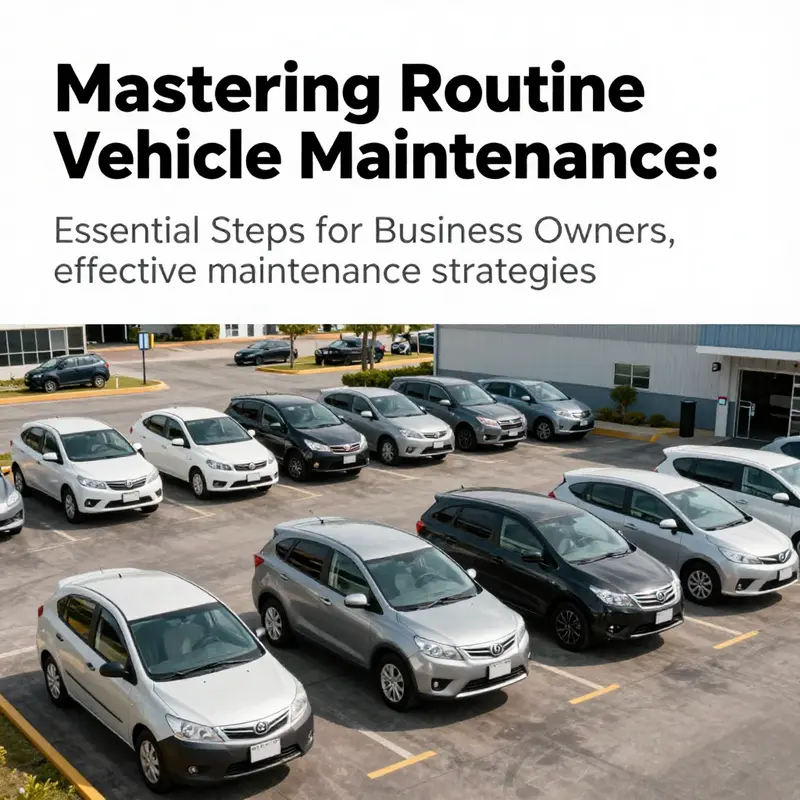
Routine vehicle maintenance is pivotal for business owners who rely on their vehicles for operations. By regularly performing maintenance tasks, you not only enhance the safety and reliability of vehicles but also contribute to a more efficient operation. This involves a systematic approach where fluid checks, tire maintenance, and brake system inspections play critical roles. Each chapter highlights these essential aspects, providing business owners with a comprehensive understanding of how to keep their vehicles in top shape, thereby avoiding costly repairs and ensuring the longevity of their fleet.
Fluid Checks and Changes: The Quiet Pillar of Routine Vehicle Maintenance
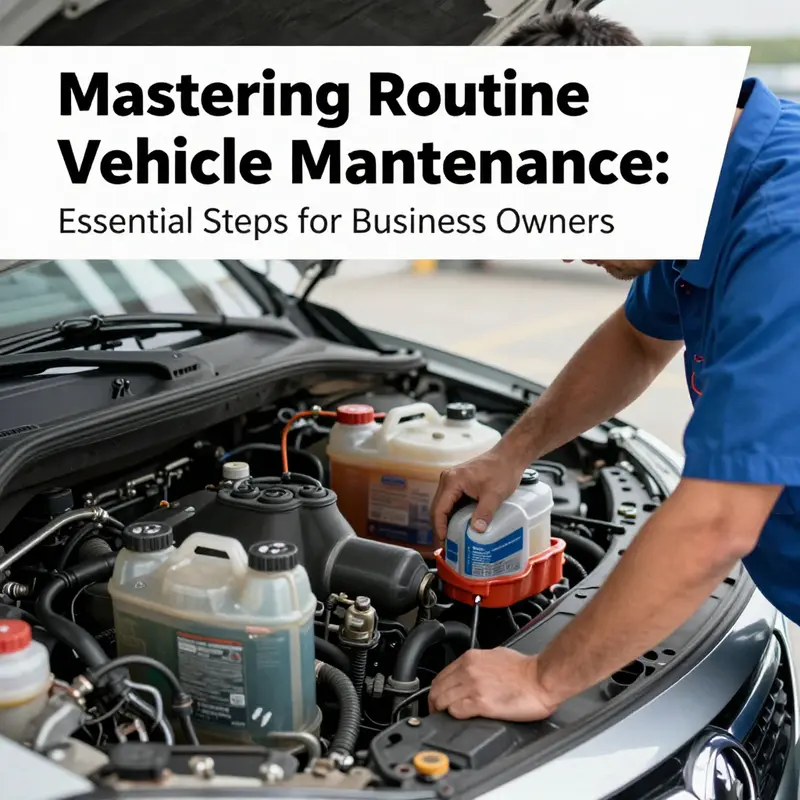
Fluid checks and changes form the quiet backbone of routine vehicle maintenance. They are not flashy or dramatic, yet they safeguard safety, protect performance, and extend the life of the vehicle in ways that drivers rarely notice until something goes wrong. The fluids in a car are more than just lubricants or coolants; they are the moving reason a machine of dozens of moving parts continues to work smoothly. When you consider what counts as routine maintenance, fluid health sits near the top of the list because it influences reliability and efficiency far more than most drivers appreciate. A car that drinks clean oil, circulates properly cooled coolant, and maintains clean hydraulic lines will coast through years of daily use with far fewer breakdowns and far fewer expensive repairs. The mindset to adopt is simple: treat fluids as the lifeblood of your vehicle, inspect them regularly, replace them on schedule, and stay vigilant for signs that something has gone off the rails.
The first and most familiar fluid in any maintenance routine is engine oil. Its job is clear: lubricate the moving parts inside the engine, absorbing heat and carrying away debris. Oil is the sort of fluid that ages with use, thinning as it heats and accumulating contaminants as it does its work. This is why changing oil and replacing the oil filter on a sensible schedule remains the core of maintenance. The exact interval depends on the vehicle, the oil type, and how you drive, but a common baseline is something like every 3,000 to 5,000 miles for traditional mineral oils or longer for modern synthetic blends. In practice, many drivers now see intervals extended beyond 5,000 miles, but the principle remains the same: fresh oil means better lubrication, cooler running temperatures, and less wear on bearings and camshafts. Signs that oil may be past its prime are not always dramatic. Dark, dirty oil, a sudden drop in oil level, or an unusual burning oil smell are cues to check more closely. Using a dipstick to compare the current level to the marked range — with the engine off and on level ground — provides immediate feedback on whether oil needs topping up or a full change.
Cooling systems rely on coolant or antifreeze to carry heat away from the engine and to prevent freeze damage in cold weather. Coolant is a carefully blended solution that moves through a network of passages in the engine and radiator, absorbing excess heat and returning to the reservoir. A check of the coolant level and condition should be part of any regular inspection. Full flushes and replacements are typically suggested every 30,000 to 60,000 miles, though some manufacturers and environments call for different schedules. The color and clarity of coolant can offer clues: a milky or oily appearance may indicate contamination, while a change in color or the presence of sediment signals the need for service. A coolant system that is not performing can result in overheating, which not only saps power but also risks head gasket failure or warped components. Periodic inspection of hoses and clamps in the cooling circuit is also essential because a weak hose or a loose clamp can lead to rapid coolant loss, overheating, and unexpected roadside stops.
Brake fluid deserves special attention because it interfaces with one of the most safety-critical systems on the car. Moisture absorbed by brake fluid lowers its boiling point and can cause brake fade or spongy pedal feel. The recommended practice is to inspect and replace brake fluid on a manufacturer basis, often every two years, though conditions and driving style may shift this schedule. A simple color check can reveal moisture: clear or lightly tinted fluid that else appears clean can hide moisture under the surface. In practice, technicians often test brake fluid for moisture content and replace it if it crosses a specified threshold. If the fluid looks dark or exhibits a chemical smell, it is a sign that a replacement is overdue. Leaving brake fluid unchecked is not a risk worth taking, because the consequences can affect stopping power, reaction time, and overall road safety.
Power steering fluid, where a hydraulic-assisted steering system exists, provides the hydraulic pressure necessary to ease steering effort. In many vehicles, this fluid also plays a role in the lubrication of the pump and seals. Regular checks of the level and condition are part of routine maintenance, though in some newer vehicles the system is designed to be more maintenance-free or automated. When levels are low, or the fluid appears dark or smells burnt, it can indicate a leak or component wear, and service should follow. If steering feels intermittently heavy or whines especially when turning, the issue may lie within the hydraulic circuit, including fluid condition. In older systems, this fluid is a more prominent maintenance concern; in newer designs, low fluid or air in the line can still create noticeable steering irregularities that warrant attention.
Transmission fluid keeps the gears meshing smoothly and cools the transmission’s inner workings. For automatic transmissions, the fluid is typically a bright pink or red color when fresh and a signal of healthy operation. Manual transmissions rely on different lubrication schemes, but the principle is similar: the fluid must be clean, at the right level, and free of burnt odor. The maintenance schedule for transmission fluid varies widely by vehicle; some manufacturers recommend a change every 60,000 miles or more, while others suggest longer or shorter service intervals. In modern vehicles, many transmissions are sealed and do not have a dipstick, which means the service interval is tied to a factory recommendation and service history rather than a quick on-car read. Signs that fluid is past its prime include slipping between gears, delayed engagement, harsh or erratic shifts, or a burnt smell emanating from the transmission area. These are not small annoyances; they point to wear and overheating that can lead to expensive repairs if ignored.
Windshield washer fluid is the simplest of the bunch but still essential for visibility. It keeps the windshield clear in rain, dust, pollen, or salt spray. It is easily topped up, and in many climates where road grime accumulates quickly, keeping this reservoir full is a daily habit in winter and a weekly rhythm in summer. The sign of a problem here is not just a low reservoir but also cloudy fluid or a stubborn spray pattern when the nozzle is engaged. While this fluid doesn’t affect engine health, it play a direct role in safety by preserving visibility, especially during adverse weather conditions.
Checking these fluids regularly is not just about catching problems before they become expensive repairs. It is about maintaining the vehicle’s reliability and the driver’s confidence. Monthly checks, or more often if you operate the car in extreme conditions, create a proactive mindset that catches leaks, low levels, or contamination early. Early detection minimizes the risk of sudden breakdowns and provides a clear plan for preventive service rather than reactive repairs. This approach aligns with the broader philosophy of routine vehicle maintenance, which centers on preventing issues before they escalate and protecting the vehicle’s value over time. If you want to see how this concept fits into the larger picture of maintenance, explore the broader discussion on what counts as routine vehicle maintenance in the linked resource that explains the fundamentals of vehicle care.
Beyond the practical steps of checking levels and looking for leaks, there is a more nuanced skill set involved in fluid maintenance. Color, smell, and viscosity are less obvious cues than a dipstick reading, yet they require a practiced eye. Oil that darkens quickly, for instance, may be contaminated with dirt or fuel, or it could indicate a need for a filter change. Coolant that changes hue or develops sediment can signal rust or corrosion within the cooling system, or a degraded coolant formulation that no longer provides adequate protection. Brake fluid that darkens or shows a moisture test that exceeds the recommended threshold is a clear invite to service. Transmission fluid that looks cloudy, smells burnt, or shows metallic particles in the dipstick sample suggests internal wear that will only intensify if not addressed.
These checks are most effective when paired with an understanding of the vehicle’s overall maintenance schedule. The owner’s manual lays out time- and mileage-based guidance tailored to the make and model, including how often to replace engine oil, coolant, brake fluid, transmission fluid, and other critical liquids. The schedule is not a rigid decree but a practical framework shaped by normal driving conditions, climate, and load. People who regularly drive in extreme heat or cold, in dusty environments, or who frequently tow or haul heavy loads may need to adjust those intervals. The aim is not to chase perfection but to strike a reliable balance between cost, safety, and long-term durability. In the broader scope of routine maintenance, a steady cadence of fluid checks acts as a reliable rhythm that keeps your car healthy and predictable. You can learn more about how fluid health connects to the concept of routine maintenance in resources that define the scope of what counts as routine vehicle maintenance and explain how these practices fit into a complete upkeep plan.
To integrate fluid maintenance into everyday driving, consider a simple routine: at every oil change or once a month, perform a quick visual scan of each fluid area. Check the engine oil level with the dipstick, examine the coolant reservoir for proper level and color, inspect brake fluid at the master cylinder sight glass, glance at the power steering reservoir if visible, and check the transmission fluid only if your vehicle provides a dipstick or a scan via an on-board computer. Note any changes in color, level, or texture. Keep an eye on leaks under the vehicle after parked for a while, especially near the engine bay and the transmission. If you find a leak, don’t ignore it. Even a small drip can indicate a developing problem that will worsen with time and usage. The habit of daily visual checks can dramatically reduce the likelihood of surprise failures on the road.
A practical test of understanding these fluids comes from bridging the maintenance routine with the broader approach to vehicle care. The fluid system is part of the larger ecosystem of routine maintenance that includes tire care, brake inspection, air and cabin filters, and electrical system checks. All of these elements interact: for example, poor oil quality can accelerate clutch or bearing wear in the transmission, while coolant issues can cause overheating that stresses the entire powertrain. This interconnectedness underscores why fluid care is essential yet often overlooked by drivers focused on more visible items like tire tread or braking performance. The core idea is straightforward: fluids deserve regular attention because they influence every other aspect of running a vehicle. When you maintain fluids well, you are actually maintaining the health of the entire machine and preserving its performance and safety in every mile of road.
Incorporating the concept of fluid checks into the broader narrative of routine maintenance helps ground the topic in a practical, actionable way. It also reinforces that routine maintenance is not a luxury but a practical necessity that protects your investment, enhances safety, and reduces the likelihood of costly repairs. For readers seeking a broader, layperson-friendly frame on maintenance, the topic crosses into the general question of what counts as routine vehicle maintenance and how these practices translate into everyday driving reliability. To explore this broader framing, you can reference a general guide on vehicle maintenance that explains how routine checks fit into the big picture of keeping a car in good working order. What is vehicle maintenance
In closing, the discipline of fluid checks and changes is a quiet but essential discipline within the habitual care of a vehicle. It is a discipline that rewards attention with reliability, efficiency, and longer life for the car you rely on every day. By understanding the functions of engine oil, coolant, brake fluid, power steering fluid, transmission fluid, and even windshield washer fluid, drivers gain a meaningful sense of control over their vehicle’s health. They learn to read the signals the car gives, to plan preventive service around manufacturer guidance, and to approach maintenance not as a clocked annoyance but as a practical act of stewardship. The ability to recognize when a fluid is out of spec, when a leak is forming, or when a system is showing signs of stress translates into safer, more confident driving. And because oil, coolant, and other fluids are the lifeblood of a vehicle’s operation, keeping them healthy is an investment in safety, efficiency, and peace of mind on every journey. For readers who want to connect this fluid-focused practice to a broader maintenance framework, the linked resource on what counts as routine vehicle maintenance provides a comprehensive schema for incorporating fluid health into a complete upkeep plan. Finally, for a practical, industry-aligned perspective on implementing fluid checks during routine service visits, consider reputable guidance that emphasizes early detection and proactive maintenance; it underscores the value of integrating fluid inspections into regular maintenance workflows to prevent costly repairs and minimize downtime. https://www.meineke.com/vehicle-maintenance/fluid-checks-and-changes/
null
null
The Quiet Guardian of Stopping Power: Why Regular Brake System Inspections Are the Core of Routine Vehicle Maintenance
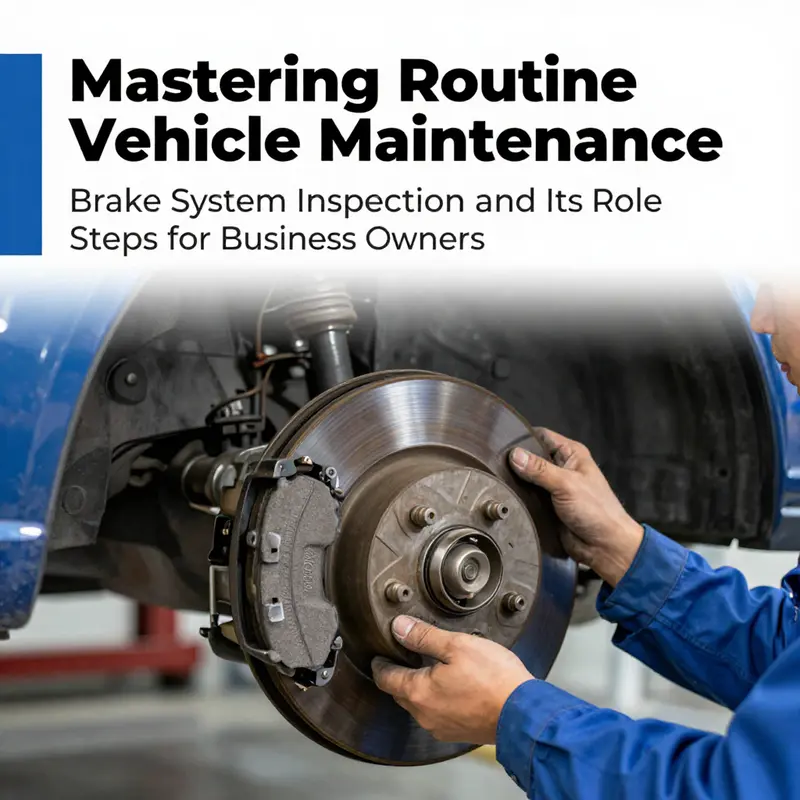
When you think about routine vehicle maintenance, the big, loud tasks like oil changes or tire rotations often come to mind first. Yet the brake system sits at the very heart of daily safety and reliability, quietly doing its job even when the rest of the car is behaving itself. A well-maintained brake system is not just a safety feature. It is a barometer of the vehicle’s overall health, a signal that you are paying attention to the wear and tear that accumulates with every mile. Regular brake inspections are the kind of proactive care that keeps your car from becoming a surprise problem, a small service that prevents a large, dangerous consequence. The brakes are the part of the vehicle you hope you never have to test at full load, but they are also the part you rely on in every stop, every curve, and every sudden obstacle on the road. Friction, hydraulics, electronics, and metal all work together in a secret language that only your maintenance routine can translate into consistent stopping power. In that sense, brake system inspection embodies the broader principle of routine maintenance: a deliberate, informed, and repeatable activity designed not to fix things after they fail, but to preserve performance and safety in the long run.
The brake system is a complex ensemble, yet its core components map neatly onto the way we experience driving. The pads provide the friction that slows rotation, the rotors or drums are the surfaces against which that friction is applied, the brake fluid transmits the force from pedal to pad, and the hydraulic lines carry the fluid with minimal loss of pressure. When any of these elements drift out of spec, the effects are felt immediately in how the car stops. That is why routine inspection routines focus on a few critical indicators: pad thickness, rotor condition, fluid quality, line integrity, and the responsiveness of the entire system. These checks do not require a ride to a shop every month; they are designed to be quick and practical, often requiring only a visual examination and a simple test. The rhythm of these checks should harmonize with the rest of your vehicle’s maintenance schedule, and they should be viewed as a line of defense that can catch wear before it becomes a hazard.
The specifics of brake wear reveal a quiet but telling story about how you drive and where you operate. Front brake pads typically wear faster than rear pads because the front axle bears the majority of the weight during braking. In everyday terms, that means the front pads tend to reach the lower limit of their useful life sooner. A common guideline is that front pads may last roughly 30,000 to 50,000 miles under normal driving, while rear pads may stretch longer, sometimes 60,000 to 80,000 miles depending on driving style and conditions. Those numbers are not universal laws; they are a frame of reference. The important takeaway is to monitor pad thickness regularly and plan for replacements before the pads reach a point where braking efficiency drops or rotor damage becomes likely. A typical maintenance threshold is a thickness of about 3 to 5 millimeters. When the pad wears down to that level, replacement becomes prudent to maintain stopping power and to prevent rotor damage that can spike repair costs.
Beyond the pads, rotors tell a parallel story. The rotor surface is the stage upon which the brake pads perform their work, and grooves, scoring, or warping can turn a smooth stop into a pulsing, dicey experience. Uneven wear and deep scoring can necessitate rotor resurfacing or outright replacement. In many cases, when you replace worn pads, the rotor surface has to be corrected to preserve proper contact. Left unaddressed, rotor issues can transfer impressions back to the pad material, creating chatter, vibration, or reduced braking efficiency. The brake system thus rewards a combined approach: when you replace pads, inspect rotors, and if necessary, address rotor wear in tandem. This is the idea behind the idea of “pad and rotor replacement together”—a practical strategy to maintain a consistent, predictable braking feel and to extend the life of both components.
Brake fluid is the hidden lifeblood of the system. Unlike the visible wear of pads, fluid wear is less obvious but no less consequential. Brake fluid is hygroscopic, meaning it absorbs moisture from the air over time. That moisture lowers the fluid’s boiling point, which can lead to heat-induced vaporization under heavy braking. The result can be a soft, spongy brake pedal and, in worst cases, brake fade when you need maximum stopping power. Regular checks of fluid level and quality are essential parts of a routine brake inspection. Most manufacturers recommend changing brake fluid every two years, though some vehicles may have different intervals based on climate, usage, and the type of fluid used. A routine inspection should include a quick check of the fluid’s clarity and a test for moisture content if you have the tools, because moisture can hide under the cap and in the lines until it suddenly becomes a safety issue.
The brake lines and hoses form the arteries of the hydraulic system. They carry the pressurized fluid from the master cylinder to the calipers and wheel cylinders. The lines themselves can corrode with road salt, moisture, and time, while rubber hoses can develop bulges, cracks, or soft spots that betray weakness under pressure. A leak, even a small one, can erode braking performance quickly. A thorough inspection looks for signs of seepage at joints, corrosion along metallic lines, and the condition of hoses, including any signs of swelling or brittleness. Detecting a leak early can prevent a catastrophic loss of brake pressure, which is something every driver wants to avoid.
Modern vehicles expand the brake story with electronic and sensor-driven elements. Anti-lock braking systems, electronic stability control, and brake wear sensors add precision but also complexity. Sensor readings, warning lights, and diagnostic codes can alert you to conditions that visual inspection alone might miss. But a rule of thumb remains essential: dashboard lights are not a substitute for regular physical checks. They tend to illuminate after wear has already progressed or when a fluid condition becomes critical. A comprehensive brake inspection includes both a functional test and a visual and diagnostic review to ensure that the system is not only capable but also reliable under the stress of real-world driving.
An efficient routine for brakes works best when it mirrors the cadence you set for the rest of your maintenance. A practical rhythm might see a basic, pre-drive brake check as part of your daily or weekly routine—just a quick look at the pad wear through the wheel, listening for any odd sounds when you brake lightly, and ensuring there are no fluid drips under the car after driving. Then, at longer intervals, perhaps aligned with every other oil change or seasonal maintenance, you would perform a more thorough brake inspection. In this more thorough check, you measure pad thickness with a gauge, inspect rotor condition for grooves or warping, test brake fluid level and quality, and inspect lines and hoses for leaks or wear. If your driving involves frequent stops, steep descents, or heavy loads, the intervals tighten. If your vehicle operates in a climate with heavy road salt exposure or in a dusty environment, you may see faster wear on both pads and rotors, which calls for more frequent attention.
The person who cares for a car does not approach brakes with hesitation or fear; they approach with a sense of responsibility and a plan. That plan should start with the owner’s manual, which provides the manufacturer’s recommended intervals for service and the specific specifications for your model. The manual becomes a guide that translates generic advice into the precise needs of your vehicle. However, a practical, everyday approach to brakes goes beyond the page. It involves listening to the car’s talking points—the way the pedal feels, the sound of pads contacting rotors, the sensation of the steering and chassis under braking, and the way the car pulls to one side if there is a hydraulic imbalance or a tire issue masquerading as a brake concern. These are not ghost signals but real cues that the brake system is asking for attention. A proactive owner responds to these cues with a quick inspection, a trip to the shop when needed, and a broader look at related systems such as tires and suspension, which can influence braking performance.
The relationship between brakes and other routine maintenance is intimate. Tires, for example, affect braking efficiency through grip and heat dissipation. Worn or underinflated tires can create longer stopping distances and uneven wear on rotors, while misaligned wheels can cause the brakes to engage unevenly. A well-balanced maintenance plan sees brakes not in isolation but as part of a system where the tires’ contact with the road informs how the brakes should be checked and serviced. Suspension and steering components matter too, because loose control arms or worn tie rods can alter how the vehicle behaves under heavy braking, sometimes masking the real condition of the braking components. In such cases, a brake inspection doubles as a diagnostic activity for the broader chassis, offering clues about the health of the vehicle in a way that a single part check cannot.
The practical upshot of a disciplined brake inspection routine is safety coupled with efficiency. When you stay ahead of wear, you avoid the kind of sudden stops that can strain both your vehicle and your nerves. You also sidestep the more expensive repairs that follow from neglect, such as rotor replacement caused by deep scoring, or the cascading costs of brake fluid contamination. The numbers matter, but they do not tell the full story. Beyond a checklist, there is a habit—the habit of making time for a quick, honest assessment, the practice of carrying a simple tool kit for basic measurements, and the discipline to address concerns promptly, even when they are minor. That habit is the kind of personal maintenance that keeps a car’s brakes dependable year after year, mile after mile.
If there is a practical takeaway to impart here, it is this: brake inspection is not an optional add-on in a maintenance plan. It is a fundamental pillar, on par with oil changes and tire care, because it directly affects your ability to manage risk. Regular checks give you two crucial advantages. First, they preserve stopping power at a time when you most need it, such as descending a hill or performing a sudden stop in city traffic. Second, they extend the life of the braking system by catching wear early, which reduces the likelihood of rotor damage and other more expensive issues later. The value of this approach is often measured not in the cost of a routine check, but in the avoidance of unsafe situations and in the peace of mind that comes with knowing your car will respond when you demand it to.
To bring this back to a practical frame, experts suggest scheduling a comprehensive brake inspection at least once a year, or every 10,000 to 15,000 miles, depending on your driving conditions and the vehicle’s history. For many drivers, that means tying brake checks to the annual service window or to a mid-year maintenance sprint. If your routine already includes a seasonal tire changeover, a brake inspection can be slotted in there with minimal disruption. In dusty or off-road environments, where abrasion accelerates wear, more frequent inspections pay for themselves by preserving braking performance and by preventing the early onset of rotor scoring or pad fracture that can complicate future maintenance.
The conversation about brakes also intersects with the broader philosophy of how we think about maintenance: not as a fixed burden, but as a dynamic, ongoing conversation with the machine we rely on every day. It is about recognizing that parts wear in different ways, that wear can be accelerated by aggressive driving or extreme conditions, and that the most responsible approach is to stay ahead of the curve through regular checks. When you adopt this mindset, you begin to see routine maintenance as a system that protects not only the car but also the people who ride in it. The result is a vehicle that remains predictable, controllable, and safe, even as it ages. In this light, brake system inspection is a cornerstone of routine maintenance that deserves a rightful place at the center of your car care routine.
For readers who want a concise primer that situates brakes within the larger maintenance landscape, the question of what constitutes routine maintenance becomes clearer. A short, practical answer is that routine care is a scheduled, repeatable sequence of checks and services designed to sustain safety, reliability, and value. It is not a single act but a pattern—a pattern that includes the brakes’ pads, rotors, fluid, lines, and electronic aids, all examined with the same seriousness you give to oil, tires, and lights. Integrating brake inspections into your regular maintenance plan reinforces the idea that safety is a continuous commitment rather than a one-off event. And it is precisely this commitment—season after season—that preserves stopping power when you need it most and protects your investment by avoiding avoidable, incremental repair costs over time.
For those who want a structured approach without getting lost in jargon, the simplest path is to adopt a three-tier rhythm: a daily, quick-check mindset; a periodic, hands-on inspection a few times a year; and a thorough, professional diagnostic annually or in alignment with major service intervals. The daily check is a tactile, familiar habit: at the end of a trip, quickly feel the brake pedal for firmness, listen for unusual sounds near the wheels, and observe any warning lights. The periodic inspection involves measuring pad thickness, inspecting rotor surfaces for grooves or heat warping, testing the brake fluid level, and scanning for leaks in lines and hoses. The annual, professional diagnostic brings in a more comprehensive assessment, including a precise measurement of rotor runout, a test of braking power, and a review of ABS and stability control system functionality. In practice, this tiered approach makes brake maintenance approachable and consistent, ensuring you address issues before they become emergencies.
If you would like to delve deeper into vehicle maintenance philosophy and chain this brake-focused routine into the broader maintenance framework, consider exploring related guidance on vehicle maintenance basics. What is vehicle maintenance serves as a foundational reference that helps anchor the brake checks within a wider schedule. It is not a substitute for a brake-specific inspection, but it provides a robust context for why these checks matter and how they fit into the overall care of the vehicle. In the end, the brake system is not a separate entity tucked away under the hood; it is a continuous thread connecting all the aspects of maintenance that keep a car safe, reliable, and ready for the road ahead.
As you plan the next year of vehicle care, remember that the goal is not to chase every squeak or to blame the car for every groan. The objective is to maintain the ability to stop with confidence, to preserve the integrity of the hydraulic system, and to minimize the risk of sudden failures. Regular brake inspections make that possible by turning a potentially hidden problem into a manageable, timely service. They also foster a partnership between driver and machine, built on vigilance, respect for the wear that comes with every mile, and a practical understanding that safety depends on steady, thoughtful action rather than heroic improvisation. In the quiet routine of maintenance, the brake system stands as a constant reminder that responsible car care is less about dramatic fixes and more about the daily choices we make to protect ourselves and others on the road.
External reference: https://www.autoblog.com/brake-system-inspection-tips-2026
Final thoughts
Routine vehicle maintenance is an essential aspect of managing any business fleet. By prioritizing regular fluid checks, tire maintenance, and brake system inspections, business owners can ensure the reliability and safety of their vehicles. This not only minimizes breakdowns but also enhances overall operational efficiency, ultimately contributing to better business performance. Understanding these key maintenance components empowers owners to make informed decisions and keep their fleets running smoothly.