

In the realm of road safety, the visibility of maintenance vehicles plays a critical role in preventing accidents and ensuring the smooth flow of traffic. A primary component in achieving this visibility is the use of amber (yellow) flashing lights, which are standard for maintenance vehicles. This article delves into the significance of these lights, exploring their regulatory framework, role in visibility and safety, comparisons with other flashing lights, and future innovations. Each chapter will build upon the understanding of why amber lights are essential, ultimately equipping business owners with necessary insights for safe road maintenance practices.
Amber Beacons on the Move: How Amber Lights Shape Road Safety for Maintenance Work
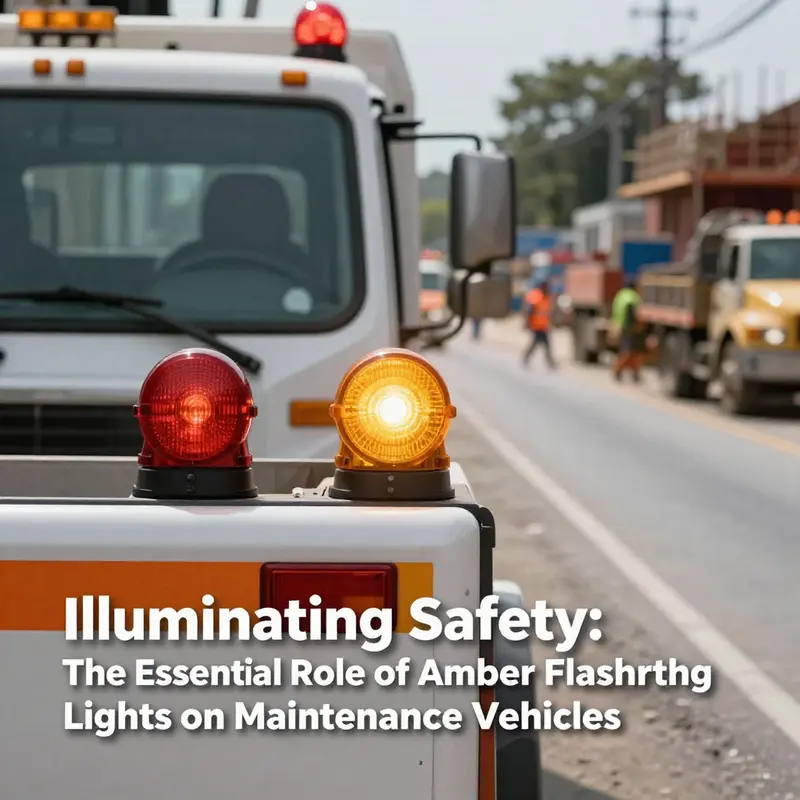
Amber lights on maintenance and utility vehicles are more than a color choice; they are a codified language of safety that communicates intent to every road user. When a crew works along a highway, by a roadside, or at the edge of a construction zone, the amber beacon becomes a universal signal that something critical and potentially hazardous is happening nearby. The purpose is simple and urgent: to alert other drivers, cyclists, and pedestrians to slow down, pay attention, and adjust their behavior accordingly. In many jurisdictions, amber lights are the standard for these contexts precisely because they strike a balance between visibility and familiarity. They stand out against the everyday white, red, and blue signals that populate roads and skies, avoiding confusion with emergency services while still commanding attention in a busy driving environment. This subtle but powerful signaling language helps maintain a safer tempo for work sites and keeps traffic moving with fewer interruptions caused by uncertainty or hesitation.
The logic behind amber as the default color lies in perception and context. Amber sits on the edge of daylight visibility; it remains conspicuous in bright sun, at dusk, and during cloudy weather without flashing into glare. It also avoids masks of urgency that brighter white work lights can trigger when mixed with travel headlights. The gentle but persistent hue is easily recognized at a glance, even by drivers who are momentarily distracted or in unfamiliar surroundings. The safety calculus is clear: amber signals a work-related hazard that requires caution, not an all-encompassing alarm that might provoke abrupt driving behavior. This creates a predictable, legible cue for motorists to slow, scan, and yield as necessary, while allowing crews to perform critical tasks with a reasonable degree of ambient flow reestablishment once the work is complete.
From a regulatory standpoint, the amber standard translates into practical actions on the ground. Official guidelines specify a minimum of one amber light mounted on top of the vehicle, positioned so that the beacon is visible from all directions outside the vehicle. This top-mounted beacon is not a decorative flourish; it is a deliberate safety feature designed to maximize conspicuity in a variety of environments. The requirements account for daylight and low-light conditions, ensuring that the signal remains effective whether a vehicle is idling in a shoulder, slowly moving in a work zone, or starting a lane closure at night. The visibility from multiple angles is essential because maintenance work often involves vehicles theater-like in their movements—converging, stopping, and reorienting in tight spaces. A single, well-placed amber beacon helps prevent blind spots where a driver entering the work area might otherwise misjudge distance or speed.
It is important to note what amber lights are not intended to replace. Blue lights, for instance, carry distinct meanings tied to urgent, high-priority services. They are associated with police, medical, or fire responses in many regions, and mixing these colors creates a potential for confusion at a moment when quick recognition can be the difference between a safe maneuver and a mishap. For maintenance vehicles, amber provides a clear, non-emergency warning that still signals authority and presence. The color choice supports a consistent hazard language across diverses sites—from a quiet street repair to a bustling construction corridor—by minimizing cross-signal ambiguity among drivers who may encounter multiple agencies working in proximity.
In practice, the amber standard also informs how a scene is managed beyond the beacon itself. A single beacon is typically complemented by a broader signaling strategy: additional amber or white warning lights, reflective tape, and conspicuity measures such as cones, barriers, and signage. Drivers benefit from a layered approach, where the beacon marks the vehicle as a work asset, while subsequent signals and static cues define the shape, scope, and direction of the operation. The combination helps maintain the rhythm of traffic, avoiding sudden lane changes or unpredictable braking that might occur if road users only glimpsed a solitary light in the distance. For crews, this layered signaling reduces risk by creating predictable patterns that drivers can anticipate and respond to, even when speeds are modest or visibility is compromised by weather.
The place and timing of amber signals also matter. The guidance emphasizes that the visibility of the beacon should be ensured outside the vehicle’s interior, which means the beacon must be elevated and unobstructed. Weather conditions such as rain, fog, or glare from the sun can degrade perception, so maintenance teams often coordinate with daylight planning, positioning, and, when feasible, moving work in a way that preserves visibility for both workers and approaching traffic. In high-risk environments—on busy corridors, near heavy machinery, or alongside fast-moving traffic—the amber signal is paired with additional measures like stand-by warning teams, moveable signs, and temporarily reduced lane widths to create a safer envelope around the work area.
A broader safety culture underpins why amber lights remain standard, and that culture is reinforced by ongoing training and compliance checks. Operators learn to activate the beacon as soon as a vehicle arrives at a work site and to deactivate it only when the area is secured and work has concluded. This discipline helps prevent what might seem like a minor latency in signaling from turning into a dangerous miscommunication. Teams also learn to respect the signal when approaching traffic incidents or roadside maintenance scenes that require pausing or diverting flow. In many cases, the amber beacon becomes the visual anchor around which the entire safety plan orients itself: it directs where to slow, where to stop, and how to proceed with caution through an evolving work zone.
Interest in standardization extends beyond local practice. Readers curious about the regulatory backbone can look to official resources that detail the vehicle lighting requirements and the reasoning behind color-coding. These resources explain how the amber standard serves as a common reference point for drivers, enforcement officers, and the teams executing roadside or near-road tasks. The alignment across regions helps reduce the cognitive load for road users who travel through different jurisdictions, supporting smoother transitions and fewer misinterpretations when approaching work vehicles en route to a site or leaving one behind. For readers seeking a concise gateway to policy, the guidance is explicit about placement, color, and conspicuity, and it invites ongoing adherence to best practices as technologies and traffic patterns evolve.
For readers who want to connect the dots between maintenance practice and everyday driving, there is a useful passage to consider. It points to a broader understanding of how maintenance philosophy—keeping vehicles visible and conspicuous—fits with a driver’s habit of scanning ahead, maintaining safe following distances, and adjusting speed in response to evolving signals. The amber beacon, in this sense, becomes a microcosm of road safety: a straightforward signal that, when seen early and interpreted correctly, reduces uncertainty and lowers risk for everyone on the road. It reminds us that safety is not just about individual vehicles but about the choreography of a community of road users sharing a single, dynamic environment.
If you want to dive deeper into the maintenance mindset and how visibility ties into everyday vehicle care, consider exploring practical descriptions of how maintenance practices integrate with road safety principles. For more on the fundamentals of vehicle maintenance and how it connects to safety standards, see What is vehicle maintenance?
For a broader, official frame of reference, the regulatory framework is detailed by the government on its vehicle lighting guidance. This resource outlines exactly what is required for amber signals on maintenance and works vehicles and explains how those requirements support hazard recognition and driver reaction in real-world conditions. https://www.gov.uk/government/publications/vehicle-lighting-requirements
Amber Signals in the Rulebook: The Regulatory Path That Defines Maintenance Vehicle Lights
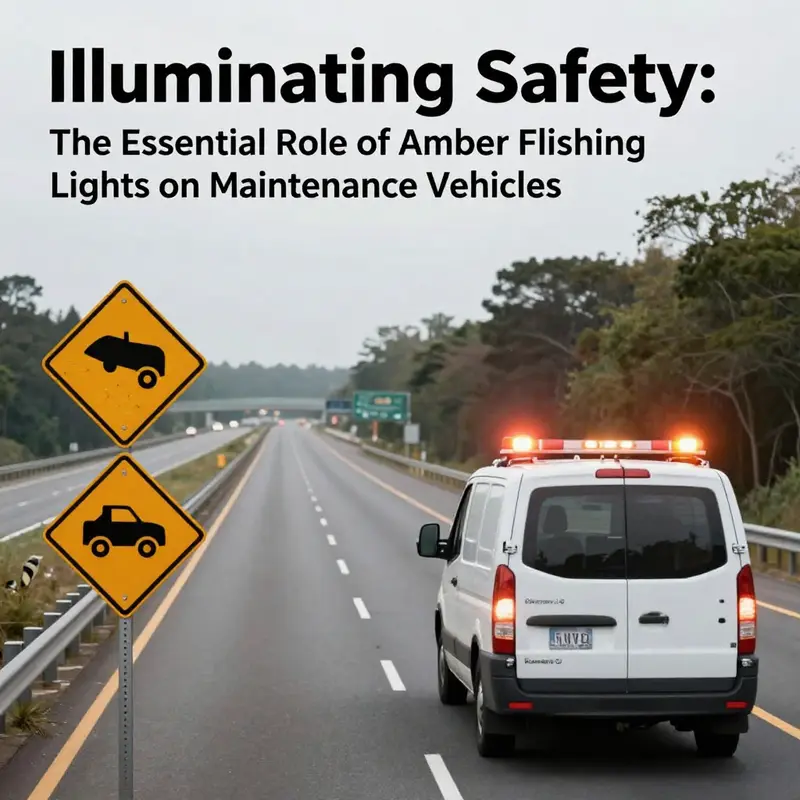
The lights that crown a maintenance vehicle at the roadside are more than mere hardware; they are a language spoken through color and position, a public message designed to slow traffic, protect workers, and keep speeds in check where asphalt meets asphalt. In the broad landscape of road safety, the color amber, sometimes described as yellow, has emerged as the most common and accepted signal for maintenance and works vehicles. Yet the story behind that amber glow is not a single rule but a mosaic of standards that shifts from state to state and from one jurisdiction to another. The aim is simple but essential: to alert drivers to the presence of slow-moving or stationary workers and to do so in a way that reduces confusion in the dynamic environment of roadwork. This requires a careful balance between visibility, recognizability, and the avoidance of signaling that could be mistaken for an immediate emergency. Understanding this balance means tracing how color, placement, and policy converge to shape everyday driving behavior and work-site safety.
The regulatory framework that governs flashing lights on maintenance vehicles rests primarily on state authority within the United States. Each state crafts its own statutes, specifying permissible light colors, where those lights may be mounted, and which types of vehicles are eligible to use them in a given context. A familiar pattern appears across many jurisdictions: blue flashing lights are reserved for firefighting and certain emergency services, while amber or yellow-green signals are designated for maintenance and construction activities. This separation is not incidental. It is designed to prevent the two kinds of signals—the urgent, multi-instrument emergency beacon and the work-zone warning—from blending together in the eyes of an ordinary driver, which could otherwise erode the distinct meaning of each color. A commonly cited frame of reference is a statute such as 321.423 Flashing lights, which helps ensure that emergency response vehicles retain a recognizable signal to the public. The practical effect is that routine maintenance crews carry lights that clearly communicate “caution” rather than “urgent assistance needed now.”
This regulatory mosaic does not end with color alone. Placement and usage matter just as much as the hue itself. State rules typically detail where on the vehicle the lights should be mounted to maximize visibility in complex traffic patterns and along busy corridors. Roof-mounted beacons and light bars are common because they offer a wide field of view, but specific states may also prescribe lower-level signaling or auxiliary lights to supplement the primary beacons. The objective is uniform across jurisdictions: to create a consistent, easily interpretable signal that reduces driver confusion in work zones, where lanes merge, speeds vary, and pedestrians may crowd the edge of the roadway. Such guidance supports safe work operations and minimizes the risk of a vehicle passing too close to a worker or the equipment involved in a roadside task.
Beyond the color and placement, the regulatory framework encodes a broader commitment to standardization that threads through both state statutes and federal recommendations. The federal perspective is not to replace state authority but to harmonize practice across the national system so that travelers, commercial drivers, and maintenance crews experience a predictable signaling environment no matter where they drive. The Federal Highway Administration (FHWA) offers guidelines and support for work-zone safety that emphasize standardized lighting practices. These guidelines are not a substitute for state law; they function as a reference point that helps jurisdictions align their rules with a shared safety philosophy. In practice, this means that even as states tailor their exact requirements to local conditions, many adopt a common expectation: amber or yellow-green warning signals should be instantly recognizable as work-zone indicators, with blue reserved for emergency responders and other special cases.
A worker standing on a highway shoulder under a gleam of amber flashing lights is not simply warding off traffic; they are part of a broader system in which the signal itself reduces risk by shaping driver expectations. The amber color communicates caution, the presence of work activity, and an implicit speed reduction mandate. When combined with appropriate placement and message clarity, these signals act as a protective barrier around crews and equipment. The goal is not to create a constant flood of color but to establish a minimal, reliable cue that stands out against the typical urban or rural backdrop. In daytime sunlight or at night, the right amber flash should be conspicuous enough to be detected from a safe distance, giving approaching drivers time to adjust their speed and lane position without abrupt, dangerous maneuvers.
To drivers, the distinction between amber and blue, or amber and other color signals, is not arcane trivia but practical instruction. Amber indicates that a vehicle or crew is engaged in maintenance work and that drivers should slow down and proceed with caution, often with a gentle recommendation to merge away from the active work area where feasible. Blue, when present in a jurisdiction, signals a different status altogether and is typically reserved for emergency response units. Understanding this language reduces hesitation and errant actions that can escalate risk in a dynamic work zone. For road users who approach these scenes regularly—construction crews, utility workers, and municipal maintenance teams—the color code offers a rapid, almost instinctive road sense that guides decisions in split seconds.
Yet the precise rules can differ, and that is where the regulatory framework matters most. Some states permit amber lighting to be used in conjunction with additional warning devices, such as sequential flash patterns or different intensity levels, to convey varying degrees of hazard or activity. Others require yellow-green variants to mark certain kinds of maintenance or limit use to specific vehicle types. The common thread is a shared objective: create a conspicuous, unambiguous signal that helps motorists recognize a work zone early enough to adjust safely. This approach aligns with the FHWA’s emphasis on standardized practices for highway work zones, seeking consistency across jurisdictions so that a driver who travels from one state to another does not have to relearn the signaling language at every border.
For professionals who design, regulate, or operate these fleets, compliance means more than acquiring lights. It involves a proactive approach to staying current with state DMV or Department of Transportation rules, and, where applicable, following federal guidelines. It also means recognizing that signage and signals exist in a broader ecosystem of road safety. Warning signs, temporary speed limits, flaggers, and lane closures all interact with flashing lights to communicate a comprehensive safety message. The maintenance vehicle’s lighting is a crucial piece of that message, but it functions best when integrated with other controls and with a clear plan for activation during work hours, weather conditions, and traffic densities. In this sense, the amber signal is not a stand-alone tool but a component of disciplined, safety-first workflow management.
As this chapter surveys the landscape of color and rule, it is instructive to look beyond national borders for perspective. The governance of flashing lights reflects a universal impulse: to harmonize visibility with safety in environments where human work meets heavy machinery and fast-moving traffic. While one jurisdiction may emphasize amber as the default, another may incorporate slightly different shades or flag-specific allowances. What remains consistent is the principle that color communicates intent quickly and unambiguously, and that systematic rules help both the public and workers interpret that intent with confidence. The practical upshot for any driver is straightforward: expect amber signals in work zones, understand blue as a potential emergency cue in places that permit it, and remember that compliance strengthens safety for everyone who shares the road.
For readers seeking further detail on how this framework operates in practice, the Federal Highway Administration’s guidance on work zones provides a robust reference point. It outlines standardized practices intended to improve consistency and safety across the highway network. You can explore these guidelines at the FHWA Work Zones site: https://www.fhwa.dot.gov/workzones/ . The guidance there emphasizes how signaling, spacing, and driver expectations come together in real-world settings and helps illuminate why amber remains the prevailing color for maintenance and construction vehicles across many states. In parallel, state-level resources, including the relevant statutes and DMV or DOT pages, will spell out the exact color options, mounting requirements, and permissible configurations in each jurisdiction, reinforcing a safety-first approach that adapts to local traffic patterns while preserving a universal language of caution on the road.
Amber Beacons at the Roadway: How Maintenance Lighting Shapes Driver Behavior
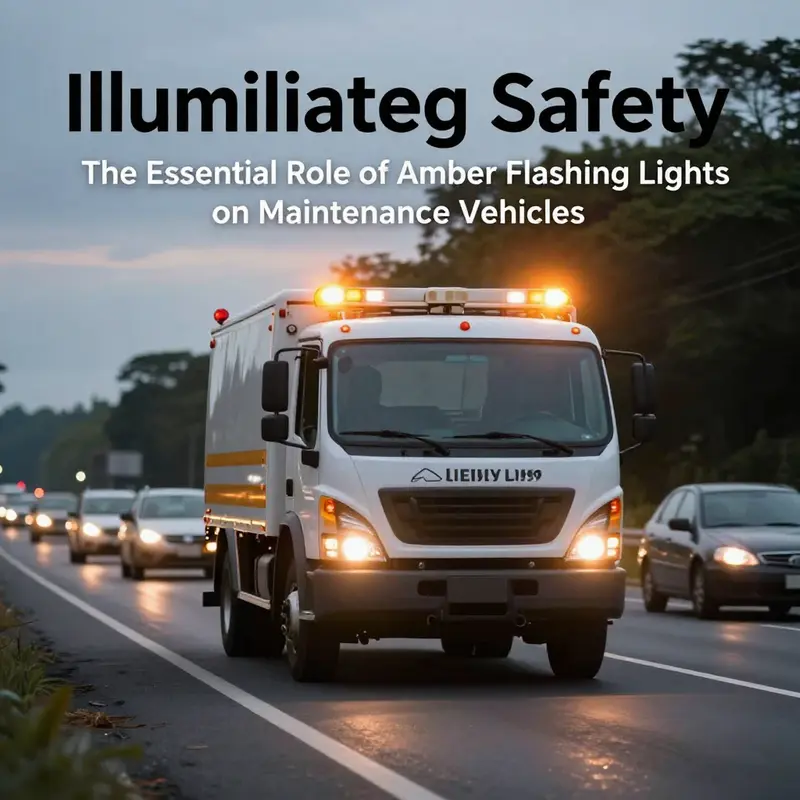
Amber flashing lights indicate a work zone and encourage drivers to slow, merge, and proceed with caution. Regulations specify their color, mounting height, flashing pattern, and how they relate to other signals, creating a predictable rhythm on crowded roads. LED beacons offer bright, reliable output and long life, and portable units allow crews to relocate signals as work progresses, keeping alignment with detours and lane closures. Clearance lights on trailers help convey the size and direction of equipment in low visibility. Together with signage and trained spotters, amber signals help drivers anticipate changes in traffic flow, reducing sudden maneuvers and the risk of injury to workers. For broader context on road maintenance practices, see https://vehicletricks.com/blog/what-is-vehicle-maintenance/ and related resources on traffic management.
Amber Is the Baseline, but Colors Push Safety: Decoding the Color Code of Maintenance Vehicle Lights
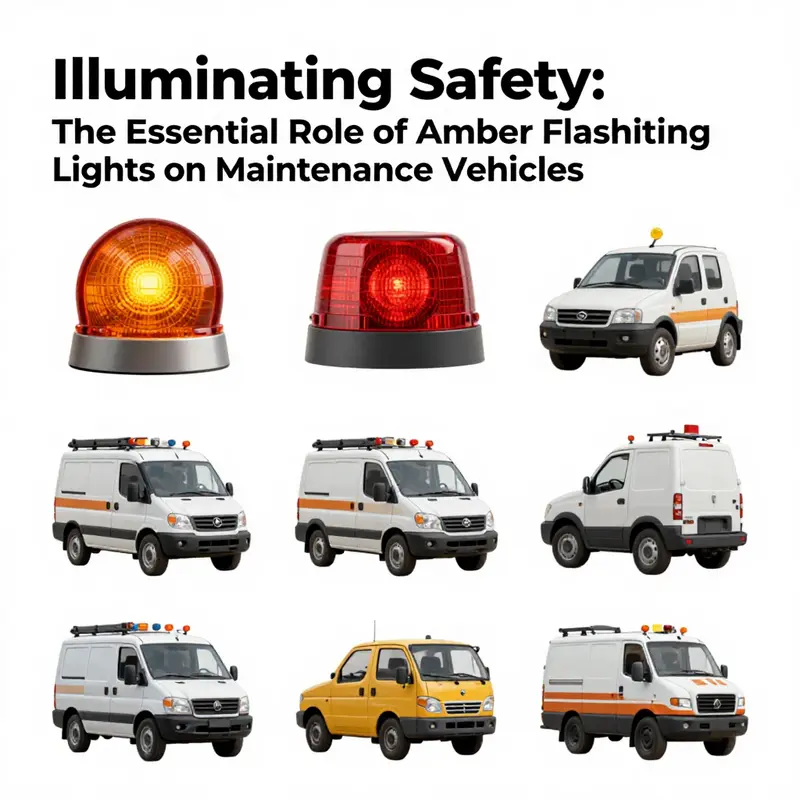
On busy roads and quiet back streets alike, maintenance work alters the tempo of traffic. Cones, barriers, slow-moving trucks, and the very presence of crews define a working zone that drivers must approach with heightened attention. The color code used by maintenance vehicles—most notably the amber flashing lights—functions as a silent conductor in this environment. Amber, or yellow, has long been designated as the standard warning color for roadside work because it signals caution without implying the immediacy of an emergency. In practice, it tells other road users that a vehicle is performing or about to perform work-related tasks, that people may be near the travel lane, and that extra care is warranted. This signaling helps to create a safety buffer around crews, equipment, and the sometimes awkward choreography of traffic control. It also offers a degree of predictability; drivers come to expect amber to appear around road works, and they adjust speed and following distance accordingly. The value of this predictability should not be understated. In complex urban corridors or high-speed rural stretches, a shared expectation about how to respond to amber flashing lights can reduce sudden braking, lane weaving, and other reactive maneuvers that risk either the crew or nearby motorists.
Yet the traffic environment is not static, and the simple one-color rule is not the only tool in the safety toolbox. When driving past work sites, many motorists encounter a spectrum of signals: amber alone, amber paired with white, and occasionally combinations that introduce blue or other hues. The rationale behind these configurations rests on layered communication. Amber remains the baseline warning color because it aligns with long-established human factors: it catches attention across different ambient lighting conditions, it remains legible at varying distances, and it blends into a universal warning language without triggering the urgent associations that red or blue emergency lighting can provoke. Still, the surrounding context matters. Lighting is interpreted against a backdrop of streetlights, vehicle headlights, advertising signs, and even weather. In a dim, rain-swept street, amber can fade from view if other light sources dominate the visual field. Conversely, in bright daytime settings, amber’s high contrast becomes more pronounced as drivers filter out distractions and focus on the road ahead.
Emerging research invites us to look beyond amber alone. A study into driver responses suggests that when amber is paired with a secondary color—specifically blue—the pattern can influence brake-application behavior, increasing the likelihood that drivers will decelerate in a more controlled way. This finding implies that the color combination can enhance hazard perception in certain scenarios, perhaps by signaling a different kind of risk or by clarifying the presence of a particular type of activity on the roadway. It does not negate the value of amber; rather, it points to a nuanced safety strategy in which color coding communicates multiple layers of meaning. The practical takeaway is not that every site should rush to adopt multi-color configurations, but that planners and operators may wish to evaluate local traffic environments, sightlines, and accident history to determine whether a two-color approach offers incremental safety benefits in specific contexts. As with any safety measure, the trick lies in balance: legibility, consistency, and avoidance of conflicting signals that could confuse drivers rather than clarify risk.
Beyond the flashing pattern itself, the technical use of amber involves careful design considerations. Amber lighting can be implemented in a variety of formats, including standalone flash units, synchronized fleets of beacons, or integrated signal bars on service vehicles. The broader point is that amber is chosen not only for visibility but for its compatibility with the human eye’s color sensitivity over longer viewing distances. In many jurisdictions, the amber signal is treated as a general warning rather than an instruction to move with urgency, which helps avoid a panic response that could endanger workers in roadside tasks. At the same time, designers are increasingly mindful of how amber interacts with other colors and shapes on a vehicle: reflective surfaces, the vehicle’s own color, and any additional lighting used for work-area illumination. The result is a signaling ecosystem that should communicate clearly to approaching drivers what kind of activity is occurring, how far away the crew is, and how much space is required for safe passage.
A broader look at the topic recalls the importance of regulatory guidance. Official road-safety authorities publish standards and recommendations that inform equipment choices, installation practices, and permitted flashing patterns. While national regulations vary, the GOV.UK guidance on road safety frames maintenance and works vehicles within a framework of signs and signals designed to support predictable driver behavior. The emphasis is on standardization, ensuring that motorists can quickly interpret the meaning of a signal regardless of the specific site or crew. For drivers and pedestrians, this standardization reduces cognitive load at a moment when reaction time matters most. For fleet managers and site coordinators, it reinforces a disciplined approach to equipment selection, placement, and continuity of signaling across jobs and jurisdictions. The practical upshot is straightforward: adherence to established color conventions and patterns improves overall road safety and minimizes the chance of misinterpretation when a work zone appears suddenly in a driver’s lane.
That said, there is more to signaling than color alone. The placement and mounting height of amber beacons, the angle of flash, and even the duration of a given flash cycle contribute to how effectively the signal is perceived. A signal that is too low may be obscured by other road furniture, while one placed too high may be perceived as distant or disconnected from the workers it is meant to protect. Likewise, if the flashing is too rapid or inconsistent, drivers may experience distraction rather than clarity. In practice, maintenance teams strive for configurations that maximize legibility under a wide range of weather, from dense fog to blinding glare. Another layer of complexity arises from the vibration and moisture environment near working components. Amber lighting systems installed close to moving parts or in splash-prone zones must be engineered to withstand vibration and water exposure, ensuring reliability when it matters most. These engineering considerations are not merely technical details; they influence the consistency of the signal and, by extension, the safety margin afforded to crews and passing traffic.
The broader narrative around color signaling also invites reflection on aesthetics and functionality in industrial contexts. Amber’s prominence in maintenance vehicle signaling is not purely about tradition or convention; it also aligns with practical goals: it is visible at dawn and dusk, it remains legible in rain or snow, and it does not convey the same immediate urgency as red or blue in many jurisdictions. Yet the continued exploration of color combinations signals a willingness to adapt safety practices to evolving traffic environments. The possibility that a secondary color could augment driver response—without erasing amber’s foundational role—speaks to a layered approach to risk management. In a sense, the color code becomes a map of a site’s hazard profile, guiding drivers through a sequence of visual cues that gradually reveal the nature of the work, the presence of equipment, and the degree of space required for safe passage.
For readers who want a broader technical lens, the concept of amber’s RGB specifications and its industrial uses is worth a closer look. While amber’s core purpose remains warning, some lighting configurations extend beyond mere signaling to include programmable or motion-activated patterns that add dynamic visibility without compromising legibility. These design choices underscore a broader theme: safety signaling is both a science of perception and an art of configuring environments so that people can respond appropriately. The same principles apply whether one is evaluating a roadside maintenance crew or considering how to optimize a vehicle’s lighting for nighttime visibility and event presence. The chapter’s thread—amber as baseline with the potential for supplementary signals—reflects a pragmatic, evidence-informed balance between clarity, consistency, and context.
As this discussion connects to daily practice, it also invites drivers to engage with the safety ecosystem beyond the road. Understanding the color code helps motorists anticipate how to adjust speed, maintain following distances, and navigate around work zones in a way that protects both workers and travelers. If you’re curious about broader vehicle maintenance knowledge that informs safe driving and maintenance planning, a concise overview can be found in resources that discuss what constitutes routine vehicle maintenance and why it matters for road readiness. What is vehicle maintenance provides a helpful foundation for readers who want to connect day-to-day upkeep with safe and responsible conduct on streets and highways.
Ultimately, amber’s dominance in maintenance signaling is a combination of human factors, regulatory clarity, and practical engineering. It offers a reliable baseline that supports consistent behavior across diverse road environments. The idea that additional colors might enhance specific responses is not a call to abandon amber but a prompt to consider context, evidence, and local traffic conditions when evaluating safety improvements. As teams plan their deployments and as drivers navigate work zones, the guiding principle remains simple: signaling should be legible, predictable, and aligned with the broader objective of safeguarding people—whether they are on foot, behind the wheel, or standing near a lane closure. For those seeking deeper technical reading on the subject of amber color RGB and related signaling concepts, an external resource provides a detailed technical overview that complements the practical discussion in this chapter. Understanding Amber Color RGB: Technical Details, Material Grades, and Industrial Uses. https://www.ledlighting.com/amber-rgb-guide
Beyond Amber: The Next Wave of Maintenance Vehicle Lighting and Road Safety

Across roads and worksites, amber has long carried a single, steady mission: to warn and to slow. Official guidance designates amber lighting for maintenance and works vehicles precisely because it creates a predictable cue for drivers and pedestrians. The aim is not to dazzle but to reduce risk by signaling the presence of slow-moving or stationary equipment and crews at the roadside. Yet the field is not static. As fleets electrify, as vehicles become smarter, and as automation begins to influence human behavior at the roadside, the language of warning lights is expanding. The chapter that follows examines how the color amber has served as a reliable symbol, and how emerging technologies are expanding the vocabulary of warning, guidance, and even identity for maintenance and service fleets. It asks not whether amber still has a place, but how future lighting systems can preserve safety while enabling more precise communication and stronger brand signaling in complex, dynamic work environments. To understand the trajectory, it helps to acknowledge that the current amber standard sits within a larger ecosystem of signs, signals, and regulations. Regulatory guidance underscores the need for clear, consistent messaging for drivers and pedestrians. The amber signal remains a core cue even as a richer signaling grammar is layered on top. The chapter previews how digital and adaptive lighting, projection, and V2X communication could extend amber’s reach without compromising legibility, reducing glare, and improving reliability under varied weather and traffic conditions. It concludes with a call for collaboration among regulators, manufacturers, fleets, and road users to ensure that innovations enhance safety first and efficiency second.
Final thoughts
The consistent application of amber flashing lights on maintenance vehicles is more than just a regulatory requirement; it is a pivotal aspect of enhancing roadway safety and visibility. As the landscape of maintenance and roadwork evolves, so do the technologies and regulations governing vehicle lighting. Business owners must stay informed and compliant to promote safe practices in their operations. Understanding the importance of these lights not only protects workers but also fosters a safer road environment for all users. Incorporating best practices, guided by regulatory frameworks, and adapting to future innovations will be key for effective road maintenance.