

Maintaining a fleet of vehicles is crucial for business efficiency and safety. Proper vehicle maintenance ensures longevity, enhances safety, and maximizes operational efficiency. This article explores the various types of vehicle maintenance that every business owner should understand. By delving into routine maintenance, preventive measures, non-routine checks, electric vehicle needs, and modern maintenance approaches, business owners can better safeguard their investments and streamline operations. Each chapter contributes uniquely to a comprehensive view, offering actionable insights to enhance fleet management.
The Quiet Guard: How Routine Maintenance Forms the Backbone of Vehicle Longevity
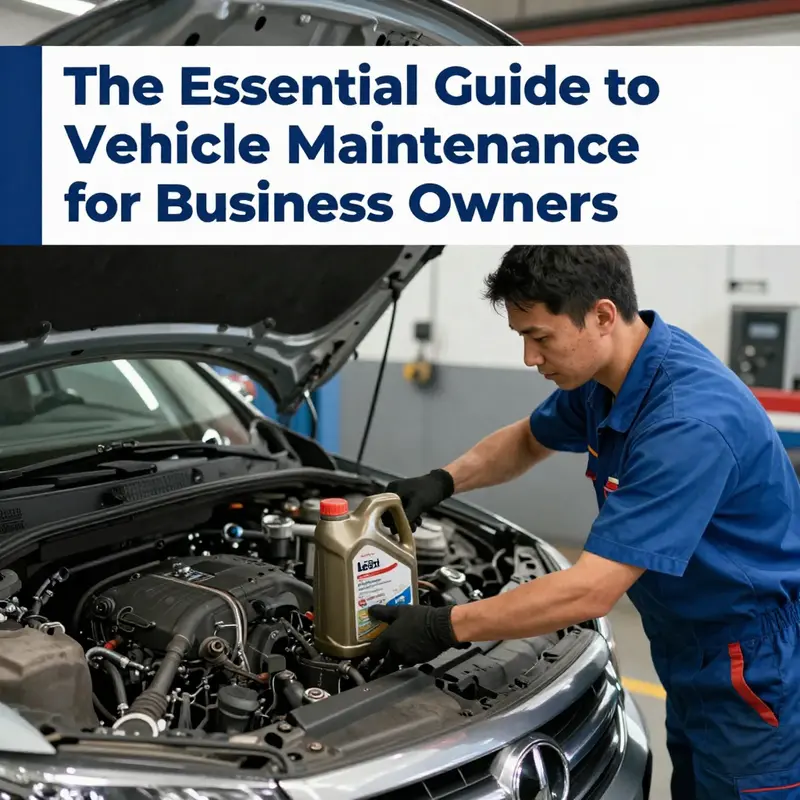
Routine maintenance is the quiet guard that keeps a vehicle dependable over many years. It operates behind the scenes, following a regular cadence of checks and services that owners may feel more than see. Yet this cadence is not arbitrary. It is designed to prevent small, manageable issues from becoming costly, dramatic failures. When done consistently, routine maintenance preserves engine health, preserves safety margins, and sustains performance. It does so through a simple truth: a well-timed inspection can catch wear before it translates into a breakdown, an underperforming component, or a safety risk. In practical terms, routine maintenance covers the essentials that touch daily driving—oil, tires, fluids, and the components that keep everything moving smoothly. As a result, the vehicle remains reliable, efficient, and safer to operate, mile after mile, year after year.
The core of routine maintenance is its predictability. Most vehicles follow a schedule that triggers certain tasks at set intervals, often expressed in miles driven or months elapsed. Oil changes and oil-filter replacements, tire inspections and rotations, and regular fluid top-offs form the backbone of this approach. In many cases, the recommended interval sits around 5,000 to 7,500 miles, though manufacturers tailor guidance to the specific engine type, oil grade, and operating conditions. The idea is straightforward: you service the vehicle before wear compounds or fluid degradation start to undermine performance. When the routine is followed, the engine receives proper lubrication, the cooling system stays within its safe operating range, and the powertrain maintains its efficiency. The practice extends beyond mere maintenance for reliability. It is a pivotal factor in keeping fuel use steady and predictable, a consequence that becomes especially clear when one considers the broader cost of ownership.
At the heart of routine maintenance lies a proactive mindset. Rather than waiting for parts to fail or for warning lights to illuminate, routine checks identify potential issues in their infancy. This approach benefits both safety and finances. For example, regular inspections of belts and hoses can reveal cracking or glazing before a belt breaks or a hose leaks. Regular brake checks and pad wear assessments help ensure that stopping performance remains consistent, reducing the risk of dangerous conditions on the road. Even electrical systems—often perceived as static—benefit from routine scrutiny, as corroded terminals or loose connections can degrade performance or lead to intermittent faults. The practical payoff is tangible: engines run more smoothly, components wear more evenly, and the likelihood of an unexpected failure during a trip decreases. In turn, this steadier performance translates to more predictable maintenance costs and less disruptive downtime for the vehicle owner.
Oil changes sit at the center of routine maintenance because engine oil is the lifeblood of the powerplant. Fresh oil provides optimal lubrication, which minimizes metal-to-metal contact, reduces friction, and helps cooling systems dissipate heat. The oil filter plays a complementary role by trapping contaminants that would otherwise circulate and abrade engine surfaces. Together, these tasks safeguard engine efficiency and prolong life. The frequency of changes is influenced by oil type, driving conditions, and manufacturer guidance, but the principle remains constant: dirty oil or a clogged filter accelerates wear. Even minor deviations, such as driving in dusty or stop-and-go city conditions, can shorten the interval. For the diligent owner, a robust oil-maintenance habit yields smoother starts, steadier oil pressure, and a cooler-running engine, all of which contribute to enduring efficiency and performance.
Tire health and rotation form another essential thread in routine maintenance. Tires do not wear uniformly; the outer edges, the center, and the sides can exhibit different wear patterns depending on alignment, suspension, and driving style. Regular tire rotation encourages more even wear across all four tires, extending tire life and maintaining predictable handling. Equally important is tire pressure, which directly affects rolling resistance and thus fuel economy and performance. Underinflation increases wear on the edges and raises heat buildup, while overinflation can reduce the contact patch and compromise grip. A simple interval—typically every 5,000 to 7,500 miles—paired with occasional pressure checks ensures that tread depth remains within safe limits and that the vehicle maintains its designed handling and efficiency. When tires wear evenly, fuel economy stabilizes and the risk of blowouts or unexpected loss of traction declines, providing ongoing peace of mind for the driver.
Fluid top-offs are the quiet, often overlooked lifeline of the vehicle. Coolant maintains the engine at a stable temperature, brake fluid supports safe stopping, transmission fluid enables smooth gear shifts, and windshield washer fluid keeps visibility clear. Regular checks for fluid levels, leaks, and contamination prevent situations where minor issues cascade into more serious ones. For instance, low coolant can lead to overheating, which may warp engine components and compromise cooling system integrity. Similarly, degraded brake fluid can absorb moisture and raise the risk of brake failure under heavy use. By staying vigilant about these fluids, drivers preserve performance margins and avoid cascading repairs that might otherwise arise from neglect. These checks also guard against corrosive build-up and premature component wear, reinforcing the vehicle’s long-term reliability.
Beyond the core trio of oil, tires, and fluids, routine maintenance often includes inspections of belts, hoses, brakes, and electrical systems. Belts may wear or crack with age; hoses can harden, crack, or leak; brakes can develop uneven wear or reduced stopping power; and electrical connections can corrode, degrade, or become loose. Each of these elements impacts safety, efficiency, and reliability. Regular visual and functional inspections catch signs of wear before components fail in the middle of a journey. In practice, technicians look for cracking, glazing, or stiffness in belts; softening, swelling, or leaks in hoses; pad thickness and rotor surface in brakes; and connectivity and battery health in electrical systems. The outcome is straightforward: a vehicle that remains responsive, predictable, and safe to operate over time.
The impact of routine maintenance on fuel efficiency and long-term costs is well-documented. When maintenance is performed consistently, fuel economy can improve by a measurable margin, and the probability of expensive, unexpected repairs drops noticeably. The link between regular service and efficiency emerges from a combined effect: optimized engine operation, healthier tires, and properly functioning fluids all contribute to more efficient energy use and fewer performance-reducing faults. The result is not only lower fuel bills but also reduced downtime and higher resale value over the vehicle’s life. As part of a comprehensive maintenance philosophy, routine care supports a lifecycle-based framework where the emphasis shifts from reactive fixes to planned reliability. In this sense, routine maintenance embodies a practical philosophy that aligns with broader concepts of equipment management and smart asset stewardship.
A practical note for readers who want to translate these principles into action is that the value of routine maintenance compounds over time. Consistency matters as much as frequency. Following the manufacturer’s guidance, while adapting to actual driving conditions, builds a predictable reliability curve. To see how these ideas translate into real-world savings and driving comfort, many drivers find it useful to explore case examples and calculators that map maintenance intensity to fuel costs and repair expenditures. This approach helps owners tailor the maintenance schedule to their vehicle, climate, and daily use, reinforcing that routine maintenance is not a one-size-fits-all regimen but a personalized, ongoing investment in performance. For readers seeking a tangible reference to such benefits, a widely cited resource discusses how regular upkeep yields fuel-saving dividends and better value over time. How vehicle maintenance saves on gas expenses provides a practical, real-world perspective on translating routine care into measurable savings.
Ultimately, routine maintenance anchors the broader philosophy of vehicle care. It aligns with the concept of a lifecycle-based maintenance strategy, which recognizes that reliability, safety, and cost control emerge from structured, proactive actions rather than episodic fixes. When routine checks are interwoven with preventive measures and condition-based insights, the vehicle becomes a more predictable tool—one that serves daily needs with fewer interruptions and greater efficiency. This integrated approach not only protects the engine and driveline but also safeguards the driver through consistent performance and confidence. In the broader narrative of vehicle maintenance types, routine care remains the foundation upon which more specialized or modernized strategies are built. Its steady rhythm makes it possible to pursue more advanced diagnostics, battery management, and system-level monitoring with a clear baseline of reliability and understanding of the vehicle’s baseline health.
External resource: https://www.fueleconomy.gov/feg/MyCarMaintenance.shtml
Preventive Maintenance as a Compass: Guiding Vehicle Longevity Through Regular Checks
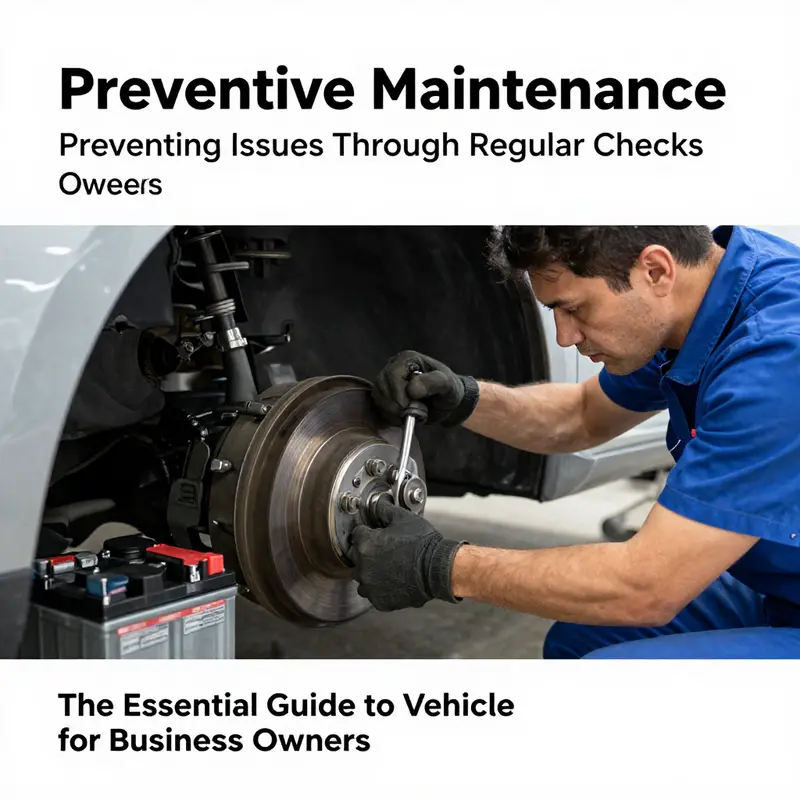
In the architecture of vehicle care, preventive maintenance stands as a deliberate, forward-looking discipline rather than a reaction to failure. It is the quiet practice that keeps a car dependable in daily life and ready for the long road ahead. While many drivers are familiar with routine tasks like oil changes or tire rotations, preventive maintenance reframes those chores as parts of a broader strategy. The aim is not to chase breakdowns after they occur, but to reduce the probability of failure by addressing wear and evolving conditions long before they threaten safety or performance. This approach resonates across industries, yet it feels especially practical for vehicles because the costs of downtime and the risks of unsafe operation are so tangible. The core premise is simple: a well-timed touch now can prevent a disruptive repair later, preserving reliability, safety, and value over time. It rewards careful attention to the car as a system whose parts interact, wear out, and influence overall performance in ways that small, scheduled actions can influence for the better.
Preventive maintenance rests on two flexible axes: time-based intervals and usage-based metrics. For most passenger cars, regular lubrication, calibration, cleaning, part replacement, and functional testing are planned around how much you drive and under what conditions. The oil in an engine, for example, ages with heat and shear, so changing it and replacing the filter at appropriate mile marks helps sustain lubrication quality and minimize wear. But oil is only one thread in a much larger fabric. Belts and hoses accrue wear with age and use; air and fuel filters clog with driving in dusty environments; brake fluid can absorb moisture over time; and cooling systems rely on coolant levels and radiator integrity to prevent overheating. The choices you face are practical: schedule a familiar set of tasks at predictable intervals, or tune those tasks to actual wear indicators as the vehicle communicates its needs. This is where the line between routine maintenance and preventive maintenance can blur in a productive way, because the best routine is one that anticipates wear and keeps the machine operating within safe limits.
In practice, preventive maintenance blends discipline with observation. A routine checkbook approach often includes a sequence of inspections: looking for leaks, listening for abnormal noises, and measuring fluid levels and tire condition. It also encompasses targeted service tasks such as replacing filters, inspecting braking components, and testing the battery’s health. The goal is not to perform every conceivable fix but to identify which components are approaching the end of their useful life and to act before any failure interrupts mobility. The result is a vehicle that remains dependable, with fewer unplanned stops. This mindset also preserves safety; tire tread, brake lines, steering alignment, and cooling function are central to how a vehicle behaves in emergencies as well as in daily driving. When preventive maintenance is practiced consistently, drivers experience steadier operation, smoother performance, and a greater sense of control over their transport needs.
Modern preventive maintenance has evolved beyond a fixed calendar. The best programs today combine routine inspections with condition-based decisions drawn from data, sensors, and diagnostics. IoT-enabled monitoring and battery management systems in more advanced vehicles offer real-time signals about component health, allowing maintenance teams to anticipate issues based on actual wear rather than elapsed time alone. This shift toward condition-based repair complements the traditional time- or usage-based approach by catching subtle degradations that might escape a scheduled checklist. Particularly for electric vehicles, attention shifts to high-voltage systems, battery health, and thermal management, where data streams can reveal a battery’s aging trajectory long before a fault becomes critical. The blend of scheduled service and data-driven alerts creates a maintenance philosophy that is both proactive and adaptive, helping to balance reliability with cost and downtime.
If one looks across industries, preventive maintenance is anchored in standards and shared principles. The formal definition you’ll encounter in professional references describes preventive maintenance as a measure carried out at predetermined intervals or according to specified criteria to reduce the probability of equipment failure or functional degradation. In the context of vehicles, this means treating maintenance as a planned investment rather than an afterthought. The essential value proposition rests on several tangible benefits: improved operational reliability, because systems are kept in tune; enhanced safety, since critical components are checked and maintained before they fail; reduced repair costs over the life of the vehicle as early wear is addressed before it snowballs; and the ability to keep production or travel schedules on track when the vehicle is a central part of daily life. A broader environmental benefit also emerges from PM: well-maintained engines, transmissions, and cooling systems tend to run more efficiently, reducing waste and emissions through better combustion, optimized fuel use, and fewer energy losses from mechanical inefficiencies.
To translate this into everyday practice, a car owner or fleet operator should cultivate a rhythm that respects both the machine and the road experiences it supports. A practical rhythm begins with a clear understanding of which tasks matter most given the vehicle’s design, age, and usage. It involves cataloging essential checks—oil and filter care, fluid levels, tire condition and rotation, brake inspection, and battery health—then aligning them with the vehicle’s mileage, operating hours, and environmental exposure. Newer vehicles often carry more sophisticated diagnostic tools, but the core discipline remains human judgment plus a structured schedule. The aim is not to turn maintenance into a chore but to embed it into the journey itself: a momentary halt that yields confidence and a longer, safer service life. In this sense, preventive maintenance is a form of stewardship over the vehicle’s lifeblood, ensuring that lubrication reaches its mission, seals resist leakage, and systems stay within safe operating thresholds.
For readers seeking a concise entry point into the broader conversation about maintenance types, understand that preventive maintenance sits alongside routine tasks and non-routine interventions. It is the forward-looking counterpart to reactive repairs, and it provides a bridge to modern strategies—like condition-based monitoring and predictive diagnostics—that leverage data without discarding the value of schedule-driven care. To connect this with practical, broader reading, you can explore a general overview of maintenance concepts at what is vehicle maintenance. This helps situate preventive maintenance within the larger framework of vehicle upkeep, where the aim is steady reliability rather than sporadic, dramatic fixes.
The future of preventive maintenance looks increasingly data-informed. IoT devices, remote diagnostics, and fleet-management analytics turn maintenance from a series of isolated tasks into an integrated program that learns from each mile driven. Yet the human element remains essential: the observer who notices subtle changes in sound, feel, or performance, and the decision-maker who chooses when to act based on a blend of data and common sense. As vehicles evolve—with more electrification, advanced driver systems, and increasingly sophisticated powertrains—the core idea endures: regular checks, informed by actual wear and usage, prevent failures before they disrupt travel, safety, or business operations. When that principle is applied consistently, preventive maintenance becomes not merely a maintenance category but a reliable compass for navigating the entire landscape of vehicle care.
External resource for a deeper standards-based perspective on PM is available to readers seeking formal guidance. For a rigorous, standards-aligned framework, consult the ISO Guide on Preventive Maintenance. ISO Guide on Preventive Maintenance.
Non-Routine Maintenance as Custom Care: Diagnostics, Decisions, and Safer Journeys
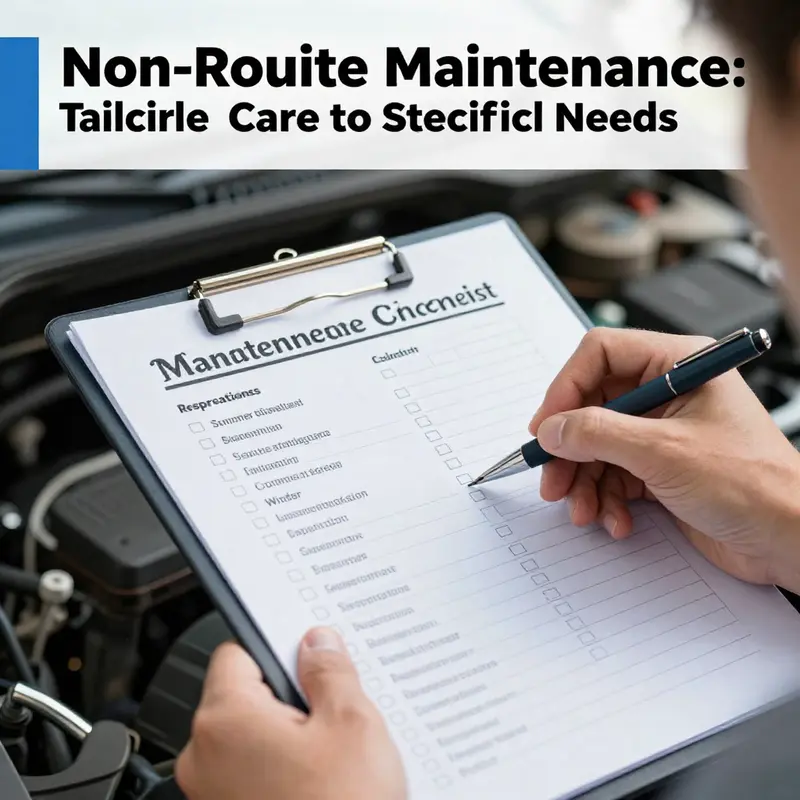
Non-Routine Maintenance as custom care emerges when vehicles demand more than routine checks. It is not a random assortment of fixes; it is a diagnostic discipline that treats each car as a unique system shaped by its environment, mileage, and the way it has been used. The essence of this maintenance type lies in recognizing when a problem is not simply an arbitrary fault but a signal about the vehicle’s current condition. In that sense, non-routine maintenance is less about following a calendar and more about listening to the car and translating that signal into a precise, appropriate response. When approached with care, it prevents minor issues from escalating, keeps performance aligned with driver needs, and ultimately supports a safer, more economical ownership experience. To frame this idea more broadly, many drivers start with a foundational understanding of maintenance itself: What is vehicle maintenance. That perspective helps a driver see non-routine maintenance not as a disruption but as a targeted intervention that complements routine care.
The diagnostic journey at the heart of non-routine maintenance begins with identifying the root cause. A single symptom—an unusual vibration, a warning light, or a change in throttle feel—can point to a range of underlying issues. The key is to resist the impulse to replace parts on the basis of symptoms alone. Instead, a methodical approach asks first what failure or abnormal condition has altered the vehicle’s normal behavior, then how severe that condition is, and finally which repairs or recalibrations will restore reliability with the least intervention. This path mirrors professional practice: diagnose, determine severity, choose a method and the right parts, and then verify that the solution actually addresses the root cause. It is not a guess; it is a structured process that respects the car’s unique history.
Consider the examples that routinely fall into non-routine maintenance. Engine overheating caused by a coolant leak requires more than topping up fluid. It involves diagnosing the leak’s source, inspecting hoses and the radiator, and replacing components as needed. The result is not only cooling system restoration but also a reset of the engine’s thermal envelope, which can prevent hot-running damage and fuel economy losses. Windshield damage is another common non-routine scenario. A crack or chip often mandates a repair or replacement that protects cabin integrity and driver visibility. Brake-system issues that arise after an accident demand careful inspection of lines, calipers, and the hydraulic reservoir, because even minor compromises can alter stopping performance. Electrical faults—water intrusion, corrosion, faulty connectors—pose risks that are often invisible until a system fails. In all these cases, the repair must be tailored to the specific fault and the vehicle’s current state, rather than bolting on a generic fix.
Tailoring vehicle care in these moments rests on a diagnostic mindset that blends observation with analysis. The aim is to identify the root cause, assess the fault’s severity, and select methods and parts that address only what is necessary. This approach prevents unnecessary repairs and reduces the chance of introducing new problems. A minor sensor fault might require recalibration or software adjustment, while a more serious transmission issue could call for replacement or a rebuild. The idea is to match the intervention to the diagnosis, not to the most expensive or the most common repair trajectory. Such discernment is the practical core of non-routine maintenance and a compelling counterpart to routine inspections.
The management of non-routine maintenance rests on several practical habits. First, detailed record-keeping matters. Logs of what happened, when it occurred, the steps taken to diagnose, and the eventual repair provide a valuable history that informs future decisions. Second, reliable diagnostic tools are indispensable. Scanners that read live data, as well as calibrated measurement references, help separate symptoms from causes. Third, when the repair moves beyond basic troubleshooting, consulting qualified technicians ensures that complex systems receive the attention they require. A smart plan for non-routine maintenance does not replace expertise; it channels it more efficiently, guiding technicians to the exact area of concern rather than broad, expensive guesswork.
Proactive monitoring remains an important ally in this process. Even without a flat tire or a sudden engine misfire, modern vehicles carry a chorus of sensor data feeding dashboards and onboard warnings. Paying attention to these signals—carried by warning lights, abnormal sounds, or changes in performance—helps to catch potential issues early. In this frame, non-routine maintenance is not merely a corrective measure but a bridge to ongoing reliability. When a dash indicator lights up, when a drivetrain notice appears, or when a semi-regular vibration creeps into drive quality, the response should be informed, measured, and aimed at restoring the car’s true operating condition. The goal is a balance: intervene when there is a genuine need, but avoid unnecessary work that does not improve safety or performance.
An integrated care strategy emerges from this balance. It weaves routine maintenance—oil changes, tire rotations, fluid checks—with non-routine maintenance into a broader life-cycle plan. The routine acts as a baseline that keeps components in predictable health, while non-routine maintenance addresses what the routine cannot foresee or prevent. The intersection of these approaches is where most owners experience the greatest value: fewer unexpected failures, optimized performance, and longer component life. The practical takeaway is simple: stay attentive to symptoms, document what you learn, and engage trained professionals when the fault reveals itself in ways that routine checks cannot fully capture. This philosophy aligns with the broader goals of vehicle care, where efficiency, safety, and longevity are pursued through thoughtful action rather than rote fixes.
To anchor this concept in everyday practice, think of non-routine maintenance as a form of diagnostic tailoring. The diagnostic process is the tailoring tool that interprets the vehicle’s current condition and translates it into a precise repair plan. A minor sensor issue might be a calibration tweak; a worn belt or hose could demand selective part replacement; a major hydraulic problem might require a deeper intervention. The common thread is that each decision adds only what is necessary to return the car to its best possible operating state, while avoiding the pitfalls of over-repair or under-repair. In this way, non-routine maintenance harmonizes with the broader maintenance philosophy that governs all vehicle care.
Finally, the external context matters. Safety regulators and vehicle safety guidance emphasize the importance of timely, appropriate repairs, especially for critical systems such as brakes, steering, and propulsion. Engaging with non-routine maintenance through a careful diagnostic lens helps drivers uphold safety standards while also sustaining performance and efficiency. For readers seeking broader context on safety-oriented maintenance, the National Highway Traffic Safety Administration offers foundational principles that complement the practical, hands-on approach described here.
In sum, non-routine maintenance is a disciplined, patient art of care. It recognizes that not all problems fit a schedule and that the most effective solutions are those tailored to a vehicle’s specific condition. By diagnosing root causes, evaluating severity, selecting targeted repairs, maintaining detailed records, leveraging reliable diagnostics, and collaborating with skilled technicians, owners can transform unexpected repairs into opportunities for improved reliability and safer journeys. This approach completes the mosaic of vehicle maintenance, connecting the routine rhythms that keep a car healthy with the necessary, precisely applied fixes that respond to life on the road.
External resource: https://www.nhtsa.gov/vehicle-safety
Electric Vehicle Maintenance: Challenges and Best Practices
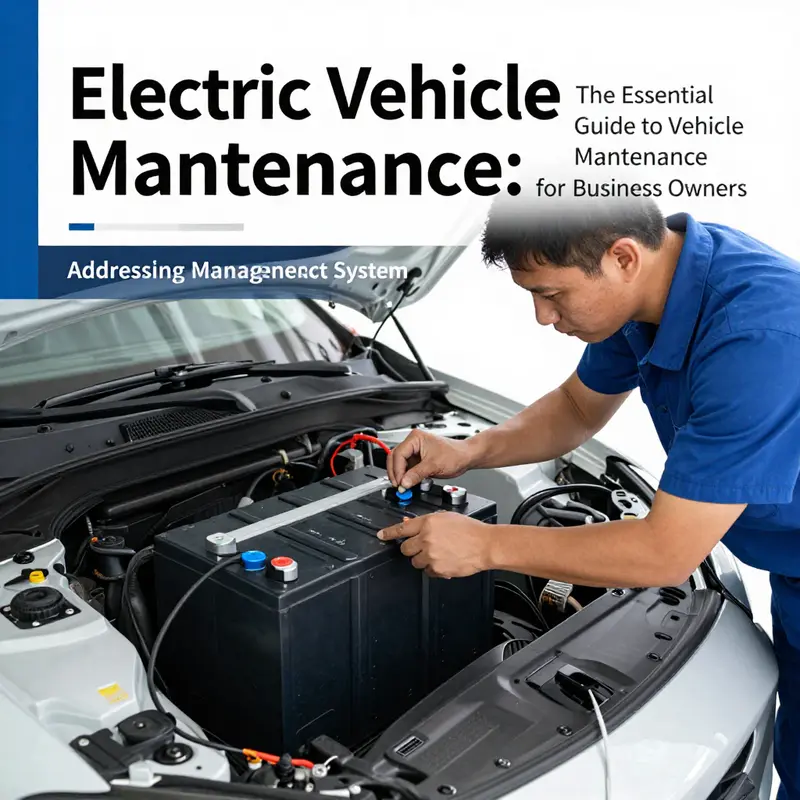
Electric vehicle maintenance focuses on battery health, thermal management, charging readiness, and software integrity. Battery degradation is driven by temperature, high-rate charging, and deep discharge cycles, so a balanced charging strategy helps extend life. Keeping state of charge in a practical window, such as 20% to 80%, supports durability and response time. The battery management system (BMS) monitors cells, temperatures, and voltage to guide maintenance decisions. Thermal management requires regular checks of coolant, hoses, pumps, and heat exchangers; remote diagnostics can flag issues before they impact performance. Reliable charging infrastructure—on-site Level 2 charging and trusted DC fast charging—reduces downtime and supports fleet schedules. Even with fewer mechanical parts, EVs demand attention to software updates, cybersecurity, and high‑voltage safety. Preventive care covers cooling circuits, BMS health, and charging equipment, while training technicians to work safely with high voltage and diagnostic software remains essential. A data‑driven maintenance approach enables condition‑based repairs, minimizing unplanned downtime and optimizing total cost of ownership across the vehicle’s life.
Modern Approaches to Vehicle Maintenance for Optimal Performance
Maintenance has moved beyond ticking clocks and mileage marks; it now unfolds as a living discipline powered by sensors, software, and data. The goal remains the same: keep vehicles safe, reliable, and efficient, but the path has changed. Instead of waiting for a failure to appear, modern practice holds a mirror up to the machine, revealing subtle shifts in performance long before they become visible. This shift is not a rejection of routine tasks but a reorientation of when and how they are done. The result is a maintenance culture that treats reliability as a dynamic balance between opportunity and risk, between the cost of action and the cost of inaction. In this new frame, the vehicle becomes an intelligent system that can tell a story about its own health, and the technician becomes a reader who translates that story into timely, targeted care.
Predictive maintenance sits at the core of this transformation. It uses real-time data from on-board sensors and telematics to monitor critical parameters such as engine temperature, oil pressure, tire wear, battery health, and brake performance. The advantage is not simply knowing when something will fail, but knowing when to intervene to prevent a failure from occurring. When the sensors flag a deviation, the maintenance plan shifts from a fixed schedule to a data-driven action. This approach reduces unplanned downtime, which is costly for fleets and inconvenient for drivers, while also avoiding unnecessary service that happens when traditional intervals are over‑cautious. The logic is straightforward: act when the risk is demonstrably rising, not just when the clock says it is time.
Condition-based maintenance (CBM) builds on that premise by evaluating the actual condition of components through diagnostic tools and software. Rather than relying solely on age or mileage, CBM uses empirical reliability data and statistical models to estimate failure probabilities. In fleet management, where hundreds or thousands of vehicles operate under varying conditions, CBM yields sizable cost savings. It aligns spare parts inventory with real need, minimizes waste, and streamlines maintenance workflows. The emphasis is on confidence—knowing which parts are approaching the end of their useful life and planning replacements before a breakdown disrupts operations. The driver’s experience also benefits, as CBM often translates into fewer unscheduled visits for minor issues that would otherwise escalate.
Total Productive Maintenance (TPM) expands the conversation beyond machines to people. TPM invites drivers, operators, and maintenance staff to share responsibility for reliability. It creates a culture where small, observable problems are reported promptly, routine checks are performed consistently, and feedback loops drive continuous improvement. TPM recognizes that humans remain a crucial layer of sensing and decision making in a highly automated environment. When drivers are trained to notice subtle changes in feel, sound, or response, and when maintenance teams have clear channels to act on those signals, the system becomes greater than the sum of its parts. The human element complements automated diagnostics, ensuring that both technical and behavioral factors contribute to peak performance.
Hybrid or combined approaches acknowledge that no single strategy fits all scenarios. Vehicles range from traditional internal combustion engines to electrified drivetrains, and each category presents different maintenance pressures. A flexible framework blends predictive, preventive, and CBM methods, guided by intelligent diagnostics. Artificial intelligence and soft computing techniques help manage imprecise or uncertain data, enabling smarter diagnostics and adaptive maintenance plans. This flexibility matters as technologies evolve and new vehicle architectures emerge. The modern maintenance ecosystem becomes a living portfolio that can reallocate resources as needs shift—whether a fleet adds more EVs, introduces new sensors, or faces changing regulatory demands.
The practical value of these modern strategies extends to consumer and fleet management guidance. Manufacturer guidelines still provide the foundation; they establish the safety bounds and essential servicing that keep vehicles aligned with design intent. But the everyday experience of maintenance has grown richer. Digital dashboards, mobile apps, and cloud-based platforms now translate complex diagnostics into clear, actionable alerts. These tools personalize maintenance to actual usage patterns, helping drivers understand what to do, when to do it, and why it matters. For fleets, this translates into centralized control—real-time visibility across the entire operation, with data-driven decisions about scheduling, parts stocking, and technician allocation. The result is a maintenance program that is not only more efficient but also more proactive, with a clear link between day-to-day care and long-term performance.
Among the evolving maintenance landscape, electric vehicles introduce a distinctive focus on high-voltage safety and battery health. High voltage battery maintenance centers on monitoring the health and longevity of large battery packs, with regular diagnostic checks of the battery management system (BMS). The BMS protects performance, safety, and efficiency by balancing cells, calibrating state-of-charge estimates, and predicting degradation. While the battery demands different attention than an engine or transmission, the same modern principles apply: continuous sensing, data-driven planning, and a culture of proactive intervention. In practice, this means more frequent yet precise checks that are tightly synchronized with vehicle usage, charging patterns, and climate conditions. The end result is a fleet that can maximize energy efficiency, minimize downtime, and extend asset life without compromising safety.
A crucial advantage of modern maintenance is the alignment of actions with actual conditions rather than rigid calendars. Periodic inspection remains essential, but it is now complemented by condition monitoring that captures real-time signals of wear and performance. This approach helps balance cost and reliability, ensuring that maintenance investments correspond to genuine need rather than assumed risk. It also supports a more resilient operation, one that can adapt to unexpected events without cascading losses. The balance is delicate: act too conservatively, and you waste resources; act too aggressively, and you invite unnecessary interventions. The modern framework seeks a sweet spot where predictive signals, diagnostic confidence, and practical operating constraints converge to maximize reliability and lifecycle value.
The governance of maintenance has also evolved. Standards and regulatory requirements, often reflected in mandatory maintenance schedules and documentation, provide a safety net that anchors the more agile, data-driven methods. Yet the most effective programs go a step further by leveraging digital records to reveal patterns over time—how long a component lasts under certain conditions, how different driving styles affect wear, and how environmental factors influence performance. This longitudinal view is where modern maintenance shines: it turns every service history into a learning opportunity, informing future decisions and helping an organization edge closer to true reliability. Within this context, manufacturers’ guidance remains a baseline, while data-driven practices push performance beyond traditional limits.
For readers seeking a concise primer on the broader idea of maintenance, see What is vehicle maintenance. The integration of timeless wisdom with cutting-edge analytics is not a retreat from fundamentals but a reimagining of how those fundamentals are applied in a digital age.
In sum, modern maintenance for optimal performance is a coordinated, data-informed discipline that respects the value of routine care while exploiting the predictive power of real-time diagnostics. It is a system that invites every stakeholder to participate in reliability, from the technician reading sensor trends to the driver noting evolving ride quality, to the fleet manager coordinating schedules across dozens or thousands of vehicles. The payoff is tangible: fewer unexpected failures, shorter downtimes, lower total ownership costs, and a vehicle fleet that remains productive and efficient throughout its life. The journey from routine checks to proactive intelligence is not a single leap but a continuous practice of listening to machines, interpreting signals with care, and acting with precision when it matters most. As technology advances, this practice only becomes more refined, more integrated, and more essential to keeping vehicles operating safely at peak performance.
External resource for further guidance: https://www.energy.gov/eere/vehicles/vehicle-technologies-office
Final thoughts
Understanding the different types of vehicle maintenance is essential for business owners responsible for a fleet. From routine upkeep to preventive measures, addressing non-routine needs, specializing in electric vehicle care, and adapting to modern maintenance practices, each category plays a pivotal role in optimizing operational efficiency and safety. By investing in these maintenance types, businesses can enhance vehicle longevity and reliability, ensuring that their fleet operates smoothly and effectively.