
For business owners, understanding how vehicle maintenance impacts fuel consumption is essential to both operational efficiency and cost savings. Regular checks on key components, like the engine, tires, air filters, and exhaust systems, can significantly enhance your fuel economy. Most notably, an under-tuned engine can lead to excessive fuel use, while poor tire health increases rolling resistance. In the chapters that follow, we will delve into the specifics: from the importance of engine maintenance, how tire conditions affect overall efficiency, the role of air filters and exhaust systems, to the significance of routine checks. Each chapter illustrates how these factors interconnect, providing a comprehensive view on maintaining more fuel-efficient vehicles.
The Engine That Buys You Gas: How Regular Maintenance Drives Fuel Efficiency
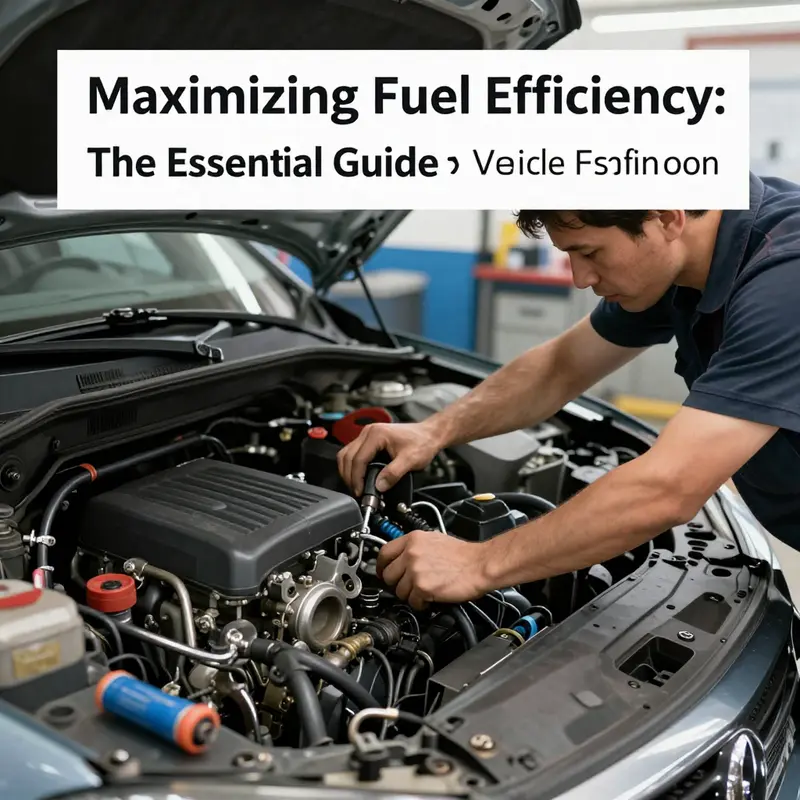
Maintenance is not merely a backstage chore; it is a daily determinant of how far your fuel goes each mile. When engines are kept clean, lubricated, and properly fed, the energy stored in every drop of fuel becomes propulsion rather than waste. When neglect sets in, the opposite occurs: combustion becomes less efficient, friction grows, and the car pays for the neglect at the pump. The impact of engine maintenance on fuel consumption runs deeper than a single service note; it reshapes how smoothly a vehicle converts energy into motion, affects operating costs, and quietly alters the environmental footprint of every trip. This is not a matter of occasional brilliance but of predictable physics in motion, where small, timely interventions preserve a lot of momentum over tens of thousands of miles. A broader takeaway from extensive testing and real-world experience is that regular upkeep does more than prevent breakdowns. It continually tunes the engine’s efficiency, aligning the air, the fuel, and the ignition with the demands of the road and the driver’s intent. In practical terms, maintenance keeps the combustion chamber free from carbon deposits and oil sludge that would otherwise choke the engine’s response. Those contaminants limit airflow and interfere with the precise air-fuel mixture the engine relies on for clean, complete combustion. When air can’t reach the cylinders in the amounts the ECU expects, the engine fights to produce the same power, and fuel is squandered in the process. The problem compounds in engines that use direct injection, where carbon can accumulate on intake valves, subtly suffocating the air intake and nudging the mixture toward richness. The result is not only higher fuel consumption but also increased exhaust emissions, underscoring that fuel economy and environmental performance share the same maintenance ledger. The simple truth is that a clean engine breathes better. It can atomize fuel more efficiently, burn it more completely, and exit with fewer unburned residues. The converse is equally true: when the intake is coated with deposits, the combustion process becomes less predictable. The engine management system must compensate, often by delivering more fuel to maintain power, an adjustment that erodes efficiency even before the driver notices any performance change. Beyond carbon and sludge, internal friction is a silent thief of efficiency. Engine oil serves as a vital shield against metal-to-metal contact, reducing the energy wasted as parts slide and rub against each other. As oil ages, becomes contaminated, or fails to meet the manufacturer’s viscosity specification, its lubricating properties degrade. The result is higher friction, more heat, and a heavier burden on the crankshaft, camshaft, and pistons. The engine then requires more fuel to achieve the same output, a penalty that accumulates with every mile traveled. Worn piston rings or degraded cylinder walls exacerbate the problem by allowing compression loss and leakage. Even small gaps translate into lower effective engine compression, requiring the engine to work harder to achieve the same level of power. The net effect is that neglecting oil changes and lubrication compounds inefficiency in ways that are not always immediately obvious. Airflow and fuel delivery further illustrate how maintenance shapes efficiency. A clogged or dirty air filter restricts the engine’s intake, forcing the ECU to interpret a lean or rich condition and to adjust fuel delivery accordingly. When the filter restricts airflow, the engine must compensate by injecting more fuel to maintain the proper flame front, leading to a richer mixture and a tendency toward higher consumption. Inaccurate fuel delivery from a faulty injector or a miscalibrated fuel system can also disrupt the delicate air-fuel balance. When fuel flow is too generous or too stingy for a given air intake, the combustion process becomes less efficient, producing more heat and more exhaust without proportional gains in power. Misalignment in the mechanical system can also raise fuel costs, even without obvious performance symptoms. Front-wheel misalignment or imperfect toe and camber settings increase rolling resistance. The tires scrub or drag rather than roll smoothly, so the engine must deliver more torque to maintain speed. Every extra watt of work the engine must perform translates into more fuel burned. The interplay of these factors makes maintenance a holistic equation: keep air intake clean, fuel delivery accurate, lubrication optimal, and tires properly aligned, and fuel economy follows. The maintenance equation is not merely about a single task but about maintaining a system in harmony with its operating conditions. This is why the most meaningful gains come from consistent, scheduled care rather than episodic fixes. There is a broader, research-backed context to these practical mechanics. A considerable body of real-world testing, including dynamometer-based studies, demonstrates that properly serviced engines deliver measurable improvements in fuel economy and reduced emissions. While the immediate effect after maintenance can include temporary recalibration or resetting of engine management parameters, the long-term trend clearly favors sustained maintenance. The engine, when kept in good health, can approach its designed efficiency because the systems that control air intake, fuel delivery, ignition timing, and exhaust flow work in concert rather than at cross-purposes. This synchronized behavior is what translates to fewer trips to the pump and lower operating costs over the life of the vehicle. The broader design and reliability context further enriches this picture. Vehicles engineered with simplicity, durable materials, and self-correcting management systems tend to maintain fuel economy longer, even as components wear gradually. In contrast, vehicles with highly complex, interdependent systems can experience sharper declines in efficiency if maintenance becomes sporadic. This does not mean modern cars are inherently doomed to waste fuel as they age; rather, it suggests that maintenance strategies must be attuned to design philosophies. When a vehicle is kept within the maintenance envelope its designers assumed, it tends to retain better fuel economy longer and exhibits more predictable performance as mileage accrues. The practical implications for drivers are straightforward. Regular oil and filter changes, timely air filter replacement, sensor and ignition maintenance, throttle body cleaning, and tire pressure management form a coherent program that protects fuel economy as a direct return on investment. Each task supports a specific mechanism that, taken together, sustains efficiency across the vehicle’s life. The most fundamental and enduring action is oil health—using the correct viscosity and changing it on schedule minimizes internal friction, so the engine can convert chemical energy into motion with less waste. Synthetic oils, when recommended, can further reduce friction relative to conventional blends, contributing to measurable fuel savings over time. Air intake health follows closely. A clean air filter supports a leaner combustion process by providing the engine with adequate air for efficient burning. A modest improvement here—perhaps a fraction of a liter per 100 kilometers under typical conditions—adds up over long commutes and every highway journey. Spark plugs and the ignition system complete the trio of fuel economy-critical components. Clean, properly gapped plugs ensure reliable ignition, reducing misfires and incomplete combustion that waste fuel and create heat without corresponding thrust. Regular inspection and replacement at the manufacturer’s intervals protect both performance and economy. The throttle body and intake cleaning step deserves emphasis, even though it is less dramatic in everyday perception. Carbon deposits on the throttle plate and intake valves can desynchronize the ECU’s fuel calculations from actual air flow. A professional cleaning restores smooth air passage, allowing the ECU to manage fuel delivery with greater precision. The payoff may be incremental, but it’s consistent: smoother idle, steadier acceleration, and modest but real improvements in miles per gallon. Tire maintenance, while not an engine task per se, is integral to the fuel economy story. The recommended tire pressure is a straightforward lever you can pull to reduce rolling resistance. Under-inflated tires create additional drag, requiring the engine to work harder to push the vehicle down the road. This is not a luxury adjustment but a direct influence on how efficiently energy is translated into motion. A consistent effort to monitor and maintain correct tire pressures pays dividends in fuel savings, especially for drivers with longer commutes or frequent highway travel. The maintenance narrative is not a one-time adjustment but a continuous discipline. After a service event, a vehicle may experience a temporary shift as the system re-learns fuel maps and air-fuel calibrations. In practice, this can look like a short initial fluctuation in fuel economy or fuel trim readings. Yet the long-run trajectory consistently trends toward improved efficiency and lower emissions, provided maintenance is kept up. The larger takeaway is clear: engine health is fuel health. Because fuel economy is sensitive to air, fuel, and timing, keeping those subsystems clean and correctly calibrated translates directly into fewer trips to the gas station and reduced running costs. In this sense, maintenance is not merely a safeguard against breakdowns; it is an ongoing strategy for cost control and environmental stewardship. For readers seeking a concise, practical overview of how routine maintenance translates into gas savings, reference this overview: the link provides a clear, applied framing of how the maintenance habit reduces overall fuel expenditures while extending engine life. For further reading and context, you can explore this external resource on fuel efficiency standards and best practices: https://www.fueleconomy.gov/feg/drive_sustainably.shtml. To learn more about practical maintenance steps and how they translate into real-world savings, consider the detailed guidance here: how vehicle maintenance saves on gas expenses.
Rolling Toward Better Gas Mileage: The Tire Condition Link to Fuel Efficiency
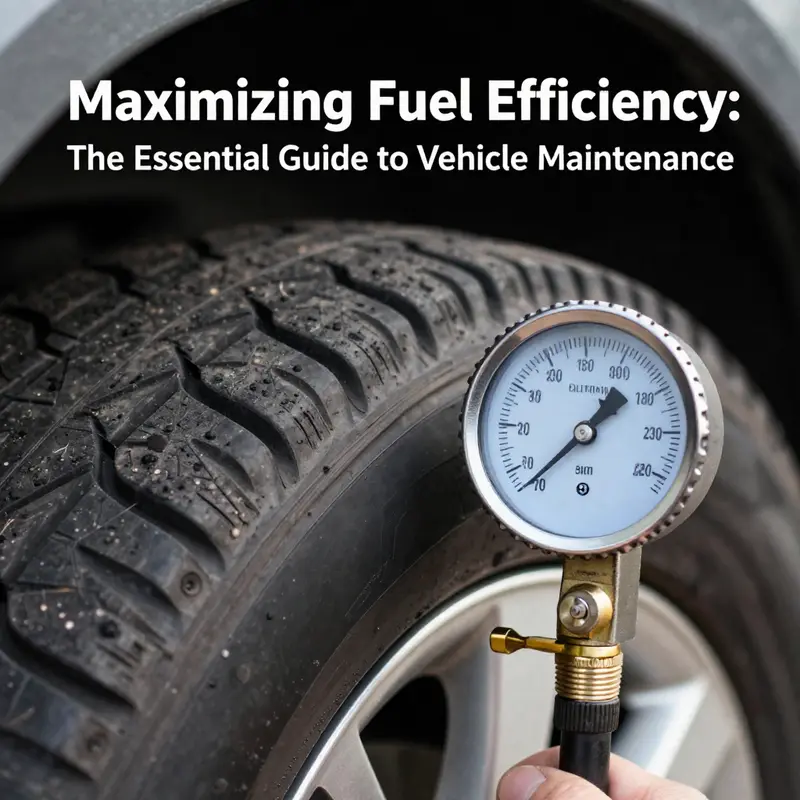
Tires are more than just the last contact point between a vehicle and the road; they are a dynamic system that quietly governs how much fuel you burn on every trip. The idea that tire condition can swing your fuel economy might seem almost counterintuitive at first glance. After all, the engine does the heavy lifting, and most drivers picture their gas gauge or dial as the sole indicator of efficiency. Yet the tires—through rolling resistance, contact patch dynamics, and grip—drive a substantial portion of the energy equation. When a tire’s condition is ideal, the road and the tire cooperate as a well-tuned team. When it isn’t, the engine works harder to achieve the same acceleration, maintain speed, or climb a gentle incline. The result is not just a higher fuel bill, but a less comfortable ride, more road noise, and, in some cases, reduced safety margins. The chapter that follows threads together the physics of rolling resistance with the practicalities of everyday maintenance, showing how small, consistent actions can translate into meaningful savings at the pump over time.
To begin with, imagine the tire as a flexible band that deforms as it rolls. Every time the wheel meets the road, the tire carcass compresses and then rebounds. That deformation is energy spent, and the energy comes straight from the engine. In a car that is mechanically efficient and properly equipped, the rolling resistance is minimized, and the engine can devote more of its power to forward motion rather than overcoming friction in the tires. Conversely, when tires are underinflated, the deformation increases and the tire behaves like a more stubborn spring. The engine must supply extra torque to overcome the resistance, and fuel consumption climbs accordingly. The magnitude of this effect is surprisingly linear: research indicates that for every 1 psi drop below the recommended inflation, fuel economy tends to drop by roughly 0.3% to 0.5%. While that may sound small on a single outing, it compounds across weeks, months, and thousands of miles.
The second piece of the puzzle is the tread. Worn tread alters the way the tire contacts the road, shifting the footprint and changing how friction develops during each rotation. As tread depth diminishes, the contact patch becomes less uniform, and the tire can lose traction efficiency. This is not merely a safety concern; it also adds to rolling resistance in subtle, constant ways. The result is a quieter interior and a smoother ride only when tread is within safe limits; outside those bounds, the same wear that compromises grip can also erode fuel economy. It’s a reminder that fuel efficiency does not live in a vacuum of engine tuning. It lives in the entire chassis, including tires, suspension geometry, and how the car carries its load. A car that spends its life with worn tires is fighting an uphill battle against rolling resistance that could be avoided with timely tire replacement and proper maintenance.
What makes tire maintenance particularly practical is its relative immediacy. Checking tire pressure, inspecting for uneven wear, and recognizing when tread depth has fallen to concerning levels are habits that can fit into a routine maintenance day without the need for specialized equipment or expensive repairs. The simple act of inflating tires to the manufacturer’s recommended pressure has a direct and measurable impact on efficiency. The recommended pressure is not a formality; it’s the pressure at which the tire delivers the best balance of resistance, grip, and wear characteristics for a given vehicle and load. When you underinflate, you not only increase rolling resistance but also risk generating heat and accelerating tire wear on the shoulders of the tread. Overinflation, while less common in daily driving, reduces the tire’s contact patch and can lead to a harsher ride and uneven wear, which eventually undermines efficiency in a different way. The steady practice of checking tire pressure when the tires are cold, using a reliable gauge, and adjusting to the recommended level is one of the most effective, low-cost ways to pull more miles from every tank of fuel.
The tire’s role is also sensitive to the tread depth beyond safety thresholds. Tires with adequate tread depth provide stable traction and predictable performance, which translates into more efficient power transfer and steadier fuel usage across a range of speeds and conditions. Worn tires, especially in wet or slippery conditions, can force a driver to reduce speed or increase throttle input to maintain the same pace, eroding fuel efficiency further. In addition to safety, the efficiency implication reinforces the notion that maintenance is a holistic endeavor. It is not enough to fix what is broken; it is about preserving the synergy between components—engine, tires, suspension, and drivetrain—that determines how efficiently a vehicle converts fuel into forward motion.
A broader pattern emerges when we consider maintenance in aggregate. Regular maintenance—inflation checks, rotation, alignment checks, and timely tire replacement—does more than prevent punctures or uneven wear. It preserves the fuel efficiency gains that an optimized tire setup can deliver. The interconnected nature of the system means a modest improvement in one area can yield compounding benefits in others. For instance, properly rotated tires promote uniform wear and predictable rolling behavior, which, in turn, helps the engine maintain smooth operation without compensating for awkward tire patterns. Misalignment, on the other hand, can create subtle drag that drives up rolling resistance across miles of driving. The chain reaction is clear: when tires are well cared for, the vehicle behaves more efficiently, and the driver experiences both tangible fuel savings and improved handling.
The empirical evidence, while broader than tire maintenance alone, underscores this logic. A comprehensive study analyzing thousands of passenger cars on a mobile chassis dynamometer laboratory found that vehicles requiring a tune-up showed measurable improvements in fuel economy after maintenance. In the study’s before-and-after comparisons, properly serviced vehicles demonstrated not only enhanced fuel efficiency but also reduced emissions. While the study evaluates the broader maintenance picture, the tire component is central to the observed improvements. Tires influence rolling resistance directly, and engine management responds to changes in load and road feedback. The takeaway is not that tires alone will fix fuel economy, but that neglecting tire condition can erode the benefits of all other maintenance tasks. When a vehicle is regularly tuned, tires are kept at their best possible state, and the combined effect can translate into meaningful savings at the pump.
An important caveat accompanies this narrative. When maintenance actions are performed, some systems may recalibrate, and drivers might observe a temporary uptick in fuel consumption as the engine management system relearns optimal maps and the tires settle into their new operating conditions. This short-lived fluctuation is normal; it should not discourage ongoing maintenance. Over the longer horizon, the gains accumulate. In many cases, this is a case where patience pays. The short-term nuisance of recalibration gives way to longer-term efficiency and performance gains that benefit both the driver and the broader ecosystem by reducing fuel demand and associated emissions.
From a practical standpoint, the tire component of maintenance translates into a straightforward checklist that can be incorporated into typical vehicle care routines. First, keep tires inflated to the vehicle manufacturer’s recommended pressures. Those numbers are not arbitrary; they reflect the balance of load distribution, speed rating, and tire construction. Next, monitor tread depth and look for uneven wear patterns that might indicate misalignment or suspension issues. A simple tread-depth gauge is enough to confirm when tires have reached a safe and efficient threshold. Third, consider rotation schedules to promote even wear across all four tires. Rotating tires not only extends life but also helps maintain uniform rolling resistance and consistent handling characteristics across the vehicle. Finally, replace worn tires promptly. The moment tread depth approaches critical levels, efficiency is already slipping and safety is compromised. By treating tires as part of the fuel economy equation rather than an afterthought, drivers can achieve a smoother, safer ride while also stretching their gas dollars further.
For readers seeking a concise, publicly available anchor on tire efficiency, the U.S. Department of Energy’s Fuel Economy website offers well-supported guidelines on tire inflation and tread wear. This resource reinforces the practical guidance discussed here and provides operational steps drivers can take to optimize their tires without specialized tools. It is a reminder that much of what makes a car affordable to operate comes from everyday habits that keep the vehicle in harmony with the road.
Beyond the mechanics, the narrative of tire maintenance also connects with the broader theme of responsible vehicle ownership. Those who routinely check and adjust tire pressures often develop a more nuanced understanding of how weather, temperature, and load affect performance. In turn, this leads to more mindful driving decisions. For instance, a driver who notices a drop in fuel economy during a unusually hot spell may recall that tire pressure changes with ambient temperature and could recheck pressures to ensure they remain within the optimal range. This attentiveness translates into fewer abrupt throttle changes, smoother acceleration, and better overall efficiency. The point is not simply to chase a number on a gas gauge, but to cultivate a mindset that recognizes how small maintenance acts bounce through the whole vehicle and into everyday driving outcomes.
To close this thread, consider the idea that tire condition can be a reliable climate ally. When tires are properly inflated, tread is adequate, and wear is even, the vehicle does not fight itself on the road. The engine can do what it was designed to do—convert fuel into motion with minimal losses. The result is a more predictable, economical, and safer ride. This is the kind of maintenance that compounds over time. It is not a flashy upgrade or an expensive repair; it is a disciplined practice that keeps the vehicle’s energy equation balanced. The payoff is visible not only in the miles per gallon but also in the quiet confidence of knowing that your car is performing as efficiently as possible, regardless of the road you choose to travel.
As you deepen your maintenance routine, you can explore broader resources and connect with a wider community of drivers who have found that small, consistent tire checks yield big dividends. For instance, a broader discussion of how routine maintenance translates into gas savings can be found in this comprehensive piece on How Vehicle Maintenance Saves on Gas Expenses. It situates tire care within the larger maintenance ecosystem and helps readers see how each action, including tire inflation and tread care, contributes to fuel economy. How Vehicle Maintenance Saves on Gas Expenses.
In closing, tire condition is a tangible, actionable lever for fuel efficiency. It is a reminder that the path to lower fuel consumption is not a single knob to twist but a constellation of habits and checks. Accurate inflation, sufficient tread, and regular maintenance work together to minimize rolling resistance and maximize the efficiency of the powertrain. The benefits extend beyond the numbers on a fuel gauge. They translate into safer handling, more confident braking, and a smoother ride across miles of road. For drivers who want to make the most of every drop of fuel, making tire care a priority is a reliable starting point—one that respects the physics of movement while acknowledging the everyday realities of driving. And because tire maintenance is as much about prevention as it is about performance, the habit pays dividends in reliability and cost savings that accumulate quietly over time. The road rewards those who treat it with respect, and tires are the most direct form of that respect.
External resource: https://www.fueleconomy.gov/feg/tires.shtml
Air Filters, Exhaust Paths, and Fuel Economy
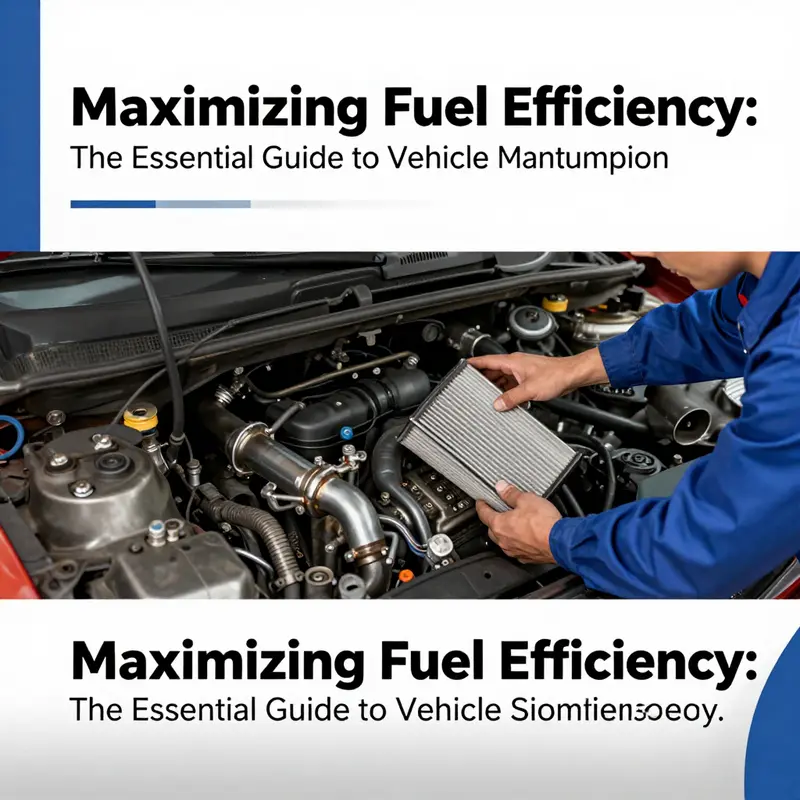
The engine’s demand for fuel is shaped by how easily air can enter, mix with fuel, and escape as exhaust. Air filters and exhaust systems are quiet gatekeepers at this cycle’s gate. When air can flow freely and exhaust can exit with minimal resistance, the engine’s control system can hold the intended air-fuel ratio with less fuel penalty. Conversely, a dirty air filter reduces air supply, prompting the ECU to adjust fuel delivery and sometimes timing, which can raise overall fuel consumption. Exhaust leaks or excessive backpressure perturb sensor readings and can cause the ECU to recalibrate in ways that degrade efficiency. Across modern engines, the linkage between intake cleanliness, exhaust integrity, and fuel use is well established: better air and exhaust paths generally mean more efficient combustion and better mileage.\n\nAir filtration affects power and economy at once. A clogged filter creates a lean boundary; the engine faces less oxygen and its sensors respond by reducing fuel efficiency in attempts to compensate, often resulting in slower throttle response and higher fuel use to attain similar performance. A clean filter, by contrast, helps the engine reach and maintain its target torque with fewer injections. The exhaust system’s health matters too: leaks upset pressure signals and can mislead the oxygen sensors, causing the ECU to run richer mixtures or altered timing, which can raise fuel consumption and emissions. Even small leaks can have measurable effects over a drive cycle.\n\nMaintenance matters. Regularly replacing the air filter and inspecting the exhaust path helps the engine stay near its designed operating envelope, reducing unnecessary fuel injections and improving overall efficiency. Vehicle data aggregations show that routine maintenance correlates with improved fuel economy and lower emissions across large samples. While individual results vary depending on driving style and engine type, the direction is clear: preserve the air path and the exhaust path to sustain fuel efficiency over the vehicle’s life.
The Quiet Gas Saver: How Routine Checks Shape Vehicle Fuel Economy
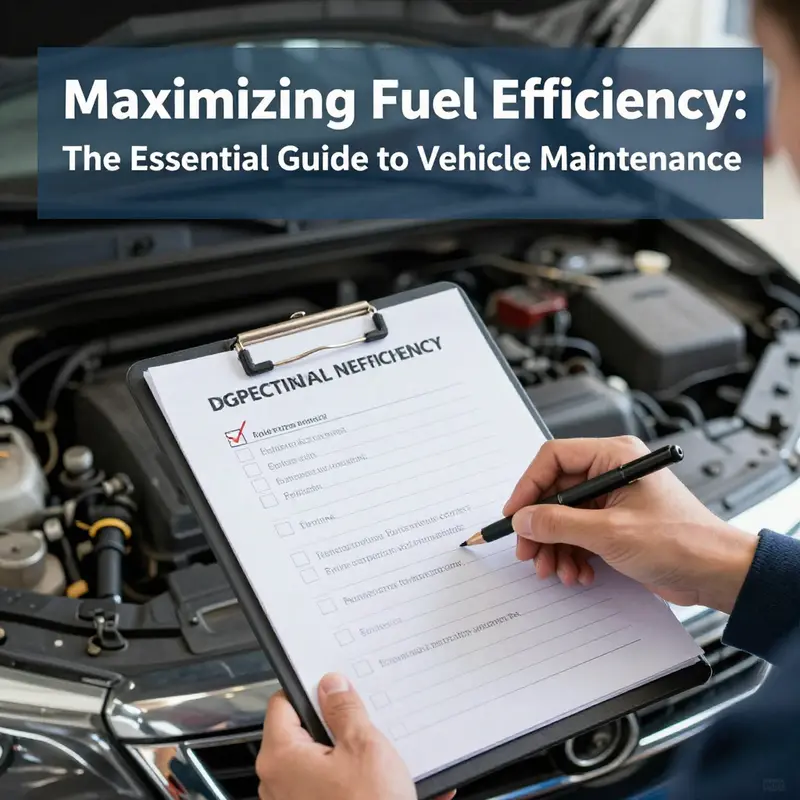
Every driver wants a car that sips fuel rather than gulps it, yet the most effective fuel-saving strategies are often the simplest, spread out like quiet habits over the life of a vehicle. Routine checks and timely maintenance operate in the background, translating small, consistent actions into meaningful gains in fuel economy. The idea is straightforward: when a vehicle’s parts are well cared for, they work together more efficiently, and even modest improvements accumulate over thousands of miles. This chapter follows that logic through the everyday mechanics of maintenance, revealing how tire pressure, air filters, engine tuning, and the regular replacement of essential fluids shape the engine’s efficiency and, by extension, the amount of fuel a driver uses without needing to chase dramatic, one-off fixes.
To begin, consider the tire—the most immediate interface between the road and the vehicle’s energy use. Proper tire inflation is a deceptively simple factor that has a measurable impact on fuel economy. The U.S. Department of Energy has quantified this effect neatly: maintaining correct tire pressure can improve fuel economy by as much as 3 percent. The mechanism is plain enough. When tires are underinflated, rolling resistance—the energy the engine must overcome to keep the tire moving—rises. The engine then works harder to maintain speed, and fuel consumption climbs. It is a small pressure in the tire that yields a meaningful gain in miles per gallon, and the value compounds with every mile traveled. The converse is true as well: overinflation can increase wear on the tread and alter handling, so the aim is to keep pressure within the manufacturer’s recommended range, checked when tires are cold, ideally monthly or before long trips.
Next, the air intake and the filters through which that air flows deserve careful attention. The air filter is a gatekeeper for the engine’s air-fuel mixture. A dirty or clogged air filter restricts airflow, which disrupts the delicate balance the engine relies on for efficient combustion. When the air-fuel mixture becomes too rich or too lean, the engine cannot combust fuel as efficiently, and fuel economy suffers. The potential impact is not trivial: studies and practical measurements show that a dirty air filter can reduce fuel efficiency by as much as 10 percent. That means a routine filter change, a quick maintenance task, can translate into a nontrivial fuel saving over thousands of miles. Keeping the air intake clean is not about chasing horsepower; it is about enabling the engine to breathe freely so that combustion remains close to the optimal stoichiometry and fuel is used where it should be, not wasted in bypassed or restricted pathways.
Alongside air intake, engine oil—often overlooked as a mere lubricant—plays a foundational role in efficiency. Using the correct motor oil and maintaining proper oil-change intervals reduces internal friction and drag within the engine. When the engine spins with lower friction, less energy is wasted overcoming mechanical resistance, and more of the fuel’s energy can be directed toward propulsion. The maintenance guidance from energy-efficient operation emphasizes choosing the appropriate viscosity and grade for the climate and driving conditions, and aligning changes with the vehicle’s service schedule. It is not a flashy adjustment; it is a disciplined practice that reduces parasitic losses inside the engine and helps the car maintain steady performance with less fuel.
Beyond these consumable items, a vehicle’s electronic brain plays a central role in translating maintenance into economy. Modern vehicles are equipped with onboard diagnostic systems that monitor performance, sensor integrity, and emission controls. These systems not only alert drivers to problems that could waste fuel but also guide technicians to impending faults before they degrade efficiency. The essence of this technology is proactive maintenance. Rather than waiting for a dashboard warning to appear, drivers can use real-time data to schedule timely interventions that keep the engine’s air-fuel ratio within the target window, prevent excessive fuel consumption, and reduce emissions. The value of such systems is clear: a proactive approach to maintenance can prevent efficiency losses that accumulate across miles driven, supporting both individual savings and broader environmental objectives.
But maintenance is not only about preventing losses; it is also about harnessing the fuel-saving potential of regular, systematic care. A sizable, independent study examined 5,666 passenger cars using a mobile chassis dynamometer laboratory. While the report highlights the overarching value of tune-ups, it also provides a concrete message about the chain reaction from maintenance to fuel economy. In the tested subset of 216 vehicles, before-and-after dynamometer tests demonstrated that proper servicing led to measurable improvements in fuel economy. The results extended beyond gas mileage to include reductions in harmful emissions, reinforcing the idea that routine maintenance yields dual benefits for drivers and the broader environment. This is not a radical claim but a well-substantiated one: small, consistent maintenance actions can translate to tangible fuel savings if performed with regularity.
A critical nuance in this discussion is that maintenance can yield a temporary, short-lived shift in fuel usage immediately after service. When the engine management system is reset or re-calibrated after a tune-up, it sometimes re-learns and adjusts fuel delivery and ignition timing. This recalibration can momentarily perturb fuel economy as the system searches for new optimal settings. In most cases, the dip is brief, and the longer-term advantages of a well-tuned engine become evident after the initial adjustment period. The takeaway is practical: do not panic if fuel economy seems to wobble for a tank or two after a tune-up. The long arc typically points toward improved efficiency as the engine settles into its calibrated state.
What emerges from these threads is a coherent argument for a maintenance culture built on consistency rather than grand, infrequent repairs. A steady schedule of checks—keeping tires properly inflated, replacing air filters on schedule, ensuring the engine is tuned, and honoring correct oil specifications—can create a reliable baseline for fuel economy. This is especially true for fleets and commercial operations, where even modest percentage savings accumulate across hundreds of vehicles and thousands of miles. Fleet operators, in particular, stand to gain from a discipline that maps maintenance to measurable performance outcomes. The National Renewable Energy Laboratory (NREL) has documented that vehicles operating within consistent maintenance programs show average fuel economy improvements of roughly 4 percent to 7 percent compared with vehicles with irregular or no maintenance. Those numbers are not theoretical—they reflect real-world performance gains that arise from the simple, repeatable acts of inspection, replacement, and calibration. In other words, routine maintenance is a durable, scalable investment in efficiency that pays dividends over time.
The practical resonance of these findings lies in how they translate to everyday driving. A driver who makes tire pressure checks part of a regular habit, who vows to replace the air filter before it becomes a choking point, and who keeps an eye on the engine’s health via the vehicle’s diagnostic cues, ends up with a car that operates more efficiently for longer. The cumulative effect across a year or a decade becomes a meaningful reduction in fuel costs, which in turn reduces the total cost of ownership. When this effect is multiplied across thousands of vehicles, the environmental benefits extend beyond personal savings to national energy resilience and emissions reduction. The logic is simple and compelling: well-maintained components operate in harmony, new wear signals are caught early, and the engine is allowed to execute its fuel-saving strategy with minimal interference. Regular maintenance, in this framing, is not merely a preventative measure; it is a strategic tool for optimizing energy use.
To connect the practical to the behavioral, it helps to view maintenance as a relationship with the vehicle rather than a calendar habit. The car’s systems are interconnected, and neglect in one area can ripple through others. For example, a small air leak in the intake system or a slight oil viscosity mismatch may not immediately produce a dramatic change in performance, but they create subtle inefficiencies that accumulate. The evidence from the dynamics of actual driving—gathered through dynamometer tests and extended fleet studies—shows that when drivers commit to routine checks, the car’s overall energy choreography becomes smoother. The engine Management System, tire dynamics, and filtration all converge to minimize wasted fuel. The relationship is honest: care today brings efficiency tomorrow, and the pattern of care defines the trajectory of fuel use across the vehicle’s life.
The broader implication is that fuel economy is not a fixed trait hardwired into a vehicle’s design by accident. It is a property that emerges from ongoing maintenance choices. The route to stronger efficiency lies in a blend of science and habit: apply precise, evidence-based maintenance actions, and combine them with attention to how the vehicle behaves in daily use. The data support this view. The Energy Department’s guidance on vehicle maintenance emphasizes simple, repeatable steps that drivers can perform themselves or with a technician. The emphasis on practical, budget-conscious maintenance aligns with the lived reality of most drivers: small costs for regular checks translate into savings through better mileage, less strain on the engine, and fewer trips to the shop for avoidable problems. The science behind the numbers is clear, but the human dimension—the discipline to check, replace, and recalibrate—creates the actual outcome.
For readers who want a compact synthesis of these insights into a practical routine, the core message is straightforward. Make tire pressure a regular check, not a rare event. Replace the air filter before it becomes restrictive. Ensure the engine is tuned and the timing and fuel delivery are aligned with the manufacturer’s specifications. Use the correct oil and adhere to its change interval. Leverage the vehicle’s onboard diagnostics to catch issues early, and be mindful of the short-term fluctuations after maintenance while the system recalibrates. When these actions become habitual, the gains accumulate. The result is not only a smoother, more predictable driving experience but also a more efficient use of fuel across the vehicle’s entire lifespan. The chapter’s core narrative—routine checks as a powerful, accessible path to fuel economy—rests on these practical anchors.
To readers who want a concise resource that connects maintenance to savings, a quick reference in the form of a summarized guide can be found in the broader discussion of how vehicle maintenance saves on gas expenses. This resource encapsulates the practical steps outlined here and situates them within a larger framework of efficiency and emissions reduction. For a deeper dive into the science behind the guidance, the external source offers a more technical perspective on how disciplined maintenance translates into real-world fuel savings. In the end, the quiet, repeatable acts of routine maintenance stand out as one of the most reliable levers drivers have to improve fuel economy, reduce emissions, and extend the life of their vehicles.
External source: https://www.energy.gov/eere/vehicles/articles/how-maintain-your-vehicle-save-fuel-and-money
Final thoughts
Investing in regular vehicle maintenance is a strategic move for business owners looking to optimize fuel consumption and reduce operational costs. By ensuring that engines are tuned, tires are inflated, air filters are clean, and routine checks are conducted, the benefits extend beyond improving fuel economy—leading to a reduction in harmful emissions and contributing to a more sustainable operation. In this way, proper vehicle care is not just a best practice but a necessary commitment for responsible business stewardship.