
In today’s economy, many businesses leverage employee-owned vehicles to optimize operations while minimizing costs. However, maintaining these vehicles can become a financial burden if not managed effectively. By integrating smart software solutions into your vehicle management processes, you can significantly reduce maintenance costs associated with employee-owned vehicles. This article delves into five critical strategies, each leveraging specialized software to ensure your fleet remains efficient and cost-effective. From preventive maintenance scheduling to optimizing inspection services, each chapter reveals actionable insights that can lead to substantial savings. Understanding these techniques will empower business owners to streamline operations and enhance overall fleet management practices.
Preventive Maintenance Scheduling for Employee-Owned Fleets: A Data-Driven, Privacy-Aware Approach
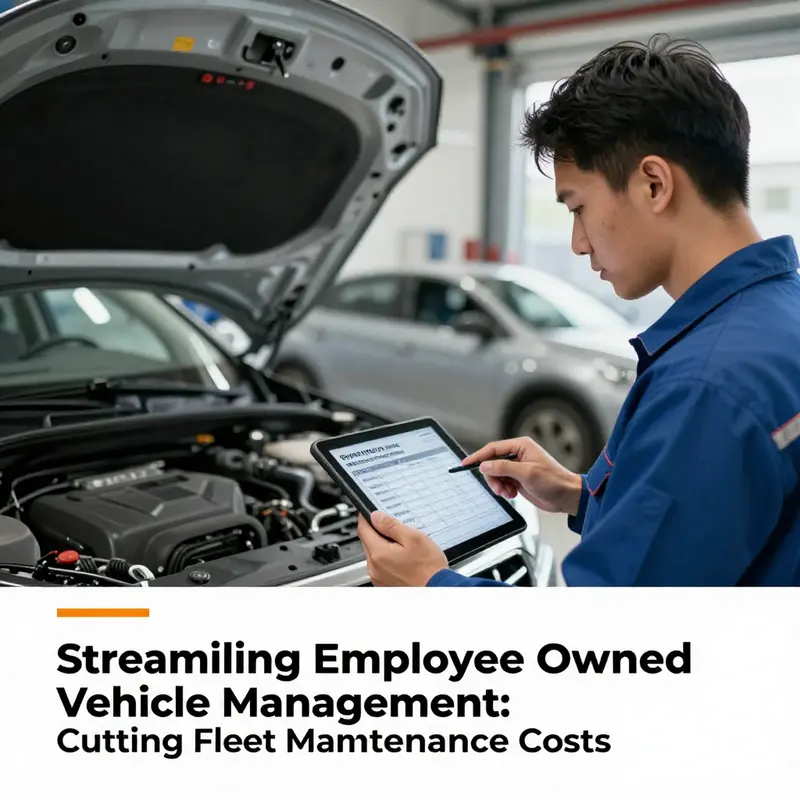
Preventive maintenance scheduling for employee owned fleets is a data driven process. The approach treats maintenance as decisions about when to service a vehicle considering interval costs and shared setup costs. A rolling horizon planning framework allows the central team to propose service windows while respecting driver privacy. Data such as mileage, usage codes, and service history are collected with consent and stored securely. The model accounts for the fact that delaying some services increases cost while performing too many services at once incurs setup costs. When several vehicles can be serviced in one visit, bundling reduces the per vehicle cost. The aim is to minimize total cost over a planning horizon while maintaining reliability and fairness. A governance layer defines reimbursement and data sharing rules in clear terms. The chapter also discusses practical deployment issues such as data quality, driver engagement, and the balance between centralized planning and individual ownership. In practice the result is a schedule that aligns maintenance with actual wear instead of calendar dates, reduces emergency repairs, and provides predictable budgeting. The literature and real world show that incorporating interval dependent costs and shared setup costs yields substantial savings when scaled to a mix of vehicles. The overall message is that prevention is a process supported by data, policy, and human cooperation rather than a single software tool.
Fine-Tuning Maintenance Intervals for Employee‑Owned Fleets: A Data-Driven Path to Lower Costs
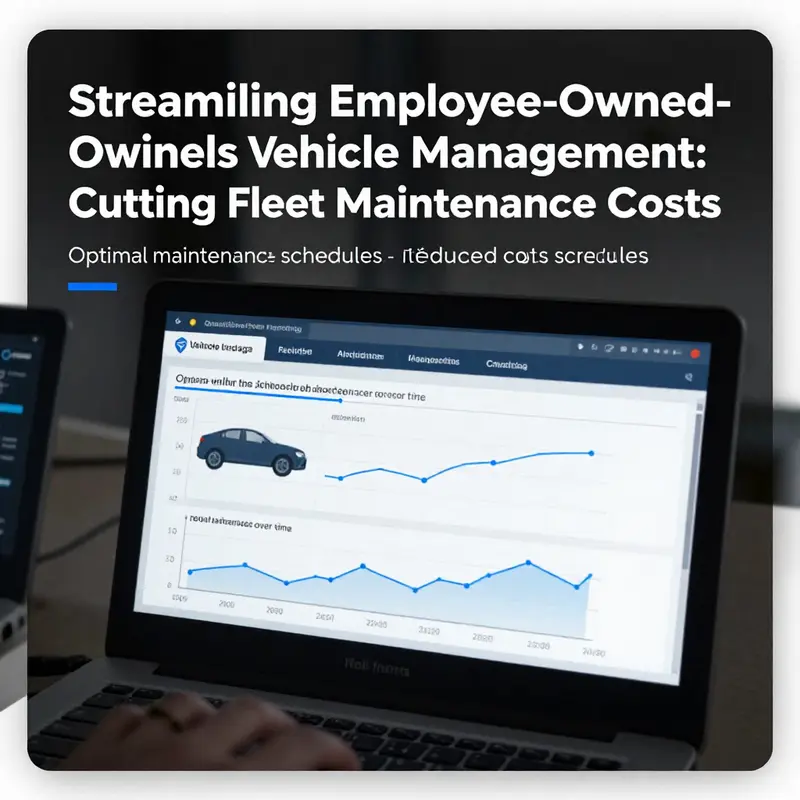
Every fleet executive knows that maintenance costs rarely rise from a single failed part. They accumulate as a result of missed preventive care, reactive repairs, and the drift between what a vehicle needs and what an organization is willing to fund. When employee‑owned vehicle programs are on the table, the challenge intensifies. Personal vehicles used for business introduce variability in usage, wear patterns, and scheduling flexibility. Yet, the opportunity remains: with a disciplined, data‑driven approach to maintenance intervals, organizations can unlock meaningful savings without compromising safety or reliability. The core idea is simple but powerful. If you can map vehicle health, usage, and repair costs over time, you can identify the precise points where maintenance delivers the best return on investment. The result is a maintenance cadence that avoids both needless servicing and surprise failures, a cadence that translates into lower total cost of ownership and higher fleet availability. In practice, this means moving from a calendar‑driven or guesswork approach to an interval optimization that is grounded in real operational data and disciplined governance.
At the heart of this approach is the data foundation. Modern maintenance programs collect and harmonize a wide range of information: detection events from telematics, diagnostic trouble codes, maintenance and repair histories, costs by component, and kilometers driven or hours of operation. When this data is clean and well organized, it becomes a living model of how each vehicle behaves under typical business use. The model can then be used to simulate maintenance scenarios that would otherwise be impossible to test in real life. For example, by analyzing several years of operation, you can identify a mileage threshold where the incremental cost of preventive servicing begins to outpace the cost of potential failure. This is not a one‑size‑fits‑all answer. It is a customized threshold that reflects the unique mix of vehicles, duty cycles, and driver behavior in your organization. In some fleets, the sweet spot may be around 12,000 kilometers; in others, closer to 18,000 or 15,000. The key is to let the data reveal the optimal point rather than relying on generic industry rules.
To translate these insights into real-world savings, you need to couple the data model with a disciplined maintenance workflow. A modern maintenance platform—or a prudent, enterprise‑grade system designed to handle asset health, service logistics, and repair history—can automate reminders, route work to the appropriate depot, and provide technicians with intelligent guidance. Importantly, these capabilities are not about pushing maintenance earlier or later for its own sake. They are about aligning service events with the actual condition of the vehicle, the expected wear patterns of its components, and the economic impact of each intervention. When the model flags a low‑risk interval, the system nudges teams toward preventive care that preserves reliability at a lower cost than reactive fixes. When a higher risk window emerges, the same framework supports timely intervention to prevent a costly breakdown. This balanced, data‑driven approach reduces downtime, extends component life, and lowers average repair costs per mile over the vehicle’s life.
Driver behavior has a sizable influence on maintenance economics, and for good reason. Harsh braking, rapid acceleration, and excessive idling accelerate wear on tires, brakes, and driveline components. A transportation program that tracks behavior can link driver habits to specific maintenance needs and costs. The insights gained become a powerful instrument for coaching and training. It is not punitive; it is a proactive effort to align human performance with vehicle health. When drivers understand how their choices shape maintenance costs, the organization benefits from reduced wear, less unscheduled maintenance, and more consistent service intervals. This, in turn, makes the data model even more accurate, creating a virtuous feedback loop between behavior, health indicators, and economic outcomes. The result is a fleet that runs smoother, lasts longer, and spends less on avoidable repairs.
There is also value in recognizing and leveraging manufacturer programs, when applicable, to support maintenance health. In many cases, manufacturers offer free inspections or checkups at certain intervals or kilometers driven. While the specifics vary, the underlying principle remains constant: early detection of emerging problems can avert expensive later failures. A disciplined program that tracks these opportunities and routes eligible vehicles into preventive inspections can yield meaningful cost relief. It is important to frame these collaborations within a broader maintenance strategy rather than relying on them as the primary cost reducer. The data‑driven intervals define the baseline, and manufacturer programs provide occasional accelerators that help keep the fleet in sensible health without inflating labor or parts costs.
The concept of non‑invasive or minimally invasive repairs also plays a critical role in cost control. Advances in diagnostic tooling and remote sensing enable technicians to identify root causes with less disassembly and fewer parts replacements. When technicians can perform diagnosis with software‑driven guidance and portable diagnostic devices, the repair process becomes leaner, faster, and less costly. This is not a call to cut corners; it is a reminder that many issues can be resolved through precise diagnostics and targeted interventions that minimize vehicle downtime and the risk of collateral damage during service. In the context of employee‑owned vehicles, where usage may occur off‑site and with varying levels of formal maintenance infrastructure, the ability to perform efficient diagnostic checks remotely or at decentralized service points becomes especially valuable. A robust data framework supports these capabilities by providing up‑to‑date service histories, latest fault codes, and recommended repair pathways that technicians can follow without lengthy site visits.
Yet even the most sophisticated data model is only as good as the governance that surrounds it. In an employee‑owned program, there are additional layers of risk that require careful management. Insurance coverage, tax implications, and reimbursement rules for maintenance expenses demand a compliant framework. The research notes that, when personal vehicles are used for business purposes, traditional fleet software alone may not suffice. Instead, organizations should pair data‑driven maintenance practices with clear reimbursement policies, safety standards, and audit trails that ensure expenses are appropriate and properly documented. The aim is not to police or penalize but to create transparency and accountability that harmonizes business needs with employee realities. With such governance, maintenance optimization remains a practical, scalable strategy rather than a fragile add‑on that collapses under complexity.
From a practical standpoint, implementing interval optimization begins with a phased, evidence‑based plan. Start by assembling a data inventory that covers vehicle health metrics, usage patterns, service histories, and cost records. Next, build a simple, interpretable model that estimates maintenance costs as a function of mileage, age, and usage intensity. Use this model to identify candidate intervals where the total cost per kilometer is minimized. The goal is not to slash service to the bone but to service at the point where the economic value of maintenance is greatest. This often requires balancing the economics of preventive care against the risk of unexpected failures, a balancing act that becomes clearer as data accrues.
With the intervals defined, deploy a lightweight workflow that integrates scheduling, diagnostics, and technician guidance. Make sure technicians have access to a knowledge base embedded in the workflow—guidance on what inspections to perform, what components to check given specific fault codes, and what non‑disruptive repair options exist. A well‑designed system also supports mobile access, so technicians in the field can receive updated service histories, upcoming maintenance windows, and recommended next steps without returning to a central depot. The alignment of data, workflow, and human expertise is the engine of cost reduction in maintenance for employee‑owned fleets. It creates reliability and predictability in maintenance spend, and it yields a fleet that stays on the road longer with fewer unexpected repairs.
As the program matures, so too does the economic impact. The cost reductions accumulate not only from fewer breakdowns but also from improved asset life and better utilization of vehicles for core business activities. When vehicles are kept in better technical condition at optimal intervals, downtime declines, which translates into higher productivity and service levels. The gains ripple outward: fewer emergency repairs mean lower premium costs, steadier budgeting, and a more predictable maintenance cadence that supports long‑term strategic planning. The data won’t lie. It tells a story of maintenance performed exactly when it is most valuable, with resources allocated where they deliver the greatest return. In the context of employee‑owned vehicle programs, this disciplined approach ensures that the business interest in cost control does not come at the expense of fair treatment for employees or the safety of drivers on the road.
For further reading that connects maintenance practice with fuel and cost efficiency, see the discussion on how vehicle maintenance saves on gas expenses. This link provides additional perspective on how preventive care and timely servicing directly influence operating costs beyond repair bills itself. How vehicle maintenance saves on gas expenses.
In summary, the path to reducing maintenance costs in an employee‑owned fleet rests on three pillars: data‑driven maintenance intervals, disciplined governance that aligns business needs with employee realities, and a robust workflow that integrates diagnostics, scheduling, and technician guidance. When these elements work in concert, maintenance becomes a strategic asset rather than a recurring expense. The intervals are not guesses; they are informed by years of operation, vehicle health signals, and economic analysis. The organization gains reliability, availability, and cost discipline—all essential ingredients for sustainable fleet performance. For those who seek a deeper empirical foundation, the literature on data‑driven maintenance optimization offers validated approaches to interval modeling and economic evaluation, such as the study on optimizing maintenance intervals for transport vehicles. External readers can consult the DOI‑linked study to explore the quantitative underpinnings of interval optimization and its implications for fleet economics: https://doi.org/10.1061/41139(387)218
null
null
Driver Behavior as a Cost-Cutter: Leveraging Employee-Owned Vehicle Software for Smarter Maintenance
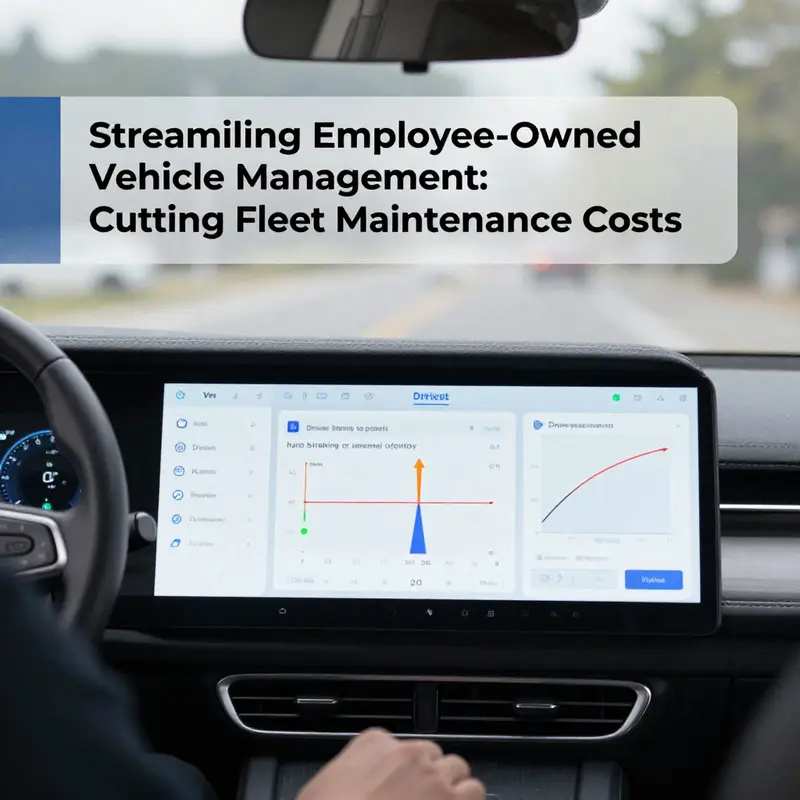
In a landscape where data guides decisions, employee-owned vehicle programs present a rare blend of opportunity and responsibility. The opportunity lies in extending business insight into personal mobility without owning a company fleet. The responsibility is to protect the employee’s privacy while controlling costs. The central lever for cost reduction is driver behavior monitoring. Not by prying, but by revealing patterns that affect maintenance. When business use of personal vehicles is governed by clear policies and consented data, driver behavior analytics become a practical tool for extending component life and trimming maintenance spend.
The software behind these programs collects a range of signals from the vehicle’s operation. It records how a driver accelerates, brakes, and corners, how long the engine runs at high RPM, how often the vehicle idles, and the typical trip length and terrain. It may also surface tire pressure indicators and other wear signals that live inside the vehicle’s systems. The aim is not to create a surveillance culture but to translate raw usage into actionable maintenance insights. A well‑designed dashboard presents these insights as prioritized alerts and trends, accessible to managers, risk teams, and, with appropriate controls, the drivers themselves. Crucially, the data handling must be consent-driven and privacy‑preserving, with access restricted to policy‑relevant roles and time-limited to what is necessary for maintenance planning.
What makes driver behavior a meaningful determinant of maintenance costs is the clear connection between how a vehicle is driven and how quickly wear accumulates. Harsh braking, rapid acceleration, and aggressive cornering stress the braking system, tires, and drivetrain components. Prolonged high RPM operation or sustained heavy loads can accelerate engine and transmission wear. Excessive idling wastes fuel and increases engine start/stop cycles, which, over time, can contribute to accelerated wear. When the software flags these patterns, maintenance teams gain a predictive view of when parts are most likely to reach their wear thresholds. The result is not just fewer breakdowns, but smarter scheduling of preventive services aligned with actual usage rather than a fixed calendar. For a broader look at how routine maintenance can translate into fuel savings and lower costs, see How Vehicle Maintenance Saves on Gas Expenses.
This approach invites a disciplined shift from reactive repairs to preventive care. The preventive maintenance scheduling that emerges from driver-behavior data is not a rigid calendar beige; it is a responsive plan that adapts to real-world use. If the data show a driver frequently makes short trips with long idle periods, the software can flag the need for more frequent checks on fluids, battery health, and battery charging systems. If another driver style correlates with higher brake wear, the system can prompt more frequent brake inspections or targeted tire rotations. The objective is to find an optimal maintenance cadence—neither over-servicing nor under‑servicing—so components last longer and service events are timely and cost-effective. This becomes especially powerful in employee-owned programs where the maintenance burden is distributed and where the cost of unexpected failures can be borne by individuals if not mitigated by policy and data-driven planning.
Beyond scheduling, the underlying philosophy is maintenance over repair. Proactive inspections, guided by real-use data, catch wear before it becomes a fault. A tire that is 30 percent worn may still roll safely, but the risk of a blowout or uneven wear increases costs over time. A brake pad that’s approaching its wear limit can be serviced before a rotor is damaged or a sensor is triggered. The software makes these thresholds visible, transforming maintenance from an afterthought into a continuous, affordable discipline. In employee-owned contexts, this requires clear governance: who pays, who approves, and how the reimbursement aligns with cost savings. When policies are explicit, employees understand that prudent maintenance protects their own vehicle value as well as the company’s bottom line.
Operationally, driver coaching emerges as the critical bridge between data and tangible cost reductions. Feedback loops must be constructive and timely. Short, targeted coaching sessions that explain how specific behaviors—such as gradual acceleration, smooth braking, and steady speeds—reduce wear can drive meaningful changes. When drivers adopt smoother styles, wear rates on brakes and tires decline, engine stress diminishes, and maintenance cycles lengthen. The coaching should be supported by simple, non‑punitive incentives that recognize improvement rather than penalize mistakes. The most successful programs couple coaching with transparent maintenance dashboards: drivers see the direct link between their driving style and the life of their vehicle components, which cultivates a sense of ownership and motivation to improve.
A crucial, often overlooked dimension is the integration of non‑invasive diagnostics and early‑warning tools. Modern vehicle interfaces allow technicians to access diagnostic data without disassembly, and many wear indicators can be interpreted through software with minimal intrusion. When a driver’s data point aligns with a diagnostic cue—such as fluctuating sensor readings, abnormal idle patterns, or unusual engine load—the system can trigger a preventive inspection rather than a reactive repair. This is cost-effective labor and parts management in action: catching issues before they demand extensive disassembly, costly parts, or emergency dispatches. It also preserves the integrity of personal vehicles by avoiding intrusive checks; the emphasis stays on data that informs maintenance planning and driver education, not on micromanaging everyday vehicle use.
Yet this technology is not without its caveats. In employee‑owned programs, privacy and data governance must be front and center. Drivers should opt in, understand what is being tracked, and why it matters to their safety and the program’s financial health. Access to data should be role‑based and time-bound, with aggregates used for policy refinement rather than individual scoring. Clear communication about data use builds trust and reduces resistance to the monitoring effort. In parallel, the program should include transparent reimbursement rules: maintenance costs should be tracked at the policy level, not levied as penalties on individuals who rely on their own cars for business tasks. When designed with consent and fairness in mind, data-driven maintenance planning becomes a shared responsibility that benefits both employers and employees.
Looking ahead, integration with existing maintenance policies is essential for sustained impact. The most effective implementations do not depend on a single data feed or a one-off audit. Instead, they blend driver-behavior analytics with structured maintenance planning, driver training, and continuous feedback loops. Over time, this trifecta reduces the frequency of avoidable repairs, extends component life, and lowers total maintenance spending per business mile. It also offers a practical approach to risk management. By identifying outlier driving patterns, the program can surface safety concerns that, if unaddressed, could lead to higher claims or downtime. In short, monitoring driver behavior is not a silver bullet; it is a strategic lever that works best when paired with policy clarity, education, and disciplined maintenance scheduling.
For readers seeking a broader perspective on how driver-behavior analytics intersect with cost control, the broader industry discussion underscores the value of telematics and tracking technologies in achieving measurable savings. External research and case studies alike point to the link between improved driving habits and longer vehicle life, fewer major repairs, and lower maintenance costs overall. This aligns with the fundamental argument for employee‑owned vehicle software: when used responsibly, it helps organizations manage maintenance risk without compromising personal mobility, privacy, or autonomy. As with any policy that touches personal assets, success hinges on governance, transparency, and a shared commitment to data‑driven decision making.
External resource: https://www.scmagazine.com/insights/fleet-management-software-optimizes-driver-behavior-to-reduce-costs
Rethinking Inspections in Employee-Owned Fleets: Non-Traditional Methods to Cut Maintenance Costs
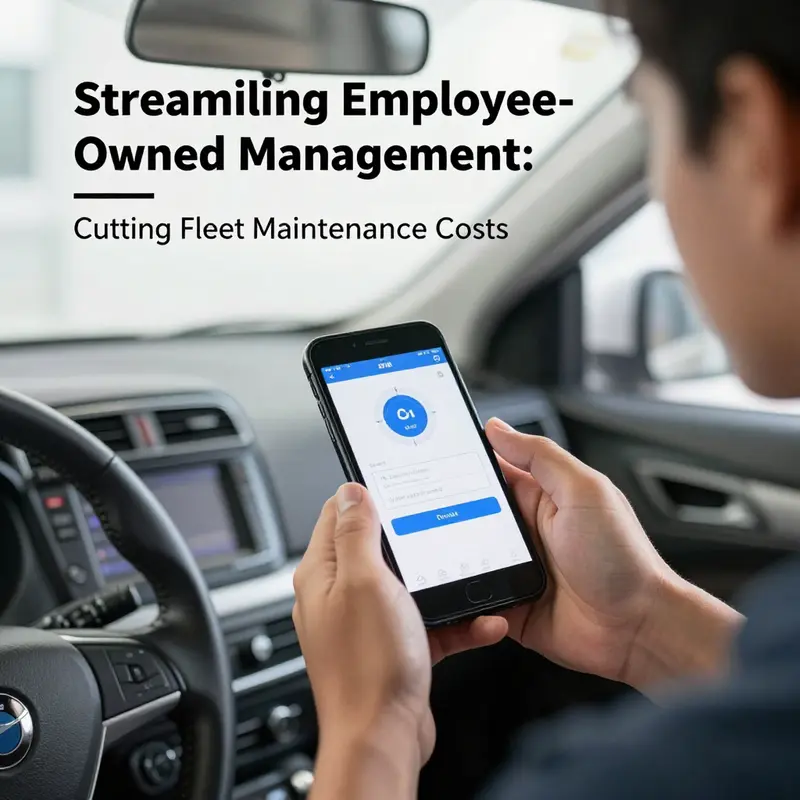
In many fleets, the largest blind spot in maintenance cost is not the price of tires or parts but the cadence and method of inspection. Traditional schedules focus on company-owned assets and standard service intervals. But when fleets incorporate employee-owned vehicles for work, the inspection regime must adapt. Nondestructive inspection services, widely used in industries that demand high reliability, offer a way to detect emerging problems without dismantling or interrupting service. They allow the vehicle’s condition to be assessed at multiple points in its life cycle, reducing the chance of unexpected failures that trigger expensive repairs or replacements. When paired with a purpose-built employee-owned vehicle software platform, this approach can scale inspection coverage across the workforce, turning every driver into a moving data point rather than a gap in the maintenance mesh.
Non-destructive inspection techniques, such as ultrasonic testing, radiographic imaging, and thermal analysis, have the advantage of revealing internal flaws before they become visible problems. In the fleet context, their value lies not only in catching issues early but in enabling a data-driven maintenance philosophy. Instead of relying on reactive fixes after a breakdown, organizations can schedule targeted checks based on observed usage, vehicle age, and specific risk indicators. For EOV programs, the software layer becomes a conductor that orchestrates these advanced checks without creating a maze of manual processes. Mobile applications can present drivers with standardized checklists that align with the most relevant inspection methods for their vehicle type. When drivers complete these checklists and attach short video clips or photos, the central system gains a high-fidelity picture of current risk. The result is a maintenance plan that emphasizes preventive and predictive actions rather than last-minute emergency repairs.
From a cost perspective, the benefits accrue in several ways. First, a broader inspection net reduces the probability of hidden faults that escalate repair bills. Second, it lowers downtime losses by catching issues before they disrupt service. Third, by controlling the inspection workflow within the EOV software, the organization can minimize travel costs and scheduling frictions associated with third-party inspectors. The ability to route inspections through a digital channel also helps standardize the quality of information. When a driver sees a single, clear form on their phone and can record video evidence at the moment of inspection, disputes over fault or responsibility decline. Even when a fault is found, the data trail supports quicker, more accurate diagnosis and cheaper fixes because technicians can prepare precisely what the vehicle needs, avoiding unnecessary disassembly or parts replacement.
An additional advantage comes from the way nondestructive data integrates with broader maintenance planning. NDT findings can feed into condition-based maintenance models, where service windows are scheduled not on miles alone but on verified material condition. In an EOV setting, that means drivers contribute ongoing streams of condition indicators instead of episodic reports. The software lens then aggregates this data, highlighting patterns such as recurring wear in certain components under specific usage profiles. Maintenance teams can then tune intervals, select noninvasive repair techniques when possible, and steer investments toward things with the highest marginal impact on reliability and cost. Importantly, this model is not about collecting more data for its own sake. It is about translating inspection results into concrete actions that reduce the likelihood of expensive corrective work later. That is where the synergy between employee engagement, smart checklists, and nondestructive inspection really shines.
However, implementing this approach requires attention to risk, compliance, and practical feasibility. Employee ownership changes the liability and reimbursement landscape. The organization must ensure that drivers who use personal vehicles for work are covered by appropriate policies, and that inspection data is securely transmitted and stored. The goal is to avoid shifting burdens onto drivers while still achieving cost reductions through better information flow. When these guardrails are in place, the cost picture improves on multiple fronts: fewer outsized repair bills, shorter vehicle downtime, and a clearer path to extending the usable life of assets. In this setup, the software acts as a bridge between the hands and the hardware, turning routine checks into timely, actionable insights. Drivers who participate in inspections become advocates for reliability rather than passive users. They learn how wear progresses under real work conditions and how small, proactive steps can preserve vehicle usefulness and resale value. And the organization benefits from a more predictable total cost of ownership, with maintenance expenditure aligning closely to actual risk rather than to the inertia of tradition.
To make the model work, organizations can adopt a few practical principles that keep costs in check while preserving safety. Start with a clear maintenance plan that distinguishes what must be done by the vehicle owner and what is best handled by a centralized team. Use standardized digital checklists and enforce data quality through lightweight validations in the app. Emphasize training that builds inspector confidence among employees, stressing both safety and accuracy. Finally, treat inspection results as a learning system: track which findings lead to the most meaningful reductions in failures and cost, and adjust schedules accordingly. In this way, nondestructive inspection is not a one-off event but a continuous discipline that scales with the size of the fleet and the reach of the driver network. The end result is a leaner, more transparent maintenance operation where every mile is a data point, and every data point points toward wiser decisions and lower total cost of ownership.
For a practical angle on how maintenance practices translate into operational savings, see How Vehicle Maintenance Saves on Gas Expenses.
External resource: A representative demonstration of video-based inspection capabilities is available at the following external resource: https://www.record360.com/video-inspection
Final thoughts
By implementing these innovative strategies through employee-owned vehicle software, business owners can effectively manage their fleet maintenance costs. Each chapter of this article offers practical tools and insights aimed at maximizing vehicle efficiency and minimizing unnecessary expenses. From preventive maintenance to behavioral monitoring, taking a proactive approach ensures not only cost reductions but also an overall smoother operation. Investing in specialized software not only streamlines vehicle management but also cultivates a culture of responsibility among employees caring for their vehicles. Adopting these practices can lead to a robust framework for efficient fleet management, ultimately providing a significant return on investment.