
Managing a fleet of vehicles requires not just operational efficiency but also a comprehensive understanding of each vehicle’s maintenance history. Vehicle maintenance records hold critical insights that can influence purchasing decisions and ongoing maintenance strategies for business owners. From using third-party data platforms to accessing official dealership records and insurance data, obtaining these records is vital for informed decision-making. This guide will explore various approaches to efficiently secure vehicle maintenance records, ensuring businesses remain ahead of costly surprises and enjoy optimal performance from their fleet.
null
null
Accessing the Manufacturer’s Memory: Retrieving Vehicle Maintenance Records Directly from Official 4S Dealerships
Official 4S dealerships hold a unique archive: the manufacturer’s own record of every service event since the car left the factory. When a vehicle spends its life within a brand’s service network, those records live in a Dealer Management System that is designed to be accessed by authorized customers. This makes the 4S channel the most authoritative source for a brand’s maintenance history, especially when precision matters, such as verifying a long service history or confirming the exact parts that were replaced.
To begin, you should assemble two core documents: a valid driver’s license or ID card and the vehicle’s registration certificate, the green copy in many markets. These documents confirm your identity and tie you to the car in question. If you are unsure what to bring, a quick call to the service desk can confirm the exact requirements for your location and brand network.
Next, visit the service department of a dealership within the same brand network where the car was originally sold or most recently serviced. You don’t need to return to the exact location, but you should go to an authorized facility of the same brand. When you arrive, tell the front desk or service advisor that you would like the complete maintenance and repair history for your vehicle. Provide them with either your vehicle’s VIN, which is often found on the lower-left corner of the windshield, or your license plate number. If you have the car’s previous service receipts or a maintenance booklet, bringing those can help the advisor cross-check what is already in the system.
On arrival you will undergo identity verification. The staff will verify your identity using your driver’s license and the vehicle registration. This step protects privacy and ensures data security before any data leaves the internal system. In most cases you will see a short privacy statement and a consent request, clarifying how the information will be used and who may access it. If the vehicle is owned by a business, be prepared to provide documentation that proves authorized access on behalf of the owner.
After verification, the service advisor will access the dealership’s internal system and retrieve the full maintenance and repair history. The records typically include the date of each service, the specific maintenance tasks performed, parts replaced with part numbers, labor hours, and even the technician’s ID. In many cases the history is delivered as a detailed report or PDF that you can keep for your records. If the system is busy or the file is large, there may be a short wait while the data is pulled and formatted for you. Some dealerships may also offer a concise summary if you request a quick snapshot, which can be useful when you want a high-level view before diving into details.
Key advantages of this method are clear. The records come directly from the manufacturer’s database, making them the most authoritative and least likely to be incorrect or missing. The level of detail is usually unparalleled: exact service dates, precise parts replaced with numbers, hours billed for labor, and the technician’s ID. You gain confidence that the information reflects how the car was serviced within the brand network. This can be especially valuable when evaluating a vehicle’s provenance or verifying compliance with brand-specific maintenance intervals that carry warranty implications. For buyers, it can help confirm that the vehicle met required service milestones and that no critical upkeep was skipped within the known service windows.
There are, however, meaningful limitations to keep in mind. The data retrieved from a 4S dealership is typically siloed within that brand’s authorized network. If the vehicle was serviced at independent shops or at other brands’ centers, those records will not appear in this source. An in-person visit is often required, which can be time-consuming and may involve travel—though some dealerships can provide a printed copy or a digital file on request. If you anticipate needing data from multiple brands, you should plan for multiple visits or coordinate with the seller to obtain consent for cross-brand retrieval in advance. Availability may also vary by market, and some records may be restricted to owners or to authorized representatives, depending on local privacy laws.
Practical tips can smooth the process. Bring both your driving license or ID card and the vehicle registration, and have the VIN handy, which is usually visible on the windshield or listed in the vehicle’s documents. When you speak with the service advisor, be precise about the period you want covered or the specific maintenance events you want included. If the car has multiple owners or complex service history, ask the advisor to export the data as a readable PDF or spreadsheet for easier review. It helps to confirm whether the dealership can provide digital access or a portable copy during the visit, so you leave with something you can annotate later. If you want a quick sense of the maintenance landscape before you visit, review a general overview of maintenance concepts through the linked resource in this article. The link uses an internal reference to a broader topic that can deepen your understanding of what maintenance involves and why it matters for long-term reliability.
Beyond the immediate records, you may consider using this method as part of a broader verification strategy. When you combine the 4S history with third-party history platforms, you get a fuller picture that includes records from shops outside the brand network. Insurance records can corroborate major repairs and accident history, helping you detect discrepancies or hidden issues. This cross-verification is a powerful way to assess a vehicle’s condition before purchase or during ownership diligence. A well-rounded approach reduces the risk of undisclosed maintenance gaps that can affect reliability and resale value. If you are evaluating how maintenance affects operating costs, the detailed data from the dealership can feed an accurate maintenance budget and help you plan future service intervals with greater precision. For readers who want a broader context about how vehicle maintenance fits into overall ownership, see the related resources on maintenance concepts and budgeting within this site.
In some cases, manufacturers offer online portals or apps that let you link your VIN to view maintenance history digitally. This can be a convenient complement to a visit to the dealership, especially if you want ongoing access without returning to a service desk every time. If you pursue this option, keep your VIN and personal identification information secure, and be mindful of the privacy settings and access permissions within the portal. Remember that online access is a complement, not a replacement for the formal record obtained directly from the dealership, particularly when exact part numbers and technician identifiers are needed for warranty or resale validation.
In sum, obtaining maintenance records from official 4S dealerships provides the most authoritative and detailed data for a brand-specific history. Use this channel in tandem with reputable third-party sources for a complete, cross-verified view of a vehicle’s maintenance and repair narrative. This layered approach supports smarter decisions, whether you are buying, selling, or simply monitoring the health of your car over time. External resources can broaden your understanding of how vehicle history information is managed and used in consumer decisions: https://www.nmvtis.gov/
From Claims to Clear History: Accessing Vehicle Maintenance Records Through Insurance Companies
When you purchase or evaluate a used vehicle, insurance records can illuminate the car’s past in ways that other sources do not. Insurance claims chronicle events that required repairs, the shops involved, and sometimes even the cost of those repairs. While not a substitute for a full maintenance history, insurer records can fill in crucial gaps—especially for major work following an accident. Accessing these records requires a clear understanding of who holds them, what they contain, and how to request them while respecting privacy and security.
The first step is identifying which insurer or insurers might have covered the vehicle over its lifetime. In many regions, the vehicle’s registration documents list current and past insurers, but that information can also appear in older policy documents or on a VIN lookup service. If you do not have direct access to the policy, you may still determine potential holders by tracing the vehicle’s ownership history and the reported incidents that would have triggered claims. If the car has changed hands multiple times, you may be dealing with more than one insurer, which is common for vehicles with long service lives or leased arrangements. In such cases, you should prepare to contact each insurer separately to piece together a complete picture.
Once you have identified the insurer(s), the practical path to access the records depends on your role and the insurer’s digital options. If you are the policyholder, most insurers provide direct access through an online portal or mobile app. You log in with your credentials and navigate to sections often labeled something like Claims History, Service Records, or Vehicle Details. The system will typically require the vehicle’s VIN and may also ask for your policy number or other identifying information to confirm your identity. In some cases, you’ll have the option to generate a formal records request that can be delivered electronically or by mail. If you are not the policyholder, you may still obtain records, but you will almost always need explicit authorization from the policyholder and, at times, a power of attorney or a written consent form the insurer recognizes. This requirement protects sensitive personal information and aligns with privacy regulations that govern who can access claim data.
When you reach the point of making a request, be precise and patient. Insurance claims histories typically cover incidents that led to repairs within an insured period. The records will usually include the incident date, a narrative of what occurred, the assessed repair costs, the final settlement amount, and, in many cases, the repair shop that performed the work. You may also see notes about involved parts, and sometimes the event type, such as collision, theft recovery, or weather-related damage. It is important to understand that these are claim-driven records. Routine maintenance, scheduled service, and non-claim repairs are generally not included unless they were billed to the insurer as a covered repair. This distinction is critical for buyers who want a complete maintenance timeline independent of whether those services were claimed under an insurance policy.
A practical way to frame your request is to start with the scope you want to see. If you suspect a vehicle has undergone substantial work after a specific date, ask for all claims related to that period. If your concern is broader, request a claims history with a focus on major repairs and the associated vendors. In many cases, the insurer will provide a summary or an official document called a claims history report, which you can review for consistency with other sources. If the insurer’s portal offers downloadable PDFs, you can systematically compare the dates, repair shops, and reported problems against records from the 4S dealership network or independent shops found in third-party history reports.
The value of insurer records grows when you compare them with other sources. If a claim history reveals a major repair that contradicts maintenance invoices found elsewhere, it could indicate an anomaly worth deeper investigation. Conversely, if the insurer confirms a documented maintenance event that aligns with a dealership’s service log, your confidence in the vehicle’s condition increases. The cross-checking process helps you detect inconsistencies, such as missing intervals or tampered mileage, which, when combined with third-party histories, strengthens your overall assessment of the vehicle’s health.
It is also useful to recognize the limitations of insurance data. Not all repairs are claimed, and not all incidents are reported to insurers. A minor accident that was settled privately or a preventive replacement that wasn’t claimed will not appear in an insurer’s records. Non-claim maintenance—oil changes, tire rotations, brake pad replacements—will typically lie outside the insurer’s purview. If you rely solely on insurer data, you risk overlooking routine service that could still impact long-term reliability. Therefore, insurance records should be seen as one piece of a broader mosaic rather than a standalone source. A well-rounded approach combines insurer records with a reputable third-party maintenance history and, when possible, direct dealership records from the vehicle’s brand or the servicing network where the vehicle was most often serviced.
For readers who want a concise synthesis of how insurers contribute to the vehicle history, consider this perspective: insurer data offers a high-fidelity window into major repairs and accidents, including where the work was done and what was replaced. It excels at confirming or refuting a potential accident history and the severity of repairs. It does not, however, replace the need for routine maintenance data or cross-brand service records. With that in mind, a buyer should approach insurer-provided data as a rich corroborating source that works best when integrated with other records. A holistic review reduces the chance of buying a vehicle with undisclosed issues and gives buyers a clearer path to estimating future maintenance costs.
As you navigate these records, you may encounter situations where you need to explain your request to the insurer. A brief, professional explanation helps. State that you are assessing the vehicle’s history for a potential purchase or for a due-diligence check before a lease or purchase. If you have the vehicle’s VIN and your authorization, many insurers will respond more quickly. It also helps to provide a simple consent form or a signed letter from the policyholder, clarifying that you are authorized to obtain the records on their behalf. Such documentation can expedite the process and reduce back-and-forth, especially if the insurer’s privacy procedures are strict.
In practice, a buyer who uses insurer records as part of a multi-source verification gains leverage. You can align the insurer’s claim history with a dealership’s service notes and with a reputable third-party vehicle history report. The triangulation yields a robust narrative about the car’s past, including the reliability of the major repairs and the integrity of the documentation surrounding them. A well-documented history can also facilitate smoother negotiations, as transparency lowers perceived risk and demonstrates due diligence.
To expand your understanding of what maintenance means in a vehicle’s lifecycle, you may want to explore broader definitions and frameworks. For a broader view of maintenance definitions, see What is vehicle maintenance.
If you are curious about how insurers’ data interface with other sources, a practical next step is to compare insurer records with third-party history databases and the official dealership records from the car’s original brand network. This approach helps you assemble a more complete maintenance timeline and detect any gaps or inconsistencies. This approach helps you assemble a more complete maintenance timeline and detect any gaps or inconsistencies. In the end, insurer records are a powerful tool in your toolkit when used judiciously, but they work best as part of a balanced, multi-source verification strategy rather than as a stand-alone source. They provide a window into the big-ticket events that shaped the vehicle’s condition, while other sources fill in the daily rhythm of routine care that maintains long-term reliability.
End note: the process works more smoothly when you prepare ahead. Gather the VIN, confirm the insurer(s) you believe may hold records, and obtain any required authorization in advance. When the data arrives, review it with the same careful eye you apply to any maintenance report: look for dates, parts, costs, and shops, and cross-check against other sources for consistency. This disciplined, multi-source approach is your best path to a trustworthy picture of a vehicle’s maintenance history, particularly when you are evaluating a used car for purchase or lease.
External resource: https://www.consumerreports.org
Behind the VIN: Navigating the Limitations and Challenges in Getting Vehicle Maintenance Records
Assessing a used car’s condition without seeing the service log is like judging a book by its cover. Maintenance records carry information not visible on the surface: the frequency of visits, the parts replaced, and the driver’s habits that shaped wear. Yet obtaining a complete history is rarely straightforward. Each method for pulling records has its own blind spots, and privacy rules, data-sharing practices, and technical hurdles shape what you can actually access. A careful buyer or a curious owner must move with a plan that accepts trade-offs rather than looking for a single source of truth. In this chapter, we examine the core limitations and challenges you will encounter when trying to assemble a vehicle’s maintenance history, and we explain how to work around them without chasing miracles.
The most convenient paths often come from third‑party data platforms that aggregate information from multiple repair shops and service centers. These databases can deliver a surprisingly broad snapshot in minutes, which is invaluable when you are weighing a used car decision. But this convenience comes with a caveat: the completeness and accuracy of what you see depend entirely on the data providers who contribute records. If a shop does not participate, its maintenance history remains invisible in the platform’s feed, and gaps can stretch for months or even years. Even with broad coverage, the platform’s data quality varies. Duplicate entries, inconsistent spellings, or conflicting notes can creep in as different centers report in different formats. You may end up with a history that looks extensive but is missing critical episodes, such as a regular-but-incomplete service plan or a late, undocumented repair. A further practical risk is human error: when users enter the VIN, a digit can be swapped or omitted, pulling a report for the wrong vehicle or returning nothing at all. This is why careful VIN verification and cross‑checking with other sources are essential rather than assuming a single online record is definitive. When evaluating a third‑party history, treat the document as a strong starting point rather than a final verdict, and read the embedded cues—the dates, the scope of work, and the consistency with known service intervals. The value often lies in the patterns: a steady cadence of maintenance, a cluster of major repairs around certain mileage thresholds, or a string of visits tied to a particular region or class of shops. And while these platforms can reveal mileage verification and even some claimed accidents, the presence of these details is not guaranteed and should be weighed against possible gaps.
From a practical standpoint, the allure of third‑party platforms is partly logistical. You can obtain a report online, usually with little friction, and the turnaround is fast. This speed is a double-edged sword, however. A quick read can mask deeper issues in the data’s provenance. If the report lists a complete maintenance history, you still won’t know whether some entries came from a different vehicle that shares a VIN via a documentation error, or whether certain routine services were performed but never logged in the system you accessed. This is especially relevant when trying to establish a baseline for the vehicle’s condition. A clean maintenance slate in a single platform may obscure ongoing wear not yet captured in the database. That is why a cautious approach combines these online records with independent verification, such as invoices, receipts, or direct confirmation from the shops where possible. The aim is not to discredit the convenience of digital records but to augment them with tangible corroboration. To sharpen your understanding of what maintenance entails in the practical, everyday sense, it helps to explore the broader concept of vehicle maintenance itself. For a grounded overview, see What is vehicle maintenance. What is vehicle maintenance.
Moving beyond the convenience of third‑party datasets, the official channels at a brand’s authorized network offer another layer of depth—and a different kind of reliability. If you know the vehicle was serviced primarily within a single brand’s ecosystem, contacting the dealership or service department where the work was done can yield highly detailed records. These official sources often provide original data from the manufacturer’s internal systems, sometimes including precise maintenance dates, exact parts replaced with part numbers, labor hours, and the technician’s identifiers. The level of detail can be astonishing, which makes this route academically compelling for historical accuracy. Yet there are practical restraints. Such records are typically bound to the brand’s own network, which means you may miss important pieces if the vehicle has visited non-brand shops or independent garages for repairs. Access is sometimes restricted to owners or authorized representatives, and privacy protections can require you to prove ownership or obtain explicit consent. In short, this channel is the gold standard for data quality when it is applicable, but it is not a universal solution. When the vehicle’s service life strays outside the brand’s authorized network, the full picture remains incomplete, and you must turn to other sources to fill the gaps.
A third pillar involves insurance records, especially when the vehicle’s history includes notable accidents or major repairs. Insurance companies maintain meticulous claim files that can illuminate events not always captured in maintenance logs. A claim record can confirm that a major repair occurred, identify the parts that were replaced, and often reveal the cost and the involved service providers. This information complements other data by focusing on incidents rather than routine maintenance, which is invaluable for spotting “accident histories” that might otherwise be inferred from mileage and wear alone. However, insurance records have their own boundaries. They reflect only what was reported and processed through insurance, which means minor repairs, cosmetic fixes, or routine maintenance that never led to an insurance claim may be missing. Access to these records is typically restricted and requires proof of ownership or authorization, and the process can be time-consuming. If you do obtain them, use them as a cross‑check rather than a standalone source, comparing the claim notes with the service entries from other channels to identify any inconsistencies or gaps.
Together, these pathways present a coherent reality: no single source offers a flawless, complete history for every vehicle. The limits of data coverage, privacy barriers, and reporting standards converge to create a landscape where data integrity depends on your approach as much as on the data itself. The reader should anticipate that some threads may go quiet, while others surface with opposing details. A realistic plan is to navigate these imperfect signals with disciplined cross‑verification, a patient pace, and a readiness to reassess conclusions as new information arrives. When you feel confident in the corroborated signals—reliable maintenance intervals, verifiable replacements, and a consistent mileage record—you gain a solid read on the vehicle’s condition. When you sense dissonance between sources—a late‑stage, undocumented repair; a mileage jump that doesn’t align with service visits; or a missing entry that should exist in a given maintenance window—pause and seek further evidence rather than rushing to a conclusion. The goal is not a magical, uninterrupted history but a robust, triangulated understanding that reduces risk.
In practice, this means approaching each vehicle with a clear plan for integration. Start with a baseline check of the VIN’s identity and ensure you are querying the correct vehicle in every source. Then gather the three core channels in parallel: a third‑party history report for breadth, an official brand channel for depth where available, and insurance records for claims that illuminate significant events. Treat any discrepancy as a signal to dig deeper rather than a reason to abandon the inquiry. Photographs of invoices, service stamps, and even the vehicle’s odometer readings at different points provide tangible anchors. The more anchors you have, the better you can assess consistency over time. And while the reality of data fragmentation can be frustrating, it also reinforces a practical principle: a comprehensive assessment rarely rests on a single document. It rests on a disciplined synthesis of multiple sources, cross‑referenced for coherence and plausibility. As you build your understanding, remember that maintenance data is not merely a ledger of fixes; it is a narrative about how the vehicle was cared for, how it aged, and how effectively the prior owners managed its upkeep. That narrative is essential for making informed decisions about value, safety, and future maintenance needs, even when the trail is uneven.
Tracing the Car’s Past: Best Practices for Pulling Vehicle Maintenance Records
When you evaluate a used car, one of the most reliable predictors of future reliability is the vehicle’s maintenance history. A complete maintenance record can reveal whether the car was cared for according to the manufacturer’s schedule, hint at hidden issues, and illuminate its true value beyond the surface appearance. Yet many buyers and new owners stumble here, chasing scattered receipts or vague summaries. The path to a trustworthy history is not a single source but a practical approach that blends three complementary sources, used in concert to maximize accuracy and depth. Start with a fast, broad snapshot from a reputable third‑party data platform, then confirm details with the brand’s official dealership network, and finally corroborate or supplement with the insurer’s claim records when applicable. This combination yields a narrative of care and repair that is far more reliable than any one source alone. Along the way, you’ll also learn practical steps for maintaining your own records to support future resale, warranties, or guaranteed service plans. To keep the discussion grounded, imagine you are assembling a chronological dossier: each entry should reflect a service event, the parts involved, the labor hours, and the context of the work—whether it was routine maintenance, a repair, or an alignment after a tire change. This mindset helps you evaluate not just what was done, but how well the vehicle has been tended over time.
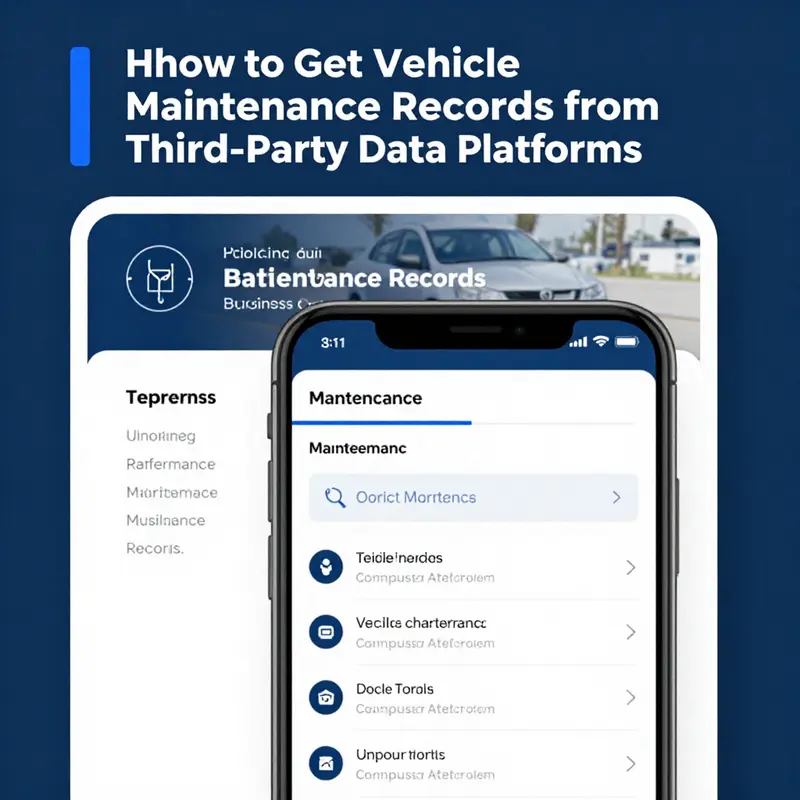
The fastest route to a comprehensive view is through a reputable third‑party data platform. In practice, such platforms aggregate maintenance and repair records from a broad network of service providers, including brand‑authorized dealerships and independent repair centers. The appeal is clear: you receive a unified report that compresses months or even years of service into a single, readable document. When you access this kind of service, the typical workflow is straightforward. You open the query tool, enter the vehicle’s VIN—the 17‑digit identifier that appears on the windshield or in the vehicle’s registration documents—and request a maintenance history retrieval. In most cases the process is online and instantaneous. The resulting report often includes more than routine service dates and mileage. Expect to see accident or insurance claims history, current vehicle status such as liens or seizures, and even mileage verification that flags odometer tampering. This last point is particularly valuable for used‑car purchases, because a sudden mileage anomaly can signal a misrepresented odometer or mileage fraud. One practical tip is to double‑check the VIN before submitting the request. A single digit entered incorrectly can yield a distorted history, or no history at all.
Beyond maintenance entries, the breadth of data in these third‑party reports can be surprisingly useful for a buyer’s due diligence. For example, the report may indicate if a vehicle has undergone major repairs, such as transmission work or body repairs after an accident, and it may show whether the vehicle has been reported as stolen, crashed, or under monetary encumbrance. While not every platform will have the same depth, the general expectation is coverage across multiple service networks, giving you a fuller picture than would be possible by requesting records from a single shop. This method shines when a vehicle has a dispersed service history—the kind you’d expect from a car that has lived in different states or regions, or one that has moved across owners who favored different service ecosystems. If you are new to this, treat the third‑party platform as your first pass: a quick, broad, and fairly reliable snapshot that tells you where to dig next.
If the initial snapshot raises questions or confirms a pattern of usage that warrants closer examination, the next step is to request the brand’s official dealership data. The 4S shop that most recently serviced the vehicle—whether it was a brand’s original dealer or a widely recognized authorized network—can often supply a highly detailed, brand‑specific archive. The data come directly from the manufacturer’s Dealer Management System, which means the records are precise down to exact service dates, the specific parts replaced (with part numbers), the type of oil used, and even labor hours. The level of detail available through this channel is hard to match elsewhere, and it is especially authoritative when you want to confirm adherence to recommended maintenance schedules or verify replacement parts. However, this method has a clear limitation: it generally only includes data from that brand’s network. If the car was serviced at independent shops or at dealerships belonging to a different brand, those entries will be outside the scope of this source. The process to obtain these records—typically requiring the VIN and proof of ownership or authorization—can involve a brief in‑person or remote verification step, but the payoff is a near‑definitive account of brand‑specific service history.
In situations where the vehicle has been involved in an accident or sustained major damage, an insurance inquiry adds an essential corroborating layer. Insurance claim records are meticulous about documenting the event, the repairs, and the parts replaced. Although these do not replace routine maintenance histories, they identify large‑ticket repairs and reveal whether the vehicle has a claim history that could affect its long‑term reliability or resale value. If a claim exists, the report will typically list the claim number, the claim type, the repair work performed, and the cost. Cross‑referencing these details with both the third‑party history and the dealership records helps uncover gaps and reconciles discrepancies. The insurer’s perspective can be especially revealing when a vehicle has undergone systemic repairs or when a damaged component was replaced with upgraded parts, which could influence maintenance planning and warranty eligibility.
Taken together, the trio of sources—cross‑validated third‑party history, brand‑specific dealership data, and insurer claim records—provides a robust framework for understanding a vehicle’s past. The practical takeaway is simple: begin with the broad view, then drill down into brand specifics, and finally triangulate with insurance data to confirm any significant events. Throughout this process, it is also valuable to maintain your own archive. Save digital copies of every receipt, invoice, and service note you obtain, and organize them by date and entry type. This personal “vehicle medical record” becomes an invaluable resource for resale, warranty claims, and routine care decisions. If you want to deepen your understanding of what constitutes typical maintenance, you can explore a detailed overview of vehicle maintenance concepts here: What is Vehicle Maintenance.
From a practical standpoint, there are a few habits that keep this process efficient and reliable. First, keep a clear log of what you request and from whom, including the VIN, the date of the request, and the response you receive. This creates a traceable trail in case records arrive late or contain ambiguities. Second, be prepared to verify ownership and identity when requesting records from official channels. Service departments and brand portals often require documentation such as a driver’s license or vehicle registration, especially when sensitive information is involved. Third, recognize that no single source is perfect. If the third‑party platform reports a certain sequence of maintenance events but the dealership records disagree on a specific entry, treat the discrepancy as a red flag worth investigating rather than a mere nuisance. In such cases, you can request supporting documents, such as service invoices or parts receipts, to resolve the debate.
Finally, consider the forward plan. Use the gathered history to align future maintenance with the manufacturer’s schedule, and keep an updated calendar linked to your personal records. This makes resale smoother and warranties more likely to be honored. For instance, if the history shows a late or skipped service, you can negotiate with a potential buyer or a financing institution by presenting a plan for addressing the lapse and re‑establishing proper maintenance cadence. In this way, the history becomes not just a record of the past but a guide for responsible stewardship of the vehicle moving forward.
Internal link cue: For a quick refresher on what constitutes routine care, see What is Vehicle Maintenance.
External reference for further context and practices in different markets can be found here: https://weixin.qq.com/k/3aKzQ7wvL8JpZd4j9k7r
Final thoughts
Acquiring vehicle maintenance records is a pivotal aspect of managing a fleet effectively. By leveraging third-party platforms, official dealerships, and insurance inquiries, business owners can ensure they make informed decisions regarding vehicle purchases and maintenance. However, being aware of the potential limitations is equally important, along with adopting best practices tailored for your specific needs. Empower your business today by efficiently accessing and utilizing these records to maintain a well-performing fleet.