

For business owners, developing a robust vehicle maintenance policy is crucial not only for ensuring safety but also for extending the lifespan of vehicles and minimizing operating costs. This article delves into how to construct a comprehensive policy that relies on manufacturer guidelines, adapts to real-world driving conditions, and implements a record-keeping system. Each chapter weaves together these elements, providing you with the necessary tools and insights to build an effective maintenance framework that upholds both quality and accountability in your vehicle operations.
From Manufacturer Maps to Real-World Roads: Crafting a Living Vehicle Maintenance Policy
A vehicle maintenance policy is not a static checklist but a living framework that translates the manufacturer’s guidance into daily decisions on the road. The starting point is anchoring policy design in the owner’s manual—the engineering intent and validated service envelopes that underlie performance, reliability, and safety. When a policy reflects those specifications, it provides a reliable baseline that can adapt with real-world usage data, environmental conditions, and organizational needs. The baseline is simple in principle: follow manufacturer service intervals for critical components, respect documented procedures, and maintain the vehicle so that it stays within the design envelope. In practice, that baseline becomes a dynamic compass when combined with actual wear patterns, driving patterns, and risk tolerance.
The policy’s value comes from translating the manual, not by duplicating it, but by codifying decisions about when to intervene, who is responsible, and how evidence from maintenance history informs future actions. This approach avoids rigidity and enables budgeting aligned with actual needs rather than artificial milestones. A policy anchored in manufacturer guidance and informed by data can maximize uptime and minimize unnecessary interventions. The regulatory context matters too. Regulations may shape maintenance practice, and contemporary references such as the FMCSA guidance on vehicle maintenance emphasize aligning maintenance with manufacturer standards to protect consumer rights and safety. The policy should be compliant yet pragmatic, balancing the letter of the law with the realities of fleet operations. For readers seeking formal regulatory context, consult the FMCSA guidance on vehicle maintenance: https://www.fmcsa.dot.gov/regulations/vehicle-maintenance.
Adaptation to real-world conditions is the practical heartbeat of any robust policy. Urban driving, stop-and-go, long-haul, dusty environments, high-heat, and cold-weather cycles each stress systems differently. The policy should allow for conditional adjustments to service intervals within the manufacturer’s ranges, and emphasize more frequent checks of critical fluids and filters as conditions demand. It should also specify criteria that trigger adjustments, such as elevated oil-contaminant levels or unusually rapid filter clogging, and how to document those decisions. Seasonal adjustments should be codified, so cooling systems, battery health, and lubrication behave consistently in extreme climates. The goal is a data-informed, rule-based framework that remains flexible as patterns emerge.
Drivers contribute to wear in identifiable ways, such as frequent short trips, heavy loads, or harsh driving regimes. The policy should acknowledge these factors and reflect them in maintenance planning. It should also consider environmental conditions, such as dusty seasons or flood-prone periods, and describe how exposure data—where available—can influence inspection frequency. The dynamic nature of wear underscores the need for a living document rather than a fixed schedule.
Records form the backbone of predictive maintenance. The policy should require a detailed log of service dates, mileages, tasks performed, parts replaced, fluids used, and costs. A robust log supports forecasting, warranty claims, resale value, and diagnosis of intermittent issues. Digital logs backed by fleet management software can automate reminders, dashboards, and analytics, but only if data entry is disciplined. The policy should mandate timely data entry, standardized terminology, and routine audits to ensure data quality. In addition to compliance, records enable continuous improvement by surfacing patterns that prompt reviews of intervals, parts sourcing, and driver training.
Selecting service providers is a critical decision point. The policy should require properly licensed providers with technicians who hold current qualifications applicable to the vehicle platform. Where applicable, authorized channels should be preferred to preserve warranty terms and ensure OEM-compatible parts. Outside warranty, reputable independents can be appropriate, as long as they use OEM-approved or equivalent quality parts and proper procedures. Criteria for evaluating providers should include accreditation, traceability of parts, diagnostic capabilities, and evidence of ongoing training. A policy that emphasizes qualifications and transparency reduces the risk of substandard work that could compromise safety or drive up long-term costs.
Differentiation between routine maintenance and repairs helps prevent over-maintenance and ensures diagnostic-driven interventions. Routine maintenance includes proactive tasks performed on a schedule, with clearly defined timing and acceptance criteria. Repairs address degraded or failed components and should be driven by diagnostic results and safety implications. The policy should require evidence-based decisions, balancing the need to fix real issues with the risk of unnecessary replacements.
Preventive inspections knit the policy together. A cadence for checks should align with critical systems, while leaving room for professional judgment. For example, routine checks could cover tires, fluids, and basic systems weekly or monthly, with annual diagnostic scans that evaluate engine, transmission, emissions, and onboard diagnostics. These are guidelines, not rigid mandates, and should be documented with notes on anomalies and actions taken. When patterns emerge—such as recurring battery issues in a climate, or unusual wear trends—the policy should trigger reviews of preventive measures, training, or supplier adjustments.
Budget and resource planning cap the policy with a practical lens. Maintenance costs extend beyond parts and labor to include diagnostics, consumables, and occasional major repairs. A thoughtful budget should allocate funds for parts, service, tooling, training, and data management. It should also anticipate variability as the fleet ages and usage patterns change. A well-funded program improves uptime, reduces unplanned downtime, and supports safer operations while optimizing total cost of ownership.
The policy’s end state is a living document that evolves with usage, environment, and the fleet’s condition. Manufacturer guidance remains the foundation, but real-world data, records, capable service providers, clear maintenance-vs-repair distinctions, proactive inspections, and prudent budgeting give the policy practical relevance. The broader aim is to protect safety and reliability while managing cost and risk across the operation. For additional regulatory context, consult ongoing industry resources such as FMCSA guidance on vehicle maintenance: https://www.fmcsa.dot.gov/regulations/vehicle-maintenance.
From Road Realities to Policy Precision: Building a Real-World Vehicle Maintenance Framework
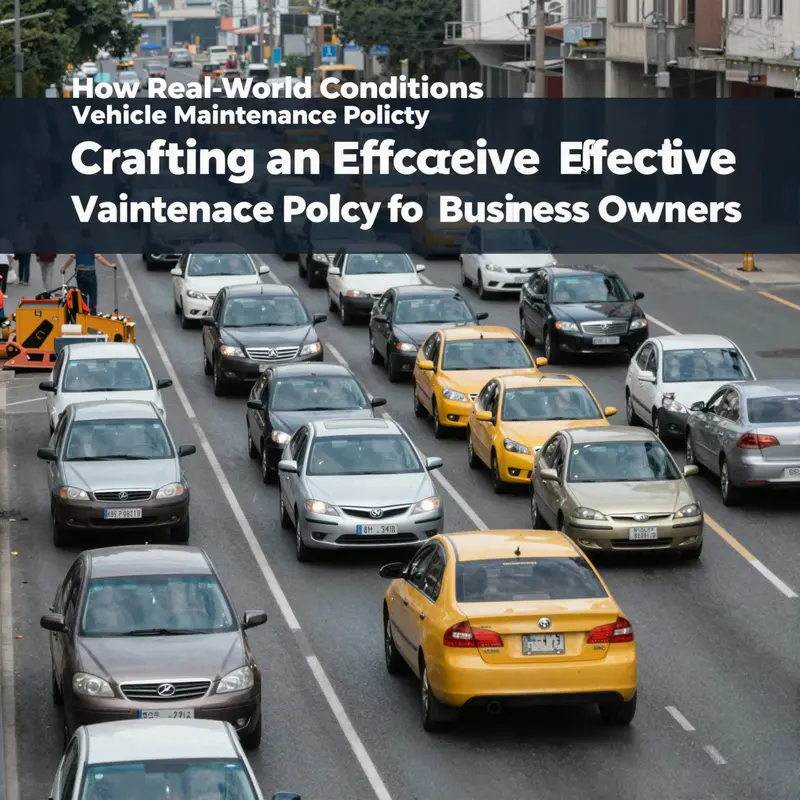
Every policy is a map, but a maintenance policy is most useful when it reflects how a vehicle actually lives on the road. A framework built solely around calendar dates and mileage can drift away from the realities of daily use, environmental exposure, and the unpredictable wear that accompanies real driving. The strongest vehicle maintenance policy begins with a recognition that safety, cost efficiency, and reliability emerge not from rigid adherence to a timetable alone, but from translating manufacturer guidance into a living, data-informed practice that mirrors how, where, and why a vehicle is driven. In this sense, policy development becomes a discipline of aligning formal guidance with observed condition, while maintaining a clear line of accountability, traceability, and adaptability. It is about designing a system that is precise enough to protect safety and durability, yet flexible enough to evolve as conditions change and as new evidence about vehicle health becomes available.
At the foundation of any policy sits the manufacturer’s guidance. The owner’s manual is more than a list of service intervals; it is the official specification for how a vehicle should be cared for to preserve its performance, efficiency, and warranty protections. The intervals for routine tasks—oil changes, filter replacements, and fluid checks—are not arbitrary. They are calibrated to the engine design, lubrication regime, and the thermal and mechanical stresses a particular model is engineered to endure. For instance, many brands outline an initial service window that lies between five thousand and ten thousand kilometers, or within six months of purchase, whichever comes first. This baseline is not optional lore but a protection for component longevity and warranty compliance. A policy that begins with strict adherence to these manufacturer baselines does more than safeguard performance; it creates a defensible framework for longer-term budgeting and risk management. The principle here is straightforward: the closest guide to the vehicle’s needs is the maker’s own specification, and any deviation must be justified with data rather than habit.
Yet a policy that only parrots the manual risks becoming stale. Real roads impose conditions that the showroom never experiences. Cities that pulse with stop-and-go traffic, highways that ride through extreme weather, and environments loaded with dust or moisture all interact with a vehicle in ways that can accelerate wear in disproportionate ways. The most enduring policies step beyond a one-size-fits-all schedule. They introduce a dynamic, condition-informed dimension that adjusts intervals to reflect actual exposure. In practice, this means translating driving patterns into maintenance triggers. Urban commutes, where engines spend longer cycles at lower speeds and where frequent braking heats up the friction surfaces, may demand more frequent oil and filter attention. A policy might specify that in dense urban settings the oil-change interval shifts from a fixed 10,000 kilometers to an 8,000-kilometer cadence, recognizing the heightened oxidative and thermal stress under those conditions. Likewise, vehicles operating in dusty environments accumulate particulate ingress and filter loading more quickly, which accelerates the need for air and cabin filter replacements. The policy can therefore elevate these components from a routine 20,000-kilometer replacement to a more aggressive range, such as 10,000–15,000 kilometers, depending on measured environmental exposure. And for drivers racking up substantial daily mileage—over fifty kilometers a day—the plan should include more frequent fluid inspections, even when the odometer has not yet reached the next scheduled service. In short, real-world conditions demand a policy that pays attention to the road’s fingerprints on machinery as a diagnostic guide rather than a mere calendar-based signpost.
A robust policy, therefore, blends the steady cadence of manufacturer guidance with a responsive schedule informed by actual use. This balance requires structured record-keeping and a reliable mechanism for collecting and analyzing usage data. The value of careful record-keeping cannot be overstated. Detailed maintenance logs—recording dates, mileages, service items, parts replaced, and costs—do more than prove care for resale or insurance claims. They enable forecasting with greater precision and help detect patterns that individual drivers might overlook. Digital logs and fleet-management software can automate reminders, consolidate data across vehicles, and generate actionable insights about when the next service should occur. The evidence trail becomes a living map of the policy’s effectiveness, highlighting preventive interventions that consistently reduce downtime and emergency repairs. When a policy is anchored in data, it can justify adjustments to service intervals, parts inventory, and technician workloads, all of which contribute to smoother operations and better total-cost-of-ownership outcomes.
The path from guidance to practice also hinges on choosing the right service providers. The selection of a repair and maintenance network has a direct bearing on policy effectiveness. Reputable shops with proper licensing, certified technicians, and transparent parts sourcing create a trustable interface between policy intent and real-world service. National regulatory frameworks often require repair businesses to register with local transport authorities and to hold valid operating permits—a prerequisite that helps maintain quality and safety across the service ecosystem. For vehicles under warranty, the policy should favor authorized dealerships or service centers to maintain warranty protections and ensure the use of original equipment parts. For out-of-warranty vehicles, the policy can reasonably consider reputable independent chains that deliver quality, provided they use OEM-approved or high-quality aftermarket parts and adhere to diagnostic standards. The goal is to minimize the risk of substandard repairs, incorrect parts, and subpar workmanship that would otherwise undermine the policy’s safety and reliability objectives. The policy should also encourage checks for technician certifications and the credibility of the facility, recognizing that a skilled technician can interpret diagnostic results more accurately and translate them into appropriate maintenance actions.
Even with strong manufacturer alignment and a trusted network, a policy must make explicit the distinction between routine maintenance and repairs. Routine maintenance refers to scheduled upkeep—oil changes, air and fuel-filter replacement, brake system inspections, fluid checks, and belt or hose inspections—that keeps systems operating as designed. Repairs, by contrast, respond to diagnosed failures or worn components that affect performance or safety. The policy should discourage over-maintenance—conducting unnecessary services driven by aggressive sales or misguided perceptions of risk—while remaining vigilant against under-maintenance that could compromise safety or escalate costs through preventable breakdowns. Clear criteria for when a diagnostic is warranted and how results translate into actionable work help preserve both reliability and cost discipline. In practice, this means that a policy documents the decision framework used to authorize service interventions, including the thresholds for different kinds of repairs, the role of diagnostic tools, and the responsibility for parts sourcing. A well-defined boundary between routine care and corrective action protects the vehicle, the driver, and the organization’s financial health.
Preventive inspections form a silent backbone of the policy. They extend beyond the constraints of a service schedule and act as a proactive health-check system. A light, ongoing cadence of checks sustains early detection and avoids the shock of unexpected failures. For instance, weekly checks of tire pressure, coolant levels, brake-fluid status, and windshield washer fluid can be minimal but revealing in spotting drift or leakage before it becomes consequential. Monthly checks of battery health, electrical connections, and charging performance help prevent stalling or electrical faults that could compromise safety. An annual, comprehensive diagnostic scan that covers engine, transmission, and emissions systems can reveal subtle trends that a quarterly inspection might miss. The idea is not to overwhelm with inspections but to make them meaningful and data-driven. When the policy couples these preventive inspections with the ongoing data stream from a maintenance log, it becomes easier to identify components that wear out prematurely or under unusual circumstances. This approach aligns with more advanced maintenance philosophies, including condition-based maintenance, which treats maintenance as a response to actual health indicators rather than a fixed calendar. Condition-based maintenance recognizes that a worn component can reveal itself through measured deviations in performance, noise, temperature, or fluid analysis, and it prescribes intervention when the data indicate risk, not merely when a schedule arrives.
The shift toward condition-based maintenance is well supported by research. Real-world usage patterns—gleaned from empirical studies on CBM strategies—show that maintenance planning tuned to actual vehicle health improves reliability and reduces downtime. When a fleet or individual driver’s usage is mapped against emissions data, engine wear indicators, and subsystem diagnostics, maintenance can be targeted to the components most in need. The result is a policy that reduces unnecessary interventions, lowers total maintenance costs, and sustains productivity. The literature also suggests that CBM can free up maintenance budgets to address higher-priority issues, thereby improving overall lifecycle performance. This is not a departure from sound baseline guidance but an evolution of policy that makes room for evidence-based decision-making, enhanced reliability, and better alignment with real operating conditions. For readers who wish to explore this transition in greater depth, a recent exploration of condition-based maintenance strategies for vehicles provides a rigorous theoretical and practical foundation: it underscores the value of aligning maintenance with actual health and environmental exposure rather than relying solely on time- or mileage-based triggers. The study speaks to the broader strategic advantage of CBM in balancing safety, reliability, and profitability in vehicle operations.
Any effective policy must recognize that maintenance is not a one-off event but an ongoing capability. Budgeting and resource planning play critical roles in sustaining this capability over the vehicle’s lifecycle. A policy should allocate funds for predictable expenses, like oil changes, filter replacements, and planned inspections, while also maintaining a contingency line for unplanned repairs. This approach mitigates the risk of financial shortfalls when a component fails unexpectedly or when a diagnostic uncovers a latent issue that demands immediate attention. It also supports a stable maintenance cadence by avoiding dramatic budget swings caused by sudden repairs. Moreover, a well-structured plan should account for the hidden costs of maintenance, such as downtime of vehicles awaiting service, the friction of scheduling, and the administrative overhead of record-keeping. A comprehensive policy embeds these considerations into its forecasting models, enabling more accurate budgeting and smoother operation.
The policy’s governance framework is equally important. It should define roles and responsibilities, delineate the process for updating maintenance intervals in light of new data, and specify the methods for documenting compliance with both manufacturer guidelines and local regulatory requirements. In the context of regulatory awareness, the policy must reflect that regulatory environments can evolve, and so too must the maintenance framework. The policy should be designed as a living document, capable of absorbing new evidence about component life, advances in diagnostic technology, and shifts in environmental exposure. The initial baselines provide a robust anchor, but the path forward lies in iterative refinement guided by the real-world data produced by each vehicle’s experience. This approach ensures that the policy remains credible, enforceable, and aligned with safety and environmental standards while still delivering practical value in daily operations.
The practical payoff of this approach extends beyond safety and uptime. Condition-informed maintenance can improve productivity by reducing unplanned downtime and by concentrating service interventions where they will have the greatest impact on performance and fuel efficiency. When maintenance is tuned to actual health and operating conditions, fleets can optimize resource allocation, from technician scheduling to parts inventory management. The enterprise can also realize gains in reliability that translate into better customer satisfaction and operating margins. The research literature corroborates these benefits, showing that condition-driven approaches not only bolster reliability but also streamline maintenance workflows and contribute to overall profitability. In developing a policy, leaders should therefore view CBM not as a departure from traditional maintenance wisdom but as an enhanced framework that leverages real-world data to sharpen decision-making and align maintenance with actual risk exposure.
Importantly, the policy should be accompanied by an accessible reference to the broader body of knowledge. For readers seeking a concise primer on the foundational concepts, a dedicated resource can offer clarity on what maintenance entails and why it matters. See the linked primer What is vehicle maintenance for a succinct overview that complements the policy’s more detailed, data-driven guidance.
In closing, a vehicle maintenance policy that mirrors real-world conditions is one that respects both the letter and the spirit of manufacturer guidance while embracing the evidence that comes from actual usage. It is a policy that remains rigorous in its safety and reliability goals but adaptive in its application, enabling organizations and individuals to manage costs, extend vehicle life, and sustain dependable performance across diverse environments. The ultimate objective is not merely compliance with a schedule but the realization of consistent, measurable value—through safer operation, lower downtime, and smarter use of maintenance resources. As real-world wear, environmental exposure, and usage patterns continue to evolve, so too should the policy, guided by data, informed by experience, and anchored in a shared commitment to responsible vehicle stewardship. The road ahead is about translating the realities of daily driving into a maintenance framework that is precise, practical, and resilient—one that serves drivers today and remains adaptable for the journeys of tomorrow.
The Ledger of Reliability: Building a Record-Keeping Backbone for Vehicle Maintenance Policy
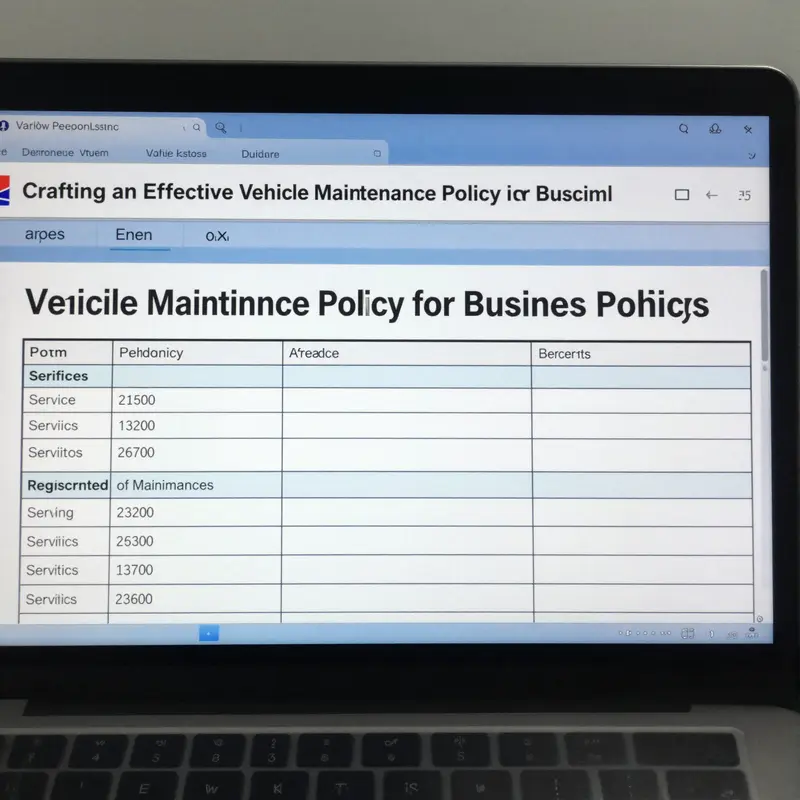
A vehicle maintenance policy relies on traceable evidence. A disciplined record-keeping practice makes safety actionable, costs predictable, and performance measurable. The backbone is standardized data entry anchored by VIN and service date. Parts, labor, and technician notes should be captured with consistent terminology to enable audits and regulatory checks. Digital systems enable real-time entry, reminders, and cross-system integration; paper trails are insufficient for timely decisions. Governance rules define who can enter, review, and retain records, with regular audits to ensure accuracy. Quality data support planning, budgeting, and supplier management, while historical trends illuminate wear patterns and inform maintenance intervals. In short, a robust ledger turns maintenance from a reactive cost into a strategic asset for reliability.
Final thoughts
In summary, effective vehicle maintenance is a dynamic blend of adherence to manufacturer recommendations, consideration of real-world driving conditions, and a structured record-keeping system. By implementing these strategies, business owners can protect their investments, ensure compliance, and optimize the performance of their fleet. Regular reviews and updates to your maintenance policy will help adapt to changing conditions and emerging technologies, ensuring your vehicle operations remain efficient and effective in the long run.