
For business owners managing a fleet, keeping vehicles in optimal condition is paramount. Accessing reliable vehicle maintenance records can help you assess the true history of your vehicles, enabling informed decision-making regarding purchases, maintenance, and overall vehicle health. In this guide, we will explore three essential methods: leveraging third-party platforms for comprehensive vehicle histories, contacting dealerships for the most detailed records, and utilizing insurance company data to uncover crucial accident history. By understanding and utilizing these resources, you’ll ensure that your fleet remains efficient and reliable.
Seeing the Whole Picture: How Third-Party Platforms Uncover a Vehicle’s Maintenance History
When a buyer meets a car with a glossy exterior and a clean dashboard, it’s easy to fall into the trap of assuming the vehicle has lived a careful life. The truth, though, often hides in the fine print of maintenance records, service slips, and repair receipts tucked away with countless other documents. Relying on a single source—an isolated dealer file or a single workshop’s notes—can leave crucial gaps that become awkwardly obvious after purchase. That is where third‑party data platforms step in, offering a broader, faster, and more objective lens through which to view a car’s maintenance history. These platforms have emerged as a practical answer to the long-standing problem of information silos. They pull data from multiple channels—authorized dealer networks, independent repair shops, and even insurance claim archives—and present a consolidated report that would have required visits to several different offices in days gone by. The effect is not merely convenience; it is a kind of due-diligence renaissance for vehicle history, a way to check a vehicle’s story against the plausible narrative a seller provides and to uncover chapters that might otherwise stay hidden in the shadows of fragmented records.
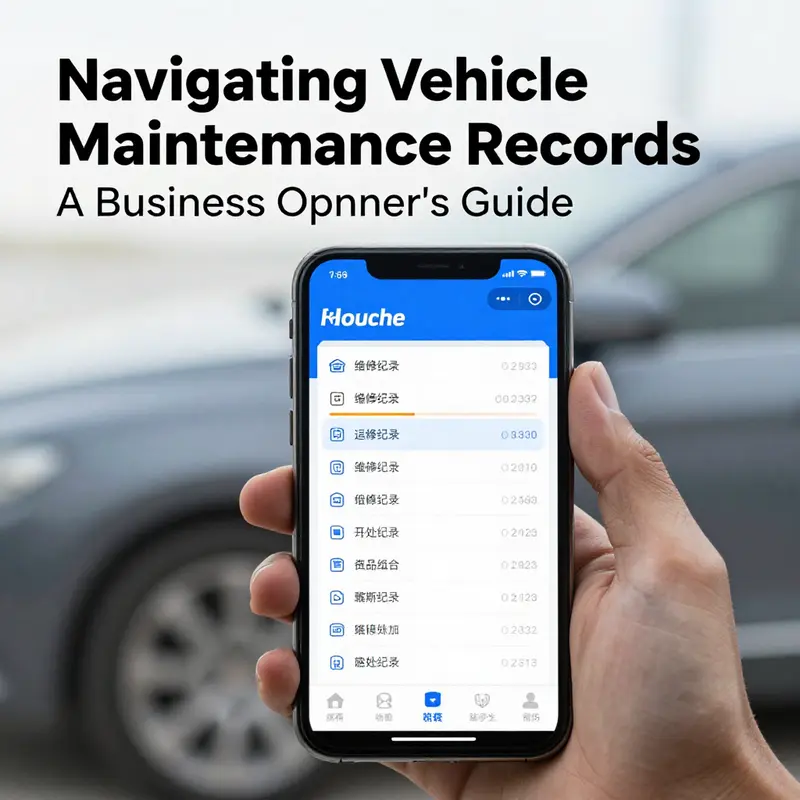
A particularly common and well-regarded option in this landscape is a platform known in the vernacular as a vehicle history service that emphasizes accessibility and speed. The core appeal lies in its ability to take a 17-digit Vehicle Identification Number (VIN) or even a license plate, feed that information into a centralized system, and return a detailed, readable history within minutes. The practical steps are simple enough to follow on a smartphone. In many cases you begin by opening a messaging app or a dedicated mini‑program, which guides you to a section labeled something like “Vehicle Maintenance & Repair Records.” From there you can enter the VIN exactly as it appears on the vehicle’s registration certificate or windshield, or you can choose to upload a photo of the license plate. The platform then matches the data to the vehicle and assembles a report that spans maintenance events, repairs, and other pertinent checks. In the modern used‑car market, this is where a lot of buyers fix their attention, because the completeness of the data often correlates with the reliability of the subsequent assessment.
The appeal goes beyond the mechanics of retrieval. A well‑designed third‑party platform aggregates information across several sources, which means you can cross‑reference multiple data streams in a single session. Maintenance history is there, yes, but so is accident history, claims filed with insurance companies, and even the current status of the vehicle in broader legal or financial contexts—whether the vehicle is mortgaged, seized, or involved in other encumbrances. The inclusion of odometer tampering checks is especially valuable. It is not unusual for odometer readings to be adjusted in ways that misrepresent true wear, and a platform that can flag suspicious mileage patterns across different repair points gives a more credible baseline for evaluating condition and value. In short, these platforms address the central problem of information fragmentation by stitching together a stitched timeline that painters would call a composite portrait rather than a single snapshot.
To understand why this approach has gained traction, consider the different kinds of data that a buyer would want to know beyond routine servicing. Routine maintenance—oil changes, filter replacements, brake pad replacements, and the like—speaks to how well the car was cared for on the day‑to‑day. But a car’s health is also shaped by its incident history, which can affect long‑term reliability and safety. An accident that left a frame straightening job done at an insurer’s shop or at a non‑authorized facility may not always be obvious just from the mechanic’s notes at a single dealership. A robust third‑party report connects those dots: it shows whether insurance claims exist, whether major repairs were undertaken, and whether there were any unusual gaps in service that might warrant closer inspection. It thus becomes a practical, objective baseline for a buying decision or for ongoing ownership tracking.
A point worth emphasizing is the way these platforms handle the information. They do not claim to replace primary sources, but rather to enhance accessibility and visibility by providing a consolidated overview. The primary source—whether a dealer’s internal system, a repair shop’s work order, or an insurer’s claims record—remains authoritative. The platform’s role is to harmonize and present that information in a way that is easy to interpret. This matters because maintenance history can be dense and technical. A well‑designed report converts cryptic entries into a narrative that a layperson can follow, with clear indicators of what each event means for the car’s condition. It also usually surfaces red flags that would otherwise require manual cross‑checking across several documents. For someone evaluating a used car, this is precisely the kind of efficiency that turns a potentially risky purchase into a well‑informed decision.
A practical note helps set expectations: while the convenience of a third‑party platform is undeniable, no single source can guarantee completeness. Some maintenance or repair events, especially minor services at small, non‑networked shops, may not be reported to every aggregator. Similarly, a dealership that has never connected with an external platform might not feed its data into the system unless the platform has an established data sharing agreement. This is not a flaw so much as a natural limitation of how data flows in the real world. The prudent approach, therefore, is to treat the third‑party report as a highly informative baseline and then complement it with other sources when necessary. For critical verifications, cross‑checking with the brand’s official 4S dealership records remains the most authoritative route for brand‑specific history. In fact, the strongest due‑diligence plan often involves a triad: third‑party platform data for breadth and speed, dealer DMS data for depth, and insurance records for major incidents.
To illustrate the practical workflow, imagine you are assessing a used sedan you found through a listing. You start by opening your preferred chat app or the platform’s mini‑program. In the service menu, you choose the option that translates to a vehicle maintenance and repair record inquiry. The next step is straightforward: you enter the VIN exactly as it appears on the registration certificate or the windshield, or you upload a photo of the license plate. Within a few moments, the system returns a report that outlines the vehicle’s service history, mileage milestones, and any noteworthy repairs. The quick turnaround is not merely a convenience; it changes the calculus of a decision. A buyer who can verify a consistent maintenance cadence—oil changes at regular intervals, timely brake work, and confirmed parts replacements—gains a stronger sense of the vehicle’s care history. Conversely, a report that reveals large gaps in service, conflicting mileage entries, or unaddressed safety recalls can trigger a more cautious stance or a demand for further verification.
The richness of the data can extend beyond maintenance records to include broader health indicators. An accident history, if it exists, can be a decisive factor in pricing and risk assessment. Insurance claims tied to frame damage, airbag deployment, or other structural work provide objective context for evaluating the vehicle’s safety margin and expected longevity. The vehicle’s status—whether it is pledged as collateral, seized, or otherwise encumbered—plays a role in both ownership risk and future resale value. A car with significant recorded issues might still be a good purchase if the responsible owner addressed problems transparently and the platform’s data corroborates repairs and maintenance. But if the report shows inconsistencies in what a seller claims versus what the data reveals, that is a strong reason to pause, request primary documentation, or walk away.
As you move through this landscape, a gentle reminder about context helps keep expectations calibrated. A maintenance history is a vital, but not sole, determinant of a vehicle’s reliability. It speaks to past care and potential risk, not a guarantee of future performance. A well‑maintained vehicle can suffer from unforeseeable failures, just as a poorly documented history does not necessarily spell doom if a vehicle is fundamentally sound and well cared for moving forward. The goal of using third‑party platforms is to reduce uncertainty and provide a transparent foundation on which to base decisions. The best practices embrace curiosity rather than lockstep acceptance: use the platform to surface questions, then pursue corroboration through additional channels such as the brand’s official dealer network and, when appropriate, a professional inspection.
When it comes to choosing a platform, the intuition is to look for breadth and speed. A platform that aggregates data from a wide network of 4S dealers and independent repair shops tends to produce more complete histories, because it captures a broader set of events. A short‑hand measure you can rely on is how many different data sources the report references. A robust report will highlight not just maintenance events but also mileage milestones and any detected anomalies in odometer readings. If the platform can also flag when mileage appears inconsistent with service events, you have a tool that can prompt more thorough follow‑up. In addition, the platform’s ability to present a clearly organized timeline—allowing you to scan the sequence of maintenance events, accidents, and insurance interactions in chronological order—marks a quality report. This chronological layout makes it easier to notice sudden spikes in work or recurring issues that may warrant deeper investigation.
For the reader seeking to ground this explanation in a practical connection to the broader topic of vehicle maintenance understanding, consider this a gentle invitation to reflect on what maintenance means beyond a pair of oil changes. Maintenance encompasses the day‑to‑day care that preserves function and safety, the larger repairs that restore capability after a breakdown, and the preventive work that reduces the risk of sudden failure. A third‑party platform that consolidates these dimensions creates a compact, readable health profile for a vehicle. It allows you to see whether the car has received timely maintenance at appropriate intervals, whether any large repairs were performed outside the usual channels, and whether there are any red flags that could affect resale value or safety. To deepen your understanding of maintenance itself, you may refer to resources that outline what maintenance entails in a general sense. For a quick refresher on what counts as essential maintenance, see What is Vehicle Maintenance.
Beyond the surface value, third‑party platforms also encourage a more disciplined approach to verification. When you encounter a report that includes an itemized history, you can compare the dates and services with what you can see from the vehicle’s own documentation. The VIN is the common thread that holds these checks together, and a correct VIN entry matters as much as the data sources themselves. Cross‑checking with the VIN helps ensure you are looking at the correct vehicle and not mixing records from two different cars with similar plates or numbers. In a market where vehicles circulate rapidly and where sellers may present selective records, this cross‑check is a simple step with outsized payoff. If a seller cannot produce consistent records across sources, it is a signal to proceed with extra caution or to disengage from the negotiation.
The integration of an internal link to established maintenance knowledge can further empower readers without complicating the narrative. For readers who want to ground their decisions in a broader, stable framework for maintenance concepts, the linked resource provides a concise overview of what constitutes routine and major maintenance, helping to interpret the data surfaced by third‑party platforms. What is Vehicle Maintenance offers a helpful primer that complements the raw data in a platform report. This integration of external knowledge with a practical data tool mirrors the dual approach many buyers adopt: use the tool to gather data, and use trusted definitions to interpret what that data means for the car’s future reliability.
As you navigate the interplay between convenience and rigor, it’s useful to think of the third‑party platform as a gateway rather than a final verdict. The platform shines when used as part of a broader verification strategy, which can include direct checks with the dealer network, especially for brands with well‑defined service histories. Communicating with a brand’s authorized service department can yield granular details such as exact repair item descriptions, part numbers, labor hours, and even technician notes. Those details, while sometimes tedious to track, can be pivotal for confirming the integrity of the reports surfaced by the third‑party platform. The strongest practice, therefore, is not to replace traditional verification processes but to augment them with a consolidated, cross‑source view that is much harder to achieve through a single channel.
In the end, the choice to rely on third‑party data platforms is a practical acknowledgment of how information flows in the automotive ecosystem today. By consolidating records from multiple sources, these platforms help you assemble a coherent and credible narrative about a vehicle’s maintenance history. They transform scattered notes into a story you can read with confidence, enabling a more informed negotiation, a more accurate valuation, and a safer ownership experience. The chapter that follows will explore complementary routes—how to triangulate this data with direct dealer records and with insured history—to craft a robust, multi‑source verification framework. For many buyers, this triangulation is not just a method but a discipline that turns data into trust.
External resource: https://www.houchekejian.com
null
null
From Accident Files to Honest Maintenance: How Insurance Histories Illuminate Vehicle Records
A vehicle’s maintenance history is best understood as a mosaic across dealer records, insurer files, and third-party data; triangulating each source helps you assess whether preventive care aligned with the car’s age, mileage, and usage.
Final thoughts
Understanding how to check vehicle maintenance records is indispensable for business owners looking to maintain a reliable fleet. Utilizing third-party platforms offers a comprehensive overview, while direct dealership contacts provide the most detailed insights on brand-specific maintenance. Additionally, insurance records can reveal the hidden impact of past accidents on a vehicle’s condition. By employing these strategies, you can enhance your fleet management process, ensuring that your vehicles retain optimal performance and longevity.