
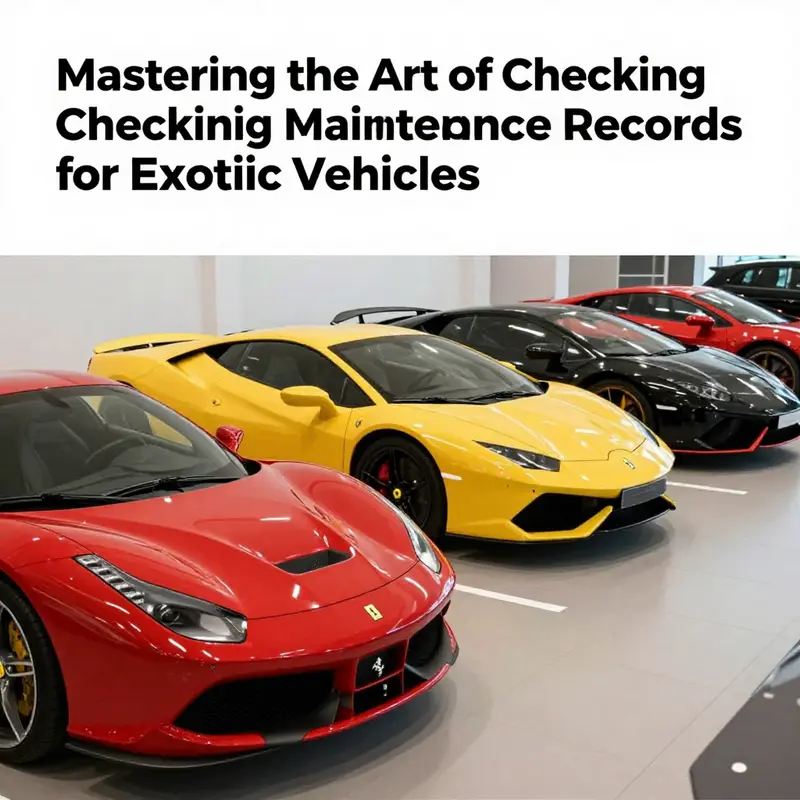
Exotic vehicles represent a substantial investment, and ensuring their optimal performance and value relies heavily on thorough maintenance checks. For business owners or potential buyers, understanding the maintenance history of these luxury cars is paramount. Knowing how to effectively check maintenance records can protect against unexpected repairs and preserve the investment. This guide will walk you through essential steps: requesting documentation from sellers, verifying information with manufacturers or authorized dealerships, utilizing vehicle history report services, and consulting specialist mechanics. By following these steps, you can make informed decisions and cultivate long-term relationships with exotic vehicles in your business.
In Pursuit of the Clean Ledger: How to Request and Verify Maintenance Records for Exotic Vehicles
A high-performance, exotic vehicle is as much an investment in trust as it is a machine of speed. The thrill of the drive comes with the responsibility to understand the car’s past, not just its present condition. The maintenance history serves as a written testament to how the vehicle has been cared for, and in this niche, that testament matters more than in most other segments of the market. A well-documented history can illuminate whether the car has received routine care at expected intervals, whether critical components have been serviced by qualified technicians, and whether the vehicle’s performance aligns with the claimed ambitions of its maker. In short, a complete and credible maintenance record helps you gauge not only the car’s current reliability but also its future behavior under high-stress driving and track conditions. It protects value, reduces unknowns, and supports confident decision-making whenever the price, rarity, and performance envelope of an exotic model collide with the realities of used-vehicle ownership.
The central strategy for uncovering that history is straightforward but exacting: request documentation directly from the seller and then verify it through a web of checks that extend beyond a single invoice. This approach acknowledges that exotic vehicles demand special expertise, parts, and service channels. It recognizes that a standard service log in a mass-market car can be sufficient for a buyer, but for an exotic, investor-grade transparency requires corroboration from multiple sources. The seller is the natural first point of contact because they hold the lion’s share of the narrative—the bills paid, the shops visited, the intervals observed. Yet the seller’s word alone cannot stand in place of verifiable paperwork. You want receipts, invoices, and service logs from authorized dealerships or specialized exotic car technicians who can confirm that the work performed aligns with factory specifications and high-performance standards. And you want those records organized in a way that you can audit: dates, mileages, service descriptions, part details, and the identity of the service facility.
To begin, demand a complete service history that enumerates every service entry, not just the big-ticket repairs. The value here lies in granularity. Each entry should show a date and the mileage at the time of service, the service provider’s name and location, and a clear description of what was done. A simple oil change note, for example, is insufficient if it omits the oil grade, the filter part number, and the exact viscosity. The more precise the documentation, the easier it is to verify the work against the car’s known maintenance schedule and the manufacturer’s recommendations. In exotic vehicles, the parts used deserve particular attention. The records should indicate whether OEM parts were employed, or, if aftermarket components were installed, they must be high-performance, model-appropriate parts installed by qualified technicians. The inclusion of part numbers and supplier details is not a luxury; it is a necessity for tracing provenance and ensuring that the modifications—if any—were documented, justified, and in keeping with the vehicle’s performance profile.
One practical way to phrase this request is to ask for a complete, unedited maintenance dossier, including all service invoices, rosters of replaced components, and any diagnostic reports tied to the service events. If the car has been through multiple owners, insist on records from each owner’s stewardship. It is perfectly reasonable to request that the seller compile a file or provide access to a cloud repository where these documents are stored. The emphasis should be on continuity: a seamless chain of maintenance from the first ownership through the current period, with no significant gaps that could conceal lapses in care. And as you collect these documents, keep an eye out for digital maintenance logs. Modern exotic vehicles often carry connected services that can log reminders, service advisories, and even diagnostic data. If the previous owner used such features, there could be a valuable layer of data that complements traditional invoices. A note here: if the logs exist, you may need to request access through the manufacturer’s official channels or via the dealer network, and you should not rely on excerpts alone. The goal is to assemble a comprehensive, auditable history that can be cross-checked against other sources, not a partial snapshot.
Beyond the initial collection, the authenticity of the documents must be scrutinized with a careful eye. Forged records do exist, and exotic vehicles, by virtue of their scarcity, can attract forgeries that prey on the buyer’s enthusiasm. A prudent approach is to contact the service providers listed in the history to verify that the listed work was performed. A quick phone call or a secure email exchange with the technician or shop manager can confirm the job number, the technician’s name, and the invoice date. When possible, request copies of the actual invoices or work orders rather than rely on secondhand summaries. Look for consistency across entries: dates should progress logically with mileage increments, and the descriptions should reflect the vehicle’s technology and configuration. A single late-in-life service entry that claims a major overhaul without corresponding mileage or without the expected pre- and post-service diagnostics is a warning sign. The presence of multiple entries from the same reputable facility, with consistent formatting and professional terminology, strengthens credibility. If you encounter discrepancies—such as vague descriptions, missing odometer readings, or inconsistent job numbers—treat them as red flags and seek clarification before proceeding.
To strengthen the verification, demand specificity in each record. For high-value components common to exotic cars, the seller should provide targeted maintenance documentation that demonstrates proper care. Engine and transmission maintenance—oil changes with indicated grades and filter part numbers, coolant and fluid service, timing systems if applicable, and any performance-tuning adjustments—should be traceable to a service entry with the exact parts used. The braking system warrants attention as well: records of pad and rotor replacements, brake fluid flushes, and any ABS or traction-control related servicing should be present with dates and mileages. Suspension and steering deserve similarly thorough documentation: service on shocks or struts, alignment checks, and any upgrades or recalibrations that affect handling. Finally, for exotic models with advanced electronics and aerodynamic systems, look for service notes on electronic modules, calibration updates, or repairs to active aerodynamics or driver-assistance features. The more granular the documentation, the more confidently you can assess the car’s readiness for spirited driving or track use across the next ownership cycle.
In addition to chasing the paperwork, you should leverage the VIN as a central thread for verification. Provide the VIN to the seller and request a full report generated by a reputable third-party service. A VIN-based report serves as an objective counterpoint to the seller’s documentation, offering recall histories, service bulletins, and ownership timelines that are difficult to manufacture or misinterpret. While no single source guarantees a complete picture—especially with rare or recently produced exotic models—the VIN trail is an essential cross-check. It is a crucial complement to the seller’s file and a practical way to confirm that the car’s claimed maintenance aligns with recall alerts and factory advisories that could influence both performance and safety. If possible, also consult the brand’s official portals or dealer networks to see if there is any additional verifiable history associated with that VIN. The convergence of multiple sources—seller records, third-party reports, and manufacturer-provided data—greatly reduces the risk of undisclosed issues lying beneath a glossy history.
A growing but often overlooked dimension of this process is the potential availability of digital maintenance logs in connected or intelligent vehicles. Many modern exotic cars incorporate connected services that track maintenance reminders, scheduled service intervals, and even remote diagnostics. If the vehicle’s previous owner shared access or authorized data transmission, you may gain limited visibility into the vehicle’s maintenance cadence via the manufacturer’s platform or a dealer’s portal. This capability does not replace the need for physical invoices or professional opinions, but it can fill gaps that are otherwise hard to reconcile in a paper trail. If you do gain access to such logs, approach them as complementary data: they can corroborate dates and service intervals or reveal anomalies that warrant deeper inspection. In all cases, safeguard any access credentials and ensure that sharing or retrieval of logs complies with privacy and security standards.
All of these steps culminate in a broader assessment of maintenance discipline—an attribute that is particularly telling in exotic cars. Look for consistent service patterns that align with the vehicle’s design and the manufacturer’s guidance. Regular oil changes, timely brake services, and routine inspections are positive indicators of disciplined ownership. Gaps that coincide with long periods of inactivity, or service gaps that interrupt major intervals such as major belt work or cooling-system refreshes, can indicate neglect or hidden issues. The absence of supporting documentation for significant repairs—especially those that touch the engine, transmission, or suspension—should prompt heightened scrutiny. Conversely, a history that shows a steady cadence of professional care, with transparent part specifications and service provider identities, builds confidence that the vehicle has been treated with the respect such a high-performance platform deserves.
In practice, this process is not about chasing perfection before purchase but about establishing a credible baseline. A seller’s willingness to provide a complete dossier signals transparency and confidence in the car’s stewardship. It equips you to assess risk more accurately and to negotiate from a position of knowledge rather than emotion. When you couple thorough documentation with independent verification from the service providers and correlations across VIN-based reports, you create a robust, external validation of the car’s condition. This approach protects not only your investment but also your peace of mind as you prepare to enjoy a machine that is, at its core, a precision instrument—a device that rewards careful handling, precise maintenance, and honest record-keeping. For readers who want a concise primer on what constitutes proper maintenance in general, see the resource below for additional context on maintenance fundamentals: What is Vehicle Maintenance.
In sum, the act of requesting and verifying maintenance records for exotic vehicles is as much about building a trustworthy narrative as it is about verifying mechanical soundness. The seller’s willingness to share a complete history, the corroboration from service providers, the consistency of entries across time and mileage, and the VIN-based cross-checks together form a multilayered defense against misrepresentation. This meticulous diligence does not merely protect a purchase price; it safeguards performance, safety, and the long-term enjoyment of a vehicle whose engineering deserves nothing less than scrupulous attention. The written history becomes a guide you can rely on, informing your inspection, your negotiation, and your ongoing relationship with a machine that embodies engineering artistry and automotive ambition. For readers who want an authoritative external pointer on recalls and safety data, the following resource offers a consolidated reference: NHTSA recall database.
VIN Truths and Dealer Doors: Verifying Exotic Vehicle Maintenance with Manufacturers and Authorized Dealerships
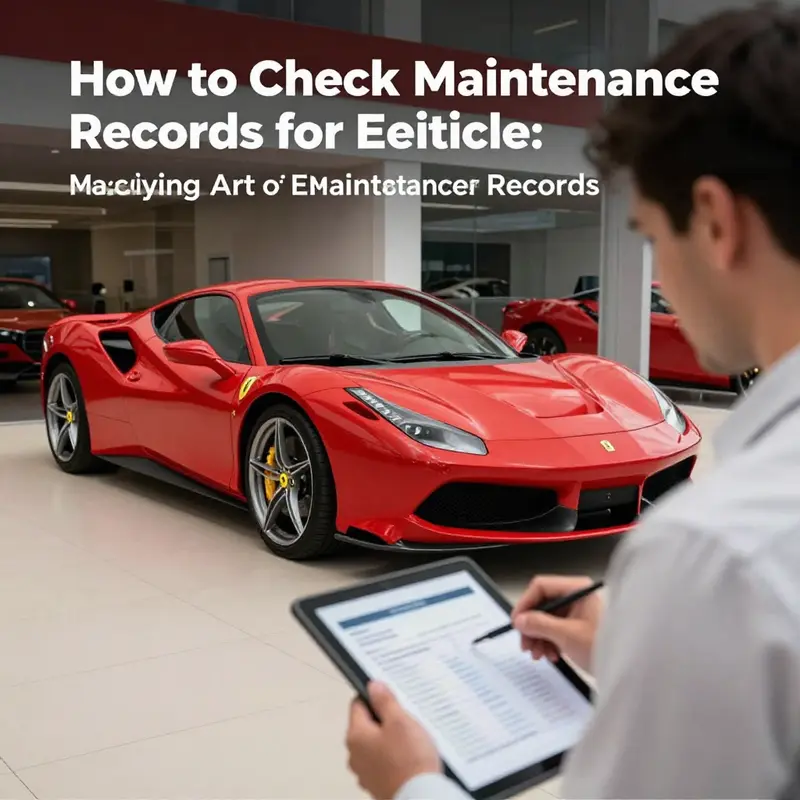
Exotic vehicles carry a weight that goes beyond horsepower and prestige. Their maintenance histories read like a map of their true condition, and without a clear trail, a prospective owner can miss warning signs or, worse, misread the car’s reliability. The most trustworthy source of this history is not the anonymous file tucked in a folder or the page of receipts from disparate shops. It is the manufacturer’s official records, accessed through the vehicle identification number, the VIN, which ties every service entry, every part replacement, and every recall to a single, verifiable identity. This chapter unfolds the path to that source, not as a checklist you skim, but as a seamless flow of steps that preserves the integrity of the history while protecting privacy and ensuring you do not overlook a critical detail that could alter the car’s value or performance.
The starting point is simple in theory but demanding in practice: the most reliable maintenance record comes from the source that built and supports the vehicle. When you pursue it directly through the manufacturer or an authorized dealership, you are not merely collecting receipts; you are accessing a narrative that the brand maintains with stringent standards. For exotic models, this is especially important because the records there are often tied to unique part numbers, labor hours, and specific service procedures that standard third-party reports may fail to capture. The goal is a complete, unbroken history that shows every service entry, every parts replacement, every recall action, and every technical note that might influence the car’s condition years down the road. The presence of such a history can dramatically affect the perceived and real value of the vehicle, as well as the confidence a buyer or lender has in its ongoing reliability.
To move toward that gold standard, you begin with the VIN, the 17-digit key that anchors the entire maintenance dossier. Locate this number with care. It is stamped in multiple secure places on the vehicle for safety and traceability. The windshield base, the driver’s side B-pillar, and official documents such as the title or registration are typical anchors. The VIN is more than a serial code; it is a ticket to a digital archive that the brand maintains about everymend of the car’s life. With the VIN in hand, you make contact with the brand’s presence in the service ecosystem. You are not merely making an inquiry about a file; you are requesting the official service history that mirrors the vehicle’s identity and the exact configurations it presented during each visit to a sanctioned service center.
When you reach out, the tone matters almost as much as the information you request. Explain that you are evaluating the vehicle for purchase or ongoing ownership and that you seek a full service history tied to the VIN. If you are not the owner, you will likely need to provide proof of ownership or obtain written authorization from the current owner. This is a privacy safeguard that, while perhaps frustrating to a buyer, serves the integrity of the records and the confidentiality of the owner’s information. The best approach is direct and transparent: present your intent, offer to verify your identity, and request the complete history in its unedited form. You should not expect a casual summary; you should anticipate a full report that includes the date of service, the precise work performed, the parts used, and the service center’s notes.
As you prepare to contact the brand or its authorized network, assemble what you need with methodical care. Have the VIN ready, of course, but also have proof of ownership and a clear statement about your purpose. Some brands require a formal authorization document, while others may verify identity through the information on the vehicle’s official records. In any case, the process is designed to protect both the owner and the potential buyer from unauthorized access to sensitive vehicle data. Once verification steps are satisfied, you request a full service history. A robust report will detail not only routine maintenance but also major interventions—engine work, transmission refurbishment, suspension overhauls, or airbag recalls. It will usually include the date, the service center, the technician’s notes, the exact parts or part numbers used, and the labor hours. It may also highlight recalls and service bulletins that pertain to the model, giving you a comprehensive view of what the vehicle has endured and what has been addressed by qualified professionals.
A critical distinction in this process is the depth of information. The manufacturer’s records, being the primary source, offer the highest level of precision. They connect the dots between the VIN, the service performed, and the official parts catalog. This is not just about verifying that a service occurred; it is about confirming that the service aligns with factory standards, that the correct parts were installed, and that the labor was performed by technicians trained to work on that exact model. In exotic cars, misaligned parts or improper procedures can silently undermine safety or performance. The records from the brand’s official system are designed to minimize those risks by presenting a traceable lineage of care that follows the car through its life.
Even with the brand’s records in hand, it is wise to supplement the official history with cross-checks. A third-party history report can reveal incidents outside the brand’s own maintenance logs, such as accidents, title issues, odometer anomalies, or repairs performed at non-authorized shops. For exotic vehicles, this cross-check is prudent, but it should never replace the manufacturer’s data as the primary source. The reason is simple: third-party reports aggregate data from many, varied sources and sometimes lack the granularity needed for high-value, high-performance cars. They can indicate that a service occurred, or a recall was issued, but they may not detail the exact parts installed or the labor hours billed by a qualified tech. The manufacturer’s record is the anchor, and the external history serves as supplementary color—useful for a broader context, but not a substitute for the primary record when you are assessing the car’s true maintenance history.
Digital maintenance logs add another layer to the verification process. In recent years, many modern exotic models have connected services that store maintenance alerts, service reminders, and sometimes remote diagnostic data. If the prior owner linked the car to an official account or allowed the manufacturer to access its service data, you might be able to request access to some of these logs via authorized channels. This is especially valuable for a vehicle that has lived with enthusiasts who leverage remote features to monitor performance, tire wear, or oil quality. Access to these digital logs can reveal patterns of care that dashboards and receipts alone cannot convey. Yet, as with any sensitive data, access is mediated by privacy rules and authorization protocols. Even when you cannot obtain the full digital log, the existence of such data, and the extent to which it was used, can be a meaningful signal about ongoing maintenance discipline.
To reinforce the verification, you should also consider what the VIN reveals about safety and compliance beyond routine service. The brand’s official service history may indicate recalls or service bulletins that were addressed, which is critical for exotic vehicles that frequently incorporate advanced technology and specialized components. Reassuringly, the VIN can be cross-referenced with recall databases and service bulletins via the brand’s official portals, which helps you confirm that any known safety issues were properly remedied. This aspect is not merely a matter of value; it is a matter of safety and reliability, particularly when you are evaluating a vehicle that will spend time on performance-oriented roads or in demanding driving conditions.
In practice, the process unfolds as a careful dialogue. You present the VIN, document ownership authorization, and request a comprehensive file that includes all maintenance, recalls, and parts replaced—especially components with high impact on performance and safety such as engines, transmissions, suspension, and airbag systems. The best responses will be granular: dates that align with factory service schedules, explicit part numbers, labor hours broken down by service event, and technician notes that shed light on the work’s rationale. This level of detail speaks to the car’s true care history, not just a log of parts replaced or a handful of generic entries. The information you obtain should enable you to assess whether recent maintenance aligns with the car’s known service windows. It should help you forecast potential future needs, anticipate maintenance costs, and decide whether the asking price reflects a car that has lived according to the highest standards of care.
A balanced approach, then, is to start with the gold standard—manufacturer-backed records—then augment with targeted checks from reputable, non-brand sources and digital logs where available. As you review the documented history, look for consistency: are oil changes and brake services performed at reasonable intervals given the model’s typical maintenance regime? Do the parts and service entries reflect the factory’s recommended maintenance schedule, and are any deviations explained or justified by the vehicle’s usage history or condition? Gaps in service can either signal a benign lapse or an emerging issue, so note them carefully and discuss them with a qualified specialist who understands exotic systems. If you uncover a gap, a pre-purchase inspection by a technician who specializes in high-performance or exotic vehicles can help determine whether the absence of documented service corresponds to neglect or simply to records held outside the primary file.
The practical path you take should also consider the vehicle’s privacy and ownership status. If you are not the current owner, secure authorization from the owner and be prepared to present your case to the brand’s representatives with the seriousness and transparency that the situation warrants. The exchange of information is not a betrayal of trust; it is a professional, due diligence-driven step that protects both parties. When the manufacturer confirms a thorough, up-to-date history tied to the VIN, you gain a high level of assurance that the car has been cared for in a manner that respects its engineering integrity and performance potential. If there are inconsistencies or questionable gaps, you should pursue a pre-purchase inspection with a specialist who can validate whether the history matches the car’s condition and whether any red flags warrant a price adjustment or an extended warranty consideration.
To support readers who want a quick contextual grounding, consider a general resource on how to think about vehicle maintenance at a high level, which can help interpret the nuances you encounter in brand records. For a general foundation, see What is vehicle maintenance. This reference offers a broad framework that complements the brand-specific data, helping you translate a dense service history into an actionable sense of a vehicle’s ongoing care. It is the bridge between the technical language of service entries and the practical judgments you must make when evaluating a high-end car’s condition. While the brand’s records deliver precision, this broader perspective helps you interpret that precision in terms of ongoing ownership costs and reliability.
In rare but important cases, the brand may provide a portal or a secure method to share or view the service history directly with the prospective buyer. If such an option is available, follow the instructions carefully and ensure that you receive the complete history in a usable format. The goal is not merely to collect documents; it is to obtain a coherent, verifiable narrative that explains what was done, when, and why, and that can be reconciled with the car’s current condition and future maintenance needs. When done thoughtfully, this process can transform a potential purchase from a gamble into a well-informed investment, aligned with the vehicle’s status as an exotic, high-performance machine.
The overall takeaway is clear. The VIN is the passport to the car’s maintenance identity, and the manufacturer or authorized dealership is the custodian of the most trustworthy version of that identity. While it can require patience and the navigation of privacy steps, the payoff is substantial: a maintenance history that is precise, exhaustive, and calibrated to the model’s particular engineering. The value of such a record extends beyond price. It shapes confidence, influences resell prospects, and enhances the owner’s ability to plan for future service, upgrades, and potential restoration work. In the world of exotic vehicles, where millions can hinge on a single decision, the discipline of obtaining and interpreting official brand records becomes not just prudent but essential. The VIN, in its quiet authority, guides you to the truth of the car’s life, and the authorized channels preserve that truth with integrity and care. The result is a clearer view of what you are buying, or what you already own, and a foundation upon which to base your next decision with confidence.
External resource: For authoritative recall information and safety updates, you can consult government safety data at https://www.nhtsa.gov/recalls.
null
null
The Trusted Check: How Specialist Mechanics Unravel the Maintenance History of Exotic Vehicles
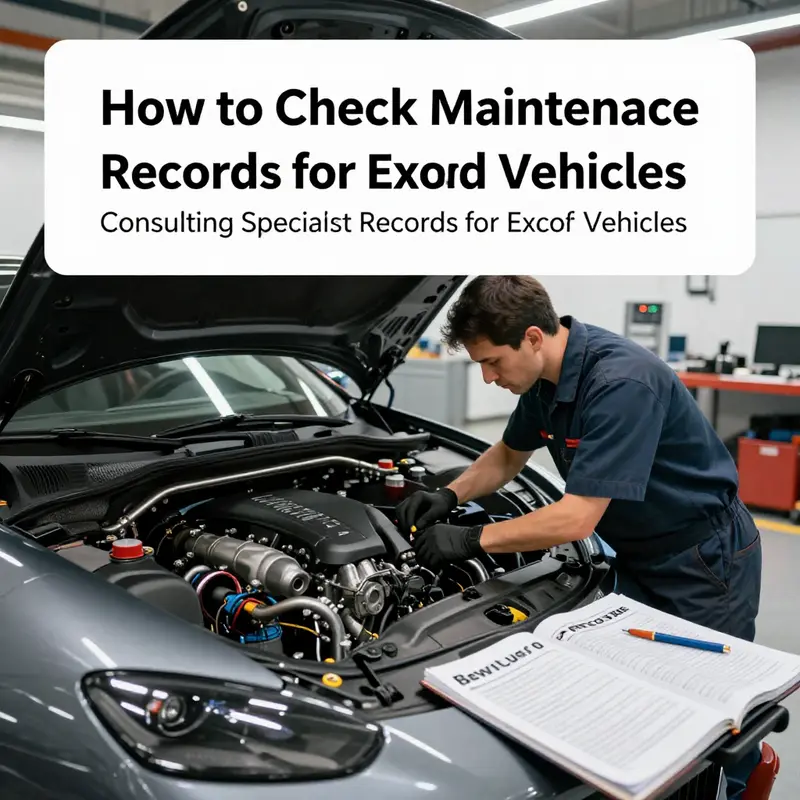
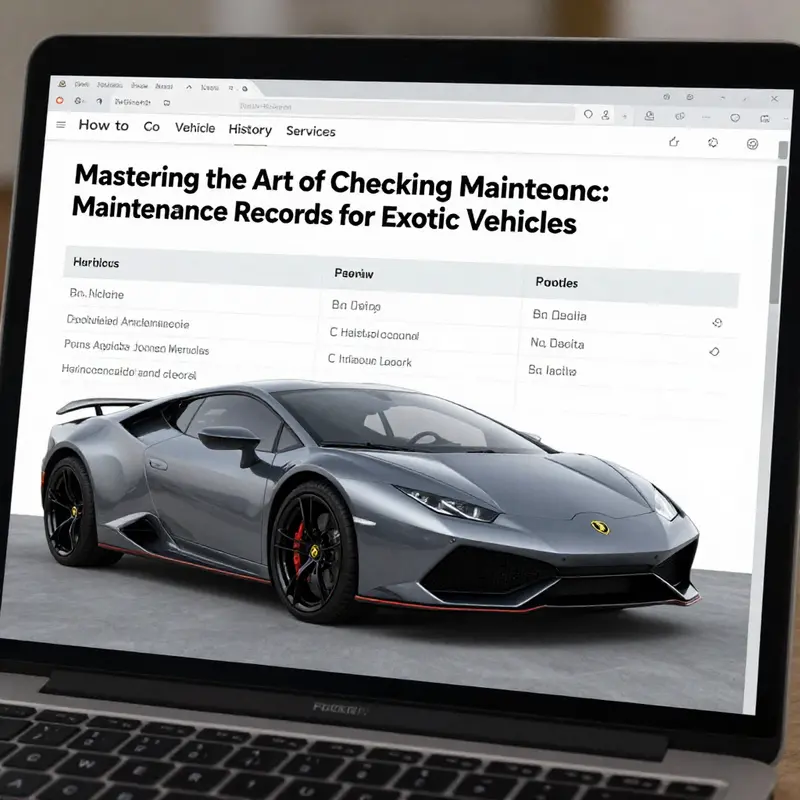
External resource: a directly accessible, brand-level service network reference can provide additional context about how manufacturers organize official maintenance records and support. While the specifics vary by model and region, the principle remains the same: official channels exist to verify and consolidate service data, reducing uncertainty for buyers who demand exacting standards of documentation. This external reference is intended to complement the specialist-driven verification you pursue, not replace it. By combining professional inspection with manufacturer-aligned records, the maintenance history of an exotic vehicle becomes a navigable map rather than a mystery ride, guiding you toward a purchase or ownership decision that reflects a true understanding of the car’s life and its future care requirements.
Final thoughts
Understanding how to check maintenance records for exotic vehicles is essential for business owners looking to invest wisely in luxury cars. By effectively requesting documentation, verifying with manufacturers, utilizing vehicle history reports, and consulting with specialists, you can safeguard your investment and ensure a reliable performance. These thorough checks not only enhance operational safety but also contribute to maintaining the vehicle’s value over time. In the world of exotic vehicles, informed choices lead to remarkable experiences on the road.