
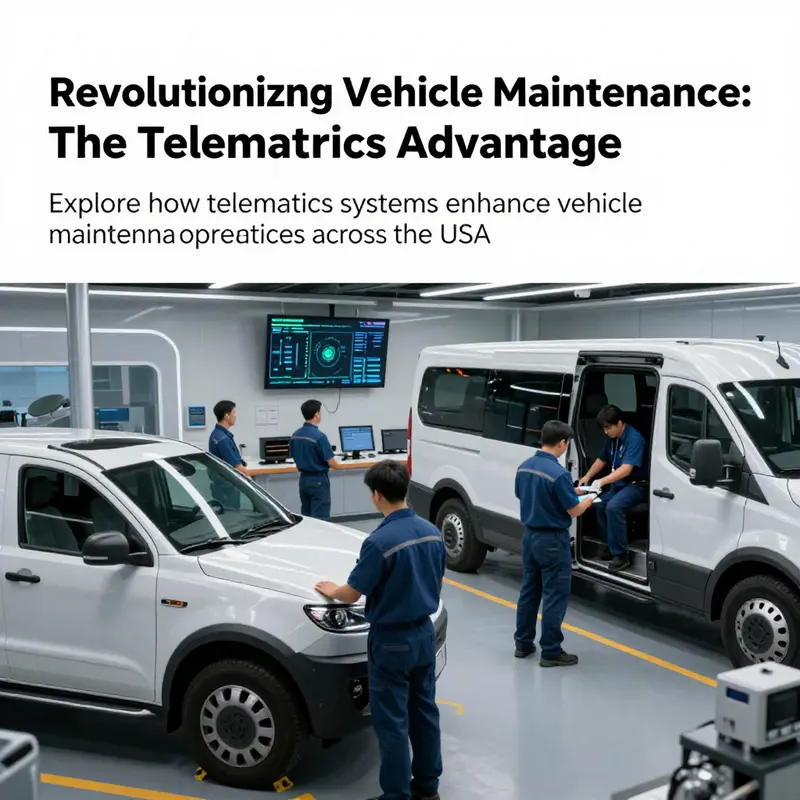
Telematics systems have fundamentally reshaped the landscape of vehicle maintenance in the USA, providing critical insights that enhance both safety and efficiency. For business owners managing fleets or individual vehicle owners, understanding the functionality and advantages of these systems can lead to significant operational gains. Through real-time monitoring, predictive maintenance, and seamless integration with management software, telematics provides a robust framework for improving vehicle health. As we delve deeper into various aspects of telematics systems, we will unveil their predictive capabilities, explore how they contribute to cost efficiency, and discuss their impact on fleet management and insurance practices. Each chapter will provide valuable insights tailored specifically for business owners, highlighting the transformative role telematics plays in modern vehicle maintenance.
Predictive Maintenance in Motion: Telematics-Driven Upkeep for U.S. Vehicle Fleets
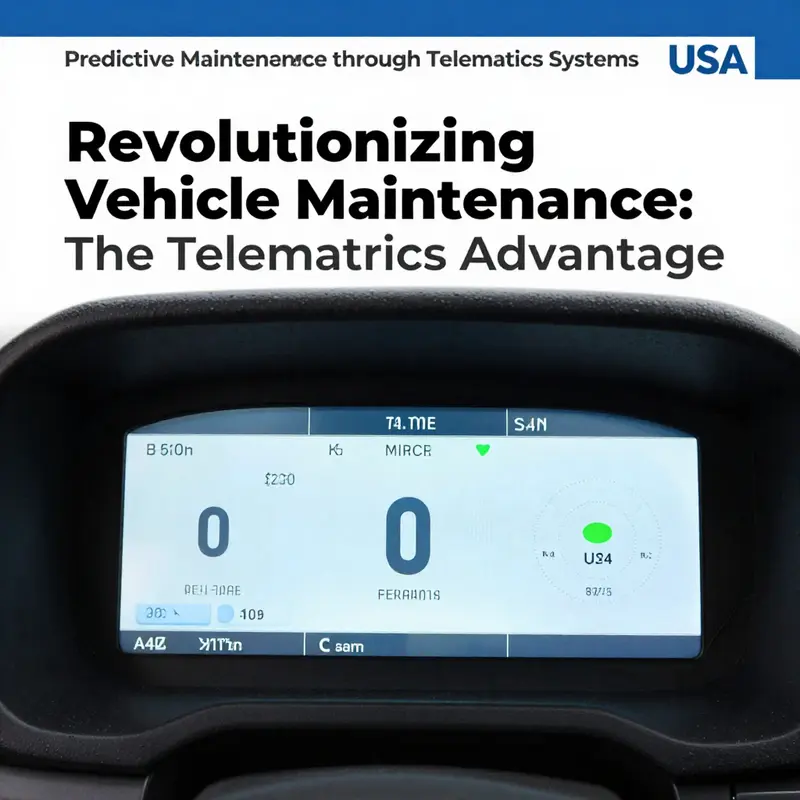
Telematics have moved maintenance from a calendar-driven ritual into a state of continuous awareness. In the United States, fleets and individuals alike now rely on real-time data streams that describe how a vehicle behaves under actual operating conditions. This shift is not a minor tweak; it rewrites what counts as timely service, how overlaps between performance, safety, and cost are managed, and who is responsible for keeping a vehicle ready for the road. At the core is predictive maintenance—a disciplined, data-driven approach that uses sensors, GPS, and wireless transmission to forecast when a component will fail or degrade enough to warrant attention. Rather than changing the oil on a fixed date or at a fixed mileage, the system reads the engine’s heartbeat, the tire’s pressure, the brakes’ wear, the battery’s voltage, and a constellation of fault codes. It then translates those signals into a maintenance calendar aligned with actual usage, not a best-guess schedule. For drivers and fleet managers, this creates a reliable, proactive routine that reduces surprises and concentrates service where it adds value, rather than where it simply occurs by habit or tradition.
The mechanics of how predictive maintenance works are straightforward in principle, but the data ecosystem that supports it is surprisingly intricate. Telematics systems combine several technologies: onboard diagnostics that quantify engine health and fluid conditions, tire sensors that monitor inflation and tread wear, brake sensors that gauge pad life, and environmental or usage sensors that track temperature, vibration, and fuel dynamics. All of these signals are continually transmitted to centralized platforms over wireless networks. There, advanced analytics models—built from historical maintenance records, manufacturer guidelines, and observed failure patterns—spot trends that precede a breakdown. A rising engine temperature, a subtle drift in oil pressure, or a growing discrepancy between fuel efficiency and load conditions can all signal a pending issue days or weeks before a light on the dashboard becomes a crisis. By interpreting these patterns, the system can generate alerts, propose precise service actions, and even dispatch work orders automatically. This is not a crude alarm system; it is a decision-support engine that helps the maintenance team decide when and what to service, calibrated to each vehicle’s specific behavior and duty cycle.
The practical benefits extend into the daily rhythm of fleet operations. Because maintenance becomes conditional on actual wear and operating conditions, service intervals become smarter and more efficient. Unnecessary maintenance is reduced, saving parts and labor, while critical wear is addressed before it escalates into a failure. This helps protect uptime—the most valuable asset in transportation operations—by lowering the probability of unscheduled downtime. The effect on safety is equally meaningful. Early warnings about abnormal vibrations, overheating, or lubrication degradation create opportunities for timely intervention, which can avert catastrophic failures and keep drivers safer on the road. In the U.S. context, the convergence of real-time telematics data with business processes means service visits can be scheduled within planned maintenance windows, minimizing disruption to routes and schedules while ensuring that vehicles remain compliant with manufacturer guidelines and regulatory requirements. The impact is a more predictable lifecycle for each vehicle, as well as more predictable costs for maintenance and repairs, which in turn stabilizes budgeting and capital planning.
From the perspective of the fleet, the value of predictive maintenance grows when data is organized into actionable insights. Centralized dashboards offer a transparent view of fleet health, but the real power lies in the automation that ties those insights to workflow. Condition-based maintenance becomes a routine part of dispatch and service planning: when a sensor flags a potential issue, the system can automatically generate a work order, assign it to the nearest qualified shop, and align it with the vehicle’s upcoming route. This level of coordination requires integration with other enterprise systems—inventory, parts procurement, and scheduling software—so that the right parts are available when needed and service slots are booked efficiently. In practice, this means fewer emergency repairs, lower idle time for assets awaiting service, and more consistent adherence to OEM maintenance schedules. The ultimate aim is to synchronize the health of every vehicle with its operating plan, a balance that protects both safety and productivity.
Beyond the operational advantages, predictive maintenance reshapes how risk is managed across the fleet. Insurance and financing ecosystems increasingly recognize telematics-derived health and usage data as a means to more accurately price risk and influence behavior. Usage-based insurance programs, for example, lean on maintenance and performance data to assess driver risk profiles and vehicle condition, creating incentives for safer driving and timely service. For individual vehicle owners, OEM-connected apps and other telematics-enabled interfaces extend the same logic to private mobility, enabling remote health checks and proactive service scheduling without the friction of ad hoc diagnostics. The common thread is a shift from reactive to anticipatory care, where every mile traveled becomes a data point informing the next service action.
Implementing predictive maintenance at scale in the United States has shown measurable outcomes. Industry analyses indicate that fleets leveraging telematics-driven maintenance have experienced substantial improvements in reliability and efficiency. In reported deployments, there have been notable reductions in unscheduled repairs, along with gains in fuel efficiency, driven by better-maintained engines and optimized maintenance timing. These results are not just footnotes; they reflect a broader transformation in how maintenance budgeting, route planning, and equipment life-cycle management are conducted. The cloud-enabled architecture of modern telematics platforms—combining real-time data streams, secure storage, and AI-powered analytics—enables real-time dashboards, automated work orders, and seamless coordination across drivers, dispatchers, and maintenance teams. Even the concept of a “digital twin” has begun to appear in some systems, where a component’s projected degradation over time is simulated to sharpen prediction accuracy and extend the useful life of critical parts.
This evolution has consequences for the broader ecosystem of vehicle upkeep. Major companies and large fleets in the country have moved toward predictive maintenance as a standard operating practice, recognizing that uptime, safety, and total cost of ownership improve in tandem with smarter maintenance. The alignment of telematics with maintenance policies helps ensure that service intervals reflect actual wear and recommended guidelines, rather than being driven solely by historical practices. The result is a maintenance culture that respects both the science of component wear and the realities of fleet operations, including route variability, cargo types, and climate extremes. In practical terms, that means a truck working in a hot, dusty southern corridor may trigger different maintenance timing than a similar unit operating in a cooler, more temperate region, with the system accounting for those environmental and usage differences in its forecasts.
Linking telematics data to everyday maintenance decisions also invites consideration of clinician-like expertise within fleets. Technicians and maintenance planners increasingly rely on data-driven narratives to diagnose problems, prioritize work orders, and plan for spare parts inventories. As AI-assisted anomaly detection and digital-twin simulations mature, technicians gain predictive insights that guide troubleshooting and repair sequencing. This collaborative data-automation model reduces guesswork, shortens diagnostic cycles, and improves the consistency of repairs across shifts and facilities. Yet it is essential to retain human judgment at critical margins. Telematics data must be contextualized within the vehicle’s service history, the driver’s feedback, and the operator’s broader operating environment to avoid overreliance on automated alerts or misinterpretation of transient anomalies.
For readers seeking a concise primer on maintenance fundamentals within this data-rich landscape, a helpful starting point is the resource that explains what maintenance encompasses in practice. It offers a grounded view of the tasks, timelines, and quality standards that predictive systems are designed to augment: What is vehicle maintenance.
Ultimately, the promise of predictive maintenance through telematics in the U.S. is not merely about avoiding breakdowns. It is about orchestrating maintenance as a continuous, value-adding process that aligns vehicle health with operational goals. It requires investment in data collection, analytics, and the integration of maintenance workflows with dispatch and inventory systems. It demands attention to data governance, privacy, and the training of staff to interpret and act on insights. When executed well, it yields a fleet that is more reliable, safer, and cost-efficient. It translates the abstract promise of “smarter equipment” into tangible performance gains on every route, every day. And as the technology matures, it will keep extending its reach—from large commercial fleets to individual owners who want longer-lasting vehicles and fewer unexpected service visits.
External reference: Telematics and Predictive Maintenance in Fleet Management — https://www.truckinginfo.com/article/telematics-predictive-maintenance-fleet-management
Data-Driven Breakthroughs: How Telematics Elevate Vehicle Maintenance Across the USA

Across the United States, telematics has quietly become the backbone of how vehicles are cared for. In fleets that move goods and people every day, the practice of maintenance has shifted from calendar-driven checkups to a continuous, data-informed discipline. The same paradigm is spreading to light-duty cars and municipal vehicles, where real-time insight into a machine’s heartbeat translates into fewer surprises on the road and in the budget. The underlying promise is simple: know when a part will fail before it does, and fix it on your terms rather than in the middle of a breakdown.
Telematics systems blend a constellation of sensors, GPS, and wireless communications to build a living health profile of each vehicle. They monitor engine performance markers such as temperature and pressure, the condition of critical wear items like brakes and tires, battery status, and a long list of fault codes that would once have lurked as alarming lights rather than actionable data. They also track location and utilization, because how a vehicle is used often governs how quickly wear progresses. When a driver idles excessively, accelerates hard, or frequently runs at high RPMs, the data tells a story about stress on the powertrain, cooling system, and fuel system. The result is a maintenance narrative that is tailored to the actual life of the vehicle, not the generic timeline on a maintenance calendar.
The most powerful benefit of this data-rich approach is predictive maintenance. Rather than waiting for a gauge to crest or a light to blink, managers can anticipate an issue using patterns drawn from thousands of vehicle hours. A sensor catching a rising engine temperature trend or a gradual drop in oil pressure becomes more than a warning; it becomes a maintenance dispatch. The driver can be informed immediately, and a work order can be generated with the exact parts and service needed. This capability reduces unplanned downtime, which is often the largest hidden cost in operations. It minimizes the drag of emergency repairs, protects against warranty gaps, and sustains the productivity of the fleet. The cadence of service shifts from “fix it when it breaks” to “service it before it stumbles,” a transformation that echoes through a fleet’s operating metrics.
Linked to predictive maintenance is the improvement in maintenance timing and resource allocation. When the machine health data is harmonized with service histories, parts lifecycles, and weather or route data, managers can fine-tune intervals to the actual usage observed. This means fewer trips to the shop for unnecessary service and fewer components left on the shelf past their prime. The aim is to strike a balance: avoid under-maintenance that invites expensive failures, and avoid over-maintenance that wastes money and time. In practical terms, this means automated reminders, parity checks against manufacturer guidelines, and cases where service is synchronized with other activities—like a vehicle already scheduled to be in a shop for inspection or a routine parts replacement that aligns with the fleet’s overall maintenance plan. It is the precision of condition-based scheduling realized at scale.
Beyond the maintenance events themselves, telematics reshapes the administrative workflow that underpins upkeep. Inspections can be digitized, and maintenance logs can be stored with date stamps, part numbers, and service notes that are easily searchable. This has a direct impact on compliance and accountability. For operators, this means fewer lost forms, quicker audits, and clearer visibility into the history of every asset. For fleets, it translates into tighter control over budgets and greater confidence in cost projections. The digitization also supports benchmarking: operators who adopt safety and efficiency training can be measured for changes in harsh braking, rapid acceleration, or excessive idling. The data reveals whether behavior improvements translate into lower wear and tear, and it provides a feedback loop that reinforces safety culture.
The business case for telematics is compelling. Industry analyses consistently show that a data-driven approach yields measurable reductions in fuel costs, maintenance expenses, and vehicle downtime. The numbers vary by fleet type and operating environment, but the direction is clear. When teams access detailed usage histories and maintenance records, they can optimize service intervals, track parts replacement cycles, and ensure adherence to manufacturer guidelines. That adherence matters because it protects warranties and sustains the performance envelope of the vehicle. In practice, the effect is not only financial. It is also a matter of reliability, predictability, and driver confidence. When a driver knows the vehicle is being cared for in a precise, scientifically informed way, fatigue and risk can be reduced, and on-time service becomes more consistent.
The breadth of telematics use in the United States spans large corporate fleets and local government operations to independent owners who rely on smartphone-enabled diagnostic alerts. Even as these systems collect and transmit data to centralized platforms, the effect is to democratize maintenance insight. Service centers can receive automated notifications with the vehicle’s health snapshot, repair history, and recommended actions, while ERP and maintenance-management software can synchronize service scheduling with inventory and workflow. The net effect is a more transparent lifecycle for each asset. Costs are better controlled, and reliability becomes a strategic capability rather than a reactive outcome. In the end, maintenance ceases to be a cost center and starts to fund its own optimization through smarter planning and accountability.
This broader shift aligns with the way insurers are using telematics data to shape risk and incentives. Usage-based insurance programs reward safer driving and timely maintenance, connecting the vehicle’s condition with the driver’s behavior in a way that motivates proactive care. The driver may see lower premiums for keeping tires inflated, maintaining safe braking patterns, and staying current with preventive checks. For individual owners, the technology can extend life and preserve value by enabling proactive scheduling and remote health monitoring through connected apps. The promise extends beyond the time-tested questions of “When should I service?” or “What broke?” It becomes a continuous, actionable view of how well a vehicle is aging and how well a fleet is aging with it.
The uplift in efficiency does not stop at maintenance itself. Telematics helps allocate resources more effectively across a fleet. With real-time visibility into vehicle location, maintenance teams can coordinate service windows around routes and duties, reducing the time vehicles spend out of service. Administrative tasks shrink as digital records replace hand-written logs, and auditors gain access to standardized, accurate data. In this sense, telematics helps convert maintenance from a routine expense into a measurable driver of throughput and uptime. The organization learns to balance preventive care with demand, inventory, and scheduling constraints, which ultimately protects margins and service levels.
For readers seeking a broader, research-backed view of how telematics shapes vehicle maintenance, a comprehensive overview from a national research center explores these dynamics across the U.S. transport landscape. It underscores how monitoring-based maintenance, predictive alerts, and data-driven decision-making are weaving into everyday practice in maintenance shops and service bays alike. External resource: https://www.nitc.org/project/telematics-vehicle-monitoring-systems. This resource anchors the real-world applicability of the concepts described and invites further exploration of how usage patterns, asset health, and driver behavior converge to drive efficiency.
To connect this discussion to practical, reader-facing insights, consider the foundational notion of maintenance itself. For those seeking a concise primer on what maintenance entails and why it matters, see the guide What is vehicle maintenance?. The link invites you to reflect on the core purpose of maintenance and how telematics reframes those questions around anticipatory care rather than reaction.
Taken together, the trajectory is clear. Telematics-enabled maintenance in the United States translates data into decisions, and decisions into sustained performance. It is a shift from guessing to knowing, from reaction to anticipation, and from siloed maintenance to a coordinated, ecosystem-wide discipline. As more vehicles become instrumented and more operators adopt connected workflows, the maintenance footprint will continue to shrink in cost and grow in reliability. The future lies in refining these data streams, aligning them with manufacturer guidance, and embedding them into daily operations so that each mile traveled is a tested, proven step toward greater resilience and lower total cost of ownership.
Predictive Power in Motion: Telematics and Proactive Fleet Maintenance in the USA
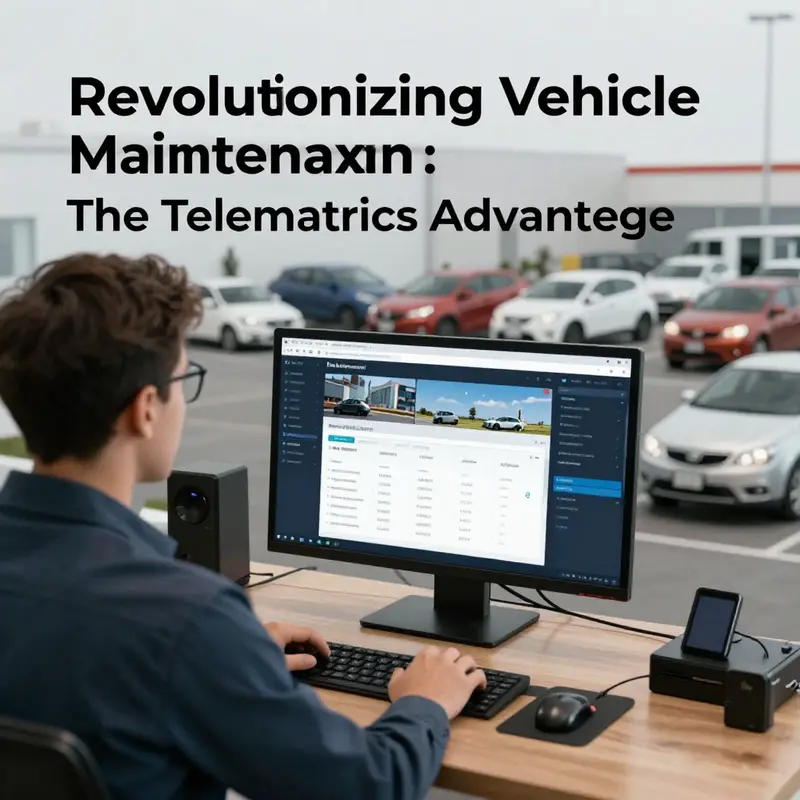
In the United States, fleets increasingly treat maintenance as a strategic capability rather than a recurring chore. Telematics systems, integrated with a fleet management backbone, provide a continuous stream of vehicle health data that shifts maintenance from calendar-based tasks to condition-driven actions. Real-time telemetry from engines, transmissions, tires, brakes, and batteries feeds a centralized platform that translates sensor signals into actionable maintenance actions. The result is a cadence of service aligned with actual wear and operating conditions, reducing unplanned downtime and smoothing budgeting. Managers gain visibility into how vehicles perform on specific routes, loads, and weather, enabling predictive maintenance well before a failure occurs. This integration is the core driver of reliability and cost control, delivering fewer surprise repairs and more predictable repair costs. See DOE guidance on Fleet Management and Telematics for broader context: https://energy.gov/eere/vehicles/articles/fleet-management-and-telematics.
null

null
Remote Vigilance on Wheels: How Telematics Elevates Individual Vehicle Maintenance in the United States
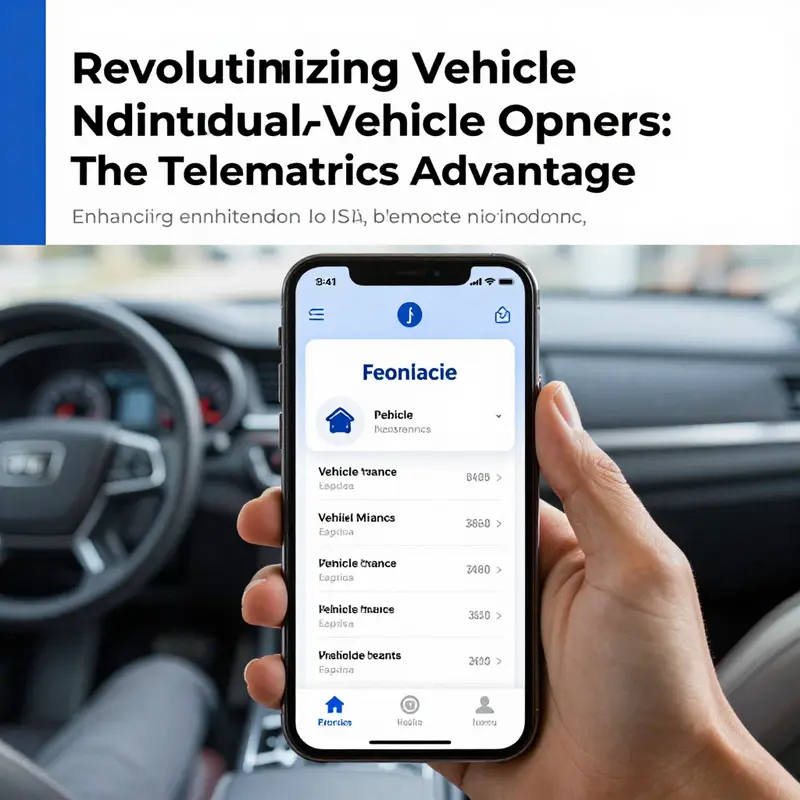
Telematics has moved beyond fleet dashboards and into the hands of individual drivers, turning everyday cars into continuously monitored partners. In the United States, this shift means a vehicle can relay health signals, usage patterns, and potential faults in real time, empowering owners to act before a minor issue becomes a costly breakdown. A basic telematics setup for a single vehicle collects data from sensors that track engine performance, tire pressure, coolant and battery status, braking wear, and other indicators of wear and risk. What differentiates modern telematics from traditional gauges is the speed and specificity of insight: drivers receive clear, actionable notifications with context on what subsystem is involved, how urgent an issue may be, and likely service implications, often delivered to a smartphone or in-car display with next steps. The result is a data-driven approach to maintenance that aligns service needs with actual usage, improving component longevity, reducing downtime, and supporting more predictable budgeting for owners.
Final thoughts
Telematics systems are redefining vehicle maintenance practices in the USA, offering tools that empower business owners and individual users alike. By leveraging predictive maintenance capabilities, enhancing cost efficiency, and integrating seamlessly with fleet management software, these systems are transforming how users approach vehicle upkeep. As the automotive landscape continues to evolve, the utilization of telematics will only become more critical. Embracing this technology means not only safeguarding investments but also ensuring safety and reliability in vehicle management. For business owners, understanding and implementing telematics is a step towards modernizing fleet operations and achieving long-term success.