
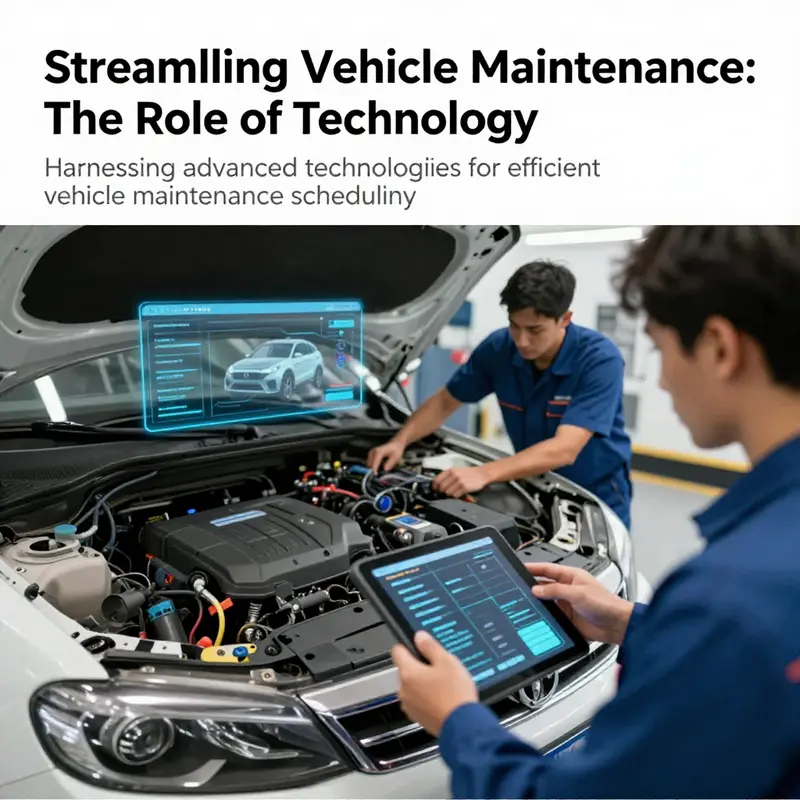
Effective vehicle maintenance is crucial for business owners, ensuring operational efficiency and safety. Modern technology is transforming how maintenance is scheduled and conducted, utilizing real-time data and sophisticated analysis to optimize processes. This article explores four key areas of technological integration in vehicle maintenance scheduling: real-time monitoring systems, predictive maintenance technology, the influence of mobile applications, and the role of artificial intelligence and data analytics. Each chapter covers how these advancements contribute to more reliable, efficient, and user-friendly maintenance strategies for businesses, ultimately reducing operational costs and enhancing vehicle lifespan.
Pulse of the Road: Real-time Monitoring as the Engine of Proactive Vehicle Maintenance Scheduling

Real-time monitoring systems are quietly changing the decisions fleet operators make about maintenance. They pull the brakes on reactive fixes and replace them with a steady stream of health signals that turn maintenance from a calendar exercise into a data driven planning process. Across modern vehicles, sensors embedded throughout the powertrain, chassis, and subsystems feed a continuous flow of measurements. Engine temperature, oil pressure, tire inflation and wear, brake pad thickness, vibration levels, battery cell health, and even subtle shifts in steering and suspension behavior are all part of a living questionnaire the vehicle asks of itself every second. When these signals are aggregated and interpreted by purpose built analytics, a picture emerges that is far more precise than mileage or elapsed time ever could be. The result is a maintenance schedule that moves with actual usage and actual wear, not with an arbitrary timetable. This is the core shift that makes maintenance both cheaper and more reliable, turning downtime from a disruptive surprise into a managed, predictable event that can be planned around operations and opportunities.
Predictive maintenance models sit at the heart of this shift. Rather than waiting for a gauge to hit a threshold, the system looks for subtle deviations from normal behavior and for interactions between different data streams that point toward a future fault. A gradual decline in oil pressure, a rising engine temperature during certain load conditions, or a growing discrepancy between tire tread wear and vehicle radius may not trigger an alarm alone. But when the model recognizes them as a pattern, it emits an early warning with a recommended action. The maintenance team can then schedule service during planned downtime or during a maintenance window that minimizes disruption to routes. The benefit is twofold: it prevents the cascade of failures that follows a surprise breakdown and it shifts the service load toward times when the facility and technicians can handle it most efficiently. The result is not only fewer breakdowns but also longer component lifespans, since parts are serviced or replaced before heat, friction, or contamination take irreversible tolls.
The value of real-time monitoring goes beyond the vehicle alone. When these data streams are integrated with GPS and telematics, fleet managers gain a holistic view of how the vehicle is used. Location, mileage, load conditions, and driving style all feed into maintenance planning. A truck that consistently carries heavy loads on rocky routes and experiences frequent hard braking in urban corridors will demand a different maintenance cadence than one that cruises on smooth highways with lighter duty. Rather than apply the same service interval to every asset, the system learns to tailor maintenance to actual operating patterns. This usage based scheduling is particularly impactful in industries where uptime is sacred—logistics, public transit, and other high utilization segments—and where even small reductions in unplanned downtime translate into meaningful cost savings.
It is here that the integration of real-time monitoring with predictive analytics shows its most powerful promise. The models do not merely flag impending issues; they provide a concrete set of recommended actions, prioritized by risk and by operational impact. A warning about potential brake wear may be paired with an estimated time to next service, a suggested alternative route to minimize downtime, and a proposed service window that aligns with scheduled maintenance. In effect, the system becomes a decision support partner, translating raw sensor data into actionable, implementable steps. This is critical because data quality matters as much as data volume. Real-time monitoring thrives when sensors are properly calibrated, data gaps are minimized, and communication channels are robust enough to carry timely alerts. When these conditions hold, the result is a reliable, transparent maintenance forecast that technicians and fleet managers can trust enough to act on without second guessing.
The daily rhythm of maintenance scheduling shifts from crisis management to continuous optimization. A modern maintenance workflow starts with a dashboard that presents a summarized health score for each asset, but the real value appears in the underlying data that supports that score. Engineers can drill into trends over weeks or months to understand wear patterns and the effectiveness of interventions. They can correlate sensor signals with service history to validate models and refine thresholds. Over time, the predictive system becomes more precise as it learns from historical outcomes and adapts to the specific operating environment of each vehicle model and route. In practice, this means fewer unnecessary service visits because the system recognizes when wear is within tolerable limits or when a scheduled service can be safely postponed without increasing risk. It also means fewer missed maintenance actions because reminders are delivered in ways that align with drivers’ workflows and maintenance shop schedules. Digital tools, including mobile interfaces and in vehicle prompts, simplify the human factors of scheduling. A driver can see a clear alert about a due service and a suggested appointment window, while the maintenance planner can approve, reschedule, or defer the action with a few taps. The outcome is a more harmonious relationship between vehicle health signals and human action, where information flows smoothly across teams and devices, limiting latency between signal and service.
The human element remains crucial, even as automation scales up. Real-time monitoring does not eliminate technicians or process expertise; it amplifies them. It surfaces anomalies that might otherwise go unnoticed amid daily routine and fleet-wide complexity. Engineers still interpret the signals within the broader context of vehicle design, component compatibility, and the operating environment. They bring judgment to decisions about when to perform a service now versus deferring it, how to sequence maintenance tasks that share workshop space, and how to adjust procedures to reflect weather, terrain, or mission. In this sense, technology serves as a partner that sharpens professional insight rather than replacing it. When people and machines work in concert, maintenance no longer resembles a plan written in advance and then forgotten. It becomes a living schedule that adapts to the road, the weather, and the demands of the fleet’s mission.
The practical implications of this approach are tangible. Companies that embrace real-time monitoring and predictive maintenance report significant improvements in reliability and cost efficiency. Downtime can be reduced because vehicles are serviced before a fault escalates to a breakdown. Parts are used more efficiently because maintenance intervals reflect actual wear rather than generic estimates. Inventory planning improves as well because service tasks are forecast with greater precision, reducing the number of spare parts sitting idle while keeping critical items in stock for when they are truly needed. And because service needs are anticipated rather than discovered on the side of the road, technicians can prepare the right tools, parts, and diagnostic protocols ahead of time, further compressing repair times.
This approach also catalyzes broader strategic benefits. For operators with multiple depots or service partners, standardized data models and interoperable interfaces enable seamless coordination. Maintenance histories travel with each asset, giving new owners or new service providers full visibility into past work, current conditions, and future recommendations. The result is a cleaner chain of custody for vehicle health and a more cohesive, proactive maintenance program that scales with an expanding fleet. In such environments, the value of predictive analytics multiplies as data from thousands of vehicles converges, enabling more accurate population level insights and better benchmarking across the fleet.
For readers seeking a deeper technical grounding, a technical paper from a leading automotive research source outlines how real-time data is transforming maintenance scheduling at scale. This resource discusses the architecture of continuous data collection, the design of predictive models, and practical considerations for deployment, including data quality, sensor reliability, and cybersecurity. It also highlights the performance gains reported by organizations integrating real-time monitoring with their telematics and service ecosystems. See the external reference for a thorough technical treatment of these topics.
In the broader arc of fleet transformation, real-time monitoring is the keystone linking sensing, analysis, and action. It turns maintenance from a routine ritual into a strategic capability that supports reliability, efficiency, and safety. By continuously watching how a vehicle is used and how its components wear, these systems enable maintenance to be scheduled where and when it matters most. They empower technicians with intelligent diagnostics and clear, prioritized work plans. They reduce guesswork for managers and make service calendars more predictable for drivers. And they free up time and resources to focus on strategy—whether that means extending asset lifecycles, optimizing routes to minimize wear, or planning capital investments around data driven insights.
As the technology matures, the boundary between maintenance and operations blurs further. Edge computing inside vehicles may push more processing to the point of data collection, delivering near instantaneous alerts even when connectivity is intermittent. Over the air updates could adjust maintenance models as new failure modes emerge or as new operating conditions are encountered. The end result is a maintenance ecosystem that is more adaptive, more resilient, and more economical than ever before. The road ahead points toward a future where real-time monitoring is not a novelty but a standard operating practice—an essential discipline for any organization that relies on safe, reliable, and cost effective vehicle performance. Alongside governance frameworks, standardized data schemas, and robust cyber protections, real time monitoring will deepen the alignment between maintenance activities and actual vehicle usage, and it will account for the realities of how and where vehicles spend their lives on the road.
For readers who want to explore practical implications further, a concise resource on how ongoing vehicle maintenance translates into fuel efficiency and overall cost savings provides tangible context for the business case behind predictive maintenance. You can read more about how routine maintenance contributes to reduced fuel consumption and better operating economics in the article linked here: how vehicle maintenance saves on gas expenses.
In sum, real time monitoring reframes maintenance as a dynamic capability rather than a static program. It makes maintenance scheduling a proactive, data driven discipline that learns, adapts, and improves over time. It aligns maintenance actions with how vehicles are actually used, supports smarter decisions by engineers and managers, and ultimately enhances safety, uptime, and total cost of ownership for fleets of all sizes. The chapter that follows will build on these themes, showing how deployment patterns, governance considerations, and organizational change intersect with technology to sustain and amplify these benefits over the long term. For a deeper technical grounding of the concepts discussed, see the SAE International Technical Paper linked in the references.
External reference: SAE International Technical Paper 2025-01-0123, which presents a comprehensive treatment of real-time data transformation in vehicle maintenance scheduling, including architecture, models, and field performance. https://www.sae.org/publications/technical-papers/content/2025-01-0123
Forecasting the Road Ahead: Predictive Maintenance Reshapes Vehicle Scheduling

Predictive maintenance has moved beyond a periodic checkbox on a calendar and a calendar reminder. It sits instead at the center of how modern transportation teams think about keeping vehicles on the road. At its core, predictive maintenance uses data from real-time condition monitoring to tell a story about a machine’s health, then uses that story to forecast when a component will fail or lose efficiency. In vehicles, this means listening to the language of engines, transmissions, tires, and brakes through embedded sensors and telematics, translating whispers of wear into actionable maintenance steps before the trouble becomes a breakdown.
Sensors collect diverse streams: vibration patterns that reveal bearing wear, temperature and pressure changes that signal seal failures, current draw from battery and alternator, and tire pressures and tread wear that alter rolling resistance. That data isn’t rolling in a static report; it’s streamed continuously to cloud or edge platforms where statistical models, machine learning, and AI triage signals. The model assigns a remaining useful life to critical components and outputs recommended maintenance windows that align with actual usage and operating conditions rather than the arbitrary mile-marker.
Scheduling becomes the pivot of operational efficiency. Instead of sending a technician on a fixed route to perform tire rotations or oil changes every 5,000 miles, PdM-based systems trigger work only when the asset’s state indicates need. The result is a precise maintenance interval calibrated to the vehicle’s real life, which can be shorter in some cases and longer in others. In practice, a fleet might stagger service across dozens or hundreds of vehicles, using automated alerts to populate work orders as soon as sensors cross predefined thresholds. This idea is echoed in analyses that show how proper maintenance can save fuel and reduce overall costs How Vehicle Maintenance Saves on Gas Expenses. The human factors shift too: technicians arrive with the right parts and the right diagnostics, speeding up repair and minimizing idle time.
Technology also reshapes the workflow that connects vehicles, technicians, and maintenance facilities. Telematics platforms pull data, analytics engines interpret it, and maintenance management systems orchestrate service scheduling and parts logistics. Because data flows in near real time, service histories accumulate with each trip and each repair, creating a living digital record of an asset’s health. That history supports not only reactive fixes when a fault emerges but proactive planning that reduces downtime and keeps routes on schedule. The value extends beyond individual vehicles: when a whole fleet operates under PdM, managers gain visibility into which types of maintenance drive the greatest downtime or highest costs, enabling smarter budgeting and reserve parts strategies.
Evidence of PdM’s potential extends beyond road vehicles. In rail and heavy equipment, digital twins and AI-driven diagnostics have demonstrated the power of seeing a system’s virtual backbone mirror its physical counterparts. For example, virtual replicas of rolling stock and track systems enable operators to anticipate wear patterns and align maintenance with actual usage cycles. In automotive manufacturing and component fabrication, sensor networks monitor assembly lines, enabling predictive insights that reduce scrap, improve safety, and shorten time to delivery. While the scale and complexity differ, the underlying architecture—a network of sensors, data streams, predictive models, and automated workflows—remains consistent and transferable to the realm of everyday vehicle maintenance.
One of PdM’s most compelling advantages is its potential to extend asset life while lowering total cost of ownership. By identifying degradation early, parts can be serviced or replaced before they cause collateral damage. This not only prevents expensive emergency repairs but preserves performance, fuel efficiency, and safety margins. The system also helps technicians stay ahead of the curve: rather than chasing intermittent symptoms, they receive precise diagnostic signals and context, including how a vehicle is used, where it was operated, and prevailing environmental conditions. This context is increasingly essential as vehicles incorporate more electronics and power electronics that respond to changing loads, temperatures, and duty cycles.
Of course, predictive maintenance is not a magic wand. It requires robust data governance, sensor health, and careful calibration to avoid alarm fatigue from false positives or missed signals. Data quality matters: noisy signals, missing telemetry, or lag can erode confidence and degrade decision quality. Integration with enterprise systems must be designed to avoid duplicating work or creating data silos. The best PdM deployments weave sensor data with maintenance history, parts availability, and service capacity, creating a closed loop that translates prediction into a concrete action—an appointment booked, a parts ordered, a technician dispatched—without heavy manual intervention. In this sense, predictive maintenance acts like a conductor, coordinating the tempo of vehicle health with the pace of service operations.
From the driver’s seat to the shop floor, the experience shifts. In-vehicle interfaces and mobile apps begin to resemble personal assistants that remind drivers and fleet managers when attention is due, without nagging. For drivers, the change is subtle but meaningful: fewer unexpected stops, more predictable trip times, and a sense that the vehicle is actively looking after itself. For technicians, the advantage is access to richer diagnostics and smarter work packets, enabling faster triage and higher first-time fix rates. For fleet operators, the payoff is resilience: maintenance events become predictable, downtimes shrink, and compliance with safety standards becomes easier to document. All of this builds toward a future where maintenance becomes a service that travels with the vehicle in the form of data, rather than a series of reactive visits to a shop.
Looking ahead, predictive maintenance will grow more adaptive and context aware. Systems will learn from driving conditions, loads, road surfaces, and climate to refine predictions. As edge computing evolves, some analysis will occur directly within the vehicle, reducing latency and enabling even timelier actions. Integration with broader enterprise planning—parts procurement, training schedules for technicians, and capacity planning for service centers—will deepen, turning maintenance scheduling into a strategic capability rather than an operation afterthought. This evolution is not just about saving money; it is about safety, reliability, and the confidence that every mile is backed by data-driven care. The chapter that follows can tell how infrastructure-level PdM and vehicle-level sensing converge to form a holistic maintenance ecosystem, where a single sensor reading or a machine-learning alert can ripple through a network to minimize risk and maximize uptime.
To ground these ideas in everyday terms, consider the narrative of a typical fleet day. A driver rolls out at dawn, the vehicle’s health dashboard emits a subtle indicator and a background analytics agent evaluates the engine’s thermal profile from last night’s idle period. Within minutes, a maintenance work order is generated automatically, a parts request is issued, and the scheduling system proposes a time window that aligns with the fleet’s service center capacity and the day’s route optimization. The driver sees a suggestion to plan a brief stop for a tire check, which can be accomplished without derailing the route. The technician arrives with a diagnostic kit that couples with the vehicle’s data stream, confirming wear levels and confirming the recommended service with precise parts and torque specifications. In practice, all of this evolves toward a smoother, more predictable service cadence that minimizes unplanned downtime and extends the period between major failures.
Ultimately, predictive maintenance is not merely a technological upgrade; it represents a shift in how organizations think about risk, resources, and the cadence of care. It reframes maintenance from a cost to be controlled into a strategic lever that protects throughput, safety, and customer satisfaction. It enables decisions grounded in evidence rather than intuition, while still acknowledging the human expertise that technicians bring to interpreting subtle signals and making final calls. As systems mature, the line between maintenance and operations blurs, with predictive insights informing scheduling, parts logistics, and even training programs. The journey from reactive to predictive maintenance is ongoing, but the trajectory is clear: the vehicles we rely on become more dependable, their maintenance becomes more precise, and the economy of maintenance moves closer to a science of anticipation rather than reaction.
In practical terms, organizations will measure success not by the volume of scheduled events but by uptime, on-time deliveries, and the efficient use of assets. PdM lets managers reallocate maintenance budgets toward preventive tasks that truly extend life and performance, while technicians gain time to apply expertise where it matters most. As the practice matures, maintenance becomes less of an interrupt and more of a steady, predictable cadence that supports safety, efficiency, and customer trust. The shift demands disciplined data governance and investment in sensors and analytics, but the payoff is a transportation system that treats maintenance as a living, responsive capability rather than a series of isolated repairs. In this collaborative model, maintenance planning aligns with route optimization, fuel efficiency goals, and safety standards, creating a virtuous cycle of reliability and value. The chapter that follows will map these ideas to concrete workflows and measurement frameworks that organizations can adapt today. As technology continues to evolve, the integration of PdM with autonomous maintenance scheduling, dynamic routing, and real-time risk assessment will deepen. The future is not a distant prospect; it is happening in pilot programs and early deployments that demonstrate tangible improvements in uptime and service quality. This trajectory will require ongoing collaboration between data scientists, engineers, and shop floor teams, but the payoff is a transportation system that treats maintenance as a strategic, value-generating capability. External resource: https://www.sciencedirect.com/topics/engineering/predictive-maintenance
Timing the Tune-Up: Real-Time Data Redefines Vehicle Maintenance Scheduling
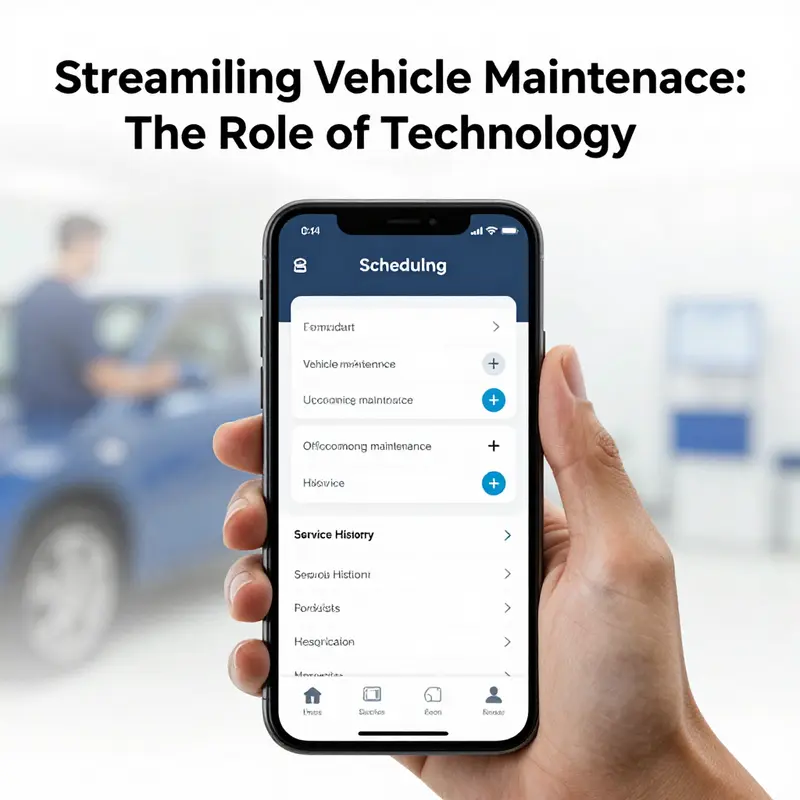
A maintenance plan that appears before you notice a fault is the result of a deliberate shift in how we understand vehicle care. Technology has moved maintenance from a calendar-based ritual to a living, data-driven conversation between machine, driver, and service provider. The gear that makes this possible starts in the vehicle itself, where onboard diagnostics, sensors, and telematics feed a steady stream of information into a mobile ecosystem that can see patterns, anticipate needs, and translate insight into action.
When a driver opens a maintenance app, they are not simply checking a static service interval; they are entering a real-time cockpit of health indicators. Oil temperature, coolant level trends, tire tread depth, brake wear, battery health, and unusual vibration patterns all contribute to a dynamic maintenance narrative. The app synthesizes these signals with the vehicle’s usage profile to produce an evidence-based forecast of when service is due.
Predictive maintenance is a central feature. Rather than wait for a fault, the software analyzes historical performance, current sensor data, and contextual factors to forecast remaining useful life of components. AI models process large volumes of data across engine temperatures, fuel quality, and environmental exposure to estimate failure likelihood and timing.
The user experience around mobile maintenance apps has evolved to be approachable. Dashboards show a health score, the next recommended task, and a concise justification. Notifications are actionable rather than punitive, and in many cases the system can automatically schedule an appointment with a partner near the vehicle’s upcoming trips.
For fleets, the implications scale up. Central dashboards enable coordinated preventive tasks, inventory planning, and workforce scheduling, reducing downtime and improving predictability across hundreds of vehicles.
Digital tools also augment human judgment. Technicians gain diagnostics that highlight likely causes and suggest inspection steps, while drivers receive clear summaries of what is needed and why. This collaboration helps preserve safety and reliability while reducing cognitive load on both sides of the maintenance equation.
In addition to efficiency and reliability, proactive maintenance has environmental and economic benefits. Keeping components operating within their intended range can improve fuel efficiency, reduce the risk of costly failures, and lower total cost of ownership over the vehicle’s life.
The practical takeaway is straightforward: live data and automated scheduling make maintenance a continuous, data-supported process rather than a one-off task triggered by a warning light. The future of maintenance scheduling is about augmenting human decision-making with robust data and reliable logistics.
Predictive Maintenance in Motion: AI-Driven Scheduling for Vehicle Fleets
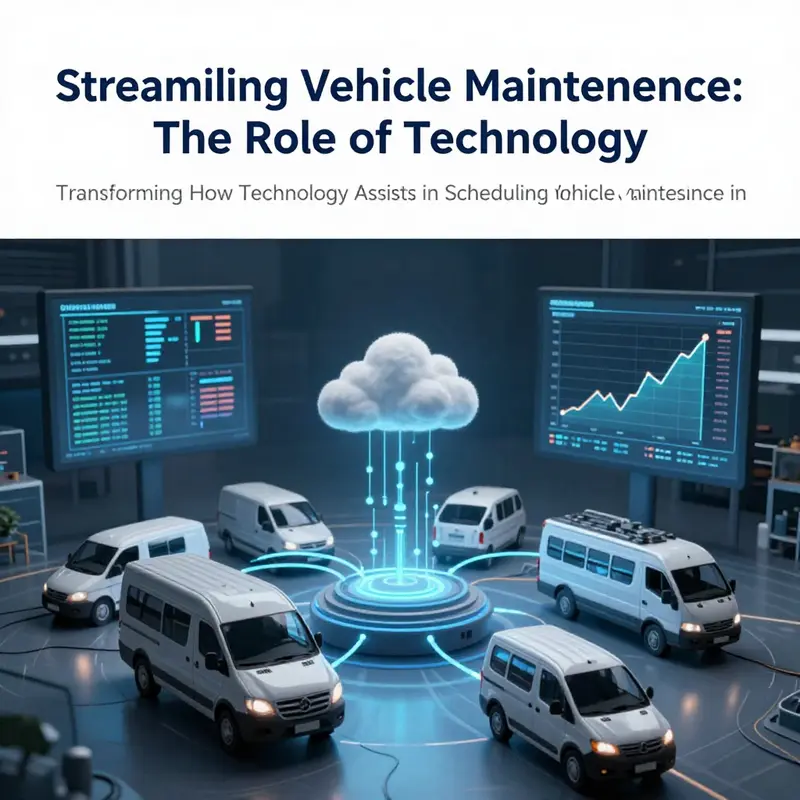
A quiet revolution is reshaping how fleets and individual vehicles are maintained. It isn’t driven by the calendar, mileage marks, or seasonal heuristics alone. It is driven by data—streams of sensor signals, usage patterns, and performance indicators that, when interpreted by advanced analytics, reveal the precise moments when care is needed. In this new paradigm, maintenance becomes a process of continuous health assessment. It moves from a reactive posture—fixing what fails—to a proactive practice—preventing failures before they arise. AI and data analytics are at the core of this shift, turning disparate data points into a coherent forecast of vehicle health that fleet managers can act on with confidence and speed. The consequence is not merely smoother operations; it is a tangible reduction in downtime, longer asset life, and a more resilient transportation system that can adapt to changing demand and risk profiles.
At the heart of this transformation lies real-time monitoring. Modern vehicle systems embed a web of sensors that continuously collect data on engine performance, thermal conditions, fluid levels, tire pressures, brake wear, battery health, and even subtle vibrations and noise patterns. When this data is funneled into an AI-enabled platform, it becomes more than numbers. It becomes a living portrait of each vehicle’s condition. Machine learning models examine these signals in the context of past behavior and current usage, discerning the normal range for a given vehicle under specific routes, loads, and environmental conditions. Unlike static maintenance schedules, which assume a one-size-fits-all cadence, AI-based scheduling calibrates itself to actual operations. It learns how a vehicle ages under real-world stress and adjusts maintenance timing accordingly. The result is maintenance that aligns closely with actual wear and need, rather than with generic intervals that may under- or over-service.
Anomaly detection is the second pillar of this approach. Rather than waiting for a failure to occur, predictive systems look for deviations from the established baseline of normal operation. A gradual rise in engine temperature, a slow increase in oil consumption, irregular vibration, or a small but persistent drop in battery voltage can all trigger a maintenance alert. What makes these alerts powerful is the accompanying guidance: the system doesn’t merely say, “Something is off.” It offers a recommended action and a timeline. It might suggest a tire rotation to even out wear, a brake inspection due to unusual pad thickness readings, or a high-voltage system check if battery health indicators cross a threshold. This actionable insight is essential because it translates data into practical, timely activity. It also reduces cognitive load for technicians by prioritizing work orders based on risk and expected impact, ensuring that the most urgent issues receive attention first while less critical items can be scheduled alongside routine service.
Resource optimization follows naturally from predictive alerting. When a fleet management platform understands what needs attention and when, it can optimize the allocation of service bays, technicians, and parts. Parts can be staged ahead of service windows, preventing delays caused by back-ordered components. Technicians can be dispatched with the right diagnostic tools and replacement parts for the specific issue, minimizing time spent on diagnosis. This level of orchestration matters in operations where every minute costs money and every delay ripples through the supply chain. It also improves safety. By pairing predictive maintenance with intelligent work planning, fleets can reduce the risk of roadside breakdowns in hazardous conditions and on high-traffic routes. In short, AI and data analytics don’t just forecast maintenance needs; they choreograph the entire maintenance workflow to be as smooth and efficient as possible.
From a cost perspective, the benefits accumulate in layers. First, there is the obvious reduction in unplanned downtime—a metric that directly affects service reliability and customer satisfaction. Fewer surprise failures translate into more predictable schedules, better utilization of drivers and assets, and fewer emergency repair charges. Second, maintenance becomes more cost-efficient because it targets interventions to the exact needs of each vehicle. Rather than servicing at rigid intervals that may over-treat or under-treat, teams can optimize the mix of preventive tasks, selecting the right services—whether that is a tire recalibration, a brake check, or a battery health test—based on actual wear and usage. Finally, predictive maintenance extends vehicle life by mitigating the cumulative damage that results from missed service opportunities. When wear patterns are understood and addressed promptly, engines operate closer to their designed tolerances, components age more gracefully, and the total cost of ownership declines.
The user experience, both for operators and technicians, is transformed as well. Mobile applications and in-vehicle interfaces become the primary conduits for maintenance intelligence. A driver might receive a discreet, non-disruptive alert about a recommended service item or a scheduled maintenance window that aligns with anticipated downtime in a facility. The driver can confirm the appointment, view the service history, and compare recommended tasks—such as tire rotation or a routine battery health check—alongside the vehicle’s recent metrics. The touchpoints are designed to be intuitive, reducing the friction of maintenance planning and encouraging timely action. For technicians, the data-driven workflow means diagnostic dashboards that summarize likely fault areas, show historical patterns of wear for similar vehicle profiles, and propose the most efficient sequence of checks. This is not merely about speed; it is about empowering technicians with a clearer map of what to inspect and why, thereby raising first-time fix rates and shortening cycle times.
A crucial nuance in this system is adaptability. As more operational data flows in, AI models refine their predictions. They learn not only from miles driven and hours of operation but also from the outcomes of maintenance actions themselves. If a particular maintenance intervention reliably reduces the probability of a failure in a given context, the model reinforces that practice, and vice versa. This feedback loop makes the entire maintenance ecosystem smarter, more responsive, and increasingly resistant to disruptive events. It also invites a broader shift in how organizations think about maintenance budgets. With predictive insights, capital expenditure becomes more strategic, enabling more precise stocking of parts, better alignment with service capacity, and more accurate forecasting of maintenance-related expenses. In turn, that predictability supports more stable pricing, improved service levels, and greater resilience across the transportation network.
Looking toward the horizon, industry observers anticipate broader adoption across sectors that rely on complex fleets—logistics, public transit, and industrial services. The promise is not only cost savings but also a fundamental change in how assets are stewarded over their lifecycles. As data collection capabilities widen and AI models become more sophisticated, the precision of maintenance schedules will deepen. The practical implications are clear: fewer unplanned outages, longer vehicle lifespans, and a fleet that remains safer and more reliable under variable conditions. The transition from reactive to proactive maintenance is not instantaneous, but every data-driven decision point brings operators closer to a future where maintenance happens just in time and exactly as needed.
For readers seeking a concrete reminder of the financial dimension of maintenance optimization, consider the broader literature on the subject. The central takeaway is that when maintenance is guided by actual wear and usage patterns, fuel efficiency, downtime costs, and replacement part expenses all trend downward in a coordinated way. The logic is straightforward: better-informed scheduling aligns service with reality, not merely with the calendar. When a vehicle’s metrics signal readiness for service, the maintenance window becomes an opportunity to sustain performance rather than a costly interruption. This perspective helps reconcile the tension between uptime requirements and the inevitable wear that comes with operation. It also underscores a practical point for managers contemplating investment in AI-enabled maintenance. The returns are not hypothetical; they accumulate as a series of smaller, smarter maintenance decisions that compound over time, yielding higher reliability and lower total ownership costs.
As with any transformative approach, there are governance and data-management considerations. Ensuring data quality, protecting privacy, and maintaining transparent audit trails are essential for trust in predictive systems. Operators must guard against over-reliance on automation, balancing automated recommendations with human judgment. Standards for data interoperability, sensor calibration, and model validation help maintain consistency across heterogeneous fleets and regions. The aim is to create a robust ecosystem where data-driven maintenance decisions align with safety, regulatory requirements, and organizational goals. When these elements come together, AI-enabled maintenance scheduling becomes an integral part of modern fleet operations rather than an add-on capability.
Internal linkage to practical reading can reinforce the value of this approach. For a deeper look at how routine maintenance translates into tangible cost savings, you can explore a discussion on how vehicle maintenance saves on gas expenses. This exploration demonstrates the link between upkeep, efficiency, and ongoing performance, reinforcing why predictive maintenance matters beyond the shop floor. how vehicle maintenance saves on gas expenses
In sum, AI and data analytics are redefining maintenance scheduling as a precise, dynamic, and economical discipline. By leveraging real-time monitoring, anomaly detection, and intelligent resource planning, fleets can move from scheduled maintenance to scheduled reliability. The promise is clear: fewer surprises, safer operations, and a lifecycle management approach that treats maintenance as a continuous value driver. The private and public sectors that embrace this shift stand to gain not only in uptime and safety but also in the confidence that their assets will perform when they are needed most. The trajectory is clear, and the data is compelling: predictive maintenance, grounded in AI, is not a distant ideal but an actionable, increasingly standard practice.
External resource: https://www.mckinsey.com/industries/operations/our-insights/the-future-of-vehicle-maintenance-in-the-age-of-ai
Final thoughts
Integrating technology into vehicle maintenance scheduling is not just an option, but a necessity for business owners aiming to enhance efficiency and reduce costs. With real-time monitoring, predictive analytics, user-friendly mobile applications, and the power of artificial intelligence, businesses can ensure their fleets are maintained proactively, prolonging vehicle lifespan and minimizing disruptions. The future of vehicle maintenance is undoubtedly rooted in these technological advancements, making it imperative for owners to embrace them fully.