
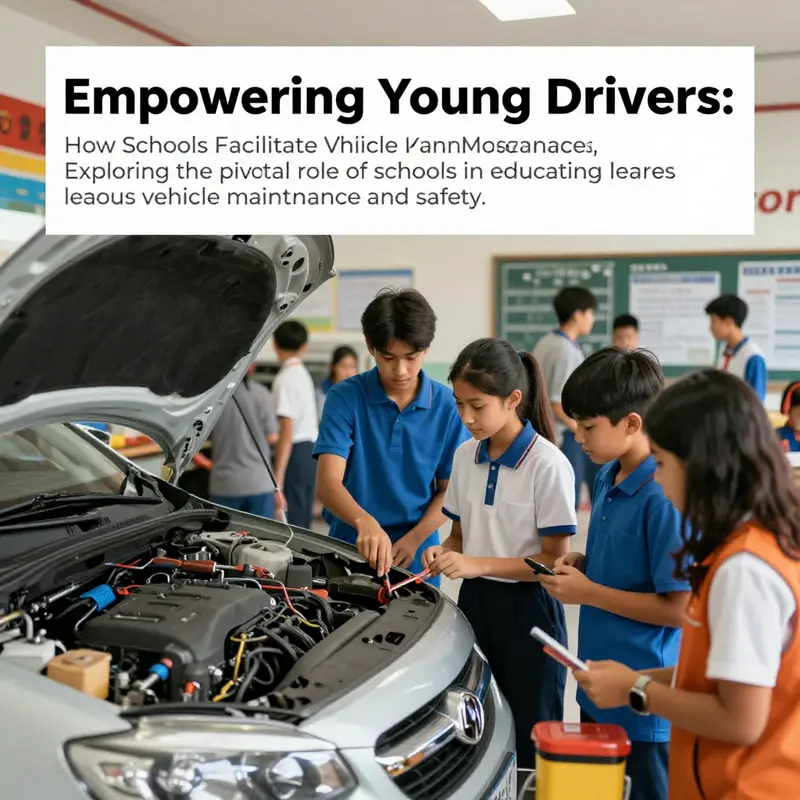
As young drivers prepare to navigate the complexities of the road, schools increasingly recognize their role in equipping these learners with essential knowledge about vehicle maintenance. The intersection of education and vehicle care fosters not only a culture of safety but also promotes responsible driving habits. This article delves into various initiatives by schools, from driver education programs to community partnerships, workshops, awareness campaigns, and the integration of technology. By understanding how schools contribute to vehicle maintenance education, business owners can appreciate the interconnectedness of community engagement and automotive safety.
Beyond the Road: How Schools Shape Teen Learners’ Vehicle Care and Safe Driving

In the language of schools, preparation for independent driving is not just a matter of passing tests or memorizing road signs. It is a gradual cultivation of habits, responsibilities, and practical know-how that keeps young drivers and their families safer on the road. The research landscape shows a clear pattern: while most schools do not offer direct vehicle maintenance services, they increasingly embed maintenance awareness into driver education and allied programs. This shift reflects a broader understanding that safety is not solely about obeying traffic laws but about the everyday care of the machines that carry students to and from school, activities, and part-time jobs. When students learn to view a vehicle as a small system of moving parts needing regular attention, they move from passive passengers to active participants in their own safety. The classroom becomes a place where measurable habits begin to form, habits that extend beyond the school bus into the learner’s own car, bike, or future family vehicle.
At the heart of this transformation is the recognition that maintenance literacy—knowing what to check and why it matters—can prevent breakdowns and reduce risk on the road. Driver education programs, historically focused on signs, signals, and defensive driving, now frequently weave in practical maintenance components. Students are guided through the logic of routine inspections, enabling them to articulate what a healthy vehicle looks like and what a potential red flag might feel like or sound like. They learn to approach a car as a system of interconnected parts rather than as a mystery machine, which lowers the anxiety that sometimes accompanies first-time driving. This approach matters because the first months of teen driving are the period of highest risk, when inexperience intersects with imperfect maintenance practices. The aim, then, is not to turn students into professional technicians but to give them a usable baseline of care that keeps vehicles reliable and drivers safe.
In practical terms, basic maintenance education often centers on core, easily observable elements. Students learn to check tire pressure and tread depth, to listen for unusual sounds in braking systems, and to monitor fluids such as oil and coolant. They practice visual inspections for leaks or worn belts and learn how to recognize when headlights or taillights are dim or failing. They are introduced to windshield wipers that no longer clear the glass effectively and to the simple task of replacing blades. These tasks, though seemingly modest, empower learners to perform quick checks before a trip and to know when to seek professional help. The value of this knowledge goes beyond preventing a flat tire or a disappointing weather-day outage; it reinforces a philosophy of proactive care. When a student understands that a small tire pressure adjustment or a clean headlight can improve visibility and control, the habit becomes a lifelong practice rooted in responsibility rather than reaction. As the National Highway Traffic Safety Administration notes, vehicle-related mechanical failures contribute to a meaningful share of crashes, underscoring why timely maintenance is a critical safety component for every new driver. A practical primer aligns with this insight, offering students a concrete framework to translate classroom concepts into everyday vigilance. In this light, the phrase What is vehicle maintenance? emerges as more than a definition; it becomes a living question that students carry into every drive, ready to be answered through observation and action. What is vehicle maintenance?
Beyond individual understanding, schools cultivate a culture of maintenance awareness through partnerships and experiential learning. Some districts collaborate with local automotive professionals to bring expertise into classrooms or labs that simulate real-world maintenance scenarios. Hands-on labs, equipped with vehicles or diagnostic equipment, allow learners to observe, handle, and troubleshoot under supervised guidance. They might practice checking fluid levels, replacing wiper blades, or testing lighting circuits in controlled settings before applying those skills to a family car. These experiences are not mere demonstrations; they are invitations to apply critical thinking, problem-solving, and responsible decision-making in a context that feels relevant and immediate. The presence of professionals in the educational environment helps bridge the gap between theory and practice, ensuring that students understand not only what to do but why it matters for safety, reliability, and cost efficiency. The result is a more confident learner who can articulate maintenance needs, assess risk, and communicate effectively with caregivers about the health of the vehicle.
This integrated approach to maintenance education also carries a broader social value. When schools help learners recognize maintenance as part of responsible car ownership, they cultivate a sense of stewardship toward the vehicles that serve families in daily life. The ability to monitor fluid levels, verify tire condition, and notice changes in vehicle behavior creates dialogue within households about safety priorities and budgeting for routine care. It shifts maintenance from a reactive expense to an anticipated, regular practice—a shift that can reduce unexpected downtime, expensive repairs, and the stress that can accompany it. In communities where distance, work schedules, and transportation options vary, such proactive habits can be especially impactful, helping teen drivers stay on the road with fewer interruptions and more dependable performance.
Of course, schools do not operate in isolation. Recognizing that families must bear the final responsibility for ongoing vehicle care, many districts provide informational materials, workshops, or family-oriented events that extend maintenance literacy beyond the classroom. Programs may include take-home checklists, short event-based demonstrations, or online resources that families can access at their convenience. Importantly, these materials are designed to be practical and actionable, avoiding jargon and focusing on routine actions that students and caregivers can perform together. In some cases, districts explore partnerships with local service providers to offer discounted maintenance services for families, a model that makes essential care more affordable and accessible. While such initiatives are not universally available, they reflect an emerging consensus that safety and maintenance are shared responsibilities, best approached through collaboration between schools, communities, and local businesses.
An important facet of this work is the ongoing evaluation and adaptation of curricula to reflect evolving needs and technologies. Driver education continues to evolve as new safety technologies enter the market and as car construction trends shift toward greater integration of advanced systems. In this context, maintenance education remains dynamic, expanding to cover basic checks alongside more sophisticated topics, such as battery health in electric or hybrid vehicles, or the implications of new tire technologies. The educational approach thus becomes a living framework, one that respects the realities of teen drivers while remaining anchored in practical, actionable steps. The objective is not to overwhelm learners with technical detail but to give them a reliable, repeatable process for evaluating their vehicle’s condition and making informed decisions about when to seek help.
As with any school-based initiative, the question of implementation varies by district and context. Some schools embed maintenance components directly into the driver education curriculum, weaving practical checks into class sessions and supervised lab days. Others distribute informational materials and host optional workshops that cater to students preparing to drive independently or to families planning shared use of a vehicle. The most effective models often blend both strategies: foundational knowledge delivered through structured classes, reinforced by community partnerships and family engagement that extend learning into the home. In all cases, the emphasis remains on safety, reliability, and the cultivation of responsibility. The overarching aim is clear: to equip learners with the confidence and competence to manage basic vehicle care, reduce preventable breakdowns, and approach driving as a learned, collaborative practice rather than a solitary or improvised one.
For districts seeking to understand what their peers are doing and how to approach these initiatives, official resources and guidance can provide a starting point. A crucial step is to consult the school’s official channels—curriculum guides, driver education manuals, and community outreach calendars—to identify what maintenance content is already offered and where gaps might exist. The aim is to create a cohesive experience that connects classroom lessons with real-world applications, while staying mindful of the family context and the diversity of vehicles that learners may be accustomed to. In pursuing these aims, schools cultivate not only safer drivers but also a broader culture of proactive care that students carry into adulthood.
The broader takeaway is that schools have a meaningful, though not always direct, role in vehicle maintenance education for learners. By embedding basic maintenance knowledge within driver education, providing hands-on learning experiences, and fostering partnerships with local automotive professionals, they help students become more competent, confident, and responsible drivers. The impact extends beyond the classroom as students discuss maintenance with caregivers, schedule routine checks, and approach driving with a habit of care rather than expedience. When maintenance becomes part of the educational journey, safety is strengthened at the level where it matters most: in the decisions made by young drivers as they navigate the roadways of daily life. For those who want to explore foundational concepts further, a concise overview of maintenance basics can serve as a useful primer: What is vehicle maintenance?
External resources provide a broader safety framework and practical guidance for families and educators alike. See NHTSA for comprehensive safety information and updates on vehicle maintenance considerations and teen driver safety: https://www.nhtsa.gov
null
null
Wheels for Learning: How Schools Build Vehicle Care Literacy for Learners
In many communities, reliable transportation is more than a convenience; it is the everyday bridge between schooling, work, and opportunity. When a student arrives at class with a car that is well maintained, the day already feels more manageable. When the car is unknown, unreliable, or poorly understood, the day can become a hurdle. Schools increasingly recognize that building mobility literacy—the knowledge and skills to keep a vehicle safe and dependable—can reduce attendance obstacles, empower families, and foster independence among learners who face the greatest barriers to reliable transportation. The shift is not about turning school grounds into repair shops, but about translating everyday automotive care into practical life skills that students carry beyond the classroom. It is a move that aligns with the broader aim of education to prepare young people for responsible citizenship and practical self-reliance in a world where mobility underwrites both safety and opportunity.
These programs often begin with a simple, accessible premise: most car trouble that interrupts a student’s routine is avoidable with basic checks and a little discipline. A school-based framework may offer workshops, informational sessions, and collaborative events that demystify maintenance topics in a way that speaks to families who juggle tight budgets and busy calendars. The goal is not to train future mechanics, but to cultivate a culture of proactive care. When students understand how oil levels affect engine longevity, why tire pressure matters for fuel efficiency and braking, or how to assess battery health before winter starts, they acquire a practical set of habits that translate into fewer unexpected breakdowns and fewer missed classes. The effect ripples outward, touching parents who manage household fleets, caregivers who balance work with school pickup schedules, and siblings who learn by observing how a car is checked, rather than simply being told to “take care of it.”
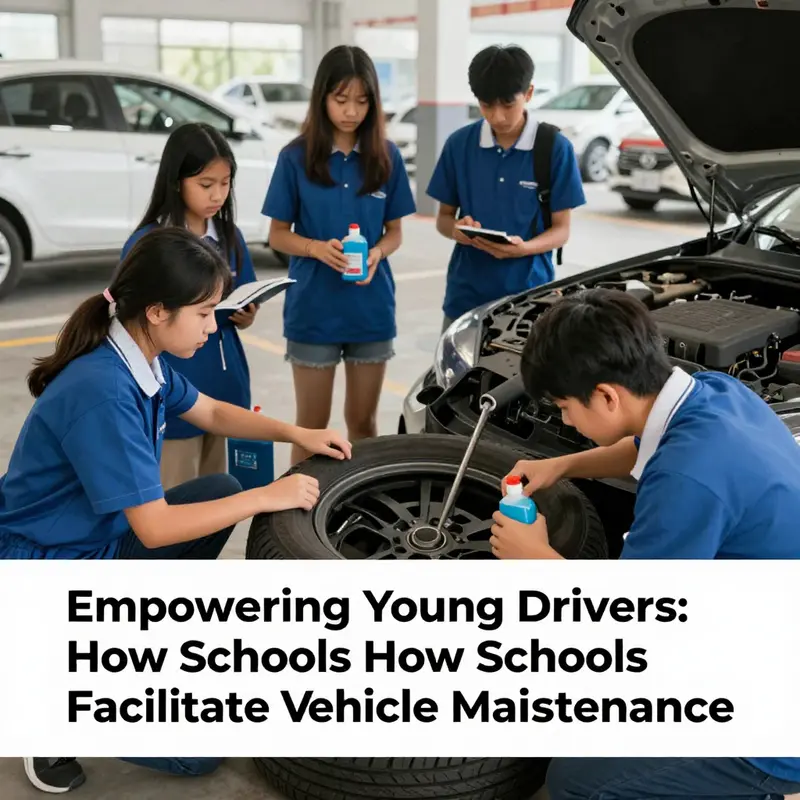
The heart of these initiatives lies in accessibility and relevance. Workshops are typically designed with low-income students and their families in mind, recognizing that financial constraints often shape how people approach vehicle upkeep. When a school invites a local mechanic or a community workshop to share knowledge, the interaction blends technical guidance with cost-conscious strategies. Learners are introduced to the kinds of routine checks that prevent minor issues from becoming major expenses: verifying oil and coolant levels, inspecting tire tread and pressure, listening for unusual sounds in the drive line, and recognizing the early warning signs of brake wear. There is also attention to battery health, antifreeze readiness, and the simple but powerful concept of preventive maintenance as an investment rather than an expense. Hands-on demonstrations, where feasible, reinforce memory and confidence. A student who can demonstrate how to check tire pressure, replace a wiper blade, or notice a drop in oil level leaves the session with a tangible toolkit and a plan to bring these checks into regular practice.
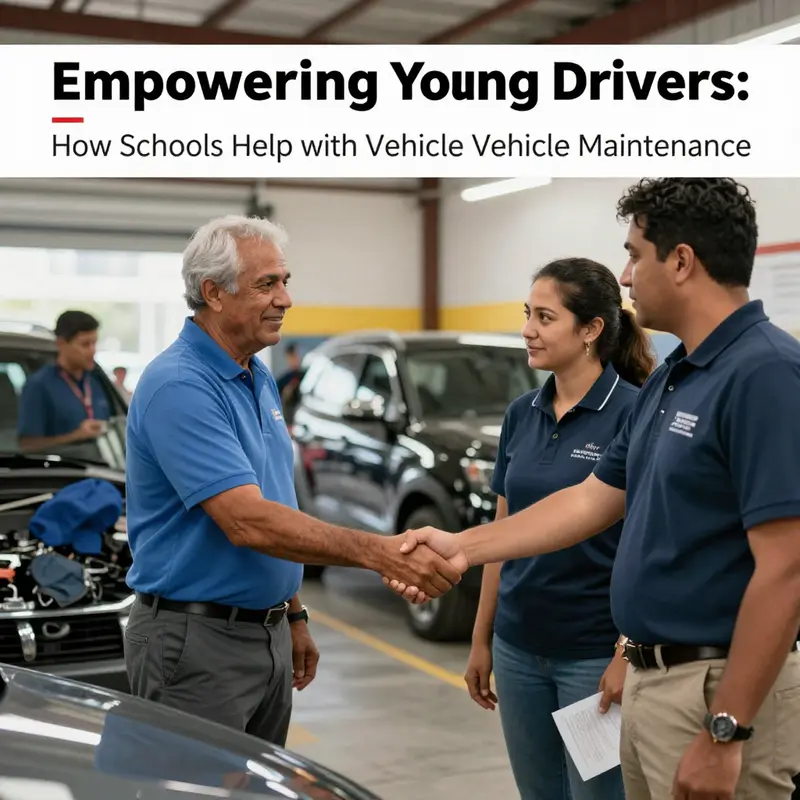
A critical dimension of these school programs is their collaborative ecosystem. Rather than delivering a one-off lecture, many districts seed ongoing partnerships with local auto shops, vocational training centers, and community organizations. These alliances can lead to discounted services for families or temporary roadside assistance partnerships that help students stay on track when timing and transportation matter. The social benefits extend beyond the mechanics of the car. By placing these conversations in a trusted school setting, educators normalize the idea that vehicle care is not a clandestine skill reserved for the mechanically inclined, but a practical, communal responsibility. Students learn to talk about maintenance without shame or fear of judgment. They gain a vocabulary for collaborating with trusted adults—teachers, mentors, and technicians—when a vehicle problem arises. That shared language helps reduce stigma around maintenance challenges and supports families navigating financial stress, job shifts, or unpredictable schedules.
The educational payoff is broad. Attendance is more reliable when students can depend on a functioning ride to school and employment, and this reliability translates into better academic continuity. In classrooms that have observed these workshops, teachers report fewer disruptions from preventable breakdowns and more opportunities for students to apply scientific concepts—thermodynamics in engine heat management, materials science in brake components, or even basic trigonometry when assessing wheel alignment—within real-world contexts. Beyond immediate school day benefits, maintenance literacy equips learners with financial literacy as well. Budgets for car upkeep become exercises in prioritization: deciding when to replace a part versus when a temporary fix can bridge a gap, recognizing the long-term cost implications of neglect, and planning for seasonal maintenance that prevents expensive emergencies. It is a holistic approach that links the mechanical with the monetary, the personal with the communal, and the present with the future.
Independence emerges as a powerful theme when students practice maintenance in or near campus. They learn to take ownership of a vehicle’s health, and that sense of accountability often extends to other areas of life. When a learner sees a simple oil check translate into a smoother ride and fewer late arrivals, that experience reinforces a broader ethic of responsibility. The confidence built through small, repeatable tasks becomes transferable: students become participants in their own mobility, rather than passive passengers on someone else’s schedule. This shift matters especially for learners who rely on public transit and carpooling as a backup. A reliable, well-maintained personal vehicle can mean the difference between missing a class and arriving prepared, on time, ready to engage with the day’s challenges. In this sense, vehicle maintenance literacy is not a niche skill; it is a foundational element of campus resilience and personal agency.
The narrative of these school-based efforts is reinforced by external observations of a broader trend. As schools expand their portfolios of practical life skills, maintenance education stands out as a clear intersection of safety, economics, and educational equity. The Atlantic highlighted the growing practice of schools incorporating practical life skills—including vehicle maintenance—into programs designed to prepare students for success beyond high school. While the exact formats vary—from after-school workshops to integrated driver education modules—the core objective remains constant: empower learners with knowledge that reduces risk, lowers costs, and expands access to opportunity. For readers seeking a broader societal lens on this trend, the Atlantic article offers a compelling case study of how schools are reimagining their role in preparing students for independent, mobile lives. The Atlantic Article.
Within the classroom and workshop spaces, the conversation about maintenance is anchored by a simple reference point: what is vehicle maintenance. For readers who want to ground their understanding in a concise definition, a trusted explanation can be found in the resource that distills maintenance into its essential activities and aims. To learn more about the basic definition and scope of maintenance in this context, see what is vehicle maintenance. This anchor helps students connect concrete tasks with the broader idea of vehicle health, and it reminds educators and families that maintenance literacy is a shared journey rather than a set of isolated practices. The ongoing emphasis on practical learning—checking fluid levels, understanding warning signs, and budgeting for repairs—serves a dual purpose: it protects students’ safety and it builds enduring habits that support academic persistence and personal mobility.
The journey toward widespread adoption of these programs is iterative. Schools experiment with formats aligned to local needs, student demographics, and community resources. They measure success not only in the immediate reduction of missed classes or late arrivals, but in the longer arc of they way students describe their own readiness to navigate adulthood. In many districts, the pilot programs evolve into regular offerings, embedded within career and technical education pathways or cross-listed with health and safety education. The emphasis remains squarely on continuity, accessibility, and relevance. When a student encounters a workshop after a long day of classes or joins a lunchtime session hosted by a local technician, what they take away is more than a set of steps. They gain a language for safety, a framework for cost-conscious decision-making, and a sense of belonging to a community that cares about their mobility as a core component of learning.
As with any educational innovation, the most enduring outcomes arise from thoughtful partnership, careful adaptation, and a clear commitment to equity. Schools that succeed in this space do not rely on one-off events; they weave maintenance literacy into the fabric of student support systems. They align with counseling services to help families plan for repairs within tight budgets; they coordinate with transportation departments to accommodate students who rely on varied schedules; and they cultivate a network of mentors who model responsible car ownership. The result is a learning environment where the car becomes another classroom tool—one that teaches science, math, budgeting, and responsibility while directly supporting a student’s ability to attend, participate, and progress. In that sense, the chapter on workshops and informational sessions is not merely about car care; it is about equity in access to mobility and the future-ready skill set that comes with taking ownership of one’s own transportation needs. In this way, schools are not just keeping wheels turning; they are turning wheels of opportunity for learners who will carry these lessons into adulthood, into family life, and into the economies of their communities.
null
null
Bridging the Classroom and the Garage: Technology-Driven Vehicle Maintenance Education in Schools
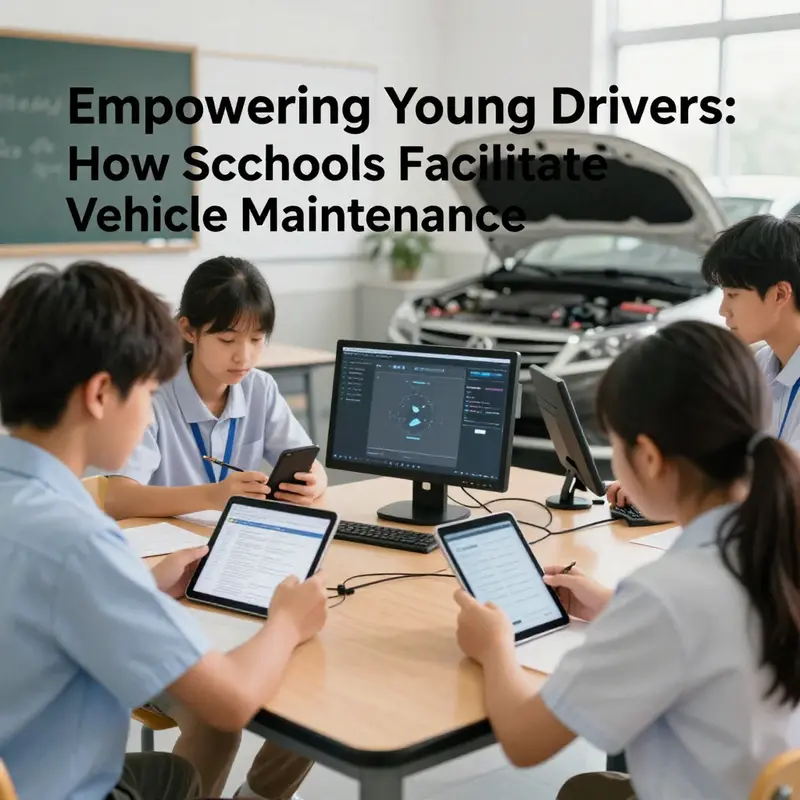
Schools rarely run full-service garages for students, yet they shape the habits and knowledge that keep young drivers safer and more capable. The core of schooling’s contribution lies in building understanding and confidence: teaching how vehicles work, why regular inspections matter, and how to recognize early warning signs before a breakdown disrupts a ride to class or a job. This indirect approach reframes maintenance from a chore to a set of safe, practical practices that can be applied in everyday life. When learners grasp tire condition, fluid levels, and brake health, they carry those disciplines into their personal vehicles, family cars, or future workplaces. The goal isn’t to produce standalone technicians in every graduate, but to cultivate a culture of proactive care, where students can describe a maintenance plan, ask informed questions at a service shop, and participate intelligently in the safety exam that accompanies a licensed drive. Understanding the basics—What is vehicle maintenance—provides a foundation that helps learners connect classroom theory to real-world action. See the linked resource for a concise framing of maintenance concepts.
Technology magnifies this effect. Digital platforms allow schools to blend theory with practice more effectively than traditional lectures could. In modern programs, online modules expose learners to maintenance theory, diagrams, and diagnostic logic, while curricula link those lessons to real-world tasks performed in well-equipped shops or simulated labs. A learner can study basic maintenance theory from a tablet, then watch a guided simulation that demonstrates brake bleeding, air-fuel balance, or proper tire inflation, and finally apply those procedures under supervision with actual equipment. This shift toward informatization creates a continuum between classroom learning and shop floor experience. It also enables scalable assessment: students demonstrate competence through interactive tasks, virtual checklists, and performance dashboards that instructors can review remotely. The result is not a mere transfer of knowledge but an integrated rehearsal of professional practice, where mistakes in a safe digital space lay the groundwork for precise, hands-on execution later.
Echoing the best of vocational pedagogy, many schools now frame their maintenance education around a core cohort of courses that blend content, skill, and industry relevance. Courses such as Automotive Maintenance and Servicing—though the exact naming may vary—use online resources on national or regional smart education platforms to bring theory to life. Instructors guide learners through basic maintenance theory, the use of service equipment, and standard operating procedures, all while tracking progress through digital portfolios. Importantly, these programs often incorporate international collaboration and industry partnerships. Students analyze case studies grounded in both domestic and global contexts, which keeps the curriculum aligned with changing standards and technologies. In every case, knowledge is not isolated from practice; it is embedded in projects that simulate real-world challenges. Designated class sessions led by industry experts or international professionals ensure that learners confront complexity directly, without the fear that a mismatch between textbook examples and actual shop conditions will derail their understanding. The pedagogy thus models a professional environment where continuous learning is a core expectation, not an optional add-on.
This approach yields benefits beyond technical know-how. Students develop diagnostic reasoning, safety-first mindsets, and collaboration skills that are indispensable in any workplace. They learn to read service manuals with confidence, to interpret gauge readings critically, and to corroborate a suspected issue with multiple checks. Because maintenance is a preventive discipline, learners who understand the cost and consequences of neglect can become advocates for timely care in their households and communities. The classroom becomes a lab where curiosity meets responsibility: learners propose maintenance schedules, plan inspections, and discuss how preventive care reduces breakdowns, saves time, and lowers long-term expenses. In this sense, schools do not simply teach how to perform a task; they cultivate a systematic habit of care that learners extend to their own vehicles and to those of family members, employers, or future teams. The educational framework also emphasizes safety and ethics: students consider the environmental impacts of fluids and waste disposal, they learn to handle tools with care, and they practice communicating clearly with clients or guardians about recommended services and timelines.
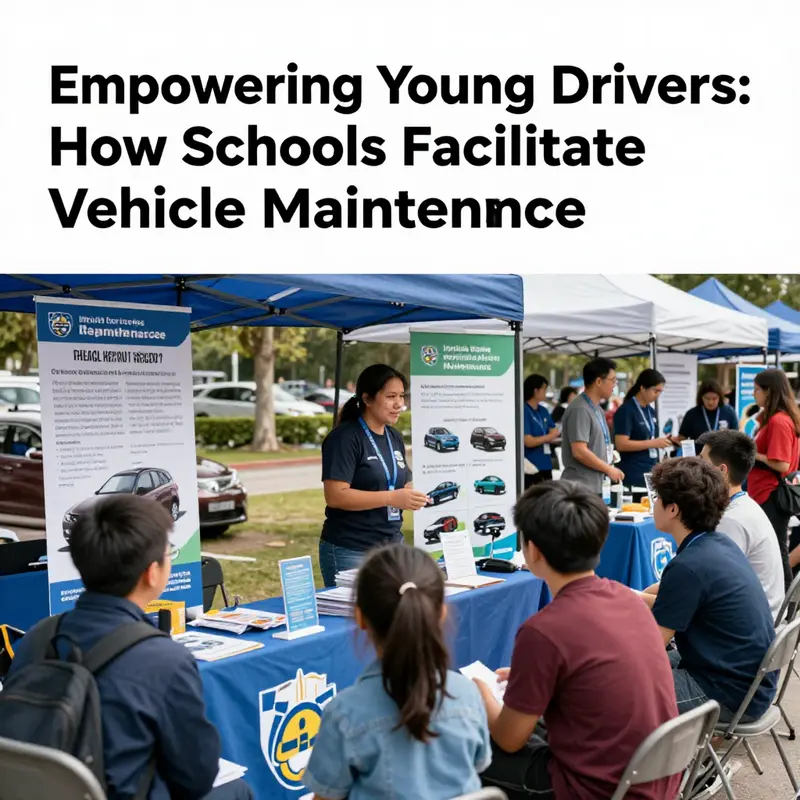
Implementation matters as much as design. Some districts partner with local auto service centers to provide access to discounted maintenance for families of students, pairing experiential learning with community support. Informational materials, safety campaigns, and hands-on workshops hosted on campus can demystify maintenance topics for older teens preparing to drive independently. When students participate in managed projects—such as a supervised vehicle check weekend or a diagnostic lab day—they observe the link between knowledge and responsibility. Educators curate content with input from industry mentors, ensuring that the vocabulary and procedures students encounter map onto what technicians actually use in the field. This alignment makes the transition from school to work smoother and more credible. The emphasis is not on creating cookie-cutter graduates but on producing adaptable thinkers who can collaborate with service professionals, ask the right questions, and apply what they learn to a wide range of vehicles and systems. Even in schools that do not offer on-site maintenance, students benefit from curated resources, workshops, and collaborative experiences that mirror the real world of automotive care.
Technology-driven education also creates pathways for a diverse set of learners. For some, interactive modules accommodate different paces and styles; for others, projects that pair students with industry mentors reveal potential career tracks in repair, diagnostics, and system design. The model accommodates blended learning, where asynchronous modules support in-class practice, and synchronous sessions—whether virtual or in-person—bring experts into the learning space. By incorporating live data from sensors or simulations, educators can show how components respond under stress, how wear evolves, and how predictive maintenance can be planned before a fault develops. Students grow not only in manual dexterity but in critical thinking, problem solving, and the ability to communicate complex ideas to non-specialists. They gain confidence in explaining what they would check, how they would measure outcomes, and why certain maintenance tasks matter for safety and reliability. In short, technology does not replace hands-on work; it amplifies it, making a broader, deeper, and more equitable educational experience possible for learners from varied backgrounds.
There is also a pedagogical virtue in the way these programs knit academic theory to professional identity. The curriculum benefits from real-world projects that require teamwork, project management, and documentation. When learners present a maintenance plan or a diagnostic report, they practice professional communication under peer and teacher review. This habit of documentation matters because it translates into accountability in the workplace. The potential for cross-border collaboration—through content development with foreign institutions and exchanges with international industry partners—exposes students to diverse standards and practices. It broadens their problem-solving repertoire and establishes a sense that good maintenance thinking travels beyond a single market. The online platforms that host these courses often support multilingual resources, mentorship networks, and remote labs, which lowers barriers to participation for nontraditional or underserved learners. The result is a more inclusive education that still adheres to rigorous industry norms.
Ultimately, the value of school-based vehicle maintenance education rests in its capacity to prepare learners not just to fix cars, but to think proactively about safety, efficiency, and stewardship. A well-designed program links everyday driving decisions to longer-term outcomes: fuel efficiency, reduced breakdowns, safer routes to school or work, and fewer disruptive incidents. When students leave the classroom with a portfolio of completed projects and a clear sense of how maintenance knowledge intersects with broader life goals, they carry a powerful asset into the next stage of their lives. The chapter’s synthesis is simple but resonant: technology enables a stronger, more connected pathway from classroom to shop floor, while partnerships with local businesses and global networks anchor that pathway in real-world standards. To frame maintenance as a learned capability rather than a set of isolated tricks reframes the experience into a professional preparation that serves communities as well as individual student futures. For a basic framing of maintenance concepts, see the resource that frames maintenance in accessible terms: What is vehicle maintenance.
External resources expand the safety and practice context for learners and families. Readers who want to situate school-based maintenance education within broader road-safety education and youth-driver programs can consult reputable national guidelines and research. For broader safety context, see the following external resource: NHTSA road-safety education.
Final thoughts
Schools are playing a crucial role in nurturing the next generation of responsible drivers. By integrating vehicle maintenance education into their curricula and establishing community partnerships, schools empower learners with essential skills and knowledge that contribute to safer roads. This collaboration not only benefits students but also supports local businesses through enhanced community engagement. As society evolves, businesses can leverage these educational initiatives to foster stronger connections within the community and promote a culture of road safety and maintenance awareness.