
In the competitive landscape of business operations, vehicle reliability can directly impact productivity and profitability. Regular vehicle maintenance is not just a routine task; it’s a vital practice that plays a crucial role in maximizing the efficiency of high-quality fuels. This connection is especially important for business owners who rely on their vehicles for transportation and service delivery. A well-maintained vehicle ensures optimal performance and supports the effective utilization of premium fuels, and understanding this synergy can lead to significant improvements in fuel economy, engine longevity, and environmental impact. The upcoming chapters will delve into how regular maintenance enhances fuel efficiency, the impact on engine performance when using high-quality fuels, and the way maintenance supports optimal combustion, all of which is essential for forward-thinking business owners.
Precision Under the Hood: How Regular Maintenance Unlocks the Full Benefits of High-Quality Fuels
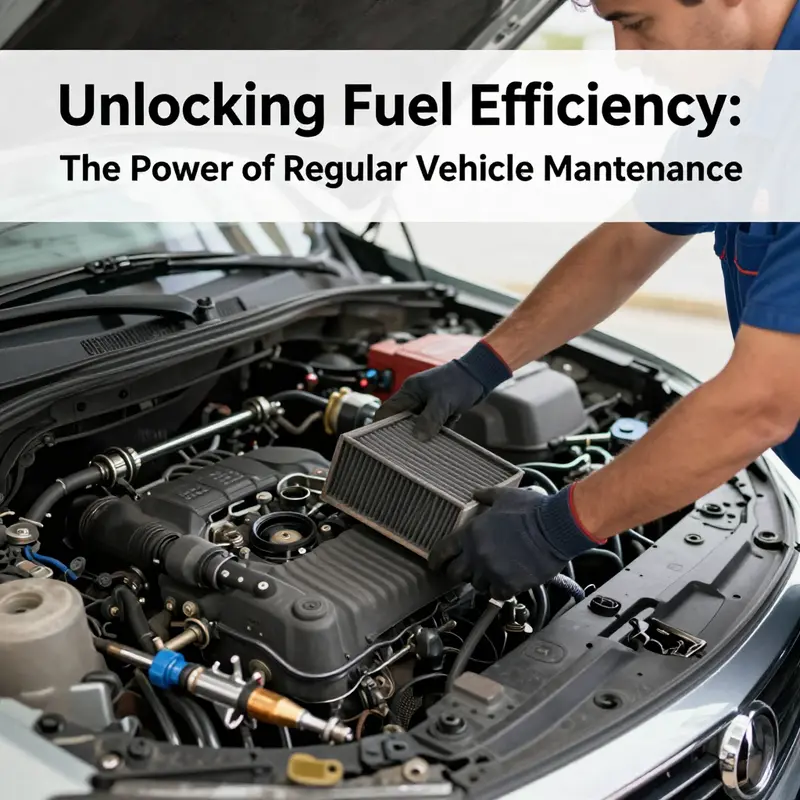
High-quality fuels promise more than just a brighter octane number or a smoother idle. They promise efficiency, power, and cleaner emissions, but those promises are not automatic. The engine is a living system that depends on clean intake air, precise fuel delivery, and careful timing. Regular maintenance acts as the health check that allows premium fuels to behave as advertised. Without it, even the best gasoline or ethanol blend can fall short, because the path from pump to piston is riddled with small barriers—clogged filters, dirty injectors, and tired sensors—that dull the fuel’s potential. When maintenance is kept up, the engine breathes easier, the fuel is burned more completely, and the vehicle gains the kind of efficiency that the fuel intended to provide. This is not about chasing hype; it is about aligning two parts of the same system—the fuel and the engine—through disciplined care. In this light, the act of regular servicing becomes not just a precaution but a practical partnership with high-quality fuels, a partnership that yields smoother drivability, better power delivery, and noticeably lower emissions without requiring a different fuel regimen from the driver.
A well-tuned engine and a clean fuel system are the first conditions for realizing the advantages of premium fuels. When air and fuel mix in the right proportions, the additives in high-octane or ethanol blends can do what they are designed to do: reduce knocking, improve protection against pre-ignition, and support a cleaner burn. But when the air intake is starved by a dirty air filter, or when fuel delivery is perturbed by varnish and deposits in the fuel system, those additives have less opportunity to act. The result is a less efficient burn, lower power output, and higher stress on components that should be operating in harmony. This reveals a simple truth: high-quality fuels amplify the engine’s existing health, but they cannot compensate for neglect.
The practical path to harnessing premium fuel’s full potential begins with a cadence of routine checks that keep the engine’s air, fuel, and ignition pathways clear and calibrated. In simple terms, maintenance creates the conditions under which the chemistry of the fuel can work as intended. When the air filter is clean, the air entering the intake is properly conditioned. When the fuel injectors deliver precise amounts, the engine can exploit the fuel’s octane and combustion modifiers without compromise. When the oxygen sensors and exhaust gas sensors monitor the burn and adjust the air-fuel ratio in real time, the engine stays in its optimal comfort zone for both performance and efficiency. Those who drive regular maintenance into the rhythm of their vehicle use the high-quality fuel as intended, rather than as an optional bonus. The difference shows up in the way the engine responds to throttle input, the steadiness of idle, and the steadier temperature profile during a highway climb. And the impact extends beyond performance. Cleaner combustion means less unburned fuel exiting the exhaust, which translates into lower emissions and a smaller environmental imprint, a benefit recognized by the U.S. Department of Energy and echoed across fuel-economy research.
Consider the everyday maintenance habits that directly influence how well a high-quality fuel performs. Tire pressure, often overlooked, has a surprisingly immediate effect on fuel economy. Underinflated tires increase rolling resistance, forcing the engine to work harder just to keep the vehicle moving. Data from the U.S. Department of Energy show that maintaining proper tire pressure can improve fuel economy by as much as a few percent, which compounds with the efficiency gains from a clean air-fuel path. This is not a marginal effect. It multiplies with the quality of the fuel, because the engine can sustain leaner, more controlled combustion when the tires aren’t adding artificial drag that the fuel must overcome. In effect, tire inflation is a ready-made, no-disassembly-required multiplier for the benefits of premium fuels. Pair this with timely oil changes that minimize friction inside the engine, and the picture becomes clearer: the engine can spin with less resistance, the fuel can burn more efficiently, and the overall system becomes more economical and cleaner.
Oil plays a quiet yet decisive role in how well high-quality fuels can actually deliver their promised performance. Fresh oil reduces friction, dissipates heat efficiently, and helps the piston rings seal with minimal leakage. This reduces parasitic losses and allows the engine to reach and maintain its ideal operating temperature with less energy wasted as heat. The longer the interval between oil changes, the more the oil degrades, the more friction rises, and the more the engine fights to extract energy from every drop of fuel. When you couple regular oil changes with the use of a quality lubricant, you give the engine a smoother surface to work against. That translates into steadier compression, more precise ignition timing, and a more consistent air-fuel ratio across driving conditions. All of this means that high-quality fuels can contribute more of their designed advantages, including better resistance to knocking and more stable power at higher loads.
The conversation would be incomplete without addressing the heart of the fuel system: the air filter, the fuel injectors, and the sensors that regulate the mix. A dirty air filter not only reduces the volume of clean air reaching the combustion chamber; it also alters the pressure dynamics within the intake manifold. Even premium fuels cannot fully compensate for an air path that is throttled by deposits or obstruction. Regular air-filter replacements keep the engine breathing easy, ensuring that the oxygen available in the air is effectively used by the injection system. Clean air supports efficient combustion, which is the bedrock upon which the fuel’s additives can work properly. On the fuel delivery side, dirty or varnished injectors fail to spray a fine, evenly distributed mist. The result is an uneven air-fuel mixture, pockets of rich and lean regions, and incomplete combustion. Premium fuels rely on exact metering to maximize power and minimize emissions, and clean injectors are essential to that precision.
This is where the sensors and control systems come into their own. Oxygen sensors and other diagnostics are the guardians of the air-fuel ratio. When these sensors are clean and responsive, the engine’s computer can finely tune the mixture to accommodate different fuel blends, including high-octane or ethanol-rich formulations. A malfunctioning sensor can push the mixture toward richness or leanness, which wastes fuel and increases emissions. Regular diagnostic checks catch sensor drift, worn spark plugs, or aging catalytic converters before they become affordability sinks. A car that travels with a healthy sensor suite is better positioned to extract the full value from high-quality fuels, because the engine no longer fights against its own control thresholds. It is this synergy—clean intake, precise fuel delivery, and vigilant sensing—that makes premium fuels stay honest about the performance they promise.
Speaking of spark, the ignition system deserves a closer look. Worn or fouled spark plugs can misfire or ignite late, causing portions of the fuel-air mixture to remain unburned. When that happens, even the most refined fuel blends lose decade-long efficiency boosts. Regular inspection and timely replacement of spark plugs maintain uniform combustion, avoid misfires, and reduce unburned fuel slipping past the exhaust. In this frame, high-quality fuels offer their advantages only when ignition timing and spark quality cooperate. The result is smoother acceleration, consistent power delivery, and a more predictable response to throttle inputs. This is not just about a smoother ride; it is about ensuring that every molecule of fuel contributes to useful work, delivering the fuel’s designed performance with minimal waste.
A broader perspective reinforces what maintenance really buys you: longevity, environmental stewardship, and smarter fuel use. Routine servicing beefs up the vehicle’s resilience against the cumulative wear that can erode efficiency over time. Even as electric powertrains begin to take on a growing share of the automotive landscape, the reality remains that internal combustion engines depend on well-maintained systems to extract the maximum benefit from any high-quality fuel. Cars that endure regular tune-ups, timely part replacements, and proactive diagnostics accumulate less fuel waste, emit fewer pollutants, and maintain a higher resale value because they stay closer to their factory tolerances. The environmental payoff is not theoretical; it is measurable in cleaner exhaust and steadier fuel economy under real-world driving conditions. The DOE’s guidance on vehicle maintenance and fuel efficiency highlights how these practices translate directly into better mileage and lower emissions, a reminder that maintenance is not an optional extra but a core contributor to responsible driving when high-quality fuels are involved.
As drivers navigate varied terrains and shifting loads, the interplay between maintenance and fuel quality becomes even more apparent. When a vehicle climbs a long grade or accelerates with a heavy payload, the engine works harder and the fuel system must perform under greater demand. In such moments, the benefits of clean air, precise fuel delivery, and stable ignition become magnified. Regular maintenance helps ensure that the engine remains capable of adapting to this demand without sacrificing efficiency. In other words, maintenance keeps the system flexible enough to exploit the full range of performance enhancements that high-quality fuels offer. The result is a vehicle that responds with confidence, maintains steady efficiency, and sustains low emissions across a wider spectrum of driving scenarios.
To deepen this point, consider the practical path a driver takes every week: check the tire pressures, replace the air filter on schedule, keep the oil fresh, and have ignition components inspected periodically. These small acts, done consistently, create a corridor of reliability through which premium fuels can travel unimpeded. The effect is cumulative. A car that has a clean air path, precise fuel metering, and a well-tuned ignition system is not merely operating closer to its potential; it is actively realizing the fuel’s designed advantages. The economic dimension of this is clear as well. While premium fuels may carry a higher upfront cost, the improved efficiency, fewer misfires, and reduced emissions can translate into real savings over time as fuel economy stabilizes and maintenance issues that would sap performance are avoided. In this sense, the practice of regular maintenance becomes a strategic choice to maximize the value of high-quality fuels rather than a conservative expense.
For readers who want a concise synthesis of how to translate maintenance into measurable fuel savings, a practical takeaway is to view vehicle upkeep as a continuous partnership with the fuel. Each service interval is an opportunity to recalibrate, clean, and confirm the health of the engine and fuel system. It is not enough to select a high-quality fuel and hope for optimal results; the engine must be prepared to receive and utilize that fuel’s properties. This mindset aligns with the broader understanding of fuel efficiency and emissions reductions, as reflected in official sources that connect maintenance practices with tangible gains in economy and environmental performance. In short, high-quality fuels shine brightest when the rest of the system is kept clean, calibrated, and ready to perform.
As a practical invitation to readers, the idea is to cultivate a maintenance routine that respects the fuel’s design intent. For a quick reference to the value of ongoing upkeep in gas savings, you can explore how vehicle maintenance saves on gas expenses. This resource underlines the simple but powerful truth: small, regular actions pay off at the pump. For those seeking more formal guidance, consult the U.S. Department of Energy’s fuel-economy resources, which provide a framework for understanding how maintenance intersects with fuel choice and usage. The core message remains consistent across sources: a well-maintained engine and clean fuel system are the best match for high-quality fuels, unlocking performance, efficiency, and emissions benefits that would otherwise remain untapped. To deepen the conversation beyond this chapter, the energy.gov article on vehicle maintenance and fuel efficiency offers a grounded overview of how these practices translate into real-world savings and cleaner operation.
External resource: https://www.energy.gov/eere/vehicles/articles/vehicle-maintenance-and-fuel-efficiency
Fuel that Performs: Why Regular Vehicle Maintenance Maximizes the Promise of High-Quality Fuels
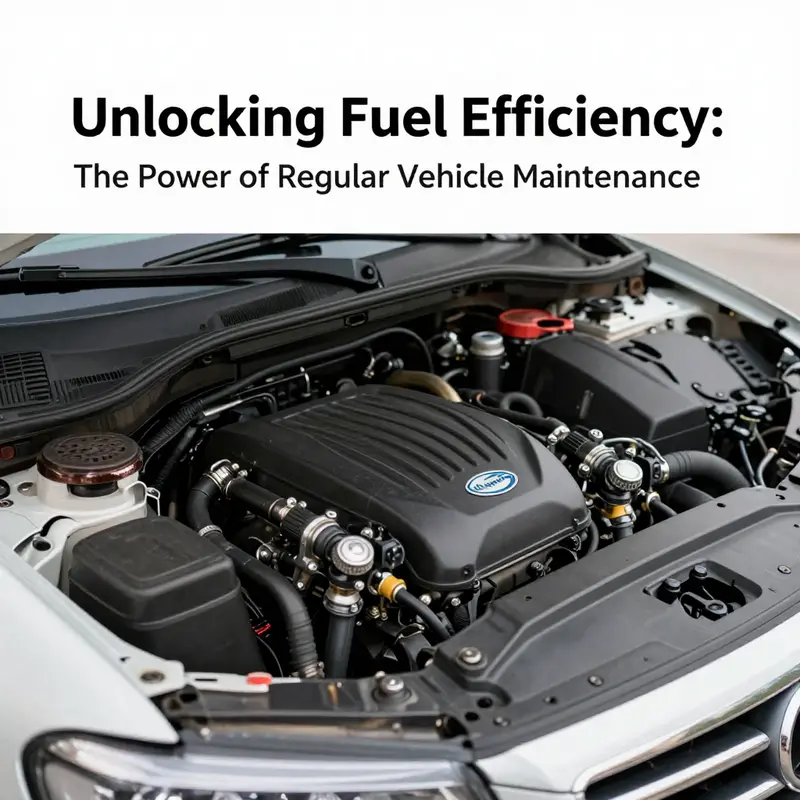
The relationship between the fuel you pour into a vehicle and the state of the engine that uses it is often framed as a simple choice: choose high quality fuel, and your car will run better. In practice, the truth is more nuanced. High quality fuels carry additives and a higher octane or ethanol blend that can deliver more complete combustion and cleaner operation. But those advantages rarely reach their full potential unless the engine and fuel system are in good mechanical condition. Regular maintenance acts as the conductor of a symphony, ensuring that every component involved in delivering and burning fuel is in tune. When maintenance is neglected, even the most advanced fuels can fall short of their promise, and the result is wasted energy, increased emissions, and diminished performance. In the long run, maintenance is not a cost but an investment that preserves the value of fuel quality through the life of the vehicle.
Consider the air intake, where the journey toward efficient combustion begins. A clean air filter is not a cosmetic detail; it governs how much air mixes with the fuel. An air stream that is clean and unobstructed supports a precise air mass entering the combustion chamber. When the filter becomes clogged or dirty, the engine management system reacts by reducing air intake or altering fuel delivery to maintain idle stability. The outcome is a subtle but real drift away from the ideal air-fuel ratio, even if the vehicle is running premium gasoline. In other words, high quality fuel cannot compensate for a throttled air path. The result is a drop in power, slower throttle response, and higher fuel use as the engine compiles compensations that do not align with the fuel’s design.
Next comes the fuel delivery system, where the injectors perform the delicate task of atomizing fuel into a fine mist that can mix evenly with air. Modern engines rely on precisely timed injections to create a homogeneous charge. When injectors are clean and calibrated, premium fuels can perform their role more fully, delivering the correct spray pattern and quantity. Dirty or varnished injectors disrupt spray quality and disrupt the intended stoichiometry. The outcome is incomplete combustion, higher exhaust temperatures, and the chance of fuel puddling in the combustion chamber. The deeper impact is on efficiency: even a slight deviation in how fuel is introduced can undermine the benefits of high octane or ethanol blended fuels that are designed to resist knock and burn more completely. Routine maintenance, including periodic fuel system cleaning or injector service when indicated, helps ensure that the fuel’s additives, detergents, and lubricants can act where they are meant to act, not in reaction to deposits formed by neglect.
A core pillar of engine health is the spark system. Spark plugs do not carry the entire burden of ignition on their own, but their condition can make or break the engine’s ability to ignite a refined fuel mixture consistently. Worn or dirty plugs may misfire, especially under load or during rapid accelerations that demand precise timing. When misfires occur, the engine loses power and efficiency, and fuel economy deteriorates as the vehicle compensates with richer mixtures or unnecessary throttle input. Regular plug replacement in line with manufacturer recommendations ensures reliable ignition, which translates into cleaner burning and a smoother power curve. The interplay between good ignition and high quality fuel is subtle but powerful: clean sparks ignite the mixture more completely, enabling the fuel’s additives to work effectively inside the combustion chamber and reducing unburned fuel that would otherwise pass through the exhaust system.
The oil that lubricates and protects the engine also plays a decisive role in how well high quality fuels perform. Oil is more than a lubricant; it carries away heat, flushes away contaminants, and helps maintain tight tolerances within moving parts. Using the correct oil grade, viscosity, and quality is essential for minimizing friction and wear, especially when operating with premium fuels that can burn more efficiently. If the oil is too old or too thin or too thick for the engine’s current state, shearing forces increase, heat rises, and the engine must work harder to achieve the same level of performance. In turn, this added strain can blunt the advantages of a premium fuel, making the engine less responsive and less able to capitalize on higher octane’s resistance to knock. Regular oil changes, along with checks of oil level and condition, keep the engine reliably lubricated and cooler, preserving the integrity of the combustion process over time.
Beyond the mechanical bits, sensors and exhaust aftertreatment components float at the core of how modern engines exploit high quality fuels. Oxygen sensors monitor fuel mixture in real time, guiding fuel delivery to align with the air that enters the engine. If sensors accumulate drift or contamination, the engine control unit may misread the mixture and compensate in ways that undermine efficiency and power. The catalytic converter’s performance over its service life also hinges on maintaining proper operating temperatures and clean exhaust streams. When the engine is well maintained, sensors and converters work in concert with the fuel’s properties to minimize emissions while preserving performance. The direct link to fuel quality is clear: high octane or high purity fuels are designed to operate optimally under tight control of the engine’s fuel-air ratio and temperature management. Poor maintenance, on the other hand, can turn the benefits of premium fuels into marginal gains, or even losses, as misreadings trigger inefficient combustion and unnecessary fuel use.
A practical way to view this is to think of maintenance as the conditioning of the entire system that handles fuel—from intake to exhaust. Each component has its own role, and each is more effective when the rest of the chain is functioning properly. The air path must breathe freely; the fuel must be atomized precisely; ignition must occur reliably; lubrication must minimize resistance; and the aftertreatment network must monitor and respond correctly to operating conditions. When all of these elements are in good shape, high-quality fuels can deliver the performance benefits they promise—more power on demand, smoother acceleration, and, crucially, better fuel economy and lower emissions under real-world driving. When any link in that chain weakens, the engine’s total performance becomes a sum of several compromised parts, and the premium fuel’s advantages shrink accordingly.
There is a body of evidence that reinforces this integrated view. Studies that compare engines running on premium gasoline or high-octane blends show clearer performance and emission advantages when the engine state is favorable. The Honda Civic example cited in research illustrates a broader lesson: premium fuels provide the intended benefits most clearly when the engine remains in good mechanical condition through consistent maintenance. The converse is also instructive: neglect can erase the gains of high-quality fuel, producing a scenario where knocking, incomplete combustion, or elevated emissions persist despite the fuel choice. This synergy between fuel quality and maintenance is the reason many drivers notice tangible improvements only after they have addressed routine maintenance tasks, such as replacing worn sensors, changing oil, and ensuring the air and fuel systems remain clean and calibrated. The underlying principle, then, is not simply to choose better fuel but to maintain the system that uses it so that the fuel and the engine can interact as designed.
A broader perspective helps translate this into everyday practice. Regular maintenance acts as a form of optimization that aligns with the energy economy that high-quality fuels are meant to enable. The U.S. Department of Energy’s Fuel Economy site emphasizes that keeping vehicle systems in good condition is one of the most effective ways to improve fuel economy and reduce emissions. That guidance is not a judgment on fuel quality alone; it is a recognition that the benefits of fuel quality are realized through a well-tuned, clean, and efficient engine. When maintenance is neglected, the same fuel becomes more of a cautious promise than a guaranteed improvement. This is particularly true for engines that are old or operated in demanding conditions where deposits build up and sensors drift. In such cases, the combination of high-quality fuel and a properly maintained system becomes not only a matter of performance but also of reliability and environmental responsibility.
To weave these threads into a coherent picture, consider the daily routine of a driver who values efficiency and performance. The car is serviced at the manufacturer-recommended intervals, air filters are replaced, oil is changed, spark plugs are inspected and replaced when needed, and the fuel system is checked for leaks or signs of deposit formation. In parallel, the driver fills with a consistently high-quality fuel that matches the engine’s design—whether that means a high octane or an ethanol blend approved for the vehicle. When this routine is followed, the engine runs with less resistance, maintains a stable idle, and responds crisply to throttle input. The combustion process remains close to ideal, producing power where it is needed while using fuel more efficiently and reducing the production of pollutants. In this scenario, the car does not merely run; it performs with a clear, measurable sense of confidence. It is a practical example of how the synergy works in real life rather than a theoretical claim.
The broader implication for drivers, fleets, and policy makers is that fuel quality cannot be viewed in isolation. It sits within a system that requires consistent upkeep to realize its full potential. The chapters that follow will delve into related nuances, including what maintenance practices specifically support the use of high-quality fuels under varied driving conditions and what signs indicate that a vehicle may be drifting away from optimal performance due to maintenance lapses. Yet the through line remains consistent: high-quality fuels offer advantages that are conditional on a well-maintained engine and fuel system. The two elements magnify each other when kept in harmony. For readers curious about how small changes in maintenance can translate into measurable savings, a practical discussion on fuel economy gains from routine upkeep is available here: how vehicle maintenance saves on gas expenses.
As a closing reflection for this section, it is worth reiterating that regular maintenance is a form of insurance against the inevitable aging of an internal combustion engine. It protects the fuel system and its interactions with modern fuels, preserving performance, efficiency, and emissions controls. High-quality fuels are not a magic replacement for neglected systems but a complementary factor that shines when the engine is in good shape. The combined effect is a vehicle that runs more smoothly, with fewer trips to the service bay for avoidable issues, and with more consistent performance across a wide range of driving scenarios. The message is simple and enduring: invest in upkeep, and your high-quality fuel will deliver the cleaner burn, the stronger response, and the longer life that you expect from your investment.
External resource: https://www.sciencedirect.com/science/article/pii/S2352146516300785
null

null
Final thoughts
In summary, regular vehicle maintenance is fundamental for any business owner looking to enhance fuel efficiency and optimize engine performance. By ensuring that components such as the air filter, fuel injectors, and sensors are clean and functioning as intended, fleet managers can unlock the full potential of high-quality fuels. This not only leads to improved fuel economy and reduced emissions but also extends the lifetime of the vehicle and contributes to a more sustainable operational approach. As businesses strive for operational excellence, incorporating routine vehicle maintenance into their strategy proves to be not just an option but a necessity for staying competitive in today’s market.