
Maintaining a fleet of vehicles is vital for any business owner who relies on dependability and performance. Proper vehicle maintenance not only enhances the safety and reliability of your fleet but can also prolong the lifespan of your investments. Understanding the frequency of essential maintenance tasks can help you prevent costly repairs and ensure smooth operations. This article breaks down three fundamental aspects of vehicle maintenance: oil changes, tire rotation and inspection, and brake inspection. By grasping the timelines for these tasks, you can make informed decisions that benefit your business and improve overall efficiency.
Oil Changes Decoded: How Oil Type, Driving Conditions, and Manufacturer Guidance Shape Your Maintenance Schedule
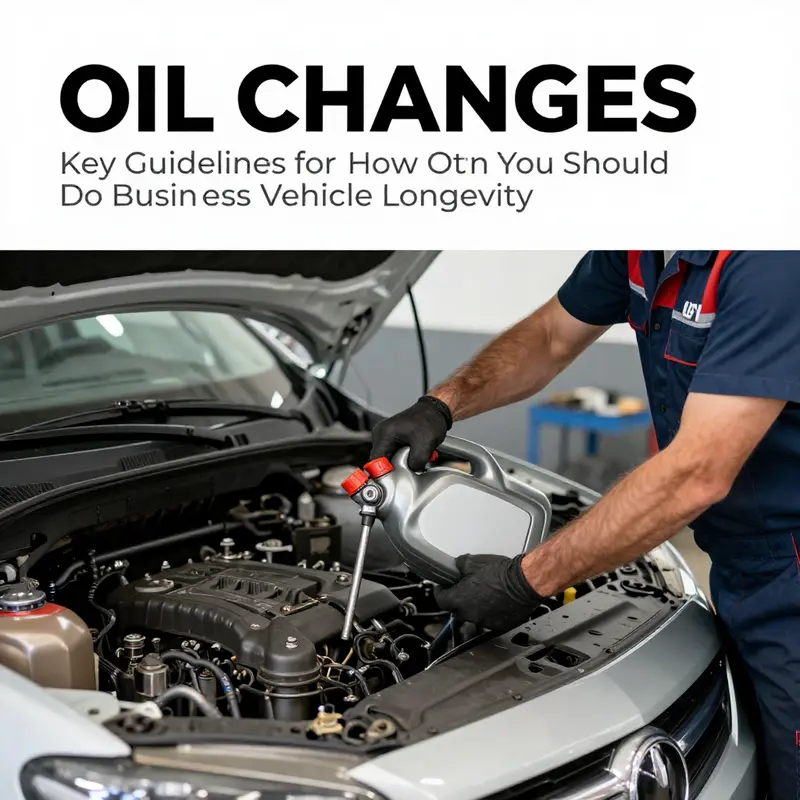
Oil changes sit at the center of your vehicle’s health, acting as a regular heartbeat that keeps the engine clean, cool, and lubricated. They are not simply a box to check off on a maintenance sheet; they are a practical habit that translates into smoother performance, better fuel economy, and fewer surprises on the road. Understanding when to change the oil involves balancing several factors: the type of oil you use, how you drive, the conditions you routinely encounter, and what the manufacturer recommends for your specific model. When you see a maintenance reminder light, or you pick up the car from a shop after a service, you are not just replacing a consumable—you are reestablishing the engine’s protective shield. The question of frequency, then, becomes less about a fixed number and more about keeping the engine’s internal environment stable across real-world scenarios. It is a mindset built on clear information, attentive observation, and a willingness to adapt a schedule as your vehicle and its usage evolve. If you are seeking to translate general guidelines into a personal plan, this chapter will help you read the signs, weigh the options, and apply a practical routine that honors both your car and your time.
Oil is more than a lubricant; it is a reservoir of chemistry that carries away heat, traps contaminants, and forms a protective film between metal surfaces. The viscosity and additives are chosen to match engine design and operating temperature ranges. As engines have grown more precise, the maintenance implications of oil have expanded. Modern engines with tighter tolerances and more efficient cooling systems can tolerate longer intervals when they are filled with high-quality oil, but they also demand respect for the specific type recommended by the manufacturer. The choice of oil type—conventional, semi-synthetic, or full synthetic—changes the calculus of how often you should drain and replace it. Conventional oil was once the default for many older engines, where the intervals were shorter and the engines were built around simple tolerances. Semi-synthetic oils offered a middle ground, providing improved protection and stability without the price tag of full synthetic. Full synthetic oils, engineered to resist breakdown under high heat and heavy loads, enable longer intervals for many modern engines, especially those designed to perform under demanding conditions. Yet the decision is not one-size-fits-all. It depends on your car’s design, your driving patterns, and the environmental realities you face every day.
To translate these ideas into a workable maintenance rhythm, start with intervals by oil type, which the industry generally regards as a reliable framework. Conventional or mineral oil typically requires changes about every 5,000 kilometers (roughly 3,100 miles) or every six months, whichever comes first. In some markets and for some driving styles, the six-month cap acts as a conservative safeguard, ensuring lubrication and protection regardless of miles accumulated. Semi-synthetic oil, which blends mineral with synthetic elements for improved resilience, commonly carries a change interval around 7,500 kilometers (about 4,700 miles) or eight months. Full synthetic oil raises the ceiling further, with recommended intervals that can stretch to 10,000 kilometers (approximately 6,200 miles) or up to a year, depending on weather, driving conditions, and the vehicle’s tolerance for heat and stress. These guidelines align with the practical reality that driving conditions—such as frequent short trips that never allow engine temperature to stabilise, or extended highway runs that push lubrication to its limits—play a decisive role in how quickly oil breaks down. In very hot climates or in engines that carry heavy loads or towing duties, even full synthetic oil may require more frequent attention. Conversely, in moderate climates with steady highway driving and lighter loads, the interval can extend further within the manufacturer’s suggested window.
The numbers above provide a baseline, but there is more to the decision than the category of oil alone. Correct oil capacity and a properly matched oil filter are essential companions to any oil-change routine. Most engines require roughly 4 to 7 quarts of oil, though some modern engines with tighter spaces and advanced filters may use a different amount. Overfilling can generate excessive pressure and foam, reducing the oil’s effective lubrication and potentially causing damage. Underfilling, on the other hand, leaves the engine without enough protective film, increasing components’ wear over time. The filter is more than a simple screen; it serves as a dedicated flow path for oil, trapping particles and contaminants before the oil circulates again. An improperly matched filter—whether for thread size, gasket diameter, or height—can leak or fail to seal properly, undermining the entire lubrication system. The upshot is that the oil change is not just about swapping oil and a filter; it is about ensuring harmony among the oil, the filter, and the engine’s capacity to manage heat and cleanliness at every temperature and load condition.
Beyond the literal oil and filter swap, the broader maintenance ecosystem matters. The engine operates within a network of systems—cooling, fuel delivery, air intake, and exhaust—that influence how hard the oil works. Driving under heavy acceleration, continuous stop-and-go traffic, or frequent short trips can all contribute to oil contamination and more rapid breakdown. In such cases, a more frequent change interval, or the use of a higher-grade oil, may be warranted. Even with longer intervals suggested by a synthetic oil, you should not ignore the fact that the oil’s health is a reflection of how you drive and how often the engine reaches its operating temperature. If you regularly tow, haul cargo, or participate in spirited driving, the engine endures higher stresses, and the oil’s life will shorten relative to a similar trip driven at modest speeds on smooth roads. It is not a judgment on your driving; it is a factual acknowledgement of how stress alters chemical reactions inside the crankcase. This perspective helps you approach maintenance with honesty and practicality rather than with a rigid calendar mindset.
A practical way to anchor your plan is to consult the vehicle’s owner manual, the best source of manufacturer guidance. Manuals translate engineering intent into actionable schedules, reflecting the engine’s unique tolerances, oil-fill quantities, and filter specifications. Some manufacturers also embed on-board maintenance reminders that calculate oil life based on your actual driving patterns and engine conditions. These reminders can be surprisingly accurate, especially when you combine their recommendations with your own observations about engine noise, oil level consistency, and temperature behavior. The key is to treat these tools as guides, not gospel. They work best when you use them in conjunction with periodic measurements and a sense of how your car behaves across the seasons. When you see a maintenance reminder, it is worth assessing not just the timing but the broader health signals—are there any metal shavings on the dipstick, is the oil darker than expected, or does the engine feel unusually loud or sluggish after changes? These questions help you decide whether to adhere strictly to the timeline, shorten the interval, or extend it with a higher-quality oil.
In addition to the oil type and capacity, understanding the practical realities of your daily life can sharpen your scheduling. For drivers who live in dusty or polluted regions, cabin air filters and engine air filters may shed debris and contaminants more quickly, creating a parallel wear pattern that interacts with oil life. Although this chapter focuses on oil changes, the broader maintenance routine benefits from a holistic view: you are protecting your engine’s ecosystem as a single unit. A clean air intake helps the engine run more efficiently, which can reduce fuel consumption and heat generation. In turn, cooler operating temperatures slow oil degradation, allowing a synthetic or semi-synthetic formulation to last longer under similar conditions. The result is a synergy between intake cleanliness, oil quality, and engine temperature. Keeping doors and windows sealed tight to reduce dust ingress, ensuring proper sealing of the valve-cover gaskets, and addressing any overheating issues promptly all reinforce the oil’s ability to protect the engine.
For those who prefer a hands-on approach, the DIY route offers both learning and cost savings, but it requires respect for the details. Before you remove the drain plug, warm the engine so the oil flows more freely; do not work on a hot engine to avoid burns. Check the dipstick and inspect the color and consistency of the oil after a fresh fill to gauge whether the choice of oil type was appropriate for your driving profile. If you notice the oil appears unusually milky, metallic sludge, or an acrid odor, there may be an issue with the cooling system, the combustion process, or a leak that warrants further inspection. In such cases, postponing a routine change to diagnose the underlying cause may be wise. If you opt for professional service, a reputable, service-oriented facility will perform drains, replace the filter with a correctly matched unit, refill to the specified capacity, and reset or update any maintenance reminders. They will also take the opportunity to inspect belts, hoses, and fluid levels beyond the oil, providing a broader sense of your vehicle’s health and readiness for the road ahead. In this sense, the oil change becomes a gateway to a more comprehensive checkup, rather than a standalone procedure.
The integration of oil change planning with a broader maintenance calendar makes practical sense for anyone who wants to avoid avoidable breakdowns. Consider the way you schedule service around seasonal changes. In winter, for example, colder temperatures can alter viscosity and the rate at which oil loses its protective film when the engine idles for long periods. A driver in a cold climate might lean toward a slightly shorter interval or a higher-grade synthetic to ensure dependable lubrication during cold starts. In summer, heat can accelerate oil degradation and place more demand on cooling systems. A longer interval with full synthetic, coupled with a rigorous cooling system check, could be appropriate in some cases, provided the manufacturer supports it. The art here is to translate climate realities into a narrative you can apply each year, rather than relying on a one-size-fits-all timetable that may not reflect how your car works in your environment.
To anchor these ideas in a concrete, actionable routine, you can build a simple rule of thumb that respects both the letter of the manual and the spirit of your driving life. Start with the manufacturer’s recommended oil type and interval as your baseline. Then adjust within the permitted range based on your driving conditions. If you drive primarily on highways in temperate weather, you might keep to the longer end of the interval, provided the oil is synthetic and the engine is well-maintained. If your commute includes frequent short trips, stop-and-go city driving, or harsh weather, shorten the interval slightly or choose a higher-grade oil to preserve engine robustness. Finally, remember that the oil life is not the only indicator; the dipstick, the color and consistency of the oil, and any unusual engine sounds or performance shifts should inform your decision. The aim is to maintain that protective film and clean flow at all times, so the engine can perform reliably for years to come.
For readers who want to bridge theory with everyday practice, consider how an integrated maintenance approach—oil changes, filter replacements, and periodic fluid checks—shapes your vehicle’s reliability. The act of changing oil is more than replacing a liquid; it is a deliberate reset of the engine’s protective environment. As I’ve described, the interval is not just a question of miles or months but a dynamic response to oil type, driving style, climate, and the engine’s own tolerances. In practice, this means you should keep a small, personal log of oil-change events, noting the type of oil used, the vehicle’s current mileage, and any noteworthy performance observations. Over time, this log becomes a practical guide you can rely on, making it easier to align your routine with the car’s needs rather than chasing a calendar you may not fully understand.
As you close the loop between knowledge and action, you may also find value in interpreting maintenance guidance as a form of car health literacy. Just as a physician reads a patient’s history and test results, you read the vehicle’s history and its current signals to decide when to change the oil. This approach reduces the risk of surprises and extends the car’s lifespan. It also fosters a mindset of proactive care rather than reactive fixes. If you need a quick mental model, remember that oil life is a story about heat, contaminants, and time. Changing oil at the right moment preserves engine performance, keeps wear down, and minimizes the likelihood of expensive repairs down the road. The narrative is simple at heart: protect the engine when it is most vulnerable, and protect the investment you have made in your vehicle by continuing to treat it with disciplined attention. In the broader sense, oil changes are a cornerstone of responsible ownership, a practical habit that honors the vehicle’s design and your own safety on the road.
For readers who want to explore the topic further, a broader resource discusses engine oil changes by time or mileage and offers a nuanced explanation of intervals across oil types and driving scenarios. This external guide can complement the framework outlined here by providing additional examples and case studies that illustrate how real-world usage influences oil-life decisions. https://www.jiffylube.com/blog/how-often-should-engine-oil-be-changed/
If you are curious about the broader philosophy of maintenance and how to translate it into everyday routines, you can also review foundational discussions that frame maintenance as a continuous practice rather than a one-off task. Understanding maintenance as a habit—an ongoing cycle of check, replace, and verify—helps you stay ahead of issues and reduces the chances of neglect creeping into your schedule. When you present your car with regular oil changes, you are not merely meeting a requirement; you are investing in a smoother drive, better performance, and greater peace of mind. And while numbers and intervals provide a framework, the lived experience of your vehicle—how it feels, sounds, and responds—remains the ultimate guide. A well-tuned routine is not simply about extending the life of your car; it is about ensuring that you and your passengers travel with confidence, every mile of the way.
In closing this exploration of oil change frequency, the key takeaway is not a single, universal interval. It is a flexible system that honors the oil you choose, the engine it serves, and the road you travel. By aligning your schedule with manufacturer guidance, the realities of driving conditions, and the concrete signals you observe from the vehicle, you build a maintenance rhythm that supports safety, reliability, and value. The engine’s health is a reflection of your daily choices, and a thoughtful oil-change plan is a reliable compass that keeps you moving forward with certainty. For those who want to deepen their understanding, the next pages will explore related maintenance tasks—brake checks, tire care, and cooling-system maintenance—so you can weave a comprehensive care routine that protects every major system in your car. As you continue, let the focus on lubrication and timing anchor your approach, while the specifics adapt to your car’s unique needs and your own driving life. The road is long, but with a disciplined, informed cadence, it becomes a dependable journey rather than a series of unexpected stops.
Internal link for context: for a concise overview of how maintenance fits into overall vehicle care, see what is included in a general vehicle maintenance framework at what is vehicle maintenance.
null
null
Brake Inspection Frequency: How Often Your Car Should Be Checked to Keep Stopping Safe
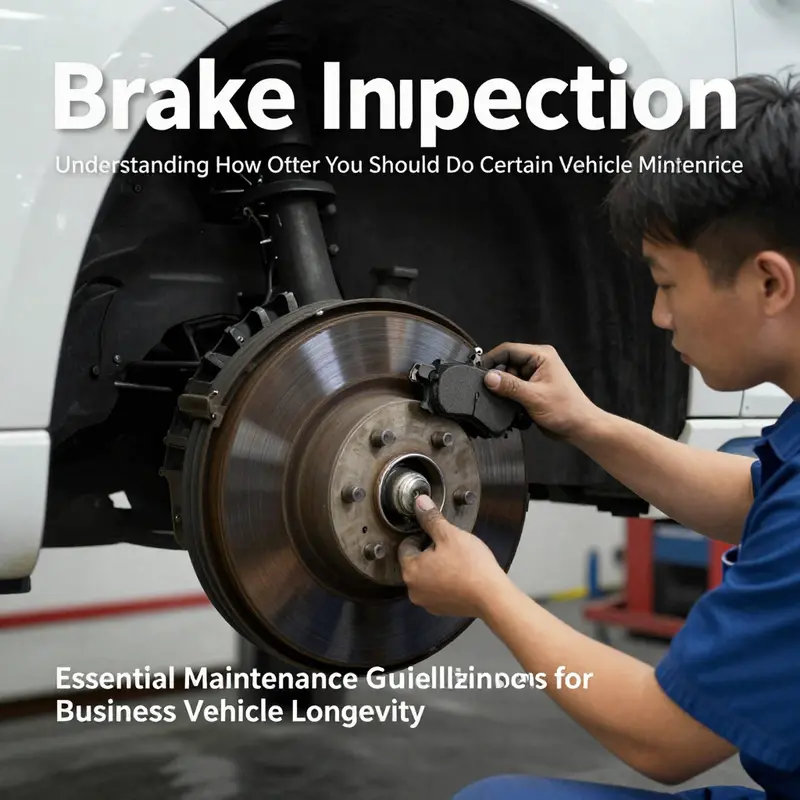
Brakes sit at the core of vehicle safety, functioning as the interface between driver input and the car’s response. Because their performance can be a matter of life and death, knowing how often to inspect them goes beyond ticking off a maintenance box. It means establishing a practical rhythm that accounts for how you drive, where you drive, and the specific design of your brake system. The general rule of thumb is straightforward: have your brakes inspected at least once a year, or every 12,000 miles, whichever comes first. But that guideline is only a starting point. Many manufacturers and most brake technicians emphasize that the real cadence should be tailored to the realities of your daily use. For drivers who spend most of their miles in stop-and-go city traffic, or who regularly haul heavy loads, inspections may be warranted every 6,000 to 8,000 miles. If you routinely push your vehicle to the limit on mountain roads, or if you frequently drive in extreme heat or cold, those factors can also justify more frequent checks. And, of course, if a warning sign appears, that is a signal to stop relying on the usual schedule and get an immediate inspection.
Final thoughts
Regular vehicle maintenance is not simply a checklist item; it is a crucial practice that significantly influences the safety and operational efficiency of your business fleet. Understanding the appropriate frequency for oil changes, tire inspections, and brake checks can save you from unexpected costs down the road and keep your vehicles running smoothly. By committing to these maintenance routines, you are not only safeguarding your assets but also ensuring your business can maintain its performance and reputation. Stay proactive in your maintenance schedule to reap the benefits of reliability and longevity in your fleet.