
Maintaining a vehicle is not just about keeping up appearances; it’s a critical aspect of ensuring efficiency, safety, and longevity—especially for business owners. Regular vehicle maintenance directly impacts operational costs, safety compliance, and overall performance. Understanding how often to service vehicles can save substantial time and money while enhancing reliability. This article delves into the frequency of necessary maintenance, the specific intervals associated with various components, and how external conditions can necessitate adjustments to those timelines. By the end, you will have a clearer perspective on managing your vehicle maintenance program effectively.
Timing the Pulse of Your Vehicle: A Practical Guide to How Often Maintenance Should Be Done

Maintenance is best understood as a ongoing conversation between your vehicle, its manual, and the way you use the car every day. The vehicle speaks through performance changes, the way it starts, the smoothness of a turn, or a difference in fuel economy. The manual translates that conversation into scheduled checks and service windows. The reality is that the right timing is not a one size fits all prescription. It depends on the manufacturer recommendations, your driving habits, and the conditions you routinely face. When all three lines up, maintenance becomes a shield against unexpected failures, a way to preserve efficiency, and a method to protect resale value. And the cadence matters as much as the act of servicing itself, because a well timed service can preserve engine health, extend component life, and keep safety systems functioning as intended.
Most manufacturers set a baseline cadence that works for a broad spectrum of driving, and that baseline is usually expressed in miles or kilometers and in time. A common benchmark is a routine maintenance visit every five thousand to ten thousand miles, or roughly six months, whichever comes first. That interval acts as a practical default, a starting point to build your maintenance calendar. It accommodates the majority of drivers who keep a modest mileage footprint, who drive mostly on highways, or who maintain steady speeds and gentle accelerations. It also aligns with the typical life cycle of many consumables and fluids in modern vehicles. Yet the truth is the real sweet spot lies in the space between these numbers, tuned to your car and your usage. Oil age and contamination are not defined solely by distance traveled; time matters too. Fluids degrade over time and accumulate contaminants regardless of mileage, which means time based intervals still have a role, especially for vehicles that see infrequent use or long idle periods.
The type of oil you choose dramatically influences how often you actually need to service the engine. Mineral oil typically requires more frequent changes, around every five thousand kilometers or three thousand miles, with a six month cap. Semi synthetic oil offers a middle path, allowing changes around seven thousand five hundred kilometers or four thousand five hundred miles, roughly eight months in practice. Full synthetic oil provides the longest service window, up to ten thousand kilometers or six thousand miles, and often up to a full year in many maintenance schedules. Whatever the category, the oil filter should accompany every oil change, because contaminants that slip through the filter can shorten engine life. This focus on oil is not just about the oil itself; it is about keeping the engine clean inside, preserving lubrication efficiency, and reducing friction that wears moving parts.
Beyond routine oil changes, there is a general framework for major maintenance, sometimes called the large service. This more comprehensive service is typically recommended every two to four years or twenty thousand to forty thousand kilometers (twelve thousand to twenty five thousand miles), again dependent on the vehicle and its usage. The major service often includes replacing air filters, cabin filters, spark plugs, and a battery of checks for fluids and cooling systems. It is not simply a matter of swapping worn parts; it is a holistic check of the vehicle’s vital systems. The exchange of a spark plug or a clogged air filter can alter ignition timing, fuel economy, and performance. A prudent major service can reveal wear patterns that would otherwise creep up as stubborn, expensive problems later.
Component specific intervals are useful guides because different parts live in different environments and experience different stresses. The air filter, which guards the engine from dust and debris, benefits from a replacement every ten to fifteen thousand kilometers (six to nine thousand miles). In dusty conditions or arid climates, you may opt for more frequent changes, potentially every five thousand to eight thousand kilometers. The cabin air filter, which impacts the air quality inside the cabin, generally requires attention every six thousand to ten thousand kilometers or about every six months, particularly if you live in urban areas with higher pollution levels or rely on the recirculation setting frequently. The fuel filter, a line of protection for the fuel system, typically is replaced every twenty thousand to thirty thousand kilometers, depending on the vehicle and fuel quality.
Brake fluid deserves careful attention as well; its quality degrades over time and can affect braking performance. A cautious standard is to replace brake fluid every two years or forty thousand kilometers, with adjustments based on driving style and usage. The coolant or antifreeze, which protects the engine from freezing or overheating, should be checked annually and replaced according to the manufacturer’s schedule, often every two to three years or forty thousand to sixty thousand kilometers. Tires deserve consistent care through rotations roughly every eight to ten thousand kilometers, coupled with regular pressure checks and tread depth assessments. Spark plugs, depending on the material—standard, platinum, or iridium—may need replacement anywhere from twenty thousand to forty thousand kilometers, a range that reflects both the spark plug design and the engine’s requirements.
Special conditions can push the maintenance cadence in meaningful ways. Frequent short trips, common in city driving, can lead to oil contamination because the engine never reaches its optimal operating temperature. In such cases, shortening the oil change interval by twenty to thirty percent can be a prudent precaution. Harsh environments, including dusty roads, snowy climates, or coastal salt exposure, accelerate wear on filters and undercarriage components. In these settings, consider more frequent filter changes and perhaps annual underbody protection or rust prevention measures. Extreme heat or cold also shifts attention to engine coolant and windshield washer fluid, ensuring they remain effective in protecting the engine and the visibility system. Vehicles that are infrequently used still require care; even at low mileage, fluids degrade with time, so a full inspection and service at least once a year becomes a wise habit.
Electric vehicles introduce a different rhythm to maintenance, focused less on engine wear and more on the battery system health and thermal management. In EVs, battery, motor, and inverter systems benefit from inspections every ten thousand kilometers or six thousand miles for battery seal integrity and motor wiring. The motor cooling system should be cleaned or inspected roughly every twenty thousand kilometers or twelve thousand miles. The auxiliary 12 volt battery, which powers a portion of the old school electrical system and certain convenience features, is typically checked every three to five years, with replacement if weak. Even with EVs, tires and braking systems follow familiar patterns because wear depends on driving style and road conditions. The best practice is to align EV maintenance with the same proactive approach used for internal combustion engine models, while acknowledging the unique health indicators of electric propulsion components.
The best practice in all cases is to lean on the owner’s manual for the exact sequence and timing. The manual is an authoritative guide tailored to your make and model, reflecting the engineering choices and protective measures built into the vehicle. It is not merely a checklist; it is a map that correlates specific symptoms, maintenance windows, and service procedures to the goal of safety and reliability. Keeping a maintenance log complements this approach. Recording every service, every part replacement, and every diagnostic finding creates a personal history that can help future technicians reproduce previous conditions or detect subtle shifts in performance. A well maintained log also preserves resale value, as it provides verifiable evidence that the vehicle has been cared for.
Another practical pillar is to use reputable repair shops with trained technicians and access to proper diagnostic tools. The goal is not to chase the absolute cheapest service but to ensure accurate diagnostics and correct procedures. A good shop will use manufacturer grade or approved equivalents and will follow the recommended procedures for fluid changes, filter replacements, and torque specifications. It is worthwhile to discuss the maintenance plan with your technician, asking questions about any unusual wear patterns or performance changes you have observed. A collaborative approach helps translate driving experience into precise service actions. Speaking with a technician is not a sign of weakness but a signal that you are attentive to the vehicle’s needs and are prepared to tailor the schedule to your actual usage.
Adapting maintenance timing to driving style is another critical dimension. Aggressive driving with frequent rapid accelerations and hard braking elevates wear on brakes, pads, tires, and the transmission. It can also lead to quicker oil contamination and more frequent heat cycles, pressing for earlier inspections and service. Conversely, a smooth, steady drive can extend certain intervals, particularly for oil life and filter longevity. In practice, the cadence becomes a function of your behavior, the car’s design, and the environment. A data minded approach is to track not just mileage but also operating conditions—city vs highway driving, climate, and load. Some modern vehicles feature onboard maintenance reminder systems that estimate maintenance needs using actual usage patterns. These systems offer a more precise window than a fixed schedule, helping to optimize service timing while avoiding unnecessary visits. When such systems exist, they can be a valuable ally in aligning maintenance with real life usage.
The consequences of neglect are practical and costly. Skipping regular oil changes can lead to lubrication breakdown, increased engine wear, and diminished performance. Delayed brake maintenance elevates the risk of brake failure or reduced stopping power, which has clear safety implications. Ignored cooling system work can result in overheating, which may cause head gasket damage or warped components. The broader consequence is a cycle of escalating repairs that ultimately undermines reliability, safety, and resale value. Regular maintenance is not an expense to minimize but a preventive investment that reduces the probability of catastrophic failures and unplanned downtime. When maintenance is kept up, the vehicle delivers consistent performance, steady fuel economy, and a sense of confidence on the road.
From a financial perspective, adherence to a well planned maintenance schedule pays off through better efficiency and fewer major repairs. The routine tasks—oil changes, filter replacements, tire rotations, and fluid checks—are relatively small investments when compared with a major repair that could have been prevented. Even in a budget minded approach, a predictable cadence reduces the chance of expensive emergency service. The objective is to keep the vehicle at peak efficiency, where the engine breathes clean air, the transmission shifts smoothly, the brakes respond promptly, and the cooling system maintains a stable operating temperature. A well timed maintenance plan translates into fewer breakdowns, greater reliability, and preserved resale value, which together contribute to a lower total cost of ownership over time.
For those seeking an anchored source of schedules and care guidelines, the most straightforward path remains the vehicle manufacturer’s website and the owner manual. These sources provide the calibrated maintenance intervals and service procedures uniquely designed for every model. In addition, credible resources such as government or industry aligned guides can offer practical summaries of care principles, especially when you want a cross reference across different vehicle types. A widely cited resource that offers comprehensive guidance on vehicle care and efficiency is a national fuel economy and maintenance guide. While the exact recommendations can vary by model, the underlying principle is consistent: routine care at regular intervals preserves safety, performance, and value. To connect the ideas here with practical planning, consider how you would plan maintenance around your daily routines, travel needs, and annual mileage horizon. If you keep a steady schedule, you minimize the risk of surprises and you maintain a vehicle that behaves as intended over its lifespan.
In thinking about your maintenance cadence, it helps to imagine the maintenance schedule as a living document rather than a rigid timetable. It should be flexible enough to account for unusual driving patterns, extended road trips, or long stints of inactivity. The aim is to maintain optimal lubrication, clean filters, stable cooling, and accurate sensor readings. The more accurately you interpret the signs the car gives you, the better you can time the service to your actual conditions. If you notice reduced fuel economy, unusual engine noises, longer stopping distances, or warning lights, these signals merits a check sooner rather than later. Delays in responding to such signals can compound wear and lead to more extensive damage. That is why a practical maintenance plan emphasizes both preventive routine and responsive adjustments to performance cues.
The overarching message is clear. While a general rule of thumb exists—roughly every five thousand to ten thousand miles or six months—this cadence should be refined by your owner manual guidance and your actual usage. A systematized approach that respects the variance in driving style, climate, and vehicle design will yield the best outcomes. The objective is safety first, reliability second, and cost efficiency a close third. When maintenance feels like a predictable habit rather than an obstacle, you gain peace of mind and a vehicle that reliably meets your needs for years to come. For readers who want to explore a practical example of how proper maintenance can translate into gasoline savings and overall efficiency, see how vehicle maintenance saves on gas expenses. how vehicle maintenance saves on gas expenses.
As you plan ahead, keep in mind that official sources provide the most accurate guidance. The combination of the owner manual, vehicle specific guides, and reputable national resources offers a dependable framework for scheduling maintenance. In practice, you will use a mix of fixed intervals and usage based cues to tailor the plan. The result is not just longer engine life or better fuel economy, but a vehicle that remains safer and more dependable every time you turn the key. This approach sustains performance, comfort, and confidence, turning maintenance from a chore into a strategic activity that protects your investment and your safety on the road.
External resource for further detail: https://www.fueleconomy.gov/feg/pdfs/vehicle_maintenance.pdf
The Schedule You Can Trust: Translating Specific Maintenance Intervals Into Safe, Efficient Driving

Maintenance is best viewed as a steady rhythm rather than a single event. A practical maintenance plan blends manufacturer recommendations with real-world driving to create a living calendar you can follow. In this chapter, we explore how to translate those guidelines into a schedule that fits your life, climate, and daily habits. The result is a flexible approach you can rely on season after season.
At the heart of any reliable plan is the owner’s manual, the authoritative source for baseline intervals for oil, filters, fluids, and belts. But the manual is not a one-size-fits-all script. Your driving conditions—extreme heat or cold, dust, stop-and-go city traffic, or long highway trips—can accelerate wear. Use the manual as an anchor and adjust the routine with careful observation and a detailed record.
Consider oil changes as an example. Many manufacturers suggest intervals like 5,000-7,500 miles under normal conditions, with shorter intervals in extreme environments. Short trips that don’t let the engine reach full temperature can contaminate oil sooner, shortening the interval. Conversely, milder climates with longer highway driving can push the interval toward the upper end. The type of oil matters: mineral oil often requires more frequent changes, semi-synthetic a modest extension, and full synthetic can stretch the calendar, though the filter should still be changed with every oil change.
Maintenance is a broader tapestry. Major services cover air and cabin filters, spark plugs, brakes, and coolant. In dusty environments, air filters clog faster; in coastal or snowy regions, moisture and salt can accelerate corrosion. The overarching principle is regular, systematic checks to prevent small issues from becoming big problems.
A practical framework splits maintenance into two tiers: routine or small services and larger, more comprehensive services. The small service typically occurs every 5,000-10,000 kilometers (3,000-6,000 miles) or every six months, whichever comes first, and includes oil and filter changes, fluid level checks, tire inspection, and a quick brake check. Larger services occur every two to four years or after a broader mileage window and include more thorough inspections of filters, brakes, and cooling systems.
Special conditions call for recalibrating the rhythm. Frequent short trips, dusty or coastal environments, and high temperatures all justify adjusting intervals. Electric vehicles introduce a slightly different rhythm, with battery and motor checks on a similar cadence and attention to tires and brakes as well.
The practical payoff is clear: regular maintenance improves fuel efficiency, reliability, and resale value. Above all, tailor the plan to your manual and to your driving reality, and keep a maintenance log to predict future needs and communicate with shops. Digital reminders can help, but the core guidance remains your manual, your habits, and your record.
When Conditions Drive the Maintenance Schedule: Adjusting How Often Your Vehicle Should Be Serviced
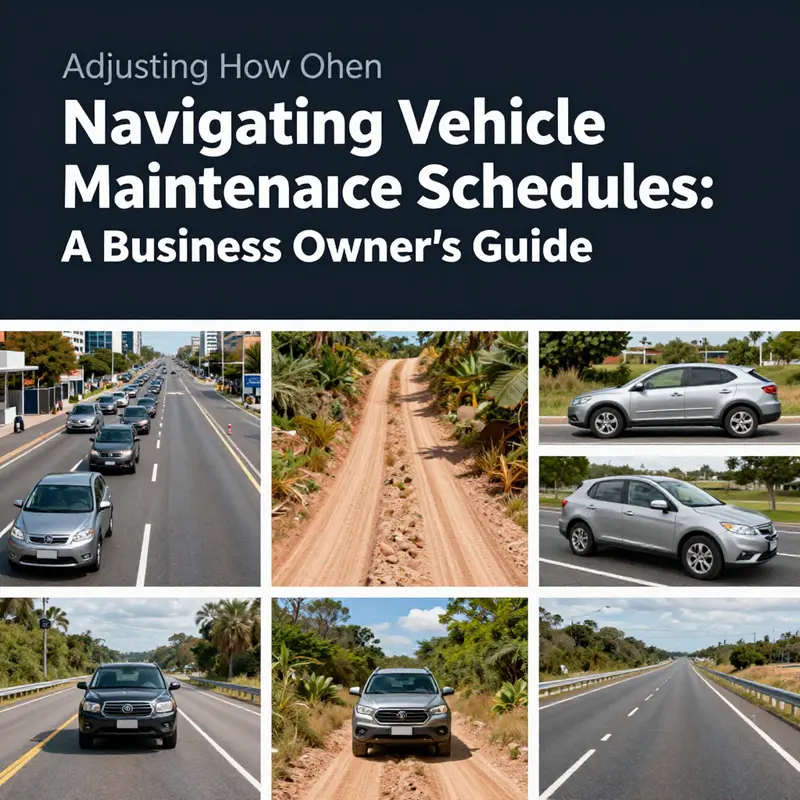
Maintenance is often treated as a fixed checklist, but the best practice is to view it as a schedule that adapts to where you drive, how you drive, and the environment around you. The core idea remains simple: follow the manufacturer’s recommendations as a baseline, then adjust based on real-world conditions. This approach protects safety, preserves performance, and helps avoid unnecessary repairs. The baseline commonly cited for routine service—5,000 to 10,000 kilometers or every 6 months, whichever comes first—still holds true for many vehicles, but the steady cadence shouldn’t be a rigid drumbeat in every situation. The type of oil you use matters as well. Mineral oil typically requires more frequent changes than semi synthetic or full synthetic oils, and in every case you should replace the oil filter with the oil. Major maintenance, which encompasses more comprehensive checks and replacements such as air and cabin filters, spark plugs, and fluid levels, generally occurs every 2 to 4 years or roughly 20,000 to 40,000 kilometers. These general guidelines create a reliable spine for the schedule, but the lifeblood of the routine lies in tuning the intervals to the realities of your driving life.
Driving conditions act as accelerants or dampeners to wear and contamination. In dusty or salty environments, such as coastal roads or desert trails, contaminants can reach and degrade critical components more quickly. The air filter, engine oil, and even brake systems shoulder extra stress when debris is present in greater quantities. In those settings, a practical adjustment is to shorten the oil and air filter change intervals to something closer to 3,000 to 5,000 miles, rather than sticking to the longer midpoints designed for pristine conditions. This does not mean abandoning the manufacturer’s guidance; it means acknowledging that the environment adds a new layer of wear, and the maintenance calendar should reflect that reality. When the vehicle confronts heavy dust or salt daily, the cost of neglect is measured not only in reduced performance but in the potential for accelerated corrosion and clogged filters, which can cascade into more expensive repairs later. A disciplined approach keeps these risks contained.
Short trips and cold weather introduce another dynamic that can distort wear patterns. Engines that never reach their ideal operating temperature do not boil off moisture efficiently, allowing condensation to accumulate in the oil. Over time, that moisture can accelerate oil degradation and wear on engine components. City driving with frequent stop and go compounds the issue, as the engine spends a greater portion of each trip cycling through start and stop conditions rather than sustaining steady heat. In such scenarios, more frequent inspections of brakes and fluid levels are prudent. Brakes endure more start-stop cycles, and brake fluid can absorb moisture, which lowers its boiling point and can affect braking performance. If your routine includes many short hops around town, consider tighter intervals for brake checks and fluid top-ups, even if the odometer remains relatively modest. In contrast, drivers who regularly take longer highway trips may benefit from the opposite adjustment: the longer, consistent operating conditions can help fluids stabilize and components operate within a predictable window, allowing for the standard intervals to hold more firmly.
Temperature extremes also shape how often you should service the vehicle. In scorching heat, heat soak and elevated coolant demands can push cooling systems harder, increasing the importance of verifying coolant concentration and temperature regulation. In bitter cold, you must pay closer attention to antifreeze strength, battery performance, and tire pressure, since cold weather exacerbates these concerns. Tires lose air pressure with temperature swings, and underinflated tires wear more quickly and reduce efficiency. These conditions collectively influence the maintenance cadence not through a single metric but through a constellation of indicators that signal shifting needs. When you live in regions with extreme heat or cold, you should plan for more frequent checks of the cooling system and tires, and you may find that you also need to refresh or adjust wiper blades and fluids that perform differently under harsh conditions.
When a vehicle is regularly subjected to heavy traffic and heavy loads, including towing or hauling, the demands on cooling systems, suspension components, and brakes intensify. The braking system may undergo more frequent fluid checks and pad wear inspections, while the cooling system works harder to manage load-induced heat. Suspension parts endure additional stress when carrying heavy cargo or navigating pothole-rich streets, so a more vigilant inspection schedule for shocks, struts, bushings, and alignment becomes sensible. In such cases, a proactive approach means scheduling more frequent inspections, even if the odometer reading does not scream for it, because the cumulative stress can lead to more serious issues if left unchecked.
For drivers who operate under what manufacturers classify as severe service conditions, the recommended maintenance schedule frequently shifts toward more frequent servicing. Severe service embraces a combination of demanding driving patterns, such as frequent towing, extensive off-road use, extreme climates, dusty environments, and inconsistent driving cycles. In these scenarios, following the standard intervals may be insufficient to maintain safety margins and reliability. Reading the owner’s manual with a careful eye toward the severe service section matters; many manufacturers provide an explicit schedule designed to account for these realities. Adhering to that schedule isn’t a luxury; it’s a practical strategy to preserve performance and mitigate the higher probability of breakdowns under tough operating conditions.
Electric vehicles add another layer to the conversation about maintenance frequency, though the core principle remains the same: adapt to conditions. In EVs, the battery, motor, and inverter system deserve regular attention for battery seal integrity and motor wiring every 10,000 kilometers, while the motor cooling system benefits from a more thorough cleaning at about 20,000 kilometers. The 12V auxiliary battery typically requires attention every 3 to 5 years, a cadence that reflects its different role in the vehicle’s electrical ecosystem. Tires and brakes still follow familiar paths for wear monitoring, since tire wear and brake usage are not abolished by electric propulsion. The changes in maintenance emphasis reflect the different failure modes of EVs, but the overarching message remains unchanged: tailor maintenance to the vehicle’s usage profile and environment.
To translate these considerations into a practical schedule, start with the owner’s manual as your base map. The manual embodies the manufacturer’s tested guidance for your exact model and powertrain. It is the authoritative source against which you calibrate your personal timetable. Keeping a maintenance log—whether on paper or a digital platform—transforms a collection of dates into a narrative about the vehicle’s health. When you document what was serviced, what parts were replaced, and what readings or alerts accompanied the service, you create a history that informs both immediate decisions and future resale value. This log becomes particularly valuable if you are the owner of a vehicle that experiences unusual usage patterns or lives in an extreme environment. And when you choose a repair shop, selecting a reputable facility with broadly trained technicians is crucial. The accuracy of diagnostics and the quality of parts used directly influence the effectiveness of the maintenance you perform.
The way you drive also matters. Aggressive driving—rapid accelerations, hard braking, and frequent high-load operation—accelerates wear across multiple systems. In such cases, even if the odometer does not show extreme mileage, the maintenance schedule may need to be advanced by a noticeable margin. Conversely, calm, steady driving in which the vehicle frequently settles into an efficient cruising speed can permit longer intervals between services, provided other conditions remain favorable. The dynamic between usage and wear is not a simple one-to-one ratio; it is a composite picture of how hard the vehicle works and how well its subsystems tolerate that workload over time.
All of this points to a strategy that blends the best of both worlds: use the manufacturer’s schedule as your anchor, then adjust with discipline based on environment and usage. A practical approach is to view maintenance as a flexible, wellbeing-oriented habit rather than a rigid calendar: check fluids and basic functions around every fill-up, plan targeted inspections around significant weather changes, and set reminders for more extensive services when you observe signs of wear or performance changes. In other words, maintenance becomes a continuous conversation between you and your vehicle, in which the environment and your driving choices influence when the next tune-up should occur.
A key part of making this work is choosing the right information channels and tools. For many drivers, onboard diagnostics and data from the vehicle’s sensors offer real-time cues about oil degradation, brake wear, coolant health, and battery status. Digital maintenance tracking tools can translate sensor data into actionable schedule adjustments, flagging when an early service is warranted or when a standard interval is still appropriate. This adaptive approach is not about chasing a perfect number; it is about listening to the vehicle and the road together, and letting that conversation guide your servicing rhythm.
For readers seeking a concise anchor in the broader maintenance conversation, a useful takeaway is this: the five-thousand-to-ten-thousand-kilometer rule provides a widely applicable baseline, with six-month intervals serving as a practical time-based check. But the actual cadence should bend toward the conditions you encounter. If you frequently drive in dusty or coastal environments, shorten the oil and air filter intervals. If your trips are predominantly short and cold, emphasize brake and fluid checks more often. If you regularly tow or carry heavy loads, lean toward more frequent inspections of cooling, exhaust, and suspension systems. If you operate in extreme temperatures, monitor coolant and tire pressures closely and adjust your schedule accordingly. If your vehicle sits idle for long stretches, schedule a full inspection once a year to ensure that fluids and seals don’t degrade with time. And if you drive an electric vehicle, adapt to the battery and electronic system maintenance timelines while keeping tire and brake checks aligned with standard guidelines.
As you navigate these considerations, it can be helpful to consult reputable sources that distill complex maintenance science into practical guidance. For instance, the U.S. Department of Energy provides official maintenance tips that emphasize prevention and proactive care, reinforcing the idea that a tailored schedule is a wise investment in safety and reliability. Meanwhile, you can explore related topics and practical explanations in related articles on the same site and similar automotive education resources. In this chapter, the goal has been to weave these concepts into a coherent approach that you can apply to your own vehicle, drawing the line between manufacturer recommendations and the realities of your driving life.
To connect theory with action, consider this approach: map your common driving scenarios to the maintenance categories discussed here, and then translate those into concrete intervals. If you live in a dusty area and drive scenic byways with frequent stops, you might set an oil and air filter change every 3,000 to 5,000 miles and schedule a more frequent brake inspection. If you operate a vehicle in a city with variable weather, you might align your maintenance with season changes, planning more frequent checks of fluids and tires around spring and autumn when temperature shifts are most pronounced. If you are a long-haul driver who spends months on the road, your maintenance could align with the cumulative mileage milestones while incorporating checks for cabin air quality and filter maintenance when operating in heavy-duty environments. The key is to be deliberate, to document what you do, and to listen to your vehicle’s signals so that the calendar remains a living guide rather than a static rule.
One practical consequence of adopting a condition-driven maintenance mindset is cost savings that accrue over time. Regular, timely maintenance reduces the likelihood of unexpected failures, keeps fuel economy stable, and preserves the resale value of the vehicle. It also helps you avoid the emotional and financial stress of last-minute repairs that disrupt plans and budgets. The goal is not to chase every micro-issue but to stay ahead of problems that would otherwise escalate with time and use. The steps you take today—choosing the right oil type for your climate, performing timely air filter replacements, and keeping a meticulous service log—are the investments that pay dividends in reliability, safety, and long-term efficiency.
If you are seeking a concise synthesis to anchor your decisions, remember this: start with the manufacturer’s schedule as the baseline, assess your environment and usage, adjust the intervals accordingly, and maintain a documented history that informs future decisions. Integrate sensor data and maintenance software where possible, and rely on certified technicians for critical inspections. The result is a maintenance discipline that remains true to your vehicle’s needs, your driving life, and the road you travel every day.
For readers aiming to deepen their understanding of how maintenance links to efficiency, and to see how a proactive maintenance philosophy translates into real-world savings, consider exploring additional insights through a related article that discusses how regular maintenance can influence fuel expenses. how-vehicle-maintenance-saves-on-gas-expenses. This resource, linked here for convenient reference, provides a practical complement to the overarching framework outlined in this chapter and encourages ongoing attention to the subtle ways maintenance and driving habits combine to protect your investment.
External resource note: authoritative guidance on adjusting maintenance schedules based on driving conditions can be found through official sources such as the U.S. Department of Energy. Their Vehicle Maintenance Tips provide a validated foundation for the principles discussed here and underscore the value of tailoring service intervals to your environment and usage. https://www.energy.gov/eere/vehicles/articles/vehicle-maintenance-tips
Final thoughts
Understanding the frequency of vehicle maintenance is vital for business owners who depend on their vehicles for operational success. By adhering to specific intervals and adjusting for varying driving conditions, you can effectively enhance vehicle longevity and reliability. Regular maintenance not only ensures safety but can also lead to significant cost savings and improved efficiency in your daily operations. Prioritizing these maintenance schedules will contribute to sustaining your business’s operational capabilities and ensuring customer satisfaction.