
Effective vehicle maintenance is a critical aspect for business owners, especially those relying on transportation to execute daily operations. Understanding how often vehicle maintenance should be performed can prevent costly repairs and extend vehicle lifespan. This article explores three essential chapters: routine maintenance frequency per manufacturer guidelines, critical checks beyond routine maintenance, and how driving conditions influence maintenance schedules. Following these guidelines helps fleets remain in optimal condition, boosting productivity and safety.
The Maintenance Clock: Reading Manufacturer Guidelines to Decide How Often Your Vehicle Needs Service
Every car carries its own timetable, a schedule written by engineers who understood that the machine behind the wheel is not just metal and oil, but a coordinated system built to work within known limits. To drivers, that schedule often looks like a mystery. The owner’s manual sits on a glove box shelf, its pages gathering dust, its warnings easy to ignore in the rush of daily life. Yet the truth is simpler and more practical: the frequency of maintenance is not an arbitrary choice. It is a carefully calibrated instruction grounded in the vehicle’s design, its intended duty cycle, and the environments in which it operates. When you tune into that instruction, you gain not only reliability but also the sense that you are driving with a plan rather than at the mercy of chance. The modern approach to maintenance blends traditional mileage milestones with real-time data from the car itself, a shift that mirrors broader changes in how we think about reliability, safety, and efficiency on the road. This chapter explores how often maintenance should be performed, why those intervals exist, and how to translate the manufacturer’s guidelines into a practical, year-by-year regimen that adapts to your driving life without sacrificing safety or performance.
At first glance, routine maintenance is built around simple milestones. For many conventional maintenance tasks, the rule of thumb has long been clear: change the oil and filter at regular intervals, rotate the tires to ensure even wear, and check crucial systems before they degrade into expensive problems. The traditional oil-change interval—roughly every 5,000 to 7,500 miles for conventional oil and closer to 10,000 to 15,000 miles with synthetic oil—still appears in many owner’s manuals and service guides. But there is more nuance today. A growing number of manufacturers have adopted extended intervals, often expressed as “2- to 3-year” service blocks or “x miles” windows, and they frequently pair these with life-monitoring systems that track oil condition, engine load, and operating temperature to fine-tune the exact timing of the next service. In practice, that means two things. First, the clock that governs maintenance is now partly driven by the car itself. Second, the intervals can shift depending on how you drive and where you drive.
Oil is the obvious example because it carries the most immediate performance implications. Conventional oil works well for many drivers, but it breaks down due to heat, oxidation, and contaminant buildup. Synthetic oils, engineered for stability, frequently provide longer service life. Manufacturers that deploy oil-life monitoring systems take this a step further: the system samples data from the engine, the oil’s temperature range, and driving patterns, then estimates how much life the current oil still has. This approach can extend the oil-change interval beyond the traditional 5,000–7,500 miles, sometimes substantially, as long as the vehicle’s operating conditions don’t demand more frequent changes. The practical takeaway is simple: follow the manual, but also pay attention to the car’s own indications. If the system says you have a lot of life left, you may be able to push the next change out. If it signals a reduced life, you should trust the signal rather than the calendar.
Beyond oil, there are other core checkups that help keep a vehicle safe and efficient. Tire maintenance is a constant. Rotating tires every 5,000 to 8,000 miles, and keeping them properly inflated, helps prevent uneven wear, preserves grip, and improves fuel economy. Brake systems demand regular attention, by design a safety-critical domain. Brake inspection every 12,000 miles or at least once a year—whichever comes first—matches typical wear patterns and the matrix of driving styles that shape wear. The air intake system, with its filters, plays a quieter but equally important role. Replacing the engine air filter every 15,000 to 30,000 miles is a general guideline, with more frequent changes in dusty climates or during heavy use. Fluid health—coolant, brake fluid, and transmission fluid—also deserves a yearly check at minimum or per the manufacturer’s schedule. The battery, often overlooked until it fails in winter, benefits from a health check every two to three years, even more if the vehicle is frequently exposed to extreme cold or heat. These intervals are not random or merely conservative; they reflect the engineering that makes each system work in concert with others.
Pre-trip inspections are another practical axis of maintenance that many drivers tend to overlook. A quick check of lights, tires, fluids, and wipers before each trip builds a safety net that can prevent a roadside failure. In challenging environments—extended heat, freezing temperatures, frequent towing, or off-road excursions—the maintenance cadence often needs to tilt toward more frequent attention. The manual itself is the final authority here, but the everyday truth is that a vehicle used in demanding conditions tends to accumulate wear more quickly and may require the next service sooner than a vehicle that mostly stays in a controlled climate and on paved highways.
To make sense of these intervals in a way that is actionable for daily life, many owners rely on a simple ladder of checks that aligns with practical driving patterns. The everyday routine includes a basic, almost ritual set of tasks, from the before-each-drive checks to the longer intervals that govern the major systems. A practical framework runs like this: daily checks for tire pressure and fluid levels, a monthly look at brake pads, battery health, and wipers, a quarterly or every-10,000-kilometer rhythm for basic engine and suspension evaluation, and then longer intervals, such as every 40,000 kilometers or four years, for air filters and accessory checks. A more extended cadence, like every 80,000 kilometers or five years, marks a deeper service window that often touches on ignition components, fluids, and the possibilities for more sophisticated system refreshes. In practice, the exact timing is not a single line on a calendar but a balance between what the manual prescribes and what the car’s own life data suggests. Some vehicles rely on smart reminders that monitor actual usage rather than rely solely on time or mileage. This smarter maintenance advisory system uses data from the vehicle’s computer to decide when a service is truly due, which means it can respond to short trips, heavy loads, or frequent idle time in a way a calendar-based plan cannot.
The core idea is straightforward: use the manufacturer’s plan as your base, then adjust for your actual driving life. If you frequently tow, haul heavy loads, or drive in extreme temperatures, the base intervals may shift toward more frequent service. If your driving is mostly short trips that do not allow the engine to reach normal operating temperatures, the oil may degrade more quickly and the vehicle may benefit from shorter oil-change windows. The owner’s manual provides the logic and the specific numbers for your exact model, but there is also value in comparing patterns across brands and vehicles. This is where reputable, model-specific maintenance schedules published by credible sources can provide a cross-check for typical intervals, helping to spot outliers or unusual recommendations that might apply to your situation.
A growing chorus of drivers also finds value in simpler, transparent guidelines that echo their day-to-day life. General frequencies exist in consumer resources and service literature, but the most reliable approach remains anchored in the owner’s manual and in the car’s own data streams. For practical decisions, consider that routine maintenance spans several domains: the engine and its fluids, the drive train components, the braking system, the electrical system, and the climate control and comfort systems that keep the vehicle’s performance consistent. Each domain has its own recommended cadence, and neglect in any one of them can create a chain reaction that compromises reliability, safety, and cost of ownership. For example, delaying a brake inspection beyond the recommended interval may save a little time and money in the short term but can lead to higher repair costs if wear unloads into a critical failure in the middle of a trip. The counterbalance is obvious: timely maintenance acts as a shield against the expensive and disruptive consequences of component failure.
This is why manufacturers emphasize the owner’s manual as the doctrinal source for maintenance scheduling. It is not a one-size-fits-all instruction but a personalized plan tailored to engine type, powertrain architecture, and the vehicle’s intended duty. Some schedules are conservative, designed with a broad envelope of driving conditions in mind. Others are optimized for efficiency and longevity, welcoming longer intervals when the car operates under favorable conditions and the monitoring systems indicate a healthy oil life and system wear. In either case, the goal remains consistent: sustain performance, safeguard safety, and minimize unscheduled downtime. It is this triad—performance, safety, and reliability—that best captures the value of following manufacturer guidelines rather than chasing generic time-and-mile streaks.
When thinking about implementing these guidelines in real life, it helps to think about two layers of decision-making. First, follow the manual as the baseline—the factory-supported plan. Second, add a layer of situational judgment, informed by how and where the vehicle is used. In cities with frequent stop-and-go traffic, the engine cycles more often, heat management becomes critical, and oil life monitoring may shorten the traditional interval. In rural or highway-heavy use with stable temperatures and fewer idling events, you may see longer gaps between service. The key is to interpret the data your car is gathering and to use it in concert with the manual’s guidance rather than in opposition to it. This approach also helps when you are trading up or selling the vehicle; a clear maintenance history that aligns with the manufacturer’s plan improves resale value and buyer confidence.
A practical, real-world habit is to keep a maintenance log that translates the manual’s guidance into your day-to-day calendar. Mark the expected dates or miles for each major service, but also note any outliers—long road trips, towed loads, extreme temperatures, or unusual driving patterns. When the system issues a reminder, read it as a professional nudge rather than a vague warning. If you notice abnormal wear, noises, or performance changes, don’t wait for the reminder. Use it as an opportunity to inspect and address the issue promptly. The aim is to avoid the stress of surprise failures and the cost of emergency repairs by maintaining a predictable, proactive rhythm.
In addition to the tangible mechanical checks, there is a broader behavioral dimension to maintenance that often goes unspoken. How you operate the vehicle—how quickly you accelerate, how you brake, how you use climate control, and how often you run the engine at optimal temperatures—can shift maintenance needs in subtle but meaningful ways. Short trips with frequent cold starts put extra cycling stress on engines and batteries, which can accelerate wear and reduce efficiency. Long trips in stable conditions, with careful engine and tire management, can help preserve life. The balance of these factors means that even drivers who log similar miles each year may experience different maintenance experiences. Understanding this helps a driver interpret the schedule more intelligently and not simply by the clock or the odometer.
To connect theory with a concrete example, the literature often presents a layered schedule that aligns with the vehicle’s lifecycle. A typical primer might suggest daily checks such as tire pressure and fluid levels, monthly checks of critical components like brakes and battery, and then longer intervals such as 10,000 kilometers or 12 months for essential services like oil changes and suspension inspections. More comprehensive intervals, roughly every 40,000 kilometers or four years, may apply to items like air filters and certain filters in the climate system, while even longer horizons—around 80,000 kilometers or five years—might be appropriate for ignition components and certain fluid replacements. While these intervals serve as a useful scaffold, the intersection with a smart maintenance system can yield the most precise guidance, adapting to your actual driving conditions and the car’s measured wear. This synergy between human-generated schedules and machine-generated reminders is where maintenance becomes both science and art: a disciplined plan that still recognizes the car’s individuality and the driver’s unique life rhythm.
Of course, no chapter on maintenance would be complete without acknowledging the public authorities and independent reviewers who help translate the sometimes opaque language of manufacturer manuals into usable guidance. Reputable automotive publications and consumer resources often compile model-specific schedules drawn from manufacturer documents and real-world data. They provide cross-checks for patterns that recur across brands and vehicle types, helping drivers identify common maintenance touchpoints and avoid gaps in crucial systems. When in doubt, consult these sources to confirm that your manual’s recommendations align with broader industry practice, and verify whether any updates have been issued for your specific model year. This is not about replacing the owner’s manual; it is about enriching your understanding with reliable corroboration.
For readers who want to explore the rationale behind these guidelines beyond the page, there is value in examining the data that underpins maintenance schedules. One practical path is to review maintenance schedules published by mainstream automotive outlets, which often distill manufacturer guidance into accessible timelines. They can illuminate how the intervals for essential tasks—oil changes, filter replacements, tire service, and fluid checks—are calibrated in relation to typical driving patterns. However, the anchor remains the vehicle’s own documentation, which is crafted by the manufacturers to preserve the integrity of each system and to optimize performance for the many conditions in which the vehicle will operate over its lifetime. Adhering to that anchor provides a foundation you can depend on, even as you adapt to the realities of your own driving life.
In short, the question of how often vehicle maintenance should occur is answered by a synthesis: follow the manufacturer’s official maintenance plan as the baseline, while applying practical judgment based on driving conditions and lifestyle. The intervals for oil, tires, brakes, air filters, and fluids are not arbitrary rituals but engineering decisions designed to preserve the vehicle’s performance, safety, and longevity. The smarter maintenance approach—even when it is grounded in a manual—recognizes that data from the car itself offers a precise lens on its needs. Embracing this approach means treating maintenance not as a fixed number on a calendar but as a living plan that responds to how you drive, where you drive, and what the car tells you about its own wear and reliability. And when you combine the manual guidance with the vehicle’s own life-readiness signals, you gain a powerful ally: a dependable, efficient, and safer ride that carries you through miles with fewer interruptions.
For readers seeking a concise bridge between these ideas and practical action, consider this link to a discussion that translates maintenance into tangible savings and reliability outcomes: how-vehicle-maintenance-saves-on-gas-expenses. This resource illustrates how thoughtful maintenance affects fuel economy and overall cost of ownership, reinforcing the idea that a schedule tailored to your life is also a schedule that pays off in real-world performance. If you want to see how these concepts align with a broader maintenance culture, you can also consult widely recognized schedules and consumer guidance that place emphasis on oil life monitoring, tire care, and brake health as central pillars of reliability over time. The point is not to chase a perfect number, but to cultivate a disciplined approach that is grounded in the car’s design, validated by monitoring systems, and attuned to the realities of how you drive.
As you carry this mindset forward, keep in mind that the manufacturer’s plan is not a rigid dictation but a reliable compass. Use it to steer your maintenance decisions, while staying flexible enough to adjust for climate, road conditions, and personal usage. By harmonizing the manual with the car’s own life data and your day-to-day driving realities, you can maintain peak performance, protect safety, and reduce unexpected repairs. This is the essence of maintenance done right: a proactive, information-rich practice that respects the vehicle’s design while adapting to the driver’s world. The result is not just a well-run car but a more confident journey through the miles ahead.
External resource for authoritative guidance: https://www.motortrend.com/cars/maintenance-schedule/
Critical Vehicle Checks: How Often Should Vehicle Maintenance Be Beyond Routine

Maintenance is not just a calendar exercise. It is a proactive practice that guards safety, preserves performance, and extends a vehicle’s life. When we talk about how often maintenance should occur, it is tempting to default to simple mileage marks: every 5,000 miles for an oil change, every 30,000 miles for a transmission service, and so on. But real-world driving is unpredictable. The road tells you when something needs attention long before an error light illuminates. The most valuable maintenance habit couples routine care with a trustworthy set of critical checks that rise to the level of safety concerns. In that space, the frequency is less about a single number and more about a rhythm—one that recognizes warning signs, respects manufacturer guidance, and adapts to how and where you drive. The goal is not to chase a perfect schedule but to maintain dependable capability in every weather, every load, and every mile ahead.
A solid starting point for building this rhythm is to understand what maintenance truly covers beyond the obvious oil changes, tire rotations, and fluid top-offs. These fundamental tasks keep the engine lubricated, the tires wearing evenly, and the systems balanced enough to avoid cascading failures. Yet there are deeper checks that quietly determine whether the brakes respond promptly in an emergency, whether the cooling system can withstand extended heat, whether the drivetrain remains quiet and efficient under load, and whether the electrical system will perform when you need headlights, signals, or a jump-start after a cold night. If you are forming a maintenance philosophy for yourself or your family vehicle, consider what happens when any one of these systems begins to falter under stress. The risk is not merely reduced performance; it is the potential for sudden, hazardous failure. In that light, the frequency of certain inspections must be observed with a careful eye. For an accessible overview of what maintenance encompasses, you can explore: What is vehicle maintenance. This anchor helps frame the more specific checks that follow and anchors your broader maintenance decisions in a practical understanding of vehicle health.
Brake systems sit at the pinnacle of safety concerns. Brakes are a complex assembly of pads, rotors, calipers, hydraulic lines, and sensors. Worn pads can fade under repeated stopping, while warped rotors may cause pulsing, grabby responses, or uneven braking. The guidance is clear: inspect brakes at least every 12,000 miles or annually, whichever comes first, and adjust the frequency based on how aggressively you drive or the terrain you encounter. Mountain roads that demand frequent heavy braking, city driving with constant stop-and-go, or vehicles that haul substantial loads all increase the wear rate. A comprehensive brake check goes beyond pad depth. It includes rotor wear and warping, caliper sticking, brake fluid quality and level, and the presence of any leaks or corrosion that could undermine braking performance. Small signs—squealing, a spongy pedal, or a soft pedal under pressure—should never be ignored, because brake degradation often occurs without dramatic visual cues. The preventive value of periodic brake inspections cannot be overstated; a well-timed check can prevent a marginal situation from turning into a dangerous one on a slick highway or in a crowded intersection.
The cooling system deserves parallel, vigilant attention. An engine’s cooling system is the lifeline that keeps heat in check, preserving performance and protecting against head gasket failures. Visual inspections of hoses, clamps, and the radiator should occur frequently—roughly every six months or every 6,000 miles, depending on climate and mileage patterns. Cracks, bulges, leaks, or soft spots in hoses are telltale signs that the system is approaching a failure. Coolant level and concentration should be maintained according to the manufacturer’s specifications, which often involve a precise mixing ratio. Fueling this diligence is a broader understanding that overheating can silently degrade the engine, reduce efficiency, and shorten its life. A rule of thumb is to treat coolant maintenance like a defensive shield; even if you do not flush the system right away, stay vigilant for rising temperatures, unfamiliar odors, or steady heater performance changes, which often precede a more serious event. Flush intervals vary by vehicle and coolant type, with many modern formulations lasting longer than older conventional mixes. Yet the principle remains: regular inspection and timely replacement keep the engine’s inner core cool under pressure and away from the damage that heat can cause.
Drivetrain health is equally critical because it governs how power moves from the engine to the wheels. This includes the transmission, driveshaft, and differential, all of which rely on precise lubrication and clean surfaces to function smoothly. Automatic transmissions, in particular, rely on fluid that maintains reliable viscosity and filtration. Transmission fluid checks and changes are commonly recommended every 30,000 to 60,000 miles, but some manufacturers call for more frequent service in towing or heavy-duty applications. The signs of trouble—delayed shifting, slipping, grinding noises, or a burning smell—demand immediate attention. It is not enough to rely on a single indicator; a trained technician should evaluate fluid color, level, and the presence of metal shavings or frothing. The driveshaft and differential deserve attention too. Leaks around grease fittings, worn universal joints, and unusual vibrations can be early signals of a problem that, if neglected, becomes expensive and dangerous to repair. In harsher driving environments—mountain grades, frequent off-road use, or extreme temperatures—the maintenance window for drivetrain components tightens. A proactive approach means not only adhering to general intervals but also monitoring performance, listening for new noises, and addressing vibrations promptly.
Electrical systems and lighting, often underestimated, knit the vehicle’s safety and convenience together. A dim headlight, flickering dash lights, or a slow crank can be a clue that the electrical system is straining. The annual electrical check becomes an essential practice, not merely to replace worn parts but to verify battery health, charging output, and the integrity of wiring, fuses, and connectors. Batteries typically have a life cycle of a few years, depending on climate, temperature extremes, and usage patterns. Before winter or during a season of heavy driving, many drivers find it prudent to test battery voltage and inspect terminals for corrosion or loose connections. Replacing a failing battery or cleaning corroded terminals before a trip can prevent unscheduled breakdowns in the most inconvenient moments. The alternator’s performance should be considered in this assessment as well, since a failing alternator can load the battery in ways that mimic a dying battery, complicating diagnosis.
Beyond the core systems, pre-trip inspections provide a simple, repeatable routine that keeps safety front and center. A quick walk around the vehicle before any journey helps catch tire defects, fluid leaks, or loose components that could compromise handling during travel. Checking lights, tires, fluids, and wipers ensures the vehicle communicates with you and with other road users through clear visibility and predictable behavior. This pre-check is not an optional extra but a practical daily habit. It becomes even more important for vehicles exposed to demanding conditions—extreme temperatures, long highway runs, or frequent towing—where the margins for error are smaller. The ability to anticipate problems through basic visual cues and routine checks often determines whether a trip ends in confidence or a roadside emergency.
To integrate these critical checks into a working maintenance plan, imagine the schedule as a dashboard of priorities rather than a rigid list. You begin with the routine foundation: regular oil changes, filter replacements, tire care, and fluid checks. Then you layer in the higher-frequency interventions for brakes, cooling, drivetrain, and electrical systems, adjusting for driving style, environment, and vehicle age. The owner’s manual remains the authoritative guide, translating the general logic of maintenance into the precise requirements for your specific model. Some modern vehicles also use oil life monitoring systems and other onboard diagnostics that can extend or condense intervals if the data indicate it is safe to do so. When such systems suggest extended intervals, use them as complementary information rather than as carte blanche; the real-world driving conditions and wear patterns will often tell a different story than the generic timetable.
The cost-benefit angle is often overlooked in discussions about maintenance frequency. A conservative, disciplined approach to critical checks costs less over time than reactive repairs caused by neglect. The costs involved in a brake job, an overheated engine, or a failed transmission are rarely trivial. They can include not just parts and labor, but also the risk of breakdown during travel, reduced vehicle reliability, and the potential for secondary damage. By maintaining an awareness of the consequences of neglect, you can see why prioritizing brakes, cooling, drivetrain, and electrical checks is a prudent financial decision as well as a safety measure. In practical terms, this means setting a maintenance rhythm that places a higher emphasis on the four critical areas while maintaining the routine cadence for oil, filters, tires, and fluids. It means taking a proactive stance: inspect, test, and replace before symptoms intensify, and document any signs of wear or failure to create a history that guides future decisions.
An important nuance is that the guidance is not one-size-fits-all. The frequency of critical checks should respond to the vehicle’s age, the climate, and the driving tasks placed upon it. A car that tows a trailer up steep grades will naturally demand more frequent brake and transmission checks than a similar vehicle used exclusively for city commuting. A vehicle operating in dusty regions requires more frequent air filter inspections and radiator and hose checks. Cold climates intensify battery stress and coolant performance, while hot climates stress the cooling system and tires. In short, the maintenance rhythm should be tailored: base it on the manufacturer’s explicit intervals, enhanced by your observations of how the vehicle behaves in real conditions, and locked in by the clear signals your vehicle and its components provide.
For readers seeking to anchor this approach in credible guidance, the broader maintenance conversation remains grounded in reliable sources and practical experience. The goal is to blend a schedule you can manage with the flexibility to respond to real-world cues. If you want to explore the foundational ideas of maintenance further, the linked resource above offers an accessible entry point. Embracing this approach aligns your vehicle care with the realities of driving: safety needs immediate attention, performance benefits from consistency, and longevity rewards careful stewardship. As you plan your next service appointment or routine check, consider how these critical inspections fit into your life’s travel patterns. A few minutes of attentive inspection now can prevent hours of downtime later, preserve resale value, and sustain confidence behind the wheel.
External resource: https://www.consumerreports.org/cars/vehicle-maintenance-checklist-a7584794144/
Maintenance by Environment: Tailoring Vehicle Care to Urban, Highway, and Extreme Conditions
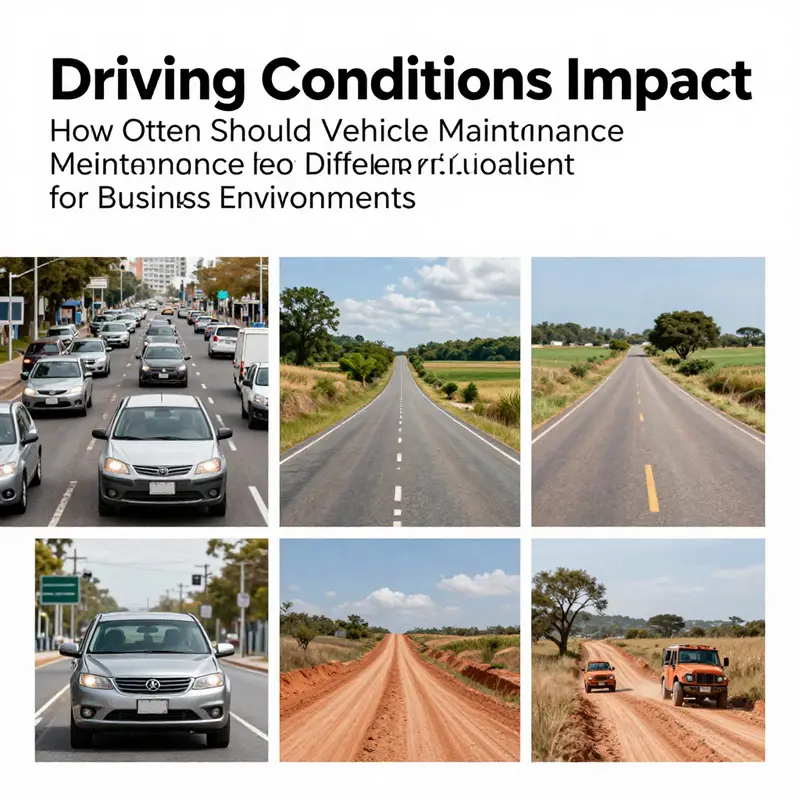
Maintenance is not a fixed ritual carved in stone. It is a dynamic discipline shaped by where you drive, how you drive, and the conditions your vehicle endures. The chapters that precede this one have laid out baseline schedules—oil changes at common intervals, rotations, inspections, and fluid checks. Those guidelines still matter, but the environment in which a vehicle operates can compress or extend those intervals in meaningful ways. Every driver should begin with the owner’s manual and the vehicle manufacturer’s recommended schedule, yet the real-world rhythm of maintenance follows the rhythm of the road itself. Modern cars increasingly rely on oil life monitoring systems and other sensors to tell you when maintenance is truly needed, rather than sending you to a fixed mileage marker. Still, even with smart monitoring, understanding how different environments stress a vehicle helps you interpret those signals correctly. The goal is not to chase every possible service, but to align maintenance with vulnerability points created by your typical routes, weather, dust, and loads. In practice, this means translating general guidelines into a practical cadence that suits your daily miles, not just a theoretical ideal. When you do this, you safeguard performance, extend longevity, and avoid the cost and hassle of avoidable breakdowns. The following reflection on distinct environments—urban, highway, extreme weather, and dusty or corrosive settings—offers a framework for tailoring maintenance to your actual needs. It also underscores the importance of a proactive approach, regular checks, and careful observation of how your vehicle responds to different conditions. A simple start is to view maintenance as a living schedule rather than a fixed checklist, one that you adapt as your driving environment changes. This is the path to reliability and value over the life of a vehicle, and it begins with a clear understanding of how each environment imposes its own demands on engine oil, filters, cooling systems, brakes, tires, and electrical components. For context and corroboration of these considerations, consult the broader guidance that highlights how environment influences maintenance frequency and what drivers can do to optimize upkeep across varying conditions. For authoritative guidance, consult the official website of your vehicle manufacturer or resources like Consumer Reports and CarMD, which provide detailed maintenance schedules based on real-world data. As you read, keep in mind that the numbers below are starting points that should be refined by your own observations and by the vehicle’s diagnostic feedback. The core idea is to tune maintenance to the stresses you actually encounter, not merely to repeat a calendar-based routine.
Urban congestion places a unique burden on a car’s systems. In dense city driving, engines spend extended periods at idle or under frequent stop-and-go loads. Incomplete combustion and repetitive starts increase carbon buildup in the intake, exhaust, and fuel delivery pathways. Brakes endure more frequent use, clutch packs (where applicable) see additional wear, and transmissions experience more heat cycles as stop-and-go patterns repeat. In this environment, the maintenance cadence should err on the cautious side. Oil change intervals commonly compress to the 5,000–7,500 mile range (8,000–12,000 km) when conventional oil is used, while synthetic oil can stretch toward 10,000–15,000 miles (16,000–24,000 km) if the vehicle’s oil life monitoring system supports extended intervals and the oil remains in good condition. The air intake system also faces a higher dust and pollutant load, so the air filter should be checked and replaced more aggressively—typically every 15,000–20,000 miles (24,000–32,000 km) in urban environments, though this can tighten further in particularly polluted downtowns or construction corridors. A vehicle kept in city traffic should also undergo more frequent brake inspections, since pad wear and rotor condition can accelerate with regular braking and shorter intervals between stops. The cooling system deserves attentive checks too, as urban heat and frequent engine cycling place alternating demands on coolant levels and condition. In sum, urban drivers benefit from a slightly compressed maintenance cadence for oil, air filtration, and brakes, along with a heightened awareness of how temperatures and stop-and-go cycles alter wear patterns. This approach helps prevent performance degradation and keeps the car predictable and safe for daily commutes. The underlying message aligns with a broader view: environment shapes wear, and wear shapes the need for maintenance. See how regular upkeep translates into efficiency, and how that efficiency translates into fuel savings over time—an idea you can explore further in discussions about how vehicle maintenance saves on gas expenses.
High-speed highway driving offers a different balance of benefits and risks. On the open road, the engine operates more steadily and at higher cruising temperatures for extended periods. This stability reduces some types of wear but intensifies others. Long stretches at speed push cooling systems to work harder over longer durations, and tire wear becomes a more predictable factor, especially when roads are smooth but temperatures are high. Engine oil still performs its critical role under load, but the monitoring systems in modern cars can justify longer intervals if the oil life is preserved and the vehicle sees minimal short trips that would degrade lubricants in between. For many vehicles, a typical highway cadence aligns with manufacturer guidance, such as oil changes around the 10,000–12,000 mile (16,000–19,000 km) mark for synthetic oil, or closer to 5,000–7,500 miles (8,000–12,000 km) for conventional oil when the car experiences substantial highway use, heavy loads, or frequent towing. Tires require careful attention too, with pressure and tread checks recommended every 4,000–5,000 miles (6,400–8,000 km) and rotations every 5,000–7,500 miles (8,000–12,000 km) to promote even wear. The cooling system should be checked regularly because sustained high speeds concentrate heat in the coolant and hoses, raising the risk of overheating if levels drop or if contaminants accumulate. While the highway environment can reduce some types of engine stress, it invites a disciplined vigilance: track oil level and condition, monitor tire pressures, and never neglect coolant health. Those habits are a practical form of risk management that preserves performance and avoids the sudden disruptions that can ruin a long trip. The takeaway is not to abandon standard maintenance but to respect the reality that constant, steady loads still demand thoughtful maintenance planning, particularly for cooling and lubrication systems. When you read about maintenance in relation to fuel economy and efficiency, remember that highway driving can be forgiving in some respects but unforgiving in others if a small issue goes unaddressed on a long trip. A helpful way to frame this is to consider how regular maintenance supports predictable performance, which in turn protects fuel efficiency over time. You can explore more about the broader link between maintenance and fuel costs in the context of everyday use through resources that discuss how vehicle maintenance saves on gas expenses.
Extreme weather conditions—whether scorching heat or biting cold—impose dramatic and sometimes abrupt demands on a vehicle. High temperatures accelerate oil oxidation, quicken the aging of rubber components like belts and hoses, and hasten the evaporation of coolant in some climates. This means oil can lose viscosity more quickly and protective properties can decline if intervals are stretched beyond what the environment permits. In hot climates, regular checks of oil quality and level become essential, along with vigilant coolant management and an emphasis on the battery’s health, since elevated temperatures can undermine battery performance over time. In some cases, manufacturers recommend shorter oil-change intervals in hotter regions, or at least more frequent oil-condition assessments, to ensure the oil maintains its protective properties. Conversely, in cold climates, cold starts are harder on engine internals, and the oil can thicken, reducing lubrication until the engine warms up. Winter-grade oils and careful battery assessment become critical. Batteries can lose capacity in freezing temperatures, so ensuring a healthy state of charge and clean terminals matters even more before winter arrives. In frigid environments, some manufacturers advocate starting with a conservative oil-change interval and relying on test results and monitoring to decide if and when to adjust. For this reason, the battery deserves early attention in advance of winter, and a preemptive check of the coolant system, hoses, and clamps helps prevent leaks in freezing conditions. Humidity and wet environments introduce corrosion risk to undercarriage components and electrical harnesses. Regular undercarriage washing and anti-corrosion measures can prevent rust from progressing, which otherwise undermines reliability and resale value. In the end, extreme weather requires a nuanced approach: you may need to tighten oil and coolant checks, battery readiness, and corrosion prevention as seasons shift. The core idea is to align maintenance with the climatic realities you face, rather than sticking to a single calendar rhythm year-round. In this regard, the oil life monitor can act as a practical guide, but it should be interpreted in light of regional climate data and how frequently you drive in extreme heat or cold.
Dusty and sandy environments impose yet another set of precise demands on a vehicle. When airborne particulates are abundant—near deserts, construction zones, or rural roads with loose topsoil—the air intake system bears a heavier burden. The engine relies on clean air to maintain efficient combustion and to minimize harmful carbon buildup. As a result, the air filter and the cabin air filter require more frequent attention. In dusty settings, air filters are commonly recommended for replacement every 5,000–8,000 miles (8,000–13,000 km), not the longer intervals you might see elsewhere. The cabin air filter can demand even more frequent changes, often every 3,000–5,000 miles (4,800–8,000 km), to maintain interior air quality and protect HVAC performance. The exterior cleanliness of the vehicle also matters in these environments; regular washing, particularly of the undercarriage, helps prevent abrasive particles from eroding paint and corroding exposed metal. Even simple steps such as ensuring seals around doors and windows remain tight can reduce dust intrusion. Beyond filtration, the emissions system and sensors can accumulate particulates that degrade readings if not cleaned or inspected appropriately. In addition to filtration, the maintenance plan should include more frequent inspections of belts, hoses, and electrical connectors that can be affected by dust and heat exposure. The overarching message in dusty environments is straightforward: the air path and the cooling path are working harder, so filters, seals, and related components deserve increased vigilance. A disciplined approach to filtration and undercarriage cleanliness reduces the risk of performance loss and keeps the engine breathing easy.
Across these environments, one principle stands clear: a one-size-fits-all maintenance schedule is not enough. Start with the baseline laid out in the owner’s manual, then adjust the cadence based on your actual driving environment and the stresses your vehicle experiences. Keep a simple log of miles driven in each environment and note any changes in performance, fuel economy, or driving feel. When you have a reliable record, you can anticipate service needs more accurately and avoid the abrupt failures that come from neglect. It is equally important to couple these adjustments with smart habits: pre-trip inspections that verify lights, tires, fluids, and wipers; a careful assessment of tires for tread depth and pressure before long trips; and periodic checks of the battery, especially before winter or in very hot regions. These habits create a safety net that protects you and your passengers while preserving the vehicle’s value. The aim is not to chase an endless schedule but to cultivate a living, responsive maintenance routine that honors the realities of your daily driving. In this sense, the maintenance decision becomes a balancing act—between the reliability of a well-cared-for car and the practical realities of fuel costs, downtime, and the environmental stressors at work on your vehicle. The result is a smarter schedule that respects both manufacturer guidance and real-world conditions, with the end goal of consistent performance, safety, and longevity. To learn more about how regular upkeep connects to fuel economy and overall efficiency, see the discussion on how vehicle maintenance saves on gas expenses.
Finally, no chapter on maintenance would be complete without acknowledging the value of relying on trusted guidance while staying responsive to your vehicle’s feedback. The owner’s manual remains the primary source for your car’s precise schedule, and today’s vehicles often use sensors that tailor maintenance needs to actual usage. When in doubt, err on the side of a modestly shorter interval for critical items like oil and filters in demanding environments, and extend carefully only when the vehicle’s condition and diagnostic data confirm it. Be mindful of your patterns: if you drive short trips daily in a hot city, those oil changes may come sooner, while a long highway commute in a milder climate may allow longer intervals. The point is to translate the general rules into a practical, personalized rhythm that adapts as your conditions change. A well-tuned maintenance plan is a living document that grows with you and your car, rather than a rigid script that becomes obsolete after the first season. The effort pays off in smoother starts, crisper throttle response, steadier braking, and fewer breakdowns on the road. It also translates into tangible cost savings over time, since catching wear early often costs less than repairing a failed component. In the larger picture, driver knowledge about environment-specific maintenance empowers you to protect your investment and keep your vehicle performing at its best, mile after mile. For readers seeking a concise summary of the environmental considerations described here, revisit the baseline maintenance guidance and reflect on how your own driving conditions might compress or stretch those intervals. The path forward is clear: tailor maintenance to your environment, rely on the vehicle’s diagnostic tools, and stay vigilant about the signals your car gives you through performance, temperature, and comfort. External resources can supplement this understanding as you build a practical, environmental maintenance plan. For a broader perspective on how environment affects maintenance frequency, consider the external reference linked here. External resource: https://www.motor1.com/news/467545/vehicle-maintenance-tips-by-environment/
Internal link: For a practical linkage to the broader value of maintenance, readers can explore how regular upkeep translates into fuel efficiency in the article how vehicle maintenance saves on gas expenses. This connection reinforces the idea that adapting maintenance to your environment not only protects reliability but also supports efficiency and cost savings over time.
External resource summary: The discussion above aligns with industry observations that environment significantly influences maintenance needs and intervals. By applying this understanding, drivers can implement a customized schedule that ensures reliability and safety while optimizing the total cost of ownership.
Final thoughts
Vehicle maintenance is not just a periodic task; it is a pivotal aspect of maintaining profitability and safety for business operations. By adhering to the guidelines laid out in this article, business owners can streamline their vehicle upkeep processes and avoid unexpected downtimes. Routine maintenance, critical checks, and awareness of specific driving conditions all play integral roles in ensuring that vehicles remain efficient and reliable. Investing time to understand and implement these strategies will ultimately contribute to a more resilient and cost-effective fleet.