
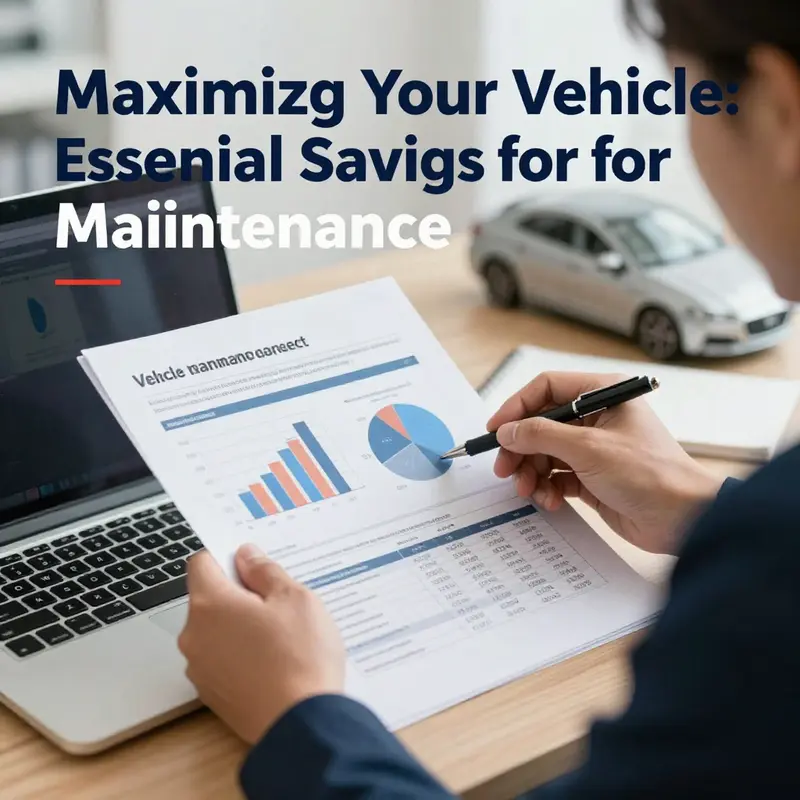
For business owners, understanding how much to save for vehicle maintenance is crucial for effective budgeting and operational efficiency. Vehicles are often critical assets, and their upkeep directly impacts profitability. This article outlines the various costs associated with vehicle ownership, dissecting maintenance and repair expenses, fuel costs, insurance implications, and strategies for smart financial management. By thoroughly analyzing each component, business owners can make informed decisions about their vehicle maintenance savings, optimizing their budgets while ensuring reliable transportation.
A Practical Safety Net: How Much to Save for Vehicle Maintenance and Repairs Through the Year
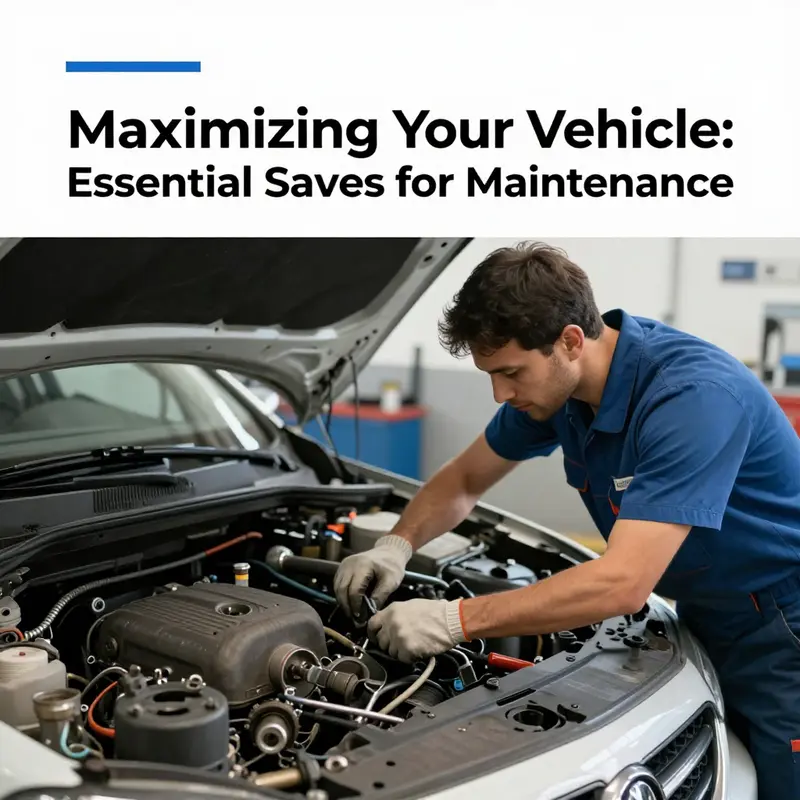
Saving for vehicle maintenance is not a single number but a disciplined habit aligned with how you drive and the age of your car. The question, how much should you save for maintenance on a vehicle, invites a practical answer grounded in data and lived experience. In the United States, typical annual maintenance and repair costs for a standard vehicle often fall in a recognizable band: drivers commonly spend about $1,000 to $1,500 per year on routine service such as oil changes, tire rotations, brake inspections, and fluid replacements, with occasional repairs. This range reflects quiet years and years with necessary replacements. The exact figure depends on the vehicle’s age and condition; older cars usually require more frequent tire work, brake service, and fluid care, while newer cars may keep these costs lower for longer. Luxury brands and imported models can be pricier due to parts and labor. Despite these differences, the core idea is the same: keep a maintenance fund that reflects your car and your habits, rather than a one-size-fits-all number. Looking at total ownership costs consolidates the approach: many guides propose budgeting roughly $3,500 to $9,500 per year for fuel, insurance, repairs, maintenance, and other expenses. Isolating maintenance and repair alone, a common conservative target around $5,000 to $6,000 per year can cover routine service and the occasional major repair, especially on older or higher-mileage vehicles. Think of maintenance spend as a mix of fixed rituals—oil changes every 5,000 to 10,000 kilometers, scheduled tire rotations, and regular brake inspections—and variable costs such as unplanned repairs or worn tires as the car ages. Plan for both, so a surprise repair does not derail your finances. A practical starting point is a dedicated maintenance fund that follows your service rhythm and potential surprises. For many drivers, saving about $100 per month (roughly $1,200 per year) provides a sensible cushion for routine maintenance and minor repairs. If you drive more miles or own an older car, $150 to $200 per month (about $1,800 to $2,400 annually) may be more appropriate; a newer car with modest use may be closer to $800 to $1,000 per year in maintenance-related expenses. These figures are not fixed, but they offer a framework you tailor to your vehicle’s age, make, and condition, plus local repair costs and driving environment. Your environment matters: harsh winters, potholes, or long commutes accelerate wear and can drive up costs. Location also affects parts and labor prices, which is why two owners with the same model may report different bills. The maintenance fund should be treated as flexible and adjustable over time. When you consider financing and agreements like leasing, note that leasing can shift wear and tear responsibilities and, depending on the package, may reduce out-of-pocket maintenance in the short term. A 2023 report even suggested that leasing a vehicle could save drivers around £159 annually on unexpected repair work when maintenance is covered by the lease. Regardless, a dedicated maintenance fund remains prudent. Treat maintenance as a non-negotiable monthly expense, like rent or utilities, and automate transfers to a separate maintenance savings account. This habit reduces the temptation to tap general savings and helps you avoid debt when a major service or replacement becomes necessary. The AAA data provide another anchor: U.S. drivers spend about $1,000 to $1,500 per year on car maintenance and repairs to cover routine and unexpected costs. Yet total ownership costs also include fuel and insurance and can push annual expenses higher, typically in the $18,000 to $24,000 range for many households, though this includes more than maintenance. Keeping maintenance in perspective helps calibrate your savings to reality, not fear. To illustrate a practical frame, if you own a used sedan with average reliability and drive roughly 12,000 to 15,000 miles per year, expect maintenance-related costs around the mid-range; a premium model or specialist parts can push toward the higher end. The central principle remains: save regularly, anticipate service cycles, and reserve funds for surprises so maintenance never disrupts day-to-day finances. If circumstances change—such as switching from ownership to leasing or changing driving habits—the core practice stays the same: track actual spending, compare with budget, and adjust. If costs trend higher than planned, increase monthly contributions or revise expectations; if costs drop, trim the target slightly or reallocate surplus to emergency savings or a future major service. Above all, maintenance budgeting should be continuous and aligned with broader goals: cash flow stability, asset longevity, and mindful driving that can extend wear-item life and lower annual bills. A simple takeaway: for maintenance and repairs alone, a conservative starting point is $3,500 to $5,500 per year for older or high-mileage cars, and $5,000 to $6,000 as a cushion for a typical midlife vehicle. If you drive more than average or own a premium model with costly parts, you may aim higher within that range. Start with a small monthly automatic transfer to a dedicated savings account labeled Maintenance Reserve, and review your spending after a year to refine the target. This approach turns an anxious expense into a predictable one and acts as a practical anchor in your broader financial plan. For further context, see the linked resource on how ongoing maintenance can influence fuel expenses and efficiency, which shows the broader value of maintenance beyond preventing breakdowns: https://vehicletricks.com/blog/how-vehicle-maintenance-saves-on-gas-expenses/. For broader benchmarks, you can also consult external resources such as AAA’s maintenance cost article: https://www.aaa.com/autorepair/articles/average-cost-of-car-maintenance-and-repairs.
Fuel, Funds, and a Ready Wallet: Building a Realistic Vehicle Maintenance Savings Plan
When you own a car, the sticker price is only part of the cost. Maintenance, wear items, tires, and routine services add up to a larger picture that requires planning beyond monthly payments. A disciplined maintenance savings approach helps you stay on the road without dipping into savings meant for other goals. Pair that with a clear fuel plan, and you can protect mobility even as prices and miles change.
A practical range for annual maintenance costs for many vehicles falls roughly between $1,000 and $3,000. Older or higher-mileage cars may land toward the upper end, while newer or well-maintained cars can be toward the lower end. The key point is to budget enough to cover oil changes, brakes, tires, and fluid services so you aren’t surprised by a mid-year repair.
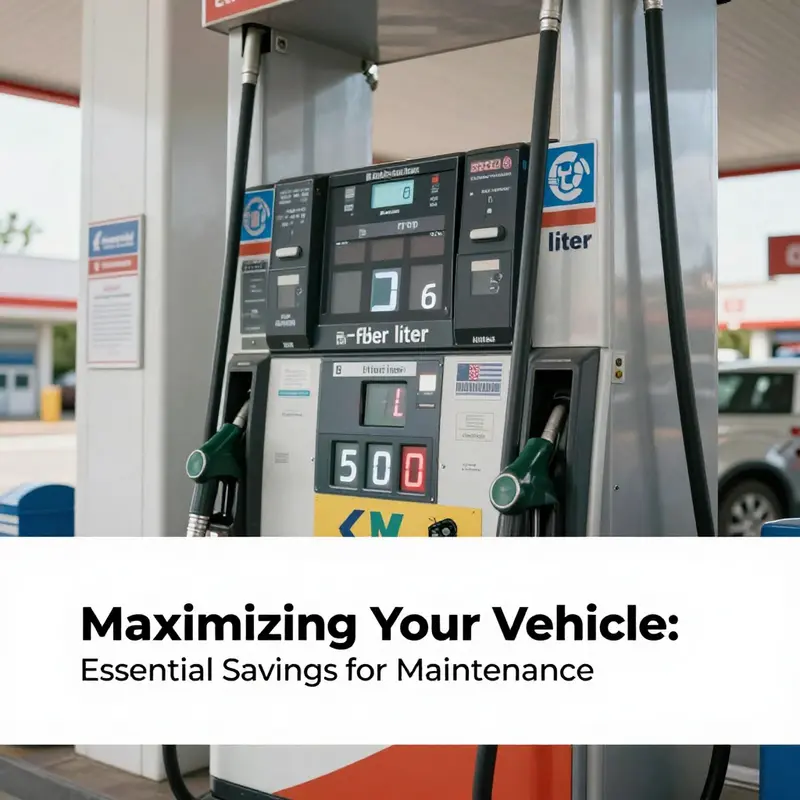
Fuel costs are the other big piece of the transportation bill. Depending on mileage and price swings, annual fuel can easily run into the low thousands. For example, at 30 mpg with 15,000 miles per year and about $3.20 per gallon, fuel costs around $2,400. A less efficient 15 mpg vehicle could push that toward $4,800. This is why many plans separate a fuel fund from maintenance, so a price spike doesn’t drain your maintenance cushion.
A practical saving plan can be simple to implement. Start with a maintenance target of around $1,200 to $1,800 per year and a fuel target that reflects your actual driving. If you want a concrete split, consider budgeting roughly $125 per month for maintenance and $250 per month for fuel, totaling about $375 per month. You can adjust these numbers upward or downward as your car ages, your mileage changes, or fuel prices move.
To keep the plan actionable, set up a dedicated vehicle fund and automate monthly transfers. Review the numbers at least annually and reallocate as needed. The goal isn’t to predict every repair but to create a predictable cadence that reduces stress and keeps your car dependable.
With a clear maintenance and fuel plan in place, you gain more control over your transportation costs and your broader financial picture.
Balancing the Ledger: How Insurance Shapes Your Maintenance Savings and Total Vehicle Ownership Costs

Maintenance is rarely the most exciting part of owning a vehicle, yet it is the quiet engine behind financial predictability. When you think about how much to save for upkeep, you are not merely budgeting for the next oil change or tire rotation. You are stitching together a safety net that keeps the car reliable, preserves its value, and shields your overall budget from the shocks of unexpected breakdowns. The total cost of owning a vehicle comprises several moving parts: ongoing maintenance and repairs, fuel, insurance, depreciation, and financing. Maintenance sits at the core of this ledger because it directly influences the other costs—reliability reduces the likelihood of expensive failures, and a well-kept vehicle often yields better resale value. Read together, maintenance and insurance form a complex but navigable landscape in which planned savings can compound into real financial stability over years of driving.
The data landscape is broad, but a consistent message emerges. The average annual cost to own and operate a vehicle in the United States is substantial. Recent findings place the figure around $11,450 per year, a total that includes maintenance and other vehicle-related costs. Within that sum, maintenance and repairs constitute a meaningful slice—about $3,834 annually in many breakdowns. This is more than a placeholder line item; it represents a real, recurring obligation that can redefine a household budget if left unmanaged. When you stretch this across the life of a typical new car, the lifetime ownership cost can exceed $48,759. These figures underscore a simple truth: maintenance is not an occasional annoyance but a major driver of long-term affordability.
Insurance, by contrast, tends to behave differently in the budgeting equation. For most drivers, insurance is a fixed cost that arrives with the monthly or annual premiums, independent of how many miles you drive or how meticulously you maintain the car—at least in the short term. The exact premium, of course, depends on the car’s make and model, your driving history, location, and coverage choices. Yet the broad reality remains: even as you work on maintenance, insurance remains a recurring expense that can tilt the year’s total costs if not managed intentionally. The AAA breakdown of total ownership costs highlights how insurance, along with depreciation and financing, composes a sizable, recurring portion of the bill. This means that the way you structure your insurance can create room for beefing up a maintenance reserve.
If you are building a practical saving plan, the first step is separating fixed costs from variable costs. Fixed costs—insurance, loan payments, and sometimes a base registration or taxes—need predictable coverage. Variable costs—maintenance, repairs, and fuel—benefit most from proactive budgeting because they swing with vehicle age, miles driven, and the car’s specific maintenance needs. A disciplined approach is to earmark a dedicated maintenance fund that evolves with your car’s life stage. If you own a newer vehicle with routine scheduled maintenance, your fund may start modestly and grow as the vehicle ages. If you own an older, high-mileage car, the fund should be more ambitious from the outset, reflecting the higher probability of wear-related repairs and component replacements.
When it comes to how much you should save for maintenance and related upkeep, a few benchmarks help translate theory into practice. The broad range you’ll encounter in guidance is roughly $3,500 to $9,500 per year specifically for maintenance and repair. That wider bracket acknowledges that newer or luxury models may incur higher maintenance costs, while frugal and well-maintained standard models can stay toward the lower end. A safer target for a typical, well-kept car is often cited as about $5,000 to $6,000 annually for maintenance and repair. This figure acknowledges the spectrum of potential needs—from routine service to tires, brakes, fluids, and the occasional major repair. It also sits comfortably within what many researchers and financial planners consider a pragmatic buffer without overinvesting in maintenance beyond what the car requires.
To translate those numbers into a workable savings habit, think in terms of monthly contributions. If you aim for $5,500 per year, that’s roughly $458 per month. For $6,000, you’re at about $500 per month. If you’re dealing with an older car or a premium, larger car with higher parts costs, you might scale toward the upper end of the spectrum and set monthly goals closer to $600 or more. The key is consistency: regular, automatic transfers into a dedicated maintenance fund keep your annual plan on course even when other expenses rise. The language of maintenance budgeting is not about chasing the lowest possible upkeep bill; it’s about smoothing the expense curve so you can respond promptly to wear items and unexpected repairs without tapping into credit.
A practical, universal principle is to separate maintenance planning from the rest of your budget. Open a dedicated savings account or ring-fenced sub-account labeled clearly for vehicle upkeep. Automate a transfer each payday. With a predictable cadence, the fund grows with you—usually a few hundred dollars a year more as the car ages and a few larger repair episodes occur less frequently but with more impact. Another layer to this planning is to build in a small emergency buffer within the maintenance fund itself. Experts often advise setting aside an initial floor, such as $500 to $1,000 annually, specifically for unexpected repairs. This approach aligns with the common finding that maintenance accounts for nearly one-third of total yearly ownership costs in many cost-of-ownership analyses. Having this cushion helps absorb nonroutine events—like a failed alternator, a brake system issue, or a cooling-system problem—without forcing a disruption to your monthly budget or forcing you to defer essential maintenance.
The insurance dimension at first glance seems separate from maintenance budgeting, but the two are deeply connected. Insurance is a fixed household cost, but the way you manage it can free up funds for maintenance or, conversely, squeeze your maintenance budget when premiums rise. A clean driving record, responsible bundling of policies, and selecting a careful deductible strategy can produce meaningful premium reductions. Reducing insurance costs in a predictable way is not just about saving money; it is about reallocating those savings toward a proactive maintenance plan that preserves the vehicle’s condition and reliability over time. In practice, that could mean translating several hundred dollars in annual premium savings into a more robust maintenance fund, which in turn reduces the risk of expensive, preventable repairs. The logic is straightforward: fewer big-ticket failures, fewer emergency trips to the shop, and more consistent performance.
The maintenance-insurance interplay is further illuminated by the broader data surrounding ownership costs. The annual maintenance figure cited in the Consumer Expenditures framework is not a negligible line item; it is a central component of the long-term cost of ownership. The same sources that quantify maintenance also remind readers that depreciation and financing figure into total costs in steady, sometimes substantial ways. In practical terms, when you improve maintenance outcomes, you often protect resale value and reduce the likelihood of expensive post-warranty repairs. Those benefits ripple forward, into lower financing needs or more favorable loan terms in some cases, and into greater peace of mind during the years you own the vehicle.
With these ideas in mind, the question becomes not only how much to save, but how to save in a way that is sustainable and precise. A robust plan begins with a realistic baseline—$5,000 to $6,000 per year for maintenance and repair as a practical target for a standard car in good condition, with room to extend toward $8,000 or more for luxury or high-mileage vehicles. Then, you layer in fixed-cost discipline: protect your insurance budget through safe driving practice, prudent coverage choices, and smart deductibles, while simultaneously allocating funds for maintenance as a nonnegotiable priority. The goal is not to squeeze every possible dollar out of insurance or maintenance in the short term but to create a durable framework where both costs are predictable parts of life rather than unpredictable shocks.
For readers seeking a concrete example of how maintenance savings can ripple into other cost areas, consider the evidence on fuel efficiency and maintenance. Regular, high-quality maintenance can preserve engine efficiency, extend tire life, and prevent performance dips that would otherwise waste fuel. A practical takeaway is to explore how maintenance practices influence fuel costs over time and to recognize that the savings from well-timed service can complement efforts to manage fuel spend. A detailed discussion of this relationship is available in an article dedicated to how vehicle maintenance saves on gas expenses, which offers actionable steps for keeping costs under better control while extending the life of the vehicle.
To deepen your understanding of the broader cost landscape, consult the AAA Your Driving Costs resource. It presents a comprehensive breakdown of how maintenance, insurance, fuel, depreciation, and financing combine to form the bottom line of driving. This resource reinforces that while some costs are within your control, others reflect the car’s age, usage, and market factors that evolve over time. Keeping a close eye on maintenance needs while prudently managing insurance premiums creates a financial pathway that makes maintenance savings meaningful in daily life. For a more detailed, up-to-date data set on vehicle costs across categories, you can refer to the official AAA report. https://www.aaa.com/autorepair/driving-costs
A bridge to practical application lies in linking your maintenance plan with accessible, relevant information. For readers who want to see how routine upkeep translates into tangible savings, one internal resource worth consulting describes the mechanics of how maintenance reduces gas expenses and offers straightforward steps to implement within a budget. See how vehicle maintenance saves on gas expenses for a focused look at the fuel-cost side of the equation and how proactive service can keep efficiency closer to ideal. You can explore that discussion here: how-vehicle-maintenance-saves-on-gas-expenses.
The bigger picture, of course, continues to center on the total cost of ownership. Maintenance is not a stand-alone expense; it is a driver of reliability, safety, and value. When you treat maintenance as a core budget item, you create a more resilient financial posture that supports other priorities. You do not have to choose between a well-kept car and a stable bank balance. With a disciplined approach—set a realistic maintenance target, automate regular contributions, manage insurance smartly, and use the maintenance fund to address both routine service and unexpected repairs—you can keep your vehicle performing at a high level while avoiding the debt and stress that come with surprise breakdowns.
The journey toward a balanced maintenance plan is iterative. Each year you review your car’s condition, mileage, and known maintenance milestones, adjusting the contribution if needed. If you add miles, you may need to increase the maintenance reserve, especially if the car has aging components or is approaching an anticipated service milestone. If you trade cars for a newer model with longer service intervals, you may recalibrate downward slightly, while preserving a baseline cushion for unexpected events. The essential idea is to keep the maintenance fund aligned with the vehicle’s actual needs and your financial objectives, rather than letting the cost drift in the wake of surprise repairs or a rising insurance premium.
In the end, what you save for maintenance and how you manage insurance are not two separate tasks but two strands of the same thread. They define how prepared you are to meet the car’s demands without compromising your other financial goals. When you view maintenance as a proactive investment—one that preserves reliability, safety, and resale value—you approach every service interval with purpose rather than reluctance. And when you couple that approach with thoughtful insurance decisions, you build a sturdier, more predictable road ahead. The road may still have bumps, but your budget will know its pace and direction, guided by maintenance vigilance and strategic cost management rather than reactive scrambling after a costly breakdown.
Budgeting for Longevity: Building a Practical Savings Plan for Vehicle Maintenance

Saving for vehicle maintenance isn’t a one-and-done action. It is a continuous, reality-grounded discipline that aligns with how you drive, where you live, and the specific demands of your car. The numbers used to frame this discipline can feel abstract until you translate them into a living plan you can actually fund every year. The broader context is straightforward: owning a vehicle carries costs beyond the monthly loan or lease payment, beyond the fuel you burn, and beyond the insurance you carry. A careful reader can see that maintenance and repair expenses, while variable from year to year, form a predictable portion of total ownership costs. The consensus across the research is clear and pragmatic: plan for maintenance and repairs as a distinct line item and treat prevention as a monetary investment rather than a sunk cost. When you view maintenance as preventive care for your car, the math starts to make sense in a way that can guide your savings without turning it into a paralyzing burden.
First, it helps to anchor your expectations with the baseline figures that show why a dedicated maintenance fund is essential. For a typical used or older car, the annual costs tied specifically to maintenance and repairs commonly fall between about $1,000 and $3,000. That range reflects the costs of replacing wear items like tires and brakes, changing fluids, and addressing components that naturally degrade with time and use. Luxury or specialized vehicles can push those numbers higher, given the more expensive parts and labor. When you widen the lens to all ownership costs—fuel, insurance, and maintenance—the total annual outlay can skyrocket to the high teens or even into the mid-twenties. Yet the maintenance and repair portion alone is often the portion drivers underestimate, and that is where a disciplined savings approach adds the most value. Some sources suggest a broader annual budget for maintenance and repair alone, in the neighborhood of $3,500 to $9,500. Those numbers acknowledge that a vehicle is not a static machine and that maintenance needs shift with mileage, climate, and driving style. A more targeted and pragmatic recommendation, particularly for a standard car in regular use, is to aim for about $5,000 to $6,000 per year to cover maintenance and repairs, with adjustments up or down based on age, model, and driving environment.
This framing matters because it reframes the savings target from a vague annual drift to a concrete, actionable amount. If you are currently spending roughly $1,500 a year on maintenance and repairs, you have a clear delta to cover when you plan for future needs, including the possibility of bigger-ticket services such as transmission work, cooling system overhauls, or timing belt replacement. The numbers aren’t just numbers; they are signposts that signal when preventive care makes sense and when neglect begins to bite back in the shape of unexpected breakdowns and sudden maintenance bills. Prevention isn’t a luxury; it’s the cheapest form of car ownership, and the chapter results here echo that sentiment: small, regular investments now prevent catastrophic costs later.
The practical policy you can adopt starts with a simple truth: maintenance should be treated as a scheduled, predictable expense, while repairs should be funded as an emergency or contingency item. A good starting point is to separate fixed maintenance tasks from variable repair needs and to quantify both in your annual plan. Fixed maintenance is the routine care your car will require regardless of whether you drive a lot or a little. Think about oil changes, oil filters, air and fuel filters, spark plugs, and fluid replacements. The recommended service intervals are widely consistent across manufacturers: oil and filters every 5,000 to 10,000 miles, spark plugs every 40,000 to 60,000 miles, automatic transmission fluid roughly every 60,000 miles, and timing belt or chain replacement per the manufacturer’s schedule. These are not optional add-ons; they are the spine of engine health and drivetrain reliability. Following these intervals helps ensure you don’t overspend on needless services, while also avoiding the huge, avoidable costs that come from neglect.
On the variable side, you’ll face costs driven by mileage, road conditions, and luck. New tires, brakes, and suspension parts wear at different rates, and some years will demand more cooling system work or additional battery or alternator attention. The prudent approach is to set aside a dedicated fund that grows with mileage and age, not just with the calendar. An emergency reserve for unexpected repairs is equally important. The guidance here echoes a familiar maxim: it’s better to spend a little now to save a lot later. Think of the maintenance fund as a liquidity cushion that keeps you from dipping into savings meant for other goals or from relying on high-interest credit when a repair bill arrives. Regular, predictable contributions shrink the likelihood of disruptive, cash-flow shocks.
To turn this into a workable plan, you can start with a clear target and a practical contribution schedule. For many standard cars, a realistic annual target is in the $5,000 to $6,000 range for maintenance and repairs. If you’re newer to car ownership or your car is in excellent condition, you might begin closer to the lower end and adjust upward as needed. If your vehicle is older, higher in mileage, or you drive in challenging conditions—extremes of heat or cold, rough roads, or heavy stop-and-go traffic—you should anticipate higher maintenance costs and increase your savings target accordingly. The key is to establish a baseline for your specific situation and then re-evaluate annually or semi-annually as your car ages and as service costs in your area shift.
A practical way to translate this target into real-world behavior is to treat the maintenance fund like a monthly bill you pay yourself. Divide your annual target by 12 and set up an automatic transfer to a dedicated savings account. For a $6,000 annual target, that would be about $500 per month. If the goal feels steep, start with a smaller monthly amount and increase it gradually as you gain clarity about your car’s needs and your overall budget. Regular, automated deposits remove the friction of saving and reduce the temptation to spend this money elsewhere. If you’re thinking in weekly terms, a modest cadence—$120 every two weeks, for example—can be even easier to manage for some households.
In the same spirit of discipline, you should also create a separate contingency fund for truly unforeseen repairs. This is not a substitute for the routine maintenance fund, but a companion cushion that covers major surprises—things like a failing cooling system, an unexpected transmission issue, or a major engine service that would otherwise derail your finances. As a guardrail, many drivers begin with a starter emergency fund of $1,000 to $2,000 and then scale up as the car ages or the repair landscape becomes more expensive. A practical rule of thumb is to increase this emergency reserve in tandem with the maintenance target, so you’re not caught between a routine cost and a sudden, large repair bill.
All of these considerations become more tangible when you view maintenance through the lens of efficiency and performance. Regular maintenance does more than prevent breakdowns; it helps you get the most out of every gallon and keeps your car running smoothly at peak efficiency. Regular oil changes, for instance, reduce engine wear and help your fuel system operate with maximum efficiency. The relationship between maintenance and fuel economy is a key driver of the overall savings you realize from preserving your car’s health. In fact, the argument for preventive care can be framed in terms of dollars saved on gas and reduced wear on critical systems over the long term. For a concise exploration of how maintenance translates into fuel savings, see the discussion at how vehicle maintenance saves on gas expenses. By keeping up with oil, air, and fuel filters, and ensuring that the engine and sensors stay clean, you minimize inefficiencies that waste fuel and degrade performance. This is not marketing fluff; it is a practical observation backed by automotive maintenance principles.
At the same time, your maintenance plan should be sensitive to the specifics of your vehicle. Vehicle type matters. Luxury and imported models often come with higher maintenance and repair costs than domestic or more common models. If you own a high-end or specialty vehicle, you should anticipate not only higher annual costs but also potentially longer lead times for service, higher parts costs, and more frequent interval checks for systems that require specialized attention. Conversely, domestic, well-known models with broad service networks can carry lower parts costs and faster service turnaround, though the price of parts and oil can still be a meaningful factor, especially in certain regions or climates. The bottom line is straightforward: align your savings target with your car’s expected maintenance profile, which you determine from the car’s age, mileage, service history, and the local climate.
To deepen the practical side of this plan, you should integrate preventative practice into your daily driving ethos. Regular service intervals are not just a set of numbers; they correspond to real maintenance outcomes. Oil and filter changes every 5,000 to 10,000 miles protect the engine’s “lifeblood” by reducing sludge buildup and wear. Spark plugs, when changed on schedule, keep combustion efficient and avoid misfires that degrade performance and fuel economy. Transmission fluid changes help maintain smooth shifting and prevent early transmission wear that can be catastrophic and expensive to repair. The timing belt or chain is another critical checkpoint—never wait for it to break, because a snapped belt or a seized chain can lead to catastrophic engine damage. The overarching strategy is to observe the sequence of replacements and services as a maintenance ritual, not a miscellany of occasional checks.
Beyond these core services, the maintenance plan should include preventative measures that extend beyond the normal checklist. The concept of preventative value includes practices like engine carbon management—occasionally revving the engine to clear deposits in shorter, controlled fashion—and the regular cleaning and inspection routines that go beyond simple cosmetic care. Checklists that cover tire pressure, wheel alignment, and input from the car’s own monitoring systems help you catch issues early and prevent alignment or tire wear problems that can escalate costs over time. The idea is not to overreact to every little squeak or warning light, but to respond promptly to genuine signals that a component is nearing the end of its useful life or is showing signs of stress. The cost comparison is stark: a few hundred dollars in preventive care today versus thousands in potential engine or transmission repair tomorrow. This is the essence of the proverb we’ve been circling: prevention costs less than cure.
The chapter’s core message remains consistent: the most effective cost-management strategy for vehicle ownership is a steady, proactive maintenance routine funded through disciplined savings. A practical way to think about it is to break the problem into two small, steady, and predictable actions: first, establish a maintenance fund that covers routine care and expected replacements, and second, maintain a separate emergency fund for truly unforeseen repairs. By doing so, you gain financial stability and you protect your car’s reliability and resale value. When you couple this approach with a clear awareness of the maintenance intervals and the high-stakes components—engine oil, transmission fluid, coolants, belts, and timing mechanisms—you cultivate a sense of ownership and responsibility that goes beyond merely keeping the car on the road. You’re preserving your investment and ensuring you have the means to handle the inevitable repairs that come with aging machinery.
Finally, you can weave all these ideas into a practical, personalized plan. Start by calculating your annual maintenance target based on your car’s age, mileage, and known condition. If your vehicle sits mid-life with regular service history, a target around $5,000 to $6,000 is reasonable. If you’re dealing with higher mileage or a more complex model, increase your target accordingly, mindful of the cost of parts and labor in your region. Then, establish a savings cadence that fits your cash flow, whether that means $500 a month or a more gradual $120 every two weeks, and automate the process so you never forget. Maintain a separate emergency fund that grows with the car’s age and usage. Review and adjust this plan annually, especially after major service milestones or if your driving environment changes. And as you implement the plan, remember the broader point: proactive maintenance isn’t an expense to begrudge; it’s an investment that preserves your car’s value, reliability, and efficiency while keeping long-term costs predictable and manageable.
In the end, the savings strategy for maintenance is neither glamorous nor complicated. It’s a disciplined commitment to the health of your vehicle and to your own financial well-being. It’s about building a durable fund that stands up to the inevitable repair bills that come with real-world driving. It’s about recognizing that you are not merely paying for parts and labor; you are paying for dependable transportation and for the time you don’t have to spend worrying about whether your car will make it to work or a family trip. The numbers will vary, but the strategy remains stable: invest consistently, prioritize preventive care, adapt to your vehicle’s unique needs, and preserve your peace of mind by keeping a robust savings foundation for maintenance and repairs. As a practical takeaway, consider this approach as a core element of your financial planning toolkit, a component that helps you navigate the true cost of owning a vehicle with confidence and clarity.
For readers who want to explore the link between maintenance habits and fuel efficiency in a bit more depth, you can read about how maintenance saves on gas expenses on the linked article. how vehicle maintenance saves on gas expenses.
External resources for broader context and safety considerations reinforce the maintenance mindset. For comprehensive guidance on vehicle maintenance and road-safety practices, consult the National Highway Traffic Safety Administration at https://www.nhtsa.gov. This external resource complements the chapter’s emphasis on proactive care, safe driving, and the long-term value of keeping your vehicle reliably maintained.
Final thoughts
In conclusion, successful vehicle management for business operations involves meticulous planning around maintenance savings, fuel expenditures, and insurance costs. With annual maintenance and repair costs averaging between $1,000 and $3,000, and significant contributions from fuel and insurance, it is crucial for business owners to adopt a comprehensive approach to budgeting. By strategically saving around $5,000 to $6,000 yearly for maintenance, alongside leveraging effective cost management practices, owners can ensure their vehicles remain reliable assets that support their operational success.