

Managing a fleet or even a couple of vehicles is a significant undertaking for any business owner. Understanding the annual maintenance costs associated with different types of vehicles is crucial for effective budgeting and operational decision-making. This article delves into various vehicle maintenance categories, starting with average cost estimates for conventional cars, followed by essential insights into electric and luxury vehicles. Each chapter also highlights additional expenses that can affect the overall costs, culminating in a detailed look at total vehicle ownership expenses. By the end, business owners will be well-equipped to anticipate and plan for vehicle maintenance costs.
The Real Yearly Bill: Understanding Maintenance Costs Across Vehicle Types
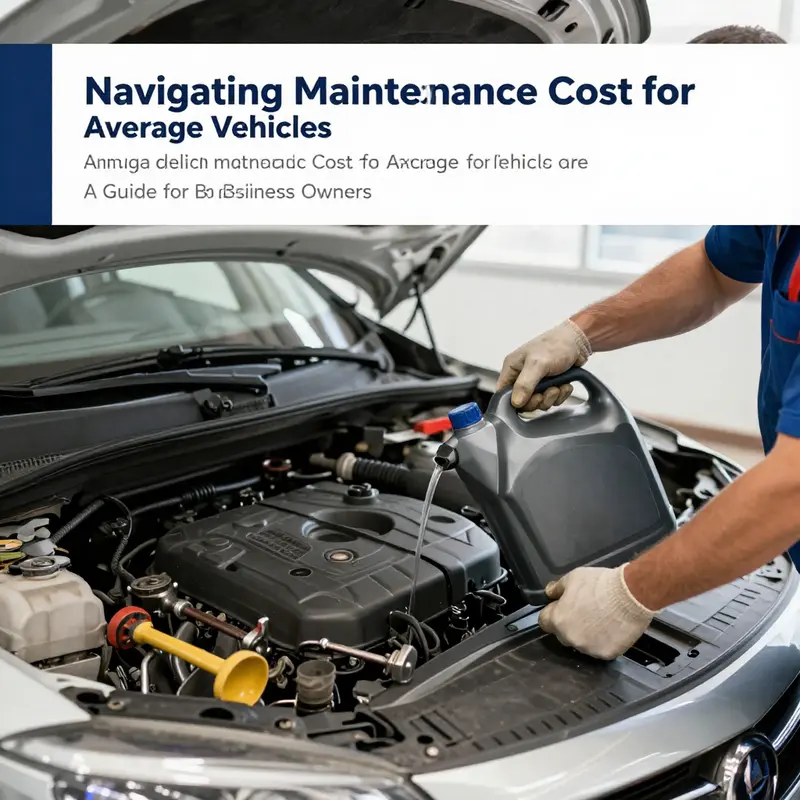
When people ask how much it costs to keep a vehicle running each year, they expect a single number. The truth is more nuanced. Annual maintenance costs depend on the vehicle type, its age, how you drive, and where you live. A practical rule is that routine maintenance for a typical gasoline car—oil changes, tire rotations, brake inspections, and minor services—sits in the low hundreds to the low thousands per year. But the exact amount shifts with choices you make, climate, and miles driven. For many drivers, the yearly maintenance question is part of a broader picture that includes fuel, insurance, depreciation, and how the costs accumulate over the vehicle’s life. The more you rely on a traditional internal combustion engine, the more maintenance you may budget; electric powertrains promise lower routine upkeep but carry different risk pockets that can spike costs if a major component needs replacement outside warranty.
From a global perspective, patterns repeat across markets. On average, gasoline-powered cars incur maintenance costs in a broad range, while plug-in technology shifts many costs toward different categories and timelines. In some markets, plug-in hybrids and EVs show lower outlays, though exact figures depend on battery health, electronics reliability, and local parts pricing. A useful view is to think of maintenance as a basket of routine services that expand or shrink with how the vehicle uses energy and how robust its systems prove over time.
A look at recent analyses helps illustrate the trend. Plug-in hybrids often show modest annual maintenance outlays, roughly in the low thousands of local currency per year; for example, a representative plug-in hybrid can sit around six hundred yuan annually. In practical terms, that can be a fraction of the annual maintenance outlay for a conventional fuel vehicle when you compare the same mileage. The cost delta matters when you manage several vehicles or fleets, and efficiency matters too: per-kilometer costs drop significantly for plug-in hybrids versus traditional cars. In concrete numbers, a plug-in hybrid might run around 0.05 yuan per kilometer, vs 0.6 yuan per kilometer for a conventional vehicle. This delta translates into tangible savings over time.
Pure electric vehicles push the story further. EVs can achieve maintenance costs around a fifth of fuel vehicles. A well-known electric sedan might incur maintenance near two hundred yuan per year, assuming battery health remains stable and no major repairs beyond normal wear. Over eight years, healthy EV maintenance can stay well under six thousand yuan, contrasted with higher totals for a comparable fuel-powered model when you include fuel. The savings in maintenance and fuel can accumulate over time, especially as technology matures.
Yet every rose has its thorn. The battery—the heart of an electric drive—also represents the most consequential financial risk beyond routine maintenance. If a battery needs replacement after the warranty expires, costs can be substantial, potentially tens of thousands of yuan. Even with strong warranties, battery health and coverage are central to budgeting for an EV. The takeaway is to recognize that battery risk exists, but it does not erase the maintenance savings; it reframes budgeting as a balance between predictable routine costs and potential major outlays.
Layered onto vehicle-type differences are location and usage realities. Parking costs, local maintenance rates, and climate shape the annual bill. In dense urban areas, routine services may be more frequent; in milder climates wear on tires and brakes can differ from harsher climates where dust, salt, or extreme temperatures accelerate maintenance tasks. Insurance remains a separate, essential part of annual ownership costs, often varying by driver, vehicle type, and location. Fuel or electricity adds variability: even if maintenance costs stay modest, higher energy costs can tilt the annual expense. In short, maintenance is just one part of the total cost of ownership.
The practical upshot is to build a budgeting framework that covers routine maintenance as well as larger, less frequent risks. Regular preventive maintenance—oil changes for traditional engines, tire rotations, brake checks, and fluid top-offs—keeps costs predictable and helps avert expensive repairs later. For electrified powertrains, battery health, charging behavior, and cooling system integrity deserve particular attention. If you weigh a purchase, the lower ongoing maintenance costs of EVs and PHEVs can be compelling, provided you factor in potential battery replacement costs and how long you expect to own the vehicle. A common rule is to anticipate that EVs reduce annual routine maintenance relative to fuel vehicles, but keep a contingency fund for battery-related events beyond standard maintenance.
Some readers want a concrete path to manage costs. Consider a budgeting approach that allocates a predictable monthly amount for routine service visits, plus a separate line item for major components with finite lifespans that could require replacement beyond warranty. For readers exploring broader implications, there is research that discusses how maintenance patterns relate to energy efficiency and total ownership costs. Do-electric-vehicles-require-less-maintenance provides a concise explanation of why many drivers see lower upkeep with electrified powertrains, while noting caveats for high-value components and battery health. This view helps frame maintenance as part of a holistic ownership strategy that includes fuel, insurance, and depreciation.
For deeper data, external resources offer cross-vehicle comparisons and cost analyses that broaden context for maintenance costs within total cost of ownership. As with any forecast, uncertainties exist, but the trend toward lower routine maintenance for electric propulsion is supported by multiple data sources and remains a central consideration in long-term budgeting.
As you reflect on vehicle choices, the key takeaway is clarity about where money goes each year. Routine maintenance is typically the most predictable portion of the annual bill, with short-term savings from electrification. The bigger, less frequent expenses—battery health and major repairs—require careful planning and wise warranty coverage. With thoughtful budgeting and an openness to adapt as technology and markets evolve, you can approach each year with confidence. The goal is to understand the dynamics that shape yearly maintenance across vehicle types and prepare for both expected and unexpected costs. External realities will always shape numbers, but informed budgeting and strategic choices can keep the annual vehicle investment manageable, and often lower than it once was. If you want a quick reference that captures the core difference between electrified and fuel-powered maintenance, a concise summary of why EVs often carry lower routine maintenance exists, while battery health remains the wildcard that merits attention and planning. The linked resources offer further reading.
Bright, Budget-Smart Years: The Real Cost of Maintaining an Electric Vehicle Each Year

Electric vehicles have shifted the conversation about annual car upkeep from a byte of mystery to a clearer, more predictable budgeting exercise. The common refrain that EV maintenance is dramatically cheaper than traditional gas-powered cars sits on a foundation of straightforward design choices. EVs consolidate many moving parts into a simpler drivetrain, eliminating engine oil, exhaust systems, and transmissions that require routine service. The result is a maintenance profile that leans toward lower baseline costs, even as individual components still demand attention. When you add in the broader ownership picture—charging costs, insurance, and depreciation—the annual cost story for an EV begins to look more favorable for many buyers, especially those who drive a lot but prefer predictable expenses. The numbers, of course, vary by model, age, driving style, and local prices, but the overarching pattern remains consistent: fewer items need regular attention, and those that do are generally more cost-efficient to service. For a popular all-electric model, the annual maintenance estimate typically lands in the range of seven hundred to one thousand dollars. That figure captures the routine tasks that persist across vehicles—tire rotations, brake inspections, software updates, and periodic system checks—while excluding fuel or charging costs, which sit in a separate line on the budget sheet. In some reports, minor service visits might clock in around a few hundred dollars, with major services spaced farther apart, often tied to mileage or specific kilometers on the clock. For a Tesla Model Y, for instance, the annual maintenance cost is commonly cited between seven hundred and one thousand dollars. The breakdown often reveals that the majority of this spending goes toward wear items—tires, brakes, and occasionally other components exposed to regular use. Major services, scheduled roughly every forty thousand kilometers, can range from around seventeen hundred to two thousand six hundred dollars, depending on local labor rates and the scope of work. Even with these higher-end maintenance events, the annual total tends to stay in the lower end of the spectrum relative to many ICE counterparts. An important nuance is that the Model Y and similar EVs typically feature a first service that is complimentary, and they generally come with generous warranties—often four years or eighty thousand miles for the basic vehicle hardware. This combination of no oil changes, simplified drivetrains, and regenerative braking translates into a maintenance rhythm that is lighter and less frequent than you might expect for a car with a traditional internal combustion engine. The practical upshot is a maintenance tilt toward ongoing, predictable costs rather than sporadic, higher-ticket repairs. Yet, the picture doesn’t exist in a vacuum. Electricity itself is a real, recurring cost. For the Model Y and many comparable EVs, energy consumption sits in the neighborhood of roughly fifteen to eighteen kilowatt-hours per one hundred kilometers. A typical daily commute of about thirty kilometers translates into monthly electricity outlays that are often summarized as around one hundred twenty dollars, with annual costs approximating one and a half thousand dollars. These figures, of course, depend on local electricity rates, driving patterns, and whether the vehicle is charged at home or at a public station. What this implies for the overall ownership cost is meaningful: even when maintenance remains consistently lower than ICE maintenance, the charging expense is a separate line item that can swing up or down with rate changes and driving behavior. In this sense, EVs can offer a more predictable every-year cost profile, anchored by steady maintenance needs and a comparatively stable energy bill. Insurance, meanwhile, tends to hover higher for many electric models. This premium reflects factors such as repair costs, parts availability, and the advanced safety features that many EVs deploy. Even with higher insurance, the total ownership picture often shows a net advantage for EVs over the long term, largely thanks to savings on fuel and maintenance and the vehicle’s safety profile. The broader takeaway is that the annual maintenance cost is a significant, but not solitary, piece of the total-cost-of-ownership equation. When you couple maintenance with energy costs, depreciation, and potential incentives, EVs frequently emerge as a compelling option for drivers who place long-term cost stewardship at the forefront of their purchase decision. While insurance and charging rates can vary widely by location and household, the maintenance backbone for EVs remains relatively light and steady. This lighter maintenance requirement is a practical boon for owners who prefer fewer service visits and less downtime spent at the shop, allowing more time on the road and fewer surprises in the repair bay. For readers evaluating whether an electric vehicle fits their annual budget, it’s valuable to anchor the discussion in concrete numbers and realistic scenarios. A Model Y-like profile—lower maintenance, predictable service needs, modest major service intervals, and the advantage of regenerative braking—paints a picture of cost stability that stands in contrast to the broader ICE landscape, where maintenance costs can spike with aging components, transmission work, and more frequent service cycles. In addition to the core maintenance costs, it’s prudent to consider the full ecosystem of running an EV. While the chassis and drivetrain demand less frequent care, the vehicle still benefits from thoughtful maintenance planning: tire health remains essential, as wear patterns can be influenced by power delivery and regenerative braking. Software updates, often delivered over the air, can improve performance, efficiency, and even extend the life of certain subsystems, reducing the likelihood of surprising visits to a service center for issues that software can address remotely. The human factor—driving style, climate exposure, and road conditions—also leaves a mark on maintenance bills. Harsh climates can accelerate tire wear and affect battery efficiency, while aggressive driving can alter brake wear dynamics even in regenerative braking scenarios. The net effect is that while EV maintenance costs can be lower in a typical year, personal driving habits and local conditions remain important inputs into the final tally. For readers who are as curious about the broader maintenance landscape as they are about the EV specifics, there’s a helpful perspective to consider. Do electric vehicles truly require less maintenance overall? The answer typically leans toward yes, particularly in terms of routine service items and engine-related tasks that ICE vehicles demand. This topic is explored in depth in discussions that compare EV and ICE maintenance needs, offering a clearer sense of where the savings come from and where they can be offset by other cost factors. Do electric vehicles require less maintenance? provides a thoughtful examination of how maintenance calendars differ and why EVs often require fewer regular visits to the shop. While that article dives into the nuances, the present chapter stays focused on the year-by-year budgeting implications for EVs, tying those insights back to the central question of annual maintenance costs in the larger article. For readers seeking additional context on formal guidance, official maintenance expectations, and model-specific service schedules, the broader maintenance framework can be informed by manufacturer resources and technical support pages. In the case of a leading all-electric brand, the manufacturer’s maintenance guidance emphasizes routine inspections, wear-item replacements, and software-driven updates as the core annual rhythm, with major service intervals that are spaced out to align with mileage milestones rather than calendar years. This practical approach helps owners plan ahead, set aside a predictable annual fund for upkeep, and avoid unexpected costs that can disrupt monthly budgets. When considering whether to buy an EV, it is worth recalling that the cost picture improves with experience. The first year may introduce some onboarding charges, but the long horizon tends to reward careful driving, smart charging, and adherence to the recommended service schedule. As with any vehicle choice, regional price differences, driving patterns, and the specific model you select will shape the ultimate maintenance bill. In the end, the annual maintenance cost for electric vehicles is a meaningful, typically lower, component of total ownership. It sits alongside energy costs, insurance, and depreciation to form a complete view of what it takes to keep an EV on the road year after year. External reference: https://www.tesla.com/support/vehicle-maintenance
Beyond the Sticker Price: The Real Yearly Cost of Luxury Vehicle Maintenance

A practical look at how owning a luxury car goes beyond the purchase price. This chapter explains why maintenance costs can run from several thousand dollars a year to much more in rare cases, driven by routine service, specialized parts, labor from dealership networks, insurance, fuel, and parking. It contrasts common luxury brands with ultra high end machines and emphasizes that maintenance is a core component of total ownership cost that should be budgeted from the start.
null

null
From Routine Upkeep to Real Costs: Mapping Yearly Vehicle Maintenance Across Vehicle Types

Understanding what it costs to keep a vehicle on the road goes beyond a single line item on a monthly budget. Maintenance—the routine care that keeps engines singing, tires gripping, and brakes stopping—sits within a broader tapestry of ownership expenses. A practical way to approach this is to picture maintenance as a spectrum rather than a fixed bill. On one end lies the typical upkeep most drivers perform each year, while on the other end lurk the potential shocks of unexpected repairs. Between these poles, the kind of vehicle you drive, its age, how you use it, and where you live all shape the annual price tag. What emerges from the data is a nuanced reality: yearly maintenance costs can vary widely, but there are plausible ranges that help any driver plan with confidence.
For a standard passenger car, routine maintenance—oil changes, tire rotations, brake inspections, fluid checks, and other scheduled services—commonly lands in a broad corridor of roughly five hundred to fifteen hundred dollars per year. That span captures the spectrum from careful, low-mileage ownership to vehicles that rack up annual mileage, or models with components that wear sooner due to aggressive driving or climate. The range may feel wide, but the logic is straightforward: more frequent servicing, more wear and tear, and more opportunities for a component to reach its service limits translate into higher annual costs. And as cars age, or as a vehicle accrues more miles, that maintenance envelope tends to drift toward the upper end. In practical terms, the older a car gets or the more it is driven, the more likely a yearly maintenance bill climbs toward the upper bound of the range.
Even within that baseline, the conversation about maintenance costs is inseparable from the larger ownership economics. A widely cited benchmark for what it costs to own a vehicle includes not just maintenance, but fuel, insurance, depreciation, and the financing or opportunity costs tied to the price of the car. State-of-the-art snapshots from national surveys show that routine maintenance alone—oil changes, tire rotations, brake services, fluid replacements—usually sits in a more modest band, commonly cited as around five hundred to eight hundred dollars per year for many vehicles. This is the core amount most owners should expect to allocate for preventive care when the car is relatively young and the driving pattern is average. Yet this figure is not carved in stone; it shifts with the car’s design, with required intervals changing as technology evolves, and with the driver’s habits and the environment in which the vehicle operates.
The expansion to electrified mobility adds another layer to the discussion. Electric vehicles, which operate with fewer moving parts and do not use conventional oil, generally present lower maintenance costs. In broad terms, annual maintenance for an electric vehicle tends to cluster around seven hundred to a thousand dollars. Minor service visits may run a few hundred dollars, while major services—performed on a cadence that differs from internal-combustion engines, and typically tied to mileage rather than time—can vary widely. For a representative electric vehicle, the annual maintenance figure lands near the lower end of the traditional maintenance spectrum, reflecting the reduced frequency of oil changes and simpler drivetrain mechanics. A typical annual estimate might hover around eight hundred dollars, a mark that is often cited by analysts and consumer surveys when discussing EV ownership economics. This relative cost advantage is a meaningful part of why some buyers find electrified options appealing beyond fuel savings alone.
Luxury and high-performance vehicles, by contrast, tend to defy casual budgeting rules. The same maintenance logic that applies to regular cars can swell significantly for premium machines. Heavy components, specialized service requirements, and higher insurance costs can push annual upkeep well above the averages. In general terms, a luxury or high-performance model can see annual maintenance costs that rise into the thousands. When performance, bespoke parts, and higher insurance premiums come into play, maintenance is only one piece of a larger cost puzzle that can easily reach into the five- to six-figure yearly range for ownership across all related expenses. In short, the cost delta between a standard sedan and a premium or exotic model is more about the sum of maintenance, insurance, fuel or charging, and other ownership costs than about a single line item.
Putting these numbers into context, it helps to widen the lens to the broader ownership framework. A well-known expense survey from the Bureau of Labor Statistics puts the annual cost to own and operate a vehicle in the United States at around eleven thousand five hundred dollars. This figure breaks down into several key components: the upfront cost of purchase or lease, recurring fuel or electricity, and other vehicle-related costs such as repairs, maintenance, and registration fees. In the same breath, more recent estimates from the American Automobile Association suggest that owning a new car—across models and configurations—tends to involve about twelve thousand dollars per year when you fold in gasoline, maintenance, insurance, loan payments, and depreciation. The numbers are not identical, but they converge on a central truth: owning a vehicle entails a portfolio of costs, and maintenance sits near the middle of that portfolio rather than at its edge.
Those broader ownership figures reveal an important nuance about maintenance budgeting. Routine maintenance, the kind that AAA groups under “Your Driving Costs,” is not merely a cost to be paid; it’s a form of financial risk management. Skipping or delaying oil changes, brake inspections, or tire service can lead to more expensive problems later. The forecast for major repairs—beyond routine wear—often includes scenarios such as engine, transmission, or cooling system failures that can exceed two thousand dollars in a single event. Even with discipline, the future holds uncertainty: a minor part failure or a sudden tire blowout can disrupt plans and drain a reserve fund. The prudent approach is to earmark a dedicated annual amount for routine upkeep while maintaining a buffer for unforeseen repairs, recognizing that prevention through timely service is frequently cheaper than reactive fixes. This is one of the core insights of maintenance budgeting and a practical anchor for planning.
The narrative of maintenance costs also intersects with how owners value their mobility. A study published in Nature Sustainability in 2021 sought to quantify the perceived value of private car ownership. It found that people in major U.S. cities would be willing to pay roughly eleven thousand two hundred dollars per year to forgo personal vehicle access, a sum that exceeds the estimated average annual cost of ownership for many households. The analysis showed that much of this value stems from non-use benefits: the freedom to travel on demand, everyday convenience, and the social and lifestyle flexibility that a car affords. This framing reminds us that maintenance costs are not just about dollars and cents; they are intertwined with choices about time, autonomy, and quality of life. It also underscores why people often tolerate higher maintenance bills in exchange for the reliability and flexibility a car provides.
From a budgeting perspective, the practical takeaway is clear. Start with a baseline for routine maintenance that reflects your vehicle’s age and expected mileage. Use that baseline to gauge how your total ownership costs will unfold over a year, then add insurance, fuel or electricity, and estimated depreciation to understand the full financial picture. If you are considering a move toward electrification, the cost structure shifts in two important directions: the maintenance spine loosens due to fewer moving parts, and the charging ecosystem rearranges how you balance fuel costs with charging costs. The net effect is often a modest reduction in annual maintenance, even as you factor in battery health and any periodic high-voltage system checks. For readers curious about the subtle differences in maintenance between electrified powertrains and traditional engines, there is a concise discussion available that summarizes whether electric vehicles require less maintenance than their gasoline counterparts do electric vehicles require less maintenance.
With these patterns in mind, how should a responsible owner allocate funds? A practical approach is to treat routine maintenance as a predictable annual expense—one that rises modestly as a vehicle ages and accumulates miles. Build flexibility into the budget for potential maintenance swings caused by climate, road conditions, and driving style. Create a small reserve for unexpected repairs, a strategy that aligns with the general consensus among consumer cost surveys. If you drive more aggressively, park in harsher climates, or operate an older vehicle, expect your maintenance line item to trend toward the higher end of the typical range. Conversely, a newer, well-maintained car with a calmer driving profile often keeps this cost well within the lower portion of the spectrum.
Finally, the numbers tell a broader, encouraging story. While maintenance is a visible, recurring expense, it is also a shield against far pricier breakdowns down the line. Regular service reduces the risk of major failures and helps protect the vehicle’s value over time. It is a form of insurance against the unpredictable cost of repair and downtime, and it is part of the discipline that underwrites reliable, comfortable, and safe mobility. For readers building a long-range plan, the message is straightforward: treat maintenance as a recurring cost, monitor it against your vehicle’s age and mileage, and maintain a buffer that acknowledges both routine needs and the occasional surprise. This approach keeps the dream of driving intact while translating it into a sustainable, year-by-year financial reality.
External resource: for a comprehensive benchmark on all aspects of ownership costs, including the guidance on maintenance, see the AAA Your Driving Costs study. https://www.aaa.com/autorepair/your-driving-costs
Final thoughts
Understanding the financial aspects of vehicle maintenance is vital for business owners managing transportation assets. By evaluating the annual costs associated with average vehicles, electric cars, and luxury models, business leaders can make informed decisions that align with their budgets and operational needs. Additionally, considering the extra expenses related to insurance, fuel, and more provides a complete picture of the financial commitment involved. Ultimately, being proactive in anticipating these costs will empower business owners to optimize their vehicle management strategies, ensuring longevity and reliability in their operations.