
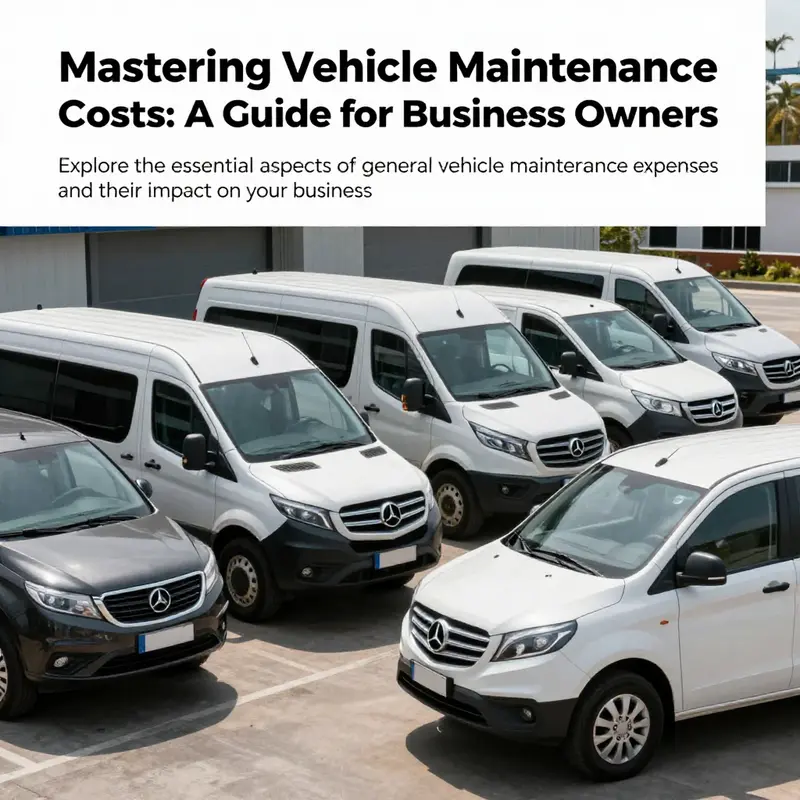
For business owners, understanding the costs associated with general vehicle maintenance is crucial. Vehicles are often a significant investment, and their upkeep can directly affect both operational efficiency and bottom-line profitability. In this exploration, we will break down routine expenses and highlight their relevance in daily operations. As we progress through this article, we will investigate routine maintenance costs, the long-term financial impact on vehicle value, the significance of scheduled maintenance, and how costs can vary based on location and vehicle type. Together, these insights will equip you with the knowledge needed to make informed decisions about vehicle maintenance in your business.
The Real Price of Keeping a Car Running: A Deep Dive into Routine Maintenance Costs and Long-Term Value
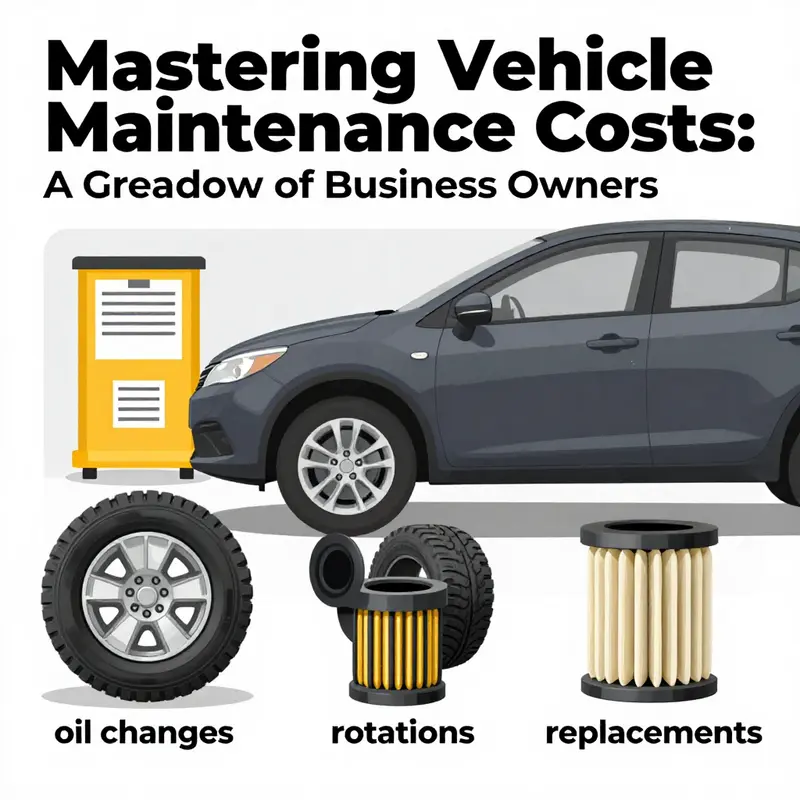
Maintenance costs for a vehicle are rarely a single fixed sum. They ebb and flow with the purpose of the car, how it’s driven, and where it’s serviced. The most telling reality is that general maintenance is a spectrum, not a one time bill. It begins with routine tasks that every owner should expect to pay for at least year after year and stretches into larger, less frequent services that can reshape a repair budget if a schedule is neglected. To understand the true picture, it helps to step through the typical categories of expense, from the most predictable yearly items to the major services that come with higher price tags. Start with the basics, because those figures set the tone for how much owners should earmark each year to keep their vehicles safe, efficient, and reliable. Oil changes, tire rotations, air filters, cabin filters, and wiper blades may sound mundane, but they are the bedrock of maintenance. Oil is the lifeblood of an engine, and its quality and frequency of change directly influence engine wear, fuel efficiency, and emissions. Depending on the oil type—conventional, synthetic blend, or full synthetic—the cost can range from roughly thirty-five to seventy-five dollars per change. A rule of thumb is that most drivers will see an interval between four thousand and seven thousand miles for conventional oil and longer intervals for synthetic varieties, which means yearly totals for oil changes can vary from around eighty to two hundred dollars for many cars. Tire rotations, often recommended every five to eight thousand miles, serve a parallel purpose: even tread wear, longer tire life, and steadier handling. This service can be priced anywhere from twenty to sixty dollars per rotation, with some shops grouping it into a package alongside nitrogen inflation or brake inspection. Air filters and cabin air filters are inexpensive components whose replacement costs typically sit between twenty and fifty dollars for the engine air and twenty-five to sixty dollars for the cabin version. Wiper blades, essential for visibility, can add another twenty to forty dollars for a full set. Taken together, the basic annual maintenance that includes an oil change, a tire rotation, and filters tends to total roughly one hundred to two hundred dollars. It is a deceptively small number that compounds when you consider the cumulative effect of consistent, proper care on the engine’s health and the vehicle’s resale value. The real discipline lies in aligning these routine tasks with the car’s manual schedule and the technician’s recommendations rather than letting an arbitrary cash figure drive decisions. The guidance from manufacturers emphasizes consistency: following the prescribed intervals for oil changes and filter replacements is not merely about current performance but about preserving long-term durability and efficiency. This is especially important because some vehicles require longer intervals for synthetic oils or more frequent changes in severe climate or heavy-use conditions. In practice, drivers who track maintenance in a log and maintain a calendar can avoid the sharp drops in reliability that accompany skipped service. It is here that the distinction between cost awareness and cost inevitability becomes clear. When you plan for maintenance as a regular expense, you avoid the distress of sudden, larger bills born from neglect. The discipline of routine service also plays a crucial role in maintaining warranty coverage and resale value, because service records demonstrate care and proactive ownership. The value of such records becomes more apparent when a vehicle is traded or leased, as prospective buyers and lenders often weigh documented maintenance history as part of the decision-making process. It is a small investment in time and money that yields disproportionate returns in reliability and peace of mind. The best approach toward routine maintenance is one of proactive budgeting. Rather than waiting for a problem to appear, schedule the tasks in a way that distributes costs across the year. Some owners line up the year with a simple maintenance calendar, allocating a predictable monthly amount toward oil, filters, and other consumables. Others use the service intervals in the owner’s manual as their anchor, then layer in minor checks of fluids, tires, and brakes as the miles accumulate. Either approach tends to smooth out the financial impact and reduces the risk of an expensive, unplanned repair that interrupts daily life. As simple as these routine items may seem, their cumulative effect is significant. A vehicle that receives timely oil changes, clean air and cabin filters, and fresh wiper blades typically performs more efficiently, with better acceleration, smoother idle, and improved fuel economy. The incremental benefit is not merely comfort; it translates into measurable cost savings over time. For some drivers, these savings may be modest in year one, but they compound when the car reaches higher miles and older age, as the engine remains cleaner, sensors stay calibrated, and the overall mechanical stress remains lower. It is not surprising that many owners discover the true financial benefit of routine maintenance only after they see how much more costly it would have been to let wear accumulate. The next layer of cost, scheduled maintenance at higher mileages, introduces a more deliberate set of services. At the thirty-thousand to sixty-thousand-mile marks, the scope expands. Brake inspection and service become a central concern, with costs typically ranging from fifty to two hundred dollars depending on whether the inspection reveals wear and whether rotor resurfacing or replacement is required. The transmission fluid change, in automatic transmissions, can range from eighty to two hundred fifty dollars, with manual transmissions usually on the lower end due to simpler configurations. A coolant flush runs around eighty to one hundred fifty dollars, while spark plug replacement can swing from one hundred to three hundred dollars depending on engine type, accessibility, and the number of cylinders involved. Some engines now use long-life plugs that extend beyond the typical interval, which can influence both the timing and the cost. A battery check or replacement at this stage can run from one hundred to two hundred fifty dollars, especially if the battery is a high-capacity unit designed for modern electronics. Together, these major scheduled services can total roughly three hundred to seven hundred dollars, with wide variation driven by vehicle complexity, drive cycles, and the quality of parts used. The idea of preventive maintenance extends beyond the bulk of scheduled services to keep the car performing at its best and to curb the risk of unexpected failures. In this category, fuel system cleaning—a task that some owners perform to restore performance and efficiency—usually costs between fifty and one hundred fifty dollars. Suspension and steering inspections add about one hundred to two hundred dollars, while an alignment service runs from sixty to one hundred fifty dollars. Drive belt replacement, depending on the engine design and belt type, typically lands in the one hundred to three hundred dollar zone. While these costs might appear modest on their own, their value lies in preserving handling, braking response, and overall drivability. A well-timed preventive maintenance plan minimizes the possibility of cascading failures that would force more intrusive and expensive repairs later. These figures, however, reflect general ranges observed in major markets like the United States and Canada, and they can shift in other regions due to differences in labor rates, parts availability, and local regulations. It is essential to note that some vehicles, especially premium or specialized models, may require more expensive fluids, parts, or labor. A practical takeaway is that maintenance budgets should be proportionate to the vehicle’s size, complexity, and intended use. A large SUV with a heavy drivetrain will naturally incur higher costs for many of the same services that a compact car also requires. The same logic applies to aging vehicles: older cars may demand more frequent brake work, battery replacements, and cooling system attention. In such cases, the costs can appear to escalate quickly, but the pattern remains predictable when aligned with a scheduled maintenance plan. The narrative of maintenance costs would be incomplete without acknowledging how vehicle type shapes the math. Larger, more capable vehicles typically demand more expensive fluids and larger components, while luxury or specialty models may require OEM parts and specialized technicians, which can lift labor charges even further. The consequence of this reality is not simply a higher price tag but also a higher potential for paying for quality and longevity. When owners weigh maintenance costs against the anticipated lifespan and utility of the vehicle, the equation often shifts. A vehicle that serves as a daily workhorse for a family or a business may justify higher maintenance spend because reliability translates into time saved, reduced downtime, and consistent performance. The perspective shifts further when the vehicle belongs to a premium or niche segment, where parts are less common and labor is in shorter supply. In such cases, even routine tasks can require more careful planning and budgeting. This is where cost management strategies become particularly important. Regular maintenance schedules, combined with the choice of the right shop, can significantly influence the total cost of ownership. Some drivers opt for independent mechanics who specialize in their vehicle brand and offer competitive rates. Others prefer authorized dealerships or certified service centers that provide OEM parts, technician expertise, and documented service histories. The latter path often commands higher hourly rates, but it provides a level of assurance about quality and compatibility that can pay off in the long run. For owners who value both cost discipline and reliability, a blended approach is common: routine services at independent shops when possible, with specialty or major services at authorized centers to ensure OEM parts and warranty compliance. It is also important to consider how driving habits influence maintenance needs. Gentle driving habits—smooth acceleration, moderate speeds, and timely responses to changing traffic conditions—reduce wear on tires, brakes, and the drivetrain. In contrast, aggressive driving can accelerate brake pad wear, increase suspension strain, and shorten the intervals between services. While this is a straightforward idea, the financial impact can be surprising. A modest shift toward gentler driving can extend the life of tires and brakes, delay major overhauls, and keep maintenance budgets in a healthier trajectory. In discussing costs, a nuanced example helps ground the discussion. For vehicles like full-size SUVs or commercial vans, maintenance costs can skew higher due to scale and usage. Consider a scenario involving a large van or SUV from a mainstream but sizable brand: a routine service might involve an oil change, filter replacements, and tire rotation, followed by a major scheduled service that includes brake inspection and potential rotor work, transmission fluid refreshment, and coolant maintenance. In some cases, the total for a major service cycle on such vehicles can be substantial, and regional currency differences can amplify the figure when translated into other markets. For instance, a basic service for a large van in one market can reach five thousand yuan or more, while a large SUV in another region might see annual maintenance and fuel expenses in the same order of magnitude. These numbers illustrate a fundamental point: maintenance is not merely a line item on a receipt but a vehicle’s ongoing investment in performance, safety, and value. Even when the headline costs look steep, many owners find the overall expenditure acceptable when viewed against the durability and comfort the vehicle provides. The decision to service at an authorized dealership versus an independent shop often hinges on values beyond price. Certified technicians, OEM parts, and documented service histories can preserve both warranty coverage and resale value. However, the higher labor rates at 4S stores are not always wasteful; if the car is under warranty, or if part integrity and labor quality are critical for the vehicle’s long-term performance, the additional cost may be justifiable. For those aiming to manage or reduce ongoing vehicle ownership costs, several strategies can help. First, maintain a consistent maintenance schedule and use the owner’s manual as the anchor. This reduces the risk of skipping essential service, which can lead to more expensive repairs later. Second, consider a hybrid approach to shop selection. Keep basic maintenance at an independent shop that understands your vehicle’s general needs, and reserve more involved services for a dealership or a shop with specific brand expertise when necessary. Third, commit to mindful driving habits that minimize wear and tear while maintaining comfort and convenience. Fourth, understand warranty coverage and any extended protection that might apply to the vehicle. Warranties can cover major systems and provide relief for certain high-cost components when they fail within the covered period. Fifth, document every service, keeping receipts and maintenance logs. These records not only help in warranty claims but also contribute to resale value by demonstrating consistent care. Finally, approach repairs strategically. Not every minor issue requires immediate attention; some can be monitored and scheduled so that repairs are timed to minimize downtime and cost. This deliberate approach helps owners avoid the psychological impulse to overreact to every dashboard warning light while still preserving the vehicle’s reliability. For readers seeking more precise estimates tailored to their car, several tools exist to translate the general ranges into model-specific forecasts. Real-time, location-based cost estimates offered by current maintenance cost platforms can help determine what a typical owner might expect to pay for oil changes, transmission fluid changes, and other routine tasks in their area. These tools, combined with a careful review of the manufacturer’s maintenance schedule, allow drivers to plan with clarity instead of guesswork. In addition to keeping maintenance budgets sensible, it is worth acknowledging that the value of routine care extends beyond the written figures. A well-maintained car tends to recover its value more readily at resale, and it is more likely to be reliable for the next owner. The maintenance history becomes a story about the vehicle’s reliability and care, a narrative that can factor into financing terms, insurance considerations, and buyer confidence. The broader takeaway is that maintenance costs are not a fixed obstacle; they are a disciplined investment that pays dividends in reliability, safety, and long-term value. When planned thoughtfully, they help keep your car dependable, your driving experience smooth, and your ownership costs predictable. If you want to explore how maintenance translates into fuel efficiency and overall running costs, you can read about how vehicle maintenance saves on gas expenses in depth here: how vehicle maintenance saves on gas expenses. For a longer view on brand and model differences and how costs accrue across makes, a data-driven perspective is available through an external resource that compiles maintenance costs by make and model. This broader perspective reinforces the idea that cost is not just about the price of a single service but about the lifecycle of ownership, maintenance frequency, and the quality of parts and labor you expect over time. Access to such data helps set realistic budgets for different vehicle families and supports better decisions when planning a purchase, lease, or long-term ownership strategy. As you plan, consider including a dedicated line item for preventive care in your annual budget, and use it as a cornerstone of your commitment to safe, dependable transportation. The goal is not to chase the cheapest service but to balance cost with value, reliability, and peace of mind. A meticulous approach offers a practical path: you gain predictability, you protect your investment, and you keep your ownership experience consistent year after year. External resource: https://www.consumerreports.org/cars/maintenance-costs-by-make-and-model/
Regular Care, Richer Returns: How General Vehicle Maintenance Safeguards Your Car’s Value Over Time
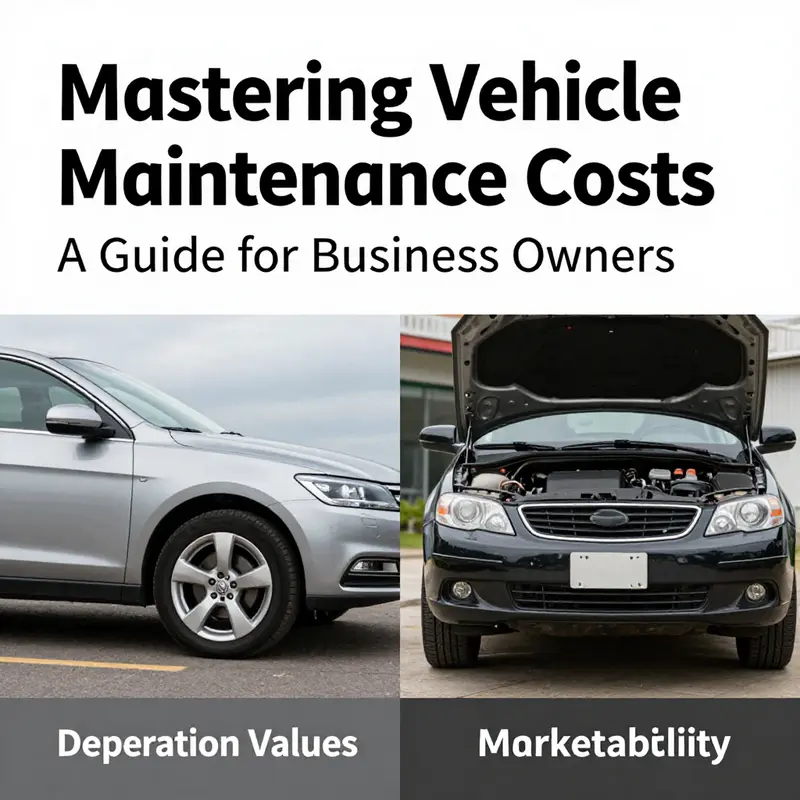
Keeping a car in reliable condition is often framed as a monthly or quarterly expense, something that simply keeps the wheels turning. Yet the true payoff of regular maintenance extends far beyond punctual oil changes and timely tire rotations. When viewed through the lens of long-term value, routine upkeep functions as a financial discipline that reduces the likelihood of expensive, unexpected repairs and preserves the worth of a vehicle well into its later years. This perspective shifts maintenance from a cost center to an investment in the car’s selling price and its overall ownership cost of ownership. It also aligns with the pragmatic truth that most buyers, whether they are stepping into a first used car or upgrading to a newer model, prize reliability and a transparent service history as much as they do horsepower or gadgetry. Understanding this dynamic helps car owners make more informed choices about what to service, when to service it, and how to document that service in a way that translates into real dollars at resale.
To begin with, routine maintenance lays the foundation for sustained reliability. Basic annual upkeep—oil changes, tire rotations, and filter replacements—might appear modest in isolation. Typical costs for oil changes range from $35 to $75, tire rotations from $20 to $60, and air and cabin filters from about $20 to $60 each. Wiper blades, often overlooked, add another $20 to $40 for a pair. When you total these items, the basic annual maintenance cost sits roughly between $100 and $200. While that figure may not seem dramatic, it represents a prudent, ongoing investment that keeps the engine properly lubricated, ensures efficient airflow, and preserves vital systems that influence fuel economy and performance. More importantly, these routine services establish consistent, verifiable care on the vehicle’s maintenance clock.
As miles accumulate, scheduled maintenance items at 30,000 to 60,000 miles begin to compound the value argument in favor of regular service. This phase often includes brake inspection or service, which can run from $50 to $200 depending on whether pads, shoes, rotors, or resurfacing are involved. A transmission fluid change ranges from $80 to $250 for automatic transmissions, while a coolant flush can cost $80 to $150. Spark plug replacement, depending on engine design and the longevity of the plugs, spans roughly $100 to $300, and battery checks or replacements typically run $100 to $250. Add in the potential for a belt replacement if the drive system demands it, and the cumulative cost for major scheduled services can reach $300 to $700. The key takeaway is not that this range is either alarming or negligible, but that it represents a predictable, planned expenditure that helps protect the engine’s health, keep the drivetrain responsive, and sustain the vehicle’s performance. When paired with OEM parts and certified mechanics, these services also preserve factory specifications and warranties when applicable, which matters for resale as well as for long-term reliability.
That’s where the value of a documented maintenance history becomes clear. A vehicle with a complete, verifiable service record commands a higher resale price than a similar model without that documentation. Industry research points to a meaningful premium: cars with a documented maintenance history can sell for an average of 10% to 20% more than comparable models lacking such records. This premium reflects buyer confidence in reliability, lower perceived risk, and the assurance that the vehicle has been correctly cared for rather than simply tolerated. The impact is especially pronounced in markets where buyers scrutinize service logs and where a few receipts can signal a well-managed asset rather than a neglected liability.
Depreciation is an unavoidable force that erodes a vehicle’s value over time. Yet regular maintenance can slow that depreciation, particularly in the early years when depreciation is steepest. When critical systems—engine, transmission, brakes, cooling—remain in optimal condition, the car’s ability to perform as advertised sustains its market appeal. A well-maintained engine is less prone to surprising failures; a healthy transmission preserves smooth operation; and properly serviced cooling systems help prevent overheating-related damage. All of these factors contribute to a stronger, more confident resale narrative. The result is not merely less depreciation in dollars, but a more favorable perception of the vehicle’s lifetime cost of ownership. Buyers are often willing to pay more upfront for a car that comes with a clean history and a transparent maintenance trail, realizing that the future costs associated with repairs and downtime are likely to be lower than for a car without such a record.
Of course, the practical question remains: how does a conscientious owner translate routine servicing into lower long-term costs? The exchange rate, so to speak, lies in avoiding expensive repairs that arise from neglect or delayed attention. factory recommendations are not mere suggestions; they reflect engineering tolerances and lubricant life, which, when observed, keep wear within predictable bounds. A single neglected transmission fluid change or an overdue brake service can cascade into more expensive outcomes, including rotor replacement, master cylinder issues, or even complete drivetrain failure. The lifetime savings from regular maintenance emerge not only from fewer mechanical glitches but from the reduced probability of costly, emergency repairs. In many cases, following the manufacturer’s schedule is more than a maintenance preference—it becomes a safeguard against depreciation triggered by mechanical unreliability.
For owners who track value as meticulously as miles, the evidence supporting maintenance’s long-term payoffs is persuasive. The financial calculus extends beyond immediate repair costs to include the buyer’s perception of risk, the potential for extended warranties, and the ease of transfer when ownership changes hands. The practical approach then is to start with a plan that aligns with the manufacturer’s recommended intervals and parts, documented with timestamps and receipts. Having a credible service history is akin to presenting a well-kept asset, one that signals responsible ownership and minimizes the buyer’s perceived risk. In this sense, maintenance is not merely about keeping a car running; it is about preserving the trust that a vehicle will perform when needed, which translates into a higher willingness to pay when the time comes to sell.
An important nuance in this discussion is how buyers interpret the maintenance story. A car’s value is not solely the sum of its parts but the story those parts tell. A vehicle that has clearly lived in the repair bay but never missed a scheduled service can still carry a stigma if the logs show late or inconsistent servicing. The opposite is true for a car with a meticulous, well-organized maintenance history: its narrative speaks to predictability, discipline, and stewardship. That narrative often manifests in a higher asking price, a shorter time on the market, and fewer price concessions from sellers who must compete with similarly aged vehicles lacking any documented maintenance. In other words, the value premium attaches to the honesty of the maintenance log more than to the mere presence of a few receipts.
From a practical standpoint, building a strong maintenance narrative involves organizing records, storing digital copies, and making them readily accessible for prospective buyers or dealers. The modern marketplace rewards transparency. Digital maintenance logs, scans of receipts, and a concise summary of key services—such as major fluid changes, filter replacements, and any OEM part installation—make the history legible and credible. This kind of documentation reduces buyer hesitation and accelerates negotiation by offering tangible evidence of proactive upkeep. It also creates a clear bridge to warranty coverage, should the vehicle still be under manufacturer or extended warranty, since service intervals and component replacements are often essential to eligibility. The bottom line is straightforward: maintain the vehicle faithfully, capture every service encounter, and present that history in a straightforward, verifiable package at the point of sale.
Owners who want to optimize resale value should consider the broader implications of maintenance beyond the mechanical heart of the car. Fuel economy, for example, benefits from clean air filters and an efficient cooling system, both of which are sustained by routine checks. The cost savings from improved efficiency accumulate over time, reducing operating expenses and reinforcing the asset’s appeal to value-conscious buyers. Likewise, a vehicle that clearly adheres to a maintenance schedule is also less likely to experience unplanned downtime. That reliability translates into a smoother transfer of ownership, with fewer seller-initiated price adjustments tied to the car’s reliability anxieties. All of this—reliability, efficiency, predictability—contributes to the asset’s value and, ultimately, to a higher realized return when the car is sold.
This integrated view of maintenance as capital preservation is reinforced by practical guidance and modeling that drivers can apply. Tools that generate location-based maintenance cost estimates, like those offered by reputable vehicle cost databases, can help owners budget for the year ahead while keeping a realistic eye on resale implications. When owners align their planning with manufacturer recommendations and keep detailed records, they equip themselves with a robust asset-management approach. In essence, maintenance becomes a strategic decision rather than an isolated chore. It is the thoughtful distributor of small annual costs that, over the lifecycle of the vehicle, yields a meaningful premium at resale and a lower risk profile for the next owner. This framing makes the case for routine maintenance not simply as a duty of care, but as a disciplined, value-enhancing practice.
To connect this narrative to the broader understanding of maintenance and value, it helps to ground the discussion in a concrete definition of what maintenance encompasses. What is Vehicle Maintenance, for example, frames maintenance as an ongoing commitment to the vehicle’s systems through regular service and timely part replacement. Recognizing maintenance in this light clarifies why the investment pays off: it protects the core components that buyers use to judge a car’s reliability, longevity, and total cost of ownership. The practical implication is simple: follow the recommended schedule, use OEM parts when possible, and maintain a precise, accessible service history. Taken together, these choices maximize the probability that the car will deliver dependable performance and preserve its value across ownership cycles. For readers seeking to quantify the impact, reputable cost guides and the automotive press consistently show that a well-documented maintenance history correlates with higher resale values, while neglecting service accelerates depreciation and can lead to higher out-of-pocket repair costs down the line.
In this sense, the financial arc of vehicle ownership looks less like a straight line downward and more like a stabilized curve when maintenance is prioritized. The costs of routine services are modest on an annual basis, but the cumulative effect over several years is a different story. The small, regular investments in oil, filters, and fluids, tempered by timely brake and transmission care, yield outsized gains in reliability and buyer confidence. Those gains directly translate into higher resale prices and lower unexpected repair bills—an appealing combination for anyone who intends to own a car for a meaningful period. By embracing maintenance as a core financial practice, drivers can align their day-to-day vehicle care with long-term value preservation, turning what might seem like routine chores into strategic steps that protect and even enhance the car’s market worth over time.
For readers who want to deepen their understanding of maintenance’s role in value, consider exploring resources like What is Vehicle Maintenance, which provides a clear framework for the kinds of servicing that contribute to long-term asset health. Keeping faith with the manufacturer’s schedule, opting for high-quality parts, and maintaining an organized ledger of every service encounter create a durable record that stands up to scrutiny from buyers and dealers alike. In this way, routine maintenance becomes a practical, persuasive argument for the vehicle’s value. As a practical takeaway, keep a running file of service receipts, schedule reminders, and a succinct service summary that highlights major replacements and fluid changes. Presenting this information in a clean, accessible format can make all the difference when the time comes to sell. The effort pays off not only in the higher price achieved but in the smoother, faster sale process that follows a well-documented maintenance history.
External resource for further reading: https://www.carcare.org/
Internal link reference: For a concise primer on the concept and scope of vehicle maintenance, see What is Vehicle Maintenance, which emphasizes the practical steps and the documentation needed to translate maintenance into value.
The Ongoing Ledger of Car Care: Understanding What General Vehicle Maintenance Really Costs and Why a Schedule Pays Off
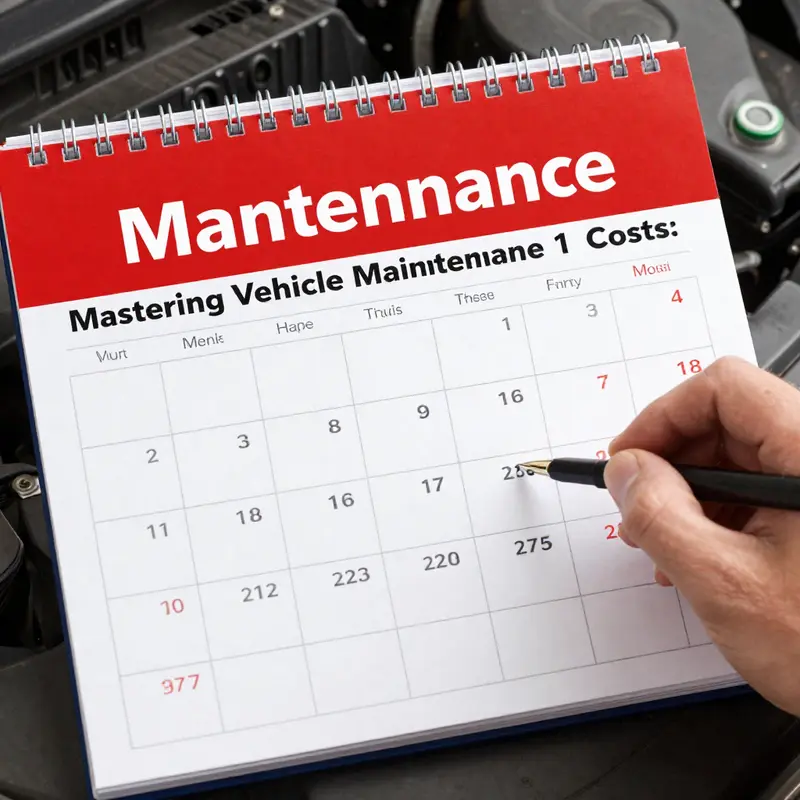
Maintaining a vehicle is less a single purchase and more a continuous investment. It is the quiet discipline that keeps an engine singing, tires gripping the road, and safety systems ready to perform when you need them most. When you step back to estimate how much general vehicle maintenance costs, the picture appears complex at first glance. Costs vary with the type of service, the make and model of the car, where you live, and which shop you trust. Yet there is a coherent pattern behind the numbers: routine care and scheduled maintenance, done consistently, reduce the chances of expensive breakdowns later. This chapter threads together the typical price ranges, the rationale behind them, and the practical steps a car owner can take to manage costs without compromising safety or reliability. It reads like a practical map for budgeting and planning, not a catalog of arbitrary fees. A clear starting point is to distinguish between the recurring costs that come with routine upkeep and the more significant, less frequent services that keep a car healthy over the long haul.
On an annual basis, many households experience the cost of routine maintenance in modest, predictable increments. Oil changes, tire rotations, air filters, cabin air filters, and wiper blade replacements form the core of this category. Depending on the oil type and the shop, an oil change typically runs from about $35 to $75. A tire rotation, recommended every 5,000 to 8,000 miles, can cost roughly $20 to $60. Air filters—both engine and cabin—are usually in the $20 to $50 range for the engine air filter and $25 to $60 for the cabin filter. Wiper blades, when replaced as a pair, commonly fall between $20 and $40. When you add these routine items up, the basic annual maintenance for these essentials tends to land in the $100 to $200 range for many vehicles. That is not a luxury expense; it is the price of keeping the engine clean, the ventilation fresh, and the small but critical systems visible to the driver functioning reliably through all seasons.
The next layer, scheduled maintenance, frequently brought into focus as a function of mileage, includes more extensive inspections and fluid changes. For many cars, maintenance tasks are prescribed every 30,000 to 60,000 miles. In this category, brake inspection or service typically costs between $50 and $200. This covers pad or shoe inspection, rotor resurfacing, or rotor replacement if needed. Transmission fluid changes, for automatic transmissions, fall in the $80 to $250 range, with manual transmissions generally on the lower side. A coolant flush commonly sits between $80 and $150. Spark plug replacement varies widely by engine design but generally falls in the $100 to $300 bracket, particularly for engines that require specialized plugs or servicing. Battery check or replacement is often listed in the $100 to $250 range. When you total these major scheduled services, the cost can run from roughly $300 to $700 in a typical scenario, influenced by the vehicle’s complexity, the specific service interval, and whether any parts wear longer than expected or require replacement.
Beyond these routine and scheduled services lies preventive maintenance that addresses systems and components that keep the vehicle operating smoothly and safely between the bigger repairs. Preventive maintenance may include fuel system cleaning, suspension and steering inspections, wheel alignment, and drive belt replacement. Fuel system cleaning is usually in the $50 to $150 range, while suspension and steering inspections can be $100 to $200. An alignment service typically costs $60 to $150, depending on the shop and the alignment issues found. Drive belts, if needed, commonly range from $100 to $300. Taken together, this layer represents the proactive outreach that prevents minor issues from becoming major, offering both reliability and efficiency benefits. In many markets, these costs are described as “beyond routine,” yet they are part of a steady maintenance rhythm that protects the vehicle’s performance, value, and safety.
The research landscape across the United States and Canada consistently highlights the same structural truth: maintenance costs are a function of frequency and the level of care you invest up front. Consumer Reports, a respected benchmark in consumer vehicle data, notes that the average annual cost for routine maintenance and repairs for a typical American car hovers in a broad range—roughly $500 to $700. This estimate encapsulates the essential services that most drivers seek on a yearly basis: oil changes, tire rotations, brake inspections, fluid replacements, and filter changes. The takeaway is twofold: first, regular care can be surprisingly affordable when distributed over the year; second, skipping maintenance is a short-sighted cost that can balloon in the long run as wear compounds and performance declines. This framing helps bring clarity to the common question of “how much does maintenance cost?” by anchoring it to a sustainable, annual budget rather than a single, unpredictable spike.
To translate these cost ranges into practical budgeting, it helps to view maintenance as a modulus—small, predictable inputs that yield a reliable, long-term return. The maintenance schedule in your owner’s manual is not a random list of tasks; it is a designed protocol for preserving performance and safety. Following it can reduce the likelihood of major failures, extend the vehicle’s usable life, and sustain fuel efficiency. When you commit to this approach, the numbers begin to look less like a burden and more like a valued line item in your car’s lifecycle plan. The impact on fuel efficiency, for instance, is often indirect but meaningful. A well-tuned engine, clean air filters, and properly inflated tires optimize combustion and rolling resistance, which translates into fewer gallons spent at the pump over time. In effect, routine maintenance compounds savings in several measurable ways: lower risk of costly breakdowns, better fuel economy, more consistent safety margins, and retained resale value.
A key theme running through the maintenance conversation is the inevitability of regionally varying costs. Prices for parts and labor can shift with geography, local wage levels, and the availability of skilled technicians. In some areas, labor rates may push routine services toward the higher end of the spectrum, while regions with a higher concentration of independent shops might offer more competitive pricing. Even within the same city, a dealership’s pricing may diverge from an independent shop that specializes in specific makes or models. In practice, this means that your actual outlay for maintenance could drift above or below the general ranges cited in broad surveys. A prudent approach is to gather a couple of quotes for the same service and to seek estimates for bundled maintenance plans that cover several routine tasks over a year or two. Some drivers find value in setting aside a fixed monthly maintenance fund, treating car care as a non-negotiable monthly expense rather than a surprise quarterly bill. This habit reduces the emotional strain of car repairs and helps ensure that necessary services are never neglected for want of cash.
The choice of parts and the reliability of the mechanics you use can meaningfully shape costs and outcomes. While it is tempting to pursue the lowest price per service, the long-term benefit often comes from using OEM parts and certified technicians. OEM parts are designed to fit and perform as intended by the vehicle’s manufacturer, reducing the risk of part-related failures or wasted labor due to incompatibilities. Certified mechanics bring a depth of training and access to service information that can expedite diagnostics and improve repair quality. In some cases, a higher upfront cost for OEM parts or factory-trained technicians pays off in the form of longer part life, fewer follow-up visits, and stronger resale value when it comes time to trade in or sell the car. The advice here is simple and practical: balance price with reliability, and consider maintenance as a quality investment rather than a mere expense. The goal is not to minimize upfront costs alone but to optimize the total cost of ownership over the vehicle’s life.
For readers who want a clearer sense of what maintenance costs to expect in their own cars, several cost-estimation tools can be helpful. Tools like RepairPal and Edmunds TrueCost provide real-time, location-based forecasts based on your car’s model and year. These resources translate the generic ranges into figures tailored to your specific vehicle, which can be especially valuable for owners of older cars or luxury models with more complex maintenance needs. Using these tools in tandem with the manufacturer’s schedule gives a practical view of what to expect in the coming year. The point is not to replace professional advice but to inform planning with accurate projections so you can allocate funds, compare quotes, and avoid sticker shock as repair bills accumulate.
An important behavioral dimension to maintenance budgeting concerns record-keeping. Keeping a detailed log of services, dates, and costs helps you identify patterns and anticipate future needs. It also supports resale value and warranty considerations. When you present a clear maintenance history to a buyer or to a service advisor, you demonstrate care and diligence that can translate to smoother negotiations and better service outcomes. The habit of documenting every oil change, filter replacement, and brake inspection becomes a practical asset, much like keeping receipts for major home repairs. It is the kind of discipline that pays off in the long run, not merely in the car’s performance but in the peace of mind it affords the owner.
The chapter would be incomplete without acknowledging the consequences of neglect. Skipping scheduled maintenance tends to create a cascade effect. An oil change that is delayed can lead to accelerated engine wear and reduced lubrication efficiency. Worn brakes, if ignored, may degrade into diminished stopping power, rotor damage, and more expensive pad replacements. A neglected timing belt (when applicable) can lead to catastrophic engine failure, with repair costs that can exceed a thousand dollars in some cases. Even something as seemingly minor as a faulty air filter can reduce fuel efficiency and engine performance. The practical lesson is pragmatic: while it is possible to postpone services during lean times, doing so invites a higher probability of costly, urgent repairs later on. The short-term savings often prove to be a mirage when long-term reliability and safety are at stake.
Across this cost landscape, a balanced approach emerges. Build a realistic budget that covers routine maintenance, place a modest but steady reserve for scheduled services, and remain attentive to the vehicle’s specific needs as it ages. The goal is to maintain the vehicle’s reliability, safety, and value without turning maintenance into a perpetual source of anxiety. A productive mindset is proactive rather than reactive: schedule regular checks, heed the owner’s manual, and recognize maintenance as the cornerstone of responsible car ownership. The economics of care, when understood and applied, emphasize that prevention is not just about avoiding failures—it is about preserving performance, safety, and the overall ownership experience.
To support this approach, consider a simple scenario that many drivers will recognize. An average driver with a mid-life vehicle might budget for routine services in the $100–$200 range per year, add a scheduled maintenance window of $300–$700 in a given year depending on mileage and the vehicle’s condition, and set aside $50–$150 for preventive tasks that arise from seasonal checks or unusual wear. In total, a responsible plan can place annual maintenance in the broader range of around $500 to $700, aligning with the Consumer Reports benchmark. Of course, a newer vehicle with extended maintenance intervals may fall toward the lower end, while a high-mileage or specialty model could push the annual figure higher. The essential point remains: maintenance costs are a deliberate, manageable part of vehicle ownership when they are anticipated, budgeted, and consistently executed.
In closing, the cost of general vehicle maintenance is not a fixed obligation of a fixed day. It is a living budget that reflects how well a driver understands their car and how diligently they follow a maintenance rhythm. The data, both empirical and experiential, converge on the same truth: scheduled maintenance matters. It shapes safety, performance, and longevity, while also protecting resale value and reducing the risk of unforeseen breakdowns. The more consciously you approach this routine, the more predictable and manageable your total cost of ownership becomes. And while the specifics will always vary by vehicle and region, the underlying discipline remains constant: a planned, thoughtful approach to maintenance is a powerful tool in keeping a car reliable, efficient, and safe for the road ahead.
For further reading and tailored estimates, you can explore vehicle-specific maintenance cost forecasting tools, which help translate general ranges into figures that reflect your car’s model, age, and locale. If you want to start with a broader understanding of maintenance fundamentals, see our explainer on the basics of car care. What is vehicle maintenance? This resource provides foundational context that complements the cost-focused discussion in this chapter, helping you connect daily upkeep with long-term value.
External resource: For a comprehensive industry overview and up-to-date cost figures, consult Consumer Reports’ cost analysis of car maintenance, which aggregates data across a wide range of vehicles and regions. https://www.consumerreports.org/cars/how-much-does-car-maintenance-cost-a-year/
Locale, Vehicle, and Value: Understanding How Location and Vehicle Type Shape General Vehicle Maintenance Costs
The price of keeping a car in good running order is not etched in stone. It shifts with where you live and with what you drive, shaped by a web of economic, technological, and environmental factors that touch the routine and the rare alike. In discussions about how much general vehicle maintenance costs, the most consistent takeaway is that location and vehicle type are the dominant levers. They tilt the price tag for everything from a simple oil change to a major system service, and they do so in ways that can surprise even seasoned owners. The story of maintenance costs, then, is not a single bill but a moving target that becomes clearer once you map the terrain of locale and machine.\n\nIn urban centers, maintenance costs tend to run higher because the backdrop against which every service takes place is more expensive. Workshop leases, utilities, city fines, and the general price of skilled labor all accumulate in the hourly rate charged by technicians. This is not merely about the sticker price for a service; it is the wholesale costs embedded in every line item on the bill. In practical terms, routine tasks may appear affordable in one city and noticeably pricier in another, even for the same model and the same shop. A telling contrast appears in the Chinese market context where routine maintenance that might run around 600 yuan in a smaller city can rise to 800 yuan or more in large urban hubs like Shanghai or Beijing. The difference reflects overheads and wage structures that are higher when the cost of living climbs. The labor pool in big cities tends to be more competitive but also more expensive, and that dynamic translates into every line item on the invoice.\n\nClimate and regional climate patterns further complicate the picture. Colder northern climates demand winter preparations that are less common in milder regions. Those preparations can include specialized oils for thinner winter grades, battery checks under harsher starting conditions, and occasional coolant considerations. Even routine changes—oil, filters, and fluids—can carry a climate-based premium when shop technicians are required to accommodate seasonal demands. Conversely, in milder zones, the same services may proceed with standard fluids and the cost pressure from climate is less pronounced. In components that serve year-round, such as air conditioning systems, the climate can push maintenance needs up in hot summers when the AC runs longer, or down in cooler seasons when its use is less intensive. The interplay between climate and labor economics makes the price of a service elastic across regions, even for a standard maintenance task.\n\nRegionally, competitive dynamics can either compress or widen the cost gap. Major metropolitan markets often host a dense ecosystem of service providers, which can translate into promotional pricing on certain services. The net effect can be a variable price landscape where discounts exist but are not uniformly applied across all models or service types. In smaller towns or rural areas with fewer options, pricing may appear steadier but occasionally less competitive, and the quality of service can vary more widely. The upshot for the consumer is a reminder to look beyond the headline price and understand what is included in each service, whether the shop uses OEM parts, and whether the technician has specialized training for your vehicle’s category. The broader lesson is simple: the price of maintenance is not only about part costs but about the total cost of doing business in your locale.\n\nVehicle type is the second major axis along which maintenance costs tilt. The brand and the luxury tier of a vehicle carry distinct implications for both parts and labor. Luxury models typically demand premium parts and a more meticulous level of service. The same basic task a routine oil change, for instance, can take more time and require more specialized equipment on a high-end model. The difference, in practice, is not merely cosmetic; it is structural. The infrastructure of work for a luxury vehicle—engine bay access, delicate trim components, and more complex engine management systems—translates into higher labor demands and, often, higher hourly rates. This is not a universal rule, but it is a pattern observed across markets: the more sophisticated the vehicle, the higher the expected maintenance bill even for routine work.\n\nSize and weight contribute another layer to the cost calculus. Larger vehicles, particularly SUVs and trucks, impose heavier loads on components like brakes, tires, and suspension systems. This translates not only into more frequent tire replacements but also into more expensive parts and longer service times when components wear out. The cost delta due to size is not purely a matter of raw part price; it also reflects the scale of labor needed to service bigger components and the more substantial equipment required to safely handle a larger vehicle. Studies from European contexts illustrate this point with tangible numbers: average SUV parts costs run higher than city sedans, and the gap widens for components like clutches. The implication for owners is clear: a bigger vehicle brings not just more capability but more frequent and costly maintenance decisions.\n\nPowertrain choice remains a potent determinant of maintenance economics. Diesel engines, known for their durability and efficiency in certain applications, carry cost implications that extend beyond fuel economy. They often require robust high-pressure fuel systems and larger support components to comply with emissions controls, which can push up the price of maintenance. A representative European comparison shows diesel injectors carrying a much heavier price tag than gasoline injectors. This kind of discrepancy matters over the life of the vehicle, particularly for owners who run higher mileage or who rely on diesel variants for commercial use. The diesel premium is part of a broader pattern: the more intricate the powertrain, the more expensive the servicing and the more careful the handling required by technicians.\n\nAge introduces another nuanced axis. Newer cars often benefit from simplified service needs and an abundance of readily available parts. Yet modern vehicles also bring advanced systems that require specialized diagnostics. Older vehicles, while sometimes cheaper to service in routine tasks due to common components and lower labor intensity, can present a different risk profile: obsolete parts, limited availability, and non-standard fixes become more likely as vehicles age. The maintenance cost story for aging cars, then, is not simply lower or higher; it’s more about volatility and risk. The potential for rare parts or non-standard repairs can create unpredictable spikes that owners must plan for, even when the underlying maintenance tasks remain conceptually straightforward.\n\nIn this landscape, the objective for drivers is not to squeeze every possible discount from the price tag but to maintain reliability and safeguard resale value. The most prudent approach blends a steady adherence to the manufacturer’s maintenance schedule with an informed understanding of how location and vehicle type shape the cost sliders. Following the owner’s manual remains a reliable anchor because it codifies the intervals at which wear components should be inspected, fluids exchanged, and systems checked. Using OEM parts and certified technicians is often the most economical long-term strategy, even if it feels more expensive in the short term, because it reduces the likelihood of recurring problems and cascading failures that can escalate repair bills far beyond the initial service.\n\nFor readers who want to translate this framework into concrete planning, a practical path is to couple local insights with broad benchmarks. Begin by establishing a baseline in your area for the typical service categories: routine maintenance, major scheduled maintenance, and preventive maintenance. Then layer in your vehicle’s characteristics. If you drive a luxury model, budget for higher parts costs and more meticulous service. If your vehicle is a large SUV, set aside more for tires and brakes. If you operate a diesel, prepare for higher injector and emission-system costs. And if winter is a significant factor in your region, earmark seasonal expenses for fluids, battery checks, and protective measures. The cumulative effect of these adjustments is a maintenance envelope that’s realistic rather than aspirational.\n\nA few practical habits can further smooth the budgeting process. Track every service with a receipt and a clear note of what was done. This creates a personal maintenance history that is valuable for warranty claims and resale value. It also helps identify patterns: if a particular shop consistently charges more for a standard service, or if certain parts are priced disproportionately in your area, you can shift strategies accordingly. In urban settings, there may be opportunities to consolidate services to save on labor and travel costs, while in rural areas you might negotiate flat-rate pricing with a trusted shop. The overarching aim is to convert a volatile, location-driven cost into a predictable, well-managed expense that aligns with the vehicle’s needs and your financial plan.\n\nTo anchor these considerations with actionable benchmarks, you can consult cost-estimation tools that tailor forecasts to your model and locale. These tools synthesize regional labor rates, typical parts prices, and service times to produce a forward-looking maintenance forecast. They do not replace professional quotes, but they provide a useful compass for planning. For a baseline understanding of maintenance, consider the resource What is vehicle maintenance, which distills the essential maintenance spectrum and clarifies why some tasks become more prominent at certain intervals. The knowledge helps you interpret the variability described here and calibrate expectations as you budget for the coming years. And for broader context and comparative framing, see external resources that discuss how vehicle maintenance budgeting fits into overall ownership costs.\n\nIn sum, the cost of general vehicle maintenance is not a fixed figure. It is a dynamic blend of where you live and what you drive. Location pushes some bills higher through overhead and climate adjustments, while vehicle type pushes others higher through part costs, labor complexity, and powertrain design. The combined effect means that a routine service in one city may feel routine in another, or a major repair in a luxury SUV may be financially closer to a midrange sedan than you might expect. The long view is to embed maintenance into a disciplined budget that accounts for local realities and the specifics of your vehicle. With a clear plan, you can uphold reliability, protect resale value, and avoid the drama of unexpected repair bills that arise when the maintenance schedule is neglected or when the vehicle’s particular needs collide with a location’s peculiar pricing structure. The chapter’s synthesis is pragmatic: know your locale, know your vehicle, and plan accordingly. That way, maintenance remains a tool for confidence rather than a source of financial surprise.\n\nInternal link: for a baseline understanding of maintenance and how these tasks cluster in the typical service windows, see What is vehicle maintenance.\n\nExternal resource: https://www.edmunds.com/truecost/.
Final thoughts
Understanding the costs associated with general vehicle maintenance is essential for effective business management. By grasping routine maintenance expenses, recognizing the long-term effects on vehicle value, emphasizing the importance of scheduled services, and acknowledging regional cost differences, business owners can make informed decisions that protect their investments and enhance operational efficiency. Being proactive about vehicle maintenance not only improves the longevity of vehicles but also contributes significantly to the overall success of your business. A well-maintained fleet can be a tremendous asset, elevating productivity and driving profitability.