
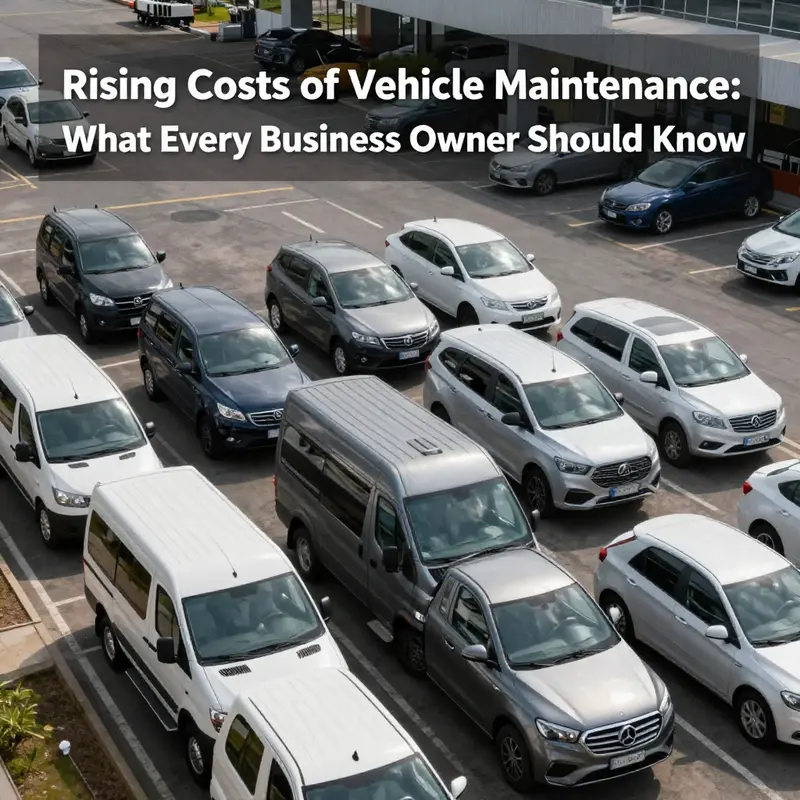
As a business owner, your fleet is vital to your operations and understanding how vehicle maintenance costs evolve with mileage can save you substantial expenses. Vehicles that rack up miles encounter an escalation in maintenance because of wear and tear on critical components. Studies suggest that while maintenance costs might seem manageable with lower mileages, they can significantly increase after your vehicles cross that crucial 100,000-mile threshold. This article delves into how maintenance costs change, the factors influencing these costs, preventive strategies to mitigate them, and the broader implications of high-mileage ownership. By grasping these insights, you can better prepare for the financial responsibilities tied to your vehicles as they age.
null

null
Miles, Maintenance, and the Pricetag of Reliability

As odometers climb, maintenance costs tend to rise. Each mile adds wear to engines, transmissions, brakes, and tires, and older components become more costly to replace. Routine upkeep, oil changes, fluid flushes, brake inspections, and tire rotations helps slow the curve, but cannot erase the physics of wear over time. Industry data show costs creep higher after the first 100,000 miles, especially for major subsystems such as the cooling system, drivetrain, and electrical components. Preventive maintenance remains the best defense against surprise failures and large bills, because timely service can catch problems early and keep a high mileage car reliable. Beyond age and design, driving conditions and maintenance history shape the total cost of ownership, so a well documented service record and thoughtful maintenance schedule can make a high mileage car more affordable to keep on the road.
null
null
The Mile Marker Effect: How Maintenance Costs Rise as Your Car Surpasses 100,000 Miles
As a car accumulates more miles, maintenance costs follow a recognizable arc. Early in a vehicle’s life, expenses tend to be modest and predictable, focused on routine items like oil changes, tire rotations, and brake inspections. But once the odometer crosses thresholds—around 100,000 miles and beyond—the likelihood of repairs climbs, and the bills reflect not only what failed but what is likely to fail next. The data from major automotive researchers illustrate this shift with practical clarity. According to industry observations, the average annual maintenance cost for a car under 100,000 miles hovers around five hundred dollars. When the odometer sits between 100,000 and 150,000 miles, annual maintenance costs commonly rise to the range of eight hundred to a thousand dollars. And for vehicles that push past the 150,000-mile mark, costs can exceed twelve hundred dollars in a year. These figures are not a universal forecast, but they capture a real pattern: mileage compounds wear, and financial exposure grows accordingly.
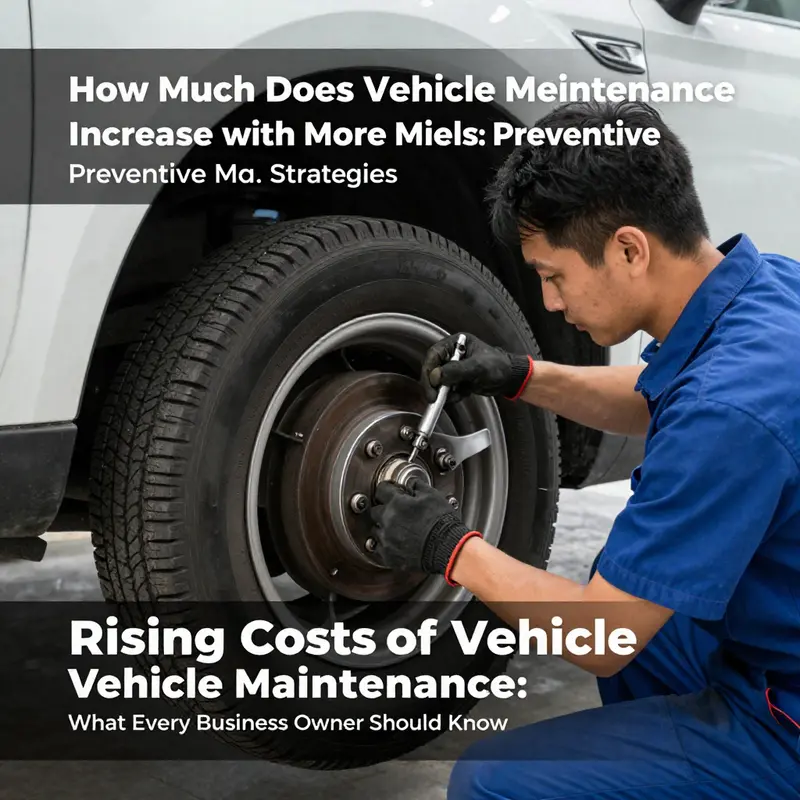
To understand why this pattern repeats across makes and models, it helps to consider the components most affected by long-term use. The engine, transmission, brakes, tires, and suspension systems are the core areas of concern as miles accumulate. An aging engine may require more frequent cooling system maintenance or gasket attention; a transmission that has endured hundreds of thousands of rotations can begin to demand servicing and, in some cases, replacement or major repair. Brakes wear in proportion to miles and driving style, but rotors can warp, pads wear unevenly, and hydraulic systems can develop leaks. Tires wear through tread reduction and sidewall fatigue, and suspension parts such as struts and bushings can lose stiffness, affecting ride quality and handling. Each of these domains contributes to a rising cost curve as mileage increases, and the complexity of the work often grows as well. In practical terms, the same trip to the shop that costs a couple of hundred dollars in a newer vehicle can become a multi‑hundred-dollar proposition once the car has endured many miles and more demanding operating conditions.
These patterns are not mere anecdotes; they are echoed by longitudinal cost studies. For instance, industry data compiled by Consumer Reports show a notable jump in annual maintenance expenditures once a vehicle has traversed the 100,000-mile threshold. The typical car shifts from roughly four hundred dollars a year to more than seven hundred dollars after hitting that mile marker, reflecting the higher probability and scope of repairs such as timing belt replacements, coolant system maintenance, brake component replacements, and the kind of transmission servicing that becomes more common with age. The message is not that high mileage guarantees failure, but that the probability and cost of needed work increase as components migrate toward the end of their design life. For readers who want to quantify this trend, the report on maintenance costs by mileage provides a clear, literature-backed snapshot of how averages shift as distance and age accumulate. Maintenance costs by mileage.
The cost story also carries an important caveat: the specific numbers vary widely depending on the vehicle’s design, manufacturing quality, maintenance history, and the conditions under which it has lived. A well-maintained car with a robust maintenance schedule may dodge some of the more dramatic expenses that a high-mileage vehicle could incur. Conversely, a vehicle that has endured irregular service, harsh driving, or neglect can accumulate problems faster, and at higher prices, than its mileage alone would suggest. Preventive maintenance remains a powerful hedge against runaway costs, even if it cannot guarantee a maintenance-free life. Routine tasks such as timely oil changes, fluid checks, brake inspections, and the replacement of consumables are less glamorous than major repairs, but they keep the odds of sudden, expensive failures in check. They also help preserve the vehicle’s performance and safety as it ages.
Beyond the general arc, studies from reputable sources also highlight how the distribution of costs shifts with mileage. A notable finding from JD Power shows that vehicles with over 100,000 miles incur nearly thirty percent higher maintenance costs than those under 50,000 miles. This statistic underscores a practical implication for owners: maintenance budgeting should acknowledge a higher baseline need as miles accumulate. It is not simply about the occasional big-ticket repair, but about a built-in increase in the frequency and scale of routine upkeep and component replacements. Understanding this can inform better financial planning, from creating a dedicated maintenance reserve to adjusting driving or ownership expectations as a high-mileage car ages.
The National Highway Traffic Safety Administration adds another layer to the picture. Older vehicles with high mileage are more prone to mechanical failures, sometimes with little warning. The risk of unexpected repairs rises as components wear, and the potential for breakdowns that interrupt daily life becomes more prominent. This reality reinforces a practical truth for owners: while preventive maintenance can mitigate the risk of surprise breakdowns, it cannot eliminate it entirely. The emerging cost profile at higher mileages is as much about probability as it is about the price tag of individual parts. When a car has logged substantial miles, owners often find themselves balancing the likelihood of a repair against the vehicle’s remaining usable life and its resale value.
For owners navigating these realities, the implications are concrete and everyday. High-mileage vehicles tend to demand more attentive scheduling and a willingness to invest in preventive care to head off costlier problems later. The timing belt or equivalent timing system maintenance, often recommended between sixty thousand and a hundred thousand miles depending on the model and design, is a prime example. When a car continues past the point where this component is ideal to replace, the risk of catastrophic engine damage rises. Similarly, the coolant system, cooling fans, and related hoses become recurring maintenance discussions as they age, and the cumulative effect of these systems aging can be substantial. The overall message is that mileage creates a progressive maintenance burden; the more miles, the more likely it is you’ll encounter items that demand attention, sometimes in tandem, sometimes in sequence.
With this context in mind, one practical approach for owners is to view maintenance as a lifecycle process rather than a single decision at purchase. A well-maintained high-mileage car can still offer reliable transportation, but it requires a disciplined, forward-looking plan. That plan starts with a service schedule that is taken seriously, not as a cursory guideline. It involves investing in quality fluids, filters, gaskets, and components when the vehicle design calls for them, and using diagnostic tools to monitor health between visits. It also means preparing for less frequent but higher-cost repairs, such as major transmission servicing or exhaust-system work, by setting aside funds in advance and prioritizing repairs that protect engine integrity and safety. In the big picture, maintenance cost is a function of likelihood and consequence; where mileage increases probability, planning shifts toward preparing for potentially larger, less frequent expenses rather than avoiding costs altogether.
The broader takeaway for readers is that the financial arc of high-mileage ownership is real but manageable. The cost increase tied to mileage is not an inevitability for every vehicle, but it is a well-supported trend across a wide range of makes and models. The most reliable path to keeping total ownership costs in check combines early and ongoing preventive maintenance with informed budgeting. This means embracing a proactive stance—regular inspections, timely part replacements, and a willingness to address issues before they escalate. For some owners, this can also mean re-evaluating the economics of keeping an aging vehicle versus trading up for a newer, more maintenance-efficient option—yet that choice should be grounded in careful calculations of repair history, current condition, and expected remaining life, rather than a simple mileage threshold.
In the end, the mile marker becomes more than a number on the dashboard. It signals a shift in risk, responsibility, and resource allocation. A high-mileage car does not have to become a financial burden, but it does require a different mindset: one that acknowledges rising odds of higher costs, embraces preventive care as a cornerstone of ownership, and recognizes that maintenance is not just a cost to manage but a strategy to protect the value, safety, and reliability of a vehicle that has already logged substantial road time. For readers who want a concise summary of how averages shift with mileage, and how those shifts translate into real-world budgeting, the takeaway is simple: plan for higher maintenance costs as miles accumulate, stay on top of preventive care, and keep a careful eye on the vehicle’s health to avoid surprise bills. External resources can provide additional perspective on the broader maintenance landscape, including national research and consumer-focused findings. External resource: https://www.aaa.com
Final thoughts
Being informed about how vehicle maintenance costs escalate with mileage equips business owners to plan their budgets effectively. Understanding the breakdown of these costs and the key factors that contribute to maintenance increases allows you to make smarter decisions regarding your fleet. Implementing preventive maintenance strategies not only mitigates these rising costs but also ensures that your vehicles remain in peak condition, ultimately leading to a more efficient and cost-effective operation. As you navigate the complexities of managing your vehicle fleet, keeping these insights in mind will aid in maintaining financial health and operational efficiency.