
In today’s competitive landscape, business owners are continuously seeking effective ways to enhance their brand visibility, and vehicle wraps have emerged as a powerful marketing tool. Specifically, wrapping a Jeep, a popular choice for adventurous branding, can significantly impact your marketing strategy. However, understanding the financial implications of such an investment is crucial. This article will explore the various aspects that contribute to the cost of wrapping a Jeep, including the factors influencing price, material choices, labor and installation costs, and how this pricing compares with wrapping other types of vehicles. By delving into these details, you’ll gain a comprehensive understanding that will aid in making informed decisions for your business branding efforts.
null
null
Material Matters: How Film Type, Finish, and Fit Drive the Price of Wrapping a Jeep
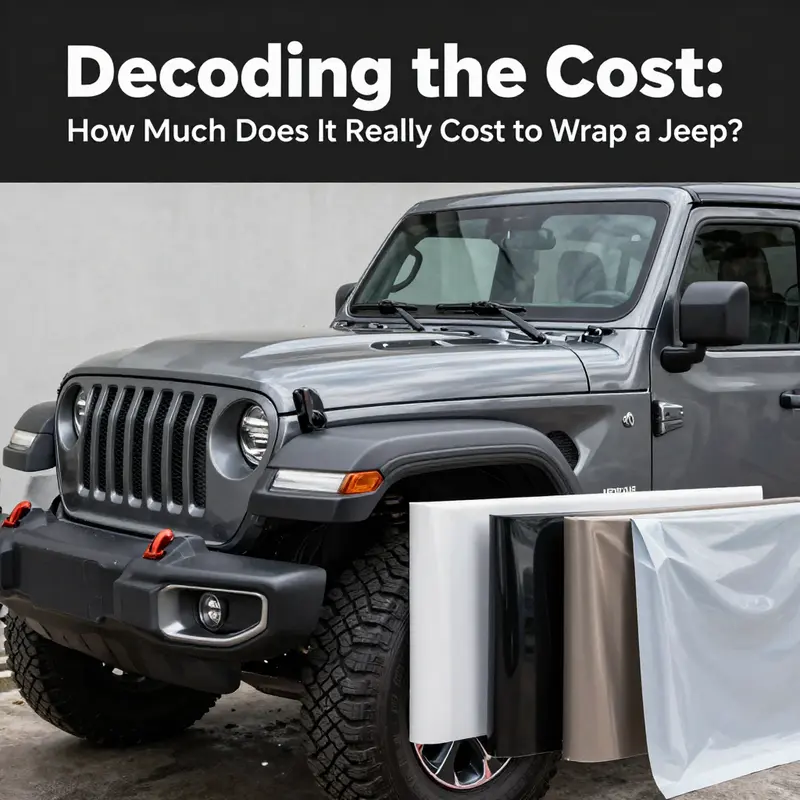
When you set out to wrap a Jeep, you’re not just choosing a color or texture. You’re choosing a system that defends the paint, transforms the look, and affects the long-term ownership experience. The price tag, then, follows the logic of materials, workmanship, and the vehicle’s anatomy. In practice, the material is the most visible lever in the price equation. It governs not only how long the wrap lasts but how smoothly it goes on, how well it adheres to complex bodywork, and how it behaves after years of exposure to sun, rain, mud, and off-road grit. A Jeep, with its sturdy lines and rugged geometry, poses both a practical and aesthetic challenge that material choice can either simplify or complicate.
The most fundamental difference in cost starts with the wrapping film itself. Broadly, wrapping films fall into two families: cast vinyl and calendered vinyl. Cast vinyl is kneaded from a more refined production process that yields longer, more uniform layers. It conforms to curves with fewer seams and offers superior durability, color stability, and resistance to cracking or lifting as the years pass. Calendered vinyl, by comparison, is typically less expensive upfront and can be perfectly adequate for straightforward surfaces and shorter-term projects. But the down side is that calendered films tend to be less forgiving on sharp contours, and their long-term performance under UV exposure and heat can be more variable. For a Jeep that often rides through sun-baked deserts or salt-treated winter mixes, the extra investment in a cast film can translate into a wrap that holds color better and resists the telltale signs of aging for a longer period. The choice between these materials is not merely about the sticker price; it’s a decision about how much peace of mind you want to buy against future maintenance and replacement costs.
Beyond the broad material category, the finish you select further shapes both the price and the experience of ownership. A standard solid color—though it sounds basic—comes with its own set of practical considerations. Gloss finishes emphasize pop and clarity, but they can demand more meticulous installation to avoid micro-mirrors of dust and tiny scratches. Matte finishes obscure small surface flaws but can be more sensitive to cleaning products and abrasion. Satin finishes occupy a middle ground, balancing glare reduction with ease of care. Each of these options has a different production cost, and the process of applying them to a Jeep’s body is distinct. Matte and satin films often require specialized pre-cleaning and a careful post-installation cure to maintain their look, while gloss films may demand an equally careful gloss control to prevent finger marks and edge bonds from catching the eye.
Then there are specialty finishes that push the price higher but can dramatically alter the personality of the vehicle. Chrome, chrome-like sheens, color-shifting or chameleon effects, and textured films each carry premium material costs and tighter tolerances for surface prep and installation. The labor component grows with these options because the installer must anticipate and compensate for the unique way each finish reacts to heat, bending, and stretching around Jeep-specific geometry. The rugged silhouette of a Wrangler or similar model—with its flared fenders, recessed panels, and angular lines—tests even seasoned installers. Achieving a seamless wrap on this shape means more time on the bench, more precision with heat and pressure, and more careful resealing around edges, door handles, and undercut areas. The result is often a higher ticket, but also a wrap that behaves better over time, resisting peel, crack, or edge lift in challenging conditions.
The body geometry of a Jeep is not merely an aesthetic consideration. It’s a mechanical one, too. The protruding fenders, rounded wheel wells, and door gaps create a fabric-like surface that can be unforgiving to imperfect film stretch. The installer must gauge how the film behaves as it slides, tucks, and bonds to different planes. Complex geometries increase the likelihood of misalignment or micro-wrinkles if the film is forced too aggressively over a curve. That is why premium labor hours tend to rise with sophistication. Even if two shops quote a similar per-hour rate, the final price can diverge considerably based on how they handle curves, how they protect edges at door jambs, and how thoroughly they address panels that meet at abrupt angles. The price conversation thus inevitably folds in the skill level and the installation approach as much as the material price.
Paint preparation is another critical cost driver that often sits alongside the film price. A wrap is not a miracle cure for preexisting paint issues. If the Jeep carries swirl marks, oxidation, or micro-damage, many reputable shops perform a paint correction step to create a pristine surface for the film to cling to. This preparation adds to the labor portion of the bill but can dramatically improve the finish and longevity. A clean, smooth substrate reduces the risk of premature film failure, prevents edge lifting, and helps maintain a uniform color and texture across all panels. Shielding the surface from contaminants during the wrap process is another subtle cost that adds to the horizon of the final price. It’s not mere housekeeping; it’s the foundation for consistent adhesion and the film’s ability to respond to heat and agitation during daily use.
Of course, the overall cost to wrap a Jeep is not governed by material choice alone. Labor is the other essential axis. Even with the same film, two installers can deliver very different outcomes and invoices depending on their approach to planning, measurement, and edge finishing. Labor intensity correlates with complexity. A full-body wrap on a Jeep is more time-consuming than a sedan because the panels are larger, the edges numerous, and the configurations more unpredictable. For Jeeps that feature removable tops, doors, and built-in rack systems, the job expands from a two-dimensional application to a three-dimensional puzzle where each piece must align with existing hardware and gaps. The installer has to account for weather seals, antenna bases, mirrors, badges, and trims. All of these elements add to the time and the precision required, pushing the bill higher. When you factor in removal at a later date or rewrap scenarios, you are again paying for expertise—how to take the film off without damaging underlying paint, how to reapply with minimal waste, and how to avoid residual adhesive that could compromise the next installation.
Another lever in price is the finish quality promised by the shop through warranties. A well-drafted wrap often includes a warranty period, typically ranging from about three to five years, depending on the brand of film and the shop’s policy. The warranty is not merely a marketing hook; it signals a commitment to inspection, re-sealing, and addressing issues such as edge lift, fading, or micro-delamination that could occur after exposure to sun and off-road grit. The warranty is a form of long-term value. It suggests that the shop is standing behind its work and is prepared to stand by the product’s performance over several seasons. That confidence usually comes at a price up front, but it can reduce the risk of expensive surprises down the line.
The price envelope for a basic full-body wrap of a Jeep Wrangler or a similar SUV, as of early 2026, tends to sit in a broad band. A basic full-body wrap that uses standard vinyl and a straightforward design typically ranges from roughly $2,500 to $4,500 in the United States. The range reflects differences in shop reputation, regional labor rates, and the particular finishes chosen. If you upgrade to high-quality matte, gloss, or satin finishes, expect to push toward the higher end of that range. Custom designs or very intricate patterns can bump pricing further, while partial wraps—such as focusing on the hood, roof, or accents—naturally reduce the cost. For wraps that employ color-shifting or textured films, the price can breach the $5,000 mark, especially when the installer’s expertise becomes a central selling point.
There is a reason professionals emphasize long-term value alongside upfront costs. Premium films are designed to resist cracking, fading, and peeling under the kind of harsh weather Jeeps endure. They also promise better color retention, which matters for resale value or the overall impact of the vehicle’s appearance. The initial premium, in many cases, translates into lower maintenance costs and less frequent replacement over the life of the wrap. A film with strong UV resistance and scratch resistance is less likely to develop unsightly defects after years of exposure, particularly on high-contact surfaces like door handles or the hood where imperfections tend to show first. In other words, you may pay more at installation, but you may save on maintenance and replacement costs later, depending on how you drive, where you park, and how you wash and protect the surface. This is the essence of the value proposition: balance the upfront investment with the expected lifespan and the peace of mind that comes from a durable finish that can handle off-road adventures without demanding constant touch-ups.
For those weighing a wrap versus repainting or leaving the factory paint alone, the timing and purpose matter. If the goal is a temporary or semi-permanent aesthetic—perhaps to match a new theme for an event or a season—the more affordable end of the spectrum may be appropriate. If the goal is a long-term enhancement that protects the paint and elevates the vehicle’s resale value, a more robust material choice and comprehensive installation become more compelling. The decision tree here includes not just the visible look but also how the film will perform in your typical environment—dust, salt, sun, humidity, and temperature swings—all of which influence warranty coverage and the likelihood of a smooth, trouble-free experience.
To navigate the market and get a realistic sense of what your Jeep will cost, many shoppers find it useful to view a regional price map that aligns with local labor rates and demand. A practical resource that helps map price expectations is the Vehicle Tricks guide, which offers a map-based overview of service variation across regions. This kind of resource can help you anticipate whether a quote you receive is in line with nearby shops and whether you should budget a buffer for regional fluctuations. For broader context on how different materials and vehicle types affect wrap costs, you can also consult the Car and Driver cost guide, which provides a detailed breakdown of material quality, vehicle type, and labor expenses. This helps frame the Jeep wrap decision within the larger context of vehicle wrap economics and sets the stage for an informed estimate rather than a guess.
Ultimately, the path to a satisfied outcome with a Jeep wrap hinges on three intertwined questions: Which film material best suits your climate and driving habits? Which finish aligns with your aesthetic while remaining practical to care for? And which installer has the skill to translate your vision into a durable, precisely fitted exterior that can withstand mud, branches, sun, and road debris years into the future? Answering these questions requires a candid discussion with the shop about expected life, maintenance routines, and the specifics of your Jeep’s body and accessories. If you’re curious about regional cost differences and how they might shape your quote, a glance at the available regional map and the shifts in labor rates can be eye-opening and help you set reasonable expectations from the outset.
In sum, material choice is the most consequential driver of wrap cost for a Jeep, but it sits within a larger ecosystem of design, preparation, and installation craft. Cast versus calendered film defines durability and upfront price. Finish options define appearance and post-install care. The geometry of the Jeep defines labor complexity. Preparation and warranty define risk and long-term value. All together, they sculpt the final price you’ll pay and the long-term satisfaction you’ll gain from a wrap that looks good today and performs well for years of off-road adventures. And when you’re weighing the total cost of ownership, remember that a high-quality wrap can offer protection, curb appeal, and a level of confidence that makes the investment feel less like a gamble and more like a thoughtful upgrade.
For a broader perspective on how these material choices translate into real-world price ranges and what drives those numbers, you may consult broader industry discussions that dive into material quality and labor expenses across vehicle types. As a practical takeaway, when you request quotes, ask to see the specific film type and finish proposed, request confirmation of surface prep steps, and inquire about the warranty terms. If you want to get a sense of regional price expectations and how they vary, you can refer to regional guides that map price bands by market. And, when you’re ready to explore the practicalities of Jeep-specific coverage and performance under winter or snow conditions, you can read further about how Jeeps perform in snowy environments and what that implies for wrap maintenance and longevity. Are Jeep Wranglers Good in the Snow. Vehicle Tricks map
External reference for broader cost context: Car and Driver’s How Much Does It Cost to Wrap a Car? (2025 Guide) provides an in-depth breakdown of material quality, vehicle type, and labor expenses, which helps situate the Jeep-wrapping discussion within the wider market trends. https://www.caranddriver.com/features/a41689377/how-much-does-it-cost-to-wrap-a-car/
The Labor Equation: How Installation Costs Shape the True Price of Wrapping Your Jeep
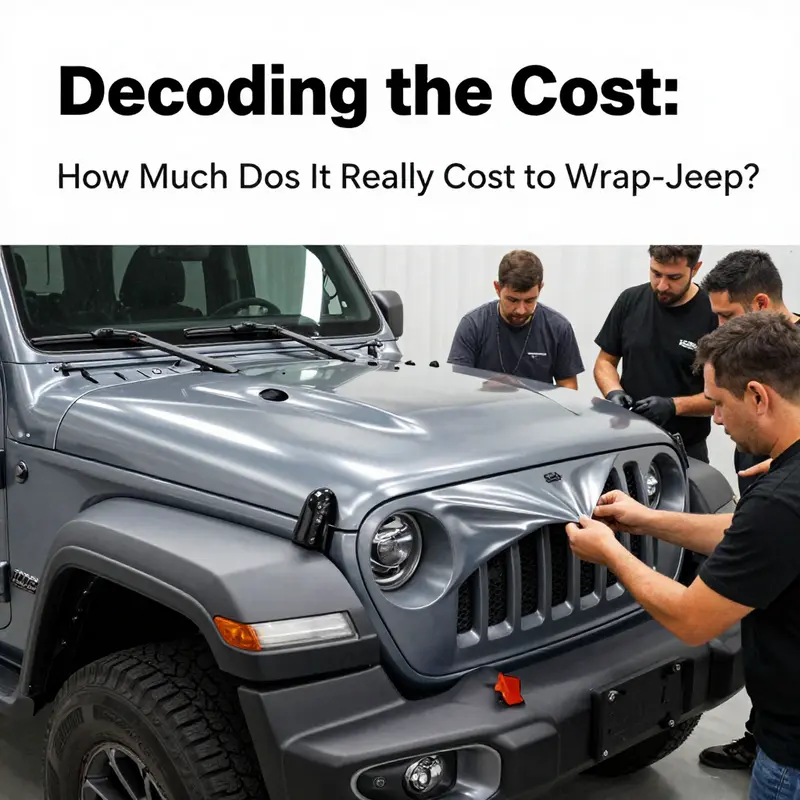
When people start planning a Jeep wrap, they often zero in on the sticker price for the film and gloss over the single most influential variable: labor. In practice, installation and labor costs can dwarf the base material expense, especially for a full-body wrap that must hug every contour, curve, and seam with precision. The math behind the final price is not a simple multiplication of film width and shop hour rates. It’s a careful balance of geography, shop specialization, the wrap’s complexity, and the quality of the finish you demand. In other words, the labor equation is where the true price of a Jeep wrap often takes shape, and it’s worth unpacking in detail so you can budget accurately without sacrificing the outcome you want.
Labor rates, at their core, reflect the cost of skilled, careful work. In urban centers or among shops that focus exclusively on vehicle wraps, hourly rates commonly range from roughly eighty to one hundred fifty dollars. Those numbers cover more than just the act of laying film; they encompass the meticulous prep work, the careful alignment across wheel arches and bumper contours, the heat management needed to stretch and tuck material around complex geometry, and the final trimming that seals edges so seams disappear into the body lines. The difference between a routine full-body application and a more intricate design often shows up here in the clock. A wrap that demands tighter tolerances around headlights, grilles, or mirror housings tends to extend the work horizon, pushing labor bills higher.
To understand the cost impulse behind labor, consider the full Jeep wrap as a time-intensive project. Full-body coverage requires the installer to map out the surface, plan out-piece joints, and execute multiple passes to ensure the film adheres smoothly without bubbles or waviness. It’s not simply laying film over a flat plane; it’s working with a flexible sheet that must lie flush on every radian of curvature, while keeping lines clean and consistent from edge to edge. That level of precision translates into more hours on the clock, which in turn elevates the labor portion of the final invoice. For many shops, the labor component alone can run into several hundred dollars for a comprehensive wrap, and often much more when the vehicle’s size, shape, or chosen finish intensifies the process.
The Jeep itself adds another layer to the math. A compact or mid-size model may require less material and fewer minutes of adjustment than a larger SUV or a two-door versus a four-door setup. A Wrangler, Grand Cherokee, or similar-sized SUV presents a mix of flat planes and abrupt curves—around doors, under flares, along door handles, and at the top of the roof. Each transition demands careful contouring, especially when polygons or patterns are introduced in the design. Even the same model can yield different labor hours if the client chooses a complex graphic, a color-shift film, or a textured finish. The more ambitious the look, the more time the installer must invest in heat shaping, edge sealing, and careful alignment.
The baseline cost story, though, starts with a generous but unspecialized assumption: full-body coverage for a Jeep could begin around seven hundred dollars in terms of the labor required for a very basic approach, though this number is only a starting point. The total price, as the data show, climbs quickly with size and design ambition. When a shop is applying a premium, multi-layer or specialty finish across the entire exterior, the labor intensity rises in step with the film’s demands and the quality standards the client expects. The result isn’t merely a higher hourly rate; it’s more hours spent, more precision checks, and more time dedicated to ensuring the wrap sits exactly right after a wash, a rainstorm, or a drive over a bumpy road.
This dynamic is part of why the broader wrap price includes a material cost that isn’t simply linearly connected to vehicle size. Material choices influence installation time in two distinct ways. First, some films are easier to cut and lay down, and they forgive small misalignments in the early stages. Second, premium finishes—those with special textures, color-shifting effects, or matte versus gloss contrasts—demand tighter control during application. The installer might use different heating patterns, more precise squeegeeing, or longer dwell times to set seams correctly, all of which adds to the labor hours and, therefore, to the final bill. In practice, you can expect that more complex finishes push the labor portion upward into a higher tier, even if the film price itself has not escalated dramatically.
For readers mapping out a budget, the lesson here is straightforward: when you request quotes, ask explicitly what portion of the price is allocated to labor and what is attributed to materials. A reputable shop will itemize these components and explain the rationale behind any premium. They should also describe the prep phase in detail—the paint, plastic trims, and surface contaminants they plan to address before the wrap goes on. Prep work, though sometimes invisible after completion, is foundational to the wrap’s longevity. If a shop glosses over prep or treats it as an afterthought, that is a red flag about the installation’s durability and, ultimately, the value you’ll receive.
The installation’s quality matters as much as the film itself. The most skilled installers command higher rates, and rightly so. Their results tend to produce a cleaner edge, fewer imperfections, and longer-lasting adhesion. A robust warranty—often three to five years—frequently accompanies this level of craftsmanship, and the warranty’s coverage is closely tied to the installation quality. When a shop stands behind its work, it signals confidence in their process and materials as well as accountability for the finish long after the vehicle leaves the shop floor. If you’re buying time, you’ll find that the guaranteed peace of mind often justifies the higher labor price because it translates into fewer headaches and less risk of peeling, bubbling, or edge lift years down the road.
All of these considerations—location, shop specialization, wrap complexity, and the finish chosen—combine to shape the final labor charge. The spectrum is wide: urban, highly specialized shops may lean toward the higher end, not because the film is more expensive, but because the team’s skill set and equipment justify the premium. Suburban or general auto-detailing outfits may offer more accessible entries, yet the risk of longer turnaround times or less precise results can accompany lower hourly rates. Either way, the labor figure in a Jeep wrap is not a fixed constant; it fluctuates with the shop’s expertise, the job’s demands, and the client’s vision for the end product.
If you’re trying to anticipate where your quote will land, consider the broader pattern of pricing you’re seeing in the market. A bare-bones, full-body wrap, done quickly by a shop with modest overhead and average skill, might hover in a lower tier. A meticulously executed wrap that wraps every contour, uses a high-end finish, and includes careful pre-wrapping treatment and post-wrap protection can push the labor to the higher end of the spectrum. Most customers discover that the total price sits somewhere in the middle, shaped by a blend of the vehicle’s size, the wrap’s finish, and the install team’s reputation. The reality is simple: labor is the catalytic factor that moves a wrap from a rough approximation to a precise, durable, long-lasting exterior transformation.
Readers who want a practical sense of how shops price these jobs can benefit from a concise primer on wrap pricing that explains the typical breakdown of costs and the logic behind them. For a quick, accessible overview, see the Vehicle Tricks blog. It offers practical guidance on how installers price wraps and what buyers should ask during the quoting process. Vehicle Tricks blog. The aim is not to steer you toward the most expensive option, but to empower you to distinguish between reasonable labor charges and red flags so you can secure a wrap that looks right and lasts. As you gather quotes, prepare a checklist: confirm what is included in prep and paint correction, verify whether removal of old film is part of the service, ask about edge sealing and warranty terms, and inquire how long the installation will take from start to finish. The answers to these questions will illuminate whether the quoted price fairly reflects the labor intensity required for your Jeep’s size and your chosen design.
In all cases, the allocation of labor should align with the project’s complexity. A simple, single-color full wrap on a Wrangler may require fewer labor hours than a multi-color graphic that twists around the vehicle’s curves, or a finish that demands precise color matching across panels. The buyer’s best strategy is to secure multiple, detailed quotes that break down labor and materials, and to compare not just the bottom-line price but the shop’s proposed workflow and post-wrap care. A thoughtful, transparent process reduces the chance of unpleasant surprises after the work begins, and it sets the stage for a wrap that remains visually compelling and functionally durable for years to come.
If you’re ready to dive into the specifics of your Jeep’s wrap, approach your local wrap specialists with a clear brief: describe the model, note any design elements you want, decide on the finish, and outline your expectations for longevity and protection. By anchoring your conversation in the labor equation—the hours, the skill, and the quality of execution—you’ll come away with a more accurate forecast of the final price and a more confident sense of the value you’re getting. For ongoing research and community insights, you can explore related topics and discussions in the Vehicle Tricks blog, and consider how your own project might best balance cost against the anticipated durability and aesthetic you desire. In the end, the goal is a wrap that looks intentional, wears well, and keeps your Jeep’s new look turning heads for the road ahead.
External reference for broader context: For a broader industry snapshot on Jeep wrap costs, see Car and Driver’s overview of wrap pricing and what drives the numbers. https://www.caranddriver.com/jeep/news/a52439649/jeep-wrap-costs/
Wrapped in Context: Why Wrapping a Jeep Often Costs More—and What That Means for Your Budget
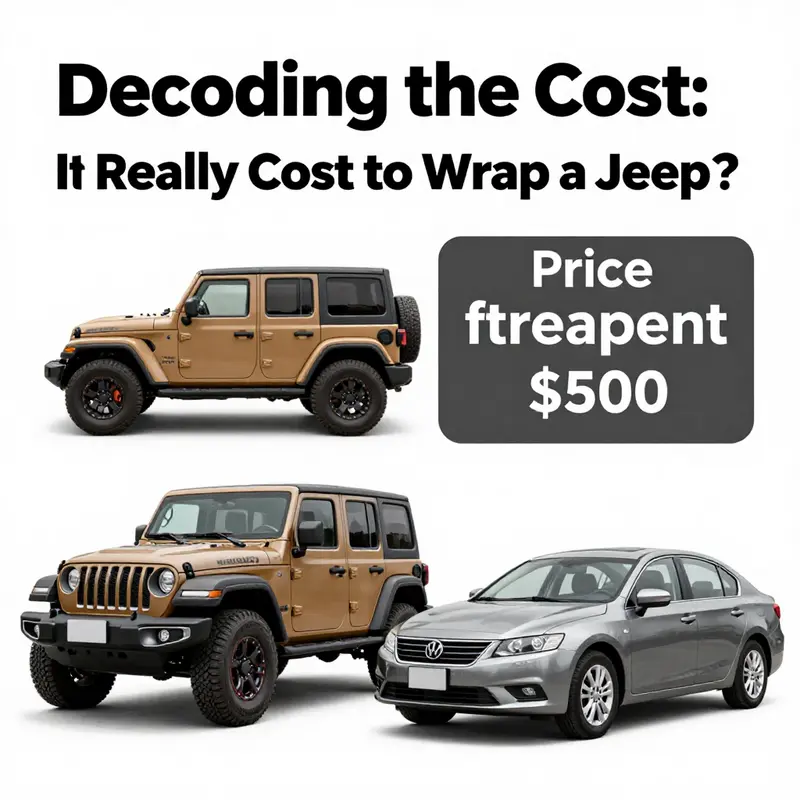
Deciding to wrap a Jeep is about more than a sticker price. It’s a careful calculus of size, shape, material choice, and finish level. A Jeep’s distinctive silhouette—with blocky lines, exposed hinges, and a roof rack—creates more seams and edges to prepare, which adds labor hours and materials. In most shops, price reflects both film and the work to clean, preheat, lay the vinyl, and work around mirrors, door handles, and fender flares. A high-quality wrap often includes paint correction and surface prep, which can raise the total but improve longevity. Typical full-body wraps for Wranglers in the U.S. as of early 2026 range from about $2,500 to $4,500, with premium materials and complex graphics pushing higher. Partial wraps may be cheaper but still require precise alignment. The installer’s experience, the surface preparation steps, and local labor rates all influence the final quote. A longer warranty—often three to five years—adds value but is rarely free. When evaluating options, it helps to compare quotes that break out film, labor, prep, and warranty, and to understand maintenance requirements that affect longevity. Ultimately, a Jeep wrap is a balance of aesthetics, protection, and cost, with the wrap’s complex geometry driving the price relative to a sedan or compact car.
Final thoughts
Wrapping a Jeep can be a strategic investment for your business, enhancing visibility and brand recognition on the road. The costs involved depend on a myriad of factors including chosen materials, complexity of the design, and labor and installation expenses. By understanding these elements, business owners can make informed decisions that align with their marketing goals. Bearing in mind the competitive nature of the market, selecting a reputable wrap provider with a proven track record is also paramount in ensuring quality and durability in your vehicle’s new aesthetic. Ultimately, wrapping your Jeep not only serves a functional purpose but also acts as a canvas for your brand’s creative expression.