
Vehicle maintenance is a crucial aspect of operating any business that relies on transportation. With the average American spending approximately $1,500 a year on maintenance and repairs, business owners must grasp how these costs can escalate based on vehicle age, type, location, and driving conditions. This article will delve into the various factors influencing vehicle maintenance costs, providing actionable insights to help business owners effectively budget for these essential expenses.
What It Really Costs: A Deep Dive into Yearly Vehicle Maintenance Spending
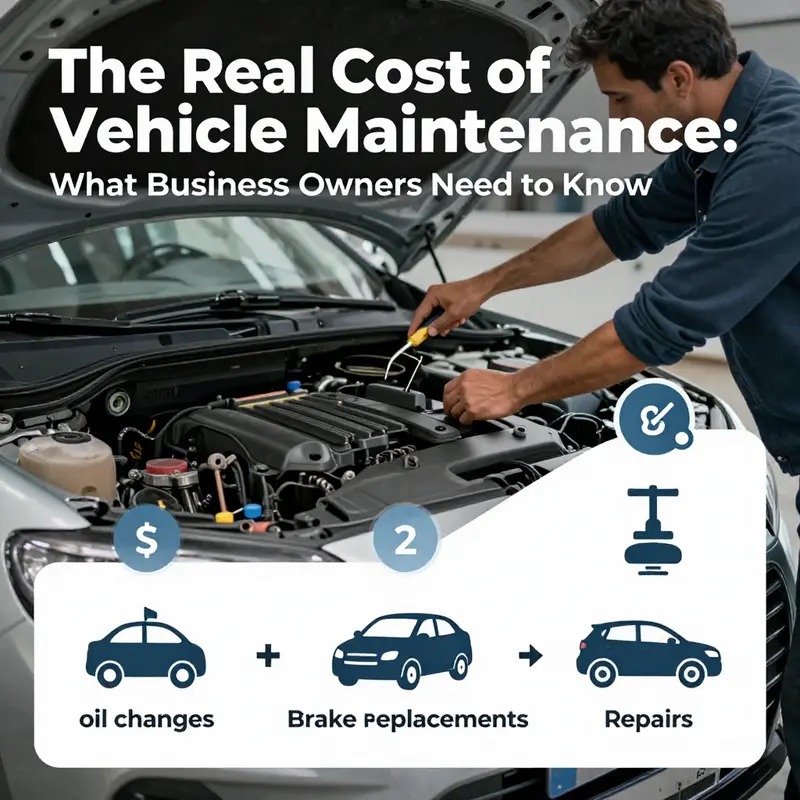
Maintaining a car is the kind of ongoing expense that quietly shapes how we budget, plan, and decide what kind of vehicle to own. It is easy to focus on the sticker price of a new car or the monthly loan payment, but the annual upkeep—oil changes, tire rotations, brake work, belts, hoses, and the occasional surprise repair—often acts as a bridge between a vehicle that runs smoothly and one that becomes a drain on finances or a source of anxiety. When you pull back the curtain on maintenance spending, a pattern emerges: costs are not fixed, they flex with age, size, and how and where we drive, yet they are predictable enough to plan for with a disciplined approach.
A commonly cited starting point is the average maintenance and repair bill. Credible surveys put the typical American spend on maintenance and repairs at roughly $1,500 per year. This figure, drawn from established sources, covers routine services like oil changes and tire rotations, as well as the more consequential brake work and more involved servicing that might be needed as a car ages. The number is a useful benchmark for budgeting, but it is not a ceiling. It is best read as a midpoint that travels upward or downward with a set of real-world variables.
To ground this discussion in broader ownership costs, it helps to look at the broader picture of what it costs to own and operate a vehicle each year. The total burden extends well beyond maintenance. A comprehensive view shows that owning a car often costs well into the five-figure range annually when you combine depreciation, fuel, insurance, registration and taxes, and parking. One widely cited figure places the all-in annual cost of owning a vehicle at around $12,828, which translates to roughly $1,069 per month. The breakdown makes the case clear: depreciation is the largest component, typically absorbing a large portion of the yearly outlay, with fuel, insurance, and taxes following in close succession, and parking adding a city-dwellers’ premium.
The numbers above are not a single verdict but a map of the tradeoffs that determine maintenance spending. For a more granular look, the U.S. Bureau of Labor Statistics’ Consumer Expenditures survey provides a relevant snapshot of annual ownership costs. In the most recent available year, the average cost to own and operate a vehicle was about $11,450 per year. That figure is inclusive of fuel—around $3,120—plus the broad umbrella of maintenance and repairs—estimated at about $3,834—while depreciation sits among the overall costs in a way that isn’t broken out as a separate line item in the report. The takeaways from this dataset are consistent with the maintenance-centric figure and reinforce a practical truth: maintenance is a meaningful, recurring slice of an ongoing financial commitment, not a one-off expense that happens only when something breaks.
When we zoom in on maintenance specifically, the data consistently show that the largest driver of future costs is age. Older vehicles need more frequent attention, and repairs tend to be more expensive as wear compounds on components that are essential to safety and reliability. The average age of cars on U.S. roads has crept upward, exceeding a dozen years in many regions. That aging curve helps explain why owners of older cars often face higher maintenance bills each year and, sometimes, higher insurance and registration costs as well. It also helps explain why a budget that assumes a flat, static maintenance expense tends to fall short for drivers with aging vehicles.
Vehicle type matters too. Larger vehicles—SUVs and trucks—generally carry higher maintenance costs than compact cars. This is not merely about the price tag of parts; it reflects the heavier wear from bigger tires, more substantial brakes, and systems that endure longer duty cycles. The mileage at which certain parts fail often differs as well. In practical terms, a family with a larger vehicle that logs frequent highway trips or rougher driving conditions may approach the maintenance line with a higher annual bill than a single-occupant commuter with a smaller car.
Location introduces another layer of variability. Labor rates, taxes, parts availability, and even the environment influence how much maintenance costs inside a given region. For example, harsher climates and rougher road networks accelerate wear on suspensions, cooling systems, tires, and undercarriage components. Remote or rural areas may add travel costs for service visits, while dense urban settings may impose higher costs for parking or storage-related wear elsewhere. In short, where you live and how you drive shape the arithmetic of annual maintenance spending.
The practical takeaway is not to fear maintenance costs but to understand how they accumulate and why. Routine upkeep—oil changes at recommended intervals, tire rotations, brake inspections, battery health checks, and timely belt or hose replacements—serves as an investment in reliability. When maintenance is neglected, the risk of breakdowns grows, and repairs can become not only more frequent but dramatically more expensive. Think of maintenance as a proactive shield rather than a reactive last line of defense. It protects not only mechanical function but also resale value and the overall financial efficiency of car ownership.
If you want to anchor your planning in action, building a maintenance budget that reflects your vehicle’s lifecycle stage is key. For a new or near-new car, part of the maintenance budget will be modest and predictable, focusing on routine services and early inspections. As vehicles accumulate miles, the share of the budget devoted to tires, brakes, and major component replacements will rise. A practical approach is to earmark a fixed monthly amount for maintenance and repairs, while leaving a modest emergency cushion for unexpected issues—your future self will thank you when a worn-out water pump or a failing alternator doesn’t derail plans because the funds were already set aside.
Budgeting also changes with driving patterns. A driver who logs long highway miles may benefit from a slightly different maintenance cadence than one who primarily navigates city traffic. In one scenario, regular alignment checks and tire balancing may prevent uneven tire wear and reduce long-run costs; in another, more frequent cooling system inspections could head off overheating and expensive repairs. These nuances underscore a simple reality: maintenance costs are a function of behavior as much as they are of metal and mechanics.
For readers who prefer a practical drill-down to definitions and boundaries, consider the question of what exactly counts as maintenance. It is not only the big-ticket repairs but the full spectrum of ongoing care—fluid changes, filter replacements, belt checks, and the inspection routines that prevent minor issues from escalating. A clear definition helps in budgeting, as you can separate routine servicing from potential, but less frequent, repairs that might be triggered by age or unusual driving conditions. If you want a concise, authoritative definition to anchor your understanding, you can refer to the resource linked here: What is Vehicle Maintenance.
The data and the everyday experience converge on a practical framework: expect maintenance to be a steady, predictable line in your budget, but prepare for deviations that follow the vehicle’s age, size, and the environment you operate in. The best strategy blends proactive care with a disciplined savings habit. Set aside a monthly amount that reflects your vehicle’s lifecycle stage, keep up with routine services, and build a buffer for larger, less frequent repairs. If you integrate these habits early, you will not only extend the life of your car but also stabilize the financial trajectory of ownership, reducing the chance that maintenance emergencies derail plans or derail a family budget.
The chapter’s takeaway is not a single number, but a way of thinking about maintenance as part of the larger financial equation of car ownership. Recognize that while the average maintenance spend hovers around the mid-thousands, the actual number for any given year will ride on the vehicle’s age, its class, where you live, and your driving habits. By planning around those variables—while maintaining a steady, predictable routine—you create a resilient financial foundation that supports the freedom and utility a vehicle provides, without letting maintenance costs quietly erode other financial goals. For readers seeking a broader, sourced view of annual ownership costs, authoritative data from ongoing surveys and analyses is available and can be consulted to supplement personal budgeting practice and to calibrate expectations for future vehicle purchases or swaps. The AAA resource below offers a comprehensive lens on driving costs and their components, including maintenance, so you can compare your numbers with a trusted benchmark and adjust as your circumstances change.
External resource: https://www.aaa.com/autocare/articles/driving-costs
Aging Vehicles, Rising Bills: How Age Shapes Your Annual Vehicle Maintenance Costs

The costs of keeping a car on the road do not rise in a straight line. They curve upward as a vehicle ages, even when you account for routine care and the usual churn of tires, brakes, and fluids. This chapter follows that arc, tying the math of maintenance to the life-cycle of a typical vehicle. The broad pattern is recognizable: early years are cheap, middle years begin to stretch budgets, and older years can demand expensive fixes you would rather not face. This progression matters because it reframes maintenance from a fixed annual expense into a dynamic, aging process that drivers can anticipate and prepare for. It also anchors the national conversation about what people actually spend each year on keeping a car reliable, a topic that sits at the heart of the broader question: how much do we spend on vehicle maintenance a year?
In the landscape of annual spending, broad surveys place the baseline in the neighborhood of a few hundred dollars per year during a car’s first years of life, mainly because major repairs are unlikely and warranty coverage often covers the big-ticket issues. Routine servicing such as oil changes, air-filter replacements, and brake inspections dominates the spending, and labor rates tend to be relatively modest for standard maintenance tasks. When folded into the larger picture of ownership costs, maintenance and repairs average around fifteen hundred dollars per year across a broad population. That average hides the real drama happening as cars accumulate miles and wear. For households with newer cars still under warranty, the outlay may stay well below that figure, while for owners of aging vehicles the same maintenance calendar can demand significantly more.
The age-related cost curve begins to tilt noticeably in the 3–6 year window. In this mid-vehicle-age phase, wear shows up in parts that were once considered low-maintenance or long-lasting. Sparks begin to need more attention, brakes and fluids require renewed attention, and cabin and engine components that were once quiet may begin to exhibit symptoms of aging. The consequence is a rise in annual maintenance costs that commonly falls in a band roughly between $1,000 and $2,000. This range captures a wide array of realities: for some models, the rise is modest, while for others with more complex systems or higher-performance demands, the added services can push costs higher still. It is not unusual to encounter years where maintenance expenses spike because a set of components arrives at the same time for servicing or replacement, and a shop bill arrives with several line items all at once.
As the car enters its senior years—typically six years and older—the maintenance conversation shifts again. The same wear that began to appear in the mid-range compounds. The engine, transmission, timing components, and suspension systems can require increasingly frequent and more expensive interventions. An individual repair, when it arises, is more likely to be technically involved and costly, sometimes running into the thousands of dollars for major overhauls or replacements. In practical terms, annual maintenance and repair costs in this aging phase often surpass $3,000 and can climb even higher as the vehicle nears the end of its expected life. This escalation is not universal; it depends on how the car has been treated, how faithfully it has received scheduled maintenance, the climate and terrain in which it operates, and the particular design and parts of the vehicle. Yet the momentum is clear: age pushes maintenance costs up, sometimes sharply, as the car’s internal components battle the long years of operation.
One important caveat is the role of reliability and design simplicity. The Oscaro study from 2026 highlighted an important counterpoint: vehicles with simpler architectures, lighter weight, and more affordable parts tend to show lower maintenance costs as they age, especially in the context of older gasoline-powered city cars. Conversely, more complex systems and high-spec configurations—such as diesel powertrains with intricate injectors or timing assemblies—tend to accumulate higher maintenance expenses over time. These patterns remind us that age is not the sole determinant of cost; the underlying design philosophy of a vehicle interacts with age to shape the total yearly outlay. For readers focusing on budgeting, this helps explain why two cars of the same age can show markedly different maintenance trajectories.
For readers familiar with the broad definitions of vehicle maintenance, an important anchor point is the idea that not all aging costs are inevitable or catastrophic. Regular, proactive maintenance remains your best defense against steep, unplanned expenses. Keeping up with oil changes, filter replacements, fluid flushes, and brake inspections is not just about preserving performance; it’s about slowing the rate at which costs rise as a car grows older. In practical terms, this means that a well-maintained older vehicle can still offer reasonable annual costs, especially if the repairs that do occur are predictable and manageable rather than surprising and urgent. It also means that the decision to continue driving an aging car versus switching to a newer model should weigh not only the current price tag but the projected maintenance curve. In other words, a modest, well-kept older car can be less expensive to maintain than a newer model of a more complex, high-maintenance design if the latter’s parts and labor are priced higher, and if its advanced systems demand more frequent attention as it ages.
To understand how this translates into a practical budgeting framework, consider how people think about maintenance in relation to the typical life stage of their vehicle. In the first three years, a car often runs with minimal surprise costs because it sits mostly within warranty coverage and requires mostly routine service. Those expenses might be in the several hundred-dollar range annually, with a few fixed services like tire rotations and fluid checks adding up. By the 3–6 year window, a driver should expect the possibility of more frequent replacements—things like spark plugs, brake fluid, transmission fluid, and cabin air filters—alongside more frequent brake service. The annual outlay in this period commonly lands closer to the low end of the $1,000–$2,000 spectrum, but the exact figure depends on the car’s make, its maintenance habits, and its driving conditions. Vehicles that experience harsher daily use or that inhabit climates with severe weather may see costs skew higher, not because the age alone demands more, but because the wear environment accelerates service needs.
As maintenance costs rise with age, the type of vehicle you drive becomes a significant secondary factor. Larger vehicles or those with more complex systems tend to command higher parts costs and more labor-intensive repairs. If a car operates in regions with high labor rates or tax burdens, the annual bill can drift upward simply from the cost of service, independent of the mechanical wear. That is why the same aging car can cost more to maintain in one city than in another. The aging curve thus carries several variables around it: vehicle type, fuel system, geographic location, and the level of preventive care already performed. Because of this, a one-size-fits-all budget for maintenance is rarely effective. A more realistic approach is to forecast maintenance on a rolling basis, adjusting for the vehicle’s age, its observed condition, and the cost environment in which you live.
To anchor this discussion in a practical sense, it is worth reflecting on how some readers might interpret the question of annual maintenance costs as they plan for the years ahead. If you are contemplating keeping an aging car for the long term, start with a baseline plan that recognizes the rising cost curve. Build a small reserve not only for routine services but also for the inevitable replacements that age tends to demand. Acknowledge that certain repairs may be deferred or replaced with alternative strategies, such as prioritizing safer or more reliable components when possible, or choosing more economical parts that extend the vehicle’s usable life. In thinking about this, many drivers benefit from framing maintenance as a dynamic budget item rather than a fixed annual expense. And to keep the inquiry grounded in the practical, remember that you can explore the broad definition of maintenance itself by reading about what maintenance encompasses and why it matters, at the resource: what is vehicle maintenance.
The upshot is that vehicle age does not merely correlate with higher maintenance costs; it shapes the profile of those costs. Early years bring solid predictability, mid-years invite a broader set of services, and older years can intensify both the frequency and the price of repairs. Yet the story is not purely cautionary. For many drivers, the aging curve is manageable, especially when maintenance is performed consistently, parts quality is preserved, and the vehicle remains well-suited to the driver’s needs. A careful, informed approach to maintenance planning—one that anticipates the potential for bigger-ticket items while leaning on preventive care—can keep annual expenses from spiraling out of control. It also invites a broader conversation about the choices we make with aging vehicles, including how we balance the cost of ongoing repairs against the benefits of newer technology, better fuel efficiency, and updated safety features. In this sense, age becomes not only a constraint but a guide: it signals when to lean into maintenance, when to budget for bigger repairs, and when the best financial choice may be to transition to a newer vehicle that better aligns with a household’s long-term finances.
For readers seeking a deeper dive into the long-term cost patterns that accompany aging vehicles, external research in this area highlights a spectrum of scenarios that tend to emerge across the market. A comprehensive external study aggregating global and regional data emphasizes how aging cars, depending on design simplicity and parts availability, can remain economical to maintain if kept within a conservative maintenance schedule and if the owner avoids high-cost powertrains. This perspective complements the practical discussion above and offers a broader context for understanding how annual maintenance costs evolve as a vehicle ages. OsCaro’s 2026 analysis provides one lens on these patterns, illustrating how parts prices, labor, and failure frequencies shift with age and configuration. For readers seeking a broader view beyond national averages, this external resource adds depth to the conversation about aging and maintenance costs.
As you plan your budget or evaluate a potential purchase, keep in mind that aging is a dynamic factor with many moving parts. The numbers discussed here are not a prophecy but a guide. They reflect observed trends, not a guarantee for every individual vehicle. The actual amount spent in any given year will depend on how well you care for the car, the weather you drive in, and the particular mechanics of your engine and drivetrain. The practical takeaway is straightforward: treat maintenance as part of the ongoing ownership expense, adapt to the car’s age with foresight, and use proactive care to stretch the time between major repairs. That approach makes aging manageable rather than prohibitive, and it helps translate the broad question—how much do we spend on vehicle maintenance a year?—into a nuanced, personalized planning exercise.
External resource: https://www.oscaro.com/
Size, Power, and Premium: How Vehicle Type Shapes Your Yearly Maintenance Bill
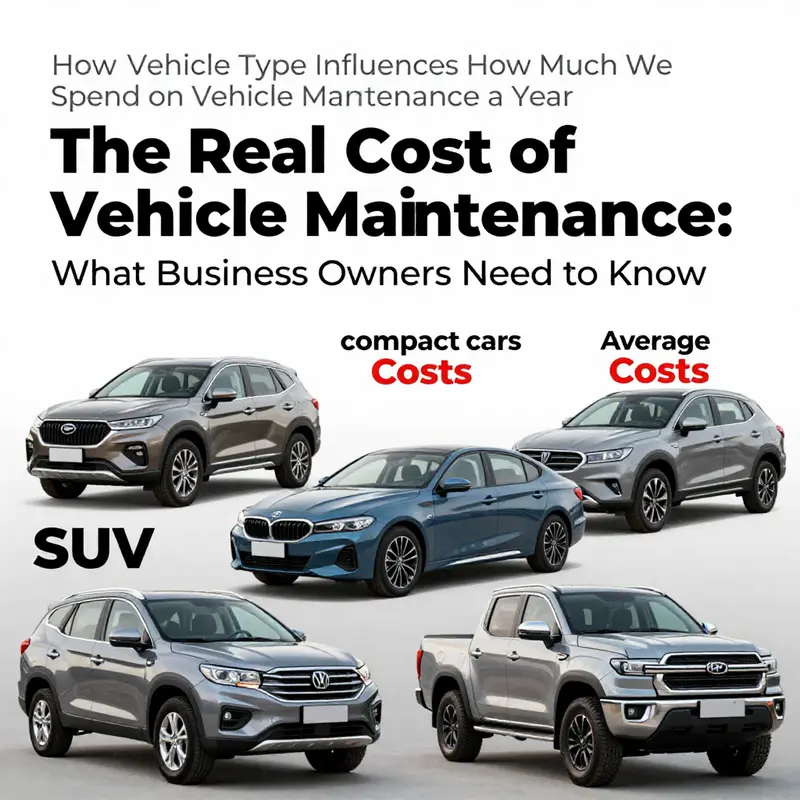
When you ask how much we spend on vehicle maintenance in a year, the answer isn’t a single number. It depends as much on the kind of vehicle you drive as on your driving habits, the climate you live in, and the age of your car. The starting point for many estimates is roughly $1,500 per year on maintenance and repairs, covering routine services like oil changes, tire rotations, brake work, and other upkeep. That baseline is useful, but it hides a big truth: the vehicle type you choose can swing that number by a wide margin.
Size and weight sit at the core of this variation. Bigger vehicles carry more load, require larger tires and brakes, and need suspension systems that can handle greater mass. The result is higher replacement costs and more frequent service checks. For example, a set of tires for a large SUV can cost significantly more—estimates range from $3,000 to $5,000 for a full set—than a tire package for a compact car, which might be $1,000 to $2,000. The heavier mass also increases wear on the drivetrain and suspension components.
Powertrain type amplifies costs in two directions: routine maintenance and the chances of expensive repairs. Internal combustion engines are common and, in many cases, cheaper to repair than diesel engines, which have more complex fuel and emissions systems. Diesel injectors can cost more than gasoline injectors, translating into higher repair bills when failures occur. For buyers choosing a heavy-duty diesel pickup or SUV, this matters.
Electric vehicles introduce a different calculus. They remove many routine maintenance items—no oil changes, no spark plugs, no exhaust work—so daily maintenance can be lighter. The caveat is the battery pack: replacements can be expensive and are a longer-tail risk, though true battery replacements are relatively rare within typical ownership timelines. In short, EVs can reduce routine maintenance spend, but occasional large battery failures or replacements can spike costs.
Vehicle class and brand premium further modulate costs. SUVs and trucks generally cost more to maintain than sedans of similar age, due to size and usage. In the luxury segment, routine maintenance can be two to three times higher than in the economy segment, driven by high labor rates, premium parts, and more complex diagnostics. A luxury oil change, for example, may be far more expensive, and the same service can involve specialized tools and technicians.
Regional differences and climate also tilt the maintenance axis. Local labor rates, taxes, and part availability vary by market, as do conditions that accelerate wear (extreme heat or cold, road salt in winter, rough roads). The practical implication is to plan your maintenance budget as part of overall ownership costs. If you need maximum predictability, a smaller, fuel-efficient sedan may offer the most stable annual upkeep; if you need space or capability, expect a higher maintenance envelope and budget for occasional larger repairs, especially with older or diesel-powered vehicles. And for those attracted to the latest technology, EVs can shift the curve downward for routine service, though battery considerations require foresight.
For readers seeking a concrete anchor between maintenance and fuel costs, think of maintenance as a component of total cost of ownership that interacts with efficiency: well-maintained tires, properly inflated and rotated, help fuel economy; clean filters support engine performance; and healthy brakes reduce drag and wear. The takeaway is that vehicle type shapes your yearly maintenance bill as surely as your driving style does, even after accounting for mileage.
Where Costs Divide: A Regional Portrait of Vehicle Maintenance Spending
Across the United States, the simple notion that a car costs about a certain amount each year hides a more complicated truth: regional weather, road quality, insurance markets, and local labor rates shape every line item in the maintenance and ownership budget. The baseline figure from the American Automobile Association (AAA) around 1,500 dollars per year covers routine services—oil changes, tire rotations, brake inspections, fluids, and small repairs. Yet people in different corners of the country find themselves paying noticeably more or less, not because the car suddenly behaves differently, but because the surrounding costs that support vehicle upkeep do. Climate, street conditions, and the way the region structures service access combine to tilt the annual upkeep in predictable ways. Understanding this regional map is crucial for anyone trying to budget accurately, choose a vehicle with maintenance in mind, or plan long-term ownership beyond the monthly payment and fuel receipts.
Climate is the most visible driver. In states with harsh winters, especially those that endure heavy snowfall and abundant salt on the roads, spending rises in several direct ways. Winter tires, when they are necessary by weather patterns, add to the annual maintenance line. Salt exposure accelerates corrosion and component wear, nudging up costs for preventative inspections, undercarriage treatments, and part replacements that would be inconspicuous in milder climates. Michigan and Minnesota are often cited as examples where the combination of cold, salt, and seasonal road wear translates into more frequent repairs or sooner-than-expected part refreshes. Conversely, hot, sun-drenched regions face a different set of pressures. In places with high year-round temperatures, air conditioning systems bear heavier loads, driving up labor and parts costs for cooling, as well as greater tire wear in extreme heat. The hot-desert expanse and certain southern corridors can push maintenance into a higher range due to these climate-driven demands, even when annual mileage is similar to cooler regions.
There is also a road condition story that follows geography. Urban areas typically contend with more congested driving, stop-and-go cycles, potholes, and the wear that accompanies frequent braking and acceleration. While rural areas may boast roads in better overall condition, they can impose higher fuel costs and longer trips to reach qualified service shops, which can raise the effective cost of maintenance in terms of time and travel. Cities with aging infrastructure or heavier truck traffic often see more frequent tire wear and suspension concerns, nudging regional averages upward. In contrast, parts of the Midwest and South, where roads may be smoother and trips shorter, frequently report lower service bills for routine care, even when vehicles accumulate similar mileage. The geographical pattern is less about one region’s vehicles being inherently cheaper to fix and more about the infrastructure and driving environment they operate within.
Insurance adds another layer to the regional cost equation. Premiums vary widely from one state to the next, driven by factors like population density, crime rates, medical costs, and the legal environment surrounding auto claims. States such as Florida and New York often show higher auto insurance costs, and those premiums feed into the overall annual cost of ownership. Even if a given driver in a lower-cost state pays less for maintenance itself, a higher insurance bill can push the total annual burden to a level that eclipses neighboring regions. Rural areas, while often enjoying lower maintenance bills due to fewer service visits, may incur longer drives to reach specialists or deal with out-of-town service centers, indirectly increasing both time and fuel expenses.
All of these regional dynamics come together in the broader picture painted by AAA’s data on ownership and operating costs. The organization’s long-running studies show clear regional disparities: in some metropolitan areas, high labor costs and expensive parts can raise service bills, while in other regions the same tasks are accomplished for less, thanks to more competitive local markets and lower overheads. A 2015 snapshot highlighted the spread before the modern inflation cycle, reporting families spending a national average of about 8,698 dollars per year to own and operate a car, with a mixture of depreciation, fuel, insurance, registration, and parking feeding into that total. The more recent regional specifics, such as metropolitan areas like Los Angeles and New York City, reveal that the sum of maintenance and ownership can diverge sharply from national averages when you factor in labor rates, regional taxes, and the price of parts—an effect that is especially pronounced for vehicles that require frequent service or for owners who drive in high-cost urban centers. The takeaway is not that your car suddenly costs a different thing in a different city, but that the components that build up the total cost—service charges, parts availability, and the cost of time—arrive with regional stamps.
The annual maintenance figure remains a useful anchor, yet it sits within a larger budget that includes depreciation, fuel, insurance, registration, and parking. Depreciation alone often dwarfs routine maintenance, absorbing the largest share of the year’s outlay. Even as maintenance costs rise with climate and road wear, depreciation follows a separate, structural path tied to the vehicle’s age and market value. In many regions, depreciation remains the largest single expense, while insurance and registration climb where local policies and taxes push premiums upward. For drivers in dense urban cores, parking can become a meaningful line item, sometimes rivaling or surpassing maintenance costs in a year with unusual service needs or episodic spikes in parking fees. When you tally these elements together, the regional picture becomes a composite of climate-driven maintenance triggers, street wear, and the cost of protection and compliance that varies from coast to coast and city to city.
What does this regional lens mean for planning and budgeting? It means a practical shift in how people should assess risk and prepare for upkeep. In regions prone to winter damage, owners might prioritize preventive checks that catch salt and corrosion early, scheduling more frequent undercarriage inspections and rust prevention strategies. In hot climates, the emphasis might be on climate-control components and tire management, ensuring tires and AC systems are serviced with the heat in mind. For city dwellers, the planning horizon should incorporate not only higher service charges but longer wait times for appointments and the opportunity cost of time spent getting to a shop. Rural or suburban drivers, while experiencing lower service bills on paper, should still account for longer trips to reach qualified technicians and the potential for higher fuel costs in some locales due to longer commutes.
The practical upshot is that a household budget for vehicle upkeep should be anchored by a regionally informed expectation—roughly the national baseline, plus a regional adjustment that accounts for climate, road realities you face. Build a reserve for potential spikes tied to local insurance markets and labor rates. And maintain a clear sense of how ownership costs break down in your region, so that you are not caught off guard when the next service bill lands or when a component reaches the end of its expected life in the face of regional wear patterns. For those seeking concrete regional guidance, the comprehensive body of AAA research remains a reliable anchor, with region-specific insights that help translate the numbers into actionable planning. For more on the broader regional costs and their drivers, visit AAA Auto Repair. https://www.aaa.com/autorepair
Rough Roads, Salted Streets, and the Real Cost of Driving: How Conditions Shape Your Yearly Vehicle Maintenance Bill
The numbers most of us already carry in our heads are stark enough: a typical American spends around $1,500 a year on routine maintenance and repairs, a figure that climbs when older cars, larger vehicles, or harsher climates push extra wear into the forecast. Yet the real driver of year-to-year costs is not just the make or the miles logged; it is the living environment and the way we drive. When the road surface, weather, and daily rhythms of use collide, maintenance costs rise in a way that often catches budgets by surprise. Understanding that dynamic helps explain why two identical cars can rack up very different repair and service bills in a single year, depending on where they live and how they are driven. It also reframes maintenance from a fixed calendar habit into a responsive practice tied to actual conditions on the road and in the engine bay.
Consider the broad picture. The average maintenance figure—oil changes, tire rotations, brake work, and other essential upkeep—sits alongside a much larger, more varied reality: the total cost of owning and operating a vehicle. Depreciation alone dwarfs yearly upkeep for many households, but the cost of keeping a vehicle safe and reliable is not a small or static line item. The environment in which a car lives accelerates or slows the aging of key systems, and those differences accumulate across the year. Harsh winter climates, frequent stop-and-go commuting, dusty or salty atmospheres, and the specific design quirks of a given vehicle all steer maintenance needs in particular directions. A car that spends winters on salted roads and summers on rough, unpaved stretches will demand more frequent undercarriage inspections, more frequent air-filter changes, and more attention to cooling-system cleanliness than a car kept in a dry, temperate climate with smooth pavement.
The environment translates into real wear on brakes, tires, suspension, cooling systems, and even the drivetrain. Salt is a silent adversary, eating away at metal components beneath the car and around wheel wells. In regions where the winter season is prolonged, corrosion can become a four-season issue, not merely a once-a-year concern. Short trips, which prevent engines from reaching their optimal operating temperature, compound this problem. When the engine never gets fully warm, oil remains thicker for longer, contaminant particles linger in the oil, and combustion byproducts can accumulate more quickly. This isn’t just theoretical chatter; it shows up in higher consumption of oil, more frequent filter changes, and, over time, increased risk of engine wear.
Dust and sand pose their own threats. In arid or windy regions, dust can accumulate in radiators and air filters faster, reducing cooling efficiency and air intake quality. A clogged radiator or a sluggish cooling system can push the engine toward overheating, triggering a cascade of maintenance needs that include coolant checks, radiator cleaning, and in some cases more extensive repairs. The point is simple: environmental exposure accelerates wear in predictable ways, and those accelerations translate into the premium a household pays at the service counter over a year.
The way a car is driven matters just as much as where it is driven. Aggressive driving—rapid acceleration, hard braking, and high-speed cornering—puts unusual stress on the drivetrain, brakes, and tires. The tires wear unevenly and more quickly, and braking systems absorb more heat, potentially shortening pad and rotor lifespans. Engine and transmission components endure more abrupt loads, which can hasten the onset of issues that would otherwise appear later in the vehicle’s life. Research consistently shows that adopting a smoother, more conservative driving style reduces wear by a substantial margin—up to about 30% in some comparative analyses—across equivalent mileage and maintenance practices. The implication for owners is clear: how you drive can be as consequential as how you maintain.
This is not merely a theoretical exercise; it has concrete implications for budgeting and planning. When a car’s environment aggressively compounds wear, it becomes sensible to think about maintenance in a condition-based rather than a calendar-based way. The concept is straightforward: let actual usage and environmental exposure guide when a service check is triggered. In practice, this means more frequent inspections after periods of severe weather, heavy dust, or persistent stop-and-go traffic, and a more vigilant approach to monitoring cooling systems, air filtration, and undercarriage components. Vehicle manufacturers increasingly emphasize this mindset. Take for instance contemporary guidance that underscores checking radiators and cooling pathways after exposure to dust or debris; in modern vehicles equipped with real-time diagnostics, drivers receive proactive alerts when service is warranted. The essence is not to chase a rigid schedule, but to respond to the car’s real signal about its condition.
The payoff for this shift in perspective is tangible. When drivers respond to condition-based cues, they can nip developing problems in the bud, avoiding the expensive cascade that often begins with a small, recurring issue. A well-timed coolant flush, an early brake component replacement, or a clean radiator before overheating season can prevent the kind of high-ticket repairs that come with late detection. The broader lesson is consistent with what we know about maintenance costs overall: it is cheaper to address wear early than to pay for emergency fixes later. In environments where wear accelerates due to cold starts, road salt, or sandy air, it becomes even more important to translate the wear signals into timely service actions.
From a practical standpoint, integrating this approach into annual budgeting means recognizing that the baseline around $1,500 per year for maintenance can be significantly swayed by your local climate and your driving style. A car living in a harsh winter region with frequent short trips may see more frequent oil changes and cooling-system checks, while a vehicle in a dry, temperate area with smoother roads might require fewer undercarriage repairs, but possibly more frequent tire maintenance due to heat or road texture. Those are not merely abstract differences; they show up in service invoices and in the interval between visits to the shop or dealer. Importantly, adopting a condition-based maintenance mindset doesn’t require sophisticated equipment or a fleet-level operation. It starts with listening to the car’s symptoms, heeding the home-state of the engine and the fluids, and following a disciplined inspection routine after seasons of tough driving.
A concrete example lies in the growing emphasis on diagnostics and proactive checks that align maintenance with actual driving conditions. Even in high-tech vehicles, where software can anticipate issues before they become obvious, the driver’s day-to-day reality—dusty roads, snow, salt, or heavy traffic—shapes what services are most valuable. In environments where debris or salt intrusion is likely, periodic radiator inspection and cleaning, along with air-filter checks, can be crucial. Regularly reviewing the cooling system’s integrity prevents overheating and the associated expense. The broader takeaway is that knowledge of your environment, paired with attentive maintenance, powers a cost-efficient yearly plan. It is about using information—engine temperature, coolant level, air-filter condition, brake wear indicators—to guide what to service and when, rather than blindly following a calendar.
For those curious about how to translate this approach into everyday practice, a useful resource highlights a mindset that links maintenance to driving patterns and fuel economy. It emphasizes the value of proactive maintenance as a lever to reduce overall expenses, including gas costs, by keeping the engine and related systems operating efficiently. This linkage—maintenance supporting efficiency and reducing waste—helps explain why some households experience a lower total cost of ownership even when mileage stays high. It also invites readers to view maintenance as an ongoing investment rather than a periodic chore. See more on how maintenance can influence fuel economy and related costs at the linked discussion: how vehicle maintenance saves on gas expenses.
As you weigh the numbers against your own situation, remember that the maintenance budget is not a single line item carved in stone. It is a dynamic panel that responds to climate, road conditions, and the driver’s approach to the road. The modern vehicle, with its diagnostics and built-in alerts, is an ally in this ongoing calibration. The decision to act on a maintenance alert in a timely fashion can convert a minor service into a cost-saving habit, preserving performance, reducing the likelihood of breakdowns, and ultimately lowering the year-to-year maintenance bill. This is especially true in regions with extreme winters or extended dusty seasons, where wear and tear accumulate with unusual vigor. The chapter conclusion, then, rests on a simple, practical premise: treat maintenance as a condition-driven discipline, not a calendar ritual, and you can manage the annual spend more predictably while maintaining safety and performance on the road.
External resource: For a detailed look at how manufacturers and service guidelines frame winter care and proactive maintenance, see Tesla’s guidance on winter care and debris management in their vehicle-maintenance documentation: https://www.tesla.com/support/vehicle-maintenance#winter-care.
Final thoughts
Understanding vehicle maintenance costs is essential for business owners aiming to create effective budgets. By considering factors such as vehicle age, type, geographic location, and driving conditions, you can make informed decisions that mitigate unexpected expenses. Instituting regular maintenance schedules and exploring cost-saving options can significantly reduce overall operational costs. Stay proactive about your vehicle management to ensure reliability and efficiency in your business.