
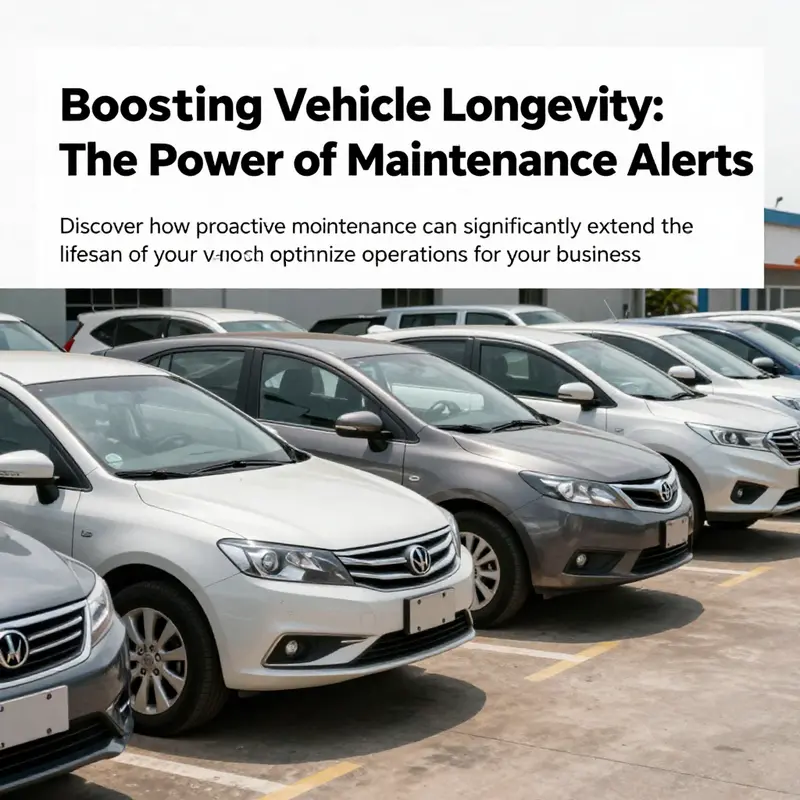
In the competitive landscape of business, maintaining the operational efficiency of your vehicles is paramount. Maintenance alerts serve as a critical tool in this quest, allowing business owners to proactively schedule maintenance tasks that prevent minor issues from evolving into costly repairs. Regular maintenance not only ensures that your fleet runs smoothly, but it also substantially extends the lifespan of your vehicles. The following chapters will delve into the importance of proactive scheduling, the role of fluid management, and the economic benefits of regular maintenance, creating a comprehensive understanding of how maintenance alerts can lead to better vehicle longevity.
Proactive Car Maintenance: Using Alerts to Extend Vehicle Lifespan

Proactive maintenance uses real time alerts and manufacturer guidelines to guide service. When a warning appears, it signals potential issues before they become costly faults. Prompt action keeps engines running smoothly, preserves fuel efficiency, and extends the vehicle lifetime. A disciplined maintenance cadence translates to fewer breakdowns, better resale value, and more predictable ownership costs. The effectiveness comes from combining alerts with scheduled care such as oil changes, fluid flushes, brake inspections, and timing belt or chain replacement at the recommended intervals. Digital logs and reminders help owners stay aligned with the car needs, creating a durable maintenance narrative that travels with the vehicle. In practice, treating alerts as guidance rather than interruptions leads to smoother operation and higher confidence in reliability. This approach also supports safety by ensuring critical systems are inspected when needed. The overall message is simple: respond to alerts, follow the planned service schedule, and maintain high quality fluids and parts to maximize lifespan.
Fluid Vigilance: How Maintenance Alerts Extend Vehicle Lifespan
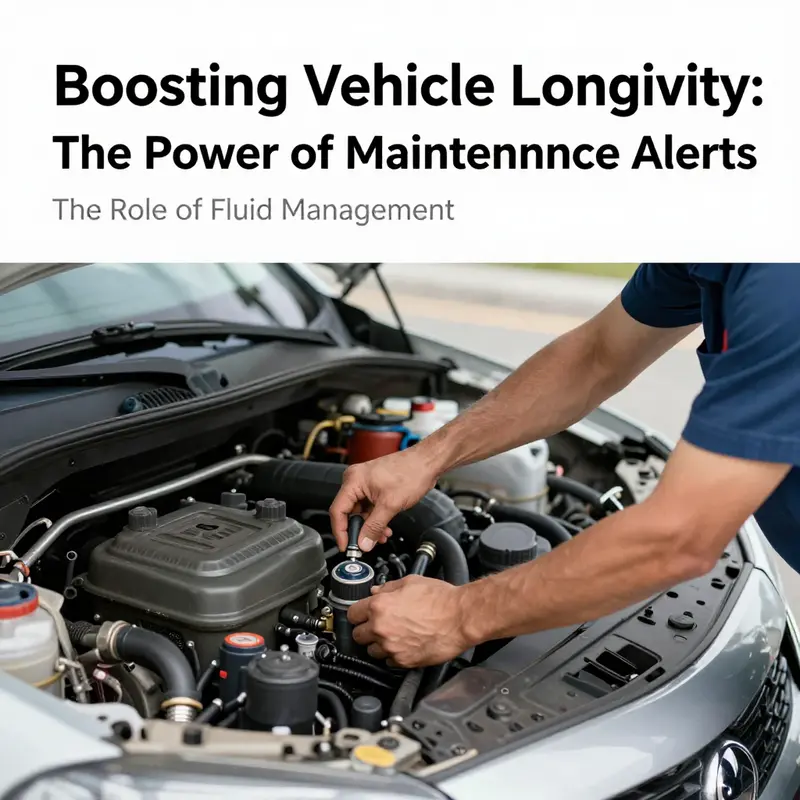
Maintenance alerts transform routine upkeep into proactive care. They notify drivers of low fluid levels, degraded quality, and emerging leaks, enabling timely oil changes, coolant top-ups, and hydraulic checks before minor issues become major failures. By guiding actions with data from sensors and diagnostics, alerts help preserve engine health, keep the cooling system efficient, and sustain fuel economy over the long run. This disciplined approach reduces unexpected breakdowns and extends a vehicle’s life by maintaining optimal operating conditions across lubrication, cooling, and hydraulic systems.
Guarding the Lifespan: How Proactive Maintenance Alerts Extend Vehicle Life and Protect Your Wallet
Maintenance alerts do more than tell a driver when to service a car. They act as an automated, disciplined steward for a machine that quietly rewards regular care with longevity and reliability. When alerts trigger routine checks and services, they interrupt the cycle where small issues slip into large, expensive problems. The result is a smoother engine, a steadier transmission, and tires that grip the road through more miles rather than more repairs. This is not merely about avoiding breakdowns; it is about nurturing the entire ecosystem of a vehicle so it remains dependable, efficient, and closer to its original design life. In that sense, maintenance alerts function as a proactive guardrail, guiding owners toward a lifecycle where preventive care translates into real, tangible value over time.
A large part of this value comes from adherence to manufacturer-recommended maintenance schedules. These plans are not arbitrary lists; they reflect engineering insights about when systems are most vulnerable and when parts begin to wear in a predictable way. Oil changes, fluid replacements, brake inspections, and tire rotations are not just routine chores. They are targeted measures designed to protect the heart of the vehicle—the engine, the hydraulic and cooling systems, and the contact surfaces that translate driver input into motion. When alerts align with these schedules, the driver receives timely prompts to perform the checks that matter most. This alignment helps prevent engine wear, preserves fuel efficiency, and minimizes the risk of cascading failures that can abruptly end a vehicle’s usable life.
The practical impact of this approach is echoed by a veteran technician who has spent years diagnosing and repairing aging vehicles. James Rutherford, an ASE-Certified Master Technician, emphasizes the value of simple fluid checks: “Checking your car’s fluids takes less than five minutes but can prevent thousands in repairs.” His observation is a reminder that time spent on basic maintenance is a small price to pay for the avoidance of major problems later. The idea is not to chase every potential issue but to maintain a robust baseline of care that keeps the machine operating under its intended tolerances. Maintenance alerts help turn that baseline into a regular habit rather than a relying on memory or the luck of a good day when a warning light finally appears.
One of the most enduring benefits of this approach is the preservation of fluid systems. The engine’s lifeblood—oil—does more than lubricate; it carries away heat, reduces friction, and cushions components under load. Oil degradation can lead to sludge formation, reduced lubrication, and overheating, each a threat to engine longevity. Fluid levels and quality extend beyond oil; coolant protects against overheating and corrosion, while brake fluid and transmission fluid rely on proper levels and condition to preserve hydraulic performance and smooth shifting. The maintenance alerts that notify owners when to replace or top up these fluids serve as a steady reminder to perform checks that safeguard critical interfaces inside the engine bay and beyond. When these fluids are kept within spec and the right products are used as recommended by the manufacturer, the risk of internal damage drops significantly. The cumulative effect is a car that runs cooler, more efficiently, and with less stress on its most wear-prone parts.
In parallel, tire health—often overlooked in discussions of longevity—plays a crucial role in overall life expectancy and cost of ownership. Tire care is not just about air pressure; it involves regular rotation, alignment, and tread inspection. Properly maintained tires deliver better fuel economy, safer handling, and less uneven wear. The U.S. Department of Energy has highlighted fuel-saving benefits tied to tire inflation and maintenance, noting that correct inflation can improve efficiency and reduce rolling resistance. Misalignment and underinflated tires, by contrast, increase wear and energy use. Maintenance alerts that remind drivers to rotate tires and check alignment help keep tires in good condition longer, which lowers the probability of a tire-related failure that can strand a driver or trigger expensive repairs.
The economic argument for maintenance alerts rests on clearer, data-driven risk management. Regular maintenance reduces the likelihood of unexpected breakdowns, which are not only inconvenient but financially disruptive. A vehicle that is consistently cared for tends to hold its value better because buyers recognize its service history as a proxy for reliability. In the broader picture, fewer major repairs translate into lower lifetime costs and more predictable ownership. The National Institute for Automotive Service Excellence (ASE) has reported that vehicles receiving consistent maintenance have about a 50% lower risk of major mechanical failure compared to neglected ones. This statistic is more than a number; it is a reflection of how measured, proactive care compounds over many miles, cushioning owners from the shock of expensive, unplanned repairs. The long arc is one of reliability and confidence on the road, rather than a constant worry about what might break next.
An important, often overlooked dimension is the resale value that accrues from a well-documented maintenance history. Prospective buyers place a premium on evidence that a vehicle has been kept in good order. When maintenance alerts create a dependable cadence of service, the resulting records become a narrative of care. This narrative helps explain why a well-maintained car can command a higher price in the used-car market and why the overall ownership experience remains smoother over time. The upshot is a virtuous loop: alerts prompt care, care sustains value, and sustained value reinforces the benefits of staying on top of maintenance, year after year.
The practical economics of alerts go beyond avoidance of repairs and resale value. They also influence the everyday costs of ownership, including fuel. Regular maintenance supports engine efficiency, which means less fuel is wasted due to excessive engine wear or poor operation. There is a clear financial incentive tied to keeping maintenance visible and timely. If a driver follows the alerts and adheres to the recommended service schedule, the car maintains closer to its designed operating performance. This contributes to lower operating costs over time and reduces the risk of sudden, costly failures that can disrupt daily life. For readers curious about the direct link between ongoing maintenance and gas expenses, there is useful discussion available that outlines how routine maintenance translates to tangible fuel savings over the life of a vehicle.
As this chapter unfolds, consider how a maintenance alert actually works in practice. The onboard diagnostics system (OBD-II) monitors diverse subsystems and parameters, from catalytic converters to sensors that gauge temperature, pressure, and fluid levels. When readings drift outside designed tolerances, the system flags a fault or a service need. Some alerts are simple reminders to perform a routine maintenance task at a specific interval, such as an oil change at 5,000 miles or six months, whichever comes first. Others are more proactive, signaling the onset of conditions that, if addressed promptly, would avert a future breakdown. The beauty of these alerts lies in their scalability. Regardless of the vehicle’s age or complexity, the core idea remains the same: provide timely, actionable notices to keep the machine within its optimal operating envelope.
The practical outcome is a vehicle that ages more gracefully. Rather than experiencing a cascade of failures and escalating costs as components wear unevenly, a well-timed maintenance regime distributes wear more evenly and keeps key systems within their intended tolerances. Engine bearings, camshafts, timing chains, cooling passages, and other critical parts benefit when lubrication, cooling, and hydraulic systems are kept in good order. Likewise, the transmission and steering linkages gain from routine inspections and fluid maintenance that protect hydraulic pressures and mechanical integrity. In short, a maintenance alert is not just a nudge; it is a structured, proactive approach to managing wear and tear before it manifests as a major, disruptive event.
The broader narrative of maintenance alerts also connects to driver behavior and daily routines. When alerts are reliable and consistent, they become a catalyst for disciplined upkeep. This, in turn, fosters a sense of ownership and trust in the vehicle. A driver who trusts that the car will remind them when service is due is more likely to follow through, even when competing demands pull attention elsewhere. Such reliability reduces the mental burden of upkeep and shifts maintenance from a reactive task to a predictable, manageable habit. The resulting stability is not just mechanical; it touches the driver’s peace of mind and the vehicle’s long-term financial equation.
For readers seeking a concrete example of how the financial math plays out, the connection between maintenance and fuel efficiency is instructive. A well-maintained engine runs more efficiently, consumes less fuel, and therefore incurs lower fuel costs over time. This is not merely a function of better combustion; it is the cumulative effect of reduced friction, consistent lubrication, and stable operating temperatures. The simple truth is that keeping a vehicle in peak condition helps it use energy more effectively, which translates into recurring savings at the pump and over the vehicle’s lifecycle. When the maintenance alerts align with a driver’s budgeting mindset, the modest, regular investments in service accumulate into a substantial long-term payoff.
In the end, maintenance alerts anchor a strategy of longevity. They help ensure that critical systems—engine, transmission, brakes, and tires—are serviced before telling signs of wear become expensive problems. They translate engineering intent into practical daily practice, turning the dream of a long-lived vehicle into a credible, achievable reality. The observer who follows these alerts consistently will see fewer surprises on the road, steadier performance, and a lifecycle that extends well beyond the first decade of ownership. The chapter thus points to a core insight: regular, timely maintenance guided by alerts is not merely a maintenance habit. It is a strategic investment in the vehicle’s future, one that pays dividends in reliability, efficiency, and overall cost of ownership.
To delve deeper into the financial dimension of routine care, consider the broader research suggesting that a well-kept vehicle can maintain higher resale value and lower risk of major mechanical failures. This perspective supports a practical takeaway: integrating maintenance alerts into daily driving routines is a prudent, cost-conscious choice. As drivers grow more accustomed to the rhythm of timely checks, the cycle of preventive care becomes self-reinforcing, sustaining a vehicle’s health for years to come. In connection with the larger theme of this article, the economic benefits described here reinforce the case for making maintenance alerts a standard feature in modern vehicle ownership, one that preserves equipment and enhances the financial logic of responsible stewardship.
External resource: https://www.fueleconomy.gov/feg/tire_inflation.shtml
Internal reference for further reading on cost savings and maintenance: how vehicle maintenance saves on gas expenses
Final thoughts
Effectively managing vehicle maintenance through alerts not only ensures optimal performance but significantly extends vehicle lifespans. By embracing proactive maintenance scheduling, prioritizing fluid management, and recognizing the economic benefits, business owners can protect their investments and maintain operational efficiency. The implementation of these practices is a strategic necessity for any fleet owner looking to reduce costs and enhance productivity over the long term.