
Properly managing vehicle maintenance records is not just a good practice; it’s vital for business owners who rely on their vehicles. The longevity and history of these records directly impact factors such as resale value, warranty negotiations, insurance claims, and overall vehicle health management. Each chapter delves into a critical aspect, examining why it’s necessary to keep maintenance records long-term while providing practical strategies to optimize record management for business efficiency and vehicle reliability.
The Long Game of Car Records: How Keeping Maintenance Histories Elevates Resale Value
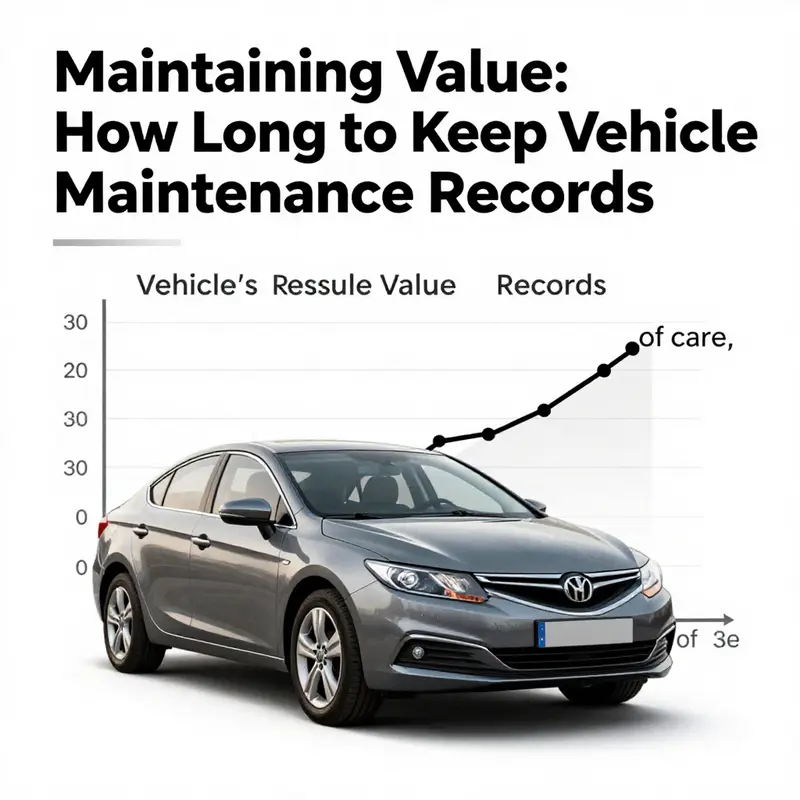
A car is more than metal, glass, and rubber; it is a story of care and decisions made over years. When you keep maintenance records, you are curating the narrative of how well the vehicle has been tended. From a buyer’s perspective, that narrative reduces uncertainty. A well documented service history signals that the car has received timely attention, important repairs, and routine care that extend its life and reliability. In short, strong records translate into trust, and trust is a currency that buyers value as they negotiate price. This is especially true in markets where the next driver wants to know that the car has not only performed well but that nothing essential was left unchecked during its lifetime. There is no universal legal mandate that prescribes a fixed period for keeping maintenance documents, but the practical and financial case for keeping comprehensive records stretches far beyond the moment of sale. Industry practice, consumer expectations, and even insurance considerations converge to make a durable, accessible service history a smart investment in your vehicle’s market value and in your own peace of mind.
The ideal retention window begins to take shape when you consider the vehicle’s stage in its lifecycle. For most owners, a period of five to ten years captures the heart of the car’s reliability window. This span typically covers the later years of the original warranty and the immediate post-warranty period when potential buyers are most attuned to the history of maintenance. A well-documented ten-year arc can demystify intervals between services, underscore the regularity of oil changes and tire rotations, and record major repairs or parts replacements that could otherwise raise questions. In a practical sense, this five to ten year frame aligns with how buyers assess risk: a vehicle with a transparent maintenance trail is seen as having fewer hidden problems, fewer surprises, and a more predictable trajectory.
The numbers add up in resale conversations. When a prospective buyer can review a complete, legible history, they’re less inclined to discount the price as a precaution against unseen issues. Anecdotal observations from dealers and service centers consistently point to higher buyer confidence when records are thorough and accessible. While the exact uplift in value varies by make, model, mileage, and prior ownership, the consensus among many automotive experts is that a comprehensive service history can boost perceived value. In some scenarios, the premium attached to clear documentation can approach a meaningful portion of the price difference that buyers are willing to pay to avoid risk. Industry guidance suggests that this confidence translates into tangible value, sometimes contributing as much as a modest but noticeable percentage increase in resale appeal. While not a guarantee, the math behind this confidence is straightforward: the more transparent the car’s past, the more trustworthy its prospective future.
A key factor in this dynamic is the role of documentation in verifying ongoing care, especially when a vehicle sustains wear through daily use. Receipts for repairs, invoices from service visits, and oil change logs all become pieces of evidence you can present to a buyer. They demonstrate that maintenance occurred at recommended intervals and that professional oversight has guided the vehicle through significant moments—be it a scheduled service or a corrective repair. This is particularly persuasive when the vehicle is sold with relatively low mileage but a long ownership history, or when a buyer is weighing a similar vehicle with a murkier service record. The aim is not to overwhelm the buyer with paperwork but to offer a concise, credible narrative that supports the decision to purchase.
Beyond resale value, records serve a practical purpose that resonates with many owners. For warranty claims or disputes, a well-preserved history can streamline discussions with manufacturers or repair facilities. When a past service is questioned or a component’s integrity is in doubt, the ability to pull a precise date, mileage, and service description can avert lengthy back-and-forth and help resolve issues more quickly. Insurance considerations also come into play. Some insurers and policy terms recognize the value of documented maintenance when processing claims or calculating premiums, rewarding drivers who can show consistent care. In aggregate, these benefits reinforce the case for long-term record retention as part of prudent vehicle ownership.
So what constitutes a robust record kit? At a minimum, keep receipts, repair invoices, oil change logs, and service dates. These items form a coherent trail that a buyer or insurer can follow. It also helps to include a concise note on any unusual driving conditions that affected service needs, such as extended idle periods, heavy towing, or exposure to extreme temperatures. A simple log that tracks service intervals alongside mileage can reveal patterns, such as recurring electrical quirks or intermittent performance concerns. Spotting these patterns before a sale can be invaluable, allowing you to address issues proactively rather than letting potential problems lurk in the buyer’s mind.
The format of the records matters as well. Digital records have a distinct advantage over paper in durability, searchability, and backup. A digital archive—whether stored in a driver’s cloud storage, a personal drive, or an official vehicle portal—reduces the risk of loss from fires, floods, or misfiling. It also makes it easier to present the history to a buyer in an organized, readable fashion. Yet paper copies still have a place, especially when the sale involves a buyer who wants to review tangible documents. In that case, a neatly organized binder with labeled sections by date and service type can be a tangible demonstration of responsibility and thoroughness. A practical approach is to use both formats: digital copies as the primary repository and organized paper copies as a ready-to-hand presentation when the car is being shown.
To maximize convenience and reliability, owners should lean on both the official channels and personal organization. Official manufacturer apps can synchronize service history with the vehicle’s records, ensuring consistent data across visits and locations. These apps provide a centralized view of maintenance events and often offer a portal where the history can be accessed by future owners as part of a sale package. In practice, this means you can present a seller-ready log that shows every service date, the provider, and the exact work performed. It is worth noting that this approach does not eliminate the need to retain copies yourself; it is the central spine of a complete, verifiable history rather than a substitute for your own documentation. By keeping copies, you retain control and can ensure that the information remains available even if service portals undergo changes or if new owners want to add fresh records.
An important nuance in this discussion is the changing nature of record-keeping itself. Digital records are inherently more durable than their paper counterparts and enable quick backups, standardized formats, and cross-referencing. When you back up receipts and invoices, you mitigate the risk of data loss and ensure that key details do not fade with time. A routine that includes scanning or photographing papers, saving them with clear filenames, and storing them in a structured directory makes future retrieval straightforward. A simple convention is to organize by year, with subfolders for each service event, including the date, mileage, and the service provider. This structure speeds up review when a buyer asks for specifics or when a warranty claim surfaces long after the service was performed.
There is also value in a personal maintenance log that complements the receipts. A digital spreadsheet or a dedicated vehicle management app can capture recurring maintenance tasks, upcoming service miles, and any observed patterns in performance. This proactive tracking turns maintenance from a reactive expense into a proactive health plan for the car. It also provides a narrative hook for buyers: not only did the car receive routine service, but the owner maintained a disciplined log that makes the car look well cared for over time. In this sense, the maintenance history becomes a tool for negotiation as much as a record of past work. If a buyer questions the cost of a certain repair, you can refer to the log to show whether that repair aligns with recommended service intervals and the car’s documented history.
For readers seeking a concrete example of what a transparent history looks like, consider the documented approach used by many dealers and manufacturers when presenting service histories. A robust history typically includes a chronological chain of events, with dates, mileages, the nature of service, and the entities that performed the work. A linkable history can also offer a way for prospective buyers to verify details online, which further boosts confidence. As a reference point, you can explore how a major automaker presents vehicle history through its official vehicle history page: Toyota Vehicle History. This kind of resource illustrates how a well-structured, verifiable record can be made accessible to a future owner, reducing the friction that often accompanies negotiations.
While the practical benefits are clear, it is crucial to remain mindful of the operational side of record-keeping. Create a habit that suits your life and vehicle use. Some owners scan and upload documents as soon as they return from a service, while others batch up a month of documents and process them together. The exact cadence matters less than consistency and completeness. If your car has been involved in a major repair or a warranty-related service, ensure that the documentation explicitly links the work to the mileage at the time and the service interval. Clear, legible records remove ambiguity and make it easier for someone else to see the car in the same light you do.
In sum, keeping maintenance records for a thoughtful span of five to ten years can significantly bolster resale value by enhancing transparency and trust. It is not merely about tallying invoices; it is about presenting a coherent story of care that prospective buyers can rely on. The more complete and accessible that story is, the more confident buyers will feel about the car’s future performance. And because the story is most valuable when it is easy to follow, invest in a routine that produces both durable digital copies and organized physical documents. The payoff is not only a potentially higher sale price but also a smoother, more efficient negotiation process that respects both your time and the buyer’s need for clarity. For those who plan to sell or trade in the future, adopting this discipline now creates a lasting asset, a portable history that travels with the vehicle as it changes hands.
External consideration and professional guidance reinforce this approach. Reputable service centers and regulatory bodies alike emphasize the value of maintaining consistent records to prove care and avoid disputes. While the retention period is not legally mandated in most places, the practical advantages—easier transfers of ownership, smoother warranty resolutions, and potential insurance benefits—make a compelling case for permanent personal copies. If you are evaluating your own records today, start with the essentials: gather all receipts and invoices, compile a log of service dates, and create a reliable digital backup. Then set a simple cadence to update the collection after each service. The car will likely outlive its owner, but the maintenance history can continue to deliver value for years to come.
For those who seek authoritative context on the impact of record keeping on resale value, see the official guidance that outlines best practices and the role of records in vehicle care and ownership. This resource reinforces that consistent maintenance records are central to transparency, credibility, and confident negotiations during resale. https://www.transportation.gov/vehicle-maintenance-records
Preserving the Record: How Long You Should Keep Vehicle Maintenance History to Back Warranty Claims
Maintaining a vehicle maintenance history is about more than record keeping. It supports warranty claims, resale value, and peace of mind.
The guidance on how long to keep records depends on warranty terms, the complexity of the vehicle, and potential disputes.
In general, plan to retain maintenance documents for at least three to five years after the warranty expires. If your vehicle has a history of complex systems or if you anticipate disputes, extending this window may be wise.
In some cases manufacturers or dealers may request longer histories to validate a claim, so be prepared to keep records for seven years or more.
Digital records are usually durable and easy to back up, but do not neglect physical copies in a labeled binder. Keep invoices, work orders, diagnostic reports, parts lists, warranty cards, and a concise summary of service intervals.
Maintain a personal log that complements official records and notes why a service was performed and what was observed. Most manufacturers today offer vehicle portals or apps to export or share your service history.
For long term value and easier claim handling, retain copies indefinitely or permanently. Adapting this practice to your ownership plans helps ensure you can resolve warranty questions and demonstrate responsible maintenance when selling or insuring the vehicle.
Guarding the Shield: How Long to Keep Vehicle Maintenance Records for Insurance Purposes
Every vehicle carries a story of care, wear, and repair. The narrative you choose to present to an insurer can influence how smoothly a claim is processed and how your coverage is understood after an incident. When you think about maintenance records through the lens of insurance, a practical retention window emerges: keep these documents for at least three to five years. This timeframe aligns with how many providers assess risk, evaluate claims, and determine whether a vehicle has been kept in a state that meets preventive maintenance standards. It is not a legal deadline, but it is a functional horizon that serves both protection and peace of mind. The logic is straightforward. Regular service—oil changes, brake work, tire rotations, fluid top-offs, and other routine maintenance—tells a story of proactive care. A well-documented history demonstrates that the vehicle has not been neglected and that potential issues have been addressed promptly. In the event of a mechanical failure or damage that could be linked to prior neglect, having a clear, dated trail can be the difference between a straightforward claim and a dispute over fault or coverage. Insurance providers may use maintenance history as a factor in determining risk profiles, potential discounts, or the likelihood of coverage for certain claims. The three- to five-year window gives you a robust document set that reflects ongoing stewardship without becoming an unmanageable archive. It is a practical balance: enough history to support claims and coverage decisions, while allowing you to maintain an orderly, current set of records that remains accessible when you need it most.
In practice, the kinds of records that matter most are straightforward. Invoices, work orders, and parts lists that show the date of service, the nature of the service, the vehicle’s mileage at the time, and the repair or maintenance performed create a tightly woven chain of evidence. It is not enough to have a receipt that says “service completed.” The insurer will benefit from a clear description of the service, who performed it, and how it aligns with the manufacturer’s service schedule. If a claim involves a component that was serviced years earlier, the ability to connect that service to the current condition can be pivotal. Therefore, a meticulous approach to documentation becomes an asset during a claim review or a dispute resolution process. You might wonder whether the retention period should extend beyond five years. For personal peace of mind and for resale value, it often makes sense to retain records longer. Digital copies can be archived indefinitely with minimal physical space, and many owners gradually shift their long-term archive to a portable drive or cloud storage while keeping the last several years readily accessible. The key is to distinguish between the insurance-focused window (three to five years) and the broader ownership window (often much longer) that serves resale value and personal history. The two aims can coexist without conflict.
A practical approach is to build a rolling retention habit. After every service, file the documentation in a dated, organized binder or digital folder that is labeled by year and service type. When a five-year period passes, you can review the archive and decide whether to extend the retention for older records. If your vehicle remains in service, you may decide to keep older records in a long-term storage area, especially if you suspect there might be a future insurance claim or if you are considering a sale where a complete service history can enhance value. Conversely, you can dispose of older records that predate major changes in the vehicle’s condition or ownership and that are unlikely to influence current claims. The goal is not to overbuild the archive, but to maintain a dependable, ready set of documentation that supports your insurer’s understanding of the vehicle’s condition and care over time.
In terms of format, there is a clear preference in the insurance world for legible, verifiable documentation. Digital records are preferable to paper for durability and ease of retrieval. A scanned invoice, a photographed work order, or a PDF summary from a service portal can be stored with the same confidence as a printed receipt. Digital copies also reduce the risk of deterioration and loss that can plague paper documents, especially if a claim spans several years or if multiple shops have touched the vehicle. When possible, consolidate records from different service providers into a single, cohesive history. If a repair is performed at an independent shop, request a detailed invoice that includes the service description, part numbers, and the exact date. If the vehicle is enrolled in a manufacturer’s service platform or an official app, sync or export your full service history to ensure nothing slips through the cracks. The practice of maintaining digital copies is not merely a convenience; it is a safeguard against gaps that could complicate claims or negotiations with an insurer.
Organizational logistics matter as much as the documents themselves. Create a simple system that you can maintain over years. A common, effective method is to separate current records—last three to five years—into a ready-to-access folder or cloud album, with older material archived in a separate, labeled storage. Within each year, sort by service type or date, and include a short note about the purpose of the service and any follow-up recommendations. This level of granularity makes it possible to reconstruct a maintenance timeline at a glance, which can be invaluable if you need to explain to an insurer why a certain failure occurred or why a particular repair was performed at a certain interval. Remember to keep copies of parts lists and itemized invoices, as these can provide crucial context in coverage decisions and potential disputes. If you use a dealer or a large repair center for most of your work, you will often find digital records that span several years. Even so, it remains prudent to retain your own copies, because your personal files act as a backup and a personal reference that you control, regardless of the service provider’s record-keeping habits.
When the topic shifts to the practical value of maintenance documentation for insurance purposes, it is useful to connect the thread to the broader calculus of vehicle ownership. Regular maintenance is not just about avoiding breakdowns; it is about keeping a verifiable trajectory of care that aligns with risk management and policy terms. Insurance premiums, deductibles, and claim outcomes can all be influenced by the perception of risk associated with a given vehicle. A well-documented maintenance history can, in some cases, support favorable claim outcomes or premium considerations, particularly if the documentation shows adherence to scheduled maintenance and timely attention to issues that, if neglected, could escalate into larger claims. The bottom line remains clear: for insurance purposes, aim to keep at least three to five years of comprehensive, organized records, with longer-term storage for personal resale value and historical interest. This approach provides a practical, evidence-based framework for navigating claims and maintaining coverage integrity over time.
For readers who want to connect these ideas to broader cost and maintenance insights, consider how keeping thorough records intersects with overall vehicle ownership costs. The record itself is a form of cost control: it helps you avoid unnecessary repairs, anticipate upcoming service windows, and demonstrate responsible ownership that can matter in dispute scenarios. You can explore related discussions about how routine upkeep translates into savings and efficiency, such as the relationship between maintenance habits and fuel economy, by exploring related content on the site. how vehicle maintenance saves on gas expenses. While the primary focus here is insurance, the overarching principle remains: organized records empower you to manage risk and value over the life of the vehicle.
As you build your insurance-focused retention plan, keep in mind the broader guidance: while institutions may only keep records for a few years, you should keep your own copies permanently. This ensures you always have control over your vehicle’s history, especially if you plan to sell later or need to demonstrate a long arc of care. There is a synergy between the insurance-focused window and the longer-term ownership window. A well-maintained archive serves two masters: it supports current claims and policy needs and it preserves a trusted narrative for future buyers. In other words, your record-keeping can protect you in the moment and increase the vehicle’s appeal down the road. If you want a concrete reference beyond these guidelines, you can consult industry discussions that reinforce the three- to five-year guideline for insurance documentation and how it fits into a broader retention strategy. For ongoing practice, treat the records as a living asset—one that grows more valuable the longer you maintain it with discipline and clarity. And as you readied yourself for the next chapter, you can carry forward this approach to other facets of vehicle management, including how to optimize maintenance scheduling, how to interpret service notices, and how to prepare a robust history that travels with the car wherever you go. For now, let these records stand as both a shield and a map: a shield against uncertainty in insurance matters and a map to the vehicle’s health and value across the years.
External resource: https://www.insurance.com/insurance-articles/car-insurance/keep-car-insurance-records/
Preserving Your Car’s History: How Long to Keep Maintenance Records for Personal Vehicle Health Tracking
A car’s maintenance history is more than a bundle of receipts tucked into a folder. It is the long-term record of how you’ve cared for a machine that carries your family, your errands, and your memories. When viewed as a living document, maintenance records become a tool for personal vehicle health tracking, a ledger that tells you how your car ages, when issues tend to surface, and which components tend to drift from optimal performance as mileage climbs. The value of keeping such records stretches beyond a single year or a single ownership cycle. It grows as you accumulate data across time, revealing patterns that might otherwise stay hidden in a mislaid stack of invoices. This chapter invites you to imagine your maintenance history as a continuous narrative, one you actively curate for your vehicle’s health, your financial security, and your future plans for resale or upgrading.
At the core of personal health tracking is disciplined data. You don’t need to become a full-time record-keeper, but a consistent routine of recording essential details yields dividends. The most useful data points form a stable baseline: service date, mileage, the type of service performed, parts replaced, and notes from the technician about the vehicle’s condition. Over years, these entries illuminate trends—perhaps an air filter that needs replacement a little earlier than the mileage suggests, or a brake pad set that slows wear when you drive in hilly terrain. When you accumulate this kind of longitudinal data, you can project maintenance needs with greater confidence, plan ahead for major services, and avoid surprises that disrupt your daily life or derail your budget.
The recommended horizon for personal health tracking is not arbitrary. A practical range from five to ten years captures a substantial portion of a vehicle’s lifecycle where patterns emerge without being overwhelmed by the noise of occasional one-off repairs. Over five years you can observe whether certain systems, such as the braking or suspension components, show consistent wear or if a specific model year exhibits a recurring issue. Ten years, while ambitious for some owners, provides a robust window to verify the long-term efficacy of preventive strategies and to document the evolution of the car’s performance. This 5–10 year span aligns with a reasonable balance between the memory needed to spot patterns and the effort involved in maintaining records. It also dovetails with practical considerations: most drivers will reassess a vehicle’s value, reliability, and remaining life within this window, whether they plan to sell, trade, or lease.
To put it plainly, the record you keep today lays the groundwork for smarter decisions tomorrow. When you log a service date, you repeatedly reinforce a habit that pays dividends. You can see how mileage increments correlate with maintenance needs, whether a particular repair correlates with a change in fuel efficiency, or if certain maintenance tasks begin to cluster around specific seasons or climate conditions. As you gather entries, you start to notice subtle shifts—the car’s response to a long commute, a tendency for a certain dash warning light to appear after a rainstorm, or a pattern of tire wear that suggests wheel alignment needs. In these moments, the record becomes a mirror you can consult before you head to a shop, before you decide whether to defer a service, and before you commit to major upgrades.
Digital backups are not mere convenience; they are the backbone of reliable, accessible history. Scanned invoices, digital service entries, and alignment charts stored in a cloud-backed folder ensure that your records survive beyond the life of any single device or filing cabinet. The most durable approach blends two practices: keep official digital copies from the service provider or dealer and maintain your own centralized log in a reliable app or spreadsheet. Digital records shine in accessibility. You can retrieve a critical piece of information in seconds, share a complete history with a prospective buyer, or attach supporting documents to an insurance claim without hunting through piles of paper. This accessibility dramatically reduces the risk of losing essential history when circumstances change—through a move, a so-called “lost folder” incident, or a misfiled email.
In addition to storing digital copies, maintain a disciplined approach to organizing physical documents. A labeled, date-sorted binder or folder provides a reliable fallback to digital records. The goal is redundancy: a complete, accessible history that you can navigate without fear of data loss. When you scan or photograph every invoice, work order, and parts list, you create a dual-channel system: one for immediate reference and another for long-term preservation. The exact system you choose matters less than the consistency of your practice. Whether you prefer a simple one-page summary per service or a detailed entry with parts numbers and technician notes, the key is to keep it up to date and easy to navigate.
If you want a compact starting point for building your personal health log, a primer on the basics of maintenance can help you frame what matters. A concise overview—such as a guide that explains what constitutes routine maintenance, why certain services matter, and how to interpret service intervals—can anchor your habit and prevent you from overlooking key data. For individuals who value quick, practical grounding, a reliable resource like What is vehicle maintenance provides a straightforward baseline without drowning you in technical detail. You can explore this helpful primer here: What is vehicle maintenance.
As you evolve your tracking habit, think of the data you collect as an evolving map of your car’s health. Start with the basics: a file for each year or for each ownership period, a running mileage total, and a record of major services. Then layer in deeper details over time: the specific part numbers for critical components, the mechanic’s notes about unusual sounds or handling issues, torque specifications for essential fasteners, and the results of any diagnostic tests. This approach does not demand perfection from day one. It rewards persistence, clarity, and a willingness to refine the method as your car ages. With a stable method, you can compare year-over-year performance, identify slow-developing problems early, and minimize the risk of expensive surprises.
The value of long-run records also extends to the era of regulatory and consumer expectations. While some jurisdictions require only limited retention, best practice for personal records is to maintain your copies for as long as you own the vehicle, and ideally beyond. The rationale is straightforward: if you sell the vehicle, a complete history reduces buyer concerns and can justify a higher asking price. If a warranty claim arises years after a past service, you’ll be equipped to provide definitive evidence of what was done and when. If an accident occurs, a well-maintained history supports you in documenting pre-accident condition and post-accident repairs for insurers and claim adjusters. And as insurance policies sometimes factor in maintenance proof, a thorough, up-to-date history can support favorable claim handling and, in some cases, discounts tied to preventive care.
Even among professional channels, the practice of record retention varies. Dealerships and large repair centers frequently maintain digital maintenance records for three to ten years, with some keeping them permanently when disputes or warranty claims are involved. Regulation and practice differ by country, with China offering one benchmark—two years—while major brands often extend well beyond that minimum. In all cases, the distinction between institutional retention and personal retention matters. Institutions may keep records for a limited window; you should keep your own copies permanently. Your copies serve as an unbroken thread through time, granting you control over your vehicle’s history and the confidence to act decisively when plans change.
The practical steps to make this approach achievable do not require heroic effort. Start with a simple, scalable system: retain all invoices, work orders, and parts lists; log entries in a digital format that you back up regularly; and maintain a single physical binder as a backstop. Digital tools can range from a dedicated maintenance app to a well-organized spreadsheet. The important point is consistency. If you commit to recording a service event with a date, mileage, and a brief note about what was done, you’ve already created a valuable data point that can accumulate into meaningful insights over time. Over the years, you will find yourself performing minor triage before major repairs, simply because the historical data makes the cost-benefit picture clearer.
In the end, the question of how long to keep maintenance records is a balance between practicality and prudence. Five to ten years offers a meaningful window to observe patterns without letting obsolete information clutter your workflow. But the more durable answer is this: keep your own copies permanently. The reason is not just nostalgia for a paper trail; it is the power to understand and manage your vehicle’s health, to protect your resale value, and to support fair and transparent interactions with insurers and repair professionals. The chapter of your car’s history is yours to edit, annotate, and extend. When you approach maintenance with this mindset, you transform routine tracking into a strategic practice that protects your investment and your peace of mind.
For readers seeking a formal, regulatory frame to anchor their practice, consider reviews of official guidance on records retention. The U.S. Department of Transportation emphasizes the importance of maintaining records of major repairs and safety-related services, which aligns with the broader principle of keeping essential documentation accessible for future evaluation. You can explore authoritative information on vehicle record-keeping practices from the official DOT site: https://www.dot.gov. This external resource offers context on how major services and safety-critical work contribute to an accurate, verifiable vehicle history, reinforcing the value of a robust personal record-keeping habit.
In summary, treat your vehicle’s maintenance history as an evolving asset. Build a simple, durable system that captures the core data you need, preserve digital backups alongside physical copies, and extend the retention period to a permanent personal archive. The payoff is clear: a clearer picture of your car’s health, more informed decisions about repairs and upgrades, and a smoother path to a fair, evidence-based resale process. By investing in a thoughtful, long-term record-keeping practice, you safeguard a valuable asset and empower yourself with a reliable, actionable history you can trust for years to come.
Final thoughts
Retaining vehicle maintenance records is a crucial practice for business owners that goes beyond simple compliance. The long-term value of these records manifests in enhanced resale opportunities, streamlined warranty claims, improved insurance relations, and effective vehicle health tracking. By implementing a robust system for documenting vehicle maintenance, business owners can secure their investments and promote operational efficiency. This investment of time and diligence will ultimately yield financial benefits and peace of mind as vehicles age.