
In today’s competitive landscape, maintaining a reliable and efficient fleet is crucial for business owners. Fleet management systems provide advanced solutions that utilize real-time data and technology to streamline vehicle maintenance. This article explores the core components that make these systems effective, including real-time data collection, the role of telematics devices, proactive maintenance scheduling, regulatory compliance, and integration with service providers. Each chapter will uncover how these elements work together to enhance the operational capabilities of businesses across the USA.
Real-Time Signals, Proactive Care: How U.S. Fleet Management Tracks Vehicle Maintenance
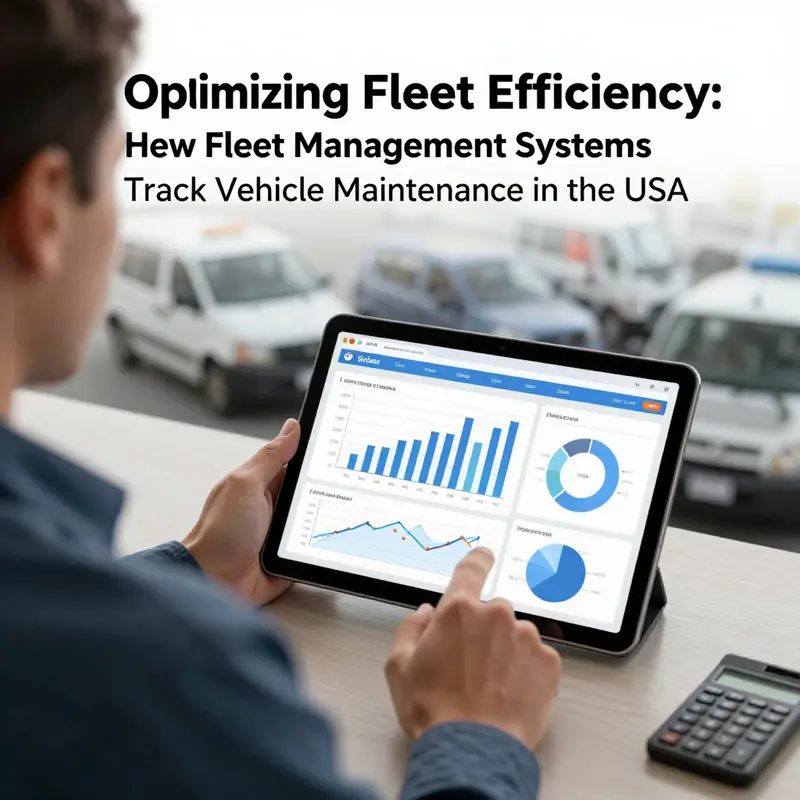
Real-time data collection sits at the heart of modern fleet management in the United States, weaving together safety, reliability, and regulatory compliance into a single, continuous workflow. The moment a vehicle rolls out of the yard, a blend of GPS, telematics, and a spectrum of sensors begins translating mechanical condition into digital signals. These signals travel through connected hardware mounted in each asset and feed a centralized operational picture that fleet managers rely on to keep dozens, hundreds, or even thousands of vehicles on the road. The raw input comes from a constellation of sources. Global positioning systems provide live coordinates and movement history, painting a precise picture of utilization and route patterns. Telematics devices, often linked through the vehicle’s data interface, harvest engine diagnostics, mileage, engine hours, fuel consumption, and even nuanced driver behavior. In parallel, a network of sensors monitors the mechanical heartbeat of the fleet—oil pressure, engine temperature, tire pressures, brake wear, and other indicators that quietly reveal what a service may soon require. Carriers that depend on large-scale operations know these data streams are not merely about location; they are about translating wear and stress into actionable maintenance decisions before failures occur. The result is a shift from fire-fighting repairs to a disciplined rhythm of preventive care. Thresholds anchor this rhythm. A predetermined maintenance interval—such as a mileage milestone or a time-based schedule—triggers alerts that convert data into work orders. When a truck approaches 10,000 miles since its last service or reaches a six-month service window, the system flags the vehicle for preventive maintenance. These prompts are not abstract reminders; they are actionable tasks embedded in a workflow that ties vehicle condition to shop capacity, parts availability, and technician scheduling. In practice, a fleet manager does not sort through stacks of paper to verify service needs. Instead, a centralized dashboard presents a living canvas of the fleet’s health. Each vehicle carries a status badge that reflects current health, upcoming service needs, and a record of completed maintenance. This visibility makes it possible to orchestrate maintenance windows in ways that minimize downtime and keep daily operations humming. The same real-time backbone that handles preventive tasks also supports compliance with regulatory mandates. In the United States, commercial fleets operate within a dense framework of rules and inspections designed to protect safety and national commerce. Real-time data helps demonstrate, in a documented and auditable form, that maintenance is performed on schedule, that inspections are current, and that records are complete. The documentation side of maintenance becomes as important as the service itself, and it often flows into digital record-keeping that can be shared with oversight bodies or service providers without the friction of paper forms. In this light, the maintenance program is not a static list of checkboxes but a living system that adapts to the fleet’s actual operating profile. To understand the foundations, it helps to think of maintenance as a multi-layered process. First, continuous monitoring observes critical indicators that signal the vehicle’s health in near real time. Oil pressure and engine temperature are common firewalls against sudden failure; deviations can reveal lubrication gaps, cooling system stress, or developing bearing wear. Second, alert logic converts threshold breaches into immediate notifications. A driver receives a warning if tire pressure falls below a safe level, while the fleet manager receives a notification about an overdue oil change or an upcoming brake service. Third, scheduling translates those signals into planned downtime. The aim is to align maintenance windows with the fleet’s operational lull, minimizing disruption and maximizing uptime. Fourth, the history ledger preserves every service event, creating an auditable trail that supports regulatory compliance and long-term asset planning. In practice, this seamless flow from data capture to service execution hinges on integration. The real-time feed must connect to an internal maintenance calendar, a parts and service network, and the fleet’s broader enterprise systems. When these connections are well-tuned, a maintenance work order can auto-populate with vehicle history, recommended service items, and preferred service locations. It can also facilitate digital record-keeping that reduces the back-and-forth between drivers, technicians, and fleet managers. The approach is inherently preventative: addressing issues before they manifest in costly breakdowns or operational interruptions. This is where artificial intelligence and machine learning enter the stage. By analyzing vast streams of historical and live data, predictive models estimate the remaining useful life of components and forecast the probability of a failure within a given window. The downstream effect is striking: maintenance can be scheduled with even greater precision, spare parts can be stocked more efficiently, and technicians can prepare in advance for the specific needs of each vehicle. The result is not just smoother maintenance but smarter allocation of fleet resources across time and geography. The impact of real-time data travels beyond the technician’s bay. In sectors that rely on large and diverse equipment—such as agriculture, where mechanical tillage implements and attached assets integrate with fleet operations—the same principles apply. Wireless sensors and lightweight interfaces provide ongoing health metrics without demanding constant human attention. Even small, solar-powered modules can deliver critical performance data, maintaining visibility across broad fields and long cycles. The common thread across these applications is a central truth: timely information enables better decisions. With real-time data, maintenance becomes a plan, not a reaction. Fleet managers can anticipate the need for service, schedule downtime strategically, and ensure that every vehicle remains within regulatory bounds and operating at peak efficiency. The practical benefits extend to the bottom line. Downtime costs, especially in high-demand periods, often dwarf the expenses of routine maintenance. Reducing unexpected failures translates into improved uptime, lower emergency repair costs, and smoother service delivery. Additionally, proactive maintenance tends to extend the life of assets and preserve resale value by avoiding chronic neglect that accelerates wear. The real-world workflow is anchored in a few core practices. First, continuous monitoring of mechanical and operational indicators creates a living profile for each asset. Second, threshold-based alerts transform data into immediate actions for drivers and managers. Third, predictive analytics convert large datasets into future-oriented maintenance plans. Fourth, integrated scheduling aligns service with operations, enabling controlled downtime rather than unplanned stoppages. Fifth, digital record-keeping ensures traceability and compliance, while seamless provider integration reduces the administrative burden of booking and documentation. Each vehicle thus becomes a node in a broader maintenance ecosystem rather than a standalone asset. Within this ecosystem, a simple but powerful mental model helps illuminate why this approach works. Real-time data acts as a constant diagnostic partner, offering early warning signs and evidence-based forecasts. The lead indicators—oil pressure, temperature, tire condition, and brake wear—are the canaries in the coal mine. Their early shifts in value prompt a cascade of downstream actions: a maintenance order is issued, a technician is alerted, a parts requisition is opened, and a service slot is reserved. When combined with GPS and usage data, these signals reveal not only when to service a vehicle but also where and how to service it most efficiently. The integration with a service network is critical. Digital workflows remove much of the friction that once hindered timely maintenance. Service providers can receive full, pre-populated work orders, complete with vehicle history, service recommendations, and even preferred scheduling windows. The outcome is a smoother, faster, and more reliable maintenance process that aligns with the fleet’s operational tempo. This seamless approach to maintenance also supports regulatory alignment. By maintaining consistent service intervals and keeping thorough digital records, fleets can demonstrate compliance with safety rules and inspection regimes. The reference to national standards and guidelines underscores the broader governance framework that shapes maintenance programs for commercial motor vehicles. For readers who want to connect the theory to practical knowledge about maintenance basics, consider exploring foundational discussions on vehicle maintenance: what is vehicle maintenance. This link provides a concise primer that complements the deeper, data-driven perspective described here. The marriage of real-time data with disciplined maintenance practices represents a new standard in fleet operations, one that supports safer roads, more predictable service levels, and a stronger foundation for compliance in a complex regulatory environment. As fleets grow more sophisticated, the importance of data quality cannot be overstated. Clean, accurate, timely data is the lifeblood that makes predictive maintenance credible. When data streams are noisy or incomplete, alerts can become false positives or, worse, misses. Hence, robust data governance, validation, and normalization processes are essential to sustain confidence in maintenance decisions. Moreover, the human element remains critical. Real-time data informs decisions, but experienced oversight ensures that maintenance strategies remain aligned with business goals, safety priorities, and the nuances of driver behavior. A well-designed maintenance program respects the realities of daily operations—productive routes, peak demand periods, and the inevitable variability in vehicle wear patterns—while leveraging technology to reduce risk and cost. In this sense, the real-time data ecosystem does not supplant expertise; it augments it. It gives fleet managers a clearer window into asset health, a more disciplined method for scheduling, and a transparent narrative that can be shared with drivers, technicians, and regulators alike. The new maintenance workflow is thus collaborative and proactive, anchored in data but executed through human judgment and organized processes. It is a model that scales with fleet size and complexity, enabling operators to sustain safe, compliant, and efficient service across diverse operating environments. For practitioners transitioning to this model, the path is not merely about installing devices or turning on dashboards. It is about designing an end-to-end process where data quality, threshold logic, predictive insights, and service delivery work in concert. When done thoughtfully, the result is a fleet that not only stays on the road but does so with a demonstrable, verifiable maintenance discipline that supports safer travel, lower total cost of ownership, and a more resilient transportation network. For readers seeking a broader perspective on how real-time fleet data informs smarter maintenance across the industry, see a comprehensive reference on smart fleet management. External reference: Avnet Smart Fleet Management
OBD to Insight: How Telematics Orchestrate Maintenance Across American Fleets

In the United States, keeping a large fleet on the road is less a matter of chance and more a carefully choreographed data dance. At the center of that choreography are telematics devices, tucked into the vehicle’s electronics and wired to the onboard diagnostics system. These devices do more than track location or fuel use; they listen to the heartbeat of each asset in real time, translating engine whispers into actionable maintenance tasks. Through a steady stream of data from the OBD-II port and other sensors, fleets convert a complex chronicle of wear and performance into a living maintenance plan. The result is not just fewer breakdowns, but a smoother operation in which every mile feeds a schedule rather than a surprise, and every fault code becomes a deliberate step toward reliability rather than an expense to be endured.
From the moment a vehicle starts its shift, telematics collect a suite of critical signals. Engine fault codes illuminate issues that might otherwise surprise a driver or a technician at the worst possible moment. Oil pressure readings tell a story about lubrication and engine health, while battery voltage can reveal charging system strain before it becomes a roadside event. Tire pressure and tread depth speak to safety and fuel efficiency, and mileage—along with engine hours and utilization patterns—anchors the maintenance calendar. When a device detects a deviation—low oil pressure, coolant temperature drift, an anomalous battery reading—the system flags a potential maintenance event. The data are not stored in a silo; they flow to a centralized dashboard that fleet managers monitor with the same seriousness they apply to route optimization or driver safety.
The real power of telematics lies in the automation that follows threshold breaches or time-based rules. A predetermined mileage threshold, such as a 10,000-mile service interval, or a time-based schedule, like maintenance every six months, triggers an automatic maintenance alert or work order. The moment a vehicle crosses that line, the system can generate a work order, assign it to the appropriate technician, and populate the order with the most likely service tasks based on historical data. This isn’t merely efficient; it is predictive. When the diagnostic trouble code system flags a pattern—perhaps a recurring fault tied to a particular component—the software can suggest a preventive replacement or a more comprehensive inspection. In practical terms, this means fewer unplanned breakdowns, less emergency downtime, and longer asset lifespans as wear is managed with foresight rather than reaction.
The architecture behind this capability blends hardware with software in a way that makes the fleet’s maintenance narrative cohesive. Telematics devices feed data to fleet management software platforms, which interpret the signals in the context of each vehicle’s history, its make and model, and the operator’s usage profile. This holistic view is essential because a diagnostic code on one truck may have a different implication than the same code on another, depending on climate exposure, load factors, and duty cycle. The result is a single, integrated picture: current health, remaining useful life, upcoming service windows, and the historical trajectory of every asset. Within this framework, maintenance becomes a continuous loop rather than a series of isolated repairs. When a diagnostic trouble code is triggered, the system can automatically generate a work order, push it to a technician, and even suggest replacement parts based on past repair patterns. The seamless workflow minimizes downtime and accelerates the path from fault to fix.
This approach dovetails with the broader regulatory environment in which American fleets operate. The Federal Motor Carrier Safety Administration (FMCSA) emphasizes the importance of well-managed maintenance programs for commercial motor vehicles. The maintenance discipline not only supports safety and reliability; it also aligns with FMCSA’s expectations for documented, auditable upkeep. Telematics-enabled maintenance records provide a traceable history of inspections, repairs, and component replacements, which can be instrumental when demonstrating compliance during audits or inspections. In this sense, telematics do more than improve uptime; they help fleets meet essential regulatory standards with verifiable data.
Behind the scenes, the practical workflow is elegantly simple and deeply effective. A truck enters service with a maintenance schedule that aligns with its duty cycle. As it accumulates miles or hours, the system tracks progress against the plan. When a threshold is approaching, an alert nudges the fleet manager to confirm the service window or reschedule around peak demand. If a fault code emerges, the system may automatically create a work order, assign it to the nearest qualified technician, and propose the specific parts most likely needed based on the vehicle’s repair history. This predictive posture not only curtails unexpected downtime but also optimizes parts inventory. By clustering maintenance events around planned downtime, fleets can negotiate better service times, reduce idle time, and balance labor availability with vehicle availability. The integration with service providers—through digital records and direct appointment scheduling—further compresses the lead times between diagnosis and repair, shortening the gap between a warning signal and a repaired asset.
At a strategic level, the value proposition of telematics in maintenance is clear. It shifts maintenance from a cost of operation to a strategic asset, one that protects uptime, protects cargo, and extends asset life. The data-rich approach yields constructive insights: which routes or duty cycles induce more wear, which components tend to fail in specific climate zones, and how preventive maintenance impacts total cost of ownership. When maintenance data are harmonized across a fleet, managers can benchmark performance, identify best practices, and replicate them across operations. In other words, telematics do not merely tell you that a vehicle needs service; they help you understand why and when, enabling smarter procurement, better scheduling, and more precise budgeting.
For readers seeking a foundational frame, consider exploring the basics of vehicle maintenance to ground terminology and concepts that underpin telematics-driven maintenance. For a foundational understanding, see What is Vehicle Maintenance.
While the core concepts are clear, the landscape continues to evolve. The most dynamic shift is toward deeper integration and predictive analytics that blend telemetry with historical repair data, wear patterns, and environmental conditions. Some fleets experiment with open versus closed data ecosystems, debating whether to rely on legacy, vendor-specific interfaces or to adopt interoperable data standards that facilitate cross-system communication. The promise is a future where diagnostics, maintenance scheduling, and supplier networks operate as a single, intelligent fabric. Industry observers point to continued advances in remote diagnostics, where technicians may review and even approve certain routine maintenance tasks remotely, based on telemetry alone. As fleets scale, the ability to automate more of the diagnostic-to-work-order loop becomes a differentiator in uptime and cost control.
The ongoing evolution also intersects with broader technological trends, including the gradual integration of autonomous driving concepts and advanced driver-assistance systems. While fully autonomous fleets remain a longer horizon, the underlying telematics infrastructure that supports maintenance will likely become more sophisticated, capable of ingesting data from an expanding set of sensors and correlating it with complex operational patterns. This layered intelligence promises to tighten the feedback loop between vehicle health, maintenance planning, and operational efficiency, enabling fleets to push the envelope on reliability without sacrificing safety or throughput.
In practice, the success of telematics-driven maintenance rests on data quality, standardization, and disciplined workflow. Without clean data, alerts lose credibility; without standardized thresholds, maintenance programs become opaque and inconsistent across a large fleet. Yet when these elements align, the payoff is substantial: fewer roadside breakdowns, faster repair times, improved safety metrics, and a more resilient operation that can withstand the pressures of peak seasons, regulatory scrutiny, and a tightening labor market. The journey from a heartbeat in the OBD-II port to a well-scheduled maintenance event is short, but its impact is long, shaping not just how fleets stay on the road, but how they thrive in a data-driven transportation ecosystem.
External reference: https://www.fmcsa.dot.gov/
Predictive Scheduling and Proactive Maintenance in U.S. Fleet Operations

In American fleets, maintenance is treated as a core discipline supported by telematics, standardized intervals, and workflow automation. Telematics devices feed vehicle health data, mileage, engine hours, and fuel patterns to a centralized system. When a threshold is reached the system generates a maintenance alert and a digital work order, moving maintenance from reactive checks to planned actions. The result is higher uptime, longer asset life, and a more predictable operating tempo. The maintenance loop combines data signals, scheduled tasks, and service delivery into a continuous cycle that supports compliance with FMCSA rules and insurance requirements. Thresholds may be mileage based or time based, and data quality is essential to preserve the predictive edge. If data drifts or drivers do not report issues, governance and calibration keep thresholds aligned with real world wear. The automation also coordinates with workshops, mobile units, and partners, producing auditable records for warranties, inspections, and reports. In this framework, maintenance becomes an optimized capability that technicians, fleets, and management use to test different intervals, adjust plans, and quantify savings over time.
Guardrails on the Highway: How Regulatory Compliance Shapes Fleet Maintenance Tracking in the USA
In the United States, fleet management has grown from a simple asset-tracking exercise into a disciplined discipline of regulatory compliance, operational efficiency, and data-driven decision-making. The heart of this transformation lies in maintenance tracking systems that weave together real-time vehicle data, standardized procedures, and auditable records. For fleets that move goods, people, and services across a vast and heavily regulated landscape, the stakes are high. Safety, uptime, and legal compliance are not separate goals but a single, interconnected mandate that determines how well a fleet can perform, stay out of penalty, and remain resilient in the face of demand and disruption.
At the core, modern maintenance tracking in the USA relies on telematics hardware installed in each asset. These devices act like digital nervous systems, constantly listening to the engine, drivetrain, braking systems, and operating conditions. The data stream typically includes engine diagnostics through standard interfaces, mileage, engine hours, fuel consumption, and driver behavior indicators such as acceleration and braking patterns. When a vehicle reaches a predefined maintenance threshold—whether it is a mileage interval such as 10,000 miles, or a calendar-based schedule like every six months—the system automatically flags a maintenance alert or creates a work order. This automation is not merely convenient; it is essential for maintaining compliance with national and state regulations that govern vehicle safety, driver hours, and vehicle readiness for service.
In the United States, regulatory attention to fleet maintenance is anchored by comprehensive safety and compliance frameworks. The Federal Motor Carrier Safety Administration (FMCSA) is a primary reference point for commercial fleets, outlining maintenance program requirements and the necessity of keeping accurate, accessible maintenance records. These records underpin the ability to demonstrate that vehicles are fit for service, that inspections are timely, and that corrective actions are taken when issues are identified. The notion of compliance here transcends the occasional audit; it translates into proactive risk management. When a system logs a fault, schedules an inspection, or documents a completed repair, it creates a verifiable trail that auditors can follow. The digital nature of these records reduces the likelihood of human error and ensures consistency across a fleet—an essential feature when dozens or hundreds of assets must be synchronized under a single regulatory umbrella.
The technology-driven approach to compliance also strengthens the integrity of reporting. Centralized dashboards aggregate vehicle-by-vehicle status, enabling fleet managers to view health metrics, maintenance horizons, and regulatory flags at a glance. Beyond simple reminders, these dashboards provide historical context: a complete maintenance history that shows what was serviced, when, by whom, and with what parts. This level of detail is critical during inspections or audits, where regulators may request proof of compliance with maintenance timing, inspection intervals, and the recency of safety-related repairs. In this sense, maintenance tracking becomes a core compliance mechanism, ensuring that the fleet is not only safe but also audit-ready at any moment.
The practical flow from data to compliance is straightforward but powerful. Real-time data identifies upcoming needs while confirming completed actions. If a fault or wear condition arises that could affect roadworthiness, the system can trigger an immediate work order or appointment with a service provider, ensuring that the issue is addressed before it escalates. This is particularly important in a regulatory environment that emphasizes preventive maintenance. The idea is not to chase penalties after a breakdown but to prevent breakdowns from occurring in the first place while maintaining a verifiable maintenance cadence. The automated nature of maintenance reminders and work orders reduces the risk of missed services due to human scheduling gaps, a common source of non-compliance in high-demand operations.
A crucial and often underappreciated piece of this ecosystem is the ability to demonstrate regulatory compliance through digital records. Paper-based histories are increasingly rare, not only because they take longer to assemble but because they are more susceptible to loss or misfiling. Digital maintenance records, synchronized across fleets and devices, provide tamper-evident, timestamped evidence of inspections, repairs, and preventive maintenance. When regulators request documentation, fleets can present complete maintenance logs that cover inspection dates, defect disclosures, corrective actions, and the status of critical safety systems. This documentation is not merely a formality—regulatory bodies rely on it to verify that vehicles meet safety standards and that drivers operate with an appropriate level of oversight and oversight is a continuous process, not a one-off event.
As maintenance tracking matures, the integration with service providers becomes more than a convenience. Digital workflows can streamline appointment booking, parts procurement, and service completion updates. When a vehicle requires a routine service or a diagnostic check, the system can automatically coordinate with a network of qualified technicians, scheduling a slot that minimizes downtime and aligns with regulatory windows, such as FMCSA inspection cycles or state-specific vehicle inspection requirements. This seamless coordination helps fleets sustain a predictable maintenance cadence while maintaining compliance, which is particularly valuable for fleets that operate across multiple jurisdictions with varying rules. The result is a more resilient operation where the regulatory framework is embedded in the day-to-day workflow rather than an external constraint added after the fact.
The relevance of such a system extends beyond mandatory compliance. Regulators themselves recognize that maintenance programs are pivotal to safety and efficiency, which has led to official guidance and resources that emphasize the importance of consistent maintenance practices. For fleets, this means that the operational benefits of maintenance tracking—improved vehicle availability, lower repair costs, longer asset life, and safer driving—are aligned with regulatory expectations. The symbiosis between proactive maintenance and compliance turns routine servicing into a strategic advantage. Fleets that cultivate a culture of meticulous maintenance record-keeping can navigate audits with confidence, respond rapidly to requests from regulators, and demonstrate a commitment to safety that resonates with drivers, customers, and the public.
From a broader perspective, the maintenance data landscape in the USA is shaped by standards and best practices that guide how information is collected, stored, and used. The Federal Highway Administration (FHWA) provides official resources that address vehicle safety standards, driver work hours, and, importantly, maintenance compliance. While the FMCSA governs the motor carrier dimension, FHWA resources help fleet operators understand how vehicle maintenance intersects with road safety and infrastructure policies. This alignment ensures that fleets are not operating in a regulatory vacuum; their maintenance practices are part of a national vision for safer, more reliable transportation networks. The availability of authoritative guidance helps fleets calibrate their internal policies to reflect current regulatory expectations and to adapt quickly as rules evolve.
In practice, the value of maintenance tracking for compliance is also about transparency and accountability. When a regulator asks for proof of maintenance, the fleet can present a coherent narrative backed by data: a history of inspections, documented repairs, and evidence of preventive measures taken to address wear and tear before it becomes a safety concern. This narrative is not only about passing an audit; it communicates that the fleet adopts a rigorous, evidence-based approach to safety and compliance. For managers, it means fewer ad hoc decisions and more deliberate, data-informed actions that align with both corporate objectives and regulatory requirements. In a landscape where enforcement can be selective but the consequences of non-compliance are significant, such a data-driven approach to maintenance serves as a steady compass, guiding operations toward safer roads and healthier assets.
To connect this understanding with broader maintenance literacy, consider the foundational question—what exactly constitutes vehicle maintenance? A clear grasp of this concept helps fleets frame compliance more effectively. A modern maintenance program is not only about fixing what is broken; it is about preventing problems, documenting actions, and ensuring each asset remains fit for service within regulatory expectations. As a practical reminder, readers can refer to foundational explanations that lay out the scope and purpose of vehicle maintenance. what is vehicle maintenance provides a straightforward overview that complements the more technical and regulatory-focused material discussed here. This interconnected understanding reinforces the notion that compliance begins with sound maintenance practices and robust documentation, then scales through automated systems to ensure consistency across an entire fleet.
Ultimately, the regulatory dimension of fleet maintenance tracking in the USA is about building a reliable, auditable, and accountable system. It is about turning regulatory demand into a structured workflow that delivers real safety and efficiency gains. As fleets expand and regulatory expectations evolve, the value of integrated maintenance tracking only grows. The combination of telematics, standardized maintenance cycles, automated work orders, and digital records turns compliance from a burden into a measurable asset—an essential capability that keeps vehicles on the road, drivers protected, and operations resilient in the face of evolving laws and changing traffic patterns. For practitioners, this means investing in robust data governance, clear maintenance policies, and a culture that treats every maintenance action as a step toward safer travel and more trustworthy service delivery.
External resources provide authoritative context for these ideas. The Federal Highway Administration remains a cornerstone for understanding the regulatory landscape and how maintenance intersects with road safety and infrastructure policy. For readers seeking official guidance and policy details, FHWA’s portal offers essential insights into vehicle safety standards, maintenance considerations, and regulatory expectations that shape fleet management practices across the United States. https://www.fhwa.dot.gov/
From Data Streams to Service Schedules: Provider Integrations Transform Maintenance in US Fleet Management
When fleet managers talk about maintenance tracking, they often begin with dashboards, alerts, and maintenance thresholds. Yet the real power of modern fleet management in the United States emerges when those data streams connect to the people and places that actually perform the work. Integration with service providers turns a passive log of faults into an active maintenance ecosystem. It stitches telematics and diagnostics to the appointment book, the repair bay, and the parts shelf. The result is not only a clearer history of every asset but a dynamic, proactive rhythm that aligns vehicle health with daily operations, logistics windows, and regulatory expectations. Across the industry, this integration is reshaping how fleets schedule, track, and verify maintenance, moving maintenance from a reactive afterthought to a carefully orchestrated asset care program. In practice, the integration is powered by a coordinated choreography of data, automation, and human collaboration, where the fleet management system serves as the conductor and the service network as the orchestra. The data backbone begins with real time telemetry and on board diagnostics, which capture engine health, mileage, hours of operation, fuel usage, tire pressures, brake wear indicators, and even driver behavior that can signal abuse or unusual wear patterns. When these signals breach predefined thresholds—be it a mileage milestone, a time-based interval, or a rapid decline in a critical parameter—the fleet system initiates not just an alert, but a bridge to the service network. Rather than sending a lone reminder to a fleet manager, the system can automatically generate a service work order and push it through to the selected repair channel. The beauty of this approach lies in the automation’s ability to translate usage and condition into scheduled work, with a full audit trail that travels with the asset across decades of service history. The central dashboard, then, becomes a living map of maintenance activity, showing which vehicles are in the shop, which ones are awaiting parts, and which are cleared for deployment, all while maintaining a chronological log of every service event. It is this digital continuity that enables fleets to demonstrate compliance under regulatory frameworks that govern safety, uptime, and record keeping, including the standards that govern commercial operations. The value proposition expands when the maintenance workflow is extended to the external ecosystem of service providers through standardized interfaces. APIs act as the language that connects the telematics platform with the networks of automotive service professionals, allowing data to flow securely between the fleet and the workshop management systems of repair facilities. The negotiation of that data exchange is not simply about loading a calendar; it is about aligning business processes so a service provider can access the exact vehicle history, maintenance needs, and prior parts usage necessary to schedule the right repair at the right time. In this integrated model, automated service scheduling becomes a practical default rather than an optional enhancement. The system can propose appointments based on current vehicle utilization, predicted downtime, and the availability of preferred service locations. It can balance priority repairs against routine maintenance, optimizing for uptime and cost efficiency. For the fleet manager, this means fewer missed maintenance windows, fewer trips to the shop for urgent service, and more predictable downtime. Real-time updates from the repair shop complete the picture. As a vehicle travels from the field to the service bay, the maintenance platform reflects live status changes: the arrival of the vehicle, the start of labor, the progression of diagnostic testing, the status of parts procurement, and the moment the vehicle is deemed roadworthy again. These live updates reduce the guesswork that used to accompany shop scheduling and resource allocation. They also enable more precise planning for drivers, dispatchers, and maintenance staff. Digital maintenance logs, meanwhile, accumulate an exhaustive history of every service event, including labor hours, parts used, and technician notes. These logs are more than records; they are evidence that the maintenance program has been executed as planned and that asset care is traceable for audits and compliance reporting. In regulated operations, such traceability matters. The ability to demonstrate that a vehicle received the scheduled preventive maintenance, or that a corrective action was completed after a diagnostic finding, becomes a cornerstone of safety programs and cargo integrity. The integration is not only about push and pull data; it is about creating an ecosystem where the service network can respond with speed, accuracy, and transparency. The most effective implementations automate reminders for upcoming services and tie those reminders to each vehicle’s individual maintenance history. Instead of generic, calendar-based prompts, the reminders reflect the asset’s actual condition and usage pattern. That approach reduces unnecessary service events while ensuring critical work is completed on schedule. When the repair work is completed, the system records the outcome and updates the fleet’s maintenance ledger in real time. The benefit extends beyond uptime and compliance. Regular, timely maintenance correlates with longer asset lifespans, reduced wear and tear, and more predictable total cost of ownership. By engaging service providers through a connected network, fleets can negotiate better turnaround times, leverage vetted maintenance partners, and gain access to standardized service data that supports benchmarking across the fleet. The operational advantages compound when these capabilities scale to multi-asset environments, from trucks to specialty equipment and even aircraft platforms. A unified maintenance view across diverse asset classes helps fleet managers compare maintenance strategies, assess the effectiveness of preventive programs, and identify gaps in the service network. The digital maintenance log becomes a single source of truth for regulatory reporting, cost allocation, and performance analytics. It is important to acknowledge the practical challenges that accompany provider integrations. Data quality is paramount; inaccuracies in vehicle history or misaligned part numbers can derail scheduling and erode trust in the system. Harmonizing data formats across a dispersed network of service providers requires careful governance, including data validation, standardized service codes, and consistent terminology for maintenance actions. Additionally, coordinating among multiple shops, parts suppliers, and scheduling systems can introduce complexity. Platforms must resolve conflicts between shop capacity, vehicle availability, and urgent repair needs, all while preserving the integrity of the maintenance record. Security and privacy are equally critical. As data travels between the fleet management system and external service networks, robust authentication, encryption, and access controls are essential to prevent tampering or unauthorized disclosure of sensitive information. The procedural integration must also respect business rules around warranty coverage, service contracts, and fleet-specific procurement guidelines. Yet for all its challenges, the integration with service providers represents a lever for tangible, measurable improvement. It extends the fleet’s maintenance program into the real world where repairs happen, enabling smoother handoffs, faster turnaround, and clearer accountability. Digitized reminders that reflect actual usage prevent missed services, while real-time repair status updates empower dispatchers to reallocate assets with minimal disruption. The digital logs that accompany every action serve as a living ledger that supports compliance, internal audits, and cost transparency. This is where the broader narrative of maintenance in the United States intersects with the day-to-day logic of operations. A maintenance program anchored in provider integrations aligns with regulatory expectations for preventive maintenance and safety, while also delivering practical benefits like reduced downtime, lower emergency repair costs, and more reliable service levels for customers. In practice, the architecture of such a program balances automation with human oversight. Automation streamlines scheduling, notification, and record-keeping. Human oversight ensures the right service providers are engaged, that replacements and repairs adhere to quality standards, and that exceptions are handled promptly when conditions or priorities shift. The result is a resilient maintenance workflow that adapts to the ebb and flow of demand, weather, road conditions, and supply chain realities. For readers exploring these concepts, consider how a maintenance ecosystem that emphasizes provider integration supports not only compliance but also operational efficiency and strategic cost management. The link between maintenance discipline and fuel economy, for instance, is a recurring theme in fleet performance discussions. When maintenance is timely and precise, engines run cleaner, components wear more evenly, and fuel efficiency trends improve over time. The broader story is that maintenance tracking, once passive and siloed, can become a proactive, data-driven discipline that touches every corner of the operation. Such a transformation rests on the twin pillars of robust data connectivity and trusted service partnerships. With those pillars in place, a fleet can turn maintenance into a strategic asset rather than a recurring expense, delivering reliability for customers, safety for drivers, and compliance with regulators. If you want to explore a practical angle on how maintenance efficiency translates into cost savings and fuel economy, you can read a related discussion here: how-vehicle-maintenance-saves-on-gas-expenses. For readers seeking a broader context on the external ecosystem that enables automated service reminders and detailed maintenance logs, a representative comprehensive platform in the industry space offers a useful reference point for how governance, security, and scalable integrations come together in practice. External resources provide the structural backdrop for the standards and considerations that guide these implementations. External resource: https://www.autozis.com
Final thoughts
The efficient tracking of vehicle maintenance through fleet management systems in the USA is integral to ensuring safety, compliance, and operational efficiency. By leveraging real-time data, telematics, proactive scheduling, regulatory guidance, and seamless service provider integration, businesses can significantly improve their fleet’s performance. Understanding these systems empowers business owners to make informed decisions that boost reliability and minimize downtime, ultimately driving greater success.