
For business owners, managing a fleet efficiently translates directly into cost savings and improved sustainability. Vehicle maintenance has a profound impact on fuel economy, which is crucial for operational costs. From engine performance to tire condition, every aspect of a vehicle contributes to how hard the engine works and how much fuel it consumes. This article explores the essential elements of vehicle maintenance, demonstrating their direct effects on fuel efficiency. We delve into the role of engine performance, tire maintenance, the function of exhaust and ignition systems, the importance of emissions controls, and the broader benefits of routine upkeep. By understanding these components, businesses can significantly enhance fuel economy and reduce environmental impacts.
Engine Health as the Gatekeeper of Mileage: How Regular Maintenance Shapes Fuel Economy

Engine health is often discussed in terms of performance, reliability, and longevity, yet it also stands as a quiet architect of fuel economy. When the engine runs smoothly, with the right timing, clean air, and properly lubricated parts, the combustion process becomes more complete and efficient. In practical terms, that means each drop of fuel does more useful work, producing propulsion rather than heat lost to internal friction and wasted energy. This is not a luxury detail; it is the central logic behind why regular maintenance matters for mpg. The engine is a complex system of interacting components and sensors that must stay in harmony. Small deviations in one part—a worn spark plug, a clogged injector, or a drifting sensor—can cascade into less efficient combustion, higher emissions, and more fuel burned to achieve the same performance. The good news is that regular maintenance acts like a tune that keeps the engine singing in tune. It doesn’t just keep the car running; it preserves the integrity of the combustion process, aligning fuel delivery, ignition timing, and air intake so that energy is used with maximum effectiveness.
Regular engine tune-ups have become both simpler and more impactful as vehicles rely on sophisticated computer controls. A properly performed tune-up recalibrates fuel injection timing, spark plug operation, and valve behavior to match the aging but still capable hardware. Over time, wires erode, sensors drift, and injectors accumulate varnish; these changes push the engine toward richer or leaner fuel mixtures and uneven power delivery. Nationwide testing mirrors what many drivers observe in daily use: small maintenance tasks can yield measurable gains in fuel economy and emissions. The U.S. Department of Energy notes that a well-executed tune-up can improve gas mileage by about 4 percent on average, with larger gains for engines that have fallen behind. The tests compare performance on a dynamometer before and after the tune-up, demonstrating that even routine service translates into real-world savings. The tune-up also helps protect the engine from burning fuel inefficiently when load and driving conditions change, such as during highway cruising or in city stop-and-go, where timing and mixture accuracy matter just as much as raw power.
Oil matters not only as a lubricant but as a shareable conduit of efficiency. The manufacturer’s recommended oil grade is chosen to minimize internal friction across the engine’s rotating assembly. When drivers use oil that is too thick or too thin, or neglect regular oil changes, friction rises. That extra drag compels the engine to work harder to achieve the same speed, and the fuel economy falls as a consequence. The EPA has estimated that using the recommended oil grade can improve fuel economy by roughly 1–2 percent. Oils carrying an Energy Conserving label offer additional friction-reducing additives that further boost efficiency, especially in engines with high mileage or older seals. The effect may be subtle in everyday driving, yet over time it compounds. It is a reminder that even the choice of lubricant is a downstream decision that shapes the engine’s thermal and mechanical balance. Clean oil also protects vital parts from wear, reducing the odds of leaks and misfires that would disrupt the air-fuel ratio and undermine efficiency in later miles.
Air is the limiting ally of combustion. A clean air filter ensures that the engine receives the right amount of oxygen without forcing the fuel system to compensate with extra fuel. A clogged filter reduces incoming air, prompting the engine control unit to spray more fuel to maintain the desired mixture. The Department of Energy highlights this simple maintenance item as one of the most impactful on fuel economy. Replacing a dirty air filter can increase fuel economy by as much as 10 percent in some cases because the engine can breathe efficiently once again. The effect is immediate and broad, improving performance in both light and heavy throttle conditions. The takeaway is that a few moments spent inspecting and replacing the air filter pays off in fuel savings, smoother idle, and more predictable acceleration.
Tire pressure is sometimes described as the interface between the engine and the road. While it is not an engine component, underinflated tires add rolling resistance, which forces the engine to work harder to move the vehicle. The manufacturer’s recommended pressures are tuned to minimize energy losses and maximize tread life. Keeping tires inflated to those specifications can improve fuel economy by a few percentage points, and the gains can accumulate across a year of driving. In addition, replacing worn tires with low-rolling-resistance models can further reduce energy loss. Even small inflations drift with temperature and load, so regular pressure checks, ideally monthly, act as a surprisingly effective engine companion. When maintenance becomes a habit that includes tire care, the overall energy picture brightens, and the car’s response and steering feel remain stable under changing conditions.
Other engine and exhaust subsystems also keep the combustion process honest. A malfunctioning oxygen sensor or a clogged catalytic converter can subtly alter the air-fuel mixture, forcing the engine to burn more fuel to reach the same power. Misreadings can cause the engine to run rich, and the extra fuel ends up as heat and emissions rather than propulsion. Likewise, misaligned wheels or brake drag create mechanical resistance that the engine has to overcome even when the driver seeks efficiency. These issues aren’t always obvious in day-to-day driving, but their cumulative effect is to erase the gains earned through good tune-ups and new filters. A well-maintained exhaust and emissions system helps preserve the intended air-fuel ratio, ensuring that the engine’s energy output is used for forward movement rather than wasted as unburned fuel or heat. Keeping sensors clean, ensuring a clear exhaust path, and addressing wheel alignment and brake drag promptly are small steps with outsized mileage rewards.
Rather than a single magic fix, fuel efficiency emerges from a balanced, ongoing relationship between engine health and vehicle dynamics. Routine maintenance keeps the engine from drifting away from its designed operating envelope, where combustion remains orderly and predictable. In practice, that means a scheduled program that includes not only periodic tune-ups and oil changes but also timely air-filter replacement, disciplined tire care, and a proactive approach to recognizing vibration, noise, or performance changes that might signal a sensor or exhaust problem. The payoff is twofold: drivers experience steadier mileage and more stable performance, while the vehicle benefits from lower emissions and longer life. The science behind this is straightforward: when friction and unnecessary resistance are kept to a minimum, the engine uses fuel more efficiently to deliver the same power outputs. The practical side is equally clear—by building maintenance into the rhythm of driving, consumers create a reliable path to savings that mount over time, not as a one-off reward.
In this light, the relationship between maintenance and fuel economy becomes not a constraint but a framework for smarter, more deliberate driving. The improvements are often most noticeable in real-world driving, where short trips, cold starts, and varying loads test the engine’s ability to meet efficient targets. A well-tuned engine will recover fuel economy faster after a cold start, and it will sustain it under moderate highway speeds and during steady cruising. The evidence from nationwide testing supports this view, showing that regular service translates into measurable, real-world gains rather than theoretical potential.
For readers curious about practical applications, explore how vehicle maintenance saves on gas expenses. This perspective helps connect the laboratory results of dynamometer tests with the everyday experience of drivers who want to save money at the pump while reducing emissions.
Ultimately, the message is straightforward: engine performance thrives on discipline. Scheduling regular tune-ups, honoring oil-change intervals with the recommended grade, replacing air filters on time, monitoring tire pressures, and addressing exhaust and sensor issues promptly—all of these steps collaborate to deliver the best possible fuel economy. The impact is cumulative and tangible, and it grows as the vehicle ages and accumulates miles. When maintenance becomes a habit, the engine remains aligned with the driving demands of its operator, converting more of the fuel into forward motion rather than heat, friction, or unburned fuel. This is how maintenance helps the car sip fuel rather than gulp it, a difference that adds up over time and across a fleet of vehicles on the road.
For more formal guidance, see the external resource from the U.S. Department of Energy that provides evidence-based maintenance recommendations: https://www.fueleconomy.gov/feg/maintain.shtml
The Quiet Driver of MPG: How Tire Health and Inflation Shape Fuel Economy
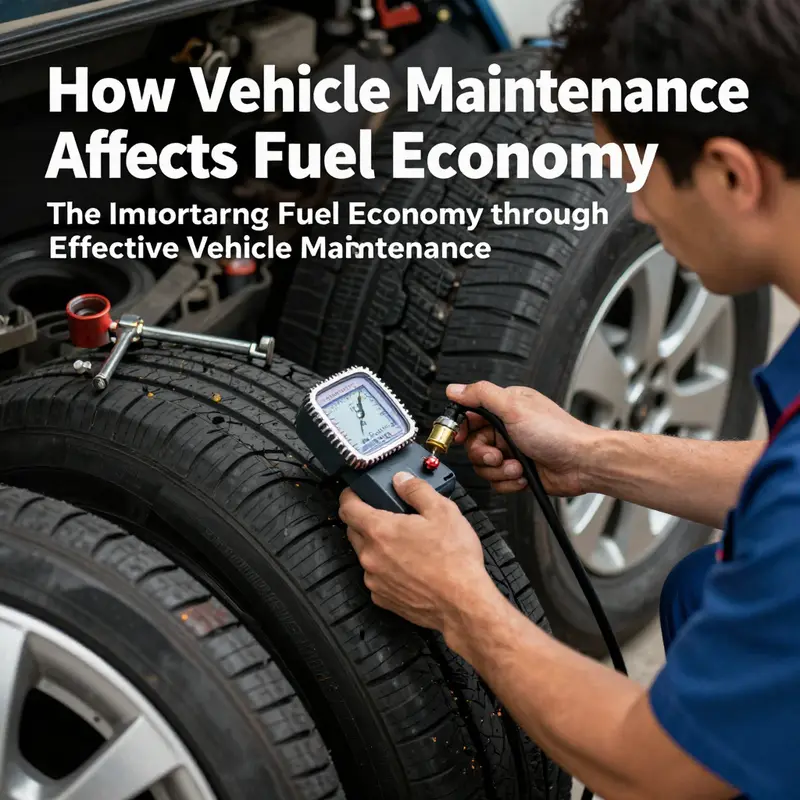
Tires are the quiet backbone of fuel economy. They are the only part of the vehicle that directly greets the road, and their condition quietly dictates how efficiently everything else is able to operate. In discussions about conserving fuel, engines and exhaust systems often steal the spotlight, but the tire’s role is foundational. A car that rolls on healthy, properly inflated tires experiences less resistance, smoother operation, and a higher likelihood of reaching the miles-per-gallon targets that drivers hope to meet. This is not a glamorous lever, but it is a reliable one—one that sits within reach every time a driver glances at the tire pressures on the door frame or the tread depth with a quick sense of the wear pattern. When maintenance routines emphasize tire health, the rest of the drivetrain benefits, and the road rewards careful stewardship with steadier fuel use over time.
Rolling resistance, the friction that tires experience as they roll and deform, is a function of tire construction, temperature, load, and, crucially, air pressure. When tires are inflated to the manufacturer’s specification, the tire maintains a stable shape as it meets the pavement, and the energy required to deform and reform the tire during each rotation remains at a minimum. But once pressure begins to slip, even by a few pounds per square inch, the tire’s sidewalls flex more. The tire becomes less efficient at transmitting engine power into forward motion and more energy is wasted as heat within the tire itself. The physics are simple, but their practical impact is anything but trivial. A well-inflated tire reduces rolling resistance, enabling the engine to perform fewer unnecessary revolutions to maintain a given speed. The result is a tangible improvement in fuel economy that compounds with every mile driven. For drivers of real-world vehicles, this means that a routine check of tire pressure can translate into more miles per gallon and less money spent at the pump over the course of a year.
The relationship between tire pressure and fuel economy is supported by broad data and broad experience. Even small deviations from recommended pressure can have measurable effects on consumption. The more you drive, the more those small changes accumulate. Regularly inflating tires to target pressures minimizes unnecessary energy loss in every trip. In addition to pressure, wear depth and tire quality influence economy. Worn tread increases rolling resistance and reduces grip, particularly in adverse conditions, which can force the engine to work harder to maintain speed or accelerate. Worn tires also alter the tire’s effective rolling radius, which can skew speedometer readings and drive a disconnect between perceived efficiency and actual fuel use. That misalignment between perception and reality is a familiar trap for drivers who rely on rough mileage estimates; the only reliable antidote is consistent tire maintenance—pressure checks, tread assessments, and timely replacements when wear reaches the point where efficiency begins to slip.
Choosing tires with low rolling resistance represents a further, practical step toward tighter fuel economy. These tires are designed to minimize energy loss in the contact patch and to sustain efficient performance across a range of road conditions. They are not a substitute for proper inflation or for a sound maintenance routine, but when used in concert with regular pressure checks, balance, and rotation, they can provide an incremental edge. Tire selection matters, but even the best low-rolling-resistance tires cannot compensate for neglect in pressure, wear, or alignment. The driver’s daily discipline—checking pressures, rotating tires at recommended intervals, and monitoring wear—remains the most consistent driver-controlled lever for economy. The interplay among tire design, inflation, and wear becomes most evident when the vehicle is loaded, driven in varied climates, or subjected to long highway runs where small efficiency gains add up across thousands of miles.
The broader maintenance picture reinforces this point. A well-tuned engine with clean oil and fresh filters reduces internal friction and ensures that the power produced by the engine translates efficiently into forward thrust rather than wasted heat. The EPA and other authorities have documented that regular maintenance, including tire management, affects both fuel economy and emissions. In practice, this means that your car’s fuel bill—and its environmental impact—improve when maintenance routines stay current. The synergy between tire care and engine care is more than additive: it is multiplicative, because each element supports the other. A tire that rolls with minimal resistance reduces the load presented to the engine, and an engine that operates within its optimal temperature and lubrication regime encounters less drag from unnecessary mechanical resistance. This integrated view helps drivers understand why tire maintenance is not simply about avoiding flats or improving safety; it is a direct, practical path to better efficiency and cleaner operation.
A concrete way to embed this understanding into daily life is to treat tire health as part of a holistic maintenance habit. First, check tire pressure when the tires are cold and compare the readings to the vehicle’s recommended specification. Inflate or deflate as needed to reach the target range, and then recheck after a short drive to ensure the tires have settled to a stable state. Keeping a simple log—pressure readings, rotation dates, and tread depth measurements—makes it easier to notice gradual leaks or atypical wear patterns before they become fuel-costly problems. Tire rotation, in particular, deserves attention because it promotes even wear and preserves the tires’ rolling characteristics. When wear becomes uneven, rolling resistance can increase on one axle, prompting the engine to compensate with more throttle input. Regular alignment checks help prevent subtle steering and tracking issues that would otherwise translate into drag on road and fuel.
The value of these practices is not only measured in gallons saved per year, but in the confidence they give drivers to optimize performance in real-world conditions. We all face varying loads, speeds, and weather, and the tires’ condition determines how resilient a car remains amid those changes. A well-inflated, evenly worn set of tires reduces the likelihood that a single, avoidable drag point will sap efficiency on a long trip or a routine commute. For readers who want to see how these ideas translate into practical savings, a good starting point is a straightforward maintenance mindset that treats tires as a critical component of the vehicle’s energy system. This approach aligns with the broader philosophy of fuel economy that emphasizes maintenance and behavior as the first and most dependable levers drivers can pull. As with any disciplined practice, the payoff accrues over months and miles rather than a single tank, yet the gains are robust enough to matter in day-to-day budgeting and in the long view of emissions and sustainability.
To bring the concept from theory into a practical, testable routine, consider the following actionable step sequence. Begin with tire pressure checks aligned to the manufacturer’s specification, performed when tires are cold. Use a reliable gauge and adjust to the correct range. Next, inspect tread depth across all four tires, looking for uniform wear and signs of unusual wear on edges or shoulders that could indicate misalignment or improper inflation. If wear is uneven, schedule rotation and a professional inspection of alignment and balance. Then, review the rest of the maintenance schedule: ensure oil changes are timely, air filters are clean, and the ignition system is operating smoothly. When these elements operate in concert, the car’s engine breathes easier, and the tires roll more efficiently. The result is not a dramatic single moment of savings, but a steady stream of improvements that make fuel economy more attainable over the long run.
For readers seeking a concise capture of these ideas in a single reference point, this approach embodies practical maintenance as a fuel-saving strategy—the kind of knowledge that moves from awareness to action in everyday driving. It is a reminder that efficiency lives in the routine as much as in the design. And it is a reminder that tire health, though sometimes overlooked, is a central, enduring pillar of fuel economy in any car. The path to better MPG is not a mystery; it is a matter of attentive maintenance, mindful driving, and respect for the tire’s pivotal role in the vehicle’s energy equation.
External resource: https://www.epa.gov/air-emissions-standards-passenger-cars-and-light-duty-trucks/vehicle-maintenance-affects-fuel-economy-and-emissions
Efficient Fire and Free Flow: Maintaining Ignition and Exhaust for Better Fuel Economy
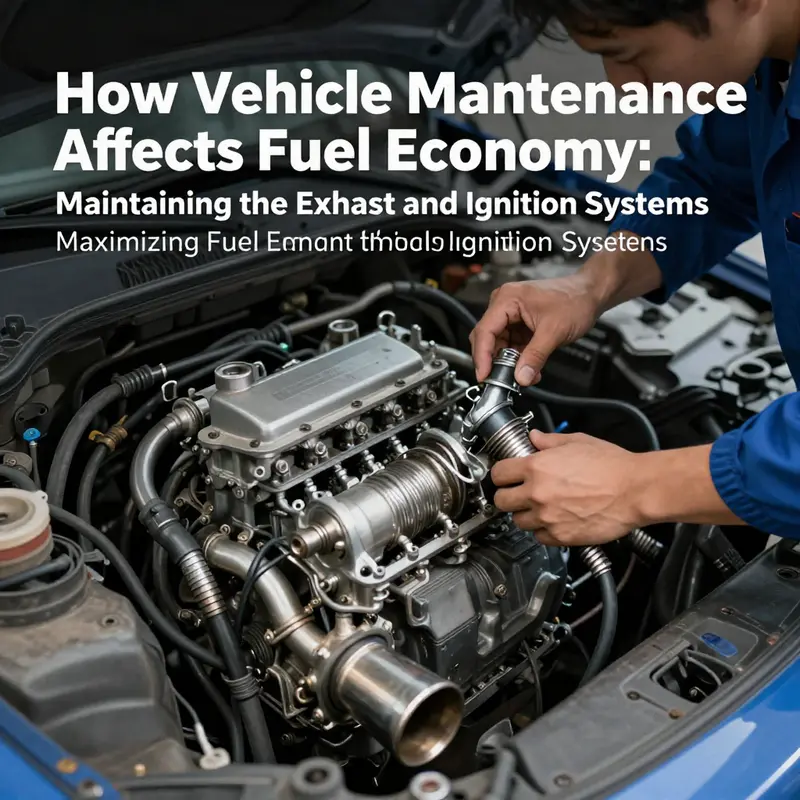
Maintaining a vehicle’s ignition and exhaust systems isn’t just about avoiding failures; it’s a practical path to real-world fuel savings. When these systems operate freely and reliably, the engine spends less time wasting energy on misfires or backpressure, and more time converting fuel into motion. Regular inspection and timely replacement of worn plugs, leaky lines, and clogged sensors keeps the combustion clean and the exhaust flow smooth, which translates into steadier idle, more predictable acceleration, and better miles per gallon. In everyday driving—city stops, highway cruises, and hills—the benefits accumulate as a quieter rhythm, steadier torque, and lower fuel use for the same workload.
Key maintenance actions include: checking spark plugs for wear and proper gaps; inspecting ignition coils and wiring for cracks or arcing; testing oxygen sensors and catalytic converter health; verifying exhaust hangers and pipes for leaks; and replacing parts per manufacturer intervals or symptoms. By staying on top of these items, drivers reduce fuel penalties caused by misfires, unnecessary enrichment, or restricted flow. The broader message is simple: clean ignition energy and an unobstructed exhaust path help the engine breathe and burn efficiently, which shows up as tangible mpg improvements over time.
Clean Air, Lean Miles: How Maintenance Keeps Fuel Economy on Track
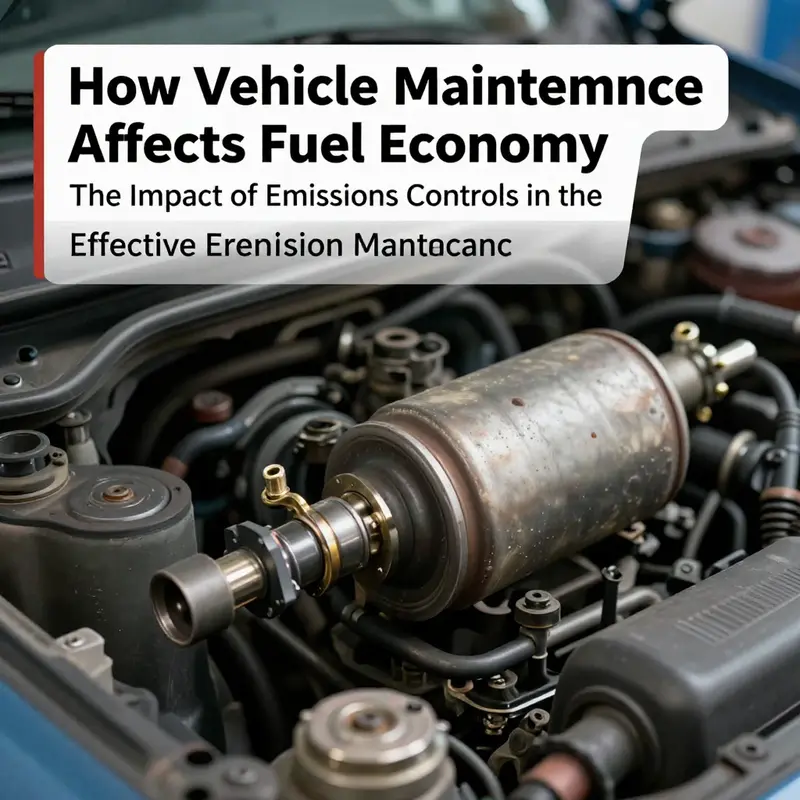
Fuel economy depends on engine design, vehicle weight, and driving behavior, but maintenance is a steady, often overlooked driver that keeps those factors working at their best. When the air intake is clean, lubrication is fresh, and the exhaust system is functioning, the engine can burn fuel more efficiently and emit fewer pollutants. Conversely, clogged filters, worn oil, or restricted exhaust pathways force the engine to work harder, reducing miles per gallon and increasing emissions.
A well-tuned engine breathes easily. Clean filters reduce friction and help the air-fuel mixture burn more completely; deposits on sensors and catalysts can degrade performance and raise consumption. Even small drifts in timing or misfires accumulate over time, shaving efficiency and increasing exhaust content. Routine tune-ups and timely sensor care therefore protect both fuel economy and air quality.
Real-world data from maintenance studies show measurable gains in efficiency after regular service. For example, professional diagnostics across thousands of cars reveal smaller gaps between observed and ideal fuel economy and lower on-road emissions after maintenance. These results translate into cost savings for drivers and cleaner air for communities.
Practical steps include: keep air and fuel filters fresh, change oil as recommended, check tire pressure and alignment to reduce rolling resistance, monitor ignition timing, and ensure the exhaust system is leak-free. A simple maintenance schedule can help sustain the baseline efficiency built into modern engines and keep emissions within expected ranges.
Overall, maintenance acts as a bridge between engineering and everyday driving. It preserves the benefits of advanced emissions controls and preserves fuel economy across the vehicle’s life, reinforcing the idea that careful upkeep yields real, tangible rewards for drivers and the environment.
Fine-Tuning the Miles Per Gallon: How Regular Vehicle Maintenance Drives Fuel Savings and Cleaner Air
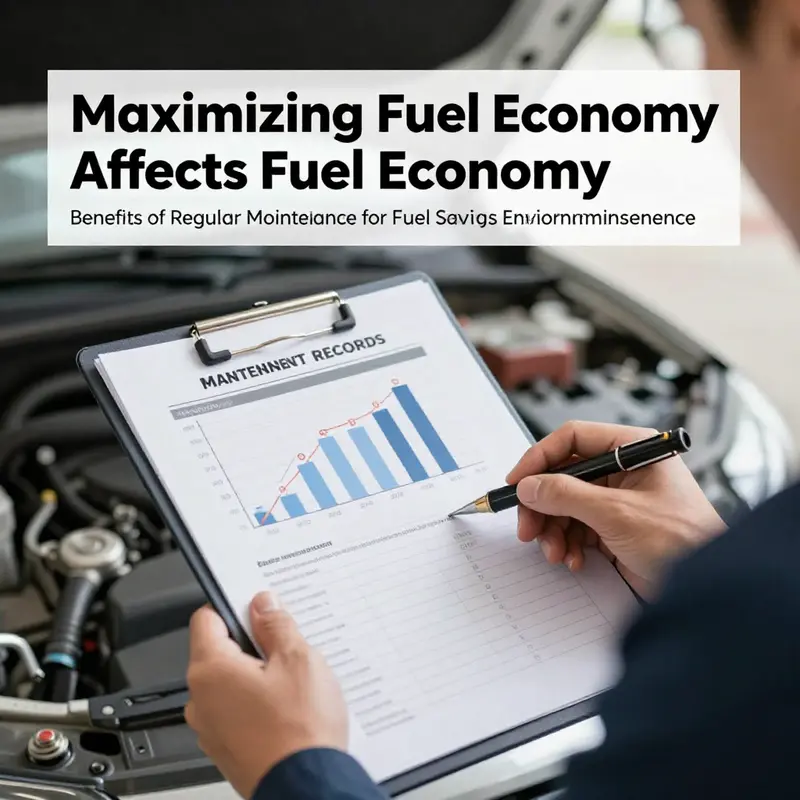
Maintenance acts like the unsung choreographer of fuel economy. When engines, transmissions, tires, and exhaust systems work in harmony, a vehicle uses less fuel to perform the same task. Regular upkeep keeps oil viscosity right, filters clear, and moving parts properly lubricated, which reduces internal friction. Fresh oil minimizes drag; clean air and oil filters allow the engine to breathe and burn efficiently. Even small improvements—like a cleaner air intake or a fresh set of spark plugs—can translate into measurable mileage gains. In this sense, maintenance is not a luxury but a performance discipline that pays back every mile with better efficiency and lower emissions. The idea is simple: when the components cooperate instead of fighting against each other, the engine does less work to deliver the same power.
To ground this idea in real-world data, a comprehensive nationwide study used a mobile chassis dynamometer laboratory to compare before and after results on tune-ups. The study analyzed data from 5,666 passenger cars and included 216 vehicles subjected to detailed ‘before and after’ testing. The headline finding was clear: routine maintenance, especially when ignition and emission systems were addressed, yielded measurable fuel savings for individual drivers. The most impactful practices involved replacing worn spark plugs, refreshing air filters, and maintaining proper tire pressure. The study did not claim a magic number for every vehicle, but it did show consistent patterns: cleaner ignition, steady air-fuel delivery, and reduced resistance led to better mileage. In short, basic maintenance translates into real-world fuel economy gains that drivers can feel at the pump.
Clogged air filters illustrate the first principle: the engine needs air to burn fuel efficiently. When airflow is restricted, the engine compensates by injecting more fuel to maintain power, a trade-off that directly erodes miles per gallon. Misfiring ignition systems or malfunctioning oxygen sensors can similarly disrupt the air-fuel mixture, causing the engine to run rich or lean and burn more fuel than necessary. A clogged catalytic converter or exhaust leak compounds the problem by forcing the exhaust to work harder, which also saps efficiency. At the same time, mechanical misalignment, wheel wear, or brake drag creates parasitic resistance that the engine must overcome just to keep the vehicle moving. Maintenance acts as a preventive shield, ensuring these systems operate within their designed tolerances rather than drifting into inefficient territory.
Equally important are tires and how they touch the road. Underinflated tires increase rolling resistance, meaning the engine has to deliver more torque to maintain speed. The math is straightforward: higher resistance costs fuel. Manufacturers typically specify a tire pressure range; staying within that range preserves the intended balance of grip, handling, and efficiency. When tires are kept at the proper pressure, many drivers notice smoother acceleration and steadier highway cruising, both of which contribute to lower fuel consumption. Some drivers may also benefit from switching to low-rolling-resistance tire models, which are designed to minimize energy losses without compromising safety or longevity. The cumulative effect of proper tire care across a fleet of vehicles can be substantial, especially on longer trips and in stop-and-go traffic where energy is wasted braking and starting again.
Yet maintenance does not operate in a vacuum. Vehicle design, engine technology, and transmission type set the ceiling for what can be achieved in fuel economy. However, maintenance determines how close a given vehicle comes to that ceiling. For example, an efficient engine with modern ignition timing can only perform well if the spark plugs are in good condition and the fuel-air mix remains accurate. Similarly, transmission health affects how efficiently torque is delivered to the wheels; slipping clutches or worn gears waste energy as heat. Tires are part of the story too: a set chosen for low rolling resistance may still fall short of its potential if pressures are a few psi low. In other words, maintenance ensures that the vehicle’s design and technology operate in concert rather than at cross purposes, turning theoretical efficiency into practical mileage.
Beyond the pump, the environmental and economic implications strengthen the case for regular care. When millions of cars are maintained with discipline, even modest efficiency gains accumulate into meaningful energy savings and cleaner air. The study’s implications extend to a national scale: small improvements in average fuel economy can reduce fossil fuel consumption and lower greenhouse gas emissions across the transportation sector. And the benefits are not limited to environmental outcomes. Saving money on fuel every month is tangible for households, especially in regions with high fuel prices or long commutes. The combination of improved performance, fewer emissions, and reduced wear translates into longer vehicle life and lower total cost of ownership. In this way, maintenance becomes a tool for personal savings and planetary health alike, aligning individual choices with broader climate and energy goals.
For drivers looking to translate these findings into everyday practice, a simple, structured approach works best. Start with a predictable maintenance schedule that includes regular spark plug inspection and replacement, air filter checks, and tire maintenance. Low-cost habits, like checking tire pressure monthly and before long trips, keep rolling resistance in check and prevent small issues from growing into bigger problems. Documenting maintenance activities helps reveal patterns in fuel use and performance, turning intuition into data you can act on. If a vehicle starts to feel underpowered or if the idle becomes uneven, seek a diagnostic early rather than waiting for a warning light to illuminate. Small, timely interventions keep the engine breathing and the exhaust cleaner, with fuel savings following as a natural consequence.
Those who want a concise roadmap can explore practical guidance that translates theory into actionable steps. For practical steps and quick wins tied to maintenance and fuel savings, see How Vehicle Maintenance Saves on Gas Expenses. This resource frames the actions above in a driver-friendly sequence, aligning routine care with measurable outcomes and reinforcing the idea that maintenance is an investment with a predictable return.
Finally, the narrative extends beyond any single vehicle or year. Regular maintenance, by preserving the integrity of ignition, air handling, and exhaust paths, reduces the energy wasted by avoidable friction and resistance. It also reinforces the symmetry between human choices and public health goals. When every driver treats maintenance as a stewardship practice—checking fluids, replacing worn parts, and adhering to tires’ recommended pressures—the collective impact is noticeable in air quality, energy demand, and vehicle reliability. In that sense, vehicle maintenance is not a housekeeping task but a strategic component of responsible mobility. The path to cleaner air, lower fuel bills, and longer vehicle life is paved with consistent, thoughtful care.
External reference: For more details on maintenance and emissions, see the AAA study: https://www.aaanet.org/vehiclesafety/maintenance-and-fuel-economy.cfm
Final thoughts
Establishing an effective vehicle maintenance program is not only essential for the longevity of your fleet but also holds significant implications for fuel economy. By ensuring engines run smoothly, tires are properly inflated, and emission systems function correctly, businesses can greatly improve their bottom line and reduce harmful emissions. Regular inspections and timely repairs prevent minor issues from escalating, yielding long-term savings. For business owners investing in fleet efficiency, understanding the multifaceted relationship between maintenance and fuel economy can lead to more sustainable operational practices and lower costs, ultimately reflecting positively on both the environment and your financial health.