
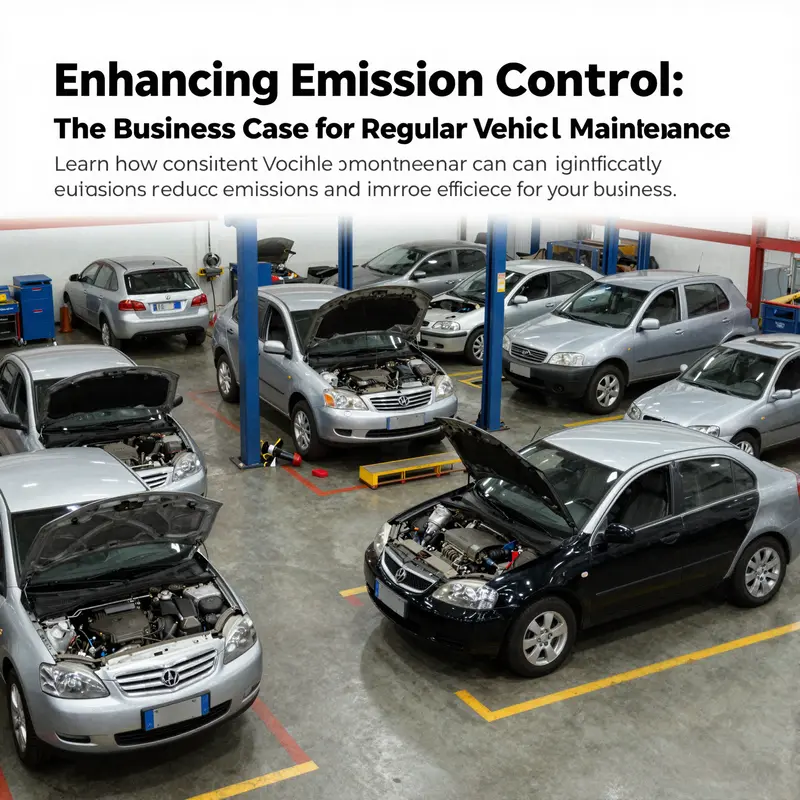
For business owners with fleets, understanding the environmental impact of vehicle emissions is crucial. Regular vehicle maintenance plays a pivotal role in decreasing emissions, enhancing not only air quality but also company reputation. Efficient engine performance, crucial fluid checks, and meticulous tire management are key factors. This article will navigate through these aspects, emphasizing their significance in reducing emissions and fostering a more sustainable business operation.
Keep It Clean, Keep It Green: How Regular Vehicle Maintenance Drives Engine Performance and Cuts Emissions
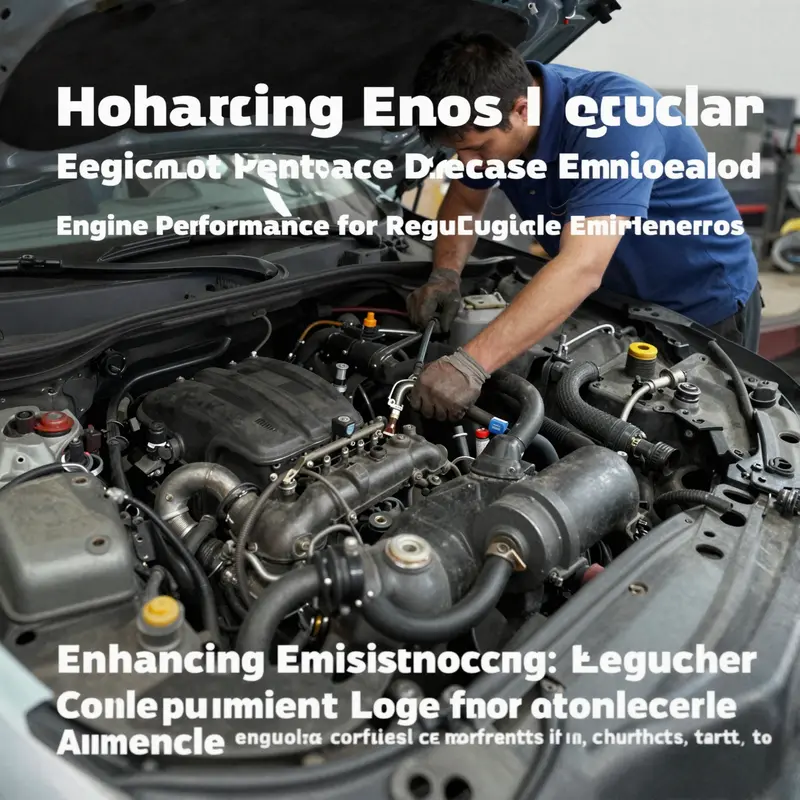
Regular vehicle maintenance is often framed as a matter of reliability and cost, yet its benefits extend far beyond the wallet. When kept current with the manufacturer’s schedule, a vehicle’s engine and its emission control systems work in concert, like a finely tuned orchestra, to minimize the release of pollutants while still delivering the power and efficiency drivers expect. The core idea is simple: maintenance preserves the engine’s ability to burn fuel efficiently and keeps the sophisticated systems designed to arrest pollutants operating as intended. When these systems function well, combustion is more complete, fuel is used more efficiently, and the exhaust stream is cleaner before it ever leaves the tailpipe. The result is a direct reduction in pollutants such as carbon monoxide (CO), unburned hydrocarbons (HC), and nitrogen oxides (NOx), alongside an improvement in fuel economy. This is not a single-point effect but a cascade of interrelated improvements that begin with the smallest service task and culminate in measurable environmental benefits over the life of the vehicle.
Engine performance is the first frontier in this defense of cleaner air. An engine that breathes clean air, mixes it properly with the right amount of fuel, and ignites it at the proper moment completes combustion more completely. When calibration drifts due to worn parts or clogged passages, combustion becomes imperfect. Incomplete combustion leaves behind unburned fuel and partially oxidized compounds that escape as hydrocarbons and CO. Regular maintenance directly counters this drift. An air filter that is clean and not clogged ensures a consistent flow of oxygen, while a healthy fuel system delivers the right amount of fuel in the right pattern for each cylinder. Spark plugs, when in good condition, ignite the air-fuel mix consistently and reliably. Worn plugs misfire more often, producing cycles of incomplete combustion that not only waste fuel but also spike emissions.
Central to the clean-exhaust promise are the sensors and catalytic devices designed to monitor and transform exhaust gases. The oxygen sensors in the exhaust stream gauge whether the engine is running lean (too little fuel) or rich (too much fuel) and feed this information back to the engine control unit. The control unit then adjusts the air-fuel ratio to maintain efficient combustion and minimize pollutants. Over time, oxygen sensors degrade. A failing sensor can cause the engine to run too rich, increasing CO and HC emissions, or too lean, which can raise NOx formation and damage the catalytic converter. The catalytic converter itself is a chemical reactor built to convert CO and HC into carbon dioxide and water, and to reduce NOx to nitrogen and oxygen. When these components are clean and functioning, the exhaust stream is dramatically less toxic. Regular maintenance—replacing worn sensors, inspecting the catalytic converter, and ensuring the exhaust system remains leak-free—keeps these transformations efficient and reduces the likelihood of elevated emissions.
Beyond the direct engine and exhaust considerations, some of the most impactful maintenance actions are those that seem peripheral but influence emissions in real, practical ways. For instance, keeping the cooling system in good shape ensures the engine runs at its optimum operating temperature. An engine that operates too cool can burn fuel less efficiently, while an engine that overheats risks damage to emission control devices and can alter combustion dynamics in ways that increase NOx formation. Similarly, proper valve and PCV (positive crankcase ventilation) system maintenance prevents unwanted vapors from escaping the crankcase and contaminating the intake stream. Vacuum leaks—often caused by damaged hoses or gaskets—let unmetered air enter the intake, adding to the total air and skewing the air-fuel mixture. A mismanaged mix can create pockets of rich or lean conditions that drive up emissions and reduce performance. Routine checks and replacements of hoses, gaskets, and seals represent a small investment of time and money with outsized environmental benefits.
The chain of responsibility for low emissions extends to the exhaust pathway as well. The exhaust system must be intact and capable of routing gases through the catalytic converter without leaks or obstructions. A loose clamp, a rusted pipe, or a clogged muffler not only dulls performance but can create leak points that bypass emission control devices. An inspection that includes the catalytic converter’s condition, the integrity of the exhaust pipes, and the proper operation of the oxygen sensors ensures the system is delivering its best possible performance. In addition, onboard diagnostics (OBD) systems are designed to monitor the emission-related components for faults and then alert the driver with a check-engine light or a diagnostic trouble code. Rather than waiting for a catastrophic failure, regular maintenance helps ensure the OBD system remains a proactive ally. When issues are caught early, the vehicle can be repaired before pollutants spike and before fuel economy deteriorates.
The benefits of maintenance extend beyond the engine bay and into the wheel realm, where emissions and efficiency meet the road. Proper tire pressure, alignment, and brake function reduce rolling resistance and mechanical drag. Underinflated tires increase the energy required to move the vehicle, leading to higher fuel consumption and, consequently, higher emissions. Misaligned wheels or degraded brakes also add drag or friction that the engine must overcome with additional fuel. Conversely, tires kept at the recommended pressure, wheels aligned within spec, and brakes functioning smoothly contribute to better fuel economy and lower emissions, even on the same model of vehicle.
As the vehicle ages, the importance of routine maintenance increases. The research field recognizes that a car’s emission systems degrade over time and with mileage, and regular service becomes not only a matter of performance but of preserving environmental safeguards. In a field study that tracks how maintenance influences emission-system performance, researchers underscore that age and consistent servicing interact to determine how well a vehicle can meet emission standards. The degradation that accompanies mileage can be gradual and silent, yet its consequences are real: small drifts in sensor readings, subtle leaks, or a polymer that stiffens and loses its sealing properties can propagate into significantly higher emissions if not addressed. Regular checks, replacements, and calibrations help keep the vehicle within its designed envelope of performance. This is not merely a matter of keeping the car running well; it is a direct contribution to cleaner air and to the vehicle’s compliance with environmental regulations over time.
The science behind these claims has been explored in recent studies that connect consistent maintenance with tangible emission reductions. For example, a study by PB Bikam (2021) emphasizes that adhering to manufacturer-recommended maintenance schedules significantly enhances engine emission-system performance. In parallel, AK Milku (2024) highlights that factors such as vehicle age, ongoing maintenance, and the adoption of advanced emission technologies interact to reduce overall vehicle emissions. The synthesis of these findings aligns with the broader understanding that a well-maintained vehicle preserves the integrity of emission-control devices as they age, thereby maintaining lower emission levels than a neglected, older counterpart. Equally important is the observation that degraded emission-control systems do not always present obvious symptoms until they suddenly fail or drift well beyond regulatory thresholds. Regular service acts as a preventive measure—catching and correcting issues before they produce excessive pollution. A third line of evidence from B Organ (2020) reinforces this view, arguing that neglect of maintenance leads to higher emissions, reduced fuel efficiency, and a higher likelihood that a vehicle will not meet environmental regulations.
In practice, maintenance becomes a continuous conversation between the driver, the mechanic, and the vehicle’s built-in intelligence. The OBD system, for instance, does not just serve as a warning light; it archives data on sensor performance, catalyst efficiency, and exhaust-leak checks that reflect the ongoing health of emissions control. When drivers respond promptly to service needs—from replacing a clogged air filter to verifying the health of oxygen sensors—the vehicle maintains an efficient combustion process and a clean exhaust. This is why preventive maintenance is often described as environmental stewardship in action. It is not merely a personal benefit but a public one, reducing the collective emissions from millions of vehicles every day and contributing to healthier air in communities around roads, schools, and workplaces.
There is also a broader, indirect benefit that often goes underappreciated. Regular maintenance can improve the vehicle’s fuel efficiency, which translates directly into fewer emissions over the lifetime of the car. When an engine burns fuel more efficiently, less energy is wasted producing heat and friction, and less fuel is required to maintain the same level of performance. This effect compounds over the life of the vehicle because a well-maintained engine remains close to its original efficiency for longer, whereas neglected engines become progressively less efficient and more polluting as components wear and drift out of spec. The environmental dividend of this ripple effect is real. It compounds with each service interval, each sensor replacement, and each check of the exhaust pathway. In practical terms, the goal is not only to meet the letter of emission standards but to sustain a trajectory of cleaner performance over thousands of miles and many years of operation.
To bring these strands together into a single practical frame, consider a typical maintenance cycle. A routine service that includes a documented inspection of the air intake, filters, spark plugs, ignition system, and sensors, followed by a test of the exhaust system and a check of the OBD readiness monitors, creates a chain of knowledge. The mechanic can identify a degraded sensor, a fouled catalytic converter, or an air leak before it translates into a pollution spike. If the vehicle also has worn tires, the service center can remind the owner to check tire pressure and alignment. The goal is to keep the engine operating in the narrow corridor where fuel is used efficiently, pollutants are minimized, and the emission-control devices function as intended. In this sense, maintenance is not a single event but a series of informed decisions that, when performed consistently, layer one environmental advantage onto another.
The social dimension of maintenance—its effect on air quality and public health—further elevates its value. Cleaner exhaust means less ground-level ozone formation in sunlight, lower particulate matter from several sources, and reduced concentration of hazardous gases in urban environments. The benefits extend to vulnerable communities that spend more time near traffic corridors or rely on local air for daily living. In addition, reduced emissions tie into broader regulatory frameworks that govern vehicle manufacturing, fueling, and maintenance standards. By keeping emissions within designed limits, a vehicle contributes to a cleaner, more sustainable transport system without requiring dramatic changes in consumer behavior or technology. The path to this outcome is paved by a simple, repeatable practice: regular, manufacturer-guided maintenance that preserves engine integrity and keeps emission-control systems in peak working order.
For drivers and policymakers alike, the message is consistent and actionable. Regular maintenance is a cost-effective, high-impact tool for reducing emissions. It aligns with fuel-saving goals, supports regulatory compliance, and protects the health of neighbors and communities. It is not about sacrificing convenience but about recognizing that small, routine acts—like replacing a clogged air filter, correcting a misfiring ignition spark, or replacing a failing oxygen sensor—are the underpinnings of a cleaner atmosphere. The connection between maintenance and emissions is thus not a theoretical chain but a practical, daily reality that can be improved with straightforward, repeatable steps. And while the initial cost of maintenance may be a consideration for many drivers, the long-term environmental and health benefits, as well as the potential for continued reliability and resale value, offer a compelling case for routine service.
Those who want to explore the topic further can reflect on the broader body of evidence supporting these conclusions. A practical takeaway is to treat maintenance not as a routine chore but as an ongoing investment in efficiency and environmental stewardship. By staying on schedule, drivers give their engines the chance to burn fuel more completely, keep emission-control devices functioning, and reduce the environmental footprint of daily transportation. The effect may appear incremental on any given trip, but it adds up across miles and years, producing a slower, steadier decrease in emissions rather than sharp spikes driven by neglect. In other words, the disciplined practice of maintenance compounds its benefits, creating a more efficient engine, a cleaner exhaust, and a healthier atmosphere for all who share the road.
To connect this discussion with practical resources, readers can refer to this accessible overview that highlights how routine maintenance contributes to fuel savings and emissions reductions: how vehicle maintenance saves on gas expenses. This resource underscores the idea that ordinary maintenance intervals are not purely about keeping the car rolling; they are also a straightforward way to curb pollution without requiring specialized equipment or dramatic behavioral changes. The synergy between the engine’s inner workings and the environmental safeguards around the exhaust is a reminder that everyday upkeep is a form of environmental action. As drivers become more aware of how specific maintenance activities affect performance and emissions, they can approach every service interval with a sharper sense of purpose and a clearer understanding of the benefits for air quality and community health.
In sum, regular vehicle maintenance decreases emissions by safeguarding the engine’s combustion efficiency and by ensuring emission-control systems perform at their best. The evidence from recent research supports what practitioners observe in the workshop: when maintenance is neglected, emissions rise, fuel economy declines, and the vehicle’s ability to meet environmental regulations wanes. When maintenance is routine, sensors stay calibrated, catalysts stay effective, the exhaust pathway remains intact, and the engine’s combustion remains clean and efficient. This combination of factors translates into fewer pollutants in the air and a more efficient, reliable ride for the driver. The story behind maintenance is not simply about extending a vehicle’s life; it is about preserving clean air and a healthier environment for everyone who shares the road.
External resource for further reading: https://www.sciencedirect.com/science/article/pii/S235214652100097X
Fluid Upkeep for Cleaner Air: How Routine Maintenance Slashes Emissions by Caring for Your Engine’s Lifeblood
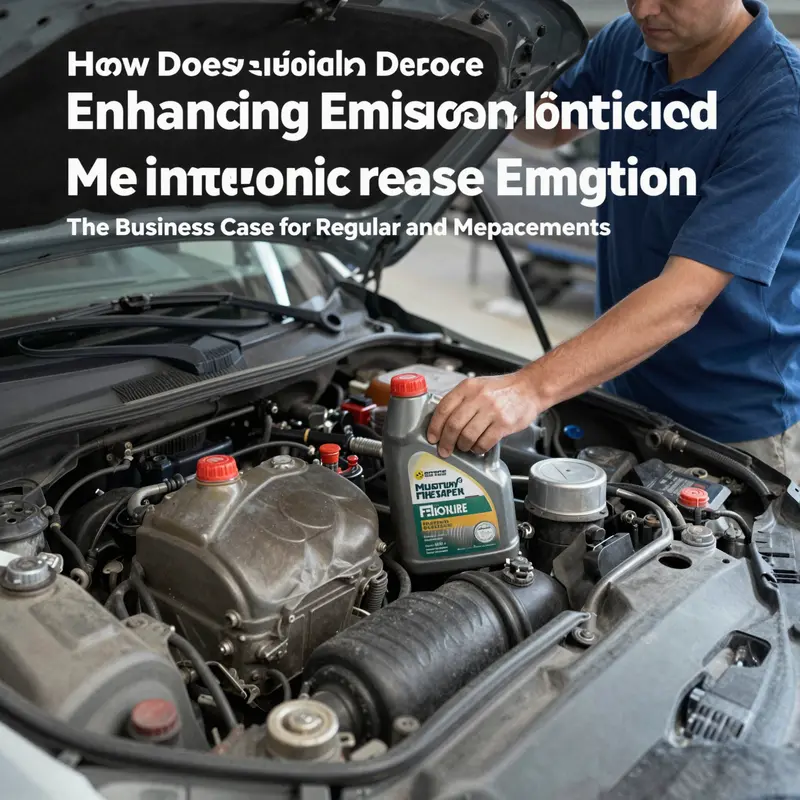
The tiny, routine tasks of maintenance often escape notice until something goes wrong. Yet in the realm of vehicle emissions, those small acts act as the quiet engineers of cleaner air. The most fundamental of these acts is checking and replacing fluids—the lifeblood that keeps engines and their many subsystems operating smoothly. When you routinely monitor engine oil, coolant, brake fluid, transmission fluid, and power steering fluid, you are not merely avoiding mechanical trouble. You are reinforcing the engine’s ability to burn fuel efficiently, maintain stable temperatures, and keep emission-control systems functioning as designed. The result is a vehicle that pollutes less per mile driven, a more predictable performance profile, and, over time, lower maintenance costs that accumulate in fuel savings and longer component life. Emissions reductions from fluid maintenance emerge not from a single dramatic fix but from a cascade of steady, preventive actions that preserve the integrity of the engine’s environment and its energy use. In this sense, fluid upkeep becomes a foundational practice for any driver who cares about clean air and responsible stewardship of resources.
At the heart of this approach is a simple principle: fluids degrade. Heat, contamination, and normal wear gradually erode their ability to perform. When lubrication falters, friction climbs. When cooling falters, heat builds. When hydraulic systems lose their vigor, response and efficiency suffer. Each of these changes pushes the engine to work harder, burn more fuel, and emit more pollutants. The correlation between fluid condition and emissions is not a matter of a one-to-one tech fix; it is a system-wide consequence of how well the car manages heat, friction, power transfer, and braking energy. The narrative begins with the engine oil because it is the most intimate contact point between the moving metal and the air we breathe. Oil is not merely a lubricant; it is a shield that slows wear, carries away heat, and forms a protective film that keeps metal surfaces from rubbing directly against each other. When oil is clean and has the right viscosity for the season and the engine’s design, it reduces the energy the engine must expend to overcome friction. That energy savings translates directly into better fuel economy, which in turn reduces CO2 emissions per mile. The opposite is true when oil becomes dirty or degraded. Sludge and varnish can clog passages, raise oil temperature, and reduce film strength. The engine then loses efficiency, and the fuel it consumes is less likely to convert into useful work. The emissions footprint grows as more fuel is burned for the same amount of productive work.
Engine oil sits at the center of this chain because it interfaces with nearly every moving part in the heart of the engine. A well-lubed engine maintains smoother rotations and crisper torque delivery, enabling the exhaust after-treatment systems to operate within their design envelope. When oil is clean and the oil filter is functioning, contaminants are kept from entering critical surfaces, helping to prevent deposits that can alter combustion chamber geometry, compression, and timing. The engine’s tendency to run lean or rich is also indirectly influenced by oil’s condition, since improper lubrication can slightly alter combustion temperatures and fuel-air mix dynamics. In modern vehicles, where engines are tightly calibrated and emissions control relies on precise sensor feedback and catalytic conversion, maintaining a clean oil environment helps the whole system stay within its target emissions range. The cleaner the oil, the less extra fuel the engine might burn just to maintain comfort under the hood, especially in stop-and-go urban driving where engine startup and idling dominate the energy budget.
Coolant is the second pillar in this fluid-focused framework for emissions reduction. The cooling system is not just about heat management; it is about preserving the stability of combustion and the consistency of engine performance across a wide range of operating conditions. Coolant that is contaminated or low impairs the cooling system’s ability to maintain an optimal engine temperature. When combustion temperatures rise beyond what the engine is designed to tolerate, the result can be uneven burning, increased formation of nitrogen oxides (NOx), and a higher likelihood of pre-ignition or detonation in certain engines. Even modest overheating can push exhaust temperatures outside the calibration window for catalytic converters and selective catalytic reduction (where applicable), reducing their effectiveness. This is not merely a mechanical failure; it is a breakdown in the engine’s ability to maintain a steady, efficient burn, which translates into higher emissions per mile. Proper coolant levels, a clean radiator system, and a healthy thermostat ensure that the engine runs within its intended temperature band. In that band, fuel is burned more completely, combustion gases are stabilized, and the NOx footprint is kept in check. The cooling system also interacts with oil life. When the engine runs cooler, oil remains at its optimal viscosity longer, further reducing friction and preserving efficiency. The interplay between oil and coolant illustrates how a single maintenance action can reverberate through multiple subsystems to keep emissions in a safer, more predictable zone.
Brake fluid may seem peripheral to emissions at first glance, because it does not participate in combustion. Yet it belongs in this fluid-focused discussion because its condition influences how a vehicle behaves under real-world driving, which is a major determinant of energy use and emissions. Brake fluid is a hydraulic fluid that transmits force into the braking system. It must resist boiling and retain a high boiling point to prevent brake fade during heavy use. When moisture contaminates brake fluid, its boiling point drops, increasing the risk of reduced braking performance. In traffic, where drivers experience frequent stops and starts, a braking system that behaves predictably encourages smooth driving habits, such as steady deceleration and controlled acceleration. These habits matter because aggressive driving—rapid acceleration, hard braking, and prolonged idling—drives up fuel consumption and emissions. In short, brake fluid that is in good condition supports safe, efficient driving patterns. While this does not directly reduce NOx or CO in exhaust, it indirectly supports energy-efficient behavior that lowers overall fuel use. The broader lesson is that complete vehicle maintenance, including the hydraulic systems, creates a platform for safer driving and more efficient operation, which together contribute to lower emissions.
Transmission fluid plays its own quiet but crucial role in emissions reduction. A well-lubricated automatic or manual transmission shifts smoothly, transmits power efficiently, and maintains consistent engine load across a wide range of speeds. Worn or degraded transmission fluid can cause delayed or rough shifts, slipping, or poor torque delivery. Each of these issues makes the engine work harder to achieve the same acceleration or keep a steady speed. The result is higher fuel consumption and, therefore, higher emissions per mile. Proper transmission fluid not only preserves the life of the transmission itself but also helps the vehicle maintain a stable, efficient operating point. This stability matters because modern engines are calibrated to run at specific load points to optimize combustion and exhaust after-treatment performance. When the transmission slips or hesitates, the engine may spend more time in less efficient ranges, increasing fuel burn and emissions. Maintenance guidelines typically recommend checking the transmission fluid level and condition at regular intervals and replacing it according to the manufacturer’s schedule. This routine care reduces the probability of efficiency losses that ripple outward into the exhaust stream and the air we breathe.
Power steering fluid, while not part of the combustion process, contributes to the overall efficiency and safety profile of driving. Adequate hydraulic pressure keeps the steering responsive, making it easier to steer without exerting extra energy. In practice, a vehicle with reliable power steering feels lighter and more precise to operate. This translates into smoother driving behavior: less abrupt throttle input, fewer unnecessary accelerator bursts, and a calmer driving rhythm that reduces the energy wasted during trips. A vehicle that steers easily is less likely to be driven in ways that spike fuel consumption, whether from sudden starts in heavy traffic or the frustration of navigating tight spaces. The fluid itself does not influence emissions directly, but it supports the conditions for gentle, efficient driving. Routine checks of power steering fluid levels and the absence of leaks help preserve steering responsiveness and, by extension, favorable driving habits that minimize energy waste on the road.
To connect these mechanical details with real-world impact, consider the broader picture of fuel economy. Consistently maintaining all five fluids at their proper levels and in good condition reduces the engine’s energy losses due to friction, overheating, and suboptimal power transfer. Those reductions in energy waste translate into fewer gallons consumed per year and, accordingly, fewer pounds of CO2 emitted. The relationship is cumulative. Each maintenance action on its own yields a modest improvement, but together they form a robust strategy for lowering a vehicle’s environmental footprint. This is especially true for vehicles that spend a lot of time in urban driving, where frequent stops, slower speeds, and idling dominate the energy budget. In those settings, the benefits of well-maintained fluids are amplified, because the engine repeatedly returns to steady operating conditions rather than fighting to overcome inefficiencies born of degraded fluids.
An important part of translating maintenance into emissions reductions is recognizing how this work fits into a broader maintenance plan. Fluid checks complement other preventive measures, such as air-filter replacement, spark plug upkeep, sensor diagnostics, and exhaust-system integrity. A well-tuned vehicle relies on the entire network of systems to operate in harmony. When one component wears out or becomes contaminated, it can disrupt others. For example, a sluggish fuel pump or a clogged air intake can no longer be fully compensated by a well-lubricated engine if the cooling system is underperforming. In practice, drivers who adopt a holistic approach to maintenance—tracking fluid levels, following service intervals for filters and fluids, and addressing issues promptly—tend to experience lower emissions, better fuel economy, and a reduced risk of costly repairs. The goal is not to chase a single magic bullet but to create a reliable, predictable operating environment in which emissions stay as low as the design allows.
From a behavioral perspective, the discipline of fluid maintenance reshapes how people interact with their vehicles. When drivers know that oil needs changing and coolant must be topped at specific intervals, these checks become routine rather than episodic. The habit of regular inspection reduces the chance that a fluid-related problem will go unnoticed during a critical period, such as a hot summer road trip or a cold-weather start. Regular checks also create opportunities to observe changes in performance and address them early. A dipstick that shows darker oil, or a coolant reservoir that looks low, prompts a check of seals, hoses, and the cooling loop. That proactive stance prevents small leaks from becoming bigger, more expensive issues, and, importantly, prevents conditions that would push emissions higher over time. In other words, fluid maintenance is a preventive strategy that aligns with responsible driving and environmental stewardship.
For readers seeking a practical route to integrate these ideas into daily life, the approach is straightforward and repeatable. Start with a simple baseline: know your vehicle’s fluid levels and condition at least once a month or every few hundred miles if you drive in demanding conditions. Check engine oil for level and clarity, inspect the coolant reservoir for proper level and color, confirm there are no signs of moisture infiltration in the brake fluid reservoir, and verify transmission and power steering fluids for proper level and color. If you notice signs of contamination, discoloration, or a change in how the car shifts or steers, schedule a service visit. Your aim is not to chase perfection but to maintain consistency. Consistency keeps fluids within design tolerances, and that consistency sustains optimal combustion, stable exhaust temperatures, and an emissions profile that remains within expected bounds. This is the kind of reliability that makes a substantial, ongoing difference in the air we share with others, day after day, mile after mile.
In addition to the internal mechanics, there is value in recognizing the broader policy and guidance context. The U.S. Environmental Protection Agency provides guidance on how vehicle maintenance and emissions relate, underscoring how routine fluid care fits into environmental objectives. While individual maintenance actions may seem modest, they contribute to a collective improvement in air quality when adopted widely. The simple act of staying on top of fluids embodies a practical, scalable behavior that households, fleets, and communities can adopt. It is a clear example of how everyday choices—keeping fluids at the right levels, replacing worn parts, and adhering to manufacturer schedules—translate into tangible environmental benefits over time. By weaving fluid maintenance into the fabric of regular vehicle care, drivers participate in a broader commitment to cleaner air and more sustainable travel.
An important practical step in this journey is understanding the thresholds for service. Oil quality degrades not just by time but by mileage, operating temperature, and driving style. High-mileage drivers or those in extreme climates should be especially vigilant about oil viscosity and filter condition. Coolant life can be influenced by the presence of contaminants, which may come from a compromised seal or a failing radiator. Brake fluid should be examined for moisture content and clarity; if moisture has accumulated, it may be time for a flush. Transmission fluid color often shifts from pink to brown, signaling aging fluids that compromise performance. Power steering fluid should be free of grit or metallic particles, which can indicate internal wear or a developing leak. The human eye and nose, complemented by simple test strips or a professional diagnostic, can reveal most issues before they evolve into major concerns. When all five fluids are monitored and refreshed as needed, the engine’s performance remains stable, the exhaust system functions as intended, and emissions stay closer to the vehicle’s designed levels.
The experience of maintaining fluids also intersects with the economics of vehicle ownership. While the immediate benefit is improved efficiency and reduced wear, there is also a longer-term payoff. Cars that consistently run with clean, properly filled fluids tend to resist thermal and mechanical stress better, which can translate into longer intervals between major repairs and less downtime. That reliability translates into more predictable fuel costs and maintenance budgets, a point that muitos households underestimate. The environmental dividend—reduced emissions and cleaner air—accrues as a byproduct of these efficiencies. In the face of rising fuel prices and growing environmental awareness, the practical value of routine fluid checks becomes even clearer. Each refill, flush, or filter change is a small investment that compounds into tangible savings in energy use, maintenance costs, and atmospheric health.
To emphasize how these ideas translate into everyday practice, consider a driver who commits to regular fluid checks as part of a broader maintenance routine. This driver would routinely verify oil level and condition, ensuring it remains within the manufacturer’s recommended range. The driver would monitor coolant levels and inspect for any signs of deterioration in hoses or the reservoir cap seals. Brake fluid would be checked for moisture content, with replacements scheduled as needed. Transmission fluid would be observed for color and smell, with flushes planned according to the vehicle’s service schedule. Power steering fluid would be checked for clarity and absence of contaminants. Such a routine reduces the probability of hidden issues and maintains a stable, efficient operating condition. The approach is not glamorous, but it is powerful in its effect on emissions and on the reliability of the vehicle over time.
In closing, the maintenance of fluids—engine oil, coolant, brake fluid, transmission fluid, and power steering fluid—serves as a direct line to cleaner air and more efficient driving. The practical path is clear: keep fluids clean, at the correct levels, and within their service intervals. When you do, you contribute to a smoother-running engine, stable temperatures, dependable braking, efficient power transfer, and responsive steering. The cumulative effect is a vehicle that uses fuel more efficiently, emits fewer pollutants per mile, and operates with less stress on its exhaust after-treatment systems. The result is not only a more economical ownership experience but also a meaningful step toward reducing the transportation sector’s environmental footprint. For readers seeking a broader perspective on how vehicle maintenance intersects with fuel economy, see the discussion on how maintenance can save on gas expenses in related materials. How Vehicle Maintenance Saves on Gas Expenses.
External resource: https://www.epa.gov/vehicles/vehicle-maintenance-and-emissions
Rolling Toward Cleaner Air: The Emissions-Reducing Power of Tire Care and Load Management
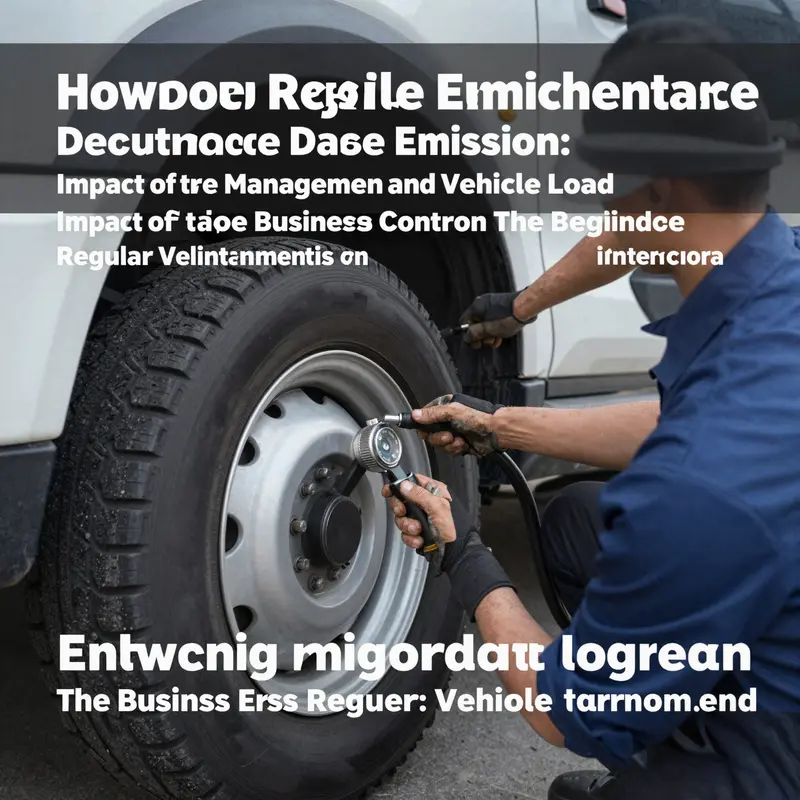
Tire maintenance and vehicle load management are practical levers in reducing emissions. Regular tire pressure checks, proper tread depth, and correct alignment lower rolling resistance and improve fuel economy, which translates into fewer pollutants per mile. Underinflated tires or worn tread cause the engine to work harder, increasing emissions and stressing the exhaust aftertreatment system. Tire wear also contributes to airborne particulates, a non exhaust source of pollution that matters for overall air quality.
Load management, by reducing vehicle mass, directly lowers energy demand and emissions, especially during acceleration and climbing. Heavier payloads increase fuel use and pollutant output, with heavy duty and long haul operations showing pronounced responses to load changes. For many vehicles, research indicates NOx emissions rise with payload, alongside CO and PM in varying degrees. Practical habits include avoiding unnecessary cargo, removing superfluous items from the trunk, and planning loads to maximize efficiency.
These maintenance actions support the vehicle’s emission control architecture by maintaining steady operating conditions for sensors and catalysts, helping the aftertreatment system function as designed. They also complement other routine maintenance tasks and broader strategies for improving air quality. In fleets, weight audits, route optimization, and proper tire management can multiply the environmental benefits and reduce fuel costs over time.
Final thoughts
Regular vehicle maintenance is a vital practice that not only reduces harmful emissions but also improves overall vehicle efficiency. By focusing on engine performance, ensuring proper fluid levels, and maintaining optimal tire conditions, businesses can significantly reduce their environmental footprint. Adopting these practices not only meets regulatory standards but also enhances corporate responsibility. As awareness grows around sustainability, prioritizing vehicle maintenance makes both ecological and economic sense.