

Understanding your vehicle’s Tire Maintenance Monitor System (TPMS) is crucial for business owners who rely on transport efficiency and safety. This article delves into the two primary types of TPMS—indirect and direct—highlighting their functionalities and importance. Additionally, maintaining these systems ensures that your vehicles run smoothly, enhancing both safety and performance. As we explore these facets, you will gain insight into why regular monitoring of tire pressure is essential for your business operations.
Decoding Indirect TPMS: How Wheel Speeds Reveal Tire Health
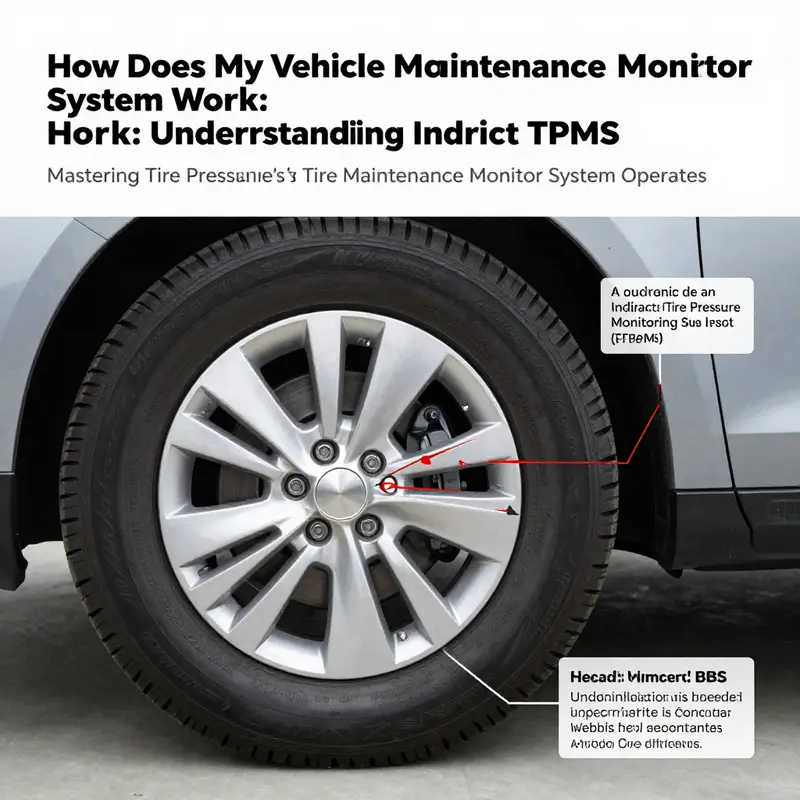
Indirect TPMS is a tire monitoring approach that uses the car’s existing wheel speed sensors to flag potential underinflation without a sensor in every tire. It does not measure air pressure directly. Instead, it watches how fast each wheel rotates relative to the others when the car is moving. If a tire’s effective rolling radius drops due to low pressure, that wheel will tend to rotate slightly more times to cover the same distance. When enough difference accumulates across the set, the ECU flags a warning on the dashboard.
Because the signal comes from wheel speeds, indirect TPMS requires motion and a baseline pattern to be meaningful. The system must have observed the car driving for a period so it can compare current wheel speeds to a reference. The warning is therefore not a live pressure readout and it does not identify which tire is low. It is an early alert that a tire condition may have changed enough to affect performance or safety.
The appeal of indirect TPMS is simplicity and cost. It reuses the ABS wheel speed sensors already installed for braking and stability control, avoiding the added weight, wiring, and maintenance of sensor-equipped tires. It works well for many vehicles and can be very effective at catching meaningful underinflation before it becomes obvious by handling or wear. But its trade‑offs are real: you do not get a pressure value, and a narrow leak or a tire that loses pressure slowly may not always trip the warning right away. The system’s strength is in prompting a manual check rather than in delivering precise data.
Driver practice matters. If the TPMS warning illuminates, pull over safely, inspect the tires, and measure with a gauge when the tires are cold. Compare results to the vehicle’s recommended cold-inflation pressure. If one tire is below spec relative to the others, adjust or top off to the recommended level and recheck after a short drive to let the system recalibrate. If you still see the warning after a reasonable drive, or if the tire shows damage or irregular wear, seek professional help or consider a direct TPMS solution.
In practice, indirect TPMS complements regular manual checks and perceived handling. It is a nudge that encourages you to maintain consistent inflation and tread health across all tires. It does not replace the skill of reading tire condition, nor does it provide exact measurements. In the balance between cost and reliability, indirect TPMS remains a useful, widely adopted approach for many vehicles.
If you want more exact pressure data or faster detection of small leaks, direct TPMS (with sensors inside each tire) offers real-time readings. Many drivers choose a combination of both philosophies depending on vehicle design and personal preference. Either way, the core message remains: tire pressure matters for safety, efficiency, and tire life, and TPMS is a tool to help you stay aware and proactive.
For readers seeking deeper context, consult the vehicle’s manual and your manufacturer’s guidance on tire maintenance. The exact thresholds and calibration details can vary by model, but the underlying principle—monitoring wheel behavior to flag pressure changes—applies broadly. In short, indirect TPMS is a practical, widely accessible way to keep you informed about tire health while keeping costs down and maintenance simple.
Direct TPMS Demystified: How Real-Time Tire Pressure Monitoring Safeguards Your Ride and Your Road Confidence
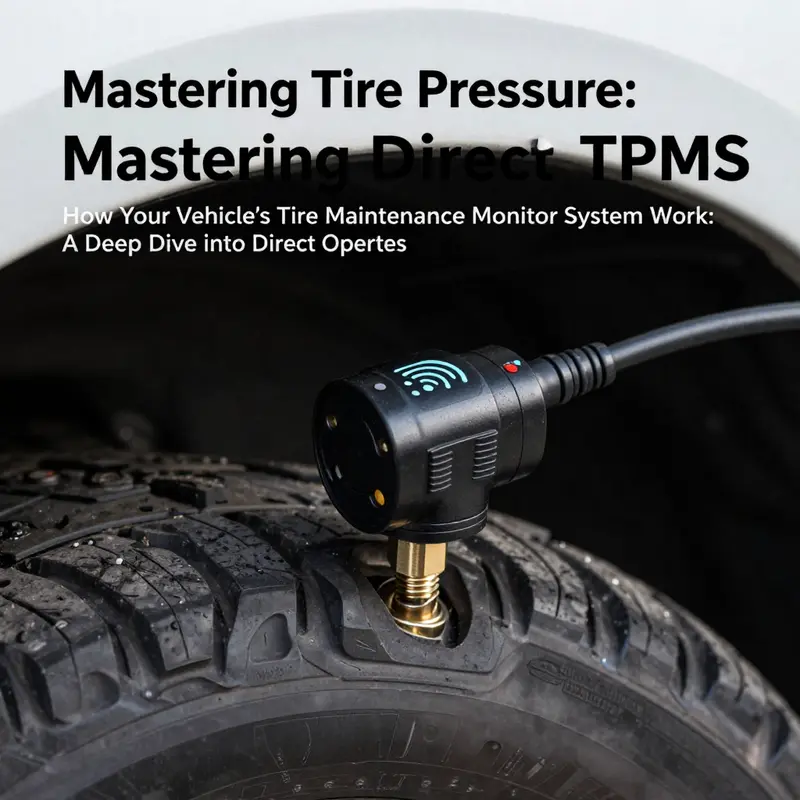
Direct Tire Pressure Monitoring Systems (TPMS) sit at the intersection of safety, performance, and daily driving practicality. They are not merely a light on the dashboard; they are a real-time sensor network embedded in the vehicle’s wheel assemblies that constantly vigilates the air inside each tire. The focus here is on the Direct TPMS variant, a self-contained, tire-internal system that offers precise pressure readings for every tire and communicates them instantly to the car’s central computer. This approach contrasts with indirect TPMS, which relies on wheel-speed data from the braking system to infer pressure changes. In many ways, Direct TPMS turns a tire’s internal condition into an observable, actionable data stream, transforming how drivers respond to underinflation and how engineers design tires for safety and efficiency. The direct system is a compact, purpose-built data loop: sensors inside the tires, a wireless transmitter, a receiver in the vehicle, and a processing unit that translates raw numbers into understandable warnings and sometimes even tire-by-tire pressure readouts. The elegance of this design lies in its auditable accuracy. Rather than guessing from changes in wheel speed, the vehicle reads the actual pressure, often along with temperature, and then presents that information in a clear, contextual format to the driver or operator. The driver’s job remains simple: respond to a warning, verify that the tire is within the manufacturer’s recommended range, and adjust if needed. Yet behind that simplicity is a robust, technically grounded system that behaves like a living circulatory network inside the car, constantly sampling, validating, and relaying tire health indicators as you travel. In practice, the Direct TPMS acts as a proactive guardian rather than a reactive alarm. Sensors in each tire continuously monitor the air pressure and, in many designs, the temperature as well. The embedded transmitter then relays that data to a central receiver in the cabin. The receiver passes the information to the car’s computer, which continuously compares current readings against a predefined baseline that accounts for vehicle load, ambient temperature, and tire size. When any tire drifts below the safe threshold—commonly around 25 percent below the recommended pressure—the system triggers a warning. Some systems even display the exact tire location, such as Front Left or Rear Right, along with the actual pressure value. This direct readout is a marked advantage over indirect TPMS, where the warning is more about a relative anomaly in wheel speeds rather than a precise, tire-by-tire pressure figure. The difference matters, especially on long trips, in changing weather, or when a slow leak begins to creep along. The direct approach makes the problem legible in real time, which translates into quicker, more targeted corrective action. The foundational idea is straightforward: tire health is a vital aspect of vehicle performance, and it deserves a direct line of sight into its status. When you understand what the system is doing and why it exists, you gain insight into the broader design philosophy of modern vehicles, where safety, efficiency, and drivability converge at a single diagnostic junction. The chapter that follows delves into the core components that enable this continuous monitoring. First comes the sensor assembly, a compact package that lives in the volatile space between tire and wheel. Inside each tire, a pressure sensor sits in a robust housing—often mounted just behind the rim or tucked behind the wheel’s valve stem area. These sensors are built to withstand heat, road debris, moisture, and vibration. They continuously sample the tire’s interior pressure. In many designs, they also measure a temperature reading from within the tire, which helps call out potentially dangerous situations where a tire might be underinflated but overheated due to heavy driving or a slow leak that raises internal temperature. The sensors are designed to have a long service life, typically powered by a small, self-contained battery. When the sensor battery eventually wears down, the sensor’s ability to transmit data wanes, and the system can begin to show warnings related to sensor malfunction. This is a reminder that, while Direct TPMS is highly reliable, it is still a system with consumable parts that require periodic attention, just like tires themselves. The second critical element is the RF transmitter inside each sensor. The transmitter is a compact radio module that encodes the pressure and temperature readings into a wireless signal and beams it to the vehicle’s receiver. The wireless channel is engineered to stay robust across driving speeds, cornering forces, and common environmental barriers such as road noise and electromagnetic interference. The receiver module is the third pillar in the Direct TPMS chain. Installed within the vehicle’s cabin or under the dashboard, the receiver collects data from all four tires, time-stamping each reading so the system can maintain a real-time, synchronized picture of tire health. The receiver is connected to the central computer, which runs software that compares current readings to the vehicle’s target ranges. The fourth element—the display and warning logic—translates data into human-friendly alerts. If a tire pressure falls below the threshold, the system will illuminate the dashboard warning light, and in many cases, it will show the exact pressure values or a simple “low tire” indicator accompanied by the tire’s location. The prompts are designed to be unambiguous, enabling immediate action. The user may be offered a follow-up display that shows the pressure reading for each tire, turning a vague warning into a precise, actionable item. The elegance of this architecture lies in its closed-loop design: sensing, transmitting, receiving, processing, and displaying all occur in near real time as the vehicle moves. The continuous loop means the system can detect both sudden losses—such as a puncture—and gradual leaks, which may be caused by a slow leak, a compromised valve, or a puncture that worsens with temperature fluctuations. The real-time nature of Direct TPMS therefore empowers drivers to investigate, verify, and correct a tire issue before it becomes a safety risk. The threshold at which warnings are issued is carefully calibrated and varies by manufacturer and vehicle type, but the baseline is tuned to catch unsafe pressure levels well before the tire’s structural integrity is compromised. In most cases, the critical figure is a pressure level that is 25 percent below the recommended level, a specification designed to provide a comfortable buffer for the driver to respond without risking a blowout or degraded handling. The system’s sensitivity is balanced to minimize nuisance warnings while remaining vigilant against slow losses that might otherwise escape notice. For drivers, this translates to a consistent, dependable signal that the vehicle is watching the tires as closely as the driver is. The strength of Direct TPMS is also its ability to localize the underinflation. When the dashboard indicator activates, the driver is often presented with a location tag—Front Left, Front Right, Rear Left, Rear Right—paired with the current reading. This specificity matters for quick checks at a glance and for prioritizing which tire to examine first. It reduces the cognitive load on the driver, turning a potentially anxious moment into a straightforward inspection routine. It also helps maintain even tire wear, because underinflation is a primary cause of uneven tread degradation. Consistent, correct pressure across all four tires improves rolling resistance, which in turn enhances fuel efficiency and reduces wear on the tread and the tire shoulders. From the perspective of vehicle dynamics, properly inflated tires maintain more predictable steering response, balanced cornering behavior, and steadier braking. In redrawing the line between tire health and vehicle performance, Direct TPMS creates a reliable feedback loop. As the car accumulates miles, the information from the sensors can be used by the vehicle’s stability and traction control systems to refine the vehicle’s behavior under varied loads and temperatures. When a tire’s pressure dips, the system’s early warning can prompt a driver to slow down, check the tire, or seek professional service before a minor issue escalates into a dangerous one. The data-rich nature of direct sensing also opens doors for better maintenance planning. Technicians can retrieve historical pressure data from the system, which helps in diagnosing slow leaks, valve failures, or sensor degradation. If a tire has a history of fluctuating readings, a service professional can analyze whether the issue lies with the tire, the wheel rim, or the sensor itself, rather than guessing or performing redundant checks. The synergy between real-time data and maintenance history ultimately supports a proactive approach to tire health, extending tire life and preserving vehicle safety. The practical realities of the Direct TPMS ecosystem are not without their constraints. Sensor batteries are not infinite; they age in the harsh environment inside a tire—subject to heat, cold, road salts, and continuous motion. Most sensors are designed to last several years, but eventual battery depletion is a known factor, and when a sensor fails to transmit at the expected strength, the receiver may report a fault condition or even replaced sensor warnings. The radio link itself, while robust, is not immune to interference, though modern systems employ encryption and signal integrity checks to minimize the risk of misreads. Costs associated with sensor replacement and rebanding after tire service can be higher than the cost of indirect monitoring, which relies on existing wheel-speed data. Yet these costs are balanced by the value of precise readings, faster problem detection, and the ability to identify which tire requires attention without trial and error. The door to smarter maintenance opens here: when a sensor is replaced or a tire is rotated, the system often requires a relearn or calibration procedure so the receiver can correctly map readings to tire locations again. This is a routine part of serviced vehicles and is typically performed either automatically by the vehicle’s system or through a brief, guided procedure in the on-board menu. The routine maintenance mindset is crucial for Direct TPMS. While monthly tire pressure checks are still recommended, the presence of Direct TPMS helps ensure that subtle changes do not go unnoticed. A driver can experience a world of difference between a system that merely signals a potential problem and one that provides precise, per-tire data that informs decision-making. For those who want to deepen their understanding of tire health within the broader maintenance framework, a foundational read on vehicle upkeep provides useful context and reinforces how tire care fits into overall reliability. What is vehicle maintenance? This broader perspective helps drivers see TPMS as part of a continuous safety and efficiency loop rather than an isolated warning light. If the discussion shifts toward performance, it’s important to acknowledge that Direct TPMS is part of a larger ecosystem designed to optimize efficiency. Properly inflated tires reduce rolling resistance, which translates into better fuel economy and reduced wear. In this sense, the system is not simply about preventing flats; it is about sustaining the vehicle’s designed performance envelope across different driving conditions. As weather moves from cool to hot and back again, the dynamic nature of tire pressure becomes evident. Temperature changes can cause pressure to rise or fall, sometimes masking slow leaks that only become apparent after a few miles or a few days of driving. Direct TPMS recognizes and accounts for these temperature effects, offering a more accurate picture than a purely static pressure gauge could. The net effect is a vehicle that maintains steadier handling, more consistent braking distances, and a more predictable driving experience. The role of the display interface, whether a simple warning light or a full digital readout, is to translate this data into driver-ready information. In many vehicles, the display presents a current pressure reading for each tire, and in some, a bar-graph or color-coded scale indicates how far each tire’s pressure deviates from the target range. The driver’s response to these cues becomes part of a routine: stop and check a cold tire before inflation, adjust to the manufacturer’s recommended pressure, and watch for changes during subsequent drives. This simple sequence—read, compare, adjust—embeds a culture of proactive tire care into daily life. It’s worth noting that the direct system’s precision does not erase the need for periodic tire maintenance checks. Tires are complex assemblies that include tread, bead, sidewall integrity, and rim sealing. A direct reading can identify underinflation, but it cannot always diagnose a leak’s cause. A slow leak stemming from a valve stem, a puncture, or a bead-seal failure still requires physical inspection and, in some cases, professional repair or replacement. This is why a direct TPMS should complement, not replace, regular tire inspections. The practical takeaway for drivers is to treat the TPMS as a trusted advisor rather than a solitary watchdog. When a tire shows low pressure, the prudent course is to stop somewhere safe, inspect the tire for obvious damage or puncture, and use a reliable gauge to cross-check the reading. If a tire pressure clearly deviates from the recommended value, inflate to the specified level and reset or re-check as necessary. If the warning persists, or if readings fluctuate without clear cause, a professional inspection becomes warranted. The technology’s value lies not just in the data but in the confidence it provides. Direct TPMS transforms tire health into a continuous, interpretable signal rather than a sporadic, guesswork-based alarm. It accelerates the feedback loop between the road and the driver, reduces the odds of a sudden tire failure, and supports more efficient operation of the vehicle. In this sense, it is a modern synthesis of safety engineering and everyday usability. External safety agencies recognize this value as well, emphasizing that TPMS protects lives by alarming drivers before tire failure reaches dangerous thresholds. For readers seeking deeper safety context, the National Highway Traffic Safety Administration (NHTSA) maintains a thorough overview of tire pressure monitoring systems that highlights how these systems contribute to road safety and vehicle efficiency. https://www.nhtsa.gov/equipment/tire-pressure-monitoring-systems
Behind the Dashboard Light: How My Tire Maintenance Monitor System Works and Why Consistent Checks Keep Tires Safe

Every drive begins with a gauge that sits in the corner of your awareness, flickering only when something in the tire needs your attention. The Tire Maintenance Monitor System, widely known as TPMS, is not a flashy gadget. It is a quiet guardian that watches a variable most drivers rarely touch directly: the air inside each tire. When a tire leaks or underinflates, everything connected to the tire’s performance—handling, braking, wear, and even fuel economy—shifts. The TPMS exists to translate that shift into a simple signal you can understand while keeping your focus on the road. It integrates itself with the car’s electronics in one of two ways, each with its own logic, strengths, and blind spots. The indirect approach takes advantage of the wheel speed sensors built into the ABS system. The direct approach relies on dedicated pressure sensors that live inside each tire, communicating wirelessly with a receiver in the vehicle. Both paths share a common purpose: to alert you before a small pressure leak becomes a dangerous loss of control or a blowout. In practical terms, the light that glows on the dash—the tire icon with an exclamation mark—tells you something needs attention. What follows is not an infallible diagnosis but a timely nudge that invites you to check the tires while you still have control of the vehicle and its performance margins intact.
The indirect TPMS, the more common configuration in many older or mass-market designs, does not measure tire pressure directly. Instead, it monitors the rate at which each wheel spins. Underinflation reduces a tire’s effective diameter, which alters the rotational speed. The system compares the speeds from all four corners, looking for a wheel that spins noticeably faster than its siblings. When such a discrepancy appears, the system interprets it as a potential drop in pressure and lights the warning. The crucial caveat here is timing and data consistency: the accuracy of indirect TPMS hinges on observing wheel speeds while the vehicle is moving. That means you may need to drive for a short time before the system provides precise pressure readings. It is a pragmatic design that avoids extra hardware inside the tire but trades some immediacy for simplicity. The trade-off becomes more apparent on vehicles that have unusually placed tires, frequent rotation patterns, or irregular wear. The warning is real and important, but the numbers behind it might not be immediately available until the wheels have reached a stable speed profile.
Direct TPMS, on the other hand, plants explicit sensors inside the tire itself. These sensors live at the valve stem and continually measure the air pressure inside each tire. They don’t rely on the wheel’s rotation rate to infer pressure; instead, they report the exact pressure in real time to a receiver inside the vehicle. The advantage is clear: the system can alert you the moment a tire dips below the manufacturer’s recommended value, without requiring you to drive a stretch to see accurate numbers. This immediacy matters for drivers who value rapid feedback—especially in scenarios where the temperature shifts or a slow leak develops. Direct TPMS can also indicate which tire is low with a level of specificity that indirect systems struggle to achieve. Yet the per-tire sensor is an electrical device with its own vulnerabilities. The sensors’ batteries have a finite life, and harsh road conditions, wheel replacements, or tire service can affect sensor performance. In both configurations, the essential function remains the same: to prevent the kind of pressure-related events that degrade safety, efficiency, and tire life.
Across both implementations, a few universal truths apply. The system is designed to flag when tire pressure drops significantly below the recommended level—commonly around 25 percent underinflated. That threshold is selected to catch slow leaks and abrupt losses before they become dangerous. A steady check-tire-pressure light on the dash means at least one tire is not at the right pressure. A flashing light often signals a system malfunction or one failed sensor, which may require attention from a qualified technician. Importantly, the TPMS does not replace manual checks. A gauge, used with tires cold, remains the best way to verify that each tire is inflated to the correct level. This distinction matters because the TPMS’s role is to alert, not to perfect‑measure; the manual check is to confirm and fine-tune.
In considering how the TPMS interfaces with daily driving, it helps to think of the system as an environmental sensor designed to capture conditions that influence how your car behaves on the road. Tire pressure interacts with load, temperature, speed, and road surface. When pressure is too low, contact patch area grows, tread wears unevenly, rolling resistance increases, and the vehicle’s steering, cornering, and braking can all feel less predictable. The fuel economy you rarely notice can also take a hit, as underinflated tires require more energy to roll and maintain momentum. Air pressure is not static; it fluctuates with ambient temperature, driving conditions, and even tire age. The system’s job is to deliver you a heads‑up when those fluctuations move beyond what is normal or safe.
To place TPMS in the broader context of vehicle upkeep, it helps to connect it with general maintenance practices. Regular maintenance is not a punitive checklist; it is a strategy for preserving performance, safety, and value. A tire maintenance plan is a core piece of that strategy. Consistent pressure checks, mindful tire wear assessment, and timely sensor service align with other routine tasks that keep a vehicle reliable. If you want a concise overview of the philosophy behind vehicle upkeep, you can consult a summary on What is vehicle maintenance? The linked resource provides a broader frame for how tire health fits into overall care, without overloading your attention with technical minutiae. What is vehicle maintenance?
The value of TPMS also extends beyond safety. Properly inflated tires help sustain even tread wear, improve braking response, and optimize fuel efficiency. The U.S. Department of Energy has consistently highlighted how maintaining correct tire pressure can yield measurable gains in fuel economy—gains that translate into real savings over time. The science behind these gains is straightforward: lower rolling resistance means the engine doesn’t have to work as hard to overcome tire drag. That incremental improvement compounds across miles, reducing emissions and saving fuel. In practical terms, that means every time you check or inflate your tires to the recommended level, you’re not just preventing a warning light—you’re contributing to a smoother ride, a shorter stopping distance in wet conditions, and a more economical journey overall.
Yet every driver knows there are days when the numbers lie to us because the conditions do. Temperature swings, a rapid road temperature shift after a long drive, or a big inflow or outflow of air can push a tire from normal into a warning zone quickly. A cold morning before work, a hot afternoon on the highway, and a long trip that climbs through mountains can each affect tire pressure. For anyone who has driven a vehicle in variable weather, the lesson is clear: TPMS is a helpful guardian, but not a substitute for routine checks. The most robust approach is a habit—a monthly check when tires are cold, plus a quick perceptual scan for bulges, cuts, or uneven wear. The gauge in your hand matters because it translates the TPMS’s digital signal into a tangible target that keeps you in control.
A practical aspect of maintaining TPMS reliability is understanding the system’s requirements after tire work. If you rotate tires, replace a punctured tire, or swap out a wheel with a different sensor, the system may need a reset or learning procedure. Car manufacturers provide the procedure in the manual, and auto service professionals can perform it if you are unsure. A reliable maintenance habit also includes ensuring the TPMS itself is functioning. Some systems require calibration after service to reestablish the correct baseline for each tire. When you are building a maintenance routine, think of TPMS checks as part of the tire health conversation—that conversation can be brief and routine, yet it pays dividends in safety and performance.
The indirect TPMS has its particular quirks worth noting for drivers who prioritize efficiency and simplicity. Because it relies on wheel speeds, it can occasionally misinterpret data if a wheel is out of balance, if there is a slow leak that hasn’t yet altered diameter noticeably, or if a tire has just been rotated to a new corner. In such cases, the system may display a false alert or delay an accurate reading. These moments are not warnings about failure; they are reminders that the data the system depends on can be influenced by other issues on the wheel or tire. Direct TPMS, with its sensor inside the tire, sidesteps some of these ambiguities but introduces others: the battery in the sensor, the potential for sensor damage during tire servicing, and the need for occasional sensor replacement as part of ongoing maintenance. Both systems share a fundamental purpose and provide a level of safety that was historically available only through manual checks and educated guesswork.
The practical upshot for drivers is straightforward. Check your tires regularly, understand the indicator lights, and treat the TPMS as a safety feature that complements your sense of road condition. If you notice a tire that feels different in handling, if the vehicle pulls to one side, or if the steering feels heavier, you should verify tire pressure and inspect for any obvious damage or wear. These indicators are not isolated signals but part of a larger feedback loop between road conditions, vehicle dynamics, and your own driving decisions. The better you understand that loop, the safer your journey becomes.
In the spirit of integrating TPMS awareness into daily routine, consider how you structure your maintenance habits. A simple, repeatable check can be built into your monthly routine, perhaps after a quick wash or during a routine tire rotation. Use a reliable gauge, and confirm pressures when the tires are cold to avoid transient inaccuracies caused by driving heat. Keep a small log or note on your phone where you record the target pressures for front and rear tires, along with observed discrepancies. The more you document, the easier it is to notice gradual changes—small leaks that creep over weeks rather than days, or sensor degradation that slowly shifts where the warning threshold lies. This approach aligns with broader maintenance principles: small, consistent actions often prevent larger, more costly repairs later.
If you are curious about the external safety framework that governs TPMS, you can review authoritative guidance from national safety agencies. For a formal safety overview and current regulatory context, consult the National Highway Traffic Safety Administration’s Tire Pressure Monitoring Systems page. This resource provides a clear summary of how TPMS is intended to function, the thresholds used for warnings, and the general safety rationale behind the system. External resource: https://www.nhtsa.gov/vehicle-safety/tire-pressure-monitoring-systems-tpms
In sum, the Tire Maintenance Monitor System is a sophisticated, adaptable safeguard that translates subtle tire behavior into actionable signals. Whether your car uses the indirect method to infer pressure from wheel speed, or the direct method to read actual pressure values, the system’s value lies in its ability to interrupt complacency with timely, practical feedback. The real power, however, comes from what you do with that feedback. Regular maintenance—checking cold tires, understanding the meaning of the warning lights, and performing the appropriate service when a sensor or tire requires care—transforms TPMS from a passive alert into an active partner in safety, efficiency, and longevity. Your tires wear best when they are properly inflated, and they perform best when you remain attentive to the data your vehicle provides. That attentiveness, carried out through simple, consistent steps, turns a dashboard light from a source of frustration into a reliable signal that your journey remains as safe and economical as possible.
Final thoughts
The effective operation of your vehicle’s Tire Maintenance Monitor System is not just about technology—it’s about enhancing safety and operational efficiency for your business. By understanding both indirect and direct TPMS, you’re equipped to ensure that your fleet remains roadworthy and performs optimally. Regular maintenance and monitoring of tire pressures will not only prevent costly breakdowns but also contribute to the overall longevity and reliability of your vehicles. Make tire health a priority, and your business will reap the benefits.