

Luxury vehicles embody sophistication, performance, and quality, but to maintain their exceptional status, it’s imperative to focus on the intricacies of vehicle maintenance. One often overlooked yet crucial aspect is the role of detergents in fuel. This article reveals how detergents enhance luxury vehicle performance, promote long-lasting engine health, and offer recommended practices for vehicle owners to ensure their investment remains at its peak. Each chapter delves into the importance of fuel detergents, their impact on engine performance and longevity, practical additive practices recommended for luxury vehicle owners, and the recognized industry standards that govern these essential compounds.
Precision Under Pressure: How Fuel Detergents Safeguard the Performance of Luxury Powertrains
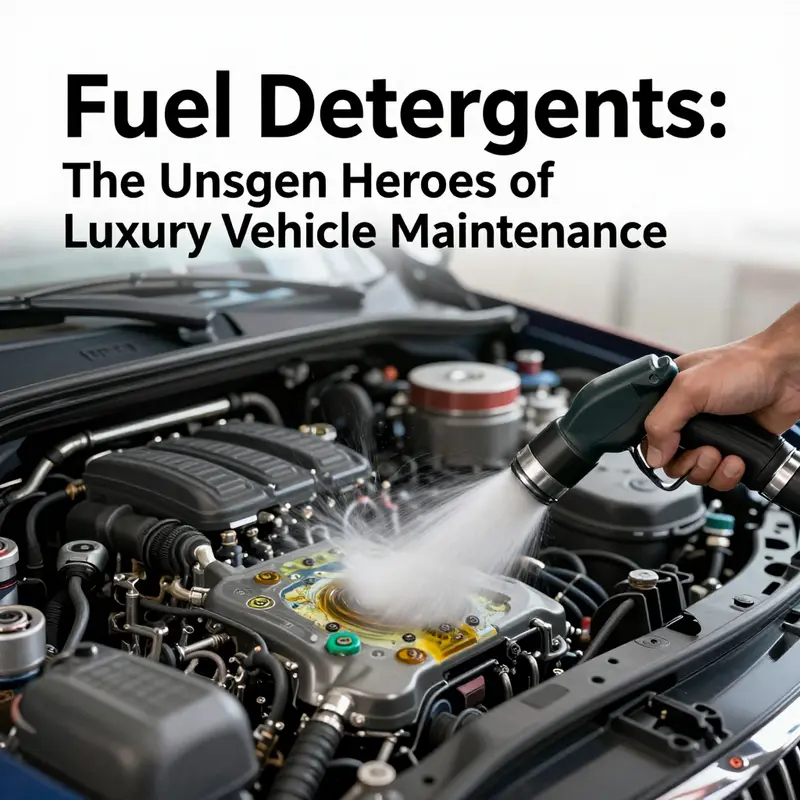
In the realm of luxury automobiles, the margin between effortless propulsion and a stumble in performance often hinges on something as small as the cleanliness of the fuel pathway. Detergents contained in fuel are not a cosmetic touch; they are a functional necessity that keeps the heart of a high‑performance machine beating with consistent rhythm. These engines are built for precision, with tight tolerances, sensitive fuel delivery systems, and controls that sculpt every pulse of air and fuel into a symphony of combustion. When deposits begin to form, they insidiously rewrite that symphony. Carbon can accumulate on fuel injectors, thin lubrication films on intake valves, and within the confines of the combustion chamber. The result is not simply a dirtier engine, but a cascade of performance penalties: irregular spray patterns, uneven combustion, a drop in peak power, and a drift in fuel economy that is felt not as a single event but as a quiet, persistent decline. In this context, detergents in fuel act as custodians of the engine’s precision, preventing the deposits before they form and washing away what does form so that the engine remains responsive and efficient under the demanding conditions luxury powertrains routinely face.
The issue at stake is not merely cleanliness for cleanliness’s sake. Deposits alter how fuel is atomized when it leaves the injector. They can disrupt the spray’s uniformity, leading to pockets of fuel that burn more slowly or incompletely. In engines designed to deliver swift throttle response and high torque at low rpm, such disruptions are immediately perceptible as hesitation or a flatter midrange. The effect compounds as the engine heats up, because higher temperatures can encourage deposit growth and change the dynamics of fuel vaporization. For high‑end engines, where every gram of air and fuel is choreographed by timing and pressure, even small deviations in fuel delivery can translate into a noticeable shift in performance, emissions, and the smoothness of idle. The detergents in fuel, when formulated and dosed correctly, act on multiple fronts to preserve this delicate balance.
At a chemical level, detergents perform a balancing act. They are designed to exist within the fuel system without breaking the fragile seals or corroding metal, yet they must be effective enough to keep carbonaceous deposits from attaching to critical surfaces. Detergents perform two complementary roles. First, they act as agents that keep deposit precursors in a dispersed state, reducing their tendency to aggregate and stick to injector nozzles or valve seats. Second, they work as surface‑active agents that improve the wetting of metal surfaces and promote a thin, protective film that resists new buildup. This dual action helps ensure that fuel, when injected, forms a more uniform spray and that the combusted charge remains consistent across the engine’s operating map. In luxury engines, where precise atomization is tied to how well the engine breathes at high rpm and how predictably it responds to an open throttle, maintaining clean fuel delivery translates directly into consistent horsepower, refined RPM response, and cleaner exhaust characteristics.
The practical upshot of these mechanisms is preventative maintenance that aligns with how luxury brands define reliability. Industry guidance, broadly interpreted, recommends a quarterly treatment when contemplating routine upkeep for modern fuel systems. A single bottle of concentrated detergent additive, used consistently every three months, is positioned as a prudent investment in long‑term cleanliness. The rationale is straightforward: regular dosing helps sustain injector spray patterns and intake system cleanliness, so fuel atomization remains stable over thousands of miles of driving. The same guidance acknowledges a different scenario: if carbon buildup has already progressed to be perceptible through rough idling, hesitation, or inconsistent power, restoration may require two consecutive treatments to effectively reduce accumulated deposits and restore engine function toward its original character. This approach—prevention as the first line, restoration as the second—reflects a broader understanding of how modern fuel systems respond to deposits and how detergents can most effectively intervene.
Within this framework, the choice of additive becomes as important as the act of dosing. Not all detergents are created equal. Studies and industry experience converge on a simple truth: only additives formulated with proven detergent compounds deliver meaningful cleaning benefits. Products that rely solely on solvents or non‑detergent bases may dilute the fuel or temporarily alter a surface’s feel without delivering durable cleaning results. In the context of luxury engines that rely on predictable combustion to maintain top‑tier performance, the emphasis is on sustained cleaning power rather than quick, short‑term relief. This does not imply a reckless search for the most aggressive formula; rather, it calls for selectivity—choosing additives that have a track record for removing and preventing deposits without compromising fuel stability, lubricity, or sealing integrity over the life of the vehicle.
Another layer of nuance concerns engine age and driving conditions. Older engines or those subjected to harsher operating environments—characterized by frequent high‑load driving, long trips on the highway, or sustained high engine temperatures—benefit disproportionately from regular detergent dosing. In such circumstances, deposits can form more readily or accumulate more firmly, and the surface areas most at risk expand beyond injectors to valve seats and the proximity of combustion chamber edges. The practical implication is not a one‑size‑fits‑all prescription but a staged approach: for engines in vigorous use or with a history of carbon buildup, a disciplined maintenance cadence that includes the quarterly additive cycle may prove particularly advantageous, with attention paid to any signs of worsening performance, such as sluggish acceleration, irregular idle, or a subtle drop in fuel economy.
For those who seek model‑specific guidance, the principle remains consistent: compatibility and suitability matter as much as cleaning power. Manufacturers routinely emphasize using additives that meet recognized industry standards to ensure compatibility with the fuel system, the materials in contact with the fuel, and the engine’s emission controls. While the precise standards can vary, the underlying criterion is clear—additives should be vetted for compatibility with the particular engine architecture and fuel type, and the dosing should align with the additive’s concentrate, the fuel’s octane rating, and the user’s driving profile. In this sense, the maintenance ritual becomes a conversation between the vehicle, the additive, and the operating environment, rather than a blind application of a generic solution. It is a conversation that underscores why many luxury owners view fuel additives not as a novelty but as an extension of the careful attention they devote to chassis fluids, tires, and the interior environment across the life of the car.
To connect the maintenance practice with a reachable action for readers who want to explore further, the idea of a consistent maintenance routine is reinforced by practical references to broader automotive care literature. For readers who wish to see how routine maintenance translates into real‑world cost savings and performance consistency, a consolidated resource on how vehicle maintenance strategies influence fuel efficiency provides a helpful framing. This kind of resource can help translate the chemical and mechanical rationale into everyday decision making about service intervals, fuel choices, and budget planning. How Vehicle Maintenance Saves on Gas Expenses offers a useful lens for understanding how the discipline of regular care—whether for a daily driver or a high‑end performance car—creates a foundation for maintaining efficiency, power, and reliability over time. It is not a replacement for manufacturer guidance, but it can illuminate how the broader maintenance mindset complements the targeted role of fuel detergents in protecting the fuel system.
The operational cadence described above is more than a precaution; it is a component of the maintenance culture surrounding luxury powertrains. Regular detergents in fuel work in concert with high‑quality fuels, clean intake paths, and properly functioning exhaust treatment systems to preserve a smooth, linear power curve and a refined throttle feel. When deposits are kept at bay, the engine’s intake valves continue to seal properly, the injector nozzles maintain their spray geometry, and the overall combustion process remains consistent across a broad range of driving scenarios. The result is not only sustained horsepower and torque but also better throttle response, reduced risk of misfire under high‑load conditions, and a noticeable stability in fuel economy that reflects the engine’s efficient use of every drop of fuel under a demanding driving regimen.
In the broader narrative of luxury vehicle care, the detergent strategy for fuel sits alongside other preventive measures that collectively protect the integrity of the engine’s performance envelope. Proper maintenance requires attention to fuel quality, regular service intervals, and the careful selection of additives that align with the vehicle’s design and the owner’s driving habits. The luxury experience is defined not just by peak power, but by the consistency of that power over time—the same surge of confidence at the first touch of the accelerator, repeated mile after mile, with the engine delivering a calm, composed cadence rather than a jittery or inconsistent response. Detergents in fuel contribute to that experience by acting invisibly, continuously, and effectively to maintain clean fuel delivery and predictable combustion.
Ultimately, the decision to adopt or continue a detergent‑in‑fuel maintenance plan rests on a practical appreciation of how modern fuel systems are engineered and how tiny changes in chemistry translate into tangible driving experience. The equilibrium between prevention and restoration, between proven detergent performance and compatibility considerations, is the fulcrum on which luxury maintenance balances. For owners who prize reliability and the long‑term preservation of engine character, detergents in fuel offer a measured, disciplined approach to keeping the engine’s heart clean and responsive. They are not a cure for every problem, but they are a reliable, proven tool in the ongoing effort to sustain the elegance and performance that define high‑end driving.
External resource: https://www.bentley.com/en/owners/support/fuel-additives
Detergent Armor for Luxury Powertrains: Preserving Performance and Longevity Through Fuel Additives
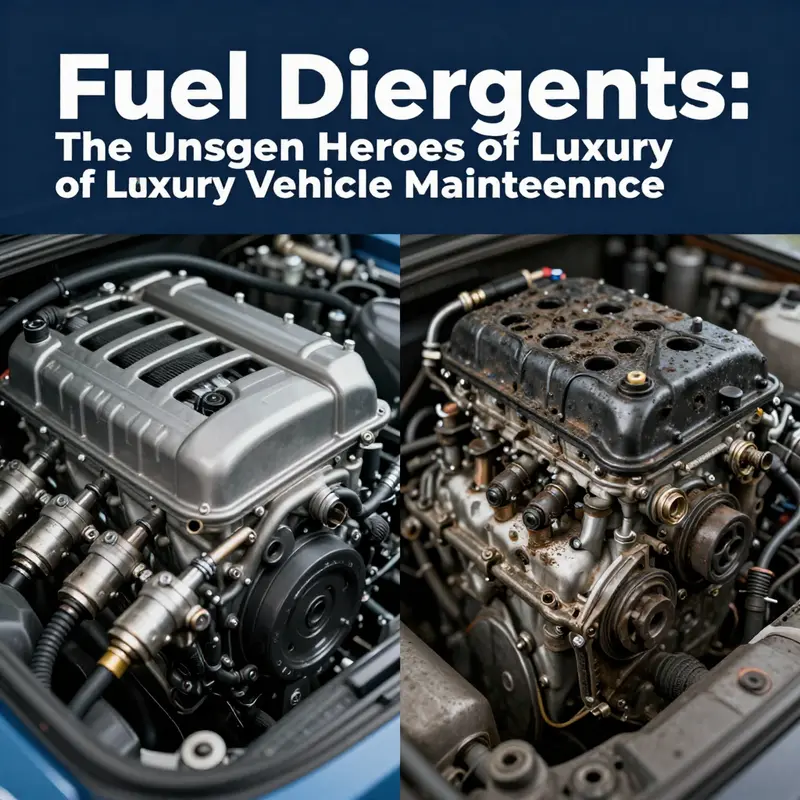
Luxury vehicles represent more than specifications; they embody consistent performance and refined character. The detergents in gasoline play a quiet but essential role in protecting that character by keeping the fuel path clean. In modern powertrains with direct injection, turbocharging, and variable valve timing, fuel cleanliness is a baseline requirement for the engine to deliver the intended horsepower and torque at the right moments. Detergents help prevent carbon deposits on fuel injectors, intake valves, and in the combustion chamber, preserving spray quality and enabling precise air fuel ratios. When surfaces stay clean, atomization remains sharp, throttle response stays immediate, and fuel economy remains predictable across a long ownership cycle.
Deposits form for many reasons, but the effect is consistent: deposits disrupt how fuel is delivered and how it burns. On injectors, deposits blunt spray performance; on intake valves, they impede the doorway through which air enters; in direct-injection systems, the fuel may not wash over the valves as in older designs, making detergents even more important. The cleansing action helps prevent fresh buildup and dissolves small deposits that could otherwise worsen with mileage. For luxury engines that often spend long periods at high RPM or sustain spirited driving, keeping the fuel path clean preserves the engine’s responsiveness and the purity of its power delivery.
The practical payoff goes beyond peak numbers. Clean injectors and valves support consistent combustion, enabling smooth idle, crisp throttle response, and stable fuel economy. When deposits are kept at bay, the engine operates closer to the manufacturer’s intent, with fewer minor hiccups during quick accelerations or rapid throttle transients. Detergents thus serve as proactive maintenance, helping the car feel new for longer and sustaining the high-quality driving experience luxury buyers expect.
From a standards perspective, detergent packages in gasoline are designed to meet industry guidelines such as the ILSAC GF-6 specification and related Top Tier requirements. Independent tests have shown that fuels with robust detergent packages reduce intake-valve and injector deposits over thousands of miles compared with fuels that contain fewer detergents. In practice, this translates to measurable gains in drivability, reduced maintenance surprises, and a longer window of performance credibility for high-end powertrains. For luxury owners, the curb-appeal of a car that stays refined over time is often as important as the latest horsepower figure.
In the modern landscape, direct-injection engines are especially sensitive to valve deposits. Detergents act not only as cleaners but as protective agents, helping to stabilize fuel quality and, in some formulations, contributing antioxidants and anti-wear properties. This holistic approach supports engine longevity and reliability under varied driving conditions, from daily commuting to weekend spirited drives. The takeaway is clear: consistent use of detergents—whether through detergent-rich fuels or approved additives—helps preserve the engine’s original character and keeps the luxury experience smooth and confident over the long term.
Practical recommendations for buyers and owners are straightforward: choose fuels with proven detergent performance and follow the vehicle manufacturer guidance regarding fuel quality and any approved additives. For engines with special maintenance needs or unusual fuel-system configurations, consult a qualified technician to tailor a detergent strategy to the specific engine family and usage profile. In most cases, a disciplined approach—relying on high-detergency fuels, supplementing with reputable detergent additives if recommended, and pairing with routine maintenance such as oil changes and air-filter care—will deliver the best balance of performance, efficiency, and long-term reliability in a luxury powertrain.
Guardians of Precision: How Fuel Detergents Sustain Luxury Engine Performance
Detergents in fuel do more than clean. In luxury vehicles, where engines are tuned for peak responsiveness and emissions are tightly managed, detergents act as stealth guardians that prevent the gradual erosion of performance. The fuel system sits at the crossroads of power, efficiency, and durability. It is where precision atomization meets clean combustion, and where even small deposits can ripple through throttle response, fuel economy, and long-term reliability. For a luxury car, the stakes are higher because the engine is designed to run with exacting tolerances and with advanced catalytic systems that reward clean, complete combustion. When detergents are present in the fuel, they form a protective shield against the formation of carbonaceous deposits on key surfaces such as fuel injectors, intake valves, and the combustion chamber itself. Without this shield, deposits can alter spray patterns, disrupt mixing, and hamper the delicate balance between air and fuel that modern engines rely on to produce power without wasting fuel or increasing emissions. The result, over time, can be a subtle but meaningful drift in ignition timing, an unsteady idle, or a slight delay in acceleration—symptoms that frustrate drivers who expect flawless, instantaneous response from a luxury drive. Detergents in fuel therefore function as a maintenance ally. They keep the fuel delivery path clear, ensuring that injectors can atomize fuel into an ultrafine mist, that intake valves seal cleanly, and that combustion occurs under optimum conditions. This is not merely about removing deposits after the fact; it is about preventing their formation in the first place. In engines that push higher compression ratios, operate at higher RPM bands, or employ turbocharging or supercharging, the margin for error narrows. Deposits can become hot spots that alter heat transfer, affect air flow, and degrade combustion chamber efficiency. In such contexts, the role of a high-quality detergent additive becomes a line of defense that preserves the engine’s intended flame front and its precise fuel metering. Luxury vehicles often feature engines with sensitive fuel systems and advanced emissions controls. The catalytic converter, the particulate filters, and the exhaust gas recirculation system all rely on clean, predictable combustion. When fuel additives reduce carbon buildup on injectors and valves, they also help keep these aftertreatment components functioning as designed. The consequence is a smoother torque curve, steadier idle, and a habit of maintaining the engine’s original character rather than drifting toward a fatigued feel after tens of thousands of miles. From a maintenance planning perspective, industry guidelines emphasize regular, preventive treatment rather than sporadic, reactionary interventions. The recommended cadence typically calls for a measured, periodic dose of a concentrated detergent additive, aligned with routine maintenance intervals. In the context of a luxury vehicle’s maintenance calendar, this often translates into a quarterly regimen, with one bottle added per quarter to safeguard fuel delivery and combustion cleanliness. The practical rationale is straightforward: consistency matters when deposits form slowly, and the cleaner the internal surfaces stay, the more consistent the engine’s performance remains over time. When a driver notices a vulnerability such as rough idling, hesitant acceleration, or a dip in fuel economy, a targeted cleaning treatment—sometimes two consecutive treatments—can help remove deposits that have already accumulated. This approach centers on restoring the original spray patterns of injectors and the sealing integrity of intake valves, which in turn reestablishes the engine’s smoothness and responsiveness. It is worth noting that the science behind these additives is not universal. Only formulas containing proven detergent compounds yield meaningful cleaning benefits. Some products on the market offer little more than solvent-based or non-detergent blends, which do not address the root of deposit formation and can provide misleading promises. For owners of older luxury models or engines that see demanding driving—like frequent stop-and-go traffic, extended idling, or sustained high-load operation in hot conditions—the protective benefits of detergent additives become more pronounced. In these cases, regular use can slow or even prevent carbon buildup, helping to maintain throttle response and engine responsiveness as the vehicle ages. This is particularly relevant for engines that rely on precise late-injection timing or highly tuned combustion dynamics, where even modest deposit formation can translate into a measurable decline in performance. The guidance surrounding fuel additives also intersects with broader standards that ensure compatibility with a vehicle’s materials and emission controls. Many luxury manufacturers advocate or approve additives that conform to recognized industry standards, such as those established for fuel-quality and detergent performance. These standards are important because they provide a framework for comparing products, ensuring that the chosen additive will not corrode metal surfaces, damage seals, or interfere with sensors and catalytic systems. In practice, this means selecting a detergent additive that is formulated to meet or exceed the standards applicable to the vehicle’s market and to the engine’s design. It also means avoiding brands or blends that lack clear compatibility testing or independent validation. The emphasis on quality naturally leads to the question of usage: how often, how much, and in what form should a luxury car owner approach fuel detergents to maximize benefit without overdoing it? The most straightforward answer starts with routine maintenance alignment. Use the additive as part of scheduled maintenance, ideally when the oil is already being serviced or at a nearby interval such as every 5,000 kilometers or whenever the vehicle is in for service. Adhering to the manufacturer’s dosage instructions is essential. Overdosing does not equate to better cleaning and can risk introducing excess detergents that the engine’s filtration and aftertreatment systems need to handle. Conversely, underdosing can leave still-present deposits to continue building up. The principle is balance: the additive should work in concert with the engine’s own design to maintain clean surfaces without overwhelming the fuel system’s chemistry. In terms of brand selection, the guidance favors authentic, reputable products over generic or no-name blends. When choosing a detergent additive, prioritize formulations that are explicitly positioned as compatible with the vehicle’s fuel system and that clearly articulate detergent performance. For luxury owners, the goal is not the cheapest option but the option most likely to preserve the engine’s integrity and the car’s refinement over many miles. The conversation around compatibility naturally extends to the importance of alignment with the vehicle’s long-term maintenance philosophy. Some manufacturers emphasize the role of fuel additives that meet recognized standards and caution against using additives that have not been vetted for their models. This caution is not a universal taboo on all aftermarket products; rather, it is a reminder to choose blends that have demonstrated compatibility with sensitive components and with emissions-control systems. As with any maintenance decision in a high-performance vehicle, there is value in consulting the vehicle’s maintenance guide and the dealership’s service recommendations. Even when an additive is not explicitly required by the manufacturer, the practice of using a high-quality, standards-compliant detergent can be a prudent precaution. It helps maintain the fuel system’s integrity, supports clean atomization, and contributes to preserving the engine’s signature throttle response and refinement. For readers seeking a concise primer that links maintenance philosophy to everyday driving, a broader resource on what vehicle maintenance entails can be helpful. See What is vehicle maintenance for a general overview and how routine decisions—like choosing appropriate fluids, filters, and additives—fit into the bigger picture of vehicle longevity and reliability. In the end, the goal for luxury owners is straightforward: sustain the engine’s clean, precise combustion and avert the creeping deposits that dull performance and raise emissions. Detergent additives, when chosen and used correctly, are not a miracle cure but a practical, evidence-based tool that aligns with the ethos of luxury care: keep the machine feeling as new as possible for as long as possible. And while the specific dosage and brand are important details, the overarching message remains clear: high-quality detergents that meet industry standards help preserve precision through every mile. For those who want to explore broader maintenance concepts while keeping the focus on fuel cleanliness, the linked resource offers a structured entry point into how routine choices shape long-term vehicle health. What matters most is a thoughtful, standards-driven approach to detergent usage—one that respects the engine’s sensitivity, the efficiency of the fuel system, and the luxury of a consistently refined driving experience. External resources and internal references can guide a driver toward better decisions without sacrificing the vehicle’s character. For readers who seek deeper context on fuel-quality practices and their impact on modern engines, an external reference on fuel-additive science can provide additional clarity and validation. External resource: https://www.jdsports.co.uk/chevron-techron-fuel-additive
Guardrails of Performance: How Industry Standards for Fuel Detergents Preserve Luxury Engine Precision
Detergents in fuel are the quiet guardians of a luxury engine’s reputation. The moment the key turns, a symphony of precision begins—injectors atomize fuel with surgical accuracy, intake valves meet the air-fuel mix without hesitation, and the combustion chamber breathes cleanly enough to sustain both performance and restraint. In high-end machines, where every click of the throttle is measured and every mile is a test of refinement, even small deposits can derail that harmony. Carbon buildup on injectors, sticky deposits on intake valves, and soot accumulations in combustion chambers are not merely cosmetic concerns; they are disruptions to spray patterns, to the timing of combustion, and to the economy of power delivery. The detergents carried in modern fuels or added as fuel treatments act as a first line of defense, reducing the likelihood that those troublesome deposits will form or grow. The idea is simple in theory, but powerful in practice: keep the fuel system clean enough that the engine’s high-pressure injection system can perform as designed, with clean atomization, predictable ignition, and steady pursuit of efficiency even after thousands of miles at the edge of performance. For luxury vehicles, where the engine is often a centerpiece of value and experience, this cleanliness matters more than in everyday transportation. The stakes are higher because the engines are more sensitive to deposit-related performance shifts and because the expectations around smoothness, throttle response, and emissions are higher as well. Detergents in fuel thus perform the dual role of protectors and enablers: they guard the engine’s dynamic behavior while enabling the car to maintain its legendary feel of effortless superiority. This makes understanding the standards that govern these detergents not merely a technical concern but a cornerstone of responsible luxury vehicle ownership.
To appreciate why standards matter, imagine the detergents as a strategic layer within a broader maintenance philosophy. The engines in luxury cars are designed to operate at high thermal and mechanical efficiency. They rely on precise fuel atomization and clean intake pathways to achieve optimal combustion. Deposits disrupt those pathways, altering spray behavior and residence time of fuel in the chamber. The result can be a subtle but persistent drift in power delivery, a tendency toward rough idle under certain conditions, or an uptick in emissions that betrays the car’s otherwise pristine performance pedigree. Standards provide a consistent baseline for what constitutes effective detergency across fuels, additives, and driving environments. They ensure that when a driver fills up at a station that advertises a detergent-rich formulation, there is a credible expectation that the fuel will support the engine’s design goals for a meaningful stretch of time. In effect, standards translate the complex chemistry and engineering of modern detergents into a reliable, consumer-facing promise: that the fuel system will stay cleaner longer, and that the car’s performance will stay closer to its original benchmark.
A central pillar of this framework is the Top Tier Detergent Standard, a benchmark developed through collaboration among automakers and fuel providers to ensure that fuels contain robust detergent packages capable of protecting critical engine components. This standard goes beyond the minimum requirements set by the regulatory baseline, extending protection against carbon deposits that can erode efficiency and power. The mechanism is as straightforward as it is consequential: fuels meeting the Top Tier standard (or additives designed to meet compatible benchmarks) maintain stronger deposit-control performance across a range of fuels, ethanol blends, and driving styles. The implication for luxury vehicles is meaningful. Because these engines often employ tighter tolerances, higher compression, and more sophisticated delivery systems, the difference between a moderately clean system and a thoroughly clean one can be reflected in smoother idle, steadier part-throttle response, and more consistent trailing edge of power at high revs. When the detergents in fuel align with sturdy industry standards, the engine’s management system can trust the input it receives and respond with confidence.
To gauge a detergent’s potential effectiveness, the industry has established testing protocols, among which ASTM D5579 stands out as a widely cited reference point. The D5579 test is designed to measure intake valve cleanliness, offering a laboratory-oriented proxy for how a fuel’s detergents will perform in real-world conditions. A fuel or additive that performs well in D5579 tends to support cleaner intake pathways, which in turn supports stable engine breathing, consistent ignition timing, and better overall efficiency under a variety of loads. In practical terms, this translates into fewer knock events caused by carbon buildup, more reliable throttle response, and more predictable emissions behavior—qualities that lie at the heart of what luxury drivers expect from their cars in day-to-day use as well as during spirited drives.
The discussion of detergents and standards cannot ignore the growing reality of ethanol in modern fuels. Ethanol blends can pose particular challenges to deposit-control chemistry. They can alter the detergency profile of a fuel and influence how detergents interact with metal surfaces and elastomer seals in the fuel system. A robust standard framework recognizes this reality and calls for compatibility across ethanol blends, ensuring that detergent performance remains durable as blends shift over time or with seasonal formulations. In practice, fuels tied to Top Tier certification are built with detergent packages that are designed to remain effective even when ethanol content fluctuates. This consideration matters profoundly for luxury vehicles, which are often driven under a wide range of conditions, from quiet highway cruising to occasional high-load sessions on mountain passes. The goal is to prevent the build-up of varnish-like residues that can become more pronounced when ethanol presence interacts with heat, pressure, and fuel-system materials.
For the conscientious luxury-vehicle owner, these standards serve as a guide to making informed fueling choices. The guidance is straightforward: when possible, select fuels that meet the Top Tier Detergent Standard, or use additives that are formulated to align with those stringent benchmarks. This approach is about consistency—consistency in detergency performance across stations, seasons, and travel climates. It also supports broader maintenance strategies that many owners already value: predictable engine behavior, reliable fuel economy, and reduced likelihood of deposit-related service events. The standard-centered mindset helps translate technical protection into everyday peace of mind, making it easier to justify the cost and effort of using high-detergency fuels in the context of the vehicle’s long-term performance and refinement.
Within this framework, it is also important to recognize the role of professional maintenance guidance. While standards set expectations for detergency, local driving patterns and environmental conditions can modulate how deposits form and how detergents perform in practice. Luxury engines sometimes display particular sensitivities to fuel quality, especially when driven aggressively or in climates that subject the engine to repeated high-load operation and thermal cycling. In such scenarios, the base level of detergency provided by Top Tier fuels may still be supplemented by periodic additive treatments, a practice that aligns with the broader aim of preserving injector spray patterns and intake-valve cleanliness across the vehicle’s life. Preventative maintenance, when conducted in keeping with established guidelines, can meaningfully extend the interval between more intensive cleaning interventions and help preserve the engine’s original responsiveness. The bottom line is that standards do not replace routine care; they empower it, by ensuring that the care itself begins from a foundation that is scientifically vetted and automaker-endorsed.
For readers seeking a concise footing on how this translates to everyday decisions, a quick reference is the notion that vehicle maintenance, at its core, is about sustaining the engine’s breathing, fueling, and combustion choreography. To explore broader maintenance concepts beyond detergents, see What is vehicle maintenance. This broader frame helps connect the detergents-in-fuel discussion with the day-to-day responsibilities of keeping a luxury car at its best—a continuity that runs from fueling choices through scheduled service intervals and into the long horizon of ownership.
The practical takeaway for owners and enthusiasts is clear: standards such as Top Tier provide a disciplined baseline that reduces variability in how detergents perform from one refill to the next. This is especially valuable in the luxury segment, where the engine’s sophistication means there is less tolerance for unexpected deposit-driven changes in behavior. The standards also foster trust between automakers and fuel suppliers, encouraging ongoing investment in more effective detergency chemistries and more rigorous testing. In a market where performance and refinement are part of the brand promise, the alliance between detergents, standards, and testing becomes a cornerstone of reliability. The chain—from the chemistry of detergents to the science of tests like ASTM D5579 to the certification of Top Tier fuels—creates a feedback loop that rewards drivers with smoother operation, lower emissions, and a sustained sense of driving excellence over time.
The broader implication for luxury-vehicle owners is that understanding these standards helps set expectations and informs fueling strategy. It is not enough to assume that all high-octane or premium fuels are created equal; the value proposition rests on detergency levels that are validated by independent testing and recognized by automakers. In this light, the decision to seek Top Tier-certified fuels or compatible additives becomes a strategic part of the ownership experience. It is an investment in the vehicle’s future, one that supports the performance characteristics that define a luxury drive and the long-term reliability that often justifies the premium price of ownership.
The narrative around detergents in fuel thus evolves beyond simple cleanliness. It becomes a narrative about maintenance philosophy, about choosing inputs that align with the engine’s precision and with the brand’s promise of refinement. It is a reminder that the luxury driving experience is achieved not only through engineering prowess but also through disciplined choices that safeguard those engineering choices. The detergents, the standards that govern them, and the tests that validate their efficacy together form a quiet but powerful trilogy. Put differently, when a luxury car is fueled with detergents that meet robust standards, the engine’s choreography remains as pristine as the day it rolled off the line, and the driver experiences that continuity in every mile.
To keep this interconnected story coherent with the broader article, consider the maintenance cadence suggested by industry practice: a quarterly routine that includes detergents capable of meeting recognized standards, plus attention to any signs that the deposits are receding or advancing. The literature emphasizes that for engines with lower baseline cleanliness, two consecutive treatments may be warranted to restore peak function. The essence of the approach is not dramatic interventions but steady stewardship, a cycle of inspection, fueling discipline, and measured care that preserves the engine’s behavior and the car’s experience of luxury. This is the practical, lived reality of standards in action: they translate rigorous testing into everyday confidence and continued driving pleasure.
In the end, the story of detergents in fuel and luxury engine maintenance is a story about trust—trust in standards, in tests, and in the engineers who designed both the engines and the products that protect them. It is a story that invites owners to see fueling not as a routine event but as a deliberate act of maintenance that safeguards performance, efficiency, and longevity. The more deeply a driver aligns with standardized detergency, the more consistently that driver can expect an engine whose behavior remains predictable, whose power remains near its peak, and whose emissions stay aligned with the standards that define modern luxury driving. These are the quiet rewards of paying attention to detergents, standards, and the science that binds them together.
External resource: Top Tier Detergent Standard
Final thoughts
In conclusion, maintaining the optimal performance of luxury vehicles goes beyond routine checks and improper fuel choices; it necessitates a consistent approach towards using high-quality fuel detergents. These compounds not only clean fuel systems but are essential for ensuring efficient combustion, enhanced performance, and a longer lifespan for luxury engines. By adhering to recommended practices and understanding industry standards, vehicle owners can safeguard their investments and enjoy the ultimate driving experience. Regularly incorporating top-tier detergent additives will enable peak performance, translating into smooth rides and sustained engine health.