

For business owners managing commercial vehicle fleets, effective maintenance plans are crucial for minimizing downtime and maximizing operational efficiency. Dealerships play a pivotal role in this process, offering tailored services and innovative solutions that cater specifically to fleet needs. From implementing scheduled maintenance programs that keep vehicles in peak condition to utilizing cutting-edge diagnostic services that preemptively identify issues, dealerships ensure that your fleet runs smoothly. Furthermore, partnerships between dealerships and manufacturers facilitate continuous upgrades and expert training, enhancing service quality. Each chapter of this article explores these essential components, providing a comprehensive overview of how dealerships support commercial vehicle maintenance plans.
Powering Dependability: Dealerships, Scheduled Maintenance, and the Lifeblood of Commercial Fleets

Dealerships sit at the intersection of manufacturing, service excellence, and everyday fleet operations. For many fleets, the promise of predictable maintenance is not a luxury but a practical asset that translates into higher uptime, safer operation, and better margins. Scheduled Maintenance Programs (SMPs) are the engineers of that promise, turning a collection of scattered repair events into a coherent rhythm of inspections, fluid changes, tire care, brake checks, and component wear assessments. When SMPs are designed and executed through a dealership network, the value goes beyond the routine service; it creates a durable framework that aligns every mile driven with a plan for reliability. In this arrangement, the shop becomes a value chain partner, not merely a place to fix things after they break. The result is a fleet that experiences fewer surprises, shorter downtime, and a smoother path from maintenance to mission delivery. The chapter that follows explains why this arrangement matters so deeply to fleet operators and how the pieces fit together to produce measurable outcomes over the long haul.
These programs are not a one-size-fits-all solution. They are meticulously tailored to the make, model, and daily duties of each vehicle in a fleet. A heavy-haul tractor spending long hours on rough highways presents different needs than a city-based delivery van executing tight schedules in urban terrain. SMPs account for mileage bands, duty cycles, climate exposure, and load profiles, translating those factors into a maintenance map that prioritizes the components most vulnerable to wear in a given operating context. The planning phase leans on data— OEM service literature, the vehicle’s diagnostic history, and the fleet’s usage metrics—to craft a plan that respects manufacturer guidelines while adapting to real-world conditions. This careful calibration helps avoid over-maintenance or under-protection, a balance that is essential to preserve asset life without eroding cash flow.
At the heart of every SMP is the certified technician. Dealerships employ technicians who are trained specifically for the brand families they service. Their expertise goes beyond basic mechanical skills; it encompasses a deep understanding of the engine family, transmission, brake systems, driveline configurations, and the software that controls modern vehicle subsystems. This specialization matters because every vehicle is a complex, integrated system where a single missed torque specification or an out-of-date calibration can ripple into performance losses or safety risk. The technician’s role in an SMP is as much diagnostician as craftsman, interpreting diagnostic codes, performing precise inspections, and applying procedures that adhere to rigorous OEM standards. In the context of a fleet, that technical discipline translates into consistent performance across hundreds of miles, drivers, and days of operation.
Part of that consistency comes from using Genuine OEM parts. The decision to equip vehicles with manufacturer-supplied components is about preserving the intended design margins and lifecycle expectations. OEM parts are manufactured to exact tolerances and material specifications that align with the vehicle’s engineering. In a high-volume SMP, where replacements accumulate across large numbers of identical vehicles, the fidelity of these parts is a fundamental reliability lever. It reduces the risk of compatibility issues, ensures proper seals and fit, and supports predictable wear patterns. For fleet operators, the payoff is not just reliability; it is better forecasting of maintenance budgets and a clearer view of the lifecycle cost of each asset. A precise parts strategy is a quiet but powerful driver of uptime, reducing the likelihood of mid-cycle delays caused by incompatible components or incorrect configurations.
Another transformative element in dealership-supported SMPs is the integration of telematics and fleet management software. Real-time health data, fault code streams, and usage patterns empower both the technician and the fleet manager to move from reactive maintenance to proactive care. Predictive analytics can forecast when a system will reach a maintenance threshold, enabling service to be scheduled before a fault becomes a costly failure. Automated scheduling can trigger appointments based on actual wear, mileage, and operational patterns rather than arbitrary calendar milestones. This visibility translates into fewer ad hoc repairs and a smoother allocation of downtime—often aligning service with planned vehicle availability rather than interrupting peak production. For managers, the data stream creates a living view of the fleet’s health across locations, enabling smarter decisions about routes, duty cycles, spare parts inventories, and technician staffing. The shop floor, the office, and the road all become part of a single, responsive system where information flows in both directions and maintenance plans continually adjust to live conditions.
Downtime management is central to SMP effectiveness. In a well-orchestrated program, maintenance is designed to minimize the disruption to operations while maximizing the value of each service event. Scheduling maintenance during planned downtime, when vehicles are already off the road or in the right yard, becomes a standard practice rather than an exception. This alignment reduces idle time and preserves productive miles, which matters a great deal when every hour of availability carries a cost. The digital service record that accompanies an SMP serves as a ledger of ongoing care. Every inspection checkpoint, every fluid replacement, every software update is logged in a structured, searchable format. This audit-ready documentation supports regulatory compliance, insurance requirements, and internal governance. It also makes issue resolution faster when a recall, recall bulletin, or factory update comes into play, because the fleet already has a complete, accessible history of what work has been performed and when.
The collaboration between dealerships and manufacturers is another pillar of SMP strength. Dealer networks give fleets access to factory-trained technicians who can interpret the latest service bulletins and engineering changes with precision. This knowledge is shared through trusted service channels and translated into actionable guidance on the shop floor. The dealership’s service advisor becomes a key conduit, translating data-driven insights into a clear maintenance plan for drivers and managers. In larger fleets, this advisor can coordinate across multiple sites, ensuring consistent service quality and standardized procedures wherever a vehicle operates. The ongoing exchange between dealer, fleet, and manufacturer creates a feedback loop that accelerates issue resolution, reduces the probability of rework, and helps keep the entire fleet aligned with the most current maintenance standards. It is a collaborative model that treats maintenance as a shared responsibility rather than a transactional service event.
Preventative maintenance packages offered within SMPs further enhance predictability and financial discipline. Fixed-period or fixed-price arrangements bundle the most common maintenance events into a transparent cost structure. This packaging helps fleet operators forecast expenses with greater accuracy, improve budgeting, and avoid the shock of unplanned repairs. The fixed pricing model does not imply a downgrading of care; instead, it incentivizes timely service at the appropriate intervals, aligning incentives toward preserving vehicle health rather than postponing service until a breakdown occurs. Importantly, the work remains performed by certified technicians using OEM parts, and the maintenance intervals stay true to the vehicle’s design and operating demands. The outcome is a steadier cost profile, more predictable uptime, and a fleet that can deliver service commitments with confidence because its upkeep is anchored to a disciplined, manufacturer-informed plan.
From a broader financial perspective, SMPs support a more manageable total cost of ownership. The proactive diagnostics and remote monitoring catch small issues before they escalate, reducing both the likelihood of expensive repairs and the duration of downtime. A well-implemented SMP creates a structured workflow across the fleet, reducing miscommunications among technicians, managers, and drivers. Data-enabled benchmarking allows operators to refine spare parts strategies, optimize technician staffing, and calibrate service intervals to the fleet’s actual operating profile. When deployed judiciously, SMPs translate into more reliable miles, reduced absenteeism due to breakdowns, and a smoother revenue-generating cadence. The value is not merely in the absence of failures but in the quality of the maintenance process itself—an ongoing discipline that keeps vehicles aligned with safety, efficiency, and compliance goals across the entire operation.
Ultimately, SMPs are as much about people as they are about parts. The durability of a maintenance program rests on the relationships that unfold between fleet managers, service advisors, drivers, and shop teams. A well-designed SMP nurtures trust: drivers experience consistent performance after service, managers gain assurance from transparent records and predictable costs, and technicians operate within a well-defined, manufacturer-aligned framework. The cadence becomes a cultural asset within the organization, a shared understanding that maintenance is a strategic enabler rather than a cost center. When this human dimension is strong, the workflow becomes predictable, communication stays clear, and the entire operation advances with fewer interruptions. The joint practice of disciplined maintenance builds reliability into the fabric of daily work, turning maintenance into a measurable contributor to customer commitments, regulatory compliance, and corporate sustainability goals.
In sum, dealership-driven SMPs fuse tailored planning, expert execution, authentic parts, and digital intelligence into a single, cohesive system. They translate complex engineering knowledge into practical, repeatable care that keeps commercial fleets moving with confidence. The SMP is more than a contract; it is a living mechanism that tunes the vehicle, the driver, and the operation toward reliability, safety, and profitability. Within the broader ecosystem, it supports safety, regulatory compliance, and durable uptime, enabling fleets to meet service commitments and customer expectations with conviction. For readers seeking a concise foundation on maintenance, a primer is available at What is Vehicle Maintenance. As fleets look to evolve, the dealership-enabled SMP stands out as a practical, scalable approach to sustaining performance across miles, shifts, and seasons. External guidance from the national safety framework also complements this practice, helping fleets anchor their maintenance strategies in evidence-based standards: NHTSA fleet maintenance guidelines.
Data-Driven Uptime: How Diagnostic Services Power Dealer-Supported Maintenance Plans for Commercial Fleets
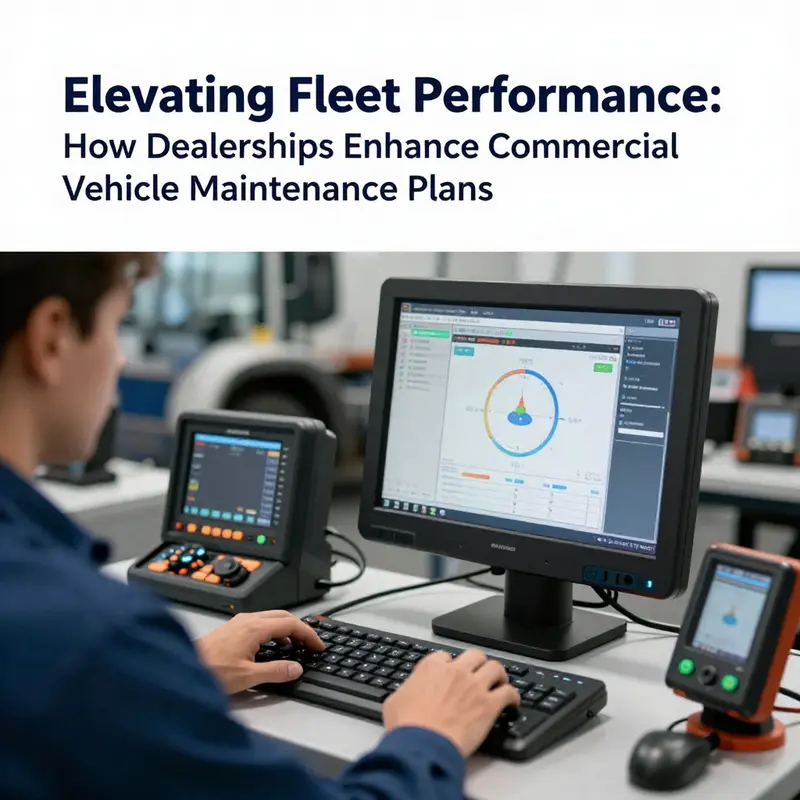
Diagnostic services sit at the core of how dealerships extend maintenance plans beyond simple wheel rotation and oil changes. In modern fleets, every mile traveled, every load carried, and every route planned generates a unique fingerprint of vehicle health. This fingerprint is not just information; it is the fuel that runs a proactive maintenance engine. When a dealership harnesses real time data from connected vehicles, telematics, and onboard systems, it can translate streams of numbers into precise actions that keep vehicles on the road and customers on schedule. The result is not merely a checklist of services but a living, adaptive program that aligns with how a fleet operates, how aggressively it uses assets, and how it budgets for upkeep over the life of the vehicle.
As vehicles grow more complex, the role of diagnostics moves from diagnostic slapdash repair toward a disciplined, data-driven discipline. Modern fleets depend on software-defined components, wireless updates, and integrated control networks that monitor everything from engine performance to climate control, brake wear, and tire pressures. The dealership becomes the steward of this ecosystem. Certified technicians trained in system-level understanding can interpret fault codes, analyze trends, and forecast failures before they disrupt service. In this environment, diagnostics do more than reveal a problem; they reveal the root cause, the most cost-effective repair path, and the optimal maintenance window. This is where predictive maintenance lives, powered by data rather than guesswork.
A central strength of dealership-driven maintenance plans is the seamless integration of diagnostic insights with maintenance scheduling and parts logistics. Diagnostic data feeds directly into maintenance tracking software, automatically creating work orders when a health metric crosses a threshold or when a pattern indicates impending wear. Because these systems are often tied to OEM parts catalogs and the dealer’s workflow, technicians can pull the exact parts needed for each repair in a single visit, reducing cycle time and minimizing the risk of substitutions that could compromise performance. This end-to-end integration matters for fleets where downtime translates into missed deliveries, delayed orders, or unhappy customers. When a diagnostic alert triggers a preventive service at the most opportune moment, the fleet operator avoids the cascade of failures that can arise from neglected maintenance, and the dealership earns a reputation for reliability, consistency, and transparent cost control.
The contribution of diagnostics to a fleet’s uptime cannot be overstated. Real-time health monitoring allows for a shift from reactive triage to proactive planning. Telematics data, when analyzed in near real time, can indicate abnormal vibration patterns, coolant temperatures outside normal ranges, or unexpectedly rising oil burn. Rather than waiting for a fault indicator light, the service team can initiate a diagnostic check, schedule a maintenance window, and preposition the necessary technicians and parts. For fleet managers, this proactive posture translates into fewer unplanned stops, smoother scheduling across multiple locations, and a more predictable cash flow. It also means that maintenance can be treated as a strategic invest ment rather than a budgetary afterthought, with clear links to asset utilization metrics, reliability indices, and lifecycle cost projections.
A powerful element of dealership diagnostics is the ability to benchmark health across a large pool of vehicles. When data from many vehicles is aggregated and anonymized, technicians can build a failure prediction library that highlights recurring issues by model family, usage pattern, or operating environment. For example, a fleet that runs long-haul routes may experience different fatigue curves for tires, brakes, and transmission components than a city delivery operation. By analyzing these patterns, dealers can tailor preventive maintenance packages to a fleet’s specific use case. This capability supports the shift toward subscription-based or outcome-focused service contracts, where customers pay for uptime and reliability rather than a fixed menu of services. The dealer, in turn, benefits from improved predictability in workload, better inventory management, and stronger long-term relationships with fleet operators who value operational visibility and cost control.
The broader ecosystem that supports diagnostic services is increasingly built on cloud-enabled platforms and interoperable data standards. Vehicle health data can be collected from multiple manufacturers and harmonized in a single dashboard that a fleet manager can access anywhere. This central visibility makes it possible to track service history, upcoming maintenance milestones, and the status of critical components across an entire fleet. It also enables more efficient coordination with the dealer’s network of service locations. When a diagnostic alert is issued, a service advisor can view the vehicle’s health trajectory, confirm the recommended action, and assign a preferred maintenance window that minimizes downtime while balancing technician capacity. For fleets with multiple locations, this capability is particularly valuable, as it ensures uniform maintenance quality and consistent adherence to manufacturer guidelines across every site.
The strategic implications of diagnostic services extend beyond pure maintenance. Across the industry, there is a growing recognition that this intelligence layer supports broader supply chain and operations optimization. For instance, the data can feed into predictive parts procurement, ensuring that the right components are on hand when needed and preventing parts shortages that cripple maintenance timelines. In some models of service delivery, diagnostic insights enable remote monitoring and remote servicing options where feasible, allowing certain tasks to be completed without a physical visit or by performing firmware updates and calibration adjustments remotely. While not every issue can be resolved without a technician on site, remote diagnostics can shorten the time to diagnosis and speed up the path to complete repair.
An emerging theme in the diagnostic narrative is the transition from fixed maintenance intervals to usage-based or condition-based plans. Traditional maintenance schedules, tied to calendar time or mileage, can be inflexible for fleets with varying utilization. Diagnostic data makes it possible to customize maintenance windows according to actual wear and operating conditions. This shifting paradigm is not merely a technical upgrade; it is a business transformation. It allows fleet operators to budget with greater accuracy, reducing the risk of surprise repair costs while preserving the expected asset life. In protective terms, it also helps ensure compliance with manufacturer guidelines and warranty conditions, because services are triggered by verifiable health signals rather than guesswork. The dealership’s diagnostic capability thus becomes a governance tool as well, safeguarding asset integrity and financial stewardship.
To illustrate the scope of what modern diagnostic services enable, consider the lifecycle from fault detection to intervention. When a fault code is read, technicians assess whether it represents a transient anomaly or a persistent condition. They examine historical trends from similar vehicles, corroborate with sensor data streams, and determine the likelihood of imminent failure. If the risk is material, the system can trigger a preventive maintenance action, such as a fluid change, a sensor calibration, or a brake system inspection, all scheduled through the fleet management platform. The objective is not to replace human judgment but to augment it with data-driven foresight. The technician then executes the planned work, validates the repair with post-service testing, and logs the outcome back into the vehicle’s health record. The vehicle leaves the shop with an updated health trajectory and a clear, auditable service history that the fleet manager can access to measure performance and cost effectiveness.
This dense network of data, people, and processes is precisely what makes diagnostic services so central to the dealership’s maintenance proposition. It is a capability that aligns with the expectations of modern fleet operators who demand reliability, transparency, and consistency across a dispersed network of vehicles and locations. It also aligns with the broader industry trend toward platform-based service ecosystems, where diagnostic intelligence serves as the connective tissue between vehicle hardware, software, and the business of maintenance. In practice, this means that a dealer’s maintenance plan is not a static list of services but a living program that evolves with the fleet’s usage patterns, the vehicle’s health signals, and the market’s pricing dynamics. The net effect is higher uptime, reduced total cost of ownership, and a stronger alignment between dealer resources and fleet goals.
A further dimension of diagnostic services is their role in knowledge creation within the dealership. Technicians build a repository of failure patterns and corrective actions. Over time, this library grows more accurate and more actionable, enabling faster diagnosis and more precise maintenance prescriptions. This cumulative expertise enhances trust with commercial clients, who come to rely on the dealer not only for repairs but for proactive guidance on optimization and lifecycle planning. The dealership thus becomes a strategic partner for the fleet, offering insights that go beyond the immediate repair and into long-term performance optimization. The trust that accrues from consistent, data-backed performance is hard to quantify, but it is undeniably valuable, translating into higher retention, more favorable service terms, and a willingness by operators to consolidate maintenance with a single trusted provider.
In the global context of vehicle health data exchange, diagnostic services sit at the intersection of safety, efficiency, and innovation. National strategies that promote standardized data sharing between vehicles, infrastructure, and cloud platforms create an ecosystem in which dealerships can operate with greater scale and interoperability. The potential rewards are substantial. Fleets can compare health indicators across regions, identify best practices, and enforce uniform maintenance standards. The dealer, similarly, gains access to a broader view of vehicle health trends across a network, enabling more accurate capacity planning and better service delivery. This level of integration is gradual and complex, requiring careful attention to data privacy, cybersecurity, and regulatory compliance. Yet the trajectory is clear: diagnostics will become more deeply embedded in the fabric of maintenance planning, turning data into action that protects asset value and sustains uptime.
From the perspective of market outlook, the trajectory for diagnostic services and remote-maintenance capabilities is steep. Industry forecasts emphasize that advanced vehicle diagnostics and remote services will form a large and growing market segment, driven by the demand for predictive analytics, remote monitoring, and proactive maintenance across fleets. In this evolving landscape, the dealer’s ability to translate diagnostic insights into tangible maintenance actions will continue to be a key differentiator. It is not enough to offer a diagnostic report; what matters is the capability to schedule the right service at the right time, optimize parts availability, and deliver consistent quality across locations. When these elements align, maintenance plans become a source of steady value rather than a transactional expense, and uptime becomes the primary service metric that fleets use to evaluate a dealership’s performance.
For fleet operators seeking practical guidance, the diagnostic narrative offers a straightforward path. Prioritize diagnostic readiness as a service capability, ensuring that the dealership has access to robust data infrastructure, skilled technicians, and a clear workflow for translating health signals into maintenance actions. Seek clarity on how the dealer plans preventive interventions, how it tracks results, and how it communicates changes in maintenance windows or service plans. Ask about data transparency, especially around the health indicators being monitored, and request predictable scheduling that aligns with your operation’s peak periods. A well-designed diagnostic program should feel seamless to operators, with minimal disruption to their routes and a clear map of the value delivered in uptime, reduced downtime, and total cost of ownership.
Within this framework, a single link to industry resources or peer insights can be surprisingly valuable. For readers looking for real-world perspectives on how diagnostic intelligence is shaping service programs, the following resource offers a practical lens on how AI-driven diagnostic platforms help dealers forecast needs and optimize service delivery across a broad range of brands and vehicle types. Vehicle Tricks blog. This reference provides a hands-on view of how digital guidance and diagnostic data intersect with everyday maintenance decisions, reinforcing the point that diagnostics are the lever that turns data into action on the shop floor. In the broader literature, external analyses underscore that AI-powered diagnostics are reshaping the aftermarket by enabling predictive maintenance, remote monitoring, and structured data exchanges that support scalable, high-quality after-sales service across fleets of all sizes.
The convergence of diagnostic capabilities with fleet management and dealer operations is not merely a technical upgrade; it is a strategic realignment of how maintenance is conceived, priced, and executed. When a dealership can demonstrate that its diagnostic service translates into measurable uptime gains, predictable budgeting, and predictable service outcomes, the relationship with the fleet operator becomes more than transactional. It becomes collaborative, with both parties sharing a common goal: to maximize asset availability while maintaining cost discipline. The diagnostic layer is the bridge that makes this collaboration possible, turning complex vehicle data into clear, actionable plans and turning maintenance plans into reliable, outcomes-based initiatives that fleet managers can trust and rely upon day after day, mile after mile.
External resources continue to shape the evolution of diagnostic services, particularly as AI and cloud technologies mature. Industry observers point to significant growth in the connected vehicle services space, with diagnostic analytics at the core of the value proposition. The insights derived from these systems inform not only maintenance scheduling but also operational planning, risk management, and capital expenditure decisions tied to asset lifecycles. The overarching message is that diagnostics empower dealerships to deliver maintenance plans that are not only technically sound but financially rational for fleets, enabling a sustainable path to uptime and reliability in a world of increasingly complex propulsion, electrical, and software ecosystems.
External source note: AI-driven diagnostics and connected services are transforming automotive aftermarkets by enabling real-time monitoring, predictive maintenance, and cross-network data integration, as discussed in recent industry analyses. https://www.reuters.com/technology/ai-drives-growth-in-automotive-aftermarket-services-2026-01-27/
Powering Fleet Reliability Through Partnership: How Dealerships and Manufacturers Unite to Support Commercial Vehicle Maintenance
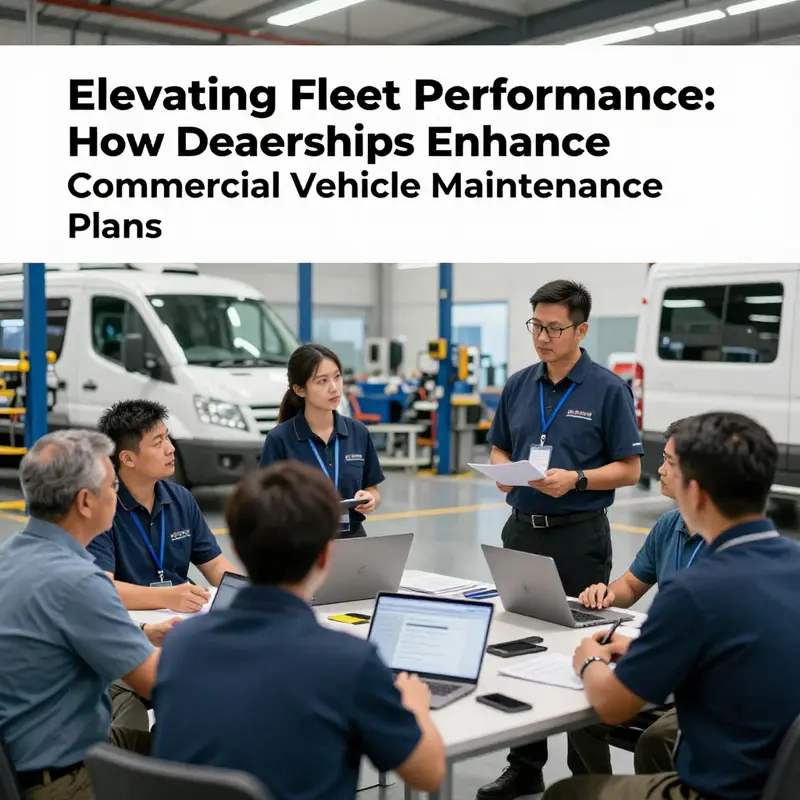
Integrated Collaboration Across the Value Chain\n\nIn the world of commercial fleets, reliability is a system built from the cooperation of manufacturers, dealerships, and fleet operators. When dealerships align with manufacturers to deliver maintenance plans, fleets gain a data-driven approach that reduces unplanned downtime and extends asset life.\n\nThis collaboration centers on integrated maintenance programs tailored to each vehicle family. Authorized dealer networks implement schedules that reflect real-world wear, operating temperatures, and duty cycles, translating generic tasks into precisely sequenced inspections, fluid services, tire rotations, and safety checks.\n\nGenuine parts are a core pillar. OEM components ensure correct fit and performance, supporting safety and warranty coverage, and reducing logistics friction across locations.\n\nDiagnostics and service information are shared through dealer-manufacturer partnerships. Access to manufacturer-grade software and current bulletins enables accurate fault isolation and proactive maintenance, translating data into timely actions and condition-based triggers aligned with the fleet’s operating profile.\n\nTraining is another critical axis. Ongoing manufacturer-led programs keep technicians up to date with diagnostics, electrified powertrains, and evolving emissions controls, fostering a culture of excellence in preventive planning and safety.\n\nService information updates—bulletins, advisories, and software calibrations—are integrated into workflows so technicians apply the latest guidance consistently, regardless of where a vehicle is serviced.\n\nThe benefits extend beyond the shop. For fleet operators, predictable maintenance, optimized turnarounds, and data-backed planning improve uptime, total cost of ownership, and customer satisfaction. Digital platforms enable unified maintenance histories, efficient scheduling, and transparent parts logistics across locations.\n\nExperience sharing and continuous improvement are central. Aggregated data from across fleets informs program refinements, which in turn refresh training and diagnostics. The result is a living maintenance plan that adapts to changing workloads and new vehicle technologies while maintaining a clear ROI in uptime and reliability.\n\nIn short, strong dealership-manufacturer partnerships turn maintenance from a cost center into a strategic asset—driving safety, performance, and growth for fleets that rely on dependable, on-time service.
Final thoughts
The effectiveness of a commercial vehicle maintenance plan directly impacts fleet performance, making it a critical area for business owners to focus on. Dealerships play an essential role in supporting these maintenance plans through scheduled services, advanced diagnostic capabilities, and strong partnerships with manufacturers. By leveraging these resources, fleet operators can ensure their vehicles remain reliable, efficient, and well-maintained, ultimately driving business success. Invest in a dealership’s expertise to protect your fleet and maximize your operational outputs.