

As the demands on fleet operations grow, effective vehicle maintenance remains a critical factor in ensuring reliability and efficiency. Telematics technology has emerged as a game-changer, offering captivating insights that not only enhance vehicle longevity but also streamline operational processes. This powerful tool allows business owners to monitor real-time vehicle health, schedule predictive maintenance, and receive automated alerts. In this exploration, we will delve into how telematics can fundamentally transform fleet maintenance, providing business owners with strategic advantages and ensuring that their operations run seamlessly.
Listening to the Road: Real-Time Vehicle Health Monitoring as the Engine of Proactive Fleet Maintenance

Every fleet operates as a living system where every mile traveled tells a story about wear, performance, and risk. In this story, telematics acts as the nervous system, continuously gathering signals from dozens of sensors and translating them into a stream of actionable insights. Real time vehicle health monitoring changes the equation from reactive repairs to proactive care. It reframes maintenance from a series of scheduled interruptions into an ongoing, data guided discipline that keeps vehicles in service longer, reduces costly downtime, and protects both safety and service quality. The core idea is simple, even if the data landscape is intricate: monitor the condition of critical components as vehicles operate, detect deviations from normal behavior, and respond before a fault becomes a failure that halts operations. When this approach is embedded across a fleet, maintenance decisions become automatic, coordinated, and traceable, with the ability to link every action back to a concrete operational outcome.
At the heart of real time health monitoring are the sensors that quietly line the arteries of modern heavy equipment. Engine performance metrics, tire pressure, battery status, brake wear, and fluid levels form a spider web of data points that travel from each vehicle to a centralized system. These data streams come from sensors that monitor ongoing operations, like engine load, RPM, coolant temperature, oil pressure, and voltage, as well as wear indicators such as brake pad thickness and tire tread health. The value lies not in any single measurement but in the pattern that emerges when many measurements are viewed together over time. A single spike in exhaust gas temperature may be a concern, but when it couples with rising engine load and a slight dip in oil pressure, the signal becomes a warning flag that deserves attention. In a well run telematics deployment, data is not collected for its own sake. It is curated, filtered, and mapped to practical maintenance actions, with the aim of keeping the vehicle running at the right time and at the right cost.
The practical power of real time monitoring shows up in two linked capabilities: continuous visibility and rapid responsiveness. Continuous visibility means every vehicle in the fleet has a live health score on a dashboard that is accessible to maintenance planners, fleet managers, and, where appropriate, safety supervisors. The dashboard presents a visual language of status: normal, attention required, or immediate action. The response to these states is designed to be intuitive. A fault code may appear alongside trend data that shows whether a parameter is stabilizing, deteriorating, or oscillating within a safe band. A fault that recurs or accelerates in a short period often triggers automated reminders for service checks or a suggested maintenance window that minimizes disruption to operations. This level of immediacy is what makes real time health monitoring more than a monitoring tool; it becomes a decision support engine that guides who fixes what, when, and with what urgency.
To realize predictive maintenance, the single most important step is to move from fixed intervals to condition based maintenance. Telematics platforms analyze the trajectory of usage, engine hours, mileage, and task profiles to forecast when a component will likely fail or when its performance will degrade past an acceptable threshold. The logic behind this approach is straightforward: wear and tear are driven by how a vehicle is used, not merely by the passage of time. With reliable trend data, the maintenance team can schedule service at a moment when it will have the least operational impact, rather than at a calendar marker or a mileage milestone that may or may not reflect actual wear. The promise is tangible—reduced downtime, extended component life, and better budgeting for parts and labor—because maintenance is performed in response to actual need rather than assumed need. A well designed system aligns service intervals with the real health of critical systems such as lubrication circuits, cooling loops, and braking assemblies, and it flags anomalies like abnormal temperature drift or oil pressure variability long before they threaten reliability.
Crucially, the architectures behind real time health monitoring enable a suite of automated alerts and actionable insights. When a particular threshold is crossed, the system can push alerts to the maintenance queue, tag the most at risk vehicles, and escalate the issue according to severity. The central dashboard can categorize vehicles by status—those that are current and healthy, those due for maintenance, and those requiring immediate action. This triage capability is invaluable in large fleets where human attention is a scarce resource. It allows maintenance teams to prioritize and sequence work in a way that minimizes disruption to routes and service levels. The alerts are not merely alarms; they are prompts for specific actions, such as ordering a part, scheduling a diagnostic, or initiating a remote check. The value of these alerts grows when they are coupled with historical maintenance data, enabling smarter decisions about what parts to keep in stock and which service intervals tend to produce the best return on investment.
Remote diagnostics is another pillar of real time health monitoring. When a fault is detected, technicians can access the vehicle’s health data remotely to determine the likely cause and necessary repair steps before the vehicle even arrives at the shop. This capability dramatically reduces diagnostic time and accelerates repair sequencing. Technicians can review fault codes, sensor readings, and usage history in the cloud, and they can even verify whether a fault is repeatable under certain operating conditions. For fleets that operate in multiple locations or rely on remote service centers, remote diagnostics translates into faster turnarounds and a smoother supply chain for parts. In this paradigm, the garage becomes an extension of the fleet data environment rather than a separate, isolated operation. When a shop is prepared with the right part and the correct diagnostic approach, the vehicle is ready for a targeted repair upon arrival, slashing the time spent in diagnostic limbo and reducing the risk of misdiagnosis.
The integration of real time health monitoring with existing fleet management software is the thread that ties sensing to action. Modern telematics platforms are designed to play well with the broader software ecosystem that fleets use to plan routes, assign tasks, and track utilization. A health oriented module can feed service reminders directly into maintenance calendars, append new entries to the vehicle history, and generate compliance reports that document maintenance activity. When data flows into a unified view, managers can assess maintenance performance alongside utilization metrics. This integrated perspective is essential for proving ROI and for identifying bottlenecks that slow maintenance, such as parts procurement delays, technician capacity constraints, or misaligned preventive maintenance windows. An effective integration also supports long term planning. Over time, the data layer can reveal seasonal patterns in wear, the impact of extreme operating conditions, and the effect of driver behavior on component life. These insights empower the maintenance team to optimize not only when to service but where and how to deploy maintenance resources across the fleet.
Decision making in this context is increasingly data driven. The real time stream provides a near real time feedback loop that informs scheduling, budgeting, and risk assessment. It makes it possible to distinguish issues that deserve immediate attention from those that can be monitored while planning a routine service. The sequencing of maintenance work becomes more precise, with technicians and suppliers aligned to a shared plan that minimizes downtime. Resource allocation—whether it is labor hours, mobile servicing units, or depot time—becomes a function of actual fleet health rather than estimates. This shift improves reliability and predictability, which in turn supports more ambitious service level commitments to customers. In practice, the outcome is a maintenance program that evolves as the fleet ages, with updated thresholds, revised preventive maintenance windows, and increasingly accurate forecasts of part usage and spare parts inventory levels.
The benefits extend beyond uptime. Real time health monitoring also plays a critical role in safety and efficiency. By continually watching brake wear, tire condition, fluid levels, and cooling performance, fleets reduce the likelihood of dangerous failures that affect operator safety or roadworthiness. At the same time, the data reveals opportunities to optimize operating costs. Habits such as excessive idling, harsh braking, or aggressive acceleration leave a measurable imprint on engine wear and fuel economy. When this information is surfaced, it can be translated into targeted driver coaching and route planning that reduce mechanical stress and conserve fuel. In a study area where cold chain logistics departments have noted improvements in both fuel consumption and product integrity, the link between disciplined telematics enabled maintenance and improved operational outcomes becomes especially evident. Although each fleet is unique, the underlying mechanics are clear: fewer surprises, more predictable maintenance, and a more resilient operating model.
Implementation considerations matter as much as technology itself. Real time health monitoring benefits from thoughtful sensor placement, robust data pipelines, and careful calibration. Sensors must be placed where they capture meaningful wear signals without exposing the system to excessive environmental noise. Data pipelines should be engineered for reliability, with fault tolerance, redundancy, and clear data governance policies to address privacy, security, and access control. Calibration is essential because drift in sensors over time can erode the reliability of alerts. Regular validation against physical examinations and shop diagnostics helps keep the telematics data honest. Equally important is the human factor. Maintenance teams need training to interpret health signals, respond to alerts, and adjust maintenance calendars in light of new patterns. Driver engagement matters too. When drivers understand how their behavior feeds into maintenance schedules, they become partners in the health monitoring program, using feedback to reduce wear and improve fuel efficiency. The cumulative effect of technical discipline and human collaboration is a telematics driven maintenance culture where proactive care becomes routine rather than exceptional.
In the practical cadence of a fleet operation, real time health monitoring translates into a continuum of actions that begin with data and end with reliable service. It starts with data collection and aggregation, where every vehicle contributes a stream of sensor readings to a centralized repository. It proceeds to real time analysis, where machine learning or rule based logic identifies anomalies and trends that signify potential failures. It then triggers alerts and initiates recommended actions, from remote diagnostics to scheduling a service appointment. Finally, it closes the loop with maintenance records that document what was observed, what was done, and what the outcome was for future reference and learning. This closed loop creates a living history of each vehicle, an archive that supports ongoing optimization of maintenance strategies and parts supply. And because the data is continuously refreshed, the organization gains the capacity to simulate how changes in maintenance intervals, driver training, or route design will likely affect reliability and costs. The result is not simply a reduction in unplanned downtime; it is a transformation of maintenance into a strategic asset that underpins service quality, safety, and operational excellence.
The broader implication for the fleet is clear. Real time vehicle health monitoring turns maintenance from a cost center into a proactive, intelligent operation that aligns with the pace and pressure of modern logistics. It makes maintenance decisions visible and auditable, with a traceable line from sensor signal to service action to fleet performance. It also creates a platform for continuous improvement, where each maintenance decision is informed by the experience of the entire fleet. When maintenance history, health signals, and utilization data are combined, fleets can test hypotheses about the most effective maintenance practices, the optimal thresholds for alerts, and the most effective driver coaching strategies. The outcome is a more reliable, safer, and more cost efficient operation, one where the road itself becomes the source of insight and the maintenance team acts with confidence rather than instinct.
For readers seeking a practical reminder of how these insights translate into everyday decisions, consider how maintenance planning can be enhanced by linking health alerts to service windows. A technician can be scheduled to address a cooling system anomaly during a planned depot visit, while a mobile service unit can be dispatched to handle tire pressure adjustments during on route servicing without delaying deliveries. When the maintenance calendar, parts inventory, and technician availability are informed by live health signals, the entire maintenance workflow becomes tightly coordinated. The literature on maintenance optimization reinforces this conclusion, showing that condition based maintenance approaches driven by real time data consistently outperform traditional, calendar driven schedules in terms of downtime reduction and cost efficiency. The chapter of the fleet narrative that begins with a sensor reading thus ends in an action that keeps vehicles moving with fewer disruptions and higher confidence in the reliability of the fleet.
From a reader perspective, it is useful to anchor these ideas to a concrete expression of value. Real time health monitoring reduces the uncertainty that surrounds maintenance planning. It supports a disciplined approach to reliability, where predictive signals are translated into specific tasks, parts expenditures, and technician deployments. It gives managers a sharper view of risk, enabling them to balance the front end of maintenance with the back end of operations, so that service commitments remain intact even as the fleet ages. And it does so in a way that scales. Whether a small regional fleet or a nationwide operation, the same principles apply: capture the health signal, interpret it through a consistent framework, and respond with precision. The fidelity of the data makes this possible, the governance around it keeps it trustworthy, and the culture surrounding it ensures that maintenance decisions are collaborative and evidence based. The result is a cycle of improvement where real time health monitoring not only preserves uptime but also strengthens safety, reliability, and the economics of maintenance over the long run.
As you chart a path to real time vehicle health monitoring in your fleet, a practical step is to weave the telematics insights into daily maintenance rituals. Begin with a clear set of health indicators that matter most to your operation—engine performance, lubrication and cooling performance, brake and tire wear, and key fluid levels. Establish thresholds that trigger timely actions, and ensure those thresholds reflect both the vehicle design and the demands of your routes. Build a robust governance framework so that alerts translate into work orders, and ensure that the maintenance history grows richer with each intervention. When this foundation is in place, the broader gains follow: fewer breakdowns, longer vehicle life, safer operations, and more predictable maintenance costs aligned with actual wear and usage rather than with abstract schedules.
For fleets exploring the broader strategic value of maintenance driven by ongoing health signals, the road ahead includes tighter integration with driver coaching and route optimization. Health data combined with driving behavior can reveal how operator decisions contribute to wear and energy use, and it creates a natural bridge to training interventions that reduce harsh braking, unnecessary idling, and abrupt accelerations. The combined effect is a reduction in mechanical stress, lower fuel consumption, and better overall asset performance. The journey from real time health monitoring to optimized maintenance is iterative. It requires ongoing calibration of sensors, refinement of alert thresholds, and continuous feedback from technicians and operators. But the payoff is substantial: a fleet that runs with fewer unplanned events, a maintenance program that adapts to the fleet’s evolving needs, and a data driven narrative that champions reliability as a core operational capability.
If you want to explore the practical implications of maintenance driven by live health data in greater depth, this route of inquiry is well covered in industry analyses that connect health monitoring to maintenance optimization and ROI calculations. For a broader perspective on how modern telematics systems are transforming fleet maintenance, refer to this comprehensive overview from a leading industry publication. And for related practical guidance on how maintenance choices translate into fuel efficiency benefits, you can read more at the linked article here: how vehicle maintenance saves on gas expenses.
Ultimately, real time vehicle health monitoring is not a single feature but a philosophy: treat the fleet as a living system whose health informs every maintenance decision. When data is collected with integrity, interpreted with rigor, and acted upon with discipline, maintenance becomes a continuous, proactive cycle rather than an episodic intermission. The fleet endures longer, operates more reliably, and serves customers with higher consistency. The road, in this light, is not just a path from point A to point B; it is a continuous source of learning about how to keep moving safely, efficiently, and affordably.
External reference for deeper reading on maintenance optimization through telematics: https://www.fleetowner.com/telematics/fleet-maintenance-optimization
Forecasting Failures on the Open Road: Telematics-Driven Predictive Maintenance for a Resilient Fleet
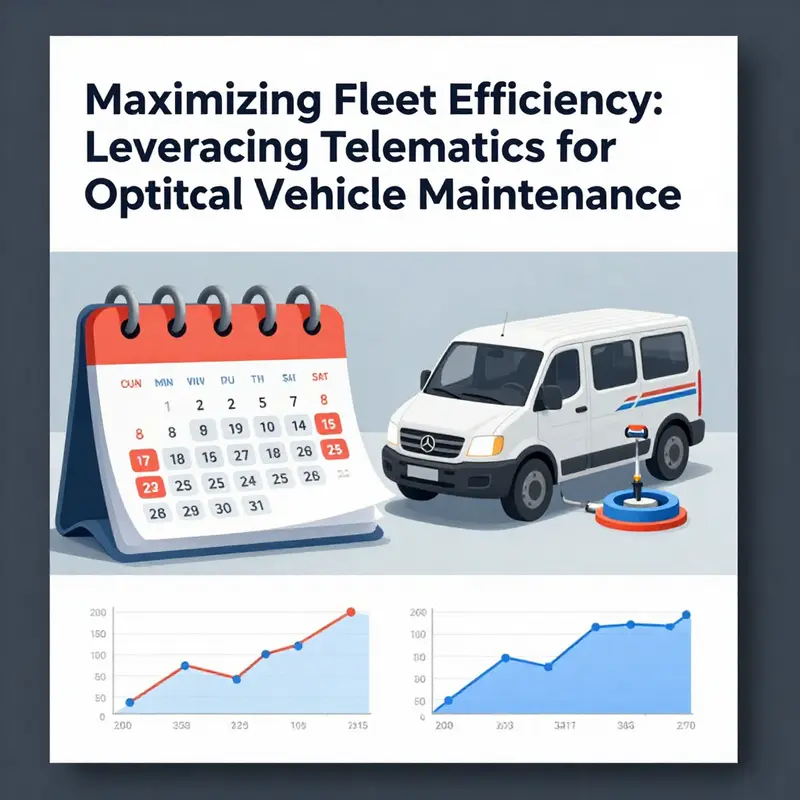
Predictive maintenance feels less like a clever trend and more like a necessary discipline when fleets depend on reliability to meet schedules, budgets, and customer expectations. Telematics, once a tool for tracking location and basic fuel consumption, has evolved into a data-rich nervous system for a vehicle fleet. It gathers a continuous stream of signals from each asset—engine diagnostics, sensor readings, hours of operation, mileage, and even the subtleties of driving style. When these signals are collected, cleaned, and analyzed in the right way, they reveal a future your team can plan around rather than one that suddenly disrupts operations. The shift from fixed maintenance calendars to predictive maintenance is not about replacing human judgment with a machine. It is about extending human judgment with timely, precise data so that every maintenance action serves a purpose: to keep vehicles available, safe, and efficient while protecting the bottom line.
The core idea rests on real-time data collection, but predictive maintenance gains its real power through interpretation. A vehicle’s onboard diagnostics system can generate diagnostic trouble codes and a panorama of sensor readings—oil pressure, coolant temperature, brake wear, battery voltage, and more. Each parameter carries a meaning, and the value of telematics lies in understanding how those meanings come together. A single reading might not trigger action, but a pattern—two weeks of steady oil pressure decline, accompanied by a gradual uptick in engine temperature during hot climbs and higher engine hours on a particular route—constitutes a signal. The system learns to distinguish routine variation from signals that historically precede a component failure. In practical terms, this means maintenance is not scheduled because the calendar says it should be done, but because the vehicle’s condition demands it.
In building this capability, two aspects matter most: the quality of data and the sophistication of the analytics. If data are noisy or incomplete, forecasts will be unreliable and managers will revert to old habits. The same is true if the analysis layer is naïve, treating every anomaly as a potential catastrophe or, conversely, ignoring subtle cues that accumulate over time. The best predictive maintenance programs are built on clean, consistent data streams and models that evolve with the fleet and its operating context. They recognize that a cold chain delivery vehicle behaves differently than a regional service truck, just as a vehicle that logs long highway hours will wear differently from one that alternates city stops with idling breaks. Separate baselines can be established for each vehicle type, route, and duty cycle, with machine learning models that compare current signals to these baselines in real time.
The practical benefits begin with early detection. Real-time monitoring doesn’t stop at flagging a fault code; it interprets trends and correlates signals across the system. A gradual rise in brake wear sensors, a creeping drop in oil pressure under heavy loads, or a hydraulic fluid temperature drift during a steep ascent signals a likely wear pattern that could lead to a failure if left unaddressed. Rather than waiting for a mile-based service interval, fleets can initiate targeted inspections or proactive part replacement during planned downtime. The result is a dramatic reduction in unplanned downtime, which is the most costly form of disruption. When a vehicle goes offline for a sudden issue, the entire schedule can unravel, rerouting loads, delaying deliveries, and inflating overtime costs. Predictive maintenance, by contrast, positions maintenance as a scheduled optimization rather than a firefighting exercise.
Underpinning this capability is the move toward condition-based maintenance. Rather than adhering to a rigid mileage threshold, maintenance is triggered by the actual health of components. Engine hours, component wear, and environmental conditions all feed into a maintenance decision. In a predictive framework, a sensor may indicate that a filter is approaching end-of-life not because it has surpassed a fixed mile marker but because its performance trajectory shows a meaningful decline in filtration efficiency. The system can then generate a maintenance work order that aligns with planned downtime, such as post-delivery routes or during a routine stopover. This sequencing minimizes disruption to operations while maximizing the effectiveness of the service, creating a smoother, more reliable operation across the fleet.
A robust predictive maintenance program also relies on pattern recognition and failure prediction. Pattern recognition builds a baseline for each asset by analyzing historical and real-time data, identifying what “normal” looks like for that vehicle in its particular context. Subtle deviations—an uptick in engine vibration, a slight rise in fuel temperature, or a small but persistent change in transmission oil clarity—can be early indicators of a developing issue. Failure prediction then connects these indicators to known failure modes, harnessing historical data to estimate the probability of a specific fault within a time window. This probabilistic view is crucial. It avoids both overreaction to random fluctuations and underreaction to real signals. The maintenance team can prioritize work based on risk, criticality, and the impact on service schedules, using risk-adjusted timelines rather than one-size-fits-all approaches.
The human element remains essential. Predictive maintenance doesn’t absolve technicians of responsibility; it informs and focuses their work. When a fault is detected, remote diagnostics can often identify the likely cause and parts needed, reducing diagnostic time. A garage visit becomes a targeted, one-shot repair rather than a series of exploratory steps. That efficiency is especially valuable when a fleet spans multiple regions or operates under tight delivery windows. Technicians can arrive with the right tools and components, and the vehicle can be returned to service with minimal downtime. In practice, the process becomes a continuous feedback loop: data feeds predictive models, which generate actionable work orders, which generate maintenance actions that, in turn, produce fresh data to refine the models. The loop sharpens over time as more maintenance outcomes feed back into the analytics, improving accuracy and trust.
A critical design choice in predictive maintenance is how to handle alerts and task prioritization. Telematics platforms can be configured to translate predictive signals into a spectrum of alerts that range from gentle reminders to urgent actions. For example, an early-stage wear indicator might generate a notification that asks a maintenance manager to schedule a routine inspection during the next downtime window. A more urgent signal could trigger a direct maintenance task with a high-priority tag and a recommended service window that minimizes operational disruption. The clarity of this workflow matters as much as the forecast itself. A well-structured alert system prevents alert fatigue and ensures that maintenance staff focus on truly consequential signals.
Data integration across the enterprise is essential. Predictive maintenance flourishes when telematics data can be correlated with a fleet’s maintenance history, parts inventory, and labor scheduling systems. This integration allows for smarter work orders, optimized technician utilization, and a better match between the vehicle’s needs and the shop’s capacity. It also supports regulatory compliance by providing auditable records of maintenance activities and vehicle health, which can be important for safety programs, audits, and vehicle inspections. The most effective programs treat data as an asset that informs strategy across maintenance, operations, and safety.
Beyond the internal benefits, predictive maintenance reshapes the broader operations picture. When maintenance becomes tightly aligned with actual vehicle condition, spare parts planning can be more accurate, reducing excess inventory while avoiding stockouts. Downtime planning improves too. If a vehicle is projected to require service during a specific window, the route can be adjusted, and the planning team can reallocate this asset’s work to another vehicle with minimal impact on service levels. The result is a fleet that is more predictable and resilient in the face of demand fluctuations and environmental stressors. And because telematics captures driver behavior alongside vehicle health, it enables a two-pronged approach: you reduce wear through coaching and you prevent wear by scheduling maintenance precisely when it is needed. The combined effect is a maintenance program that is truly proactive, data-informed, and aligned with operational realities rather than theoretical schedules.
The practical implementation of predictive maintenance, while nuanced, follows a straightforward path when guided by principles rather than by a checklist. Start with data quality. Clean, consistent data from all vehicles ensure reliable models. Then establish per-asset baselines that reflect each vehicle’s duty cycle and environment. Next, implement analytics capable of recognizing both short-term anomalies and long-term drift in component performance. Finally, translate insights into maintenance actions that fit into existing workflow—ideally within a calendar that operators already trust. It is not enough to forecast failures; you must forecast in a way that aligns with the business’s cadence. This alignment is what turns predictive maintenance from a clever capability into a competitive advantage.
A note on the human side of the transition: embrace change management. Maintenance teams accustomed to fixed intervals might greet predictive alerts with cautious skepticism. The key is to couple forecasts with clear, actionable steps and to demonstrate measurable outcomes. Early pilots can show reductions in unplanned downtime, shorter diagnostic times, and improved reliability of on-time deliveries. As teams see the benefits, confidence grows, and the system becomes an accepted partner rather than a disruptive novelty. Training is essential, but so is simplicity. The best predictive maintenance programs present alerts and work orders in a single, intuitive interface, reducing the cognitive load on maintenance staff and drivers alike. When drivers see that a signal corresponds to a concrete action—an upcoming service, a slight route adjustment, or a recommended inspection during the next stop—their trust in the system deepens. This trust is the glue that keeps data-driven maintenance from becoming an optional add-on and makes it a core capability of fleet operations.
In weaving predictive maintenance into the daily fabric of fleet management, leaders often find that the speed of improvement is as important as the magnitude of improvement. Early wins come from reducing unplanned downtime and improving first-time fix rates. As the analytics mature, the improvements spread across fuel efficiency, longer component life, and better safety outcomes. The financial case follows naturally: better uptime, lower repair costs, and extended asset life translate into improved total cost of ownership. It is a virtuous circle where better data produces better decisions, which in turn yield better data once again. In this sense, predictive maintenance is not a single initiative but a long-term capability that deepens the fleet’s understanding of itself—and its future needs.
To make this more tangible, consider a typical long-haul operation that relies on a stable timetable and predictable routes. The telematics system monitors engine hours, transmission temperatures, brake wear indicators, and fatigue signals from driving patterns. Over several weeks, the data reveals that a subset of vehicles on a particular route consistently experiences higher brake wear after city segments and heavy traffic cycles. The analytics flag this pattern and correlate it with the stop-start nature of the route. The maintenance team schedules a targeted brake inspection and pad replacement just after a planned urban leg, minimizing the risk of a roadside failure and preserving the fleet’s service level. Parallel to this, one or two vehicles show a rising coolant temperature trend during climbs, which prompts a proactive coolant system service before overheating becomes a risk. The combined effect is a smoother service schedule, fewer disruptions, and a calmer operation that can respond quickly to shifting demand without sacrificing reliability.
For readers seeking a practical bridge between theory and day-to-day practice, consider how to phrase the value to stakeholders who approve budgets and sign off on maintenance programs. Focus on four dimensions: availability, reliability, efficiency, and risk. Availability measures the percentage of time a vehicle is ready for service. Reliability looks at the predictability of maintenance needs and the degree to which faults are anticipated rather than unexpected. Efficiency quantifies how maintenance actions align with downtime, labor, and part costs. Risk speaks to the likelihood of a failure that would interrupt operations and the severity of its consequences. Predictive maintenance delivers improvements across all four dimensions. It does so not by removing the expertise of technicians but by enhancing it with timely, actionable data and a clearer map of where to allocate limited resources for maximum impact.
In closing, predictive maintenance is the natural evolution of telematics-enabled fleet management. It leverages real-time data, advanced analytics, and a disciplined approach to maintenance scheduling to move from reactive repairs to proactive, value-driven action. It is a discipline that respects the complexity of real-world operations—where routes vary, environments change, and days rarely unfold exactly as planned—while providing a clear framework for what to do when the data indicate a potential issue. When executed with care, predictive maintenance illuminates a path to longer vehicle life, lower costs, safer operations, and a fleet that consistently aligns with service commitments. In this light, telematics is not just a monitoring tool; it is a strategic ally that upgrades maintenance from a cost center into a continuous engine of optimization. For readers looking to connect the dots between maintenance strategy and tangible outcomes, the next step is to translate insights into a living workflow, one that grows smarter with every mile driven and every route completed. And as always, remember that the data tell a story—your job is to read it clearly, act decisively, and let the fleet’s performance speak for itself.
Internal link note: for a practical sense of how maintenance decisions can translate into fuel efficiency and operational savings, see the discussion on how vehicle maintenance saves on gas expenses. how vehicle maintenance saves on gas expenses.
External resource: for a broad, industry-wide view of maintenance optimization through telematics, consult the Fleet Owner overview on telematics-driven maintenance optimization. This article synthesizes real-world implementations, ROI calculations, and best practices that can guide a fleet’s predictive maintenance journey. https://www.fleetowner.com/telematics/fleet-maintenance-optimization
Smart Alerts and Actionable Insights in Telematics-Driven Fleet Maintenance
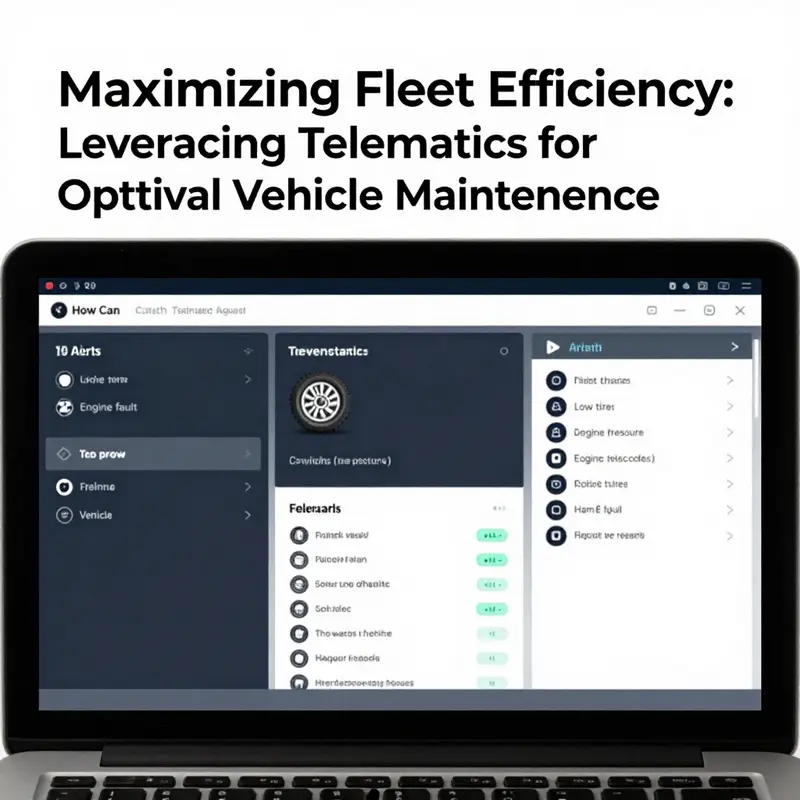
Telematics-enabled fleet maintenance turns data into proactive action. Real-time sensor readings from engines, transmissions, tires, and hydraulics feed automated alerts that trigger timely service rather than after-failure repairs. Thresholds for oil life, coolant temperature, tire pressure, and brake wear convert measurements into actionable tasks, scheduling windows, and parts orders. A centralized maintenance dashboard classifies vehicles by readiness: Ready, Due Soon, or Immediate Action Required, and surfaces next steps for each case. Technicians receive rich context—fault codes, recent readings, and historical patterns—while drivers get guided recommendations to reduce wear. The result is faster response, reduced downtime, and longer asset life. The workflow connects alerting with work order creation, smart scheduling, and parts management, closing the loop from signal to service. Over time, predictive diagnostics learn from history to forecast failure windows and preemptively address issues. The payoff is a resilient maintenance program that improves safety, efficiency, and total cost of ownership.
Final thoughts
Implementing telematics in fleet vehicle maintenance is no longer just an option; it is a necessity for business owners looking to enhance efficiency and reduce costs. By embracing real-time vehicle health monitoring, scheduling preventive maintenance based on usage data, and leveraging automated alerts, companies can transform their maintenance processes into proactive, data-driven strategies. This approach not only minimizes downtime but also prolongs vehicle life, improves safety, and ultimately contributes to higher operational efficiency. As you consider the future of your fleet, integrating telematics is a step towards a smarter, more efficient maintenance regime.