
Understanding whether brand-specific dealerships provide maintenance for various vehicle brands is crucial for business owners. As professionals seeking efficiency and reliability, knowing the limitations and capabilities of dealerships is essential for making informed decisions about vehicle maintenance. This article delves into the practices of dealerships regarding servicing non-brand vehicles, examining their training, cost-benefit analysis, service quality, and alternatives like independent workshops. With a thoughtful exploration through each chapter, business owners will gain valuable insights into navigating this landscape effectively.
Within Brand Walls: The Real Limits and Exceptions of Maintenance Across Car Brands
Across the auto service landscape, a familiar question circulates in showrooms and repair bays: do dealerships that specialize in a single brand service vehicles from other brands? The common answer is nuanced. Brand-specific dealerships overwhelmingly focus on their own makes and models. They build their reputation, training pipelines, diagnostic tools, and parts inventories around a single ecosystem. This alignment helps ensure efficient operations, precise repairs, and predictable turnaround times for their core customers. It also protects the integrity of warranties and the consistency of service quality customers expect when they bring their vehicle to a brand-certified location. Yet the practical reality is more complex. The industry contains a spectrum of service providers, and the boundaries between brand loyalty and practical maintenance flex with each shop’s capabilities, the local market, and the level of demand for multi-brand service. In other words, the question isn’t a simple yes or no; it’s a question of degree and circumstance. The broader picture is that most brand-specific dealerships will not routinely service non-brand vehicles, but exceptions exist, shaped by economics, technology, and consumer need.
At the heart of the typical practice is a simple truth: maintenance work relies on a toolkit built for a particular brand. The diagnostic software, wiring schematics, calibration procedures, and even the parts catalog are tightly woven into one brand’s systems. A dealership’s technicians train extensively on their manufacturer’s architectures, from engine control units to advanced driver assistance features. When a vehicle arrives from a different brand, the shop would need an entirely separate suite of tools, additional training, and a broader inventory. That triad—tools, training, and parts—forms the backbone of the decision to service cross-brand vehicles. The upfront investment can be substantial, and for most dealerships it would mean diverting resources away from their strongest value proposition: serving the brand and its loyal customers with speed, accuracy, and deep knowledge of the brand’s unique quirks and needs.
In practical terms, this investment calculus translates into limited cross-brand activity. Some dealerships might offer elementary services for non-brand vehicles—things like basic inspections, oil changes, or tire rotations—primarily as a courtesy or to manage a parked customer’s time. But even those limited offerings are rare and typically bound to strict confines. If a vehicle from another brand presented a more involved issue, a dealership would rarely take on the risk or cost of attempting a repair without the proper tools and training. The consequence is slower, riskier work that could jeopardize safety and performance, with the added complication of warranty implications. In many cases, manufacturer warranties explicitly discourage or restrict third-party servicing when it comes to critical systems because improper procedures, calibration errors, or subpar parts can void coverage and leave the vehicle owner exposed to liability. The result for consumers is a cautious, sometimes frustrating, reality: brand loyalty is usually mirrored by brand-specific maintenance paths.
That said, the story does not end at the door of a single-branded franchise. The industry contains a meaningful number of exceptions that reflect how markets adapt to demand and how technology has broadened repair capability. Independent repair shops have long specialized in multi-brand maintenance. These shops survive by offering a mix of technicians with diverse training, a broad parts inventory, and universal diagnostic tools that can interface with many brands’ systems. In a competitive landscape, these centers emphasize broad competency over deep, brand-exclusive knowledge in a single area. They invest in cross-brand training, keep a rotating stock of generic parts, and subscribe to diagnostic platforms designed to read common fault codes across several manufacturers. This multi-brand flexibility makes them a practical option for owners whose vehicles straddle different ecosystems, or for owners who choose not to align every service decision with a single brand’s network.
Beyond independent shops, large automotive groups that operate multiple dealership brands sometimes create centralized or shared facilities that extend a broader maintenance capability. In these configurations, a parent company might pool resources, standardize training programs, and maintain a shared parts and diagnostic hub to serve several brands. The effect is a hybrid model: the headquarters wrestles with cross-brand servicing and issues a set of guidelines to individual dealerships about what can be reasonably and safely performed in-house. The local dealer, in turn, balances the expectations of their primary brand’s customers with the occasional utility of offering cross-brand service when it’s warranted and economically feasible. Even in these setups, the norm remains that cross-brand maintenance is not common practice at the street level. The operational overhead, risk management considerations, and warranty implications keep it from becoming a routine offering.
For a consumer, these dynamics shape real-world decisions about where to service a non-brand vehicle. The most immediate concerns are cost, convenience, and confidence in the repair quality. Independent shops often present a straightforward value proposition: lower labor rates, flexible scheduling, and a broad skill set that spans multiple brands. But the consumer must also weigh warranty considerations. If a car is still under a factory or extended warranty, using a non-brand service provider could invite questions about warranty eligibility. Some warranties require maintenance to be performed by an authorized dealer or by technicians who adhere to specific service protocols, with documentation that attests to the use of approved parts and correct calibration. Skipping or mishandling these steps can lead to coverage gaps that are more expensive in the long run than any short-term savings from opting for a non-brand shop.
Another factor shaping decision-making is safety. Modern vehicles rely on precise calibrations for electronic systems, braking, stability controls, and driver-assist features. Inaccurate service or incorrect software updates might not be immediately evident but can affect performance and safety over time. Dealerships invest in ongoing training to stay current with new generations of vehicles, and independent shops, though highly capable, must maintain a broad, continually refreshed skill set. Consumers who value consistent performance across a vehicle’s life cycle often prefer the certainty of a single-brand service experience, especially for vehicles nearing a warranty expiration or involving complex electronics that demand brand-specific diagnostics.
The decision-making process also intersects with the broader economic reality of repair work. For some owners, the proximity of a trusted independent shop with a good track record or a multi-brand service center is a decisive factor. The ability to diagnose and repair problems without cross-brand bottlenecks—like waiting for a brand-certified appointment, or transporting a vehicle to a distant facility—holds real value. In other cases, the alignment of a dealership’s trained technicians with a vehicle’s specific systems can be a compelling reason to stay within the brand network, especially when a particular issue requires precise calibration procedures or software updates that only the brand’s tools readily perform.
To help readers navigate this landscape, a useful compass is the practical experience of other multi-brand service providers. These shops typically emphasize the following: a robust cross-brand training program that covers a wide range of vehicle architectures; access to universal diagnostics that can safely interface with multiple brands; a parts strategy that prioritizes reliability while maintaining a broad supply chain; and a transparent approach to warranty implications and client communication. Consumers can benefit from asking pointed questions when they visit any shop. What brands do technicians regularly service? Do they have the software, diagnostic tools, and calibration procedures required for my vehicle? Can they provide documentation showing parts used and procedures followed? How does servicing a non-brand vehicle affect my warranty, if at all? These questions can illuminate the practical limits of cross-brand service in a given location and help shoppers compare options in a more informed way.
The point of view offered by industry observers is that while cross-brand servicing exists in certain contexts, it remains an exception rather than a rule. A brand-specific dealership’s core value proposition hinges on delivering high-quality maintenance for its own vehicles with speed and precision. That is why most dealerships lean heavily toward servicing only the brand they represent. Yet consumer demand, urban concentration of multi-brand fleets, and the economics of large repair networks are gradually expanding the grey area. The end result is not a radical shake-up of the status quo but a pragmatic ecosystem where independent and multi-brand facilities fill the gaps, offering flexible options for non-brand vehicles while dealerships continue to deepen their mastery of their own lineups.
For readers seeking broader context on how repair shops operate and how that affects consumer choices, the Vehicle Tricks blog offers practical perspectives on multi-brand maintenance, reliability, and what to ask when selecting a shop. Readers can explore that resource here: Vehicle Tricks blog. This reference invites readers to weigh the balance between brand-specific expertise and the flexibility of independent service centers, acknowledging that both paths have legitimate places in a well-rounded maintenance strategy. The aim is not to privilege one path over another but to equip drivers with a clearer map of where cross-brand maintenance is feasible, where it is discouraged, and how to navigate warranty and safety considerations.
In the end, the landscape of maintenance across brands reflects a broader principle of the automotive service industry: specialization yields strength, but adaptability expands access. Brand-specific dealerships excel at delivering targeted, rapid, and precise care for their own vehicles. Independent and multi-brand facilities excel at breadth, flexibility, and cross-brand coverage. Consumers benefit when they understand these distinctions and choose service options aligned with their vehicle’s needs, warranty status, and personal priorities. The evolving relationship between brands and service providers suggests that future practice will continue to balance brand fidelity with practical accessibility, ensuring that drivers can obtain trustworthy maintenance even as vehicle technology grows more complex and interconnected. External resource: https://www.consumerreports.org/cars/repair-shops-what-to-know-a468230
The Gatekeepers of Service: How Training, Tools, and Policy Shape Cross-Brand Maintenance in Dealership Networks
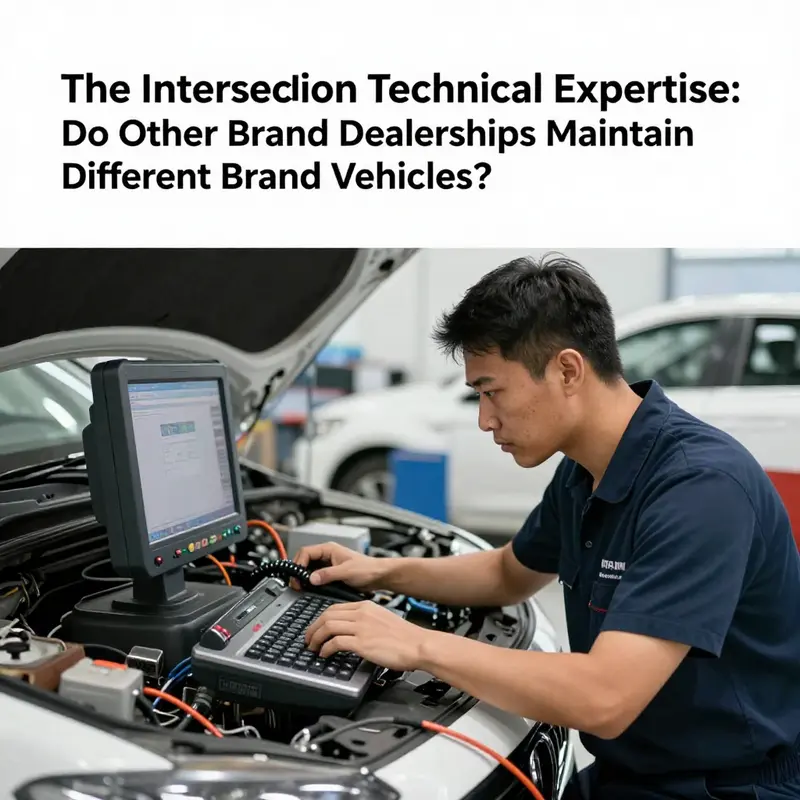
When people think about servicing their car, they often picture a familiar showroom floor with glossy posters and a technician who speaks the same brand fluently. The reality behind that image is more nuanced. Brand-specific dealerships operate as tightly tuned ecosystems built around one automaker’s engineering philosophies, diagnostic software, and parts supply. This alignment supports reliability and warranty protection, but it also creates a practical barrier to servicing vehicles from other brands. In that light, the question “do other brand dealerships maintain different brand vehicles?” becomes less about rigid rules and more about how training, tools, and corporate policy interact to shape real-world decisions. At the heart of the matter is a simple, gravity-defying truth: maintenance is a discipline that relies on specialized knowledge and resources, and those resources are expensive to replicate across brands.
Most standard 4S dealerships—authentic, factory-authorized operations aligned with a single automaker—are designed to maintain the integrity of their partner brand’s vehicles. Technicians in these settings undergo extensive, brand-specific training that covers the most intricate corners of a car’s electronics, software, chassis control, and safety systems. This training is not a one-time event but a continuing program, frequently running parallel with the automaker’s product cycles. Because these technicians are steeped in one brand’s peculiarities, they develop an almost instinctive familiarity with the quirks, update schedules, and service bulletins that govern that brand’s models. It is this depth of expertise that allows a dealership to diagnose subtle issues with confidence, perform precise calibrations, and ensure that the vehicle adheres to the manufacturer’s performance and safety standards.
Beyond the human element, the diagnostic tools and software are another crucial pillar. Modern cars are built around sophisticated control modules and cloud-connected services that require brand-specific diagnostic suites. The utilities, licensing, and data access needed to operate these systems are often proprietary. A Toyota- or BMW-branded dealership, for example, houses a suite of diagnostic tools tuned to that maker’s hardware and software. Those tools can be costly to acquire, require continual updates, and are not readily compatible with other brands’ architectures. The same logic extends to service procedures like software reprogramming, calibration of advanced driver-assistance systems, and the precise alignment of sensor networks. When a dealership contemplates servicing non-brand vehicles, the question isn’t simply, “Can we fix it?” The more practical inquiry becomes, “Do we have the right tools, the right training, and the right parts, all aligned with that brand’s standards?”
Part inventory is another barrier worth noting. At a brand-specific 4S facility, the parts shelves teem with genuine components designed for a particular make. This inventory policy is not merely about quality; it’s about compatibility and warranty adherence. Using non-authorized parts can lead to suboptimal performance or, in the eyes of the automaker, a fragile compliance verdict that can complicate warranty claims. The policy stance from many manufacturers is clear: service should be performed on brand-appropriate vehicles with brand-appropriate parts to safeguard the vehicle’s integrity and protect the brand’s reputation. That stance reinforces the impression that cross-brand maintenance belongs predominantly to a different class of shops.
Yet the landscape is not monolithic, and there are notable exceptions that arise from the economics of scale and the evolving needs of car owners. Large independent repair centers, for instance, can cultivate a broader toolkit and a workflow designed to accommodate multiple brands. These facilities invest in universal diagnostic platforms, which, while not as deeply tailored to any single brand, offer robust capabilities across a spectrum of vehicles. The technicians who work in these centers tend to accumulate cross-brand experience, learning to interpret generic fault codes, translate them into practical repair steps, and source common parts from a shared supply chain. The business model hinges on volume and versatility, allowing them to absorb the costs of more generalized tools and the risk of handling diverse systems.
Another variation is the multi-brand dealership network. Some automotive groups own and operate several brands under one umbrella, and a few have experimented with shared facilities where a single site services multiple brands. In practice, this approach can enable certain cross-brand service workflows, especially for routine maintenance and non-warranty work that does not involve a car’s most complex electronic architecture. However, even within these groups, the transfer of expertise from one brand to another is incremental, and the boundaries of competence are carefully managed to avoid compromising the core standards that each brand upholds. The result is a nuanced mosaic rather than a uniform policy: some cross-brand work gets done, primarily when it does not threaten warranty terms or safety-critical systems, but it remains the exception rather than the norm.
The high-end and ultra-luxury segments illuminate another dimension of policy. Manufacturers in those segments often insist on a meticulously controlled service channel. Authorized centers for brands with a history of exclusivity—often operated directly by the manufacturer or by carefully vetted partners—prioritize a level of standardization that is even more exacting than the mainstream. In some cases, these centers will not service non-brand vehicles at all, preserving the aura of exclusivity and ensuring that every service action adheres to the most stringent performance criteria. The implications for owners are clear: if you own a high-end product, the safest path for maintenance is typically through a channel expressly designed for that brand.
From the consumer perspective, the practical consequences of these varied policies are meaningful. Warranty coverage, for example, is a central consideration. When a vehicle is still under factory warranty, many automakers require that repairs and maintenance be performed by approved channels using approved parts. While some brands permit third-party service with no automatic warranty voiding for certain non-warranty items, the default assumption remains that brand-specific service protects the warranty’s integrity. For owners, this translates into a straightforward rule of thumb: if you are counting on warranty protections, align maintenance with the dealership or shop that is authorized for your make. The certainty this brings to the repair process—consistent diagnostic logic, replacement parts, and documented service histories—offers a degree of reassurance that cross-brand work often cannot match.
There is also a human element at play. The comfort level of technicians with a given vehicle is born of repeated exposure. A 4S tech who has seen thousands of a single brand’s vehicles develops a practical fluency in the system-level behaviors that can elude even the most capable generalist mechanic. This depth is not easily replicated in a mixed-brand environment, where a technician’s focus must be more diffuse. The risk of misdiagnosis or miscalibration rises when the diagnostic path is unfamiliar or when software quirks from one brand are mistaken for a problem in another. Even when cross-brand shops do succeed, the process often entails a more iterative and slower path to a fix, as technicians consult cross-brand references, or even call on brand-specific telematics and technical support to verify a course of action.
In light of these dynamics, it is reasonable to view cross-brand service as a matter of fit rather than mere possibility. For many owners, the best path remains straightforward: use the service network aligned with your vehicle’s make, especially for routine maintenance and any work that could influence safety or warranty decisions. Yet there are practical scenarios where cross-brand maintenance makes sense. If you own a vehicle that is straightforward to service, if your local independent shop has a strong track record and transparent processes, or if the brand’s network is temporarily stretched thin, cross-brand service can be a rational choice for non-warranty, non-safety-critical tasks. In such cases, open dialogue becomes essential: ask about the parts that will be used, confirm the technician’s experience with similar systems, verify that the service will be documented in a way that preserves future warranty considerations, and check that the pricing is transparent and competitive.
From a broader industry vantage point, the trend toward cross-brand service reflects a balancing act between specialization and scale. The automotive world is gradually moving toward platform convergence in some areas, with shared chassis architectures and standardized sensors that reduce some of the gaps between brands. This evolution can lower the barriers to cross-brand servicing in the future, but it will not erase them. Software licensing models, supplier agreements, and safety-certification requirements will continue to influence how dealerships organize their service operations. The maintenance landscape thus remains a living set of choices, shaped by policy, economics, and the evolving technology inside every vehicle.
For readers navigating this landscape, there is value in understanding where a local shop fits within that spectrum. If your goal is to preserve warranty protections and maintain a single, cohesive service history, a brand-aligned dealership is typically the safest path. If, on the other hand, you are managing non-warranty items, looking to optimize cost without compromising safety, and you locate a well-vetted independent or multi-brand center, there can be meaningful efficiency gains—provided diligence is exercised about parts, documentation, and accountability. The decision, ultimately, rests on a careful assessment of the task at hand, the vehicle’s particular systems, and the confidence you place in the service provider.
To connect this discussion to a broader sense of what maintenance entails, consider exploring a general overview of vehicle maintenance as a concept beyond brand alignments. For a concise introduction, see what is described in this resource: what is vehicle maintenance. This helps anchor the conversation in a universal framework while acknowledging that the specifics of cross-brand service depend on the policies and capabilities described here. As the industry continues to evolve, the balance between brand fidelity and practical cross-brand service will keep shaping the service experience for drivers who value both reliability and flexibility.
In sum, the gatekeepers of service—training, tools, and policy—play a decisive role in whether a dealership will maintain a different brand vehicle. The prevailing pattern is clear: most brand-specific dealerships concentrate on their own vehicles, guided by training programs, proprietary diagnostics, and parts inventories that reinforce brand integrity. Exceptions exist, and they are most often found in larger independent centers or multi-brand networks where scale and versatility enable cross-brand servicing under controlled conditions. For the majority of drivers, especially when warranty and safety are paramount, staying within the brand-aligned service channel remains the prudent default. As vehicles become more standardized in some technical areas and more personalized in others, those lines may blur further. Until then, the smart approach is to know your options, ask the right questions, and align service with the channel that best preserves the vehicle’s long-term performance and peace of mind.
External resource: https://en.wikipedia.org/wiki/Vehicle_maintenance
Cross-Brand Maintenance: Weighing Costs, Convenience, and Quality When Visiting Non-Brand Dealerships
When a vehicle owner considers maintenance outside the brand-specific dealership, the decision unfolds like a careful balance sheet. Brand-focused service centers are built to optimize every aspect of the car they were designed to service: the tools lining their bays, the training etched into their technicians’ routines, and the parts on their shelves. This alignment is not accidental; it represents a deliberate investment in accuracy and speed. The diagnostic software, the calibration procedures, the familiarity with the nuanced quirks of a particular vehicle family—all of these factors translate into fewer misdiagnoses and more reliable fixes. Yet the real world rarely pays for certainty alone. Cost, convenience, and the enduring impact on warranties and long-term reliability all come into play, shaping a decision that often hinges on the specific service needed and the owner’s priorities.
Pricing sits at the heart of the calculus. Different brands maintain distinct pricing structures for both labor and parts, even when the service task appears identical on the surface. A routine oil change can carry a price premium at a premium-brand dealership, driven by higher labor rates and the intrinsic cost of OEM parts. Conversely, non-dealer repair shops may offer lower hourly rates and appear more budget-friendly for routine tasks. The caveat is that these shops frequently use aftermarket or remanufactured components, which can influence warranty coverage or perceived longevity. For many drivers, the math isn’t static: five oil changes at a bargain shop versus one at a brand dealer may seem appealing, but the long-term reliability and the potential impact on service records can shift the calculus in subtle ways. It is not simply about the sticker price of a single visit; it is about the cumulative effect on maintenance intervals, part quality, and the way a vehicle’s systems respond to a mix of OEM versus non-OEM components over time.
The story of expertise and diagnostic capability is equally nuanced. Brand dealerships leverage technicians who have trained specifically for their vehicles’ architectures. When a car features advanced driver-assistance systems, hybrid powertrains, or highly integrated infotainment ecosystems, the risk of miscalibration grows. Within many mainstream service environments, technicians work with a broad spectrum of brands and configurations, and some are certified by national organizations that validate diagnostic and repair competencies. This shift toward versatility means that a reputable independent shop can, in many cases, diagnose and repair complex issues with a high degree of proficiency. Yet a distinction remains: certain high-stakes calibrations and system-tuning procedures may require access to brand-specific software, data, and routine maintenance protocols. In such cases, the dealer’s equipment and training become hard to replace, and attempting to sidestep them can risk miscalibrations that compromise safety or performance.
Convenience and scheduling are not trivial matters, either. The appeal of a nearby dealership often goes beyond the service itself. Large-brand networks cluster around major corridors and urban hubs, offering predictable hours, loaner vehicles, and shuttle services. For busy families or professionals who depend on predictable transportation, that level of service can tip the scales toward the dealer, even if the price is higher. Independent shops may match or exceed this convenience in some markets, yet others lag behind with less standardized appointment systems, variable turnaround times, and fewer shared customer experience tools. Some drivers appreciate a more intimate shop atmosphere, where technicians are familiar faces and the service process feels more transparent. Others need the assurance of a loaner or guaranteed ride companionship, which is a hallmark of many dealer networks but not universal in independent settings.
The decision is rarely binary. In fact, many owners find value in a blended approach. A practical strategy is to reserve more complex, high-risk tasks for a dealer—things like major transmission service, advanced brake-system work, or precise calibrations for ADAS—while leveraging trusted independent shops for routine maintenance such as oil changes, tire rotations, and basic inspections. This approach allows owners to benefit from the dealer’s specialized expertise where it matters most, without paying a premium for tasks that can be competently handled outside the brand umbrella. The balance point tends to shift with vehicle type, warranty obligations, and personal tolerance for risk and investment. For a vehicle with a comprehensive warranty, it may be prudent to fulfill the warranty service requirements at the brand dealer to ensure compliance and preserve coverage. In contrast, older vehicles outside warranty or models with established aftermarket support may be perfectly well cared for by independent mechanics who have earned a solid reputation in the local market.
Understanding what maintenance encompasses is a good starting point for the conversation. Broadly speaking, routine maintenance covers preventive tasks designed to keep a vehicle operating as intended and to prevent future failures. It includes fluid checks and replacements, filter changes, tire service, brake inspections, and inspections of belts and hoses. It also extends to the more frequent recalibrations or software updates that keep onboard systems functioning correctly and safely. To frame a decision around these tasks, many owners benefit from a simple, shopper-friendly lens: are we talking about items that are highly standardized across brands or tasks that demand brand-specific nuance? For a clear baseline on maintenance philosophy, it helps to revisit the fundamental concepts of vehicle care and interpret how they translate into service options. A concise guide is available that spells out what constitutes routine maintenance and why it matters for longevity and efficiency. See the resource on what maintenance entails and how it translates into practical choices for service providers. What is vehicle maintenance.
The warranty question looms large for many owners. Warranties often specify that service must be performed according to the manufacturer’s guidelines and using approved parts to keep the coverage intact. When a non-brand dealership performs maintenance that deviates from those guidelines or uses aftermarket components that don’t align with the brand’s requirements, some warranties can be jeopardized. The risk varies by vehicle and by the nature of the service. For some routine items, the impact may be negligible, while for others—especially components tied to safety and emissions control—the stakes are higher. It is essential to document the service history and retain receipts that itemize parts and fluids used. If there is any doubt about warranty implications, a quick call to the brand’s inquiries line or a careful review of the warranty terms can prevent missteps that could void coverage down the road. In parallel, consider whether the flexibility of shopping around is worth the potential trade-off in warranty risk, especially for newer vehicles or those with complex powertrains.
The broader industry context helps explain why this topic remains contested in some markets. A growing segment of independent shops has invested in broad diagnostic tools and staff training to remain competitive across multiple brands. Yet the economics of scale still favor multi-brand centers or large automotive groups that can share facilities, equipment, and technical support across brands. In such environments, a single location may offer an alignment between cost and capability that rivals dedicated brand-dealers, though it remains less common to find a single shop that outperforms the dealer in every category. The reality for many drivers is that the decision comes down to local options, available certifications, and the specific service required. If a visit to a non-brand center reduces the financial burden without compromising safety and reliability, it becomes a rational choice for routine work. If, however, a service is highly specialized or requires precise calibration, the dealer may deliver the most dependable outcome.
In making a practical choice, it helps to gather quotes and compare not just price but the expected deliverables. Ask for a transparent estimate that itemizes labor hours, parts costs, and any diagnostic fees. Confirm the parts source—OEM versus aftermarket—and inquire about the warranty implications for replaced components. If possible, request a diagnostic report or an inspection summary that explains the recommended service steps and why they are necessary. Remember that a dealer’s strength often lies in its ability to perform calibrated procedures and timely software updates, while a trusted independent shop can offer cost-efficient maintenance backed by years of local reputation and customer satisfaction. The best outcome is a plan that balances cost, quality, and reliability over the long arc of the vehicle’s life.
To keep this discussion connected to the wider article, remember that the central question is not simply whether other-brand dealerships will service non-brand vehicles; it is how to make maintenance decisions that protect value and safety. By framing maintenance as a blend of standardized care and brand-specific needs, drivers can approach each service with a clear set of expectations. They can recognize when the dealer’s specialized capabilities are indispensable and when an independent shop can deliver the essential care at a lower price point without compromising the vehicle’s integrity. In practice, this means staying informed, comparing providers, and prioritizing service providers who demonstrate consistent quality, transparent communication, and demonstrated competence across the services required by the vehicle at hand. A well-considered strategy recognizes the legitimacy of both paths and uses each where it makes the most sense for the individual car and its owner.
For readers seeking a concise summary of how to think about maintenance decisions across dealership options, a reliable external resource offers practical guidance on choosing a repair shop. It reinforces the idea that the choice should be driven by the specific service, the vehicle’s warranty status, and the owner’s priorities for cost, convenience, and trust. Choosing the Right Repair Shop for Your Car.
As you navigate this landscape, a final reminder helps ground the decision-making process in everyday reality: there is no one-size-fits-all answer. The best path is the one that aligns with your vehicle’s needs, your budget, and your tolerance for risk. When in doubt, start with a reputable, well-reviewed independent shop for routine maintenance and selectively use an authorized dealer for services that demand specialized equipment, precise calibrations, or complex powertrain work. This pragmatic approach preserves vehicle longevity while keeping a lid on maintenance costs and maximizing the likelihood that the car performs as intended for years to come.
Internal link reference: For a clearer understanding of what maintenance encompasses and why it matters in the broader decision framework, see the article on vehicle maintenance basics. What is vehicle maintenance.
Beyond Brand Walls: Navigating Maintenance Across Makes While Upholding Service Quality
Loyalty to a single automaker runs deep in many shops and drivers alike. The premise is simple: a dealership and its service department exist to preserve the performance, safety, and value of the brand they represent. Yet the real world of car maintenance sometimes asks a different question—whether a shop that specializes in one brand should or can service vehicles from other brands. The answer, like the answer to many questions in the service industry, is nuanced. It rests on how a repair facility is organized, what equipment and data it maintains, how its technicians are trained, and what its customers expect in terms of quality, transparency, and convenience. In practice, most brand-specific 4S dealerships are structured to optimize their own brand’s technology and parts flow. They invest in OEM diagnostic software, training programs that are brand-exclusive, and a parts inventory that mirrors the vehicle architectures they sell and service. This setup yields a high degree of precision and consistency when servicing their own brand customers. However, it also creates practical barriers to servicing non-brand vehicles in routine or complex scenarios. This does not mean cross-brand maintenance is impossible, but it requires careful alignment of resources, risk management, and customer communication. When a vehicle owner presents a non-brand vehicle at a brand-specific dealership, the first questions often center on data access, part compatibility, and whether the service request can be completed without sacrificing the brand’s warranty protections or the shop’s operational efficiency. The diagnostic data, service bulletins, and calibration procedures used for one brand do not always translate to another. The risk of selecting a wrong part, or misinterpreting a fault code due to unshared data, is not merely a minor error—it can lead to misdiagnosis, delays, and unnecessary costs that erode trust. In many cases, the dealership will direct the customer to a multi-brand or independent facility, especially for non-warranty work that requires broad-spectrum expertise. The logic behind this referral is practical: a dedicated cross-brand repair shop typically invests in universal diagnostic platforms, broad-ranging training, and a diverse parts network that crosses make lines. A center with a multi-brand remit can diagnose and repair a wider array of vehicles, including luxury, domestic, and imported models, with an emphasis on clear communication and transparent pricing. The outcome for the customer often hinges on the quality and consistency of the service experience. When an independent or multi-brand shop handles the job, the expectations shift—from brand loyalty to service reliability. The customer looks for a shop that speaks the language of maintenance across brands: the same standard of accuracy in diagnostics, the same discipline around part quality, and the same commitment to diagnostics that do not rely on a single brand’s data lock. In this environment, technicians are valued not just for their familiarity with a specific vehicle’s quirks, but for their depth of knowledge across a spectrum of systems. They bring a toolkit of universal diagnostics, alignment equipment, and calibration rigs capable of accommodating a variety of platforms. Their success hinges on transparent communication: they must describe the issue in terms the customer understands, outline the options for repair, and present a clear cost and time estimate up front. A well-run independent or multi-brand center often emphasizes the customer experience as a core differentiator. They build trust through predictable turnaround times, flexible scheduling, loaner devices or vehicles when feasible, and ongoing updates as work progresses. The quality signal here is consistency rather than brand alignment; the shop demonstrates that its process is disciplined, its technicians are credentialed, and its parts are traceable and tested across multiple makes. Certification programs become a proxy for quality in this space. National and international standards bodies have long argued that technicians who demonstrate cross-brand competence contribute to safer roads and more reliable repairs. The proof is not just in the tools a shop uses, but in the people who use them and the systems they employ to ensure that work is performed correctly the first time. It is here that the customer’s decision calculus becomes particularly nuanced. A driver with a newer, high-value vehicle under warranty might prioritize warranty considerations and OEM-specific procedures, which can channel them toward the brand’s own network. Conversely, a vehicle owner with a non-warranty need, or with a model that straddles different makes in terms of parts commonality, might find a multi-brand center more convenient or affordable. The experience factors shift as well. Large multi-brand groups, which operate multiple dealership brands under a single umbrella, often bring a degree of centralized technical support and shared facilities. This model can blur the line between brand loyalty and cross-brand capability, enabling some services to be performed at a sister brand location with authorization that preserves warranty and data integrity. Yet even within these groups, the cross-brand service is not the default. It tends to be tightly scoped, carefully authorized, and subject to governance designed to protect the individual brands’ reputations as well as the group’s overall service standards. For many drivers, the more immediate takeaway is practical: where can I get reliable service that respects my time and my vehicle’s needs, regardless of brand? The answer is not a single route but a menu of credible options. If you own a car outside the brand served by your local dealership, a prudent first step is to check whether the shop can legitimately perform the required maintenance under your vehicle’s warranty terms. Warranty provisions are a potent moderator of where and how repairs occur. Some manufacturers specify that only their authorized facilities can perform certain services for critical components; in other cases, non-OEM work may be permissible as long as the shop uses approved procedures and parts. The risk to the customer is not only immediate cost but potential warranty implications if the service does not meet the manufacturer’s standards for data access or calibration. With this in mind, many drivers choose a two-step approach: begin with a trusted independent or multi-brand shop for diagnostics and guidance, then, if the work involves a system that is highly brand-specific—such as certain powertrains, ADAS calibrations, or battery safety systems—seek a brand-certified facility for the final steps. In essence, the decision framework becomes a balance between capability, cost, and warranty considerations. The landscape is further complicated by the realities of parts availability and information access. Independent shops that perform cross-brand service often emphasize their ability to source universal or interchangeable parts and to obtain service data through reputable third-party channels. This approach minimizes delays and keeps repairs moving, but it also requires a robust process for confirming part compatibility and usage one part at a time. Customers benefit when shops provide detailed explanations of why a part alternative was chosen, what tests were performed to confirm fit, and how long the repair will take relative to OEM-path expectations. The friction that sometimes arises in cross-brand service—questions about data access, compatibility, and scheduling—can be mitigated by upfront communication. A shop that welcomes cross-brand work should outline the scope of work, identify any potential brand-specific constraints, and commit to notifying the customer if a cross-brand service might impact warranty coverage. At the same time, customers can play an active role by bringing along relevant documents: the vehicle’s maintenance history, current fault codes or symptoms, and any prior work that might influence the diagnostic path. They should also ask about the shop’s certifications, the training their technicians have completed, and the test plans for the repair. When both sides share information openly, cross-brand service can deliver quality outcomes that rival brand-specific maintenance, especially for routine tasks like brake service, tire rotation, and battery diagnostics. For complex or highly specialized work—such as advanced driver-assistance system calibration or hybrid powertrain repairs—the safest route remains a facility with brand-specific expertise or a clearly authorized cross-brand protocol. As this landscape evolves, the most reliable signal of quality remains a track record of transparent practice and certified competence. The customer should look for technicians who can articulate diagnostic steps, validate the correctness of parts, and provide post-repair verification that the vehicle operates as intended. The broader takeaway is that the existence of cross-brand maintenance options does not nullify the value of brand-specific service. Rather, it expands the toolbox available to consumers, giving them choices that prioritize reliability, access to skilled technicians, and a service experience that respects time and cost. In the end, whether you visit a brand-specific 4S dealership, a large multi-brand group, or a standalone multi-brand shop, the aim is the same: to restore performance, protect safety, and sustain the vehicle’s value with honesty and competence. The best path for any driver is to approach maintenance as a relationship—between car, shop, and manufacturer guidelines—built on clear expectations, qualified technicians, and a process that makes the journey from diagnosis to repair as smooth as possible. For readers seeking a grounded reference point on what maintenance encompasses and why it matters across brands, consider the broader definition of maintenance and how it applies to everyday driving. What is vehicle maintenance. This context helps frame the discussion about cross-brand service as part of a broader commitment to vehicle health, rather than a simple question of who will turn a wrench. For a practitioner’s perspective on accountability and standards, the National Institute for Automotive Service Excellence provides benchmarks that many multi-brand centers strive to meet, reinforcing the idea that quality, not brand ownership alone, should guide decisions about where to service a vehicle. External reference: ASE certification. https://www.ase.com/
Beyond the Brand Walls: Navigating Independent and Dealership Maintenance for Multi-Brand Vehicles
When you own a vehicle that isn’t strictly tied to a single brand—or when you simply want to explore the best value and convenience—an unavoidable question surfaces: should you trust a dealership that specializes in a particular brand to service a different brand’s car? The short answer most often remains no, but the full story is richer and more nuanced. Brand-specific dealerships build their entire care model around one maker’s design language, diagnostic software, and parts ecosystem. They invest in tools that unlock brand-unique systems and software updates, train technicians on that brand’s quirks, and stock OEM parts that only fit a particular lineup. This makes sense from a quality and warranty perspective but also creates a natural boundary: servicing a different brand would require a substantial, ongoing investment in new equipment and training, with uncertain returns if the bulk of service demand continues to target one brand alone. It’s not just about the tools in the shop, either. The workflow inside a brand dealership is calibrated to that brand’s service intervals, typical fault codes, and the way maintenance reminders are embedded in the vehicle’s software. In short, the economics of cross-brand servicing rarely pencil out for a traditional single-brand dealership, even if it may technically be possible with enough time and resources to bridge the gaps. This situation is not universal, though. Large multi-brand auto repair centers and independent shops with broad toolkits sometimes stretch beyond the brand envelope, offering a practical alternative when a customer has a mixed fleet or an older vehicle that sits outside the manufacturer’s current service emphasis.
Beyond the economics, the choice between dealership maintenance and independent service taps into a broader decision about warranty protection, access to the latest technology, and the realities of everyday scheduling and cost. For newer vehicles, especially those under warranty, a dealership often presents a clear security blanket. Technicians trained directly by the automaker have access to the latest diagnostic software, firmware updates, and the most current service bulletins. They are drilled to handle complex systems, including the increasingly common electrified and hybrid configurations with three-electric architectures—battery systems, traction motors, and power electronics. Using genuine OEM parts is another foundational advantage at the dealership level. OEM parts are designed to match the precise tolerances and material properties originally specified for the vehicle, preserving performance, safety, and resale value. In many regions, warranty terms may require dealership maintenance to keep the coverage intact, or to qualify for certain extended warranty options. The guarantee of manufacturer-backed service can translate into fewer surprises when major components wear or fail, which is a compelling consideration for newer or high-value vehicles.
Yet, the calculus shifts when budget, flexibility, or appointment availability take center stage. Independent repair shops offer a practical, often compelling alternative. They typically operate with leaner overhead, which translates into more affordable labor rates and, in many cases, lower overall service costs for the same routine maintenance tasks. Oil changes, brake inspections, tire rotations, and basic diagnostics can be markedly cheaper at an independent shop, sometimes by half or less compared with a dealership. The cost advantage arises not just from lower hourly rates but also from the ability to absorb scheduling variability and to work around manufacturer-specific constraints. Independent shops frequently pride themselves on shorter wait times and easier in-and-out service. Their personnel may juggle multiple makes and models, creating what might be described as a broad, practical literacy across a spectrum of systems and designs. This versatility becomes especially valuable for older vehicles or models outside the current new-car lineup, where dealer support may be more limited or specialized.
The trade-offs are real and worth understanding. Independents can, in some cases, rely on high-quality aftermarket or remanufactured parts, which can bring further cost savings but may carry different warranty terms than OEM components. The absence of universal OEM backing on every repair is a notable distinction, particularly for owners who value long-term warranty coverage on the work itself. Quality can vary from shop to shop, as can the degree of standardization in processes and technician training. Even when a shop claims cross-brand competence, certain models with unique software, advanced driver-assistance systems, or proprietary diagnostics may still demand a dealership level of access. For buyers who demand absolute alignment with the brand’s recommended maintenance schedules—especially for newer models—the dealership remains a safer harbor in many cases. But for enthusiasts, budget-minded owners, and those with cars that have traveled well beyond the warranty horizon, independents frequently offer a practical blend of value, responsiveness, and familiarity with non-standard or older vehicles.
The relative strength of each option also hinges on how a vehicle’s brand treats maintenance intervals and system complexity. Across brands, service schedules diverge in predictable ways. Some brands home in on shorter intervals—every 5,000 kilometers or six months for certain regions—while others stretch out to 10,000 kilometers or a year. Yet these norms are not universal; a German-oriented brand family might tilt toward longer intervals, while a French or other European brand may adopt different cadences. The implications go beyond timing: maintenance reminders, reset procedures, and the diagnostic workflows used to clear service indicators vary by brand and model. Some vehicles allow straightforward reset from the dashboard, while others require a diagnostic tool with brand-specific software. The practical upshot is that a technician who speaks the vehicle’s “maintenance language”—in other words, understands the brand’s software architecture and service logic—can avoid missteps that might otherwise trigger unnecessary service or misinterpret fault codes. This is why, even within an independent shop, the best outcomes come from technicians who can demonstrate multi-brand competence and access to universal tools alongside brand-specific ones.
What does this mean for the notion of cross-brand service at a dealership level? In practice, the rule remains that most brand-specific dealerships do not routinely take on vehicles from other brands. The reasons are straightforward: the cost of maintaining the necessary breadth of tooling, training, and parts is nontrivial, and the business case is not strong enough to justify it for most single-brand stores. However, there are notable exceptions that stakeholders should keep in mind. Large multi-brand groups with centralized service operations can, in some markets, share facilities and technical resources across several brands. They may operate as an umbrella network where a single physical site can toggle between brands with standardized processes and shared diagnostic infrastructure. Still, at the individual dealership level, the norm is to stay within the brand’s confines. Independent, non-brand-specific repair shops are the real outliers who regularly service multiple brands, driven by the needs of customers who own mixed fleets or who require flexible scheduling, lower costs, or quick turnaround within a neighborhood ecosystem. It is this practical flexibility—paired with the realities of parts supply and technician training—that makes cross-brand maintenance possible outside the dealership environment.
As a driver navigating these choices, you’ll want to align your decision with the vehicle’s lifecycle stage, your tolerance for risk, and your priorities for convenience versus cost. For a brand-new or near-new vehicle protected by a comprehensive warranty, dealership service often delivers the most predictable path to protection and support. For an older car, or a model from a brand whose current market presence is balanced between support and scarcity of dealer appointments, a reputable independent shop can deliver comparable service at a lower total cost and with more flexible scheduling. In either scenario, a careful vetting of the shop’s capabilities is essential. Look for certifications, track records, and a demonstrated history of handling the specific systems your vehicle uses. A good shop will be able to articulate how it handles routine maintenance, how it sources parts, and what kind of warranty backs their labor and parts. In the end, the decision is a balancing act between warranty considerations, total ownership cost, and the level of convenience you require for your daily life.
For readers seeking a concise primer on what maintenance entails, consider reviewing the basics of vehicle maintenance as a foundation before choosing a service path. What is Vehicle Maintenance offers a clear overview of preventive care, fluid checks, brake wear assessment, and the role of regular servicing in preserving performance and resale value. This kind of resource can help you communicate more effectively with whichever shop you choose, ensuring you’re speaking the same maintenance language as your technician. Internal links provide a quick refresher without forcing you to wade through industry jargon, so you can approach each service visit with clarity and confidence. What is Vehicle Maintenance.
In sum, the decision to rely on a dealership or an independent shop for cross-brand maintenance will depend on what you value most: the safety net of manufacturer-backed warranties and access to the latest brand-specific technology, or the affordability, flexibility, and breadth of expertise that come with a capable multi-brand or independent facility. Either path can deliver reliable care if you choose a shop with proven competence, transparent processes, and a track record of quality work. The critical step is to do your homework: confirm the shop’s capabilities for your particular model, inquire about parts sourcing and warranty terms, and read reviews that speak to real-world outcomes. The automotive landscape has grown increasingly complex, but the core principle remains simple: maintenance is about caring for your vehicle in a way that protects safety, performance, and value—and that care should be delivered by professionals who understand the specific needs of your car, regardless of which brand identity lives in the showroom.
External resource: https://www.ase.com
Final thoughts
The examination of whether brand-specific dealerships perform maintenance on vehicles of other brands reveals a complex landscape. While brand dealerships generally specialize in their specific vehicles due to training, tools, and customer focus, independent workshops provide a viable alternative for servicing a range of brands. Business owners should weigh the costs, benefits, and quality of service when making maintenance decisions. Ultimately, understanding these dynamics enables better decision-making in the management of vehicle fleets and ensures optimum service utilization.