

For business owners reliant on a fleet of vehicles, understanding the vehicle maintenance offerings of leasing companies is crucial. Efficient management of maintenance not only keeps vehicles operating smoothly but also enhances your overall operational productivity. This article delves into the integral role of vehicle maintenance within fleet leasing, examines full-service leasing models, discusses how fleet size influences maintenance services, and conducts a comparative analysis of maintenance offerings among various leasing providers. Each chapter combines to provide a holistic view essential for making informed decisions for your business fleet.
Maintenance as Margin: The Critical Role of Vehicle Upkeep in Fleet Leasing
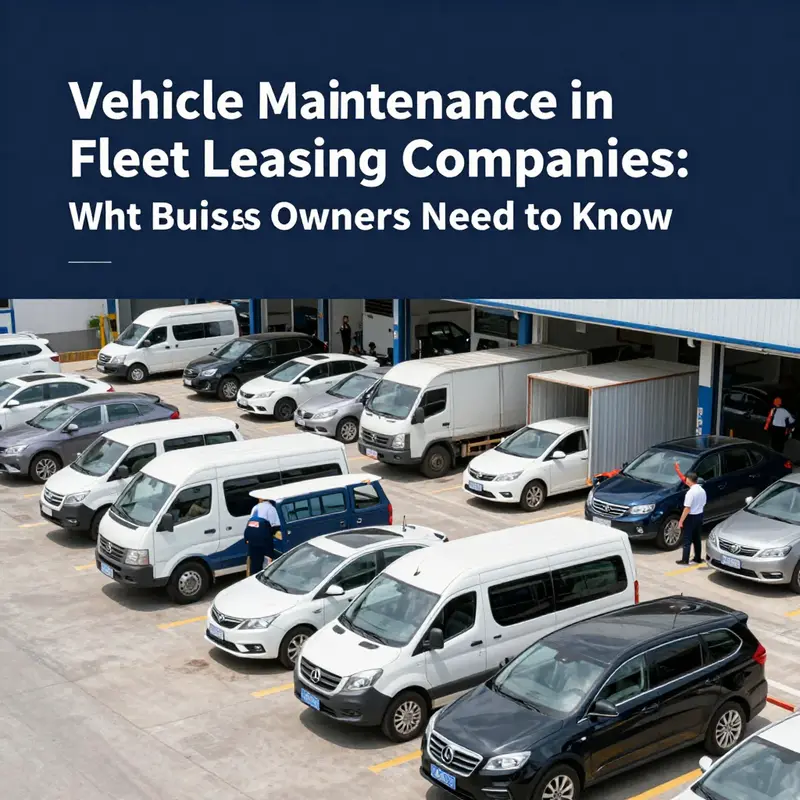
Maintenance lives at the core of what makes fleet leasing more than a simple rental arrangement. It is the quiet engine behind uptime, safety, and predictable costs. When a business relies on dozens or hundreds of vehicles to move goods, passengers, or service teams, the difference between a well-run fleet and one that stumbles is often measured in minutes of downtime and the cost of unexpected repairs. Fleet leasing companies have long understood this, and over time maintenance has evolved from a marginal service into a strategic capability that shapes asset performance, total cost of ownership, and client satisfaction. The question of whether most fleet leasing providers include maintenance in their offerings is not a yes-or-no proposition but a spectrum. Some providers fold maintenance into a comprehensive, full-service package; others offer more modular options, and a few place maintenance squares with the lessee, wrapped in advisory services. Yet across the industry, maintenance is increasingly treated as a core lever of value rather than a risk to be managed separately.
The industry’s historical arc helps explain why maintenance sits so prominently today. In the late twentieth century, fleet leasing began as a way to transfer the burden of vehicle ownership from the operator to the lessor. Early models often included maintenance as part of closed-end leases, a structure that aimed to simplify budgeting and minimize residual risk for the lessee. As the market evolved, open-end leases emerged, shifting some maintenance responsibilities back toward the user or the fleet manager and prompting a stronger focus on total cost of ownership. Those shifts did not erase maintenance as a central feature; they reframed it. The evolution toward integrated service models—where maintenance, diagnostics, parts logistics, and uptime analytics are managed in concert—has become a defining characteristic of modern fleet leasing. In this sense, maintenance is not merely a service; it is a strategic underwriter of fleet reliability and business continuity.
Today’s fleet leasing landscape reflects a layered, service-oriented approach. At one end of the spectrum are basic maintenance supports that cover essential, scheduled services and simple repairs. At the opposite end are full-service, maintenance-led arrangements that treat the fleet as a managed asset. In the middle lie hybrid models tailored to the client’s operating reality, vehicle mix, and risk tolerance. For many large commercial fleets, the full-service approach is not just convenient; it is an operating necessity. These clients often contract for end-to-end maintenance management through integrated fleet management systems. These platforms orchestrate service scheduling, parts inventory, technician utilization, and downtime analytics. They translate a complex network of service events into a transparent stream of uptime, cost data, and performance indicators. The practical impact is clear: fewer surprises, more predictable budgets, and more time for managers to focus on core operations rather than maintenance firefighting.
One practical implication of maintenance-centric leasing is the way it changes budgeting and financial planning. When maintenance is bundled into a lease, the lessee gains a predictable operating expense, often aligned with a fixed monthly payment. This predictability can simplify cash flow management, facilitate cross-functional budgeting, and support more accurate demand forecasting. For organizations that rely on a precise cost per mile or per hour metric, a well-structured maintenance program under a lease provides a reliable baseline. On the other hand, modular maintenance offerings require careful cost modeling to avoid unexpected spikes when service needs exceed the included coverage. In both cases the leasing partner’s capability to forecast maintenance spend—and to deliver on it with high uptime—becomes a differentiator that can tilt a client toward one provider or another.
A key driver of maintenance intensity is the type of lease. Full-service or closed-end leases often emphasize comprehensive maintenance because they aim to minimize the lessee’s operational complexity. In these arrangements, the leasing company is responsible for service scheduling, warranty handling, tire management, brake service, and major repairs, all within a single, consolidated agreement. This approach is particularly appealing for operations with high vehicle utilization, challenging geographic coverage, or a preference for a hands-off model. In contrast, low-mileage or usage-based leases may place more maintenance responsibility on the lessee, aligning costs with actual utilization and allowing for more flexible vendor selection. The choice reflects a balance between risk, control, and administrative bandwidth.
From a client perspective, maintenance management under a lease translates into more than just uptime. It is about safety compliance, regulatory adherence, and asset integrity. Regularly scheduled servicing ensures vehicles remain within required safety standards, while timely parts replacement reduces the risk of unexpected breakdowns. Diagnostic monitoring and predictive maintenance—enabled by telematics and data analytics—allow fleets to anticipate failures before they disrupt operations. The result is a fleet that stays on the road longer, spends less time in the shop, and delivers steadier performance. This proactive stance also tends to lower total repair costs over the life of the asset, even if the upfront maintenance premium is higher. In a practical sense, maintenance becomes a line of defense against the cascading costs of downtime, late deliveries, and lost customer trust.
The modern maintenance paradigm is data-driven and ecosystem-based. Telematics devices collect a wide range of usage and performance signals: engine hours, mileage, fuel efficiency, brake wear indicators, tire tread depth, battery health, and more. Advanced analytics sift this data to identify trends, detect anomalies, and forecast service events. Predictive maintenance moves beyond the calendar-based approach of traditional servicing, replacing routine with warranted timing based on actual vehicle conditions. When integrated with a fleet management system, predictive maintenance can trigger automatic service requests, route logistics to the nearest authorized facility, and optimize technician scheduling to minimize downtime. For fleet operators, this translates into a more responsive supply chain for parts and labor, reducing the likelihood that a vehicle sits idle awaiting a repair or a parts delivery.
The operational workflow of a maintenance-centered leasing arrangement often unfolds through a tightly coordinated sequence. Contracts define service level expectations, response times, and obvious triggers for maintenance events. The leasing company or the fleet manager develops a preferred network of service providers, balancing coverage, expertise, and cost. When a vehicle triggers a service need—whether through a scheduled maintenance interval or a diagnostic alert—the system initiates a work order, assigns a technician, and coordinates pickup or on-site service. Parts management is embedded in the process; inventory levels are tracked against service demand to prevent delays. The impact on downtime is quantifiable: a well-orchestrated maintenance program can shrink the fraction of time a vehicle is unavailable, thereby supporting more reliable delivery windows and better route planning. In turn, clients reap the benefits of tighter throughput, improved customer satisfaction, and a higher return on the fleet investment.
A recurring challenge in this space is the variability in maintenance offerings across providers. Some fleets require robust, end-to-end coverage that travels with the vehicle across regions and countries, while others prioritize cost containment and choose narrower coverage. This variability reflects not only the geography and portfolio of the fleet but also the client’s appetite for control versus convenience. For some firms, the biggest strategic decision centers on risk transfer: how much maintenance risk is the leasing partner willing to assume, and how transparent is the cost structure for the lessee? For others, the question is about sitting on the control side of the fence—how much direct oversight of the service network is desirable, and how flexible should the contract be in adapting to changing vehicle mixes or business needs? The answer is rarely one-size-fits-all, but the trend toward integrated maintenance ecosystems suggests an industry-wide move toward more standardized, data-driven practices that can be scaled across diverse fleets.
Beyond traditional internal maintenance capabilities, the rise of electric and hybrid fleets adds another layer of complexity and opportunity. Electric vehicles (EVs) reduce some routine maintenance burdens—no oil changes, fewer moving parts in some subsystems—but they introduce new needs: battery health monitoring, high-voltage system diagnostics, and charging infrastructure reliability. A modern maintenance program thus expands to cover battery management, thermal oversight, and rapid repair capabilities for EV-specific components. In parallel, telematics platforms tailor service recommendations to EV duty cycles, charging patterns, and urban driving conditions. Leasing providers who master these EV maintenance requirements position themselves as essential partners for fleets navigating the electrification transition. At the same time, the shift toward EV maintenance requires new skill sets in service networks, updated diagnostic tools, and revised warranty and parts supply strategies—elements that influence the overall value proposition of the lease.
In practice, many clients discover the true value of maintenance-enabled leasing when they assess the broader business benefits. A maintenance-centric program is not merely about keeping vehicles roadworthy; it is about protecting uptime as a strategic asset. Fewer breakdowns, shorter repair cycles, and optimized service intervals translate into greater asset reliability and more predictable service levels for customers and partners. When a fleet operates on a reliable backbone, managers can optimize vehicle utilization, route planning, and driver productivity. Maintenance therefore becomes a driver of throughput, service quality, and growth, not a burden to manage. This is why many operators pursue a full-service package or a carefully tailored hybrid solution: it aligns vehicle health with business outcomes, turning maintenance from a cost center into a value creator.
For those seeking a clearer picture of how maintenance rights and responsibilities are allocated in lease agreements, a common reference question is: Who pays for maintenance on a leased vehicle? The answer varies by contract type and negotiated terms, but modern practice often aligns payment with the level of responsibility delegated to the lessor. In many full-service arrangements, maintenance costs are embedded in the lease price and managed by the provider. In more bespoke models, maintenance may be billed separately or capped by a maintenance plan with defined limits and caps. The choice hinges on risk tolerance, operational complexity, and the desire for budgeting clarity. See a detailed discussion on this topic at the linked resource: Who pays for maintenance on a leased vehicle.
The interconnection between maintenance and value creation also informs the client-vendor relationship. A leasing company’s maintenance competency becomes a differentiator when presenting a fleet’s value proposition to senior leadership. It signals that the provider understands the client’s operations, can anticipate needs, and will intervene proactively rather than reactively. Providers that couple maintenance with data-driven decision support, transparent dashboards, and a responsive service network offer more than a maintenance plan; they offer a proactive operating model. Clients gain peace of mind, knowing their fleet is not only compliant and safe but also optimized for performance. In a landscape where fleets are increasingly scrutinized for efficiency and sustainability, maintenance becomes a strategic pillar that supports greener, more reliable, and more cost-effective operations.
As this narrative loops back to the broader article topic, it becomes clear that the majority of fleet leasing companies do indeed offer maintenance as part of their core service proposition, with a spectrum of coverage to match different business realities. The most successful programs are those that recognize maintenance as a continuous discipline rather than a one-off event. They integrate preventive servicing, real-time diagnostics, parts logistics, and predictive analytics into a seamless operating model. They also remain adaptable: adjusting coverage as fleets grow or restructure, accommodating regulatory shifts, and embracing new technologies like EV maintenance and remote diagnostics. In short, maintenance in fleet leasing is not a peripheral add-on. It is a governance framework for asset performance, a financial anchor for budgeting, and a strategic instrument for sustaining operational excellence across the life of the lease.
External resource for broader industry context: Fleet Management
Maintenance as a Core Promise: How Full-Service Fleet Leasing Keeps Fleets Moving
Maintenance as a core promise sits at the heart of what fleet managers seek when they consider a lease. The goal isn’t merely to acquire an asset, but to secure a predictable, reliable stream of operations where vehicles spend more time serving the business and less time in a shop. Downtime costs are real and quantifiable: missed deliveries, delayed service calls, and the ripple effect of a fleet that can’t respond to demand. In that climate, the value of full-service leasing emerges not as a luxury, but as a practical risk mitigation strategy. When a lessor assumes responsibility for ongoing upkeep, the organization gains a buffer against the unexpected. Maintenance costs become a line item in a broader, predictable plan rather than an erratic afterthought that can derail monthly budgets. The elegance of this model lies in shifting the focus from asset ownership to asset performance, with maintenance as the invisible engine that keeps schedules achievable and service commitments intact. A well-structured full-service program translates the complexity of maintenance into a single, accountable interface. The business owner may still care about fuel economy or driver safety, but the heavy lifting—scheduled servicing, parts availability, and rapid repairs—happens behind the scenes, managed by people who operate in that space every day.
Full-service leasing is not a one-size-fits-all construct, yet the core idea remains consistent: the lessor bundles the essential services necessary to keep the fleet healthy and compliant. In practice, this means more than a onetime service package. It implies a sustained, end-to-end approach to maintenance that begins before a tire is mounted and continues long after the last mile is logged. The scope typically includes scheduled servicing aligned with mileage or time intervals, unscheduled repairs when breakdowns occur, and a reliable chain of parts supply that minimizes shop downtime. Tires are often part of the bundle, with management extending to rotations, mounting, and replacements as needed to safeguard traction and fuel efficiency. Beyond these basics, many programs weave in preventative measures, such as technology-enabled monitoring that flags wear patterns, filter changes, and brake health before a failure becomes a roadside event. This is not merely preventive maintenance in a vacuum; it is maintenance embedded within a broader fleet-management framework that tracks service history, availability, and future needs across every vehicle.
The maintenance offerings are frequently described as a staircase of capabilities, with the base level covering routine services and roadside assistance, and the upper rungs incorporating more advanced elements. In many cases, scheduled servicing is governed by a formal maintenance calendar tied to recommended manufacturer intervals or defined by the lessee’s operating reality. Unscheduled repairs—those inevitable moments when a vehicle stops due to a fault—are handled within defined response times, with the lessor coordinating repairs through a network of certified service centers. Parts replacement becomes less a budgeting exercise and more a logistics operation, ensuring that the right parts are on hand at the right time to minimize downtime. Tire management, too, often sits squarely within the maintenance envelope, since tires impact safety, fuel economy, and vehicle uptime. A tire management program can entail regular rotations, pressure checks, and timely replacements when tread depth falls below safety thresholds. In modern programs, fleet tracking and telematics complement these activities by providing visibility into vehicle health, location, and utilization. When maintenance data is centralized, managers can anticipate issues, reallocate resources quickly, and avoid patchwork repairs that disrupt service levels.
This integrated approach yields tangible, business-oriented benefits. Reduced downtime is perhaps the most immediate, measurable outcome. When maintenance is scheduled and managed through a single channel, the time between fault detection and repair is minimized. Predictable maintenance costs replace volatile expenditures tied to sporadic repairs. The total cost of ownership often improves because preventative care reduces the likelihood of major, expensive failures, and because the lessee does not have to absorb the administrative drag of arranging every service. A broader efficiency gain emerges from reclaimed internal resources. Instead of dedicating personnel to track service intervals, source parts, and liaise with multiple service providers, internal teams can focus on core operations. In high-volume fleets, the value compounds: standardized maintenance workflows, consistent quality across service centers, and centralized reporting that makes compliance with safety and regulatory standards easier to prove during audits.
From a governance perspective, the maintenance component of full-service leasing also clarifies expectations. The lease agreement often becomes a performance contract, with service-level agreements that spell out response times, uptime targets, and coverage parameters. This clarity is especially valuable for fleets that must guarantee service to customers, such as delivery networks or on-site service teams. When the lessor names the service centers, tracks the work performed, and guarantees parts availability, the lessee gains confidence that the maintenance function is aligned with business continuity goals rather than outsourced to ad hoc third parties. In some configurations, the lessor uses an integrated fleet-management system that coordinates service scheduling with inventory control and driver assignments. The visibility provided by such systems reduces the friction of maintenance management and helps managers plan around maintenance windows without sacrificing throughput. The result is not only smoother operations but also a more defensible risk posture: the fleet’s uptime is a documented, demonstrable strength rather than an assumed certainty.
Crucially, the landscape of full-service maintenance is not uniform. The decision to include comprehensive maintenance or to offer it as a more limited service depends on several practical factors. The type of lease matters a great deal. A full-service lease, by design, tends toward broader coverage, while a low-mileage or more conservative contract may place more maintenance responsibility on the lessee. The size and nature of the fleet shape the program too: larger commercial fleets are more likely to partner with providers that offer a formal, end-to-end maintenance management layer, enabling centralized control and standardized processes across dozens or hundreds of vehicles. Industry needs also influence the mix. A delivery fleet with constant cycle times and a heavy emphasis on vehicle uptime may benefit from aggressive preventive maintenance and rapid repair guarantees, whereas a less demanding or capital-intensive operation might opt for a leaner maintenance package with more flexibility in selecting service providers.
Readers should consider the question of maintenance responsibility as part of the broader negotiation with potential lessors. The exact balance of included services versus pass-through costs is rarely a blunt yes-or-no choice. Some contracts bundle routine servicing, component replacements, and emergency roadside assistance into a single all-inclusive fee, effectively shifting most maintenance costs from the lessee to the lessor. Others may set a base maintenance package and then present optional enhancements or add-ons that allow the lessee to tailor the program to the specific vehicle mix, operating patterns, and safety requirements. For clarity on who bears maintenance costs, see Who pays for maintenance on a leased vehicle. This nuance matters because even within a full-service umbrella, there can be gray areas around coverage for wear-and-tear items, components subject to recalls, or repairs arising from misuse or accidental damage. Understanding these boundaries upfront helps prevent disputes and supports steady budget management over the life of the lease.
In practice, many fleets discover that the most valuable maintenance arrangements are those that view the lease as a long-term partnership rather than a transactional relationship. A true partner will tailor preventive maintenance schedules to the fleet’s actual operating profile, calibrate service levels to align with driver shifts and depot locations, and adjust coverage as vehicles age or duty cycles evolve. The ability to recalibrate is particularly important in an environment where vehicle technologies are changing rapidly. Telematics, sensor data, and connected car or equipment systems offer real-time or near-real-time health indicators. When a lease program leverages those data streams, maintenance can shift from a reactive model to a proactive one: parts are ordered before failures occur, service slots are booked during the most opportune windows, and the overall maintenance burden is reduced without compromising uptime.
The concept of maintenance in full-service leasing is thus a dynamic blend of service design, operational discipline, and technological enablement. It rests on a simple premise: that keeping a fleet healthy is inherently a business capability, not a back-office expense. The best programs treat maintenance as a strategic asset—one that preserves service levels, protects safety, and strengthens the organization’s competitive posture. They recognize that maintenance costs, when properly managed, can be predictable, scalable, and aligned with broader cost-control objectives. As fleets grow or shift their operating models—perhaps adding more electric or hybrid vehicles, which bring new maintenance considerations—the flexibility of a maintenance program becomes even more critical. The right provider will anticipate these shifts, offering a roadmap that accommodates new maintenance needs while preserving the core advantage of the full-service approach: a single point of accountability for uptime.
For readers grappling with how to evaluate options, the guiding question remains straightforward: does the proposed maintenance framework reduce the operational friction that comes with keeping a fleet on the road? Look for evidence of consolidated service networks, clear response times, integrated service history data, and a demonstrated ability to manage parts inventories at scale. Probe how the vendor handles escalation for critical failures and how quickly technician access can be arranged across geographies. Seek assurances about the quality of service centers and whether the program includes access to specialized expertise for your vehicle mix and industry sector. The more the offering resembles a turnkey solution, the more likely it is to deliver the uptime benefits that justified the move to a full-service model in the first place.
Ultimately, full-service leasing turns maintenance from an episodic cost into a predictable, manageable capability. It reframes maintenance as a strategic enabler of business reliability, driver safety, and customer satisfaction. It is also a reminder that the best lease relationships are not merely about shifting risk; they are about converting risk management into a lever for operational excellence. As fleets contemplate new procurement strategies or revisit their current arrangements, maintenance should be treated not as an afterthought but as a core component of the value proposition offered by the lease provider. The conversation should center on outcomes—uptime, safety, and cost control—rather than on the mechanics of who pays for what in a vacuum. When that broader view prevails, the decision to opt for a full-service approach becomes not only logical but compelling for fleets that aim to stay responsive in a fast-changing market.
External resource: Investopedia offers a formal definition and framework for understanding full-service leasing. See Investopedia’s overview at https://www.investopedia.com/terms/f/full-service-leasing.asp for a concise, industry-agnostic explanation that complements practical, fleet-focused assessments.
Size, Scope, and Service: How Fleet Scale Shapes Maintenance in Vehicle Leasing

Maintenance sits at the crossroads of cost, reliability, and risk in fleet leasing. Buyers want predictable expenses and predictable uptime, while providers seek steady utilization and manageable repair cycles. The push and pull between these aims shape not only the pricing of a lease, but the very nature of the maintenance package attached to it. The core question—do most fleet leasing companies do vehicle maintenance—unfolds into a nuanced answer once you look beyond a simple yes or no. The landscape is a spectrum. On one end are full-service leases that fold routine servicing, inspections, and major repairs into one predictable monthly obligation. On the other end are more basic arrangements where maintenance is either minimal, or the lessee takes on responsibility for certain service items. Between these poles, the type of lease, the size of the fleet, and the specific operational needs of the customer drive the exact mix of maintenance coverage. In practical terms, the common pattern is that maintenance is indeed offered by most providers, but the extent and structure vary widely. The result is a market that rewards clarity in the contract and alignment of incentives between the lessee and the lessor.
To understand why maintenance is widely offered but not uniformly packaged, it helps to examine how fleet size reshapes the service proposition. When a leasing company manages a large fleet, it gains the leverage to implement centralized maintenance scheduling, streamlined parts sourcing, and standardized service intervals. The logic is straightforward: a large portfolio generates predictable demand for certain maintenance events, making it efficient to coordinate with a network of service centers, certify technicians, and optimize downtime. A robust fleet management system becomes a backbone in this context, capable of tracking service histories, forecasting wear, and triggering preventive maintenance reminders before components fail. This capability, in turn, reduces the risk of unexpected downtime and keeps vehicles on the road when they are most needed by the customer. For the lessee, the payoff is a more stable operating budget and less administrative burden in coordinating service visits, approvals, or reimbursements.
But size also introduces an important nuance. In many usage-based contracts, a smaller, more tightly managed fleet can actually deliver higher service quality and lower total costs if the maintenance program is well-designed. A case study cited in the research highlights a striking outcome: optimizing fleet management by reducing fleet size by about one-third yielded substantial improvements in service quality and a corresponding drop in costs—described as achieving savings on the order of a half a billion dollars. While that number grabs attention, the underlying lesson is more instructive: with fewer vehicles, providers can allocate maintenance resources more precisely, inventory parts more efficiently, and schedule service windows with greater predictability. In other words, the maintenance equation benefits from focus as much as from scale. A leaner fleet concentrates the wear patterns, simplifies PM (preventive maintenance) planning, and enables tighter CM (corrective maintenance) coordination under integrated service contracts. This dynamic matters when the lease structure uses time-based limits, usage caps, or trigger-based charges that hinge on how well maintenance activities are synchronized with actual vehicle use.
The implications for different leases are telling. In complex equipment scenarios—such as heavy-duty trucks used in mining operations—the research points to a natural alignment between fleet size and proactive maintenance. When the fleet is smaller, the OEMs and their service networks can implement more precise, proactive strategies. These strategies move beyond generic maintenance schedules to a tailored plan that anticipates wear on critical components, schedules parts purchases just ahead of demand, and assigns highly skilled technicians to the most high-risk assets. The objective is clear: minimize downtime, extend asset life, and keep operations aligned with production targets. The same logic translates to less specialized fleets. In a broader commercial context, including light-duty delivery vans or mixed-use corporate fleets, the capacity to harmonize preventive maintenance across a smaller group of vehicles still matters, though the scale and complexity differ.
This is where the contract architecture begins to reveal its real influence on maintenance outcomes. The research underscores that maintenance strategies function best when they are coordinated through a service contract that binds both the lessee and the provider to defined performance metrics. Time-based service windows and usage-based triggers can shape behavior in beneficial ways. For example, a preventive maintenance schedule that is aligned with actual usage—not just calendar time—helps catch wear before failures occur. Conversely, usage overages can trigger additional charges, creating a financial incentive for tighter control of vehicle utilization. This alignment matters for the overall health of the fleet: fewer surprises, steadier uptime, and clearer accountability when things do go wrong.
For the lessee, the big question is often about cost predictability and risk transfer. A full-service lease that includes maintenance transfers ownership-like risk to the lessor for maintenance outcomes. The lessee enjoys a monthly price that covers service visits, inspections, parts, and labor, without the friction of invoices and approvals for each service event. The economics can be compelling when downtime carries a high cost, such as in time-sensitive operations or high-utilization service models. In practice, many providers will tailor maintenance inclusions to the nature of the lease. A high-mileage, high-availability fleet may come with a more comprehensive maintenance package and tighter service-level agreements, while a low-mileage or shorter-term arrangement may lean toward a lighter maintenance footprint. The result is a market where “maintenance included” becomes a core differentiator, but the exact terms depend on the negotiated risk, the anticipated wear patterns, and the specific use case.
This leads to an important practical truth: whether maintenance is bundled into the lease or acquired separately, the details matter more than the banner. Two fleets with identical vehicle counts can experience very different maintenance realities if one is governed by a highly integrated maintenance management system and the other depends on manual scheduling and ad hoc approvals. The modern landscape favors a middle path where the provider offers a maintenance management framework—an integrated approach that connects service planning, parts supply, technician scheduling, and uptime analytics—with the flexibility to scale the maintenance footprint up or down as the fleet evolves. In markets where uptime is paramount, providers often default to more comprehensive coverage, while in cost-sensitive contexts, they may offer core maintenance while leaving certain non-critical services to the lessee. Either way, the presence of a maintenance program is common; the degree of control, transparency, and financial mechanics around it distinguishes one offering from another.
The broader takeaway for readers evaluating leasing options is that maintenance is not an afterthought. It is a central feature that interacts with fleet size, utilization patterns, and contract design to shape outcomes. If you operate a large, high-utilization fleet, expect a maintenance program rooted in centralized planning, standardized service intervals, and a funded approach to spare parts and downtime management. If your operation is smaller or more specialized, you may find value in a leaner maintenance framework that emphasizes precision scheduling, proactive wear monitoring, and a flexible cost structure that scales with usage. Either way, the success of the maintenance component hinges on alignment: aligning maintenance goals with the asset, the schedule of operations, and the financial repercussions of downtime.
A critical practical consideration emerges when thinking about who is responsible for maintenance under a lease. In many leases, the lessor assumes a major share of maintenance risk, offering a clearly defined scope of covered services and a predictable payment stream for the lessee. In others, maintenance responsibility remains with the lessee, albeit within a managed service framework that the provider helps coordinate. The decision point often revolves around risk tolerance and administrative capacity. For some operators, the administrative burden of coordinating maintenance across a dispersed fleet can be a deterrent to taking on responsibility for upkeep. For others, having direct control over maintenance decisions can be an asset, particularly when the user knows the assets intimately and can optimize the timing of services for production cycles. In either scenario, a robust maintenance program is typically present, but the ownership of costs and decision rights will differ.
The discussion would be incomplete without touching on the potential for proactive maintenance to redefine value in leasing. Preventive maintenance is not just a cost line item; it is a strategic lever for reducing total cost of ownership. When a provider monitors wear indicators, schedules PM tasks based on real usage, and coordinates parts deliveries with service windows, the fleet operates with higher reliability and less unplanned downtime. Corrective maintenance, if well integrated, becomes a more efficient fallback rather than an unpredictable spike in expense. The research findings underscore that a smaller, well-managed fleet can make these dynamics even more pronounced. Concentrating maintenance resources on a reduced set of assets allows teams to master the specifics of each vehicle type, refine maintenance intervals, and push the schedule toward a regime where failures are anticipated and avoided rather than reacted to. In markets where competition among leasing providers is intense, this depth of capability can become a decisive differentiator for customers seeking reliability as much as cost control.
For readers interested in the nuance of who bears the maintenance burden, a useful synthesis can be found in existing discussions of leased-vehicle responsibility. In practice, the question often boils down to contract language and service-level commitments. The lease should spell out not only what is included in maintenance, but also how it is delivered, how service quality is measured, and what consequences arise if the service level slips. A well-structured contract aligns incentives so that the provider is motivated to prevent failures and minimize downtime, while the lessee gains predictable costs and reliable performance. For organizations evaluating options, a straightforward set of questions can illuminate the path forward: What maintenance items are included? Are PM intervals based on calendar time, usage, or both? How are parts sourced, and what is the typical lead time for common repairs? What uptime targets are guaranteed, and what penalties or credits apply if those targets are missed? How is service quality monitored and reported? And crucially, who holds ultimate responsibility for maintenance decisions when the job is outside the standard scope?
The practical implications of these questions ripple through budgeting, operations planning, and risk management. A well-articulated maintenance arrangement can translate into lower capital exposure for the lessee, reduced admin overhead, and more stable cash flows. For the lessor, it can yield higher asset utilization, more predictable service revenue, and a stronger relationship with customers built on trust and demonstrated reliability. The research’s central message—illustrated by the larger-scale insights on fleet optimization—emphasizes that maintenance is less about a fixed set of services and more about a dynamically managed system. When a fleet is sized and scheduled with care, maintenance becomes a force multiplier for uptime and cost efficiency, not a hidden expense waiting to surprise the budget.
In closing, the question of whether most fleet leasing companies do vehicle maintenance cannot be answered with a single blanket statement. The majority offer some form of maintenance, but the exact composition, scope, and cost structure depend on the lease type, fleet size, and usage profile. Large fleets in particular benefit from integrated maintenance management that reduces downtime and improves service quality, while smaller fleets can achieve similar gains through precise allocation of resources and proactive planning. The research results offer a clear takeaway for practitioners: size matters, but so does strategy. A lean, well-managed fleet can unlock substantial efficiency gains by sharpening preventive maintenance and coordinating corrective actions under a cohesive service contract. For operators selecting a leasing partner, the emphasis should be on clarity, measurable service levels, and the flexibility to scale maintenance as the fleet evolves. As with many choices in fleet management, the best path blends predictability with adaptability, ensuring that maintenance supports, rather than distracts from, the core mission of keeping vehicles on the road when they are needed most.
Who pays for maintenance on a leased vehicle illustrates how responsibility and cost allocation can shape maintenance behavior and budget planning in leased arrangements. For a broader external perspective on how fleet size can influence maintenance strategy and overall cost, readers may consult the Bloomberg piece Smaller fleet, big impact, which documents the dramatic efficiency gains that can accompany a more tightly managed fleet. https://www.bloomberg.com/news/articles/2016-12-13/smaller-fleet-big-impact
Maintenance as a Strategic Edge in Fleet Leasing: Uptime, Costs, and Digital Oversight
Maintenance in fleet leasing has evolved from a passive service addon into a core lever of performance, cost control, and strategic risk management. For organizations that rely on fleets to move people and goods, the maintenance backbone determines not only vehicle availability but the predictability of expense, the reliability of schedules, and, ultimately, the health of the business model. The broad pattern across the market is clear: most fleet leasing providers offer maintenance as part of their packages, but the shape, depth, and governance of that maintenance differ markedly. Some providers bundle comprehensive programs that cover routine services—oil changes, tire rotations, brake inspections—and escalate to major repairs within a single, integrated framework. Others offer more limited support, or place maintenance responsibility largely with the lessee, effectively shifting risk and management overhead onto the customer. The choice often aligns with the lease type, the scale of the fleet, and the customer’s appetite for control versus convenience. In large commercial fleets, the economics and operational demands incentivize partnerships with providers that deliver full maintenance management through centralized platforms. These platforms don’t merely remind when a vehicle is due for service; they orchestrate a whole ecosystem—scheduling across a network of approved service centers, parts inventory management, and insights that minimize downtime. The result is not just better uptime, but a clearer map of total cost of ownership (TCO), enabling finance, operations, and procurement to speak a common language about what maintenance costs today and what they will cost tomorrow. In smaller, lower-mileage, or more specialized fleets, the calculus can tilt toward leaner maintenance commitments, with greater emphasis on flexibility or external repair options. Yet even there, the trend toward digital oversight is creeping in, gradually increasing the visibility operators have into the health and needs of their vehicles. This intervening shift—from reactive, garage-by-garage fixes to proactive, data-driven maintenance management—has a direct and measurable impact on fleet performance. The governance model matters as much as the mechanical one. A well-designed maintenance program is not merely about replacing worn tires or changing oil on a fixed calendar. It is about aligning service schedules with real-world usage, component wear patterns, and failure risk profiles. A robust program uses telematics and connected diagnostics to move from calendar-based maintenance to condition-based maintenance, and then to predictive maintenance—anticipating failures before they occur and scheduling interventions with minimal disruption to operations. In practice, the most successful fleet providers blend three essential elements: transparency, integration, and responsiveness. Transparency means clear visibility into what is included in the maintenance package, what is covered under warranty, and how costs are allocated. Integration refers to seamless connections between maintenance data and the broader fleet management system, including ordering, parts, service history, and downtime analytics. Responsiveness captures the speed and quality of service, with uptime guarantees that translate into measurable commitments for the customer. When these elements come together, the fleet operator gains a powerful tool for stabilizing maintenance costs and maximizing vehicle availability. The evidence for the value of integrated, tech-enabled maintenance is mounting. A 2025 study analyzing maintenance practices across private and public road transport fleets found notable differences between providers that rely on advanced digital platforms and those that operate with fragmented, traditional models. Fleets that used providers with modern digital maintenance ecosystems reported as much as a 30% reduction in unplanned breakdowns and about a 25% drop in average repair time compared with fleets relying on less integrated approaches. The implication is not only faster repairs but a reduced cascade of downstream disruptions—from missed customer commitments to inflated overtime costs and accelerated tire wear due to irregular service cycles. This is the kind of leverage that can shift the economics of a fleet, especially for organizations managing multiple vehicle classes, from light commercial vans to heavier equipment, where downtime itself can be costly. The same study highlighted the broader market momentum: vendors that invest in predictive analytics, AI-driven scheduling, and tight integration with fleet management systems are increasingly gaining a competitive edge. The maintenance market for fleet services and vehicle health management has grown into a substantial, scalable ecosystem. Projections from market research indicate the market for vehicle fleet maintenance and services reaching around USD 314.32 billion in 2025, underscoring the scale of opportunity for providers and the rising expectations of customers. In this crowded field, the differentiator is not only the breadth of services but the ability to deliver them in a way that is transparent, measurable, and aligned with a company’s operational priorities. For procurement teams and fleet managers, this translates into a practical set of criteria for selecting a provider and shaping a long-term lease strategy that optimizes uptime while keeping costs predictable. A robust maintenance ecosystem reduces the friction of daily operations and clarifies the interplay between usage, wear, and repair cycles. It also reframes maintenance from a cost center into a strategic asset—one that can be leveraged to negotiate better terms, plan capital expenditures, and design more efficient routes and duty cycles. As maintenance programs become more sophisticated, the role of data becomes central. Real-time diagnostics provide a window into the vehicle’s current state, enabling proactive decisions about service windows. The scheduling layer, often powered by AI and machine learning, can anticipate parts demand, optimize technician deployment, and reduce idle time. Parts availability, often the silent constraint in maintenance performance, becomes manageable through integrated inventory control and vendor partnership models that prioritize rapid turnaround. The alchemy of these elements is a more predictable maintenance experience for the lessee and a more efficient operating environment for the provider. The lessee, in turn, often benefits from a clearer allocation of responsibility. This is where a perennial question arises: who pays for maintenance on a leased vehicle? The simple answer is that it depends on the contract, but the most effective arrangements align payment with predictable usage and outcomes. A fully managed, all-in maintenance package shifts most maintenance cost into a predictable periodic fee, transforming unpredictable repair bills into a stable operating expense. A more basic or partially managed approach may leave maintenance decisions and costs partially in the hands of the lessee, increasing variability but granting greater autonomy. Within this spectrum, the move toward transparency is decisive. When a provider presents a single, transparent maintenance quote that includes preventive services, major repairs, diagnostics, and a clear SLA, the customer gains a unified basis for budgeting and performance evaluation. When the quote is fragmented or when service credits, penalties, or out-of-network repairs are common, the value of the service becomes harder to quantify, and the fleet’s performance may suffer as a result. It is here that the partnerships with service networks matter most. Integrated providers often negotiate favorable terms with a broad network of authorized centers, enabling consistent service quality and standardized pricing. This not only stabilizes costs but also simplifies administration for the fleet manager, who must reconcile invoices, warranty claims, and service histories across dozens or hundreds of vehicles. The operational discipline that emerges from such arrangements yields tangible outcomes. Fleet managers who operate within a mature maintenance ecosystem can align service windows with vehicle duty cycles, minimize unscheduled downtime, and extend the useful life of assets through disciplined maintenance that respects manufacturer guidance and component wear patterns. They can also leverage data to test hypotheses about maintenance strategies—such as whether certain preventive tasks reduce the frequency of unexpected failures for specific vehicle classes or use cases. In other words, the value of a strong maintenance program extends beyond the mechanical repairs; it becomes a lever for route optimization, schedule reliability, and long-term asset planning. For organizations evaluating leasing partners, the decision framework should prioritize a provider that demonstrates a robust, transparent, and tech-driven maintenance ecosystem. Look for a provider that can articulate: what is included in preventive maintenance, how real-time diagnostics feed into scheduling, how uptime is guaranteed, and how data is shared with the lessee for governance and planning. The presence of a single source of truth—where service history, parts, pricing, and performance metrics converge in the fleet management system—often correlates with better outcomes and more stable TCO. The human dimension should not be overlooked. Maintenance excellence depends on the strength of the network behind the scenes—the OEM-certified technicians, the procurement teams, and the logistics that move parts quickly from suppliers to service bays. It also hinges on the quality of the customer relationship, the clarity of communication, and the provider’s willingness to adapt to changing needs, whether those needs come from a growing multinational fleet or a lean, regional operation. For readers seeking practical grounding, consider the broader context of the evolving maintenance landscape. The market’s expected trajectory—driven by digital platforms, predictive maintenance, and more integrated fleet solutions—suggests that those who invest in a holistic maintenance ecosystem will not only reduce downtime but also gain strategic leverage in negotiations with suppliers, financiers, and internal stakeholders. This is not a speculative claim but a reflection of observable shifts in how maintenance is conceived, managed, and monetized. As a concluding thread that ties the discussion to broader operational strategy, it is worth noting that the maintenance decision is inseparable from the lease structure itself. In a full-service lease, maintenance is a built-in capability that can be optimized for uptime and cost, while in a more constrained leasing arrangement, maintenance becomes a controllable variable that the lessee must manage with greater discipline. Either way, the trajectory is toward more predictable maintenance costs, tighter integration with fleet management systems, and smarter, data-driven decision-making that elevates maintenance from a routine expense to a strategic governance capability. If you want to explore a concrete perspective on who shoulders the maintenance burden in leased vehicles, you can read more on this topic here: who pays for maintenance on a leased vehicle. In the broader landscape, external market analysis reinforces the conclusion that tech-enabled maintenance ecosystems are increasingly essential. The Markets and Markets analysis highlights the scale of investment and the accelerating pace of innovation in this space, underscoring why fleet operators should expect maintenance to be both a service differentiator and a key driver of cost efficiency. External resource: https://www.marketsandmarkets.com/Market-Reports/fleet-maintenance-services-market-189712652.html
Final thoughts
Understanding the nuances of vehicle maintenance within fleet leasing is vital for business owners seeking to optimize their operational efficiency. Through this overview, it’s evident that while many fleet leasing companies offer vehicle maintenance as part of their services, the specifics can vary greatly. Full-service leasing models typically provide comprehensive maintenance packages, which are particularly advantageous for larger fleets. Ultimately, evaluating your unique fleet needs and comparing leasing options will empower you to make informed decisions, ensuring your vehicles are well-maintained and your business operates effectively.