
Understanding the nuances of vehicle leasing is crucial for business owners to manage costs effectively. One key area often overlooked is the maintenance responsibilities tied to lease agreements. Lessees might assume that vehicles come with full maintenance coverage, but the reality can be quite different. This article explores essential facets of leasing vehicles, particularly focusing on maintenance obligations. The first chapter delves into the specifics of maintenance outlined in lease contracts. The second examines routine maintenance coverage options. Finally, the third chapter clarifies which repair costs fall on lessees, providing a comprehensive overview for informed decision-making.
Beyond the Sticker: Decoding What Maintenance a Leased Vehicle Truly Covers
Leasing a vehicle often feels like trading a weighty decision for a lighter burden. The monthly payment is a fixed number, the mileage cap is a known constraint, and the car arrives with a clean, glossy promise of reliability. Yet beneath the surface of that promise lies a more complex ledger of responsibilities that can shift with every line in the contract. The question at the heart of this chapter—do lease vehicles include all maintenance?—does not have a simple yes or no. The truth is more nuanced. Most lease agreements do not blanket the vehicle with every conceivable maintenance cost. They instead spell out a balance between what the lessor covers and what the lessee must manage. Understanding where that balance falls is essential to avoiding surprise bills at the end of the term, and it helps you forecast the true cost of ownership in a lease rather than just the upfront monthly price. In practice, the maintenance landscape is shaped by definitions, timing, and the way a contract frames “normal use” versus “excessive wear.” It is a topic that sits at the intersection of practical budgeting, consumer rights, and the mechanics of your vehicle’s upkeep. As you read through lease terms, it helps to approach maintenance as a portfolio of possible expenses rather than a single, fixed package. This perspective makes it easier to identify what is truly covered, what is not, and how to plan for contingencies without derailing the financial logic of the lease you chose.
At the core, maintenance in a lease is about two competing priorities. The lessor seeks to protect the asset and its value through regular servicing, predictable wear patterns, and timely repairs. The lessee seeks predictability in costs and the ability to drive without the fear of sudden, unbudgeted charges. The difference between these priorities is why some leases include routine services while others leave most maintenance to the lessee’s responsibility. It is not unusual to encounter a lease that covers certain routine maintenance tasks, but the scope of that coverage and what happens when items wear out or fail can vary dramatically. This variability means that a lease can feel, in practical terms, more or less comprehensive with respect to upkeep, depending on the specific contract language, the lessor’s policies, and any maintenance plan that might be bundled with the lease.
A practical way to think about what is typically included—and what often isn’t—is to separate routine maintenance from the broader category of repairs and wear. Routine maintenance refers to the scheduled, preventative work that keeps the vehicle running as designed. This can include items such as oil changes, tire rotations, brake inspections, and inspections that verify systems are functioning within expected parameters. Some lease agreements or add-on maintenance packages may cover these routine services for a defined period or mileage interval. It is important to emphasize that coverage for routine maintenance is not universal. Some contracts include a limited maintenance plan, while others offer none at all, leaving the lessee responsible for service costs from the first mile.
Beyond routine maintenance, the lease agreement typically clarifies what happens when wear and tear or damage occur. Wear and tear concerns the normal deterioration that happens with regular use. The contract will specify what constitutes acceptable wear, and what crosses the line into excessive wear. Deposits or end-of-lease charges for excessive wear and tear are a standard feature in many leases. If the vehicle has scratches, dents, interior damage, or other issues that exceed the normal expectations of wear for the vehicle’s age and mileage, the lessee may face fees at the end of the term or during the return process. In this framework, the lessee bears a substantial portion of the maintenance cost burden, particularly for issues arising from misuse, neglect, or damage beyond ordinary use. A careful reading of the lease is essential to discern where those lines are drawn.
The legal framework surrounding lease maintenance adds another layer of complexity. Lease agreements are shaped by state laws and federal regulations designed to protect consumers in financial transactions and disclosures. The law expects leases to clearly delineate what is covered versus what remains the lessee’s responsibility. It is not enough for a contract to imply coverage; the terms must state explicitly which maintenance tasks are included, the schedule for service, and the thresholds for wear that trigger fees. This clarity helps prevent disputes when a vehicle returns to the lessor and wear-and-tear assessments are conducted. If a contract is vague about maintenance responsibilities, a lessee may have a stronger case to negotiate amendments or seek guidance from consumer protection resources. The federal trade landscape, including agency resources that address vehicle leasing rights and responsibilities, provides a useful reference point for readers who want to understand their protections and remedies.
An important dimension of maintenance coverage concerns the end-of-lease experience. Even when a lease includes certain routine maintenance during the term, the final assessment often hinges on wear indicators and the condition of tires, brakes, and other components. The prospect of charges for excessive wear is not hypothetical; it is a practical reality for many lessees who do not budget for those eventualities. To minimize surprises, renters should document vehicle condition over time, preserve service receipts, and ensure that all required maintenance is performed on schedule, with the proper records kept. These records can serve as a critical defense if there is a dispute about wear and tear at lease end.
The conversation about maintenance also intersects with the evolving landscape of vehicle types. Electric drivetrains, for example, typically require less routine maintenance than internal-combustion engines because they have fewer moving parts and no exhaust system to rust or wear. However, that does not mean maintenance is optional or unnecessary. Electric vehicles require periodic software updates, battery system checks, brake servicing that accounts for regenerative braking, and tire maintenance. Battery health and software-driven functions can become focal points in a lease, especially if the lessee relies heavily on features and updates that are delivered remotely. The point to take away is that even in a maintenance-light category, the lease should spell out how and when preventive care is handled, and whether any of these items are included in the cost of the lease or billed separately. As with any vehicle, the actual maintenance needs depend on usage patterns, climate, and driving conditions, so a one-size-fits-all assumption about maintenance is rarely accurate.
Among the most practical questions a prospective lessee should ask is how the maintenance plan aligns with the lease’s overall cost structure. If the contract does not explicitly include routine maintenance, a potential buyer may consider a separate maintenance package or prepaid maintenance option. A prepaid plan can be attractive when keeping maintenance predictable is a priority, but it also locks in certain costs and service intervals. The decision often depends on how long the lease term is, the expected mileage, and the likelihood of needing services that would be covered by a maintenance package. In this calculus, it is useful to weigh the savings from bundled services against the flexibility to shop around for the best service deals during the term of the lease. The goal is to avoid paying twice for the same service—once through the lease and again through an add-on after signing.
A frequent source of confusion—and a common area where consumers need clear guidance—is the question, who pays for maintenance on a leased vehicle when something goes wrong outside routine wear? The answer is seldom universal. A repair caused by a defect in materials or workmanship may be covered if the lease includes a warranty or a separate maintenance warranty, but many leases require the lessee to cover repairs arising from damage, accidents, misuse, or wear beyond the agreed baseline. The line between a covered repair and a chargeable repair can become narrow. When in doubt, it helps to document the circumstances that led to the repair, obtain a written assessment from a trusted service provider, and compare the findings to the lease terms. If a repair is disputed, understanding the exact language in the contract and seeking guidance from consumer protection authorities can provide a pathway to resolution. In this regard, the question of coverage can sometimes be answered more reliably by reading the terms rather than by relying on general impressions about what maintenance “should” include.
For readers who want a succinct, more consumer-oriented overview, a practical takeaway is to treat maintenance as a negotiation point during the signing process. Request a maintenance-inclusive package if feasible, or insist on a clearly defined maintenance schedule within the contract. Ask specific questions about what is covered at what intervals, what constitutes routine maintenance versus wear, and what procedures exist for disputing a wear-and-tear assessment. It is also wise to verify whether the lessor offers a separate maintenance plan and how it integrates with the lease. Some lessees may find value in including a prepaid plan that simplifies budgeting and reduces the risk of unpredictable charges when the lease ends. In every case, a careful read of the contract, a line-by-line check of maintenance terms, and proactive communication with the lessor can prevent unwelcome financial surprises.
The chain of reasoning that underpins the maintenance question is not merely about the mechanicals of a car. It is about financial foresight, responsible ownership, and the practical realities of living with a leased vehicle for years at a stretch. The mechanics drive the conversation, but the outcomes are financial and administrative. If you are evaluating a lease today and the terms around maintenance feel murky, consider this frame: where do you want the financial risk to lie, and how much control do you want over your discretionary spending for service? The answers will guide you toward a structure that aligns with your budget, risk tolerance, and driving habits. As you review the lease, you will likely encounter a mix of coverage statements, footnotes, mileage-based conditions, and end-of-lease provisions. Each element matters because together they determine the total cost of ownership under a lease as opposed to ownership or a different financing arrangement. A clear understanding of maintenance boundaries helps you compare offers on equal footing, rather than making a choice based only on the monthly payment.
To connect this discussion to a broader consumer perspective, it is helpful to frame maintenance within the rights and responsibilities described by reputable guidance. The Federal Trade Commission provides resources on vehicle leasing that outline rights, protections, and common practices. These resources can illuminate how maintenance terms should be disclosed and how disputes are generally resolved when terms are unclear. For readers who want a grounded, consumer-focused reference, reviewing the FTC’s guidance can help illuminate what a fair, transparent lease should look like and what steps to take if a contract seems ambiguous or overly harsh in its maintenance provisions. Who Pays for Maintenance on a Leased Vehicle is a useful real-world touchstone for understanding these decision points, and it can guide readers toward clearer expectations before they commit to a lease. Keeping such questions in mind during the negotiation can help ensure the resulting agreement reflects both practical upkeep needs and responsible budgeting rather than a surprise end-of-term bill.
In summary, lease maintenance is not a guaranteed universal package. The actual coverage varies by contract, the age and type of the vehicle, and whether the lessor offers an add-on maintenance plan. Routine maintenance may be included in some agreements, but not all. Wear and tear, damage, and excessive use remain largely the lessee’s responsibility, unless the contract explicitly shifts those costs or provides a warranty-based exception. The legal landscape reinforces the need for explicit disclosure and clarity in maintenance terms, so you can rely on the contract rather than on assumptions. If you want to explore consumer guidance further, refer to the FTC resource on lease rights and responsibilities. This broader context helps keep maintenance in perspective as one component of a lease’s total cost of ownership rather than a single line item to be compared in isolation. External considerations, such as whether a vehicle is an electric model, also shape maintenance planning, but the underlying principle remains the same: know what is covered, know what is not, and plan accordingly so that the day you return the car, you are not facing a stack of unwelcome charges. For readers navigating a current or upcoming lease, the path to clarity is straightforward: inspect the maintenance sections of the contract carefully, ask explicit questions to the leasing company, and keep comprehensive service records. In doing so, you move from uncertainty to a well-grounded forecast of what the lease will actually cost you over its term.
External resource for further guidance: https://www.consumer.ftc.gov/articles/0185-lease-your-car
Do Lease Vehicles Include All Maintenance? A Deep Dive into Routine Coverage and What It Means for Lessees
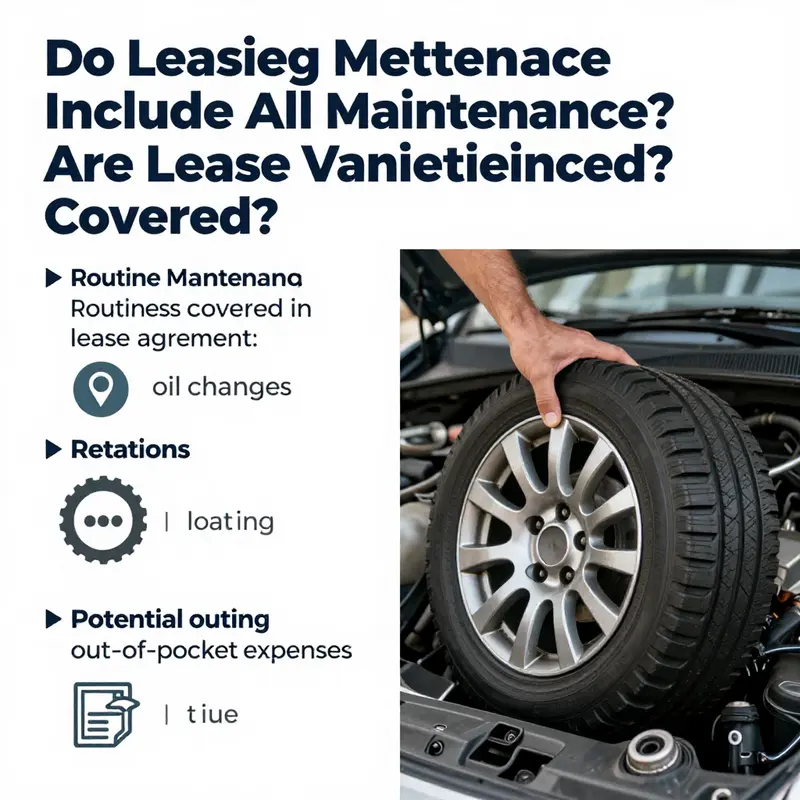
When people sign a vehicle lease, the line between ownership and obligation often blurs. A common question arises early in the process: do lease vehicles include all maintenance? The straightforward answer is no. Maintenance coverage is typically part of a broader package, and the exact scope depends on the terms laid out in the lease agreement, the type of vehicle, and the financing path the lessor has chosen. What feels like a simple, predictable obligation can, in reality, unfold into a carefully negotiated bundle of protections and responsibilities. Reading the fine print becomes less about legalese and more about forecasting the true cost of ownership over the life of the lease. The goal of a lease, after all, is to provide predictable monthly payments and a predictable end-of-lease experience, but maintenance costs can still surprise if the contract does not align with actual driving habits and vehicle needs. In practical terms, most lessees will find that routine, scheduled maintenance is covered to some extent, while repairs arising from accidents, misuse, or wear beyond normal use generally fall to the lessee. This distinction—not all maintenance being included, but a substantial share of routine servicing often being covered—frames the conversation about what to expect from a lease and how to manage potential outlays over the term of the agreement.
The coverage landscape is shaped by several factors. First, the type of lease arrangement matters. Manufacturer-sponsored programs, which are designed to foster long-term loyalty and smoother ownership transitions, often include a baseline maintenance package. These programs may cover regular servicing for the duration of the lease term and sometimes extend beyond what is strictly necessary to keep the vehicle in good working condition. Yet even within these programs, there is typically a boundary: routine tasks that ensure the vehicle remains up to standard are included, while more substantial repairs or replacements—things that happen because of accidents, vandalism, or neglect—usually require out-of-pocket payments or separate waivers.
Second, the vehicle’s condition at lease inception and the expected wear-and-tear profile play a crucial role. A vehicle with minimal pre-existing wear and tear may be eligible for more favorable maintenance terms, whereas a car with notable wear at the outset can lead to more stringent end-of-lease charges. The lease’s mileage assumptions also influence what gets covered. If you drive significantly more miles than planned, you may encounter more frequent service needs, tire wear, and potential wear-and-tear implications, which can shift the perceived value of maintenance coverage. In this sense, maintenance in a lease is complicit with the broader risk that heavy use introduces, and the contract often reflects that risk with stepped limits or caps on covered services.
To understand what routine maintenance typically looks like, it helps to define it clearly. Routine maintenance includes the scheduled services that a vehicle manufacturer recommends to keep the car running smoothly and safely. In many lease agreements, these are the services that the lessee is expected to perform and, in many cases, the lessor will assume responsibility for arranging or funding through the lease’s maintenance component. Oil changes, tire rotations, brake inspections, fluid top-offs, battery checks, and the replacement of small wear items like wiper blades or light bulbs are frequently included because they maintain roadworthiness and reflect normal vehicle use. The inclusion of these services is not universal, but it is common in programs designed to encourage steady, reliable usage and to reduce the administrative burden on the lessee. When a lease explicitly covers these routine tasks, the lessee benefits from reduced downtime and the convenience of a pre-planned maintenance cadence that aligns with manufacturer recommendations.
Some leases even offer a broader safety net: routine maintenance paired with pre-approved service scheduling. This can eliminate the friction of vetting every service provider and negotiating costs for standard upkeep. The rationale behind such coverage is straightforward: a vehicle that is properly maintained is less likely to suffer preventable breakdowns, which in turn reduces the likelihood of costly repairs during the lease term. For the lessee, the value proposition is clear if the maintenance plan is comprehensive, easy to access, and well integrated with dealer or service network arrangements. Still, even when routine maintenance is included, there is a caveat: the responsibility for certain expenses remains with the lessee. The goal is to avoid the kind of surprises that can derail a carefully planned month-to-month budget.
A third factor that colors maintenance coverage is the distinction between new-vehicle and used-vehicle leases. New-vehicle leases often come with more generous maintenance provisions because the vehicle is under the manufacturer’s warranty for a longer initial period, and because new cars are less likely to experience certain kinds of failures in the early miles. Used-vehicle leases, by contrast, usually carry more limited maintenance coverage because the vehicle has undergone some wear and has a shorter remaining warranty horizon. In practice, this means lessees of newer vehicles might enjoy clearer maintenance benefits, whereas those leasing pre-owned or higher-mileage vehicles should plan for greater out-of-pocket costs for routine services not explicitly covered by the lease. The careful reader will see how these nuances influence long-term financial planning: coverage is not a one-size-fits-all feature but rather a negotiation that aligns with risk, cost control, and expected use.
The practical value of this landscape becomes most evident during the signing process. Prospective lessees should actively seek out the maintenance clauses in the contract. Look for phrases that indicate “service and maintenance coverage,” “vehicle care and maintenance responsibilities,” or “warranty and repair obligations.” These sections reveal what the lease considers routine versus exceptional, what services are funded by the lessor, and what costs fall to the driver. If the language is ambiguous, a direct conversation with the leasing company or dealership can prevent misinterpretation later. It is not unusual for lessees to assume that all maintenance is included, only to discover that some items are only covered if they arise under the terms of a separate maintenance agreement or warranty. A proactive approach—asking about coverage limits, the duration of coverage, whether the plan transfers to the end of the lease, and what maintenance tasks require pre-authorization—creates a clearer financial map.
The issue of wear and tear also deserves careful attention. End-of-lease charges often hinge on what is considered excessive wear or tear beyond normal use. Tires that are worn past a certain tread depth, damaged interior trim, dented body panels from minor accidents, cracked windshields, and similar issues can become cost centers if they exceed what the lease defines as acceptable. Because the definitions of “normal use” and “excess wear” vary by lessor, the end result can be a painful surprise if the lessee has not kept diligent records or if the vehicle has been driven in a way that far exceeds the expected pattern. This is where the value of early, proactive inspection comes into play. A pre-lease inspection and a separate pre-return assessment are often recommended to establish a baseline, identify issues that could be charged later, and document the vehicle’s condition as it enters and leaves the lease. In some cases, lessees can purchase an optional wear-and-tear protection plan, which is designed to cover several categories of minor damage that would otherwise be charged to the driver at lease end. The decision to add such protection should be weighed against the actual risk profile, including how aggressively the vehicle is driven and the likelihood of scenarios that produce wear beyond normal expectations.
The discussion about maintenance cannot ignore the practical reality of life on the road. Routine maintenance is not just a mechanical exercise; it is a key driver of reliability, safety, and resale value. When a lease includes routine maintenance, that coverage can ease the financial burden and help keep the vehicle in optimal condition, thereby reducing the chance of unexpected repairs that could complicate the lease experience. Yet the presence of maintenance coverage does not absolve the lessee of responsibility for everything. The distinction between what is routine and what constitutes an exception remains central. The lessee should plan for two possible outcomes: a straightforward maintenance visit that remains within covered services, and a subsequent episode where a repair is necessary but falls outside the maintenance umbrella and must be paid out of pocket or through an independent agreement.
For those who want a practical touchpoint on the topic, there is a helpful resource that outlines the general principle of who bears the costs for maintenance on a leased vehicle. Consider exploring the discussion at this guide: Who pays for maintenance on a leased vehicle. It offers a grounded perspective on how lessees and lessors allocate responsibility and what to watch for in the contract. While the guide provides general guidance, the exact terms of any given lease will ultimately decide the specifics. In addition to consulting such resources, it is wise to cross-reference the lease with official guidance from regulatory bodies. For instance, a government resource on leasing a car provides authoritative context about consumer rights and the typical obligations of lessees and lessors in the maintenance domain. The official guide is available at https://www.transportation.gov/buying-a-car/leasing-a-car, which offers a structured overview of how leasing agreements commonly address maintenance, warranties, and related responsibilities. These references can help a reader move from a general understanding to a precise, contract-centered view of what is and isn’t included.
The broader takeaway is practical and straightforward: lease vehicles often include a substantial portion of routine maintenance, but not all maintenance. The exact boundaries depend on the vehicle, the lease program, and the specific contract language. A diligent lessee should invest time in reading the service and maintenance sections, asking pointed questions, and documenting the vehicle’s maintenance history. Keeping meticulous records of all services—whether they are covered by the lease or paid out-of-pocket—can simplify end-of-lease negotiations and help avoid disputes about wear and tear. It also allows the lessee to demonstrate responsible vehicle care, which can influence potential end-of-lease charges and the overall experience of returning or transferring the vehicle.
Beyond the contract language, the practical management of maintenance within a lease has a behavioral dimension. When maintenance is included, it is tempting to defer servicing until a scheduled window, expecting that the lease will handle the costs. However, adherence to the maintenance schedule is still essential. Skipping an oil change or delaying a brake inspection can lead to issues that may not be covered if they arise outside the specific maintenance window or if they develop into a problem that is no longer considered routine. Conversely, when a lease does not cover a particular service, there is value in seeking cost-effective options, such as approved service centers within the network, which can help control expenses while maintaining the vehicle’s integrity. The broader message is that the coverage is best viewed as a framework rather than a guarantee of zero maintenance costs. The lessee’s challenge is to align driving patterns, vehicle needs, and the lease terms in a way that minimizes risk while maximizing the predictable benefits of routine care.
Finally, it is worth noting that the maintenance conversation intersects with broader questions about total cost of ownership, risk management, and the strategic behavior of drivers. A lease that includes robust routine maintenance can tilt decisions toward higher-mileage usage without destabilizing the monthly budget, provided the coverage truly aligns with the user’s driving profile. On the other hand, if the maintenance package feels narrow or inflexible, lessees may find themselves revisiting the math behind the lease sooner than anticipated, particularly if unplanned repairs arise. In either case, a clear-eyed read of the contract, a thoughtful assessment of driving habits, and proactive communication with the leasing entity can turn maintenance from a potential pitfall into a managed component of the lease experience. The upshot is not merely about knowing whether maintenance is included; it is about understanding how coverage interacts with your personal risk tolerance, budget, and the practical realities of daily driving. The distinction between routine care and costly repairs is not a boundary drawn in theory but a line that reshapes your financial planning and your peace of mind as you navigate the term of the lease.
External resource: https://www.transportation.gov/buying-a-car/leasing-a-car
null
null
Final thoughts
In conclusion, the world of vehicle leasing is intricate, particularly regarding maintenance responsibilities. Not all maintenance costs are covered under lease agreements, and it’s crucial for business owners to understand the specifics detailed in their contracts. Lessees must be prepared for routine maintenance obligations and potential repair costs that fall outside the typical coverage. Awareness of these aspects ensures businesses can better budget for their leasing costs and avoid unexpected liabilities. Always review your lease agreement and consult with your leasing provider for clarity and peace of mind.