

Business owners often overlook the maintenance of non-active lease fleet vehicles; however, ensuring these vehicles receive routine maintenance is vital. Inactive vehicles, though not on the road, can still face deteriorative effects from environmental conditions and mechanical degradation. This guide delves into the significance of proactive maintenance protocols, the impact of the environment on vehicle health, the cost implications of upkeep, regulatory compliance necessities, and best practices to preserve your fleet’s integrity. Understanding these aspects can help businesses maximize their investment in lease fleet vehicles while ensuring their readiness for use when needed.
Preserving Value During Idle: A Practical Maintenance Protocol for Inactive Lease Fleet Vehicles

When a lease vehicle sits idle, it remains an asset that requires stewardship. Inactivity introduces risks to reliability, safety, and resale value, so a structured maintenance protocol is essential. The goal is to preserve condition while minimizing downtime and cost, ensuring the vehicle is ready for swift reactivation or clean resale when the lease ends.
Cadence and inspections: implement a living plan with regular checks that become routine rather than reactive events. Quarterly inspections may suffice for some assets, with semiannual or annual reviews for others, depending on age and climate.
Fluid management: regular checks of engine oil, coolant, and brake fluid, with attention to moisture, contamination, and proper replacement intervals per manufacturer guidance and lease terms.
Battery maintenance: charging strategies to prevent deep discharge, periodic activity to exercise the battery, and checks of cables and connectors.
Tire care: maintain proper pressure, rotate or reposition tires where feasible, use covers to reduce UV exposure when stored.
Environmental storage: indoor climate controlled environments are ideal; if not possible, use protective covers and minimize exposure to heat, cold, and humidity.
Periodic reactivation: run the engine for 15 to 30 minutes every few weeks to circulate fluids, recondition seals, and prevent stagnation.
Long-term storage considerations: fuel stability products, battery removal or parasitic draw mitigation, protective coatings on exposed metal, and planning for reentry.
Technology and record-keeping: fleet management software to track condition, reminders for inspections, and auditable history to support regulatory and insurer expectations.
Responsibilities and economics: maintenance is a shared obligation; basic principle is to maintain the vehicle in a ready state per lease terms and regulations to avoid surprises on reentry.
Conclusion: disciplined idle maintenance yields smoother reactivation, reduced downtime, and preserved resale value.
Idle Yet Active: Maintenance and Environmental Stewardship for Non-Active Lease Fleet Vehicles
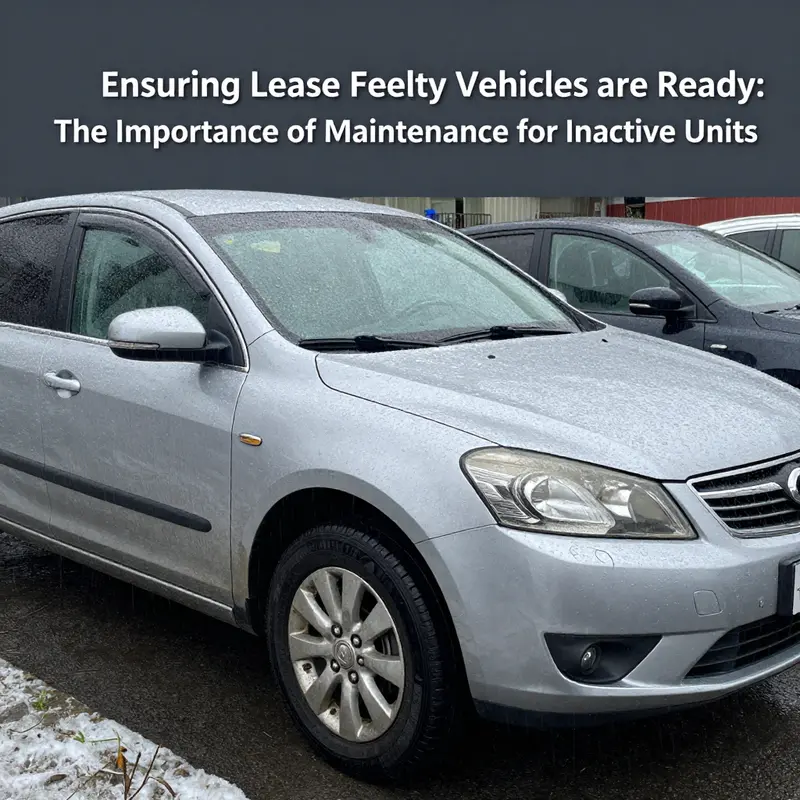
Idle-period maintenance for lease fleet vehicles is essential for safety, reliability, and environmental stewardship even when assets sit idle. Inactivity changes the risk landscape: fluids age, batteries self-discharge, tires can develop flat spots, and corrosion protection remains important. A proactive idle maintenance program should include periodic battery health checks and conditioning for BEVs to prevent deep discharge, tire pressure monitoring and rotation planning, fluid level checks and topping, exterior and interior cleaning to guard against corrosion and material degradation, and protective storage measures for longer rests. The cadence should align with storage duration and expected reactivation timelines to minimize time-to-service and avoid costly surprises. This approach reduces emergency repairs, waste, and resource use while preserving safety margins.
From a lifecycle perspective, idle periods are part of environmental accounting and end-of-life planning. Fleets should consider embodied energy, storage-related emissions, and circular economy opportunities for BEV batteries, including monitoring, refurbishment, and potential repurposing. Regulators and investors increasingly expect governance that covers idle phases as part of environmental and risk management, treating idle capacity as a dynamic resource rather than dormant inventory. BEVs, in particular, require attention to state of charge management during storage to avoid capacity losses and to support a sustainable lifecycle.
Practically, governance should assign clear responsibilities for idle checks, testing intervals, and decision rights across maintenance teams, storage facilities, insurers, and leasing companies. Cost, risk, and environmental impact should be balanced without over-maintaining every idle vehicle. For further reading, see the linked articles on maintenance responsibility in leased vehicles and the environmental lifecycle literature on idle assets.
Idle Yet Ready: The Hidden Costs and Care of Maintaining Inactive Lease Fleet Vehicles
When a lease fleet sits idle, it would be easy to assume that the car is simply waiting for its next assignment. Yet the truth is more nuanced. Vehicles in a managed lease portfolio are kept in a state of continuous readiness, not just continuous use. The chapter that follows examines why maintenance for inactive fleet vehicles is not a luxury but a strategic necessity. It also explains how mismanaging this maintenance can transform a quiet layoff into a loud financial problem when a vehicle is suddenly needed or when it is returned at the end of a lease. To understand the full picture, it helps to recognize that inactivity does not equate to inactivity’s consequences being suspended. Environmental exposure, mechanical drift, and regulatory expectations all continue to shape the upkeep requirements of parked or dormant vehicles. The aim is not to keep every component perfectly pristine in perpetuity, but to preserve reliability, safety, and value while controlling costs over the long horizon of a multi-vehicle portfolio.
A core premise guiding fleet maintenance in inactivity is proactive preservation. Even when a car is not logging miles, it is subject to wear and degradation that is distinct from active-use wear. Weather and climate can accelerate exterior aging, interior moisture can condense and corrode, and ambient pollutants can infiltrate seals and gaskets. More technically, some degradation is time-based rather than mileage-based. Engine oil and coolant can deteriorate, fluids can settle or separate, and seals can dry out. Battery chemistry remains susceptible to self-discharge and voltage drop in storage, especially in climates with wide temperature swings. Tires, even when stationary, can develop flat spots or lose air pressure. Brakes may seize if the wheels are left without regular rotation or light movement that keeps calipers and rotors free to move. All of these factors converge to create a maintenance demand that is less about mileage and more about time, exposure, and the vehicle’s state when it is finally awakened from dormancy.
From a practical standpoint, fleets adopt a scheduled cadence of checks and service tasks tailored to the inactivity period. A typical inactive maintenance plan includes battery health management, periodic charging or conditioning, tire inspections with pressure checks, and inspection of fluids such as engine oil, coolant, brake fluid, and transmission fluid. Exterior and interior cleaning, along with minor diagnostic checks, reduces the risk of corrosion and ensures basic operational clarity when the vehicle is redeployed. These measures might require a reduced scope compared with active-use maintenance, but they are far from optional. They guard against creeping issues that could escalate into unexpected downtime or costly repairs the moment a vehicle is called back into service.
This approach aligns with the lifecycle realities of lease agreements. A vehicle’s value is not merely the miles on the odometer; it is the condition, reliability, and readiness to perform when requested. In many leasing contracts, a vehicle that sits idle but remains in serviceable condition minimizes penalties at return and aligns with insurance requirements that demand ongoing compliance with safety standards and maintenance protocols. The concept of maintenance responsibility, especially for leased vehicles, is often explicit in terms of who bears the cost of upkeep during periods of inactivity. To readers exploring this area, a helpful point of reference is a discussion on whether you are responsible for maintenance on a leased vehicle. That resource delves into the obligation framework and can illuminate how a fleet manager should structure expectations and budgets for idle assets. Are you responsible for maintenance on a leased vehicle?.
The cost implications of maintaining idle vehicles are real, and they reverberate through the total cost of ownership and the lease’s residual value. Regular inspections, even in the absence of heavy use, are not cosmetic rituals; they are preventive investments designed to head off corrosion, battery degradation, seal leaks, and mechanical stiffness that can arise from long dormancy. If a vehicle is left unchecked for extended periods, the risk rises that issues will accumulate to a level where even minor problems become major repairs. A small coolant leak today can become a radiator replacement tomorrow. A flat-spot on a tire can necessitate tire replacement that would not have been required with periodic rotation and wind-down testing. The cumulative effect of deferred maintenance is a higher probability of extended downtime and a larger financial hit when the car is reactivated or finally returned.
A well-structured inactive maintenance program also contributes to fleet readiness in a more qualitative sense. When a vehicle comes off a storage rack and is driven into service with minimal prior adjustment, the transition is smoother. The driver’s experience is cleaner—lights, door seals, climate control, and infotainment systems function as expected because the vehicle’s core systems have remained in a supervised, low-stress state. This readiness reduces the risk of safety incidents that could arise from latent faults, such as corroded battery terminals, fluid leaks, or brake components that have not been exercised. Even diagnostic checks, though brief, offer a clear signal if something is drifting out of spec. In practice, these checks are not merely paperwork but a disciplined discipline that keeps the fleet in a state where a rapid mobilization is possible without the disruption of unexpected repairs.
Of course, the economics of idle maintenance require careful budgeting and prioritization. A naive approach—checking boxes only when there is a plan to redeploy the vehicle—can lead to over- or under-maintenance. The art lies in calibrating intervals to the vehicle type, its storage conditions, and the local climate. Climate control or sheltered storage, for example, can dramatically reduce fluid evaporation and tire degradation. For fleets housed in harsher environments, more frequent battery conditioning and fluid stabilization can be warranted. Conversely, for vehicles kept in milder climates with good storage practices, the schedule can be relaxed a notch without sacrificing safety or reliability. In either case, the objective is a maintenance program that minimizes long-term costs while preserving the asset’s usability when it is needed again.
An important consideration is the risk of wear-and-tear penalties at lease return. Leasing companies frequently reserve the right to assess excessive wear or mechanical faults at the end of the contract. Preventive measures taken during inactivity serve as a financial safeguard by reducing the likelihood of these penalties. The link between disciplined, staged upkeep and return-value preservation is a compelling argument for treating idle vehicles with the same level of care as those in active service, albeit at a lower intensity. This philosophy resonates with broader fleet-management aims to balance readiness with cost containment, inventory turnover with vehicle longevity, and risk management with operational flexibility.
From the standpoint of a fleet manager, the practical execution of this philosophy benefits from a structured yet flexible plan. The plan should specify storage standards, including climate considerations that minimize moisture damage and temperature-induced chemical changes. It should outline battery maintenance strategies, such as scheduled conditioning or the use of battery maintainers that prevent deep discharge during long idle periods. Tire management must include checks on pressure and tread depth, with a readiness rule that tires will be inflated to the recommended level and inspected for signs of aging or cracking. Fluid stewardship is another pillar: ensuring that oils, coolants, and brake fluids are within their use-by windows and that seals and hoses are visually checked for signs of deterioration.
Beyond the mechanics, there is an organizational dimension. Effective idle maintenance requires clear governance—who is responsible for scheduling, who approves service, and how the costs are allocated within the fleet’s budget. It also requires data-driven rigor: regular reporting on the health of idle vehicles, trends in maintenance costs, and predictive signals that identify which vehicles might need more attention given their storage conditions. When a fleet succeeds in integrating these practices, it does more than guard against breakage. It creates a responsive, resilient pool of assets that can be summoned to duty with confidence, minimizing downtime, expediting redeployment, and protecting the lease portfolio’s overall value.
The chapter thus flags a broader truth about modern fleet management: inactivity is not a permanent pause but a phase that requires strategic care. The return on investment for idle maintenance is measured not only in the avoided repair bills but in the speed with which a vehicle can be redeployed, in the steadiness of insurance compliance, and in the preservation of residual value at lease end. This perspective aligns with the practical realities of fleet operations, where capital is tight, schedules are tight, and the margin for error is minimal. It is a reminder that maintenance is a continuous discipline—one that adapts to activity levels, storage conditions, and the evolving economics of fleet ownership—and that the idle vehicle can remain a robust asset in a well-managed program.
For readers seeking a broader context on how these cost considerations fit into the larger discipline of fleet management, the principles outlined here echo a broader emphasis on cost-control strategies and lifecycle thinking. As fleets scale and storage times extend, disciplined idle maintenance becomes a core competency, not an afterthought. The goal is to keep the asset in good standing without inflating overhead, ensuring readiness without waste, and protecting the bottom line across a portfolio of vehicles that may sit idle for extended periods before returning to service. External resources on fleet-management cost optimization can provide further guidance for organizations looking to translate these principles into concrete, scalable practices. See the external resource cited for a broader overview of cost-reduction strategies in fleet management: https://www.fleetmanagement.com/2025/06/12/reducing-fleet-management-costs/
Staying Reactivable: The Hidden Maintenance and Compliance Engine Behind Inactive Lease Fleets
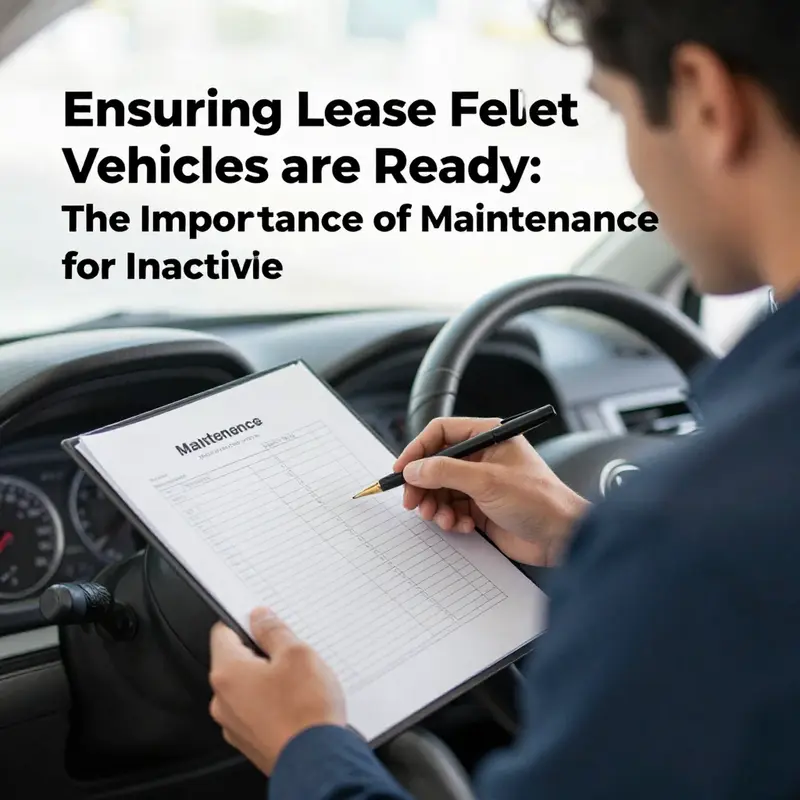
When a lease fleet is parked or assigned to a low-usage role, it would be easy to assume maintenance pauses along with daily activity. Yet the reality in fleet management is more disciplined and nuanced. Vehicles that sit idle do not become maintenance ghosts; they become test cases for preventive care, regulatory discipline, and strategic asset protection. The central question—do lease fleet vehicles receive maintenance even when not active?—unfolds into a broader narrative about how fleets preserve safety, reliability, and value through a deliberate, data-driven approach to storage and standby readiness. In this chapter, the thread that ties together safety protocols, regulatory expectations, and operational discipline is the ongoing commitment to maintenance, even in the absence of miles and deliveries. The practice is not merely about avoiding breakdowns after a long pause; it is about shaping a vehicle’s condition so that it can rejoin service with minimal friction and risk.
The regulatory landscape frames this discipline with a clarity that transcends routine servicing. In the United States, the Department of Transportation, along with state authorities, prescribes standards that apply to vehicles regardless of current operation. Storage and inactive periods must still align with safety and environmental rules, and fleets must demonstrate that stored vehicles are not allowed to deteriorate into hazards. Emissions compliance may require periodic checks, and valid registration remains a constant obligation, not a seasonal task. Fleets are expected to maintain records that prove ongoing compliance and readiness, even when the vehicle sits idle. These requirements are not decorative; they create the backbone of risk management for the fleet operator and the leasing company. A lapse in documentation or a missed inspection can expose the organization to penalties, or worse, to uninsured liability if an stored vehicle becomes involved in an incident.
That regulatory frame translates into practical, repeatable maintenance rituals designed to counter two broad vectors of deterioration: environmental exposure and mechanical aging. Environment takes two forms here. The first is weather—heat, cold, humidity, and moisture can corrode connectors, degrade seals, and encourage condensation in systems that should remain dry and functional. The second is the daily drift of fluids and components that, without periodic attention, degrade even without engine starts. The most visible example is the battery. A dormant battery can slowly lose charge, sulfate internally, and weaken the ability to turn over the engine when reactivated. To mitigate this risk, fleets install battery maintainers or, in some cases, schedule regular disconnects and re-connect cycles that keep the electrical system within safe voltage ranges. The idea is to avoid the “dead battery surprise” when the vehicle needs to be mobilized again. Engine health also deserves attention. Periodic engine cranking helps circulate and replenish lubricants, preventing oil degradation and the seals from drying, which can occur if a vehicle sits for weeks or months. While it might seem counterintuitive to crank a non-running engine, it is a targeted measure that preserves long-term integrity without subjecting the powertrain to unneeded wear.
Tire care is another area where idle status can create a latent problem. Flat spots can form on tires if a vehicle remains stationary for extended periods, especially in cold or hot climates with fluctuating temperatures. The remedy is straightforward but essential: maintain correct tire inflation according to manufacturer specifications and rotate or reposition wheels when the vehicle is scheduled for long-term storage. Proper tire management also extends to wheel alignment and balancing checks, which help ensure that, once the vehicle returns to active duty, the tires wear evenly, contributing to safer handling and fuel efficiency. Fluids demand respect as well. Regular checks of oil levels, coolant reservoirs, brake fluid, and transmission and power steering fluids help prevent stagnation, corrosion, and seal degradation. Even if a car is not moving, fluid ecosystems within the engine and subsystems require periodic attention to stay within safe operating ranges. The execution of these checks is often the simplest yet most effective line of defense against costly, reactive repairs on reactivation.
Beyond the mechanical and environmental considerations, a robust inactive-vehicle program integrates proactive preventive steps that maintain aesthetics, safety systems, and overall readiness. Exterior and interior cleaning may seem cosmetic, but it is a practical measure to deter corrosion, protect dashboards and seals, and keep cameras and sensors unobstructed. A clean vehicle is more than a gleaming asset; it provides immediate visibility into indicators that might signal a latent issue—dirt covering a sensor eye, for instance, or moisture around an electrical connector that could worsen if left unaddressed. Basic diagnostic checks during storage periods provide a snapshot of system health, enabling early detection of concerns before they escalate into replacements or extensive downtime.
The justifications for this regimented approach go beyond safety and aesthetics. Fleet management is a discipline built on lifecycle cost control and risk mitigation. When a fleet vehicle remains idle, its value is preserved not just by keeping it physically intact but by ensuring it remains a reliable, reactivatable asset. The cost of a preventable failure at reactivation—an alternator, a seized engine component, or a drained battery—can cascade into a much larger downtime and a ripple effect across service levels. By adhering to a structured storage maintenance calendar, operators reduce the probability of such disruptions and preserve the confidence of insurers and lenders. Insurance provisions, in particular, often hinge on keeping vehicles in a condition consistent with the terms of coverage. A stored vehicle that shows visible neglect or deteriorated systems can become a point of contention should a claim arise during a period of inactivity. The same logic applies to leasing agreements, which frequently specify that vehicles must be maintained in good working condition regardless of usage status. Noncompliance can trigger penalties or higher fees, undermining the financial efficiency that drove the lease in the first place.
To operationalize this philosophy, many fleets deploy digital tracking and maintenance platforms that help managers oversee compliance across an entire inactive stock. Such systems automate reminders for inspections, schedule periodic checks, and document the maintenance logs that proof compliance with federal and state rules. A digital approach makes it practical to coordinate battery maintenance, tire checks, and fluid management across dozens or hundreds of stored units. It also creates an audit trail that demonstrates due diligence to regulators, insurers, and internal governance bodies. A reliable digital record helps leadership translate policy into practice, ensuring that the storage phase does not become a blind spot or a bureaucratic bottleneck. It anchors accountability, enabling fleet managers to answer questions about who performed what, when, and with what results. The chain of custody for regulatory compliance and maintenance becomes transparent, which is essential when vehicles are reactivated and must return to service with guaranteed roadworthiness.
In the broader strategic sense, maintaining inactive vehicles is an expression of stewardship. It acknowledges that the fleet is a long-term investment, and the conditions that govern it extend beyond immediate demand. Quality upkeep during storage safeguards the fleet’s reputation for reliability, supports predictable maintenance budgeting, and reinforces the organization’s commitment to safety and compliance. It is easy to conflate “maintenance” with “miles driven,” but the true measure is whether the asset, when needed, can operate safely and efficiently. The storage phase tests that readiness, and the maintenance cadence described here is the answer to the question of whether non-active lease vehicles receive proper care. The answer, grounded in regulatory expectations and pragmatic risk management, is a firm yes.
For readers who want to explore the practical side of responsibility, the governance of upkeep often intersects with questions about who pays for and who oversees maintenance when a vehicle is not in use. The framework typically assigns responsibility to the fleet operator or the leasing company, with clear expectations codified in service-level agreements and policy documents. Those arrangements emphasize that maintenance is not discretionary during storage; it is a contractual and regulatory obligation embedded into the asset’s lifecycle. The emphasis on readiness makes the reactivation process smoother, reducing downtime and ensuring that a vehicle can meet safety and performance standards as soon as it leaves storage. As a consequence, a well-managed inactive fleet becomes a resilient, cost-efficient pool of assets rather than a dormant inventory. This resilience depends on disciplined adherence to the maintenance cadence and on the ability to adapt it to regional climates and storage conditions, which can influence battery behavior, tire health, and fluid stability.
Readers seeking deeper guidance on the maintenance responsibility embedded in lease agreements may find it useful to reflect on the broader question: Are you responsible for maintenance on a leased vehicle? This question anchors the discussion in practical terms and invites organizations to align policy, practice, and compliance in a way that supports both risk management and asset optimization. For organizations that manage large inactive fleets, the answer is rarely a single policy decision; it is a continuous process of monitoring, scheduling, and documenting that keeps every vehicle ready for deployment.
External resources provide further depth on the storage guidelines and the regulatory frame that governs inactive fleets. For an authoritative reference on vehicle storage and maintenance standards, consult the U.S. Department of Transportation’s guidelines on vehicle storage: https://www.transportation.gov/vehicle-storage-guidelines. These guidelines complement the chapter’s emphasis on proactive care, highlighting how storage decisions translate into long-term safety and compliance outcomes while ensuring that vehicles can be rapidly and safely returned to service when demand resumes. Collectively, the practices described here—battery maintenance, engine cycling, tire management, fluid checks, environmental protection, and digital recordkeeping—form an integrated engine of reliability that runs even when the fleet’s engines are at rest. It is this engine that keeps the lease fleet truly alive, ready to respond to the needs of the business and the expectations of regulators, insurers, and stakeholders who rely on consistent, compliant performance from every vehicle, whether it is on the move or parked for a period of time.
Quiet Keepers: Maintaining Inactive Lease Fleet Vehicles for Fast, Safe Return to Service

A lease fleet is rarely a museum of perfectly pristine cars; it is a living system that continues to accrue risk and require care even when most units sit idle. Vehicles in storage or temporarily parked still age, degrade, and drift away from peak performance unless a deliberate maintenance program governs their inactivity. The logic is straightforward: parked cars are not maintenance-free; they are potential time bombs for mechanical surprises, safety hazards, and unexpected costs if a dormant period is allowed to stretch too long. For fleet operators, the aim is not to chase the clock but to keep the clock from running down in the first place. In practice, this means a structured, disciplined approach that treats inactivity as part of the vehicle’s lifecycle, not as a period of neglect. The result is a fleet that remains ready, compliant, and cost-efficient, able to re-enter service with minimal delays and risks. This approach aligns with the larger objective of responsible fleet management, where safety, reliability, and regulatory adherence are continuous commitments rather than conditional obligations tied to usage.
In this sense, inactive or parked vehicles are not passive assets but active participants in a broader risk-and-cost calculus. Employers and leasing companies alike recognize that environmental exposure, mechanical drift, and fluid deterioration can erode vehicle condition even without daily miles. The practical consequence is a maintenance program that emphasizes readiness: regular inspections, careful storage, and selective interventions that preserve core systems. A well-designed program does not merely chase the appearance of a well-kept fleet; it preserves the actual integrity of the vehicles, ensuring that when the moment comes to bring a dormant unit back into service, there are no avoidable surprises waiting under the hood or in the tires. When framed this way, the maintenance of inactive vehicles becomes a strategic capability, not a logistical afterthought.
A core principle guiding this work is clarity about what, exactly, must be kept in check during periods of inactivity. Regular inspections form the backbone of the program. They are not a one-off protocol but a continuous practice that helps identify early signs of trouble before they become disruptive. Fluid leaks, for instance, reveal themselves through attention to the engine bay and the underbody at periodic checks. Inactive cars can suffer from slow seepage, and a simple visual pass can prevent a cascade of issues once the vehicle is reactivated. Tire degradation is another frequent risk; tires can develop flat spots or lose cohesion when a vehicle sits for weeks or months. A routine inspection plan includes tire condition, tread depth, and the measurement of tire wear indicators, coupled with a review of inflation pressures. Battery health deserves particular emphasis because many batteries experience gradual discharge when the vehicle is idle. A failing or sulfated battery can strand a unit at the moment of recall, so monitoring battery voltage and state of charge becomes a non-negotiable element of the maintenance workflow. These checks are not abstract; they translate into concrete actions that reduce the likelihood of operational disruption and insurance or warranty complications.
The conversation about inactivity inevitably leads to storage conditions. Proper storage is the quiet prerequisite for long-term health. Clean and dry surroundings minimize corrosion, while climate-controlled environments stabilize temperature and humidity to protect sensitive components from condensation, rust, and chemical interactions. When a vehicle is kept in a damp or extreme environment, even seemingly minor exposures—such as sunlight-driven paint oxidation or interior material degradation—can accelerate deterioration over time. The practical upshot is that storage planning must align with the vehicle’s fragility and its typical exposure during peak operation. A climate-controlled, well-ventilated facility, clean surfaces, and careful organization for access all contribute to a durable dormant state. Protective covers and dust management further reduce dust ingress and UV exposure, shielding both paintwork and interior finishes from accelerated aging.
Beyond storage, a proactive maintenance cadence includes periodic engine starts. While starting an engine may feel counterintuitive to cost-conscious idle time, evidence and best practices show that infrequent engine operation circulates critical lubricants, recharges the battery, and prevents stagnation in fuel and coolant systems. A common guideline is to start the engine every two to four weeks and let it run long enough to reach operating temperature and allow internal fluids to circulate for about 15 to 30 minutes. This practice helps maintain oil viscosity, prevents the formation of varnish in the oil passages, and keeps belts, hoses, and seals supple. It also gives the cooling system a reminder of its routine duties and reduces the risk of coolant stagnation. The exact interval may vary with climate, vehicle age, and the design of the charging system, but the underlying purpose remains clear: a dormant vehicle needs periodic life to prevent the imprisonment of its own components behind neglect.
Tire management is another essential thread in the inactivity fabric. Tires are not inert during dormancy; they age. Inflation tends to drift as temperatures swing and as the vehicle remains stationary. Maintaining manufacturer-recommended tire pressure is not merely about maximizing fuel efficiency or ride quality; it is about preserving the tire’s circadian rhythm and preventing disbondment or flat-spot formation. When possible, rotating tires can distribute wear more evenly and reduce localized stress on any single tire. This becomes particularly important for fleets with rows of vehicles stored in similar orientations for extended periods. A small, routine adjustment of tire pressures and, if feasible, rotation, contributes to a more reliable return to service and extends the life of the tires themselves.
Fuel management is equally critical, though it may seem less intuitive. Extended periods of inactivity can allow gasoline to degrade, leading to gum formation, varnish, and even phase separation in certain fuel blends. The use of fuel stabilizers offers a practical solution by preserving octane stability and preventing phase changes that would otherwise complicate engine start-up later. This practice helps avoid engine misfires, clogged injectors, and starting resistance that could undermine a quick reactivation. It is not a silver bullet, but when combined with sensible fuel management, it supports a smoother transition from dormancy to operation, reducing the need for immediate, comprehensive fueling or cleaning interventions when a vehicle is finally brought back into service.
Protective measures are the final line of defense in the dormancy playbook. A high-quality protective cover shields the vehicle from dust, moisture infiltration, and dings that can occur in tight storage environments. Covering the vehicle is particularly valuable for outdoor storage scenarios, where weather exposure remains a constant neighbor. Along with covers, the physical security of the vehicles matters; controlled access and routine checks deter vandalism and deter moisture migration. A modest investment in protection translates into significant savings by preserving paint, interior materials, and sensitive electronics, all of which can deteriorate with time if left unchecked.
In practice, a fleet manager stitches these elements into a coherent program that also respects the leasing agreement, insurance requirements, and the total cost of ownership. Documentation is the quiet backbone of this process. Detailed logs of inspections, battery tests, tire pressures, fluid levels, and engine start cycles create a traceable history that becomes invaluable during audits, risk assessments, and post-dormancy reactivations. When a vehicle returns to active duty, the baseline history informs immediate maintenance needs, reducing downtime and accelerating fleet readiness. Cost considerations are never far from view, but the best programs demonstrate that upfront, disciplined maintenance during inactivity reduces expensive repairs, insurance friction, and unexpected vehicle retirements from the fleet prematurely.
This integrated approach also benefits governance and accountability. Clear ownership of maintenance tasks, defined intervals, and standardized procedures help ensure consistency across a dispersed fleet. It is not enough to have a plan; the plan must be executed with discipline and transparency. Fleet operators often rely on digital tools to monitor environmental conditions, schedule engine starts, and track component health remotely. Such systems enable proactive adjustments when climate or usage patterns shift, ensuring the dormant fleet remains aligned with the broader fleet strategy. The objective is not to micromanage vehicles in storage but to preserve their vitality so that they can return to service with minimal friction and maximal reliability.
Within this framework, there is a line of thought that echoes through the literature and industry practice: maintenance responsibilities and cost allocations are typically defined in the lease contract, and adherence to those terms helps maintain financial predictability and risk control. For readers who want a practical connection to the contractual side, a related discussion on who pays for maintenance on a leased vehicle offers additional context and nuance about the financial responsibilities that accompany these programs. Who Pays for Maintenance on a Leased Vehicle?
As the chapter closes on this particular arc of fleet care, the message is clear: inactivity does not absolve a vehicle of maintenance. It reframes the problem as a time-managed risk that can be mitigated through a steady rhythm of inspections, thoughtful storage, controlled engine activity, tire and fuel care, protective measures, and meticulous record-keeping. The result is a fleet that stays healthy in its dormancy and emerges ready for action when the lease signals the next phase. For managers who navigate the complexities of asset utilization, this approach is not a luxury but a necessity—an investment in resilience that pays dividends in uptime, safety, and total cost assurance.
External resource: for a broader, up-to-date framework on fleet maintenance best practices, consult the National Association of Fleet Administrators’ guidelines, which discuss operational strategies, risk mitigation, and cost-saving measures for inactive or dormant vehicles. https://www.nafa.org/resources/fleet-management-best-practices
Final thoughts
Maintenance for inactive lease fleet vehicles is not merely an optional expense; it’s a critical investment in safety, regulatory compliance, and long-term vehicle performance. Regular upkeep not only mitigates risks associated with deterioration but also enhances the fleet’s overall operational efficiency. As business owners, understanding the intricacies of maintaining vehicles that are not actively on the road is essential for maximizing return on investment while ensuring the readiness of your fleet. By implementing proactive maintenance protocols and addressing environmental impacts, businesses can navigate the complexities of fleet management successfully.