
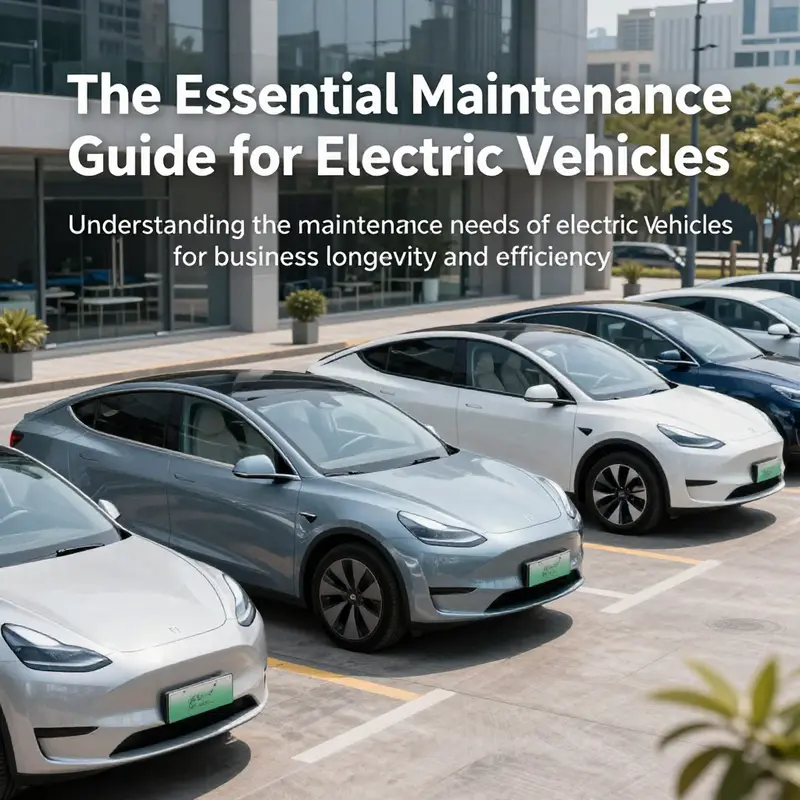
Electric vehicles (EVs) are rapidly transforming the automotive landscape, offering eco-friendly alternatives to traditional internal combustion engine (ICE) vehicles. For business owners navigating this shift, understanding the maintenance needs of EVs is crucial. While EVs do eliminate many traditional maintenance tasks, such as oil changes and exhaust repairs, they still require focused attention in several key areas. This article will comprehensively explore five essential aspects of EV maintenance: battery health, electric motor and power electronics, coolant and lubricants, tire and brake considerations, and software updates. By grasping these facets, business owners can ensure their fleet remains efficient, reliable, and profitable.
Sustaining the Heart: Battery Health Maintenance in Electric Vehicles
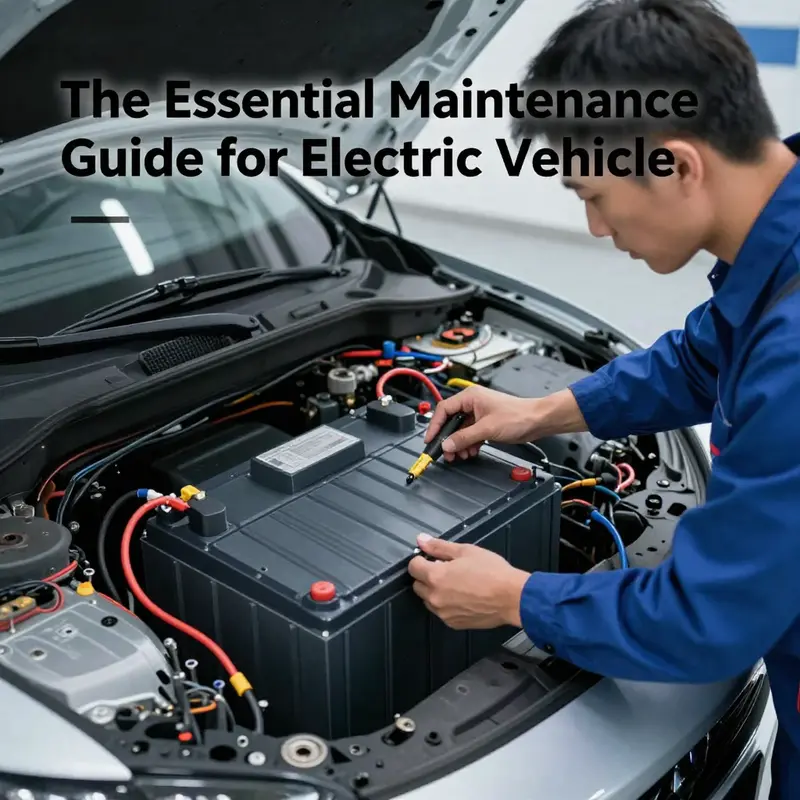
Electric vehicles do require maintenance, but the landscape of care shifts once the drivetrain runs on electricity. The heart of every EV is the battery pack, and its health largely dictates not only performance but also safety and longevity. If an ICE vehicle keeps you moving with oil changes and spark plug tunes, an EV keeps you moving with ongoing attention to the battery system, the thermal management that keeps it within safe limits, and the software that guides every charge and discharge. In this sense, battery health maintenance becomes the central discipline around which all other upkeep orbits. The Battery Management System, or BMS, is the brain that watches the battery like a careful conductor overseeing an orchestra. It tracks voltage across cells, current flow into and out of the pack, and the temperature of the cells and cooling circuits. It also maintains an accurate state of charge and a healthy view of the state of health, or SOH, of the entire array. By doing so, the BMS prevents dangerous conditions such as overcharging, overdischarging, and thermal runaway, while ensuring the pack retains as much usable life as possible. Understanding the BMS is essential because it is not a single component but a network of monitoring, protection, and balancing that operates in real time, often with a little help from machine learning in modern designs. The balance it seeks is not only electrical balance among cells but thermal balance across the entire pack. If one cell runs warmer than its neighbors, the BMS may reduce charging power, allocate more cooling, or adjust charging strategies to prevent a local hotspot from signaling a broader issue. This balancing act is why regular diagnostics, especially after long trips, high mileage, or exposure to extreme temperatures, are recommended by manufacturers. A routine check helps detect subtle signs of degradation before they ripple through the system. The BMS does more than guard against danger; it extends life. It orchestrates the thermal management system, which uses specialized coolants to regulate the battery temperature. Temperature is a driver of chemical reactions inside lithium ion cells, and even small excursions can alter capacity and rate capability over time. The environmental control loop is a careful dance between heating and cooling, designed to keep cells in a safe window where they perform efficiently and wear progresses at a slower pace. The integration of the BMS with cooling circuits means that even routine maintenance tasks, such as coolant replacement and leak checks, contribute to battery longevity. It also underscores why some EVs recommend diagnostics that occur after certain mileage thresholds or temperature exposures. The science here is active and evolving. Recent advances have brought machine learning into predictive maintenance for battery health. Researchers at a recent international conference highlighted models that ingest vast streams of vehicle data to forecast the state of health of lithium ion packs with greater accuracy and adaptability. These ML approaches aim to anticipate aging patterns that escape simple rule-based checks. They support a shift from reactive servicing to proactive care, enabling owners and fleets to plan interventions before performance dips or safety margins are challenged. The practical upshot is a more resilient relationship between the human and the machine: the car becomes a data-rich partner that signals when a service is truly needed rather than when a symptom becomes inconvenient. Yet even with advanced diagnostics, the human role remains essential. Battery health is a long game, one shaped by how the vehicle is used, how it is charged, and how it is stored when not in use. The BMS can warn, but the driver or fleet manager must respond with timely action. Regular software updates, often delivered over the air, play a crucial part. These updates may optimize charging algorithms, improve thermal management, or refine safety protections. They do not replace physical checks, but they do provide a more stable and secure operating environment. Regularly updating the vehicle’s software keeps the battery system aligned with the latest safety margins and performance calibrations. The combination of robust hardware and intelligent software thus forms a protective framework for battery health. From the user perspective, there are practical habits that support the health of the pack without requiring a degree in electrochemistry. For example, avoiding deep, repeated discharges and minimizing exposure to extreme temperatures can reduce the rate of capacity loss. However, it is important to recognize that many factors affecting battery health are outside a single driver’s control. Climate, driving style, the quality of charging infrastructure, and even regional electrical grids can influence how a battery ages. What remains clear is that attention to the battery system, through diagnostics, software updates, and sensible charging and storage practices, yields tangible benefits in performance and longevity. The modern EV owner benefits from a mindset that treats the battery as a long-term investment, not a disposable component. To emphasize the practical, everyday dimension of this maintenance, consider the lifecycle arc of the pack. In the early years, a well-managed battery will retain most of its initial capacity, offering strong range and robust performance. As mileage accrues, natural aging will surface as a gradual degradation in usable energy. The BMS helps slow this decline by ensuring cells age evenly through cell balancing, which is the process of equalizing charge across all cells. Imbalances, left unchecked, can lead to uneven wear and reduced overall capacity. Cell balancing is not something a driver can see, but its effects are felt in a steadier performance and fewer surprises when the vehicle is asked to operate at scale. The environmental control aspect of battery health is equally important. The battery pack is a sophisticated chemical system that also demands a careful thermal ecosystem. If cooling demands are mismanaged, the consequences can be more than reduced efficiency; they can be accelerated degradation or, in worst cases, safety risks. Modern EVs manage this risk through an integrated loop that monitors temperature, adjusts coolant flow, and modulates charging and discharging to keep the pack within safe thermal bounds. All of this work happens largely behind the scenes, with the driver rarely needing to intervene. Yet the maintenance value becomes evident when the system reports a coolant leak, a degraded pump, or an anomaly in temperature readings. Those signals are signposts indicating that maintenance is not optional but essential for continued performance and safety. The discussion above surfaces a central truth about battery health maintenance. It is a blend of hardware reliability, software intelligence, and user stewardship. The battery is resilient, but it is not invincible. It ages, and its performance can drift under stressors such as aggressive fast charging, high ambient temperatures, or repeated deep cycles. A thoughtful approach is to monitor state of charge and state of health as the vehicle ages, not to rely on guesswork or annual checkups alone. The BMS and supporting systems provide the vigil, while the driver provides the discipline. In this ecosystem, maintenance becomes a habit, not a one-off task. A practical mantra emerges: stay current with diagnostics, keep software fresh, and treat the battery with care through charging habits and climate awareness. When these practices align, the EV remains not only efficient but also reliably safe across its lifetime. The broader implication for the field is clear. Battery health is the hinge upon which maintenance strategy swings. As ML-driven analytics mature, predictive insights will help fleets and individual owners plan interventions that maximize lifetime energy delivery. This does not eliminate maintenance needs; it reframes them in a way that preserves performance, safety, and value. If you are curious about the broader question of maintenance in EVs, a concise overview is available here: Do electric vehicles require less maintenance. Yet the battery is the fulcrum. It deserves attention that matches its central role in safety, efficiency, and overall vehicle longevity. In the end, the care you give your battery is care you give to your car, your budget, and your confidence on the road ahead. The chapter on battery health thus becomes a guide not to fear maintenance but to practice it with intention, guided by data, and grounded in common sense. As technology evolves, the core idea remains timeless: a well cared for battery is the driver of a more durable, safer, and more capable electric vehicle. External resources and ongoing research continue to illuminate best practices, reminding us that the responsible management of energy storage is a moving target, one that rewards vigilance and thoughtful action. External reading can deepen this understanding and connect practical steps with the latest scientific and engineering developments. External resource: https://batteryuniversity.com/learn/article/cellvoltagebalance
The Electric Heartbeat: EV Powertrain Maintenance
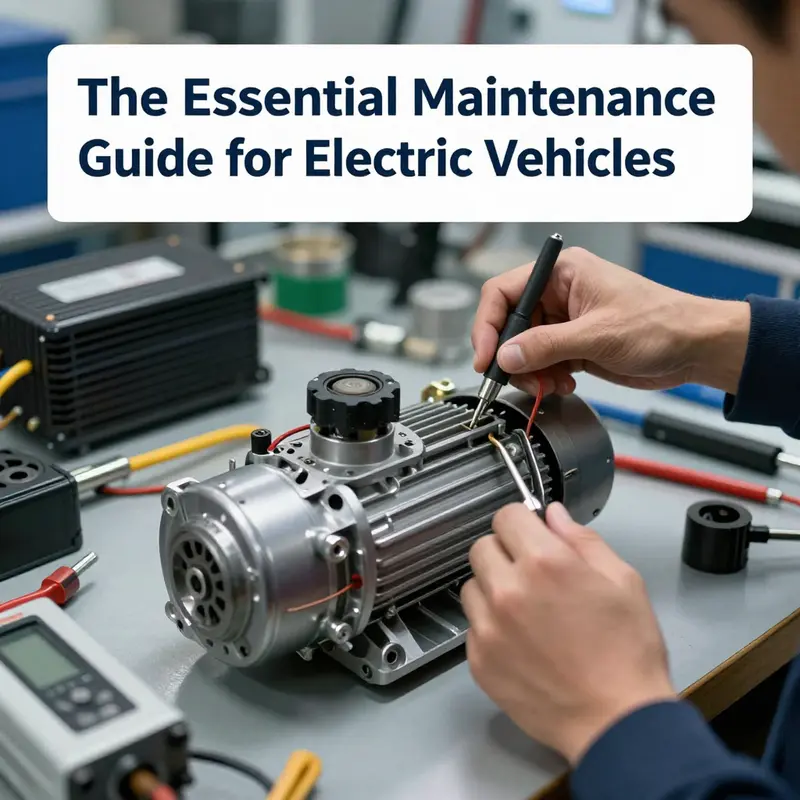
Electric vehicles shift maintenance focus from mechanical wear to electrical health, thermal management, and software integrity. The motor converts electrical energy into torque, while the power electronics control energy flow from the battery to the wheels. Regular checks emphasize clean electrical connections, robust insulation, and stable cooling. Inspect harnesses, connectors, and solder joints; verify insulation integrity and voltage isolation to prevent leaks or arcing. The cooling system should maintain coolant quality and levels; degraded coolant can reduce heat transfer and accelerate wear. Diagnostics and telematics enable proactive monitoring of insulation resistance, connector integrity, cooling pressures, and software health. OTA updates can improve performance and security but require attention to compatibility. Maintenance schedules for these systems typically include periodic diagnostic scans, software updates, and targeted physical checks rather than routine fluid changes seen in ICE vehicles. Innovation in power electronics—the addition of more efficient converters and smarter integration with the battery, motor, and cooling circuit—further reduces failure points and supports a preventative maintenance approach. Ultimately, caring for the electrical heart means interpreting health signals from the motor windings, inverters, and cooling network, and acting early to preserve range, efficiency, and safety.
Cooling the Drive: How Coolants and Lubricants Sustain Electric Vehicle Longevity
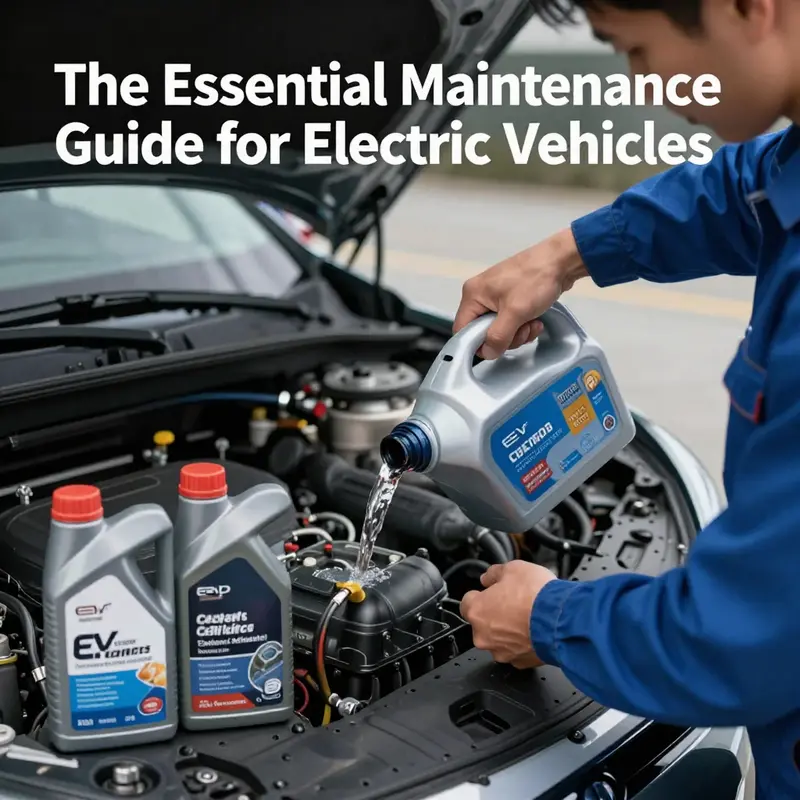
The quiet efficiency of electric vehicles (EVs) rests on a network of systems that work behind the scenes. Among them, the thermal management system stands as the unsung guardian of reliability. In an EV, where the battery pack and power electronics demand precise temperature control, the fluids that move heat and reduce wear perform a crucial, ongoing job. Unlike internal combustion engine (ICE) vehicles, which burn fuel and accumulate heat in a somewhat predictable cycle, EVs rely on sophisticated cooling and lubrication strategies to keep the entire drive system within safe temperature bands. This, in turn, protects battery life, maintains performance, and reduces the risk of unplanned downtime. The maintenance story for coolants and lubricants in EVs is not about endless tinkering; it is about timely checks, thoughtful fluid choices, and system cleanliness—attentive care that pays dividends in efficiency and longevity over the life of the vehicle.
At the heart of the subject is the coolant—the liquid that circulates through the battery pack, the electric motor, and the power electronics to absorb and transfer heat away from critical components. EVs typically require specialized, non-conductive coolants designed for electrical insulation. This is not a cosmetic or minor preference; using the wrong fluid can foster corrosion, electrical shorts, or degraded heat transfer, undermining the very purpose of the thermal system. The maintenance implications are straightforward: regular checks on level and quality, adherence to the manufacturer’s coolant specification, and a vigilant eye for signs of contamination or degradation. A degraded coolant loses heat-transfer efficiency and can allow temperatures to creep higher than intended, which for a battery or inverter can translate into reduced performance, accelerated aging, or, in extreme cases, safety concerns.
Practically, coolant maintenance begins with level and condition checks. The level should sit within the marked range on the reservoir or overflow bottle, and the fluid should be clear and free of particulates or an unusual odor. Contaminants—whether from a pinhole leak, failed hose, or a degraded seal—can silently compromise heat transfer. If the level is low, topping up with the correct coolant specified by the manufacturer is necessary. If the fluid appears discolored or smells off, a more involved replacement is typically required. Manufacturers often outline a service interval for full coolant replacement, commonly every two to four years or around tens of thousands of miles, depending on climate and driving conditions. These intervals are not arbitrary; they reflect the cumulative effects of thermal cycling, contamination, and chemical aging that can alter the coolant’s dielectric properties and its heat-transfer efficiency.
Compatibility matters even more than quantity. Coolants used in EVs are engineered to be non-conductive and to resist electrochemical corrosion. Mixing different coolant families or using an incompatible additive package can compromise insulation, promote corrosion of cooling passages, or alter freezing and boiling behavior. In extreme climates, where nights freeze and days sizzle, maintaining the correct freeze point and boil point is essential. A coolant that freezes too easily can form ice plugs in small passages, while one that boils at a lower temperature can allow hotspots under high-load conditions. Regular testing of the coolant’s freezing and boiling thresholds, as well as its pH and corrosion inhibitors, helps ensure the system remains robust across seasons.
The coolant loop itself must remain leak-free for efficient operation. Leaks can occur anywhere along the path—hoses, clamps, connectors, or seals—and small drips may escape notice until they cause a heat-management shortfall. Visual inspections, along with diagnostic checks that monitor coolant temperature and flow rates, help detect leaks early. Some vehicles employ dye-based leak detection or electrical tests to identify minute losses that might otherwise go unnoticed. In addition to leaks, the circulating pump and thermostat deserve routine attention. The coolant pump is the heartbeat of the loop, ensuring continuous circulation, while the thermostat modulates flow to match the engine’s or battery’s thermal needs. A sluggish pump, anomalous noise, or a thermostat that sticks open or closed can disrupt the entire cooling strategy, leaving hot spots that may degrade performance and shorten component life.
Heat exchangers and radiators, often stationed at the front of the vehicle, collect heat from the coolant and dissipate it into the air. Their performance hinges not just on the pump and coolant quality but also on cleanliness. Dirt, dust, and insect debris can coat fins and reduce airflow, compromising heat dissipation. Regular cleaning—gentle but thorough—keeps heat exchangers working at peak efficiency. Equally important is the function of cooling fans, which may be electric in many EVs. If fans fail or operate intermittently, the system cannot remove heat effectively, especially during sustained climbs, hot weather, or high-speed driving when demand spikes. Routine checks should confirm that fans engage when temperatures rise and that their speed is appropriate for the cooling load.
Another facet of coolant maintenance concerns the operating environment. Temperature extremes can stress the coolant and the sealed cooling system. In winter, ensuring that the coolant maintains a suitable low-temperature performance helps prevent brittle components and cold-start inefficiencies. In summer, high-temperature exposure, high ambient heat, and stop-and-go traffic can push the system toward its thermal limits. The interdisciplinary nature of the task becomes clear: coolant management does not live in a vacuum. Battery management software, motor control logic, and thermal sensors all rely on reliable fluid performance to maintain safe, efficient operation. The software side of maintenance—frequently delivered via over-the-air updates—plays a role in optimizing thermal strategies, alerting drivers when levels are low, or when temperatures exceed configurable thresholds. In essence, the cooling system is a collaboration between hardware and software, with the fluid playing a central physical role.
Lubrication in EVs is a more modest chapter than in their ICE counterparts, yet it remains part of the broader maintenance narrative. Fewer moving parts often translate to less frequent lubrication, but several components still require attention. The drive unit bearing surfaces and gears, where present, may need periodic lubrication to minimize wear and noise. Some designs use sealed, maintenance-free gears, while others anticipate service intervals. Steering and suspension parts also benefit from standard chassis lubrication practices. The general message is that lubrication in EVs is not the centerpiece of daily maintenance, but neglect can lead to increased friction, accelerated wear, and degraded handling characteristics over time. Regular inspection for signs of dried or contaminated lubricant, unusual noises, or changes in pedal response can catch issues before they become costly repairs.
The broader maintenance picture for coolants and lubricants is one of simple, methodical care rather than frequent, intrusive service. A well-maintained EV coolant system supports the battery and inverter by maintaining stable temperatures, which in turn preserves chemical stability and charge capacity. A well-lubricated drive system reduces mechanical resistance and heat generation, contributing to efficiency and predictability in performance. Taken together, these elements help explain why EV maintenance, while less onerous in frequency than ICE maintenance, still requires disciplined attention to fluid health, system integrity, and environmental conditions. It is not simply about ticking a box at a scheduled interval; it is about staying attuned to how the thermal loop feels, sounds, and responds under regular use. When in doubt, the vehicle’s service manual remains the definitive guide, but practical habits—regular visual checks, listening for unusual noises, and noting any shifts in temperature readings or performance—build a resilient baseline.
For readers who want to understand the balance of maintenance in EVs and how it translates into real-world reliability, consider this perspective: EVs generally require less maintenance than traditional vehicles, but the tasks that remain can have outsized impact if neglected. This nuance, captured by practical guidance across automotive discussions, invites a thoughtful approach to upkeep rather than a fear-driven retreat from maintenance. It is a reminder that staying current with coolant and lubricant health is not an existential burden but a straightforward habit that protects the most valuable asset in an EV—the battery pack. To explore this idea further within a broader maintenance framework, you can read a concise discussion that frames the maintenance landscape for EVs as a whole: do-electric-vehicles-require-less-maintenance.
Bottom line: keeping coolants in good condition, ensuring correct fluid type, preventing leaks, and maintaining the cooling hardware—all while attending to the lubrication needs of drive components—forms a coherent strategy for sustaining EV longevity. Good thermal management is the quiet engine of reliability, supporting performance, safety, and efficiency over thousands of miles of drive. As with any complex system, the goal is not perfection at every moment but resilience through proactive checks, appropriate replacements, and a clear understanding of which parts are serviceable and which are sealed for life. When these principles are followed, the coolant-and-lubricant chapter of EV maintenance becomes a manageable, steady practice that complements the smarter, software-driven efficiency that defines electric propulsion today.
External resource: For a deeper, policy-aligned overview of EV thermal system maintenance, including coolant checks, system inspections, and best practices for preserving battery and motor health, see the U.S. Department of Energy guide on EV cooling system maintenance: https://www.energy.gov/eere/vehicles/articles/ev-cooling-system-maintenance
null
null
Beyond Oil Changes: Software-Defined Maintenance for Electric Vehicles
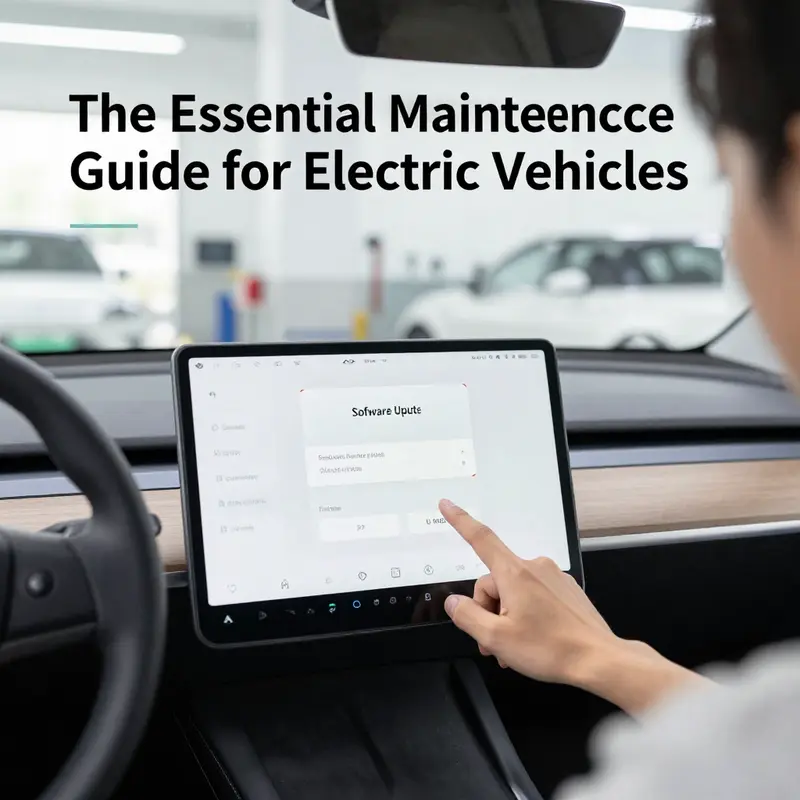
Maintenance for electric vehicles has never been about a single checklist. It is a living, unfolding practice that sits at the intersection of hardware and software, mechanics and data. As electric cars become more capable, they also become more sensitive to the health of a digital ecosystem that runs the car as much as its physical components. This shift rewrites what maintenance means, moving it from a routine of parts replacement to a continuous process of monitoring, updating, and refining a vehicle’s performance from the inside out. In this new paradigm, the strongest driver of reliability is not just a well-poured oil or a replaced filter, but thoughtful software that keeps the system’s behavior aligned with the driver’s needs, environmental conditions, and evolving safety standards.
To understand why, it helps to picture the vehicle as a software-defined, or SDV, system. Core functions that once lived in mechanical domains—the braking system, the steering feel, the energy management that decides how far you can travel on a single charge—are increasingly governed by sophisticated software. This does not mean the mechanical parts disappear; it means their behavior is now shaped by code, data, and real-time control loops. When a software update arrives, it can tune how aggressively the battery is managed at high temperatures, adjust brake blending with regenerative braking, or refine energy recovery during downhill driving. The update experience shifts from a service bay visit to a data connection and a download, with the result that performance, efficiency, and even safety can improve without a wrench turning a bolt.
The most visible advantage of software-defined maintenance is the cadence of updates. Over-the-air, or OTA, updates allow manufacturers to push improvements and bug fixes without summoning the car to a shop. The possibilities extend beyond convenience. They enable safety-critical corrections that used to require a formal recall process to reach every customer. In practice, OTA updates become a quiet, ongoing service heartbeat. They can roll out enhancements that subtly optimize battery thermal management, adjust motor cooling strategies to prevent overheating at hot roadside charging stations, or refine the software in the power electronics that convert DC to usable traction energy. When done well, this continuous improvement translates into fewer unexpected outages, better battery life, and a more responsive driving experience. Yet, this is not maintenance by magic. It hinges on rigorous testing, secure delivery, and a clear understanding of how software changes ripple through the entire system.
A pivotal shift in maintenance thinking is the rise of predictive maintenance powered by AI and machine learning. Vehicles generate streams of data from hundreds of sensors—the battery cells, the inverter, the cooling system, and even the tiniest vibration signals from mechanical subsystems. AI models analyze this data in real time, spotting patterns that precede a fault. Instead of waiting for a fault code to appear or for a component to fail, the system can forecast when a battery cell might degrade or when a coolant pump might drift out of spec. The result is proactive scheduling: diagnostic checks, battery health assessments, and targeted service visits timed to when they will be most effective and least disruptive. This approach is especially valuable for high-value subsystems like the battery pack, where improper degradation can curtail range and performance if left unchecked. It also helps fleet operators and individual owners alike plan maintenance windows, reducing downtime and extending component life.
The software backbone of modern EVs is not a single module but a unified platform that hosts many subsystems. This platform enables continuous integration and deployment, or CI/CD, practices that let engineers push safe, well-tested updates across the vehicle’s software stack. The result is a vehicle that can adapt to new regulatory requirements, adjust to new hardware options, and refine performance as new data becomes available. It also means that a car’s software is constantly evolving, which raises important questions about compatibility and safety. Manufacturers, therefore, invest heavily in rigorous validation, rolling tests, and rollback capabilities to ensure that a new software version does not compromise drivability or safety. The upshot for maintenance teams is a new kind of complexity: they must understand not only what a sensor or actuator does, but how its software layer interacts with every other layer in a living system.
Another essential dimension is cybersecurity by design. As vehicles become more connected, the risk surface expands. Secure OTA updates require encryption, authentication, and integrity checks to prevent tampering. A compromised update could alter braking behavior, energy management, or stability controls. Consequently, cybersecurity becomes a fundamental part of the maintenance conversation. It is not peripheral to service but central to the ability to keep a car healthy and trustworthy over many years. This emphasis on secure software delivery reinforces the idea that maintenance is not merely a matter of keeping parts in good shape; it is about preserving the integrity of the vehicle’s entire digital architecture.
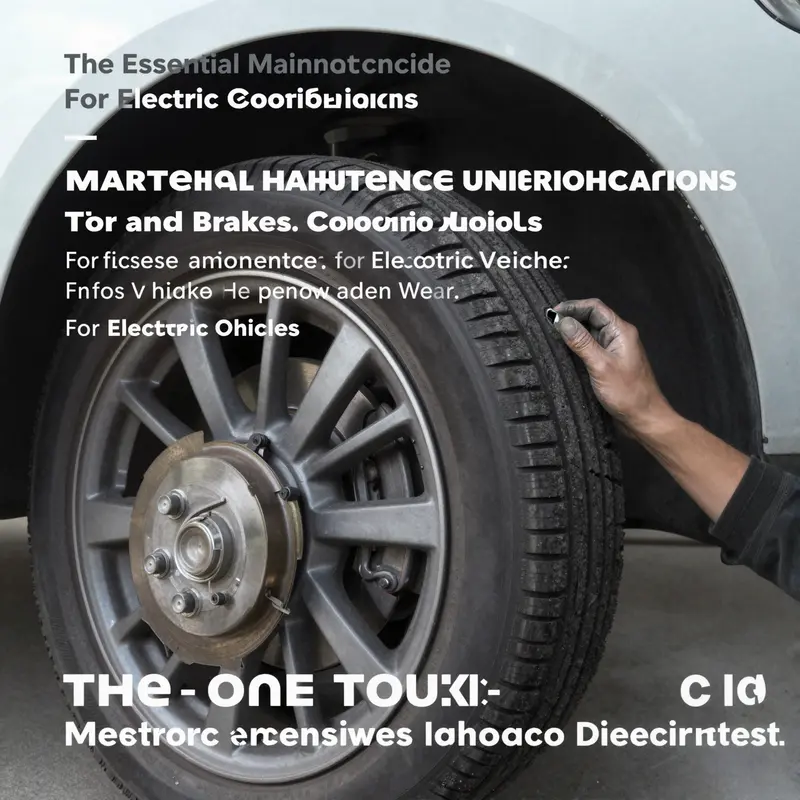
All of this points to a future where maintenance is less about replacing a physical component and more about validating and refining the vehicle’s software and data pipelines. Yet, the physical world does not disappear. Battery health remains a critical focal point, and routine checks continue to matter. Battery packs, while benefiting from software that can monitor state-of-health and thermal behavior, still require attention to their cooling systems and calibration routines. The coolant and lubricants used in thermal management systems must be replaced according to manufacturer guidelines to maintain electrical conductivity, corrosion resistance, and thermal stability. Even with OTA updates and predictive analytics, a leak or degraded coolant condition can undermine performance and safety. Tires and brakes also keep their role; the higher torque of electric drivetrains can accelerate tire wear, and regenerative braking reduces brake wear but cannot replace routine inspection. A well-rounded maintenance plan still includes tire pressure checks, tread depth monitoring, and periodic brake assessments.
The real difference lies in how these traditional tasks are scheduled and executed. Rather than a single annual service appointment that checks off a list, maintenance becomes a fluid program that blends automated diagnostics, remote monitoring, and selective in-person servicing. Field service scheduling software, guided by predictive insights, can optimize when and where a check-up should occur. In practice, this means fewer roadside surprises and more predictable maintenance experiences. It also means technicians must be versed in software diagnostics as much as mechanical troubleshooting. The technician of the future needs to read live telemetry, interpret AI-generated risk scores, and understand how a software update could influence the next battery health assessment.
Owners, too, participate in the maintenance story in a more informed way. The car can notify the driver about battery health trends, charging window optimization, or impending software updates that improve efficiency or safety. The user experience becomes a continuous dialogue between vehicle and driver, where learning from the car’s data helps people make smarter charging choices, plan longer trips with confidence, and understand how software decisions influence performance. This is a shift from “drive it and service it” to “watch it, update it, and time it.” It invites a more collaborative relationship between people and their machines, one that rewards proactive care and timely updates.
Despite these advances, it would be misleading to imagine that EV maintenance is now effortless. The reality is nuanced: some maintenance tasks remain firmly physical, while many benefits accrue from digital discipline. For example, after extreme temperatures or high mileage, battery diagnostics may reveal degradation patterns that call for more frequent health checks or cooling system inspections. The coolant and lubrication schedules still matter, particularly for systems with moving parts or where thermal control is critical for longevity. Tires and brakes demand vigilance, because even with reduced braking wear, dynamic driving conditions and higher torque can influence wear patterns more quickly than expected. In short, the tailwind of software-enabled maintenance pushes the needle toward fewer, smarter service visits and longer intervals between unnecessary interventions, but it does not erase the need for hands-on care.
This evolving maintenance landscape also reshapes the broader service ecosystem. OEMs and service networks increasingly present themselves as experience platforms, offering continuous, personalized software-driven journeys rather than isolated repair visits. The emphasis shifts toward early detection, precise scheduling, and a holistic view of the car’s health across its digital and mechanical layers. When done well, this approach translates into smoother ownership experiences, reduced downtime, and a longer, healthier life for high-value components such as the battery. It also invites a more nuanced conversation about cost and value. Drivers might find that paying for regular, predictive checks is preferable to occasional, reactive fixes. The goal becomes not just keeping the car running, but optimizing its performance trajectory over time.
Amid all this, the question of maintenance burden remains at the forefront for many readers. Do electric vehicles actually require less maintenance, or do they require maintenance of a different kind? The answer lies in balance and expectation: EVs reduce many routine mechanical tasks, but they shift the maintenance load toward software health, data governance, and system integrity. For a fuller discussion on this topic, many readers start with a simple question: Do electric vehicles require less maintenance? Do electric vehicles require less maintenance?. The truth is that the maintenance experience becomes more about staying in sync with a living digital system than about swapping out parts on a schedule. The gains in reliability and efficiency come when software, hardware, and data work in concert, guided by predictive insights and secure, well-tested updates.
In closing, the maintenance chapter of electric vehicles is not a retreat from traditional upkeep but a reimagining of it. The most critical efforts are now invisible to the naked eye: the health of battery cells monitored by intelligent software, the harmony of cooling and energy management tuned through OTA improvements, and the resilience provided by cybersecurity that guards every update. Yet the visible work—the tire spin, the brake pad check, the occasional coolant refresh—remains essential. The best maintenance programs blend proactive digital stewardship with attentive physical care, ensuring the car stays safe, efficient, and responsive as it learns from every mile traveled. The result is a transportation future where maintenance feels like a partnership between driver and machine, sustained by data, driven by updates, and grounded in a practical respect for the hardware that makes electric propulsion possible.
External resource: For a broader look at how software is reshaping EV maintenance, see the discussion on software-defined vehicles and the future of EV maintenance: https://electrek.co/2025/09/12/software-defined-vehicles-ev-maintenance-future/.
Final thoughts
Electric vehicles signify a significant shift in the automotive industry, yet they come with their own set of maintenance requirements that, when acknowledged and properly managed, can greatly enhance their performance and longevity. Business owners must pay special attention to areas such as battery health, electric motor upkeep, fluid management, tire and brake inspections, as well as software updates. By integrating these maintenance practices into regular operational protocols, businesses can ensure a reliable and efficient electric vehicle fleet that meets the demands of their operations while contributing positively to the environment.