
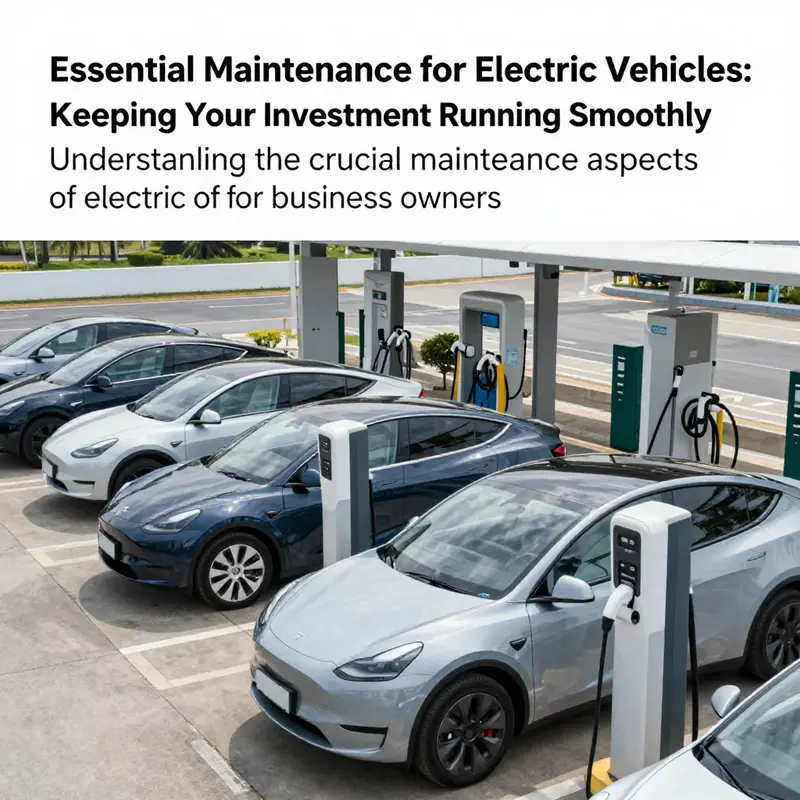
Electric vehicles (EVs) are rapidly gaining traction among businesses seeking operational efficiency and eco-friendliness. However, the assumption that they are maintenance-free can be misleading. Just like their internal combustion counterparts, EVs require diligent upkeep to ensure optimal performance and longevity. Understanding the unique maintenance needs of EVs is essential for business owners who are making the transition or expanding their fleets. From battery health assessments to cooling system care and electrical safety checks, this comprehensive guide will explore the critical maintenance areas of electric vehicles, enabling your business to protect its investment and maintain reliable operations.
Guarding the Heart: Battery Maintenance as the Key Question in Do Electric Vehicles Need Maintenance
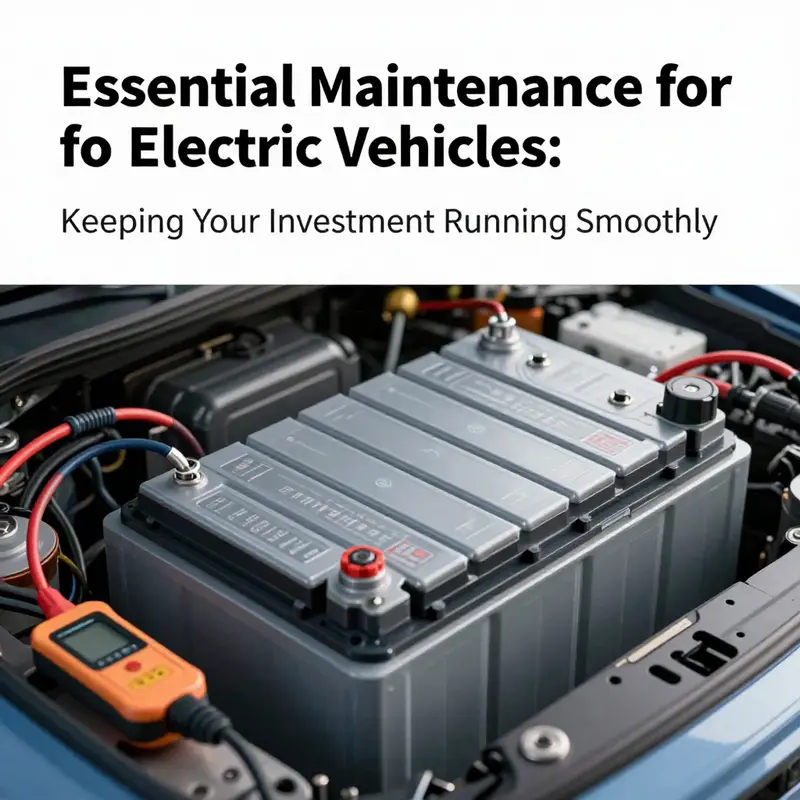
Electric vehicles have reshaped the way we think about car upkeep. They are often described as maintenance-light compared with internal combustion engines, but that simplification misses a more accurate truth: maintenance still matters, and the battery—the heart of an EV—demands ongoing care. When you peel back the hype, you find a straightforward premise: if you treat the battery well, the rest of the vehicle tends to be safer, more efficient, and longer-lived. If you neglect it, you risk degraded range, unexpected failures, and a sharper line between a trusted ride and an expensive repair bill. This chapter centers on that idea, unpacking why battery maintenance is the hinge on which the broader question—do electric vehicles need maintenance? turns, and how to approach it in everyday life without turning every journey into a science experiment.
The battery pack is a remarkable assembly of many cells, managed by sophisticated electronics that monitor temperature, voltage, current, and charge state. Over time, those cells age. Heat accelerates aging, while frequent charging to extremes, or keeping the battery at a single, constant state of charge for long periods, can push the chemistry toward less favorable paths. In more practical terms, degradation means less usable capacity, slower acceleration, and reduced efficiency—outcomes that matter not only to performance but to the economics of ownership. A technician’s observation about swollen cells under certain charging habits serves as a stark reminder: when the chemistry is pushed hard in unfavorable conditions, the risk of costly disruption rises. Understanding this helps owners separate myth from reality: EVs are not maintenance-free, but they reward consistency and care with longer life and steadier performance.
The daily routine of keeping an EV reliable revolves around respectful battery care. A widely cited guideline suggests operating within a conservative charge window—roughly 20% to 80% for regular driving. This practice reduces the ongoing stress on the battery’s chemistry, slowing aging and preserving capacity for more miles down the road. It’s not just about avoiding inconvenience on a single day; it’s about charting a slower and steadier aging curve across years of use. When people push toward 100% for every trip, or routinely let the battery dip far below 20%, the aging curves steepen, and the car’s performance can feel inconsistent sooner than expected. The idea has a human element too: charging habits form a personal routine, and adopting a smart, modest charging rhythm can become a simple, almost invisible act of stewardship.
Crucially, the charger itself matters. Using a charger that matches the vehicle’s specifications—voltage, current, and connector type—helps the battery absorb energy in the way the manufacturer intended. Mismatched charging can generate unnecessary heat, introduce inefficiencies, or stress the battery management system in ways that aren’t ideal over time. In practice, this translates into a practical, repeatable routine: pick the right charger, avoid the temptation to chase ever-faster charging at all hours, and respect the manufacturer’s guidance on maximum charging currents for daily use. The technician’s cautionary tale about full-charge habits underscores a simple, repeatable lesson: smart charging, not just fast charging, is a form of maintenance that pays off in longevity.
But daily care is only part of the picture. When a car sits idle for extended periods, battery health becomes even more vulnerable. Extended storage can increase aging through high internal activity when the battery is fully charged and the risk of deep discharge when left empty. The recommended approach is to park the vehicle with a moderate state of charge—often around 50%—and to disconnect the charger. Periodic checks every few weeks to confirm the charge remains within a safe range can prevent a nasty surprise when you return to the car after weeks away. This is not merely a precaution; it’s a practical strategy used by many owners to keep a battery in good shape during inactivity, especially in climates with seasonal storage needs.
Temperature is another pivotal factor. Excessive heat—common in hot climates or during heat waves—can accelerate degradation more than almost any other single variable. Cold conditions pose their own challenges, especially when rapid charging is attempted in low temperatures, which can temporarily reduce available capacity. The battery management system—an essential guardian—accounts for these variations, but owners still benefit from mindful behavior: avoid exposing the battery to extreme temperatures whenever possible, plan trips to allow some cooling after sustained high-load driving, and recognize that climate control usage, while essential for comfort, also interacts with efficiency and battery health. Taken together, the interplay between temperature, charging strategy, and usage patterns forms a practical framework for maintaining performance without sacrificing everyday needs.
Beyond the battery itself, there is a broader maintenance ecosystem that supports long-term reliability. The cooling system, for instance, is integral to the battery and power electronics. Regular inspection of coolant levels and replacement at manufacturer-recommended intervals helps keep the battery within its optimal operating temperatures, reducing the likelihood of thermal stress that expedites aging. The same principle applies to the transmission or gear reduction where applicable. Even if the gearbox contains lubricants designed for endurance, following the vehicle maker’s service intervals ensures those components stay quiet and efficient, complements the battery’s health, and preserves overall drive quality. In other words, while the EV’s propulsion is electric, many points of maintenance are still analogous to traditional car care—just tailored to the higher-stakes environment of high-voltage systems.
The maintenance schedule itself is not a one-size-fits-all prescription. It is shaped by the vehicle’s design, usage patterns, and climate. Different models have different cadences, and owners should consult their manuals for model-specific guidance. For example, some models suggest battery-centric checks every 10,000 kilometers or roughly once a year, while others point to longer intervals for certain inspections. The consistency, however, is clear: the battery’s health status, often summarized as state of health (SOH) and state of charge (SOC), deserves periodic attention. Regularly reviewing the vehicle’s battery status through the onboard displays or connected apps offers a practical snapshot of health and helps identify anomalies early—long before a small issue ripples into a bigger problem.
The conversation around maintenance often frames EVs as inherently less expensive to operate because certain fuel- and oil-related services disappear. In truth, the calculus shifts rather than disappears. The absence of oil changes, spark plug replacements, and exhaust work does not mean zero maintenance. It means maintenance that is more battery-centered, more technically nuanced, and more dependent on the vehicle’s health metrics. For owners, this reframes maintenance from a reactive checklist to a proactive habit. It invites regular battery health checks, mindful charging practices, and timely attention to cooling, electrical connections, and tires—all of which influence performance, efficiency, and safety in meaningful ways.
To stay oriented, it helps to recognize where the guidance comes from and how to apply it in daily life. The overarching message remains: treat the battery as your most valuable resource. Keep it in a favorable charge window, avoid unnecessary extremes, and support it with appropriate cooling and system maintenance. Model-specific guidance provides the concrete cadence, but the spirit is universal. If you want a quick takeaway that sits at the intersection of everyday practicality and the broader maintenance question, embrace the idea that proactive battery care is the linchpin of EV reliability. It reframes maintenance not as a burdensome chore but as a disciplined pattern that protects your investment and enhances your experience on the road.
For readers seeking a broader perspective on this point, you can explore a discussion that situates the idea of maintenance within the broader debate about whether EVs require less maintenance—capturing the nuance that the battery remains the central, enduring focus. Do Electric Vehicles Require Less Maintenance? This anchor points to a facet of maintenance that complements the battery-centered focus of this chapter. Of course, the practical takeaway is simple: the battery’s health dictates much of what follows, and the rest of the vehicle will reflect how well you tend to it. In that sense, maintenance becomes a conversation about stewardship rather than a checklist of tasks.
As you plan your ownership journey, you’ll encounter a constellation of numbers, recommended intervals, and cautions. The exact schedule varies by model and geography, but the imperative remains constant: monitor the battery, respect its limits, and align your charging and storage habits with the vehicle’s design. The payoff is not only sustained range and performance but a longer, more reliable life for the EV you drive. In the end, battery maintenance is the heart of the matter because it directly governs safety, efficiency, and value. By treating it as a core responsibility, owners can enjoy the many benefits of electric mobility with greater confidence and fewer surprises along the way.
External resource: https://www.afdc.energy.gov/vehicles/electricvehiclebattery_maintenance
Cooling System Care in Electric Vehicles: Why Maintenance Still Matters for Battery Health and Performance
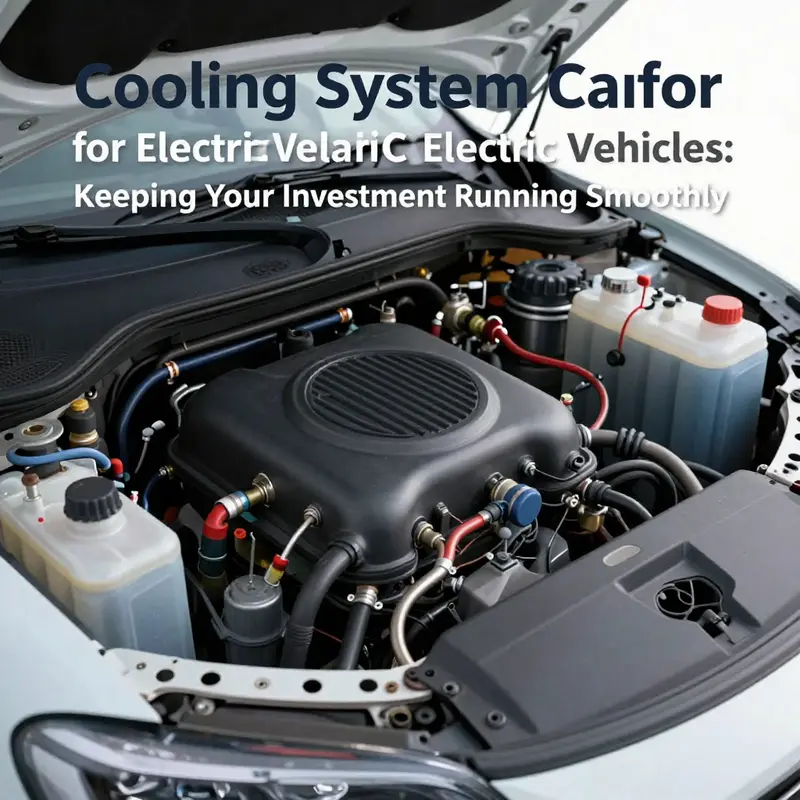
Electric vehicles have reshaped our expectations of car maintenance. They eliminate the oil changes, spark plug replacements, and many engine-centric chores that defined the era of internal combustion engines. Yet the question remains for many drivers: do EVs still need maintenance, and if so, what parts demand attention most? The answer is yes, but the nature of that maintenance is different. In EVs, a cooling system that protects the battery pack and the power electronics sits at the heart of long-term performance. It is not a flashy feature, but it is the quiet pillar that keeps range stable, accelerates consistently, and preserves safety as the vehicle travels through heat waves, cold snaps, and rapid charges. The cooling system is not merely about comfort; it is about preserving the chemistry and structure of the battery and the hardware that governs steering, braking, and propulsion. In other words, if you want reliability and a predictable lifespan from an EV, you need a well-tended cooling system, just as the battery itself requires careful management of temperature, state of charge, and health over time. The cooling system’s job is to tighten the thermal leash on the battery and the electronic components so they never operate outside safe and efficient boundaries. This is especially critical during high-demand driving, such as hills, quick acceleration, or sustained highway speed, and during charging, where heat can accumulate rapidly. The integrated nature of modern thermal management means that the HVAC system and the battery’s thermal management are not separate islands; they are a shared network that must be monitored and maintained in concert. This integrated approach to cooling and climate control has become a defining feature of contemporary EV design, driven by research that sees thermal management as a primary determinant of energy efficiency and longevity. The University of Rome Niccolò Cusano highlighted in 2026 that advanced integrated cooling and HVAC designs are being developed to enhance energy efficiency and reconfigurability in light electric vehicles. These innovations emphasize the importance of proactive system control strategies to dynamically manage thermal loads as driving conditions shift. In this vision, maintenance is not about chasing a list of discrete tasks but about preserving the responsiveness and reliability of a living thermal system that adapts to weather, terrain, and charging behavior. Alongside these developments, industry groups such as ILPEA stress the need for robust, high-quality cooling infrastructure. Their emphasis on durable piping and components that withstand continuous thermal stress underscores a central truth: EVs may have fewer moving parts than internal combustion cars, but the parts that do move operate in a high-stakes thermal loop where neglect can cascade into performance loss or shortened life. Taken together, these perspectives form a clear narrative: regular checks of the cooling system are essential, not optional, if the car is to deliver its promised efficiency, range, and safety over many years and miles. The core task for EV owners is to understand what to look for and how to maintain a system that is, in effect, the engine’s climate controller. Unlike the familiar oil change, EV cooling maintenance is less about replacing components at fixed intervals and more about preserving a delicate balance. Regular inspections of coolant levels and flow, hoses and connections for wear or leaks, and the integrity of heat exchangers and pumps are the practical guards that prevent performance drift. Coolant in an electric vehicle is not just a fluid; it is a medium that transports heat away from the battery and power electronics, sometimes through an integrated circuit of pipes that weave through the chassis and the battery pack. When that medium becomes compromised—through leaks, degraded seals, or clogged pathways—the temperature data that the vehicle relies upon can misread, triggering protective modes or reducing available power to keep electronics safe. In everyday terms, a small hose leak or a slightly diminishing coolant level can gradually erode an EV’s capability without obvious symptoms at first. The maintenance cadence for cooling systems tends to be less frequent than for many ICE-based vehicles, reflecting sealed systems and advanced materials. However, this does not mean maintenance can be neglected. Coolant replacement intervals, often recommended in the 2-to-4-year range or after tens of thousands of kilometers, remain a practical touchstone for owners who want to sustain heat transfer efficiency and prevent corrosion or bacterial growth within the circuit. The aim is not to chase a perfect, problem-free state forever but to maintain a stable baseline where the battery can stay within its optimal temperature window across seasonal swings and charging regimes. The battery thermal management system is frequently integrated with the vehicle’s HVAC system; this synergy is increasingly central to how climate comfort and energy efficiency are achieved in modern EVs. In colder climates, the system may prioritize heating to protect battery performance and accelerate warm-up times, while in hot conditions, it may devote more capacity to cooling the pack during periods of high demand or fast charging. Each mode, however, depends on a robust, well-maintained cooling network. When the cooling system is neglected, the battery’s ability to retain capacity can degrade more quickly, reducing range and degrading the very energy density that makes EVs appealing. The broader point is that maintenance in this context is a form of preventive care that reduces the risk of thermal runaway, improper charging, or sudden changes in performance profiles. The consumer experience of maintaining an EV cooling system is not dissimilar to maintaining a household HVAC system, only on a compact scale with higher stakes. Inspections focus on the coolant’s condition and level, the hoses and clamps for cracks or leaks, and the physical condition of heat exchangers and pumps. These components endure repeated heating and cooling cycles, and the materials used must resist fatigue and chemical breakdown. When wear or damage is detected, timely repair or replacement of parts protects not only the cooling performance but also the battery’s health and the electronics’ longevity. The role of high-quality components comes into sharper focus as these systems age. The cooling network is a network of connected parts where a fault in one area can create a bottleneck elsewhere. The emphasis on piping and connectors that resist corrosion, cracking, and thermal cycling is not merely a matter of reliability; it is a matter of preserving energy efficiency. An efficient cooling loop minimizes the energy the vehicle uses to shed heat, helping to extend range and maintain consistent performance even as the battery loses a portion of its maximum capacity over time. That is why industry guidance consistently calls for vigilance around the physical condition of the cooling system. Visual inspections for leaks, tactile checks on hose flexibility, and listening for unusual pump noises can all be early indicators of trouble. The idea is straightforward: a little attention now prevents a bigger, costlier fix later. Regular service intervals will still be defined by the manufacturer and can vary with model, but the underlying principle remains the same: treat the cooling system as a critical infrastructure rather than a routine accessory. For those who are curious about the broader maintenance landscape, one line of inquiry asks whether electric vehicles require less maintenance overall. The answer is nuanced and context-dependent; some maintenance items shrink in frequency or complexity, while others, particularly thermal management, gain importance. See the discussion on maintenance expectations for EVs here: Do electric vehicles require less maintenance?. This framing helps EV owners avoid the assumption that fewer parts mean zero care. It invites a disciplined approach to service that aligns with the vehicle’s design philosophy: fewer moving parts, but more sophisticated systems that demand precise, periodic upkeep. Returning to the scientific and practitioner perspectives, the integrated cooling and HVAC developments highlighted by the University of Rome Niccolò Cusano (2026) underscore that proactive control of thermal loads is central to optimizing energy use and extending component life. These advances point toward smarter maintenance in the future—systems that monitor temperature gradients, adjust coolant flow in real time, and alert owners or technicians before conditions threaten battery health. In parallel, ILPEA emphasizes the practical realities of building durable cooling infrastructure. Their focus on robust piping materials, reliable seals, and heat exchanger integrity reinforces the idea that maintenance must be planned and informed by the engineering choices that support thermal stability. The overarching implication for EV owners is straightforward: maintenance is not an afterthought, and neglect of cooling systems can accelerate degradation, reduce efficiency, and compromise safety. The path to reliable long-term performance lies in routine checks that are aligned with the vehicle’s design philosophy—regular coolant management, leak detection, and the early addressing of any hose or clamp wear, as well as periodic service to heat exchangers and pumps. While EVs may appear to offer a simpler ownership experience, the cooling system remains a sophisticated, dynamic network that keeps the battery within its optimal temperature envelope. Understanding this helps explain why maintenance, while less frequent than in ICE vehicles, is still essential. It also clarifies why many manufacturers and technicians advocate for a proactive, rather than reactive, service mindset. When these systems are kept in good condition, the benefits show up as steadier performance, consistent charging behavior, and, ultimately, a more dependable driving experience. The cooling system, after all, is the vehicle’s climate manager at the component level. Its health reflects the overall health of the energy system that powers modern mobility and, by extension, the quality and longevity of the EV ownership experience. The conversation surrounding maintenance in electric vehicles is evolving, but the core message remains robust: treat cooling systems with the attention they deserve, follow manufacturer guidelines, and recognize that even with fewer moving parts, EVs demand informed care to deliver the performance drivers expect. For readers seeking deeper technical context, an external resource offers detailed perspectives on cooling system design and durability in electrified vehicles: https://www.ilpea.com/cooling-systems-for-electrified-vehicles.
Guardians of the Drivetrain: Transmission and Gear Oil Management in Electric Vehicles
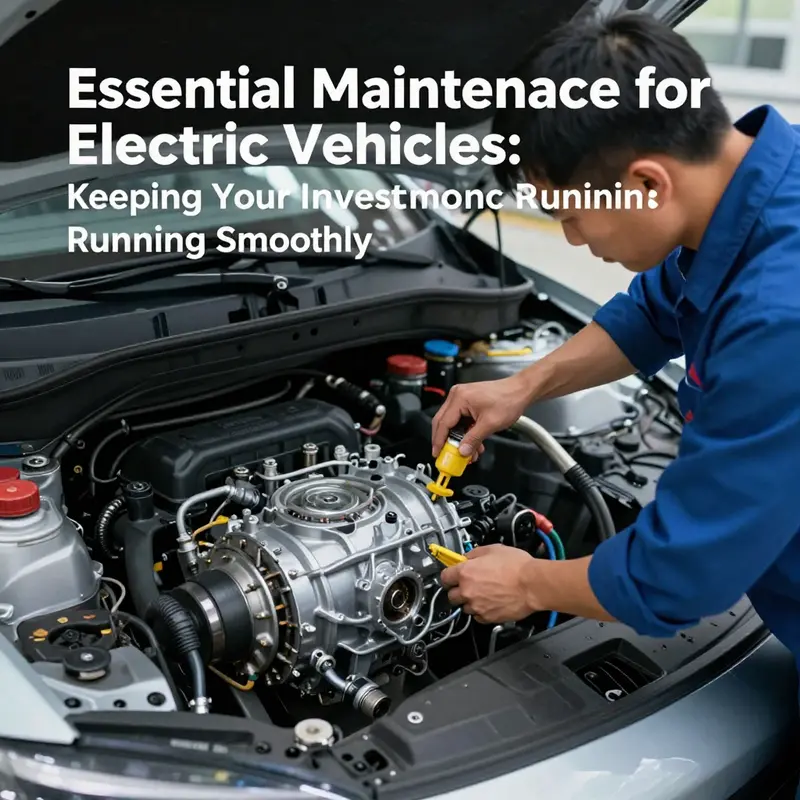
Electric vehicles have earned a reputation for simplicity in maintenance, largely because their powertrains lack the many moving parts of an internal combustion engine. Yet the absence of engine oil changes and spark plug replacements does not equate to maintenance freedom. In the drive system of an EV, transmission and gear oil management stands as a critical, technically nuanced task that quietly underpins safety, efficiency, and longevity. The transmission, or gearbox, in most EVs is simpler than a traditional multi-speed arrangement, often a single-speed or reduction-gear design. Even so, its lubrication and thermal environment demand careful attention. The oils used in these systems do more than reduce friction; they must serve as electrical insulators, heat transfer media, and chemical stabilizers all at once. The dielectric performance of the gear oil becomes increasingly important as battery and motor voltages rise in modern EVs, making the lubricant itself a part of the vehicle’s safety system as well as its mechanical backbone. The drift from engine oil changes to gear oil management reflects a broader shift in maintenance philosophy: fewer fluid changes overall, but more attention to the right fluids, the right intervals, and the right diagnostics to catch early signs of trouble before they cascade into costly failures.
The core functions of transmission and gear oils in EVs illuminate why these fluids deserve a dedicated maintenance rhythm. First, insulation is not a secondary feature; it is a primary requirement. In a high-voltage drivetrain, even small increases in oil conductivity can create paths for electrical discharge. Modern gear oils are engineered with ultra-low electrical conductivity to minimize the risk of arcing, especially under varying temperatures and load conditions that can occur during rapid acceleration or sustained high-speed cruising. This insulation property protects both components and technicians who might service the system. Second, the design of electric transmissions imposes specific demands on lubricants. The materials used in gears, seals, and housings, paired with compact, tightly integrated thermal management, require lubricants that perform across wide temperature ranges without forming varnish or sludge. Additives must resist oxidation and shear while maintaining viscosity that suits both lubrication needs and heat rejection. Third, the stability of these oils under continuous electrical and thermal stress is essential. The fluids are not static; they continually battle heat from motor windings, power electronics, and the gearbox itself. A lubricant that breaks down under load can compromise lubrication, decrease efficiency, and wear down metallic surfaces more quickly than intended. Taken together, these characteristics mean gear oils in EVs are specialized products, designed not only to lubricate but also to insulate and stabilize the drivetrain’s delicate balance of heat and electricity.
The consequence of neglect in this area is both practical and safety-related. When transmission fluids degrade or lose their dielectric properties, the risk of electrical leakage, overheating, and accelerated wear increases. The result can be reduced efficiency, noisier operation, and, in worst cases, transmission failure or a fault that triggers protective shutdowns. Even a seemingly minor issue—slightly elevated operating temperatures, a change in the color or odor of the oil, or a gradual increase in noise during acceleration—can be an early signal that the fluid needs attention. Since EVs operate at higher voltages than many conventional vehicles, symptoms in the drivetrain may manifest more subtly than fans of traditional ICE maintenance might expect. Consequently, the maintenance approach for gear oils emphasizes proactive checks at regular intervals, rather than reactive fixes after a problem becomes obvious.
Maintenance recommendations for transmission and gear oils are typically straightforward yet precise, mirroring the precision of the systems they support. Regular inspection and timely replacement are essential. Based on a synthesis of manufacturer guidance and industry practice, many EVs call for fluid checks or replacements at intervals around the range of twenty thousand to forty thousand kilometers (twelve thousand to twenty-five thousand miles). In practice, the exact interval is contingent on the vehicle’s design, the gearbox architecture, and the operating environment. Vehicles in harsh climates or with heavy usage patterns may require earlier service, while those designed for efficiency cruising in temperate conditions might extend beyond the lower end of the range. Importantly, these intervals exist within a broader maintenance framework that includes the cooling system, battery health, and braking systems. A holistic maintenance plan that aligns gearbox oil service with battery thermal management and motor cooling can yield meaningful gains in reliability and long-term cost of ownership.
Beyond timing, the quality and condition of the oil matter just as much as the schedule. Regular checks should assess the oil’s level, color, and contamination. The presence of particulates, frothing, or unusual odors can signal that the oil has aged or that seals and seals’ interfaces are compromised. Because EV gear oils are designed to withstand electrical and thermal stress, technicians look for signs that the oil’s dielectric performance is waning, whether through laboratory testing or field indicators. In many repair facilities, practical checks involve verifying the oil’s viscosity in conjunction with temperature readings from the drivetrain and ensuring there is no external leakage around seals and gaskets. A decline in conductivity or a drift in insulating performance, even if the oil still appears within spec, should prompt a fresh lookup in the manufacturer’s guidelines for the specific drivetrain. In short, the maintenance approach is twofold: adhere to the published interval, and remain vigilant for signs that the oil has aged beyond its protective capability.
The materials science behind EV gear oils reveals why this area commands particular attention. The lubricants must accommodate high electrical conductivity constraints while still delivering dependable lubrication as temperatures swing across operation. Modern formulations balance base stock, viscosity modifiers, anti-oxidants, anti-wear additives, and dielectric inhibitors. The thermal environment of an EV drivetrain—where components such as the motor, inverter, and differential share a compact footprint—makes the oil’s thermal stability crucial. In practice, the oil should not thin excessively during hot operation, nor should it become too viscous when the system cools. The interplay of these properties drives the need for precise oil specifications and service practices that align with the vehicle’s design targets. For engineers and technicians, this means that one-size-fits-all maintenance does not apply to gear oils in EVs. Each drivetrain architecture calls for coolant temperature targets, oil flow rates, and dielectric performance thresholds that are unique to that system.
To put it plainly, transmission oil management in EVs represents a blend of traditional lubrication science and electrical safety engineering. Even as the rest of the vehicle paradigm shifts toward reduced maintenance intervals, the drivetrain demands careful attention to fluid health. This is not a matter of indefinite postponement of service; it is a disciplined regimen in which the lubrication system remains a central, safety-critical subsystem. Technicians undertake visual inspections, assess system pressures, and verify that the gear oil’s dielectric integrity remains intact. They compare current measurements with the manufacturer’s established baselines and with the oil’s expected aging trajectory under the vehicle’s typical operating profile. When in doubt, the prescribed service interval provides a safeguard against creeping degradation that could otherwise erode efficiency and reliability over time.
For readers seeking a deeper dive into the electrical properties of gear oils in electric vehicles, a technical reference is available that expands on how dielectric performance and conductivity influence gear oil formulation and performance. See the resource on electrical properties of EV gear oils for a rigorous treatment of these issues: https://www.sciencedirect.com/science/article/pii/S235214652500089X.
Within the broader lifecycle of maintenance, gear oil management intersects with other EV service areas in meaningful ways. The drivetrain does not operate in isolation; it exchanges heat with the cooling circuits that also serve the battery and motor. A healthy cooling system helps preserve oil performance by keeping temperatures within the oil’s stable operating window. Conversely, a compromised cooling loop can accelerate oil aging, alter viscosity, and degrade dielectric properties. Because the drivetrain’s lubrication and thermal management are so tightly linked, an integrated maintenance approach—where technicians assess cooling performance, battery health, and oil condition together—tends to yield the best outcomes. This integrated perspective aligns with the evolving view of EV maintenance: fewer formal episodes of service, but each visit delivers broad diagnostic value that spans multiple subsystems.
From the driver’s seat, recognizing the practical implications of gear oil care means embracing a preventive mindset rather than awaiting audible clues or warning lights. If a vehicle exhibits unusual transmission noise, subtle shuddering during acceleration, or a gradual change in response to throttle input, it may be prudent to inspect the gearbox oil as part of a scheduled service. Leaks near the gearbox, unusual heat near the transmission housing, or any scent of burning oil are warning signs that should prompt professional evaluation. The aim is not to alarm but to reinforce the idea that maintenance in EVs is about preserving the integrity of electric power delivery. A well-maintained oil system contributes to consistent efficiency, steady torque delivery, and long-term reliability—benefits that echo across the entire driving experience.
In practice, scheduling these checks alongside battery health and cooling system maintenance can streamline owners’ routines and reduce downtime. For instance, aligning a gearbox oil inspection with a battery thermal management check, which may occur every few months for heavy users, ensures that the drivetrain receives attention at a cadence appropriate to its operating environment. For lighter users, the intervals may extend, but awareness remains essential. The takeaway is clear: even as EVs reduce the frequency of certain traditional maintenance tasks, transmission and gear oil management remains a vital, technically nuanced responsibility that helps preserve safety, performance, and value over the life of the vehicle. To support readers in connecting this topic to a broader maintenance strategy, you can explore a broader discussion on EV maintenance here: do electric vehicles require less maintenance.
The Quiet Brakes and the Maintenance Equation: Do Electric Vehicles Truly Need Regular Care?
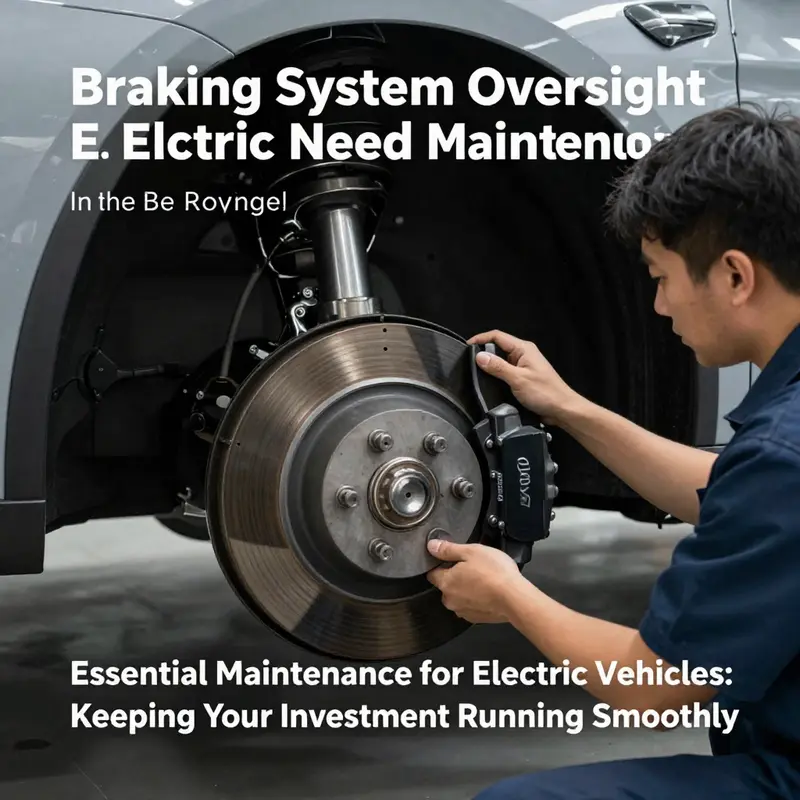
Braking systems in electric vehicles sit at a curious crossroads between cutting-edge control and old-fashioned safety. They are the interface between motion and restraint, the last line of defense when momentum must yield. In many electric vehicles, the scene is dominated by regenerative braking, a feature that captures energy during deceleration and sends it back to the battery. On the surface, this sounds like a clean, almost effortless improvement. In practice, regenerative braking reshapes how often and how hard the conventional friction brakes engage, but it does not erase the fundamental maintenance responsibilities that keep any braking system reliable, safe, and predictable. Understanding this balance is essential when we ask the broader question: do electric vehicles truly require maintenance, or are they maintenance-free by design?
Regenerative braking operates by using the electric motor as a generator. When the driver releases the accelerator or presses the brake pedal, the motor slows the wheels and converts kinetic energy into electrical energy, which is stored in the battery. This process reduces wear on the traditional friction brakes because a portion of the braking load is handled electronically rather than mechanically. The benefit is real: lower wear means less frequent pad and rotor replacement and, in many daily driving situations, smoother deceleration. Yet the word reduction should not be mistaken for elimination. Friction brakes remain active in several important moments: at very low speeds, for precise modulation during tight turns, during emergency stops, and when regenerative braking cannot sufficiently decelerate the vehicle, such as in rapid slope changes or battery temperature extremes. The system’s design ensures that the friction brakes can be applied quickly and decisively, even if regenerative braking has already begun the deceleration, and this layered redundancy is a core safety feature.
The maintenance implications of this arrangement are subtle but meaningful. For technicians and informed owners, the focus is less on simply checking brake pad life in kilometers driven and more on ensuring the regenerative system does not interfere with standard braking behavior or create unexpected responses. The braking system in an EV often integrates sensors that monitor wheel speed, pedal position, and hydraulic pressure, plus software that calibrates how much braking force is generated electronically versus how much is delivered by friction brakes. If any of these sensors drift, if software misinterprets pedal input, or if there is electrical noise that corrupts data streams, a vehicle can exhibit inconsistent braking performance. In essence, the safety value of regenerative braking depends on the reliability of a web of sensors, actuators, and control software that must be kept in good condition.
From a practical maintenance perspective, several elements require ongoing attention despite diminished wear on friction components. Regular braking system monitoring remains essential. Technicians should verify that the high-voltage control logic and brake-by-wire interfaces remain robust against electrical interference and moisture intrusion. Sensor inaccuracies, software glitches, or subtle wiring faults can alter how aggressively or how softly the system engages, leading to brake bleeping alerts, uneven deceleration, or delayed response in critical maneuvers. Because these issues can develop gradually, routine inspections should be proactive rather than reactive, aimed at catching nascent faults before they compromise safety.
Friction brakes still play a crucial role, even in EVs, and their maintenance requires disciplined attention. The regenerative portion may handle much of the daily deceleration, but the human need for reliability in emergency stops and precise, low-speed handling means the physical brake system cannot be neglected. Pads and rotors do wear, albeit at a slower pace for many drivers, and rotor surfaces can develop glaze or scoring with high-heat cycles, especially in hilly driving or repeated brake applications during traffic. Worn pads change the vehicle’s feel and braking distance, and warped rotors can cause pulsation in the brake pedal. Modern braking systems also rely on brake fluid as a hydraulic medium to transmit pressure to the calipers. Over time, moisture ingress can lower the boiling point of the fluid, leading to reduced braking efficiency under heavy use or high-temperature conditions. Regular fluid checks and exchanges—commonly every couple of years, depending on the manufacturer’s guidance—help preserve braking performance and prevent corrosion in metal components.
Beyond the pads and fluid, the hydraulic and electrical aspects of the system deserve careful scrutiny. The brake system in an EV is not isolated from the vehicle’s broader electrical architecture. High-voltage insulation and wiring harnesses associated with brake sensors, actuators, and the regenerative control loop must be intact and dry. Any signs of insulation wear, cracking, or loosened connections can generate fault codes, trigger warnings, or even create a mismatch between the driver’s intent and the braking response. An EV’s service technician will often perform a visual inspection of the charging port and nearby electrical connections, but the braking circuit requires a deeper diagnostic check that includes sensor calibration and system retesting after any servicing. Because software governs much of this behavior, manufacturers increasingly emphasize periodic software updates coupled with physical inspection. The goal is to align the hardware’s physical state with the software’s model of how the system should behave under different driving conditions.
An important nuance emerges when we consider the behavior of advanced braking features such as anti-lock braking systems (ABS) and electronic stability control (ESC). In conventional vehicles, ABS and ESC are primarily mechanical-electronic hybrids. In EVs, these systems often rely more heavily on precise sensing and sophisticated control algorithms because the vehicle’s weight distribution and torque delivery can differ markedly from traditional platforms. The interaction between regenerative braking and ABS/ESC must be tuned so that the vehicle remains controllable while the energy recovery is optimized. Any degradation in the sensors that feed these systems or in the software that interprets their data can lead to unsettling braking characteristics: wheel lock warnings, delayed activation of ABS, or abrupt changes in deceleration that feel inconsistent to the driver. Regular inspection, calibration, and, when required, software re-flashing become essential steps in maintaining reliability and safety.
From a driver’s perspective, maintaining an EV’s braking system is not about chasing a single number—like a recommended pad replacement interval—so much as it is about preserving a predictable braking envelope. That envelope includes consistent pedal feel, uniform deceleration across different speeds, and a transparent transition from regenerative to friction braking that does not surprise the driver. The best way to achieve this is through a maintenance mindset that treats the brake system as a symbiotic network of mechanical parts, hydraulic fluid, electrical wiring, and intelligent software. This mindset extends beyond the brake components themselves to the conditions that influence their performance. For instance, repeated exposure to extreme heat cycles or frequent sharp climbs can accelerate wear in friction components or stress the cooling and lubrication systems that support the braking hardware. While the regenerative system helps reduce demand on friction brakes, it cannot eliminate thermal challenges posed by heavy downhill driving or high-rate deceleration, where friction brakes must intervene to safeguard control and stability.
Owner education also plays a key role. Vehicles that provide clear diagnostic information about brake health—such as brake pad thickness, rotor condition, and brake fluid status—empower drivers to participate in maintenance decisions. When owners understand that a reduction in friction brake wear does not equate to a free pass for regular checks, they become partners in safety. The maintenance schedule in an EV often becomes not a yearly ritual but a set of checks aligned with usage patterns. A driver who frequently traverses long grades or engages in spirited driving may benefit from more frequent inspections of the braking system than someone who primarily travels in urban stop-and-go conditions. In other words, the art of maintenance for EV brakes is a balance between mechanical wear, thermal management, and software reliability, all guided by the vehicle’s own diagnostic systems and the technician’s expertise.
To connect this discussion to the broader maintenance landscape of electric vehicles, consider the perspective that EVs in general require less routine maintenance than internal combustion engine (ICE) vehicles, largely due to fewer moving parts and the absence of oil changes. Yet this reduction is not a license for complacency. The braking system illustrates the core truth: EVs demand a vigilant, informed maintenance approach that protects safety, preserves performance, and extends the vehicle’s life. The regulatory and consumer emphasis on reliability means that certified technicians equipped to assess high-voltage systems, battery management, and braking electronics are essential. A well-timed visit to a qualified technician can validate sensor calibration, verify software updates, inspect hydraulic lines, and confirm that the brake-fluid chemistry remains within spec. The net effect is a safer car and a more confident owner, even as the baseline maintenance footprint remains lighter than that of an ICE vehicle.
For readers who want a broader view of how this maintenance philosophy fits into the EV narrative, a concise exploration of the broader maintenance question can be found at the linked resource Do Electric Vehicles Require Less Maintenance. This perspective helps situate braking maintenance within the larger lifecycle of an EV, emphasizing that while the number of routine tasks may shrink, the importance of system integrity and professional oversight remains high. The braking system, with its blend of regenerative energy recovery, friction safety margins, and electronic control, serves as a microcosm of the EV maintenance equation: less wear in some areas, sustained vigilance in others, and an ongoing collaboration between driver, technician, and software.
In the end, braking upkeep in electric vehicles embodies the broader truth about maintenance in a world of advanced propulsion. It moves from a model of frequent, heavy mechanical service to a model of precise, targeted care. The goal is not to chase a calendar but to maintain the vehicle’s reliability under real-world conditions. Lower brake wear, improved energy efficiency, and sophisticated control systems all point toward a safer, more efficient driving experience. Yet the science and practice of maintenance insist that nothing, not even regenerative technology, should be left to chance. The brakes remind us that maintenance is a continuous, proactive discipline—one that protects lives, preserves investments, and keeps the electric vehicle promise intact for the road ahead.
External resource for deeper technical insight: Regenerative braking systems offer a rigorous, data-driven approach to deceleration and energy recovery. For a deeper technical dive, see Regenerative Braking Systems in Electric Vehicles.
Wiring Up Reliability: Electrical Safety Checks as the Cornerstone of Electric-Vehicle Maintenance
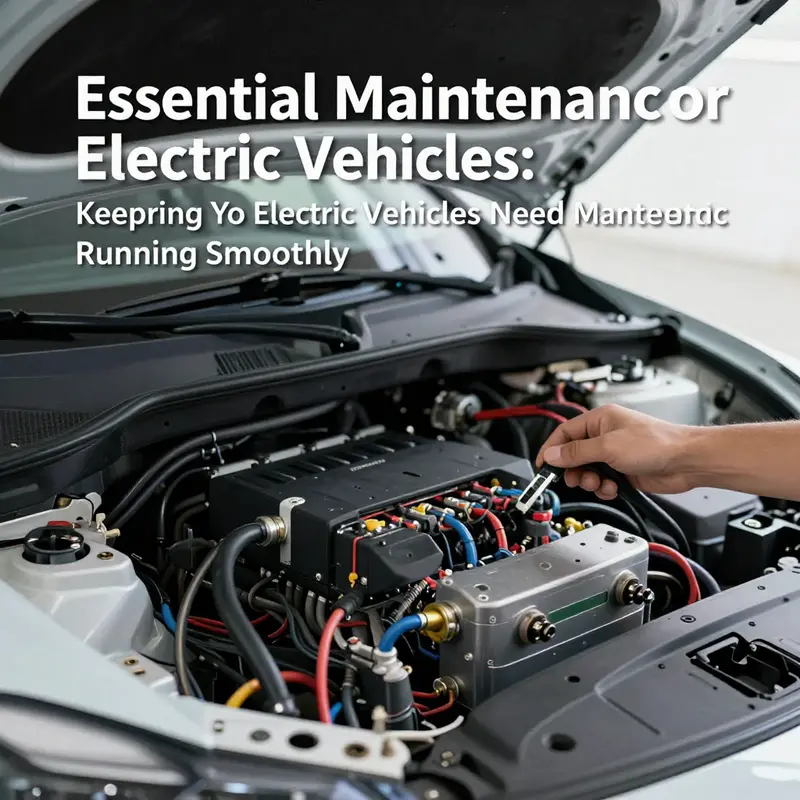
Electric vehicles have redefined what it means to own and operate a car. They run cleaner and require less day-to-day tinkering than their internal combustion relatives. Yet the question remains for many drivers: do EVs still need maintenance? The answer is yes, but the maintenance landscape shifts dramatically from oil changes and spark plug replacements to checks of electrical integrity, battery health, cooling systems, and wiring safety. The fact that there are fewer moving parts does not mean there are no parts at all that require attention. In fact, the reliability and safety of an EV hinge on the continuous health of its electrical network—an elaborate web of wires, connectors, modules, and sensors that orchestrate propulsion, charging, cooling, and safety systems. This interconnected system underpins every mile you drive, and its health is less about frequency and more about attentiveness to signs, proper servicing, and adherence to safety standards.
At the heart of every EV lies a high-voltage architecture that powers the motor, the battery, and the onboard electronics that manage charging, thermal control, and protection systems. These components operate under high electrical potential, and their performance is intimately tied to how well the wiring and connections are maintained. Over time, the combination of road vibration, heat, moisture, and natural aging can degrade insulation, loosen connections, or cause subtle corrosion at grounding points. When such issues accumulate, the risk goes beyond occasional malfunction; it can lead to reduced efficiency, erratic performance, or, in the worst case, electrical fires. Routine vigilance—visual inspections, diagnostic checks, and adherence to manufacturer guidelines—acts as a preventive shield, catching wear before it becomes a safety concern. The goal is not to chase every micro-issue, but to establish a predictable cadence of checks that keeps the system within safe, optimal tolerances.
A practical way to think about this maintenance is to picture the high-voltage wiring as the nervous system of the vehicle. It sniffs out faults, routes power, and communicates with the control unit. If a battery terminal loosens, a ground bond corrodes, or a connector becomes intermittently loose, you can experience anything from a temporary power drop to a sudden loss of propulsion or a charging fault. A visual survey often reveals telltale signs long before a fault code appears: frayed insulation near bend points, heat discoloration at connectors, or dampness around a sealed harness. Technicians rely on more than sight; they use continuity tests to confirm that conductors carry current as intended, and insulation-resistance measurements to ensure high-voltage barriers remain intact. These tests require specialized equipment and training because of the inherent hazards of live systems. The emphasis on safety is not optional; it is foundational. A high-voltage cable that appears intact can still harbor hidden degradation that only a controlled, methodical assessment will reveal.
In this context, the routine maintenance cadence for electrical components is not a rigid timetable but a framework that aligns with the vehicle’s design and use patterns. A typical approach begins with regular inspections of the charging port, onboard charging system, and related cables for dirt, corrosion, or physical damage. Even seemingly minor issues—cracked insulation, bent or stressed connectors, or frayed shielding—warrant professional evaluation. The need for such checks is amplified in regions with wide temperature swings or high humidity, where condensation can creep along harnesses and grounding points. The cool environment around the battery pack and motor is critical, and maintaining the integrity of their associated wiring is central to preserving thermal stability and preventing failure modes that amplify heat generation rather than dissipate it.
Boldly, a dedicated focus on electrical safety does not stand in opposition to the broader maintenance philosophy. It complements the other systems that keep an EV reliable, efficient, and safe. For example, while the cooling circuit for the battery and power electronics is often described in terms of coolant quality and replacement intervals, the effectiveness of that cooling relies on leak-free hoses, intact clamps, and clean, corrosion-free connectors. The same is true for the wiring harnesses and grounding points. A loss of grounding or a corrosion-laden contact can undermine the entire cooling and charging loop, producing heat buildup or charging irregularities that ripple through performance and safety. When technicians perform diagnostics, they consider how electrical integrity interacts with thermal management, battery state of health, and the vehicle’s fault-mitigation strategies. The result is a holistic view rather than a siloed checklist.
To keep this system trustworthy, many manufacturers and safety authorities emphasize a disciplined approach to inspections and maintenance. A two-pronged strategy often proves most effective. First, routine visual and functional checks are performed at manageable intervals—roughly every six to twelve months for most newer EVs, with more frequent attention for vehicles in harsh climates or with heavy daily use. Second, any abnormal symptom triggers a deeper dive: unusual battery temperature readings, erratic charging behavior, warning lights, or a noticeable drop in efficiency should prompt an immediate professional assessment. The aim is not to overreact to every minor anomaly, but to respond promptly when signs point to potential insulation degradation, connector loosening, or corrosion at critical junctions. The human factor matters here; high-voltage work requires a trained technician who follows strict safety protocols, including de-energizing the system, using proper personal protective equipment, and employing lockout-tagout practices designed to prevent accidental energization during service.
A concise way to anchor these ideas is to recognize that the electrical system is both robust and vulnerable. Its robustness comes from careful design, redundancy, and protective controls; its vulnerability comes from exposure to the elements, physical wear, and the same vibrations and thermal cycles that all vehicles endure. The result is a steady drumbeat of maintenance tasks that may appear mundane—checking connectors, cleaning termini, verifying grounding, and testing insulation—but that collectively guard against abrupt failures and safety hazards. When a high-voltage system functions correctly, it does so silently, almost invisibly to the casual observer. When something goes wrong, the symptoms are often dramatic: a charging fault, a loss of propulsion, a sudden fault code, or a warning that the insulation integrity is compromised. In each case, the root cause frequently traces back to a worn or compromised electrical pathway that good maintenance has the power to address before it becomes a crisis.
In the spirit of practical guidance, consider the value of maintaining a mental map of where the high-voltage components live and how they connect. The battery pack, motor inverter, and DC-DC converter are linked by conduits and harnesses that must be kept free from damage, moisture, and excessive heat exposure. Ground points and chassis connections provide safe paths for stray currents; when those paths deteriorate, the risk of electrical faults and unsafe conditions increases. Regular cleanliness helps too. Dirt, salt, and moisture can accumulate around ports and connectors, accelerating corrosion and insulating inefficiencies. A quick routine after winter driving or coastal climates involves a careful wipe-down of exterior connectors, a gentle inspection of visible harness routes under the hood or behind access panels, and a check for any signs of wear near bend radii where insulation can rub away. These steps, carried out consistently, support the longer-term health of the electrical system without demanding a technician’s every six-month visit.
For readers who want a compact reminder of the broader maintenance landscape, there is a helpful framing: do electric vehicles require less maintenance? The short answer is yes in many areas, but not in this: electrical safety checks remain essential. If you want a concise explainer rooted in the broader maintenance conversation, you can explore discussions that distill the maintenance expectations for EVs, including how the electrical stack fits into the overall upkeep. do electric vehicles require less maintenance.
Beyond the shop floor, a layer of vigilance benefits every owner. If you hear a buzz near the charging inlet, notice a bright or unusual warning light related to charging or battery management, or feel a perceptible difference in how the vehicle responds under acceleration or braking, treat it as a signal to seek professional testing. The safety stakes are higher with high voltage, and even small knock-on effects can cascade into more serious problems if left unchecked. Regular maintenance intervals should be viewed as opportunities to verify integrity rather than as burdensome chores. A well-timed check reduces the probability of an unexpected failure, preserves battery performance, and sustains the vehicle’s warranty protections where applicable. When you pair routine electrical inspections with fresh coolant checks, clean seals and ports, and a mindful approach to mounting and routing of cabling, you strengthen the EV’s ability to deliver the performance and safety you expect from a modern electric drive.
As you map out maintenance for your EV, keep in mind that the highest-value checks are those that prevent hazardous conditions and expensive repairs later. The wiring and electrical safety domain may not grab headlines the way high-rate performance or extended range do, but it is the backbone of reliability and safety. The emphasis on professional handling does not imply that owners cannot participate in basic upkeep; it simply sets clear boundaries around what can be safely inspected visually and what must be left to qualified technicians with the proper equipment and procedures. In the long run, a disciplined approach to high-voltage safety checks translates into smoother charging experiences, steadier performance, and a durable, safer vehicle that remains a pleasure to drive for years to come.
For additional safety guidance and best practices on EV electrical systems, consult authoritative resources and maintain a regular dialogue with your service technician. The goal is not to chase every wild possibility but to cultivate a routine that catches early wear, maintains insulation integrity, and preserves reliable electricity flow throughout the vehicle’s life. For readers seeking external safety perspectives, the U.S. National Highway Traffic Safety Administration provides official guidance on EV safety, including electrical system integrity and maintenance best practices: https://www.nhtsa.gov/vehicle-safety/electric-vehicles.
Final thoughts
Maintaining electric vehicles is essential not just for their performance but also for the safety and longevity of the vehicles. Regular checks on critical components such as the battery, cooling system, and brakes should become an integral part of your business’s operational protocol. By prioritizing these maintenance practices, you ensure that your investment remains viable and continues to align with your sustainability goals. Understanding and implementing comprehensive maintenance strategies will ultimately lead to enhanced performance, minimized downtime, and a positive impact on your bottom line.