
Electric vehicles (EVs) are rapidly changing the automotive landscape, offering significant benefits over traditional gasoline vehicles, especially in maintenance. As business owners seek cost-effective solutions for their fleet, understanding the maintenance implications of EVs becomes crucial. This article discusses whether electric vehicles require less maintenance compared to gasoline vehicles, delves into the mechanics that underpin these differences, and explores the positive economic impacts of lower maintenance costs. By examining these factors, business owners can make informed decisions about integrating EVs into their operations, potentially leading to enhanced efficiency and reduced operating costs.
Less Wrench, More Road: Reassessing Maintenance with Electric Vehicles
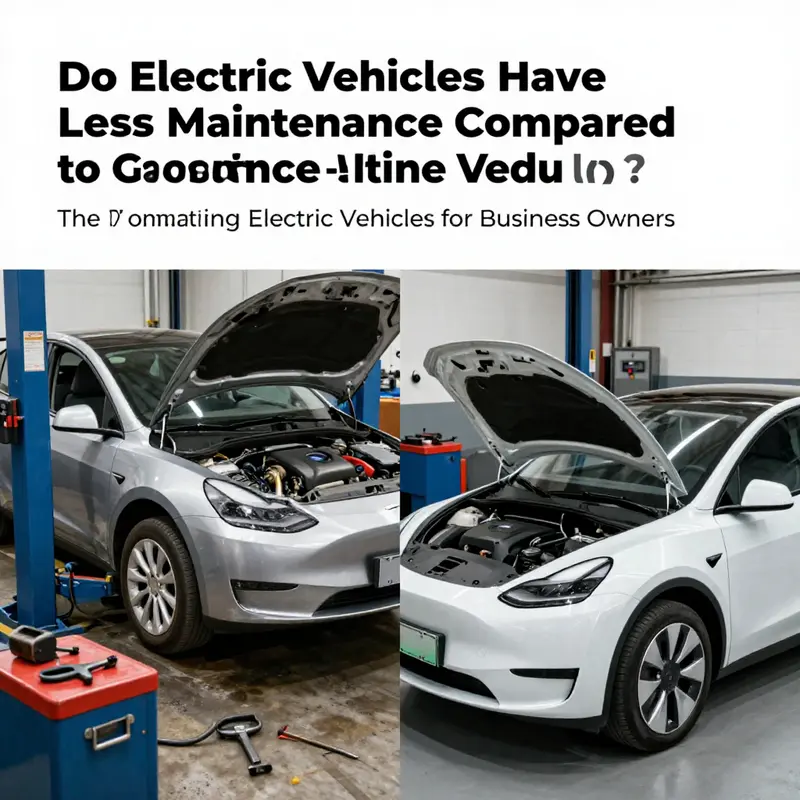
Less Wrench, More Road: Reassessing Maintenance with Electric Vehicles
For many drivers, the idea that an electric vehicle (EV) can be cheaper to maintain is not a marketing claim but a structural truth about how these machines are built. The maintenance story for EVs proceeds from a fundamental design premise: fewer moving parts, fewer fluids, and fewer points of failure. The result, in everyday terms, is a calendar of service that tends to be shorter, less fraught, and less expensive than the maintenance routine for a traditional internal combustion engine (ICE) vehicle. This chapter traces how those design choices translate into real-world maintenance experiences, unspooling the logic behind the widely cited claim that EVs carry maintenance costs that are lower, not just in the near term, but across the vehicle’s life cycle.
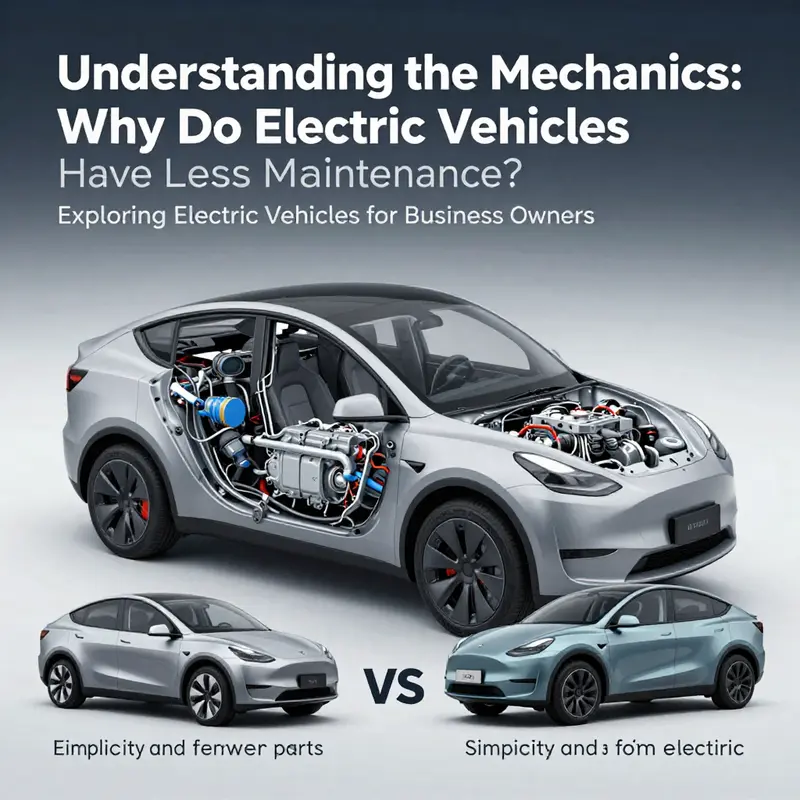
Start with the engine bay. In gasoline cars, the engine is a complex orchestra of pistons, valves, belts, sensors, and countless connections that require regular attention—from oil changes to spark plug replacements to exhaust-system servicing. EVs flip this script. They operate on electric motors that have far fewer moving parts. The absence of an engine means no oil to change, no engine oil filters to replace, and no spark plugs to nag at the end of a service interval. Because there is no combustion process, there is no exhaust system to corrode or emit exhaust leaks to monitor. The immediate effect is a dramatic reduction in the number of routine maintenance steps that a driver must budget for each year. That is not to say that EVs are maintenance-free. It is to say that the kinds of upkeep that eat into a maintenance budget are removed or significantly deferred by the vehicle’s architecture.
Beyond the engine’s absence, the rest of the drivetrain contributes to the maintenance dividend. EVs commonly rely on a simplified transmission. In many models, the powertrain uses a single-speed configuration, a stark contrast to the multi-gear automatic transmissions found in many ICE vehicles. Fewer gears mean fewer potential points of mechanical failure, less fluid to swap, and a lower risk that a transmission service will be needed at any given milestone. The broader effect is a reduced requirement for the kind of specialist service that ICE cars demand when transmissions age and shift quality deteriorates. With fewer potential failure modes, the maintenance schedule can focus on what matters most: battery health, thermal management, and the essential routine checks that keep any vehicle safe and reliable on the road.
If you zoom in on the braking system, EVs reveal another meaningful difference. Regenerative braking is more than a clever energy recovery feature; it reshapes wear patterns across the vehicle’s life. The electric motor, acting as a generator when you lift off the accelerator, slows the car and sends energy back to the battery. This process dramatically reduces the load on the conventional friction brakes. Brake pads last longer, rotors stay smoother longer, and the frequency of brake-service visits declines. That does not erase the need for brake inspections or for ensuring the brake fluid remains within spec, but it does tilt the balance toward a maintenance path that costs less over time. The regenerative dynamic also interacts with the vehicle’s software and thermal systems; a well-tuned braking strategy helps preserve energy and maintain safe stopping performance, all of which is increasingly monitored by the vehicle’s onboard systems and software updates.
Battery health sits at the center of the EV maintenance conversation, but it is not a simple matter of one number you replace. Battery health is a composite concept, shaped by cell chemistry, thermal management, charging behavior, and the vehicle’s warranty terms. Routine checks are less about replacing a component and more about monitoring performance indicators. Owners may see dashboards that report state of health, predicted range, and charging efficiency. The technician’s job, in many cases, is to verify that the battery temperature remains within the optimal window, cooling circuits remain unobstructed, and that the battery management software is up to date. Because high-voltage systems run under strict safety standards, battery health maintenance also emphasizes proper protective measures, training, and procedures during any service work. The upshot is that battery-related diagnostics can be routine for some drivers and specialized for others, depending on the warranty structure and the model’s battery technology.
While those core systems shape the maintenance story, the everyday tasks you encounter at the shop or during a routine home service are relatively familiar. Tires, tires, and more tires. EVs carry extra weight because of the battery, which has implications for tire choice, inflation targets, and wear patterns. That heavier mass yields different tread wear, so tire life must be evaluated in this context. Rotations and alignments stay essential, not optional, to ensure predictable handling and even wear. Wiper blades and cabin air filters are still part of the routine, as with any car, and the requirement to check coolant levels persists—but in EVs, coolant is more about battery, motor, and power electronics cooling than about engine cooling. Some owners discover that the coolant service intervals for high-voltage systems are less frequent than they fear, particularly if the vehicle’s thermal management is well designed and the owner follows recommended service guidelines. Software updates are no longer an afterthought. They can be automatic or semi-automatic, but their influence on performance, efficiency, and even safety features makes them a regular part of maintenance in a modern EV.
An anecdote from a driver who switched from a gasoline vehicle to an electric one helps illuminate the practical implications. They described a maintenance visit that felt almost routine in the most favorable sense: a short appointment, focused on a small set of checks, with a modest bill, and then back on the road. The memory stands in contrast with the major service visits a gasoline vehicle demanded—service events that could stretch long into the afternoon and generate bills that dwarfed those for an EV. This story reflects the broader pattern: EVs typically require less frequent visits for major work because the mechanical complexity of the powertrain has been pared down. Yet the reality remains nuanced: occasional, costly battery-related or high-voltage work can be significant, and the costs there depend on the warranty, the battery’s age, and the service network’s capabilities.
To move from anecdotes to a more anchored understanding, consider the body of research that tracks maintenance costs over time. A comprehensive review from credible sources indicates that EV owners generally incur lower maintenance costs over the vehicle’s lifetime, even when accounting for higher upfront prices. The reduced maintenance burden results from the absence of engine oil changes, fewer engine-related components subject to wear, and the simplified transmission architecture. The overall effect is that the maintenance cost curve for EVs climbs more gently than it does for ICE vehicles. The logic is straightforward: when you remove the engine, you remove a swath of routine maintenance tasks—and with fewer moving parts, there are fewer things that degrade in predictable, repair-prone ways.
The broader context matters because different environments, driving patterns, and model choices shape maintenance realities. In cold climates, for example, battery thermal management becomes particularly important. The checks involved may become slightly more intensive, and the service cadence could shift accordingly. In regions where charging infrastructure is sparse, owners might rely more on public charging networks or home infrastructure, which can influence the perceived maintenance burden in subtle ways—primarily through scheduling and reliability rather than the big-ticket repairs that ICE vehicles occasionally demand.
In the background, the mechanics of how and when maintenance is performed continue to evolve as technology progresses. The integration of software updates into the maintenance narrative is particularly telling. These updates can optimize battery management, enhance charging algorithms, and refine regenerative braking behavior. Rather than a mechanical tweak performed at the shop, owners may benefit from a software patch that improves efficiency or reliability, potentially translating into tangible savings in energy costs or reduced wear on mechanical components. The ecosystem supporting EV maintenance, including training for technicians and investment in diagnostic tools for high-voltage systems, also matters. As the skill set of the maintenance workforce broadens, the cost of care tends to become more predictable, especially in regions with robust service networks.
Nevertheless, potential considerations should temper the enthusiasm. Battery durability, while advancing, remains a factor. Replacements can be expensive, and the timing of such work depends on usage, charging patterns, climate, and the quality of the battery. A battery near the end of its life may require more frequent monitoring and could become a significant service event. Additionally, high-voltage components require specialized handling, which can influence service location and labor rates. In some markets, access to qualified technicians trained to service electric powertrains may be limited, increasing the time to repair and potentially the cost. Even so, this reality rarely erases the broader maintenance advantage, but it does shift the cost emphasis away from routine maintenance to more targeted, high-stakes repair scenarios.
Within this broader frame, a compelling takeaway is that maintenance for EVs tends to be simpler and less expensive on a recurring basis, but not universally cheaper across every possible service need. The least dramatic, most common savings arise from the mechanical economy—the engine, transmission, and exhaust are largely absent—while new kinds of costs emerge around battery health and software management. For many households, that translates to a maintenance experience that feels smoother and less disruptive, with shorter service visits and tighter bills for the routine care that keeps a vehicle safe and reliable. In turn, this shapes consumer decisions, performance expectations, and the potential for fleet operators to realize higher uptime through reduced maintenance downtime.
An important practical step in understanding maintenance economics is to look at credible, external references that quantify these patterns. The Department of Energy’s guide on EV maintenance and repair is a foundational resource that differentiates typical maintenance needs of EVs from those of ICE vehicles. It provides a clear framework for what owners should expect in terms of service cadence, the kinds of issues likely to arise, and how the service ecosystem—manufacturers, dealers, and independent shops—supports electric powertrains. This resource offers a robust basis for comparing maintenance across powertrain architectures, which is essential for consumers weighing a switch to electrification. It is also a reminder that while maintenance advantages are convincing in many scenarios, the specifics depend on the model, climate, and how the vehicle is used.
For readers seeking a practical, specific reference as they compare EVs to gasoline cars, you can explore a close-to-home take on maintenance realities through a dedicated discussion about maintenance expectations for electric vehicles. This segment of the broader conversation helps anchor the generalities in everyday budgeting and planning, clarifying how maintenance intervals and costs accumulate. If you want a concise deep dive tied to the exact question of maintenance for EVs, consider reading the article Do Electric Vehicles Require Less Maintenance, which presents a focused assessment of the core maintenance factors discussed here and tracks how owners experience maintenance in real-world cycles. Do Electric Vehicles Require Less Maintenance
The broader conclusion that emerges from this investigation is that EVs, on average, deliver a maintenance advantage relative to gasoline vehicles. This advantage arises from structural design choices that reduce routine maintenance tasks, lower the risk of certain categories of failures, and shift the care calendar toward battery health, software integrity, and tire management. The story is not a straight line to zero maintenance, but it is a narrative about resilience and efficiency. It is a shift from the calendar of engine-based expenses to a rhythm more aligned with electronics, software, and energy management—domains where rapid progress and economies of scale are advancing as the electric vehicle ecosystem matures.
As a final reflection, consider how this maintenance advantage translates into real-world decision-making. For some buyers, the maintenance dividend supports a compelling case for electrification when weighed against purchase price and energy costs. For fleet operators, predictable maintenance patterns can translate to higher uptime, lower downtime, and simpler maintenance scheduling. For households on a budget, the potential for lower annual maintenance spend can be a meaningful component of total cost of ownership, even as battery warranties and charging infrastructure costs loom large in the horizon. The central message remains: the lower complexity and reduced number of consumable parts associated with electric vehicles create a maintenance home ground that is cleaner, more predictable, and often less expensive in the long run. This is not to claim that maintenance costs will never vary; rather, the accumulated evidence points toward a long-run maintenance advantage that aligns with the broad environmental and financial incentives surrounding electrification.
The story continues to evolve as technology advances and as service networks expand. Battery chemistry improves, battery warranties extend, and the handling of high-voltage systems becomes more widely distributed across service networks. In this dynamic landscape, the maintenance difference between EVs and gasoline cars could grow larger or narrow, depending on how industry players respond to the needs of owners and fleets. Yet the core logic endures: fewer moving parts, less fluid maintenance, and a growing emphasis on software-driven improvements and battery health. Together, these factors yield a practical dividend for many drivers: a maintenance routine that is simpler, typically shorter, and often cheaper, with the potential for more reliable operation across the vehicle’s life.
External resource: https://www.energy.gov/eere/vehicles/articles/ev-maintenance-and-repair
null
null
Beyond the Bolt: The Economic Ripple of Lower Maintenance in Electric Vehicles
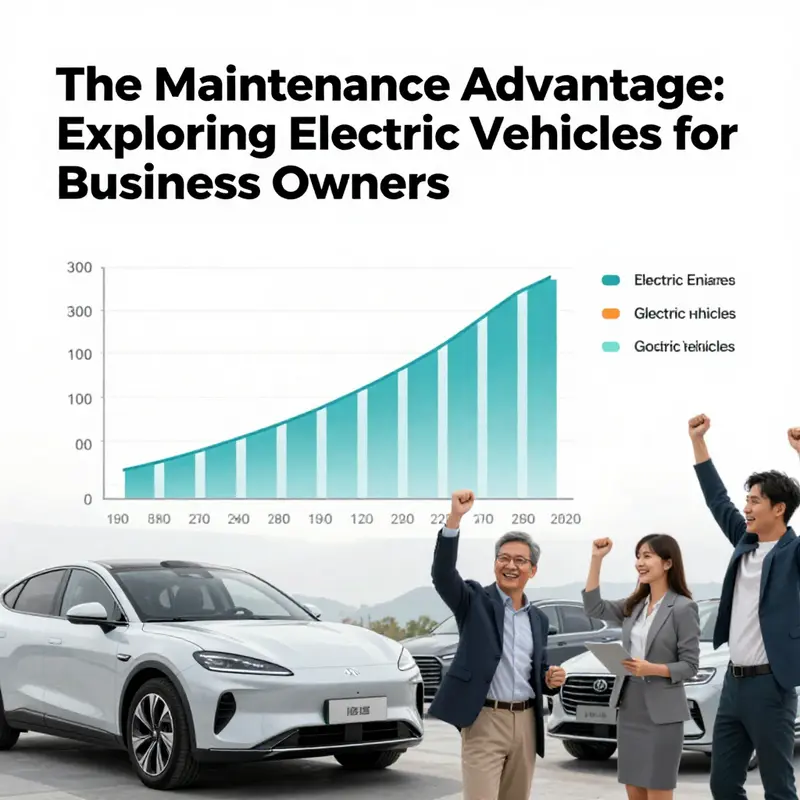
When people ask whether electric vehicles have less maintenance, they are really asking about how ownership costs unfold over time. The answer isn’t a single line about a shorter service interval. It is a layered story about fewer moving parts, simpler systems, and a logistics chain that shifts the way drivers experience car care. The maintenance advantage of electric propulsion starts with a straightforward truth: EVs do not carry an internal combustion engine, a multi-gear transmission, a complex exhaust system, or the oil-based lubrication backbone that keeps a traditional engine ticking. Those components, with their frequent wear, leaks, and smell of solvent, are the primary sources of routine maintenance in gasoline-powered cars. By removing them, electric vehicles dramatically reduce the number of service events that a typical owner must budget for over a decade. This is not a marginal improvement. It changes the cadence of maintenance visits, the reasons for those visits, and the economic calculus that families and fleets use to decide which vehicle to buy or lease.
The practical consequence of mechanical simplification shows up in the calendar of servicing. A typical EV keeps life simple: regular checks on tires, brakes, battery health, and coolant levels, plus the occasional filter replacement or wiper blade swap. Oil changes, transmission fluid flushes, spark plug replacements, and exhaust-system maintenance fade away. In practice, that translates into fewer trips to the shop and more time on the road. A driver who swapped from a gasoline car to an electric one might report that a routine service visit now lasts less than half an hour and costs a fraction of what they used to spend. This kind of anecdotal insight, while not a substitute for large-scale data, aligns with a broader pattern observed by researchers and researchers alike: the maintenance burden on EVs is markedly lower across many ownership cycles.
Beyond the obvious absence of an engine and exhaust system, several other factors compound the maintenance advantage. Regenerative braking, which uses the electric motor to slow the vehicle and feed energy back into the battery, reduces wear on traditional friction brakes. The impact of regenerative braking is not always linear, but in many daily driving scenarios—city commuting, frequent stop-and-go traffic—it means brake pads often last longer than they would on comparable gasoline cars. Fewer brake replacements directly translate into lower maintenance costs and fewer trips to a service bay dedicated to brake work.
The research landscape also emphasizes the lifetime maintenance savings rather than focusing solely on yearly costs. A 2024 study from the U.S. Department of Energy estimates that EV owners can expect to save roughly $6,000 to $10,000 on maintenance and repairs over the first 15 years of ownership when compared with ICE vehicles. Those numbers gain momentum in urban settings where short trips and frequent starts-and-stops magnify the brake wear savings and reduce tire wear relative to long-haul use. In the same way that the engine-less design reduces routine care, shorter, less complicated service intervals keep owners out of repair bays for longer stretches and improve the predictability of owning an EV from year to year.
This broader economic signal matters not just for the individual driver but for the structure of the service sector. If EV adoption continues to accelerate, repair shops face a dual challenge: they must adapt to a fleet with different diagnostic needs and different high-availability components. Battery management systems, electric drive units, and high-voltage safety systems require new training, specialized equipment, and updated operational practices. The shift creates a space for innovation—new business lines around home charging installation, remote software updates, and safer battery recycling streams—while simultaneously pressing for policy and regulatory frameworks that help the service ecosystem transition smoothly. The economic impact, therefore, is not limited to a smaller maintenance bill; it ripples through labor markets, training pipelines, waste handling, and energy planning.
The household budget implications, while substantial, are best understood through the long arc of ownership rather than a single maintenance bill. Short-term savings in maintenance costs can help offset higher upfront costs in some markets, but the larger effect is in lifetime cost of ownership. The total cost of ownership (TCO) framework—comparing purchase price, financing, fuel or electricity costs, maintenance, depreciation, and taxes—has consistently shown that EVs can offer compelling savings over the life of the vehicle. The maintenance portion is a meaningful share of that TCO, yet it is the disproportionate durability and lower frequency of service that makes the EV maintenance advantage durable across many ownership scenarios. In cities where daily driving is dominated by short trips, the maintenance advantage becomes even more pronounced, as the wheels stay in motion with fewer disruptive service events and less downtime for repairs.
For readers who want to push deeper into the question of whether this maintenance delta will endure as technology evolves, it helps to consider the dynamic nature of the industry. The question is not merely whether today’s EVs require less maintenance, but whether future designs—battery chemistries, thermal management strategies, and power electronics—will continue to minimize service needs while maintaining performance and safety. Some concerns persist, such as the longevity of high-voltage batteries and the costs associated with battery replacement in extreme cases. Yet, even with those caveats, the trajectory remains clear: the mechanical complexity of EVs is lower, and the opportunities to streamline service are substantial. This is as much about the economics of scale as it is about engineering.
The economic terms of this shift extend beyond the vehicle itself. Policy makers, insurers, and urban planners are noticing how a reduced maintenance burden can shift incentives. Lower expected maintenance costs alter insurance pricing models and the way risk is assessed over the life of the vehicle. Fewer maintenance events can translate into lower claim rates for wear-and-tear issues and a smaller burden on roadside assistance networks that often see spikes around major maintenance episodes. In turn, these shifts can support broader adoption of EVs by smoothing out the financial profile of ownership over time. The ripple effects also include environmental benefits tied to reduced service visits, less waste from consumables, and more efficient use of repair shop capacity, which can become a modest contributor to overall energy and resource efficiency in the transportation system.
As readers consider the longer arc of maintenance economics, it is useful to remember that the maintenance gap is not simply about fewer oil changes. It is about the way the vehicle’s architecture, its powertrain, and its daily operating pattern converge to reduce wear points and simplify service. The absence of oil changes and fuel system upkeep is a major factor, but the real strength lies in the combination of fewer consumables, longer-lasting components like brake pads, and the streamlined maintenance routines that accompany battery and software health checks. The end result is a vehicle that spends less time in the shop and more time contributing to daily life, a factor that compounds each year and across an entire household’s fleet of cars.
This broader understanding of maintenance economics invites a holistic view of ownership. It is not only about the frequency of visits but about the predictability of costs, the reliability of the vehicle, and the ability of households to allocate resources toward other priorities. When a family shifts from ICE to electric propulsion, the reduction in maintenance complexity translates into better budgeting, more consistent cash flow, and a smaller risk of surprise costs tied to big service events. The cumulative effect is a smoother financial experience that supports wider EV adoption and, by extension, the societal benefits those adoption patterns enable, including reduced emissions, improved air quality, and changes in energy demand profiles that align with grid development and renewable integration.
The chapter you’re reading is not a technical hymn to EVs, but a careful look at how maintenance costs shape decisions. It connects thread to thread—the mechanical simplification of EVs, the tangible savings observed in real life and in large studies, the shifting needs of service networks, and the policy and insurance innovations that recognize maintenance as a long-term economic variable. For those who want to explore a nuanced perspective on how these elements interact as technology matures, consider the following: Do electric vehicles require less maintenance? The answer, in short, is yes, but the story is richer when you examine not just the savings, but how the savings influence choices, labor markets, and the pace of broader transportation transformation. Do electric vehicles require less maintenance.
The economic argument also emphasizes a crucial design principle for manufacturers: reliability and serviceability must align with ownership costs. The fewer moving parts an EV has, the fewer potential failure points exist. Yet, the new failure modes—battery thermal management, electrical systems, and battery pack integrity—demand careful attention to design for serviceability. The industry response has been to invest in modular battery architectures, remote diagnostic capabilities, and scalable repair pathways that keep maintenance costs predictable. When these pathways are accessible and affordable, the maintenance advantage becomes a lasting feature rather than a temporary advantage tied to early-adopter vehicles. It’s this alignment between engineering simplicity, service ecosystem readiness, and intelligent policy that makes the economic impact of lower maintenance in EVs more than a footnote in a cost comparison; it becomes a driver of market dynamics and consumer trust over the long horizon.
From the perspective of a household budget, the distinction between upfront price and ongoing costs becomes especially salient. EVs may carry a higher upfront cost in many markets, but the maintenance savings help erode that premium over time. The timeline matters: negative equity or a long loan can muddy the math, but as vehicle lifespans extend and battery warranties mature, the lifetime maintenance advantage grows more robust. In fleets, where maintenance scheduling and downtime have direct operational costs, the reduced maintenance burden translates into higher utilization rates, more predictable depreciation, and improved total cost-of-ownership metrics. The net effect is a shift in how companies plan vehicle replacement cycles, maintenance staffing, and even garage space needs. It also nudges policymakers toward incentives that reflect long-term ownership value rather than short-term purchase price alone, reinforcing a cleaner transportation future without compromising affordability for a broad set of buyers.
In sum, the economic impact of lower maintenance in electric vehicles is a multifaceted phenomenon. It emerges from a simple engineering premise—remove the core components that define maintenance intensity in ICE vehicles—and grows into a broad portfolio of financial, labor, and policy implications. The maintenance advantage is real, measurable, and durable across many usage patterns. Yet it is not a solitary driver of EV adoption; it operates in concert with other advantages and considerations, including energy costs, performance, charging infrastructure, and environmental goals. Together, these elements create a compelling case for why maintenance matters as a pillar of total-cost-of-ownership calculations and why it is central to the ongoing transformation of how people move.
For those who want to see the broader policy and research context behind these observations, the U.S. Department of Energy’s comprehensive analysis offers a data-driven framework that quantifies maintenance savings over time and across different usage patterns. This work complements the more qualitative and consumer-focused narratives, providing the empirical backbone for understanding why maintenance economics matters for adoption and for the resilience of the broader transportation system. The convergence of engineering, economics, and policy in this space explains why maintenance is not just a personal expense, but a lever that can accelerate or slow the shift toward cleaner mobility. The future of maintenance for electric vehicles will hinge on continued advances in battery technology, smarter diagnostic tools, and a service ecosystem that can deliver high-quality, affordable care without sacrificing safety or reliability.
External reference for further reading: https://www.energy.gov/eere/vehicles/articles/total-cost-ownership-evs-vs-gasoline-powered-vehicles
Final thoughts
In summary, electric vehicles present a clear maintenance advantage over conventional gasoline vehicles. The reduced complexity associated with EVs translates into lower maintenance costs and less frequent servicing, fostering a more efficient operation for business owners. As more businesses look to optimize their fleets and reduce operational costs, adopting electric vehicles can not only lead to significant savings but also contribute to a more sustainable future. Empower your business with the insights shared to make informed decisions about switching to electric vehicles, and experience firsthand the cost benefits they offer.