
The gig economy has transformed the landscape of delivery services, introducing complexities in compensation structures. One of the most pressing questions for business owners is whether delivery drivers are compensated for vehicle maintenance. This article explores the differences between independent contractors and company employees, revealing how vehicle maintenance costs are handled in each scenario. The subsequent chapters delve into reimbursement policies and comparative analyses, while also examining the broader impact of these costs on driver earnings. Gaining insight into these facets will inform business owners about the intricacies of driver compensation in an ever-evolving market.
The True Cost of Delivery: Vehicle Maintenance as a Hidden Burden for Independent Contractors
When people ask whether delivery drivers get paid for vehicle maintenance, the answer hinges on two core realities of the modern gig economy: how drivers are classified and how compensation is structured. In many markets, drivers operate as independent contractors, striking deals with platforms or partnering independently to deliver meals, groceries, or parcels. In other cases, drivers are employees who work under a more traditional employer-employee relationship. The practical consequence of that difference is stark: employees are much more likely to receive some form of company-backed maintenance support, while independent contractors shoulder the bulk of maintenance costs themselves. This division sets the stage for a broader question about profitability, stability, and fairness in flexible work. It also explains why the maintenance line item often remains a “hidden cost” rather than a transparent part of take-home pay.
Independent contractors, who frequently drive their own vehicles for platforms that connect them with customers, are typically not paid directly for vehicle maintenance. They are expected to cover all ongoing costs of ownership and operation—fuel, insurance, tires, brakes, fluids, repairs, and general wear and tear. The compensation structures these drivers encounter are usually designed to offset some of these expenses through mileage reimbursements or per-delivery pay that’s intended to reflect the expected costs of operation. In practice, this reimbursement or pay rate rarely tracks perfectly with real-world depreciation and upkeep, especially as a vehicle ages and parts wear out more quickly under the demanding rhythms of rideshare and gig deliveries. The practical outcome is a profit equation that often tilts unfavorably for drivers who rely on older or high-mileage vehicles, even when demand for their services remains high. A driver may be told that the per-mile rate is designed to cover fuel and maintenance, but the reality is that maintenance costs escalate with use and time, and the reimbursement rarely calibrates to those incremental expenses.
What makes this more acute is the frequency and intensity of maintenance needs for vehicles used in these jobs. Research compiled for drivers in ride-hailing and delivery roles highlights that vehicles used for gigs require servicing 30% to 50% more often than typical personal-use cars. The reasons are straightforward yet consequential: repeated quick stops and starts in city traffic, frequent braking, and extended periods of idling all contribute to faster wear on brakes, batteries, tires, and engines. The upshot is clear: the same vehicle that powers earnings also accelerates depreciation and spares occasional breakdowns with regular, sometimes costly, maintenance. For an independent contractor, that means the cost curve is not just high on a single month but persistent across the life of the vehicle’s gig career.
This maintenance burden feeds directly into profitability. The 2025 industry analysis referenced in professional conversations about gig economics shows that for many drivers, profitability becomes a tightrope walk when fuel costs rise and depreciation accelerates. Because maintenance costs don’t disappear, the sum of these hidden expenses reduces net earnings even as gross pay per trip or per hour appears to rise. The outcome is more than a math problem; it is a matter of financial planning and career sustainability. When maintenance funds are inadequately planned, drivers may delay tire replacement, skip preventive services, or push critical repairs until a breakdown occurs. Each choice carries a risk—not just of higher out-of-pocket costs in the near term, but of longer-term losses in reliability and the ability to meet demand consistently.
For drivers using personal vehicles in a gig setting, that allocation of risk and responsibility can feel asymmetrical. Independent contractors face the possibility that a costly repair could wipe out weeks of earnings, especially in markets where demand is volatile or where there are few nearby service centers with reasonable prices. The per-delivery or per-mile compensation model, even when well-intentioned, is often misaligned with the blow of a major repair bill. The practical effect is that while a platform can tout flexible work, the financial flexibility may be hollow for many drivers if maintenance costs erase the margins that kept their operations afloat. In other words, the promise of autonomy can clash with the reality of a vehicle-dependent business where the vehicle is both the means of earning and the source of ongoing costs.
There is a contrasting experience for those who work as company employees in delivery roles. When a company provides a fleet vehicle, or reimburses a substantial portion of maintenance for personal vehicles used in the job, drivers gain a cushion that independent contractors typically do not enjoy. A company vehicle shifts maintenance costs away from the driver and, in many cases, includes routine servicing, tires, and insurance as part of the package. When a personal vehicle is used, some employers offer mileage reimbursement or stipends that help offset upkeep costs; however, these benefits are not universal. The absence of a universal standard means that, even among employees, maintenance support can vary widely by employer and by region. In both cases, the difference between a company-supported maintenance model and a fully self-funded one compounds over the life of a driver’s career, influencing career choices, vehicle replacement timelines, and overall financial well-being.
This is why many advocates and researchers frame vehicle maintenance costs as a fundamental issue in fair pay discussions within the gig economy. The maintenance line item is not a minor appendage to earnings; it is a recurring pressure that shapes decisions about how long to keep a vehicle, when to schedule major repairs, and whether a driver can sustain a given level of activity without compromising other essential needs. Budgeting becomes a core skill: drivers must anticipate regular servicing, accident-related repairs, tire replacements, and potential major overhauls—while trying to stabilize income that can swing with demand, traffic conditions, and platform policies.
From a planning perspective, a driver’s strategy around maintenance often hinges on a mix of preventive care and opportunistic repairs. Preventive maintenance—regular oil changes, tire rotations, brake inspections, and battery checks—tays with the vehicle’s age and the driving profile. In gigs with heavy stop-and-go patterns, preventive care can pay off by extending tire life and reducing the risk of unexpected breakdowns during peak delivery windows. Yet even with a proactive approach, the higher frequency of wear means that preventive maintenance must be scaled to the volume of miles driven each week and month. The research that underpins these observations underscores a key reality: drivers must budget not just for today’s repair but for the accelerated depreciation that comes with gig work, especially as the vehicle approaches higher mileages.
For readers trying to quantify these effects, consider the practical steps of budgeting within a gig-delivery context. Start by tracking mileage and maintenance intervals with a simple, disciplined log. Differentiate between routine maintenance items (oil changes, tire rotations, brake inspections) and unexpected repairs (brake pad replacement, alternator, transmission service), then map those costs onto a monthly forecast. Compare this forecast against take-home pay after fuel, insurance, and taxes. The aim is to understand the true cost per mile or per hour when maintenance is included. For a more focused primer on maintenance definitions and scope, see the explainer: What is Vehicle Maintenance?. Integrating such a resource into budgeting helps drivers see maintenance not as an abstract risk but as a measurable line item that can be managed with planning and discipline.
While many drivers cite the lack of direct maintenance pay as a clear drawback of independent contractor status, there is a broader conversation about policy and fairness that continues to unfold. The debate encompasses whether platform-based compensation should more explicitly account for the wear and tear of gig work, whether minimums should apply to repair costs, and how benefits like insurance or vehicle stipends should be structured to reflect the realities of daily operation. It is a multidimensional issue, blending labor law, economics, and the practical day-to-day experience of drivers who fuel a delivery-driven economy.
External realities aside, drivers who want to stay profitable must anticipate and mitigate maintenance costs with a combination of budgeting, vehicle choice, and prudent maintenance scheduling. Vehicle choice matters, of course. Some drivers opt for models known for lower maintenance costs and greater reliability, while others prioritize cargo capacity or performance. Each choice carries its own maintenance profile, and the long-term financial impact depends on mileage, driving conditions, and how well preventive maintenance is kept up. Even this does not solve the fundamental question of fair compensation, but it can help drivers manage risk and keep earnings from slipping away in the tides of wear and tear.
In closing, the maintenance question in the delivery sector reveals a broader truth about the gig economy: compensation is not a single number on a pay stub. It is a system whose parts include wage, reimbursements, depreciation, and risk. For independent contractors, maintenance costs are a recurrent reality that can erode profits if not planned for. For employees with company backing, a portion of those costs is shifted away from the individual, though not uniformly or universally. The ongoing policy discussions and evolving platform practices will shape how these costs are addressed in the future, but the practical takeaway for drivers remains clear: understanding maintenance costs is essential to understanding true profitability in gig work, and proactive budgeting is the most reliable defense against a wrench in the gears of earnings.
External resource for further reading: The Hidden Costs of Being an Uber Driver, Forbes Tech Council, 2024. https://www.forbes.com/sites/forbestechcouncil/2024/07/15/the-hidden-costs-of-being-an-uber-driver/
Under the Employer’s Roof: How Company Vehicle Coverage Shapes Maintenance Costs in Delivery Services
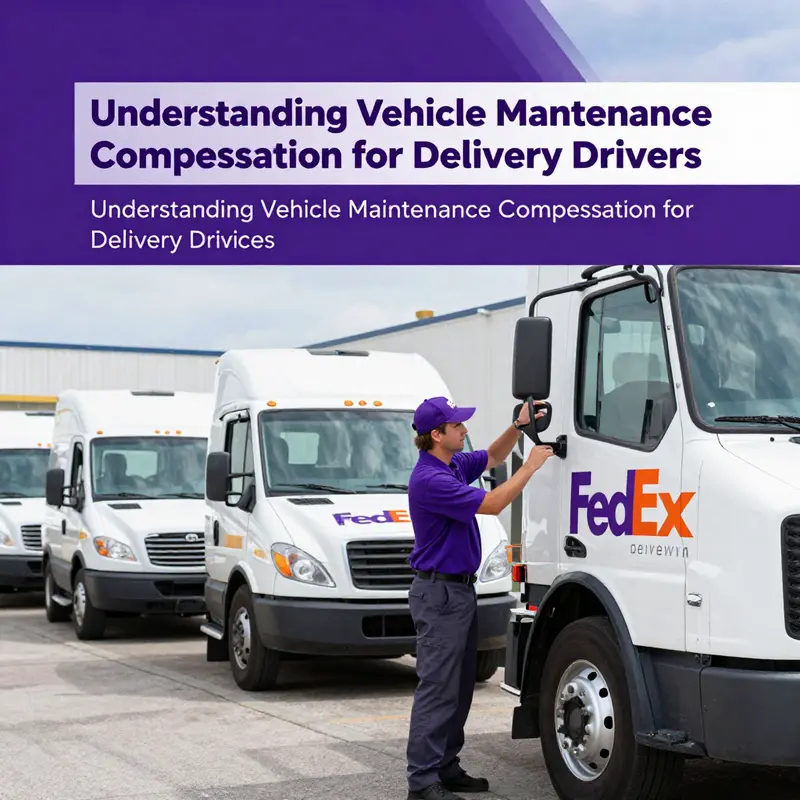
Across the delivery landscape, the question of who pays for vehicle maintenance sits at the intersection of employment status, company policy, and the specific terms that govern daily work. For drivers who are employed directly by a company and who operate a company-provided fleet, maintenance is framed not as a payroll line item but as a core element of the vehicle program that keeps operations moving. In practical terms, when a driver reports for a shift in a company vehicle, routine maintenance and necessary repairs typically fall under the employer’s responsibility. The logic is straightforward: the vehicle is a work asset, used to fulfill customer expectations and service-level obligations, so its upkeep is treated as part of the operating cost of delivering that service. The maintenance schedule—oil changes, tire wear, brake service, fluid top-offs, and other routine care—tends to be directed by a vehicle management policy. In many firms, this policy specifies that routine service be completed at designated service centers, a provision that helps the employer control quality and accountability. The company-driven maintenance cycle is not merely about keeping a vehicle running; it is about minimizing downtime, reducing the likelihood of on-the-job breakdowns, and preserving consistency in service levels. By defining approved service providers and routine intervals, the policy creates a predictable framework. Drivers can plan their routes and shifts around service windows, and the company can track spend, warranty applicability, and depreciation with improved clarity. This integrated approach to vehicle upkeep often translates into fewer ad hoc out-of-pocket expenses for the driver and a steadier cost structure for the employer. The shared goal is straightforward: keep the delivery network reliable so customers get their orders on time, and keep the fleet in a condition that supports safety, efficiency, and compliance with regulatory requirements.
Within this framework, the role of insurance becomes a complementary layer of protection. Employers typically carry comprehensive commercial auto insurance that covers vehicle damage arising from covered incidents, which may include collisions, theft, or certain kinds of accidental damage. The extent of coverage, including limits and deductibles, is spelled out in the policy documents, and it is common for coverage to be contingent on the vehicle being used in accordance with company policy. This means the driver’s personal use or unauthorized activities can complicate claims and potentially expose the driver to out-of-pocket costs or policy exclusions. When a work vehicle sustains damage in an accident, the company’s insurance is generally the first line of defense, with the deductible and coverage terms shaping the final repair bill. The policy often works in tandem with the maintenance program: a well-maintained vehicle is less prone to breakdowns, less likely to require expensive repairs, and more likely to be covered by warranty provisions or maintenance agreements negotiated at the fleet level.
A critical, though sometimes overlooked, element of this arrangement concerns how company policies address negligence and driver behavior. If a driver causes damage due to reckless actions—excessive speeding, running red lights, or driving under the influence—the employer may reserve the right to seek reimbursement for repair costs or to take disciplinary action. In some cases, the policy may specify that certain high-risk behaviors void coverage or lead to cost-shares with the employee. These provisions reflect a broader principle: maintenance coverage is not a blank check; it is conditional on adherence to safety standards and company guidelines. In practice, the maintenance policy is intended to incentivize careful operation of a fleet asset as much as it is to ensure timely repairs when damage occurs. It is a reminder that the vehicle is part of a controlled system, and the driver’s accountability within that system helps sustain both performance and safety.
For drivers who operate a personal vehicle for work tasks, the landscape shifts, and the maintenance equation becomes more complex. While the chapter here centers on employees with company vehicles, the broader market reality contrasts the employer-funded model with the independent contractor model. In many organizations, personal-vehicle use is allowed only under a formal arrangement that may include a mileage reimbursement or a stipend intended to offset wear and tear. Yet these reimbursements are rarely tied to exact maintenance costs; they are more a rough offset aimed at acknowledging the ongoing expenses of using a private asset for work duties. In these scenarios, drivers must secure appropriate commercial coverage—such as a policy that includes business use—to protect themselves and the company during deliveries. Even when a reimbursement mechanism exists, it does not eliminate maintenance costs; it frames them within a broader compensation architecture that blends pay for time, pay for effort, and a policy-driven acknowledgment of vehicle costs. Because the driver bears more of the ongoing maintenance burden when using a personal vehicle for work, the calculus of total compensation—what the driver earns versus what is spent on upkeep—tends to be more intricate and variable.
From a policy design perspective, the distinction between company vehicles and personal-use arrangements underscores why many organizations prefer to manage maintenance through a centralized fleet program. A centralized approach enables consistent maintenance standards, easier scheduling, and better cost control. Routine maintenance becomes part of a predictable cadence rather than an entirely reactive process driven by the vehicle’s symptoms. This predictability is valuable not only for uptime but for risk management. When service intervals, authorized centers, and warranty compliance are clearly delineated, the likelihood of substandard work or warranty voidance diminishes. The policy often includes provisions about the timing of service to align with duty cycles and route planning. It also defines the escalation path if a vehicle’s condition changes between inspections, ensuring the driver has access to support if a mechanical issue arises during a shift. In this way, maintenance coverage for company vehicles is as much about safeguarding the continuity of service as it is about protecting the asset and the employee.
The broader question of compensation—whether drivers are paid for vehicle maintenance—receives a different answer depending on the employment structure. For company employees backed by a vehicle program, the employer’s maintenance and insurance coverage act as a built-in form of compensation by reducing direct outlays on upkeep. The driver is not paid a line item labeled maintenance; rather, maintenance costs are absorbed into the cost of delivering the service, and the vehicle’s reliability becomes a credential of the employer’s operational model. In effect, the driver’s compensation package carries the risk and cost of maintaining the vehicle as part of the job, but the direct, itemized reimbursement for maintenance is not typically a separate payment. The upside is predictability and reduced personal risk; the downside is that the driver may not see a cash line item that explicitly offsets every maintenance expense. This nuanced arrangement helps explain why discussions about fair pay and working conditions in the gig economy are so vigorous. The contrast is stark: employees with company vehicles enjoy structured maintenance coverage, while independent contractors must absorb many of those costs themselves, often without a guaranteed offset.
For readers seeking a concise orientation to maintenance policy, it helps to connect the dots between maintenance definitions and coverage realities. A practical way to anchor this is to consider what constitutes routine maintenance versus what constitutes repair due to damage or wear beyond normal expectations. Routine maintenance includes scheduled services and inspections designed to prevent breakdowns and sustain performance. It is the backbone of fleet reliability. Repairs that arise from accidents or abnormal wear are handled within the insurance and repair framework and are subject to deductibles and policy terms. Understanding these distinctions clarifies why a company vehicle program can be seen as a form of compensation in kind: it reduces drivers’ exposure to maintenance costs and downtime, even if it does not deliver a direct paycheck line item labeled “maintenance pay.” This framing helps reconcile how employees experience compensation within a delivery workforce that prizes reliability, safety, and efficiency.
The integration of policy clarity, insurance coverage, and the operational realities of a delivery fleet also shapes the broader conversation about fairness and mobility. If a driver’s annual maintenance costs are assumed by the employer through a company vehicle program, the financial protection can be meaningful, particularly for high-mileage routes or long-term asset maintenance. Yet the policy must also be transparent and enforceable. Drivers need to know when coverage applies, which centers are authorized, and who bears responsibility for noncompliant or unauthorized use. This transparency supports trust and reduces disputes about who pays for what when a repair becomes necessary or a service is overdue. In the end, the “payment” for maintenance in this model is not a check written to the driver; it is a system that preserves asset value, reduces downtime, and stabilizes the salary’s true value by limiting out-of-pocket risk for those operating the vehicle on the company’s behalf.
For readers who want to place this discussion in a broader policy context, it is useful to consult established guidelines on employer responsibilities regarding company vehicles. These policies provide a framework for understanding what is expected of both employer and employee, including maintenance obligations, insurance coverage, and the consequences of policy violations. The link to the U.S. Department of Labor’s guidance on vehicle management offers a helpful reference point for employers seeking to align fleet practices with regulatory expectations and best practices in workforce management.
External resource: For policy context on company vehicle management and maintenance obligations, see the U.S. Department of Labor’s guidance on Company Vehicle Management Policy: https://www.dol.gov/general/topic/vehiclemanagement
Internal link reference: A quick primer on what maintenance encompasses can be found here: What is Vehicle Maintenance. See: https://vehicletricks.com/blog/what-is-vehicle-maintenance/
Wheels and Wages: How Worker Status Shapes Maintenance Costs in Delivery Driving
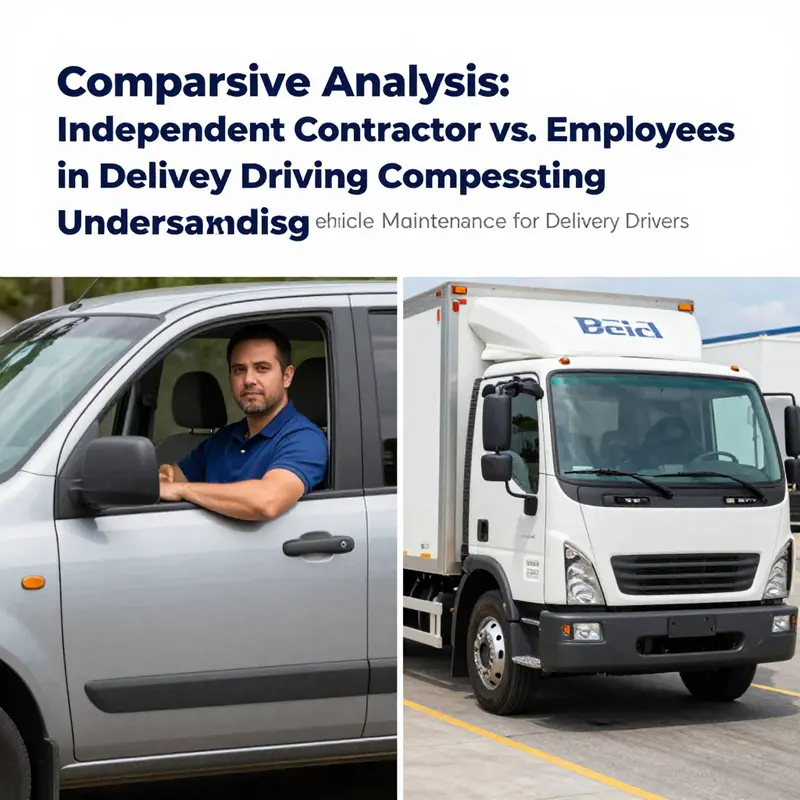
The central question of whether delivery drivers actually get paid to maintain their vehicles sits at the intersection of classification, compensation design, and the evolving rules of the gig economy. It is not a single answer, but a spectrum shaped by whether a worker is treated as an independent contractor or an employee, by the company’s policies, and by the contractual terms binding each driver. Within this spectrum, maintenance costs are not merely an incidental expense; they redefine the real value of pay, risk, and financial security for anyone who spends their workday behind the wheel. The research landscape shows a clear divide. For independent contractors—those who drive for platforms that flatly classify workers as self-employed—their compensation structure rarely pays them directly for maintenance. Instead, the framework presumes they own and operate their own vehicles, and they shoulder fuel, maintenance, insurance, taxes, and other business costs. Some platforms do offer mileage reimbursements or per-delivery pay designed to offset these expenses, but when a vehicle ages, or when maintenance needs rise, many drivers discover that reimbursements or per-delivery rates do not fully cover upkeep. In other words, the sticker price of driving can outpace the numbers paid out in wages, especially as wear and tear accumulates over time.
For company employees—drivers paid as regular staff and sometimes assigned to a company vehicle—the landscape often looks different. Employees frequently benefit from a vehicle that the employer maintains, insures, and regularly services. When personal vehicles are used for work, some employers provide mileage reimbursements or stipends intended to offset maintenance costs, yet these provisions are far from universal. The practical upshot is that employees typically enjoy greater financial predictability and a different safety net of benefits, while those same drivers may face lower gross earnings. The data points to a counterintuitive picture: independent contractors can report higher hourly or daily pay rates, yet the net income after business expenses and taxes can be lower than the steadier, more secure compensation that employees receive, especially when benefits such as health coverage, paid time off, and retirement plans are factored in.
To illustrate the arithmetic, consider that independent contractors in delivery work frequently report higher gross pay on a daily basis. A may-be-typical figure cited in industry observations is an average daily pay around $285 for contractors in the United States. It is crucial to emphasize, however, that this number is not guaranteed. It reflects revenue that depends on hours worked, demand, and the number of deliveries completed, not a paycheck with predictable deductions. The real cost tail attached to that higher gross can be substantial. Contractors must account for fuel, insurance, vehicle maintenance, taxes, self-employment tax, and other business expenses. Maintenance costs, in particular, unfold as a function of vehicle age, miles driven, and the type of driving required by peak delivery windows. A worn or aging vehicle tends to demand more frequent service, more expensive repairs, and earlier replacements. In short, the higher headline pay may be offset by the larger, more variable expenses, and by the tax burden that falls on self-employed earnings. This contrast is not merely a numbers game; it reflects a difference in risk exposure. Independent contractors bear the risk of price swings in parts and labor, the possibility of downtime while a vehicle is in the shop, and the ongoing uncertainty of tax obligations that come with running a small business. The net effect is a form of financial calculus where higher potential earnings do not automatically translate into higher disposable income once expenses are subtracted.
The employer-employee distinction also shapes how risk is allocated and who bears the consequences when maintenance issues arise. In the employee model, the employer’s liability for work-related activities translates into obligations to provide workers’ compensation insurance and liability coverage—protections that cushion the driver from some of the financial shocks of an accident or a major repair on a company vehicle. For drivers who use their own cars for work, the situation is more complex. They may receive mileage reimbursements or stipends, but the maintenance and insurance costs fall to them, and the coverage can vary widely in scope and adequacy. This is precisely where the practical experience of many drivers diverges from the study of payroll lines: the same job can feel materially different depending on whether the employer shoulders the repair bill and the risk, or whether the driver does.
The overall compensation picture then becomes a balance between gross pay, benefits, and the cost of doing business. Independent contractors may report higher nominal pay per hour or per day, but their financial equation includes taxes, business deductions, and the unpredictable demands of vehicle upkeep. Employees, by contrast, often enjoy a more predictable paycheck and a suite of benefits that help protect against health-care costs, retirement planning, and paid time off. The value of these benefits is hard to quantify in a single line item, yet it matters when calculating total compensation for a worker who spends many hours on the road. The decision is not simply about the size of the paycheck, but about the shape of compensation over time—the way wages, taxes, insurance, maintenance, and benefits mix to form a driver’s long-term financial stability.
In surveying the legal and liability landscape, another layer emerges. Employers are typically liable for the actions of their employees during work hours and are required to carry workers’ compensation insurance and liability coverage. Independent contractors operate under their own business structure, which means they must secure their own insurance and assume liability for their work-related activities. The cost and complexity of securing appropriate coverage can be a substantial burden, and it adds to the practical sense that maintenance and risk management are tasks that either the employer shoulders or the contractor must shoulder alone.
These distinctions feed into a broader policy conversation about fair pay and working conditions in the gig economy. The tension is simple and stubborn: higher gross earnings for contractors can mask a thinner margin when all costs are counted. Conversely, the stability and benefits associated with employee status may come at the price of lower headline pay and less flexibility. In this light, the question of whether drivers are paid for maintenance becomes less a yes-or-no inquiry and more a question of how compensation design aligns with the realities of ownership, risk, and the social protections that workers expect. This is not a purely academic debate. As companies rethink workforce models, and as policymakers explore clearer standards for classification and worker protections, the maintenance question remains central to what a fair, sustainable compensation system looks like for delivery drivers.
For readers seeking a practical anchor on what is counted as vehicle maintenance, a quick reference can help illuminate the costs that drivers must consider. See what is vehicle maintenance for a concise overview of the typical components a driver may need to budget for over time. This background reinforces why the maintenance line item can be a dividing factor between gross earnings and take-home income, especially when the vehicle age and usage pattern push maintenance frequency upward. As the discussion continues, it becomes clear that maintenance is not an isolated line item but a central facet of the broader compensation framework.
The chapter’s core takeaway is that maintenance costs are deeply entangled with how workers are classified and how compensation plans are structured. Independent contractors can appear to earn more on paper, but the absence of a guaranteed benefits package means the true value of their earnings may be diminished by mounting upkeep, taxes, and the unpredictability of future repairs. Employees, with company-provided vehicles or structured stipends, can enjoy more predictable finances and a safety net, even if their base pay is lower. This does not render either model universally superior; rather, it illuminates how the economics of vehicle upkeep shape the real-world experience of delivery drivers and, by extension, the evolving design of compensation in the delivery economy.
The discussion also points toward linked considerations for policy, corporate governance, and driver advocacy. As the industry continues to test different configurations—ranging from vehicle ownership models to hybrid approaches that blend elements of independence with formal employment—the maintenance cost question will persist as a key signal of where compensation models align with worker welfare. In the end, the answer to do delivery drivers get paid for vehicle maintenance is nuanced: some drivers receive indirect support through reimbursements or benefits, while others bear the full burden of maintenance themselves. The ongoing negotiation among workers, platforms, and policymakers will determine how these costs are shared in the future, shaping the structure and discipline of pay in the delivery landscape.
External reference and further reading: For a formal overview of how worker classification impacts pay and benefits, see the U.S. Department of Labor guidance on independent contractors vs. employees: https://www.dol.gov/agencies/whd/contractors-vs-employees.
Paying on the Go: How Vehicle Maintenance Shapes Pay for Delivery Drivers

Maintenance costs rarely appear on a pay stub, yet they quietly shape the real earnings of anyone delivering goods for a living. The simple question, do delivery drivers get paid for vehicle maintenance, folds into a broader conversation about who bears the cost, how compensation is structured, and what tax rules allow drivers to recover some of their expenses. The answer is nuanced: it depends on whether a driver is treated as an independent contractor or as an employee, the policies of the company or platform, and the specifics of tax reporting and deductions. Taken together, these factors determine not just the amount of money a driver takes home, but the true cost of keeping a vehicle on the road every day.
For many drivers classified as independent contractors, direct maintenance reimbursement is not a built-in feature of compensation. These drivers own and operate their own vehicles, and the operator’s pay is designed to compensate for time, effort, and risk rather than to cover every line item of vehicle upkeep. In practice, platforms that connect drivers with deliveries often roll maintenance costs into the per-mile rate or the per-delivery fee. The idea is simple: the driver’s pay should reflect vehicle wear and tear, fuel use, insurance, and other business-related expenses. The challenge, however, is that mileage-based reimbursements or flat rates rarely track actual costs, which can rise as a vehicle ages and repairs become more frequent. Maintenance tends to be the unseen drain on earnings, especially for drivers who rely on older cars or high-mileage fleets. The math becomes a moving target: a few expensive repairs can erase several weeks’ worth of what looked like a reasonable per-mile rate.
Company employees, by contrast, sit in a different economic space. Many deliver with a company-provided vehicle, which means maintenance, insurance, and general upkeep are handled within the corporate fleet. This arrangement can dramatically reduce out-of-pocket costs for the driver and lower risk of sudden, catastrophic repairs that derail a shift. When a driver uses a personal vehicle for work under an employee model, some employers offer mileage reimbursements or stipends intended to offset maintenance and other work-related expenses. Yet even here, the coverage is not universal, and the generosity of such programs varies widely from one employer to another. In some cases, reimbursements come with caps or require strict documentation, which can create friction for drivers who juggle a busy schedule with repeated maintenance needs. The result is a spectrum: from near-total maintenance support in fleet operations to partial or non-existent coverage under personal-use policies, all shaping the net income of the person on the road.
Amid these practical differences lies a layer of regulatory and financial complexity that affects how drivers navigate their taxes and deductions. The Internal Revenue Service recognizes that vehicle use for business purposes can be deductible, but it also places drivers in a position of choosing among methods that change year to year and depend on how the driver files taxes. In general, drivers who are self-employed or otherwise operate as independent contractors can deduct vehicle expenses related to business use. They may choose the standard mileage rate, a flat deduction per mile driven for business, or the actual expenses method, which requires calculating the precise costs of fuel, maintenance, depreciation, insurance, and other related expenditures. This bifurcation means that even if a platform offers little direct maintenance pay, a driver can still recover a portion of those costs on the tax return if they keep careful records and meet the IRS criteria for business use. The burden, of course, is in the bookkeeping: to maximize deductions, a driver must distinguish clearly between miles driven for business and miles driven for personal reasons, retain receipts for maintenance and repairs, and retain a meticulous ledger of expenses throughout the year.
A practical way to frame this is to consider maintenance as part of the broader category of vehicle expenses, not just as a single repair bill. Expenses such as routine maintenance, tire wear, brake work, and more unusual repairs all factor into the actual-expense deduction. At the same time, drivers can track non-maintenance costs that are still tied to business use—tolls, parking fees, equipment purchases like phone mounts, and even insurance costs that are specifically tied to the delivery work. The IRS makes clear that to deduct these costs, the driver must demonstrate business use and maintain thorough records. This is not a license to deduct every expense without justification; rather, it is a structured framework for acknowledging the real costs of keeping a vehicle in service for business purposes. As a result, drivers who treat their work as a business—carefully separating personal and business driving—are better positioned to claim meaningful deductions that can offset maintenance outlays over time.
Understanding what counts as maintenance is central to making sense of deductions and reimbursements. Maintenance covers the routine and the unexpected—the tasks that keep a vehicle running safely and efficiently, from oil changes and tire rotations to brake repairs and systems diagnostics. It also includes components that support the delivery operation but are not mechanical repairs themselves, such as a device mount for a laptop or a durable phone charger used during shifts. For those who want to dig deeper into what maintenance entails, a solid starting point is understanding the general concept of vehicle maintenance and how it applies to business use. What is vehicle maintenance can be explored in depth at a resource that breaks down these definitions and provides context for the business traveler or gig worker alike. What is vehicle maintenance.
The practical takeaway for drivers is to separate two realities: what the employer or platform covers and what the tax code permits. Even with generous fleet programs, a driver may still experience gaps between the costs that actually occur and the compensation that is intended to cover them. In the absence of direct maintenance pay, the tax code offers a potential offset, but only if the driver keeps accurate records. A key recommendation is to maintain detailed logs of business miles, paired with receipts and notes for every maintenance-related expense. Logs are not just for tax time; they also provide a framework for budgeting and forecasting. They allow drivers to see, in concrete terms, how many dollars of maintenance are embedded in each mile and how those costs trend as the vehicle ages. This awareness can inform decisions about vehicle replacement, insurance choices, and even the decision to switch from a personal-vehicle arrangement to a fleet vehicle, if such options exist within a driver’s employment relationship.
Beyond the arithmetic of deductions, there is a broader policy conversation about fairness and the structure of compensation in the gig economy. The gap between the cheap, per-mile pay that some platforms promise and the real cost of keeping a vehicle on the road has sparked ongoing discussions about how to balance flexibility with living wages and predictable costs. For drivers who rely on their own vehicle, maintenance can feel like a recurring budget shock, especially when a single repair costs more than anticipated or when worn components threaten safety and uptime. Those tensions contribute to calls for more explicit maintenance reimbursements, more transparent accounting of expenses, or even different employment classifications that provide a steadier safety net while preserving the flexible nature of delivery work. While policy changes move slowly and vary by jurisdiction, workers have increasingly emphasized the need for clear expectations around maintenance-related costs and timely, fair compensation.
For drivers who want to manage these costs proactively, a few practical steps can help. First, build a maintenance fund separate from day-to-day income. Setting aside a predictable percentage of earnings for repairs can reduce the stress of unexpected bills. Second, maintain disciplined records: a dedicated notebook, a digital log, or a simple expense tracker that flags business-related miles, tolls, and maintenance receipts will pay dividends come tax time. Third, plan for major milestones. If a vehicle is approaching the point where repairs will become increasingly frequent, run a cost-benefit analysis about continuing with the same vehicle versus replacing it. This analysis should include maintenance projections, fuel efficiency, insurance costs, and the potential for higher tax deductions with a newer vehicle. Fourth, explore the balance of mileage versus actual expenses if operating as self-employed. If maintenance costs are unusually high, the actual-expenses method may yield a larger deduction than the standard mileage rate, but it requires careful documentation of every cost beyond miles driven. Finally, consider the broader policy landscape and advocate for clearer maintenance-support structures, whether through platform reforms, clearer classifications, or improved fleet programs. These steps won’t eliminate the tax code’s complexity, but they can translate into tangible improvements in net income and financial stability for drivers.
In sum, payments for vehicle maintenance in the delivery arena are shaped by status, policy, and paperwork. Independent contractors often bear the full cost, with reimbursement schemes that may only partially offset upkeep. Employees with company vehicles enjoy greater direct maintenance support, while those using personal vehicles face a patchwork of reimbursements and deductions. The tax system offers a possible offset through deductions, but only if drivers maintain meticulous records and understand the distinction between miles and expenses. The result is a landscape where maintenance remains a critical, if invisible, factor in earnings—the difference between a seemingly solid hourly rate and a driver’s true take-home pay can hinge on whether maintenance is reimbursed, deducted, or absorbed into the cost of doing business. The evolving conversation about fair pay and worker protections will likely continue to shape how this silent line item is treated, making it essential for drivers to stay informed, organized, and prepared to advocate for policies that reflect the real costs of keeping goods moving on the road.
External resource for further reading: for official guidance on vehicle expenses, see IRS Publication 463. https://www.irs.gov/publications/p463
Worn Tires, Quiet Dollars: The Hidden Toll of Vehicle Upkeep on Delivery Driver Earnings
Every mile on the road carries more than distance; it carries the weight of maintenance costs that quietly erode take-home pay. In the fast-growing world of last‑mile delivery, the vehicle is not just a tool for getting goods from point A to point B. It is a financial asset that ages with use, demands regular attention, and can suddenly become a profit sink when maintenance slips from routine to disruptive. The way these costs are handled depends less on a single market rule and more on the employment arrangement, the policies of the gig platform or courier company, and the line items that show up on a driver’s ledger at the end of the week. The sum of small expenses—oil changes, tire wear, brake service, routine inspections, and the occasional repair after an unforeseen hitch—can cumulatively reshape earnings even when the base pay appears steady. This is not just a matter of math; it is a question about whether compensation reflects the actual conditions under which drivers must operate to stay on the road and keep customers satisfied.
For independent contractors who supply their own vehicle and accept assignments through marketplace apps, the ordinary rule is that vehicle maintenance is not paid as a separate wage item. The economic model is built around base pay, tip potential, and a reimbursement mechanism that is supposed to offset costs—often in the form of mileage reimbursement or a per‑delivery rate designed to cover operating expenses. Yet many drivers report that these reimbursements lag behind real costs, particularly as vehicles age and reliability becomes more uncertain. When a car with higher mileage requires more frequent servicing, the incremental expense may outweigh the incremental income from extra deliveries. The result is a creeping downward pressure on effective earnings, a pressure that grows as the maintenance burden intensifies with the vehicle’s age and the wear from heavy daily use. The math sounds straightforward, but in practice the balance between revenue and upkeep is anything but constant, shifting with fuel prices, insurance premiums, maintenance intervals, and the unpredictable bills that accompany wear and tear.
Meanwhile, drivers who work as employees for a delivery company often face a different financial rhythm. Some are steered toward a company vehicle, with routine maintenance, repairs, and insurance handled as part of a centralized fleet. In those cases, the direct maintenance cost to the driver is reduced or eliminated, at least for work‑related use. When personal vehicles are permissible for work, the compensation picture tightens again: mileage reimbursement, stipends, or other allowances may be offered, but coverage is not universal and rarely comprehensive. The seemingly straightforward choice between a company vehicle and a personal one hides nuances that affect earnings. A company vehicle can reduce the immediate maintenance burden, but it also concentrates risk in fleet management decisions, depreciation, and downtime when a vehicle is out of service for repairs. Personal vehicles keep costs in the driver’s hands, yet the potential for reimbursement remains a lifeline of sorts—one that too often fails to match the true outlay required to keep the vehicle roadworthy.
The tension between base pay and upkeep pushes maintenance into a central role in earnings discussions. When the engine light flickers, when tires wear thin, or when a routine service reveals larger issues, a driver’s income posture changes in real time. The impact is not merely financial; it affects reliability, service quality, and customer experience. A well‑maintained car is more likely to arrive on schedule with minimal downtime, preserving the driver’s ability to take more orders and maintain higher acceptance rates. Conversely, a vehicle that routinely requires attention can become a bottleneck, forcing missed shifts, delayed deliveries, or the need to cancel bookings. In markets where competition for delivery windows is intense, even small maintenance disruptions can translate into tangible opportunity costs.
The practical implications extend to planning and operations as well. A driver who prides themselves on punctuality may find it worth investing in preventive upkeep even when pay scales appear lean. Regular oil changes, tire rotations, and brake inspections are not merely mechanical necessities; they are strategic investments aimed at reducing downtime and keeping a steady flow of orders. The logic is clear: fewer breakdowns mean more time on the road delivering, which can translate into a higher cadence of completed orders and, in turn, higher earnings over a given period. Yet the upfront costs of preventive maintenance compete with other short‑term priorities, especially when base pay is modest and tipping, where present, is unpredictable.
To understand the economics more clearly, one can think about maintenance as a recurring expense that interacts with a driver’s utilization rate. For example, a van or car that clocks a certain number of miles per week may require a predictable maintenance schedule. If the reimbursement structure only offsets a portion of those costs, the remaining burden falls on earnings. As the vehicle ages, the ratio of fixed maintenance expenses to per‑mile revenue tends to rise, creating a declining slope in effective income if no adjustments are made to pay scales or tipping norms. In that sense, maintenance is not a one‑time cost; it is a dynamic element of long‑term profitability for the gig economy driver.
The broader discussion surrounding fair compensation has evolved to recognize maintenance as a core factor in earnings. Drivers on the road today often describe tipping as more than a courtesy; it is a practical acknowledgment of the risks and costs that come with maintaining mobility in a system that prizes speed and availability over ownership of a reliable vehicle. The moral economy of tipping—how much, when, and why—has grown out of the realization that a vehicle’s condition is a proxy for the reliability of service. When a driver’s car is well maintained, the likelihood of timely deliveries increases; when it is not, downtime and cancellations rise, narrowing the window of opportunity for earnings. From this perspective, tipping becomes a critical (even essential) component of compensation for a subset of drivers who shoulder maintenance costs personally.
For readers and writers seeking a grounded understanding of how these costs surface in practice, it helps to view maintenance through the lens of everyday operations. A reliable vehicle is the backbone of efficiency: it enables steady routing, predictable delivery times, and the psychological confidence to accept more orders. A durable insulated delivery bag, a dependable phone mount, and fast‑charging cables might seem incidental compared with the mechanical costs of oil and tires, but they contribute to reducing downtime and preventing mis‑delivery or miscommunication issues that arise from equipment failures. The net effect is a smoother workday with fewer interruptions, translating into more completed trips and greater earning potential. Conversely, neglecting routine upkeep invites the kind of breakdowns that halt work, trigger repair bills, and compress the number of hours the driver can devote to earning money.
The conversation about who pays for maintenance thus sits at the intersection of economics, policy, and ethics. It raises questions about the adequacy of base pay, the fairness of reimbursement schemes, and the social contract surrounding tipping in a highly digital, highly competitive labor market. As platforms and employers experiment with different models—some emphasizing fleet maintenance programs, others leaning on individual responsibility—the chapter of maintenance costs continues to unfold. And as the data accumulate, a clearer picture emerges: the maintenance burden is not a peripheral concern but a central determinant of what drivers can actually earn on a sustainable basis. The argument for fair compensation, then, extends beyond one job or one region. It speaks to the design of the delivery economy itself and to the expectations that customers have about reliable, timely service.
For readers seeking a concise overview of the maintenance concept referenced here, a helpful resource explains what maintenance encompasses and why it matters beyond simple upkeep. What is vehicle maintenance provides a baseline to anchor the discussion in practical terms and to contrast routine care with major repairs. This background supports the broader takeaway: maintenance is not a luxury but a core input into the profitability and reliability of delivery work.
As this chapter has indicated, the economics of vehicle upkeep are inseparable from the ethics of compensation. The rise of tipping as a meaningful supplement to base pay reflects a broader awareness that earnings in the gig economy depend on more than how many deliveries a driver completes. They depend on the reliability and operability of the vehicle underpins, which in turn hinge on disciplined maintenance habits and affordable, effective maintenance supports from employers or platforms. The debate will likely continue as drivers, policymakers, and platform designers seek a balance that keeps the wheels turning, the customer satisfied, and the workforce able to make a sustainable living. For researchers and practitioners, the Forbes discussion on the impact of maintenance costs on driver earnings offers a data‑driven perspective on these trends and is a useful external resource for those looking to quantify the relationship between upkeep and income in the evolving delivery economy.
Final thoughts
In conclusion, the landscape of vehicle maintenance compensation in the delivery sector showcases stark contrasts between independent contractors and company employees. While independent contractors shoulder the financial burden of vehicle upkeep without direct compensation, company employees often benefit from structured support in the form of company vehicles and maintenance reimbursements. Understanding these differences is crucial for business owners, as they influence driver satisfaction, retention, and overall operational costs. Ultimately, a clear grasp of vehicle maintenance policies can lead to more equitable compensation models, enhancing both service quality and workforce stability.