
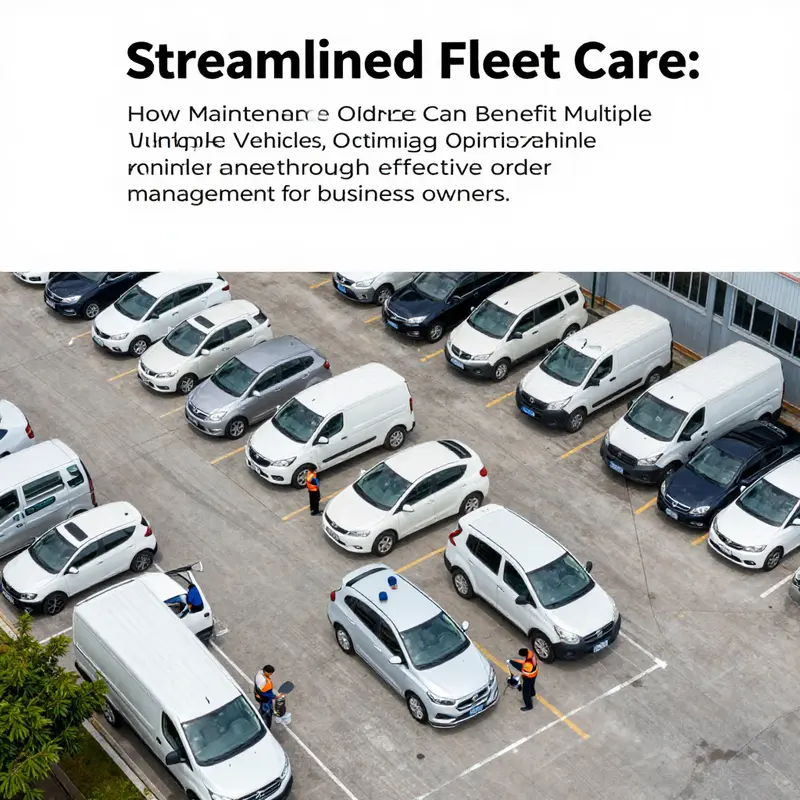
Effective vehicle maintenance is crucial for business operations, especially for those managing multiple vehicles. A maintenance order can apply to more than one vehicle, enabling organization and efficiency in upkeep. This article explores how businesses can utilize maintenance orders across their fleets. In the first chapter, we discuss the mechanics of applying a single maintenance order to multiple vehicles. The second chapter delves into why this practice is essential for fleet management and its impact on operational efficiency. Finally, we examine the legal and operational implications of maintaining several vehicles under a single maintenance order, ensuring compliance and streamlining processes.
One Order, Many Miles: The Practical and Strategic Case for Maintenance Orders That Span Multiple Vehicles
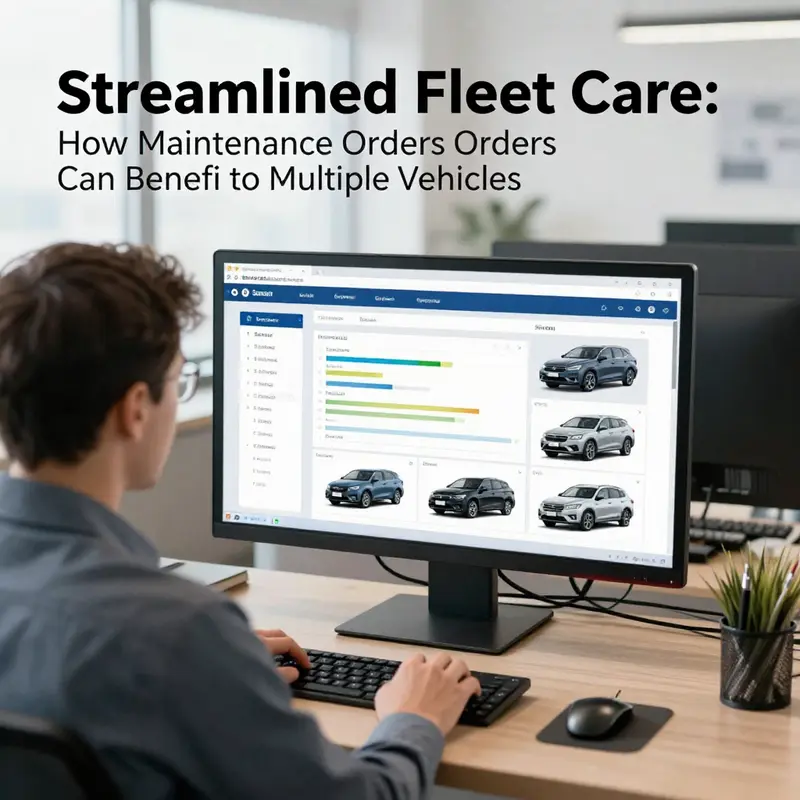
Across fleets large and small, maintenance is the beating heart of reliability. The question of whether a maintenance order can apply to more than one vehicle is not merely a technical yes or no; it is a reflection of how organizations plan, execute, and account for care across a living inventory of assets. When a single order covers several vehicles, the result is a tighter, more coordinated approach to service that aligns scheduling, parts sourcing, technician time, and financial tracking. It also introduces a set of design choices that can improve or complicate operations, depending on how the order is defined in the enterprise planning system and how the data flows from the shop floor to the ledger. In practice, multi-vehicle maintenance orders are a natural fit for fleet management, especially in contexts where many assets share common preventive maintenance schedules, service providers, or parts catalogs. A single scheduling window can ensure that all aligned inspections and routine services occur within a shared timeframe, reducing downtime and streamlining logistics. This is not simply a matter of convenience; it is about creating a cohesive service narrative for a fleet, where every vehicle has a parallel track in the maintenance calendar and every dollar spent can be measured against a unified objective for uptime and safety.
To understand how this works in a real-world system, consider the mechanics of how a multi-vehicle maintenance order is constructed. In a typical enterprise maintenance module, you begin with an order that is not tied to a lone asset but to a cohort of assets. The order includes an Object List, which enumerates all vehicles or equipment that require service. Within that same order, there is a designation for the Main Equipment—the primary asset that acts as the cost collector and reference point for financial and logistical tracking. This designation is crucial. While the order covers several vehicles, the costs and work activities—labor, parts, and attached services—are attributed to the main equipment for accounting, reporting, and audit purposes. The other vehicles in the Object List benefit from the same service window, receiving the same inspection or maintenance tasks, but their associated costs and service records are linked back to the main equipment within the system. The practical effect is a single, streamlined ticket that coordinates multiple assets while preserving the integrity of asset-level history and financial reporting.
The logic behind this structure becomes clearer with a concrete scenario. Imagine a mid-sized logistics company that operates five delivery vans that all require a routine inspection, tire rotation, brake check, and fluid top-offs within the same week. Instead of issuing five separate maintenance orders, the shop foreman creates one multi-vehicle maintenance order. The Object List includes Vans A through E, and the Main Equipment is designated as Van A. The service provider performs the same set of preventive tasks across all five, but the labor and parts consumed are recorded against Van A. As work completes, the fleet manager gains a consolidated view of the maintenance window: which tasks were performed, what parts were used, and how much labor was attributed to the main vehicle. Simultaneously, each van receives an individual service history entry under its asset record, ensuring that the fleet’s data remains granular where necessary while the operation benefits from the efficiency and consistency of a shared order.
This arrangement is not unique to private fleets; it aligns with practices in government fleets and large corporate operations where scale makes independent maintenance orders for every asset inefficient or logistically impossible. The underlying systems that support these processes—whether they are purely enterprise resource planning modules or integrated asset management suites—provide the scaffolding for multi-asset orders. In such systems, the workflow includes the creation of the order, population of the Object List with the relevant vehicles, designation of the Main Equipment, and assignment of the same service scope across all units. The result is a synchronized maintenance window that minimizes shop time, reduces parts handling complexity, and improves the predictability of spare parts consumption. A single order also simplifies reporting: uptime metrics, maintenance costs, and parts usage can be rolled up against a central cost object while still preserving asset-level detail for post-maintenance analysis and regulatory compliance.
Of course, implementing multi-vehicle orders requires careful attention to data structure and governance. The main equipment acts as the anchor for the order, but the system must also support granular data for the other assets. It needs to capture the asset identifiers, the specific tasks performed on each vehicle, and the parts and labor allocated to each unit, even when the accounting drumbeat is driven by the main equipment. This separation is essential for downstream processes such as warranty validation, vehicle-specific maintenance planning, or regulatory inspections, where a particular asset might have unique requirements or certification needs. For example, a routine inspection might involve a standard checklist applicable to all vehicles in the order, but certain vehicles could require extra attention due to prior wear or recall actions. The ERP or maintenance management system must be able to reflect those nuances without collapsing them into a single, undifferentiated record of work.
Implementation is fundamentally about design choices. The decision to use a single, multi-asset order should rest on a clear understanding of the maintenance taxonomy within the organization: what constitutes a service window, how tasks are mapped to assets, and how costs are distributed for internal reporting and external accountability. When these elements align, the operational benefits become tangible. A shared order tends to improve scheduling efficiency because the shop can allocate a contiguous block of labor and a common parts kit across several vehicles. This reduces the back-and-forth with suppliers and minimizes the green-lighting cycles needed for each asset. It also makes it easier to negotiate or standardize service breadth: if five vans share identical maintenance requirements, a single order ensures that all five receive the same treatment, which in turn fosters consistency in maintenance quality across the fleet. From a data standpoint, the consolidated order enables a stronger, more coherent audit trail. Every step of the maintenance—inspection results, parts fitted, labor hours, and the final status—can be traced from the order level back to the individual vehicle records, preserving the integrity of asset histories while supporting fleet-wide analytics.
A practical benefit lies in the simplification of logistics. When a maintenance window is planned for multiple vehicles, the procurement or parts management process can be aligned so that the required items are available to the service provider in the quantities needed for the entire cohort. The approach minimizes stockouts and reduces the administrative overhead associated with tracking multiple parts orders, supplier communications, and receiving notes for each asset. This is especially valuable in environments where the service provider operates on a single visit or a limited number of shop sessions. The system can generate a consolidated parts kit and a shared labor plan, while still isolating the outcomes for each asset in the post-service records. In environments with high compliance requirements, such as government fleets or regulated commercial operations, this structure supports a unified but auditable maintenance narrative that can be reviewed by oversight bodies without losing the asset-level detail that inspectors demand.
Every multi-asset order, however, must be designed with safeguards. One risk is that the main equipment becomes a single point of data aggregation to the detriment of asset-specific nuance. If the main vehicle’s costs and tasks dominate the record, subtle differences in wear or performance between the other vehicles may be overlooked. The cure lies in disciplined data modeling: every service line should clearly indicate which tasks apply to which asset and what portion of the labor or parts is attributed to the main equipment versus the other vehicles. In many systems, this is achieved through explicit task mapping and the use of sub-lines or asset-specific flags within the order. A robust approach captures not only what was done but where and for which asset, ensuring that the multi-asset order remains both efficient and accurate in its accounting.
The topic also invites reflection on how organizations plan around warranty and recalls. A multi-vehicle order does not automatically override the need for asset-specific warranty checks. If a particular vehicle is under warranty for a given component, or if a recall notice requires a targeted fix, the system must enable the correct allocation of warranty credits or specialized attention to that asset. The elegant solution is to preserve the broad, shared maintenance window while maintaining the capability to treat exceptional assets with bespoke handling. In practice, this may mean that the main equipment carries the bulk of the common cost center, while an asset-specific line item captures any warranty-covered labor or asset-specific parts. The result is a blended record that respects both the efficiency of a unified order and the fidelity required for asset-specific guarantees.
As with any fleet process, the human dimension matters as much as the technical one. Maintenance teams benefit from a clear standard operating procedure for multi-asset orders. It begins with an accurate asset registry so that every vehicle in the Object List is correctly identified by a unique ID, chassis or asset number, and current odometer reading. It continues with a standardized service scope, ensuring that the same checks are performed across all vehicles in the order unless a justified exception exists. The workflow should also anticipate communication needs: the service desk must be able to relay to technicians which tasks are common to all assets and which tasks require asset-level decisions. This coordination reduces the risk of inconsistent workmanship and accelerates the flow from inspection to repair. A well-designed multi-asset order also benefits from performance metrics that track not just the completion of the order, but the distribution of outcomes across each asset. That way, fleet managers can identify patterns—perhaps certain vehicle types consistently require a longer brake inspection, or a given service window proves suboptimal for one asset due to location or technician staffing. Those insights become the basis for continuous improvement across the maintenance program.
From a governance perspective, adopting multi-asset orders must align with the broader asset-management strategy. The organization should decide when multi-asset orders are appropriate and when separate orders are preferable. In practice, multi-asset orders work best when the assets share a significant portion of the maintenance schedule, use the same service provider or facility, and operate within a common financial framework. When those conditions hold, the economic advantages—reduced shop time, simplified scheduling, and improved parts planning—can be substantial. When assets diverge in their maintenance cadence or possess highly asset-specific requirements, it may be prudent to split orders to preserve clarity and reduce risk. The decision is less about a rigid rule and more about aligning the maintenance workflow with the realities of the fleet, the capabilities of the ERP or asset-management system, and the organization’s reporting needs.
To connect these concepts with a practical sense of how this plays out in modern enterprise software, consider the core pieces of an order that spans multiple vehicles. The Object List provides the roster of assets in scope. The Main Equipment remains the anchor for cost allocation and for the high-level financial view. The individual lines and tasks then flow into the work plan, with clear mapping to each asset. The system’s data model supports rolling up the work performed into a single maintenance event while preserving asset-level detail in histories and future maintenance plans. In this way, the maintenance strategy evolves from a series of isolated efforts into a coordinated program that treats maintenance as an integrated activity across a set of assets rather than as a collection of independent repairs. Such an evolution is essential for organizations seeking to maximize uptime and minimize the administrative drag that often accompanies a growing fleet.
For readers seeking to dive deeper into how these mechanics are implemented in enterprise systems, a practical reference point is available in official documentation that outlines multi-equipment maintenance orders. While the precise product name is not the focus here, the guidance emphasizes how to create and manage orders that cover multiple pieces of equipment, how to assign a main equipment for financial tracking, and how to structure object lists to maintain asset-level traceability. This resource offers concrete workflows, best practices for cost collectors, and strategies to ensure accurate data tracking across assets. It is a valuable complement to the conceptual overview and can help practitioners tailor the approach to their own ERP or asset-management platform.
To connect with foundational concepts on fleet maintenance in general, you can explore broader guidance on vehicle maintenance as a practice. The linked material discusses the fundamental purpose of maintenance, the types of tasks that fleets commonly perform, and how to align maintenance with overall asset performance. What is vehicle maintenance? This reference is a practical entry point for teams looking to build a cohesive maintenance program before layering in multi-asset orders. It reminds us that while the mechanics of ordering can be intricate, the goal remains straightforward: keep the fleet healthy, predictable, and ready for the road.
As organizations increasingly rely on data-driven management, the multi-vehicle maintenance order stands out as a design pattern that harmonizes efficiency with accountability. It makes it possible to run a maintenance program that feels almost orchestral in its coherence: a single score guiding the care of many instruments, each instrument retaining its distinct voice in the orchestration of a well-maintained fleet. With thoughtful configuration, rigorous data governance, and a clear understanding of when to aggregate versus when to separate, a maintenance order that covers multiple vehicles becomes not only feasible but preferable. It is a practical embodiment of the principle that maintenance is most effective when planning and execution align with the realities of the asset portfolio, the operational tempo of the fleet, and the financial discipline that underpins sustained reliability.
External resources can provide additional context and concrete steps for those implementing these concepts in a real system. For a broader, officially supported reference on how multi-equipment maintenance orders can be structured and managed within enterprise software, see: https://help.sap.com/viewer/97c6342b18f54a569787510a139660d1/202202.000/en-US/f872b3e912f3405ca18b3543f8c4122e.html. This resource, while product-specific, reinforces the general patterns of object lists, main equipment, and cross-asset cost management that underpin multi-vehicle maintenance strategies.
One Order, Many Journeys: Coordinating Maintenance Across Multiple Vehicles in a Fleet

In a large fleet, maintenance orders act as the conductor of a living system. They choreograph not just individual tasks, but timing, resources, and responsibilities across a diverse group of assets. From sedans and light trucks to specialized equipment and service vehicles, a well-crafted maintenance order binds every unit to a single, strategic cadence. The aim is not to micromanage each isolated repair, but to create a dependable rhythm that keeps the entire operation moving when it matters most. When a maintenance order spans multiple vehicles, it becomes a strategic instrument rather than a pile of discrete work orders. It aligns the health of each asset with the broader operational requirements of the organization, turning a scattered maintenance footprint into a cohesive, visible program. This holistic view matters as much as the technical work being performed, because availability and reliability are the true currencies of fleet performance.
The concept, though simple in outline, carries powerful implications for how a fleet is planned, executed, and governed. A single document can authorize, schedule, and track maintenance for several vehicles at once, which is especially common in fleet-management practices and in organizations with a shared pool of assets. The practical appeal is clear: common policies, a shared service calendar, and a unified approach to parts and labor. Frequently, the same service provider or workshop handles all tasks, reinforcing consistency in workmanship and in the quality of the results. But even when different facilities handle different assets, a multi-vehicle order preserves a consistent standard, ensuring that the fleet speaks with one voice when it comes to preventive maintenance, inspections, and repairs. In practice, this means routine checks, oil changes, tire rotations, and safety inspections can be scheduled to occur on synchronized timelines, enabling easier tracking of compliance and better forecasting of future workload. The result is a fleet that wears a coordinated maintenance story, rather than a mosaic of separate narratives for each vehicle.
Crafting a multi-vehicle maintenance order begins with a clear policy framework. Planners identify the fleet’s baseline maintenance requirements and apply them to each asset, using vehicle identifiers that align with the organization’s digital systems. The order lists each vehicle by its unique identifier, along with key metadata such as make, model, year, mileage bands, and usage patterns. It then maps each asset to a tailored set of tasks and prescribed intervals. Tasks might include routine inspections, lubrication, fluid top-offs, brake checks, transmission service, battery health assessments, and diagnostic scans of onboard systems. The important part is not merely listing tasks, but aligning them with the vehicle’s role and wear profile. A single service provider may handle the entire set, or the order may route different vehicles to different facilities while maintaining a uniform standard of care. Either arrangement benefits from shared documentation, so every service event contributes to a coherent, fleet-wide health ledger. This unified record strengthens decision-making, making it easier to identify trends, anticipate needs, and justify capital investments.
In designing a multi-vehicle order, planners also embed sequencing logic and downtime considerations. Some tasks are prerequisites for others, and some services require the vehicle to be offline for a defined window. The order thus becomes more than a checklist; it is a scheduling tool that optimizes shop capacity, technician availability, and inventory flow. For a busy operation, the value lies in clarity: a centralized view of when each vehicle is due, where it will be serviced, and what parts are on hand. Such visibility reduces the likelihood of bottlenecks—shifting a late brake job into a later week, for example, or preventing a parts shortage from cascading through several units. With a multi-vehicle approach, management can anticipate aggregate downtime, balance it against production needs, and negotiate with suppliers from a position of knowledge rather than guesswork. The practical payoff is tangible: smoother maintenance logistics, fewer operational hiccups, and more reliable service delivery across diverse routes and shifts.
Another key advantage is standardization. Across a fleet that includes a spectrum of assets—passenger cars, light-commercial vehicles, heavy-duty trucks, and specialized machinery—the maintenance order creates a common language. It anchors procedures, checklists, diagnostic steps, and lubrication schedules to a single framework. This is invaluable for training new technicians, who can learn the fleet’s expectations by following a uniform set of procedures rather than deciphering a patchwork of ad hoc instructions. It also simplifies compliance and auditing. When regulators or internal risk managers review maintenance activity, the consolidation provided by a multi-vehicle order demonstrates consistency, traceability, and accountability across the entire fleet. The resulting documentation supports not only day-to-day operations but also long-term planning, including capital budgeting and lifecycle management.
From a data perspective, the benefits extend far beyond operational convenience. A multi-vehicle order aggregates service events into a single data stream, enabling cross-asset analytics that would be cumbersome if approached asset by asset. Fleet managers can identify patterns that transcend a single vehicle. Are certain parts wearing out faster in specific usage contexts? Do particular routes or duty cycles produce more frequent inspections? Such insights enable smarter procurement, more precise maintenance intervals, and targeted driver training to reduce wear and tear. When data from multiple vehicles converge, the organization gains a robust picture of fleet health, which improves forecasting accuracy and supports more disciplined financial planning. The ability to watch an entire cohort of assets move through maintenance milestones creates a powerful feedback loop that informs both current operations and future fleet composition.
The perspective offered by digital integration elevates a maintenance order from a static document to a living system. Integrated with a digital fleet management platform, a multi-vehicle order allows real-time status tracking, predictive reminders, and automated scheduling. Dashboards can illuminate which vehicles are approaching service windows, which are currently in the shop, and how inventory and technician workloads align with these requirements. Alerts can prompt proactive action when a vehicle’s diagnostics indicate emerging issues, potentially catching problems before they become failures. The combination of real-time visibility and proactive scheduling helps minimize downtime and stabilizes maintenance costs over time. As the data accumulates, the organization can shift from reactive maintenance—tending to issues as they appear—to proactive maintenance, where maintenance is scheduled in anticipation of needs and aligned with operational priorities.
Shared maintenance analytics further amplify the value of multi-vehicle orders, particularly in complex environments or when fleets operate in modular facilities. In such contexts, machines and vehicles encounter a range of operating conditions that differ from factory testing scenarios. Relying solely on static manuals is rarely sufficient. A multi-vehicle order, integrated with analytics, enables organizations to detect cross-asset failure patterns, learn from collective data, and adjust strategies across the fleet. The goal is to move from diagnosing issues after they occur to predicting issues before they disrupt operations. This is the essence of scalable, data-informed maintenance. The architecture needed to support this shift emphasizes robust interconnected systems, interoperability between tools, and continuous learning loops that refine maintenance practices over time. When data from inspections, parts replacements, and diagnostics travels smoothly between systems, teams can extract maximum value from every service event. The narrative of the fleet’s maintenance history reads as a single, coherent arc rather than a sequence of fragmented notes.
The 2026 research results illuminate a path for implementing these ideas at scale. The proposed design principles describe a scalable, generalizable framework for shared maintenance analytics in fleet management. Imagine a system that can ingest data from diverse sources, reconcile different data models, and present a unified, actionable view to planners and technicians alike. The emphasis is on robustness and interoperability, ensuring devices and software tools can communicate without friction. Crucially, continuous learning becomes a core capability, with feedback loops that refine maintenance strategies over time. The implications go beyond technology: they shape how organizations allocate resources, invest in data infrastructure, and design workflows that leverage shared knowledge for better outcomes. For readers seeking deep context, the principle itself is documented in the 2026 study and related discussions on how analytics-enabled maintenance orders transform reliability and cost management at scale. While the literature is broad, the practical takeaway is concrete: multi-vehicle maintenance orders supported by shared analytics can deliver meaningful improvements in uptime, budgeting precision, and strategic resilience.
To anchor these ideas in everyday practice, consider the simple yet powerful fact that a maintenance order can apply to more than one vehicle. This is not a theoretical abstraction but a real capability that translates into tangible outcomes on the shop floor and in the fleet’s day-to-day operations. When several vehicles share a directive, teams gain a common language for tasks, timing, and outcomes. They can standardize parts supply across units, harmonize technician training, and create smoother handoffs between shifts. The order becomes a living blueprint that supports fleet-wide health, customer service commitments, and regulatory compliance. It also anchors accountability; maintenance staff can be measured against consistent criteria across the fleet, enabling fair evaluation and continuous improvement. In practice, this approach reduces redundancies, minimizes idle shop time, and supports faster incident response when issues arise across multiple assets.
As operations evolve, the multi-vehicle maintenance order proves itself as a flexible tool. It can accommodate variations in vehicle types, operating environments, and business goals while maintaining a core framework that supports visibility and control. The directive can be adjusted to reflect seasonal demand, evolving regulatory requirements, or new manufacturer recommendations, all without sacrificing the coherence that makes the approach valuable. The capacity to reallocate resources in response to disruptions or shifts in workload is one of the most valuable features of this system. In effect, the maintenance order becomes part of a governance structure that ties maintenance, procurement, and operations into a single, accountable program. The practice of applying a maintenance order to multiple vehicles is not a compromise but a strategic choice that enhances reliability, efficiency, and safety across the fleet.
For readers who want a concise primer on maintenance fundamentals as a foundation for this discussion, there is a practical resource that can help anchor the broader concepts. For a primer on the basics of vehicle maintenance, see What is vehicle maintenance?. This primer reinforces the shared principles that underpin multi-vehicle orders and reminds us that a fleet-wide strategy starts with solid, everyday care for each asset. As the fleet continues to evolve, the interplay between routine upkeep and strategic analytics becomes more evident: maintenance is both a science and an art, balancing predictable schedules with the realities of road use, duty cycles, and capital planning.
Looking beyond daily management, the broader implications of multi-vehicle maintenance orders touch organizational resilience. A fleet that operates with a shared maintenance blueprint gains a durable capability: the capacity to adapt quickly to disruptions, reallocate resources, and sustain service levels despite demand swings, supply chain delays, or decentralized operations. Shared data flows across departments, enabling finance, procurement, and operations to see the same picture. This alignment reduces friction and supports faster decision-making. It also invites governance practices that standardize data quality, security, and auditing across the fleet’s maintenance ecosystem. The net effect is a more predictable operating model where maintenance becomes a driver of reliability rather than a hidden cost.
Finally, the practice of applying a maintenance order to multiple vehicles resonates with broader trends in asset management and digital transformation. It embodies a shift from reactive repairs to proactive care, from individual job tickets to integrated maintenance programs. It invites a culture of continual improvement, where insights from one part of the fleet inform actions in another. It supports better risk management because issues detected early across vehicles can prevent failures on critical routes or high-stakes assignments. And it reduces redundancy and waste by coordinating parts, labor, and downtime. In short, a single maintenance order for several vehicles is a strategic instrument that aligns operations, finance, and risk management around a shared aim: keeping the fleet ready, capable, and compliant.
The chapter closes with a clear sense that multi-vehicle maintenance orders are not merely a procedural convenience but a foundational element of modern fleet governance. They demand disciplined data handling, clear policy, and a willingness to adapt as the fleet evolves. As new technologies mature and analytics deepen, the ability to manage maintenance across many vehicles will only grow in importance. The path forward is to continue refining orders, improve interoperability among systems, and invest in analytics that move maintenance from a cost center into a source of strategic reliability. This is how fleets stay ready for the road ahead—through coordinated maintenance that respects both the individuality of each vehicle and the collective needs of the entire operation.
External link reference: For readers seeking deeper context on the design principles that underpin shared maintenance analytics in fleets, see the external study on Design Principles for Shared Maintenance Analytics in Fleet Management (2026). Design Principles for Shared Maintenance Analytics in Fleet Management (2026).
One Order, Many Wheels: Navigating Legal and Operational Realities of Maintenance Orders Covering More Than One Vehicle

Fleet managers often face a simple, compelling question: can a single maintenance order cover more than one vehicle? In practice the answer is yes, but with a host of caveats that touch on legality, accountability, and the practicalities of day-to-day operations. The impulse to consolidate comes from a desire to streamline scheduling, reduce process overhead, and harmonize service standards across a group of vehicles that share a purpose, a location, or a vendor. In many organizations—commercial fleets, government agencies, and large private firms—the logic is clear: one order can coordinate a series of routine checks, oil changes, tire rotations, and inspections, aligning them with a common maintenance window and a shared service provider. The idea is not to blur responsibility, but to create a centralized mechanism that keeps maintenance routines consistent, simplifies logistics, and provides a coherent thread through the service history of multiple units. The practical reality is that a well-constructed multi-vehicle maintenance order can deliver real efficiency gains, particularly when those vehicles perform similar duties and require parallel service plans. Yet the ease of aggregation must be weighed against the risk that a single document might inadvertently obscure per-vehicle nuances, make traceability murkier, or complicate compliance with regulatory and insurance requirements. In this sense, the topic sits at the crossroads of operational ingenuity and legal prudence, demanding a careful balance between economies of scale and the discipline of per-vehicle accountability.
From an operational standpoint, the mechanics of a multi-vehicle maintenance order are straightforward in the abstract. The order can enumerate each vehicle involved, specify the required services for each unit, and assign them to the same service facility or vendor. The logistics become cleaner when similar vehicles share parts, technicians, or inspection checklists. The consolidation helps facilities plan capacity, reduces the administrative burden of duplicating orders, and makes it easier to generate a consolidated view of maintenance costs and workforce utilization. In many fleet environments, the maintenance schedule can be framed as a single program that spans vehicles, while the underlying tasks lines up at the level of individual assets. Software platforms used for fleet management and enterprise asset management are designed to support this kind of multi-asset orchestration, enabling planners to attach multiple equipment records to a single maintenance event and to roll up costs, service intervals, and work orders in a way that supports high-level oversight. This alignment with software-driven planning is not accidental; it reflects a long-standing industry practice that favors standardized maintenance protocols across a fleet, which in turn can reinforce safety, reliability, and predictability in service delivery. A referenced discussion from an established ERP community even shows that practitioners themselves have contemplated linking multiple devices within one maintenance order to reduce the number of open tickets and to distribute components and tasks from a single source of truth. The underlying logic is palpable: fewer, more coordinated documents can translate into smoother scheduling, more consistent maintenance standards, and simpler tracking across the duration of a fleet’s lifecycle.
But the operational advantages come with a price tag of potential complexity. When several vehicles ride on the same maintenance order, the risk that a single, aggregated document becomes a catch-all for issues that should be treated separately increases. For example, if a problem emerges during service that concerns one specific unit, tracing the root cause to that vehicle can become more challenging if the history is bundled with others. The practice of associating multiple equipment items with one maintenance order can, without careful controls, blur the line between what was done to each vehicle and what remains to be verified. This is not merely an administrative concern; it penetrates the realm of safety-critical record-keeping, warranty assertions, and the integrity of insurance claims. The need for precise, per-vehicle maintenance histories remains a fundamental expectation of regulators, auditors, and insurers alike. The consolidation, therefore, must be paired with robust documentation that preserves the individuality of each asset’s maintenance timeline, even while the operational narrative runs across a shared document.
The legal and compliance terrain is where the discussion becomes especially nuanced. A single order covering multiple vehicles can streamline operations, but it simultaneously creates a possible ambiguity in responsibility and accountability. If an incident occurs involving one vehicle after a maintenance interval that was managed under a shared order, the question of which maintenance action applied to which asset can become central to liability determinations. In the eyes of regulators, rigorous traceability is not optional; it is a baseline expectation. When maintenance records are merged, it is essential to demonstrate with clarity that every vehicle received maintenance that complied with applicable standards and regulatory requirements. The regulatory environment tends to demand per-vehicle inspection notes, service history entries, and proof that the maintenance qualified under the mandated intervals. A consolidated order can complicate the separation of those records unless the system is designed to preserve discrete, vehicle-specific audit trails within the overarching document. Without such granularity, the potential for disputes, penalties, or questions about regulatory compliance increases. This is not a speculative concern. Industry observations and professional discussions highlight the tension between efficiency and regulatory scrutiny, reminding practitioners that the most efficient workflow should not come at the expense of traceability.
Insurance considerations heighten the stakes further. In many policies, claims require a thorough and accessible maintenance history for each vehicle involved. When a maintenance order spans several assets, insurers may scrutinize whether the history can be reliably reconstructed on a per-vehicle basis, ensuring that the documented maintenance matches the vehicle’s usage profile and risk exposure. If the multi-vehicle order lacks transparent per-asset records, insurers could challenge the validity of the maintenance claims or the adequacy of the service performed. In practice, that means the maintenance program must embed explicit vehicle-level evidence—distinct service entries, serial numbers, part usage records, and verifiable approval signatures—for every asset within the same umbrella order. The risk is not hypothetical; it translates into real potential frictions in the claim process, especially in the event of a dispute or an accident. The insurance landscape, therefore, acts as a reminder that even when internal processes favor consolidation, external requirements for proof of proper maintenance remain anchored in each individual vehicle’s file.
From the perspective of governance, a multi-vehicle maintenance order introduces a need for stricter controls and clearer ownership. The reduction in the number of orders can be a win for processing efficiency, yet it demands a sophisticated approach to ensure that the grouping does not erode accountability. A practical governance model would assign explicit responsibilities to the people who authorize the order, the technicians who execute it, and the supervisors who validate the results. The governance framework must articulate how each vehicle’s maintenance tasks are allocated, how work-in-progress is tracked, and how completion is confirmed for every asset within the same order. This requires a robust data model where the parent maintenance order contains child entries or sub-records that tie each service action back to a specific vehicle, its VIN, its maintenance history, and its current condition. In effect, the governance challenge is to preserve the best of both worlds: the efficiency of a single, coordinated order and the rigor of vehicle-specific documentation.
The operational discipline needed to manage this balance can hinge on a few core practices. First, there is the crucial step of standardizing maintenance templates. When similar vehicles share service plans, a template can ensure that the same checklists, parts, and service intervals are applied consistently across all units. The template becomes the backbone for a multi-asset order, reducing the risk of divergent maintenance paths that could undermine safety or compliance. Second, there must be a clear mechanism for part and labor tracking that preserves per-vehicle attribution. A vehicle-level detail line should accompany any aggregated entry, and it should specify which parts were used for which asset, what labor was charged to which vehicle, and how the costs aggregate at the order level. Without this, even the best-intentioned consolidation can drift into a fog of cross-vehicle misattribution. Third, auditing and validation play a central role. The multi-vehicle order should not bypass the standard checks but should be subject to the same (or enhanced) review processes as separate orders. Audits benefit from a consolidated view, but they require the ability to drill down to vehicle-level records with precision. Fourth, there must be explicit alignment with regulatory and insurer expectations. This means maintaining an accessible, per-vehicle maintenance history that can be extracted and presented in a format that satisfies external scrutiny. The practical effect is that the business must invest in data integrity and reporting capabilities that support both macro-level efficiency and micro-level traceability.
The chapter’s core lesson, drawn from both practice and commentary in the field, is that the feasibility of a multi-vehicle maintenance order hinges on a disciplined data architecture and a governance model that protects per-asset accountability. Technically, a single ERP or maintenance-management platform can support linking multiple equipment items to one order, but the administrative discipline must match that capability. The forward-looking organizations that succeed at this balance typically implement a few non-negotiable rules: every vehicle in a multi-asset order carries a unique identifier that traces to its own service history; every service line item is linked to the specific asset it serves; and the system supports cross-asset reporting while preserving the ability to audit each asset independently. It is in this integration of efficiency and discipline that the real value of a multi-vehicle maintenance order becomes evident.
A historical note helps frame the conversation. In 2009, a discussion within an ERP community surfaced a concrete user need: the desire to associate multiple devices with a single maintenance order to reduce the number of open work items and to enable a unified distribution of components. That conversation did not vanish as technology evolved; it foreshadowed the modern needs of large fleets that must harmonize maintenance practices without sacrificing accountability. The practical takeaway from that and subsequent experiences is not to eschew consolidation outright, but to implement it with a structure that preserves the essential per-vehicle record integrity. When the structure is sound, multi-vehicle maintenance orders can deliver operational efficiencies while maintaining the clarity and defensibility required by auditors, regulators, and insurers. When the structure is weak, the same consolidation can become a liability, obscuring maintenance histories, muddying responsibility, and inviting disputes in the event of a claim or an incident.
In contemplating the best path forward, it is useful to anchor the discussion in a broader understanding of maintenance as a lifecycle discipline rather than a one-off workflow. Maintenance is not merely about keeping a vehicle on the road; it is about maintaining the chain of evidence that proves every asset has met defined safety and performance standards. A well-designed multi-vehicle order treats maintenance as a coordinated program with per-asset granularity. It recognizes that each vehicle, even within a shared operational mission, experiences unique wear, usage patterns, and risk exposures. The eventual aim is not to maximize the frequency of consolidation but to maximize the reliability and compliance of every asset within the consolidated framework. When this aim is achieved, the organization gains both the efficiency of fewer orders and the assurance that each vehicle’s maintenance history remains verifiable, auditable, and enforceable. This is the nuanced balance that defines modern maintenance management and that will continue to shape how fleets organize, execute, and document care for their assets.
For practitioners seeking practical guidance, the answer remains context-dependent. If a fleet operates with tight similarity among vehicles, high-volume servicing at a single facility, and stringent internal controls that ensure vehicle-specific traceability, a multi-vehicle maintenance order can be a sound choice. If, however, vehicles diverge in service intervals, carry different risk profiles, or operate under regulatory regimes with strict per-asset documentation requirements, the safer course is to issue independent maintenance orders for each asset. The choice is not a universal rule but a spectrum where efficiency and accountability must be weighed in equal measure. In all cases, the central principle is clear: maintainability and traceability must be preserved even when the administrative surface is simplified. This ensures that the operational benefits of consolidation do not come at the expense of safety, compliance, or the ability to defend maintenance decisions under scrutiny.
In sum, a maintenance order covering more than one vehicle is a legitimate and increasingly common instrument in the toolkit of modern fleet management. Its value lies in creating a coherent program across assets, aligning service standards, and unifying costs and scheduling. Its risk lies in the potential erosion of per-asset traceability and the emergence of ambiguities in liability, insurance, and regulatory compliance. The responsible path, therefore, is to design multi-vehicle orders with explicit, vehicle-level detail embedded within the shared document; to implement templates, checks, and validation processes that preserve per-asset integrity; and to maintain robust reporting capabilities that satisfy internal audit requirements while meeting external standards. In doing so, fleets can reap the efficiency benefits of consolidation without forfeiting the accountability that keeps maintenance trustworthy and defensible.
Internal link for quick reference to maintenance fundamentals: What is vehicle maintenance. This resource helps situate the chapter’s emphasis on maintenance discipline within a broader understanding of asset care and lifecycle management.
External resource for deeper context on multi-equipment in maintenance orders: For further details, see the SAP Community discussion on multiple equipment in maintenance orders. https://answers.sap.com/questions/104863/solved-multiple-equipment-in-maintenance-order.html
Final thoughts
Utilizing a single maintenance order for multiple vehicles provides significant advantages for business owners, including streamlined operations, improved efficiency, and reduced legal risks. As the chapters explored, understanding the application and impact of such orders is essential for effective fleet management. By adopting this practice, businesses can ensure that their vehicle fleets remain in peak condition while also adhering to legal requirements. Embrace the potential of integrated maintenance orders to enhance your vehicle operations.