

Vehicle expenses can pose significant financial implications for business owners. Ensuring you understand the tax benefits of vehicle repairs and maintenance is vital for effective financial management. This guide explores the essential criteria that dictate deductible repairs, as well as the relevant documentation, calculation methods, and related costs that can also enhance your tax deductions. Each chapter provides detailed insights tailored to help self-employed individuals leverage these tax benefits responsibly, ensuring that your business and personal finances are optimally aligned.
The Drive That Pays: Navigating Vehicle Repairs, Maintenance, and Deductions for Self-Employed Professionals

Every self-employed professional knows the vehicle is more than a convenience; it is a mobile office, a toolbox, and in many cases, the lifeline between meeting a client and sealing a deal. Yet when tax season arrives, the questions about what you can deduct for vehicle repairs and maintenance can feel overwhelming. The good news is that repairs and maintenance can indeed be deductible, but only if you treat the vehicle as a business asset and keep meticulous records that show how and when you used it for work. The path from expense to deduction is paved with careful tracking, clear distinctions between business and personal use, and a solid understanding of the methods allowed by tax authorities in your country. Think of the process as a practical exercise in accountability: you are not seeking a windfall, but rather a fair reflection of the costs you incur to run your business on the road, so to speak.
To begin with, the spectrum of eligible expenses is wider than many assume. Repairs and servicing sit at the core, but the deductible umbrella often extends to fuel, oil, interest on a vehicle loan, lease payments, insurance, registration, and even depreciation, or the decline in value of the vehicle over time. The exact list and the rules governing what portion of each expense is deductible will depend on whether you are in a jurisdiction that follows a standard framework for business vehicle use. In practice, most self-employed individuals can claim the portion of these costs that directly relate to business use. The proportion is not a fixed number; it is determined by how you use the vehicle for business relative to personal journeys. For example, if your vehicle is used 70 percent for business and 30 percent for personal travel, you typically claim 70 percent of the eligible costs as a business deduction. This proportional approach is central to the logic of vehicle deductions: the tax system recognizes that you incur costs in the course of delivering services and earning income, but it also recognizes that not all vehicle use serves the business purpose equally.
The question then becomes how to establish and prove that business use dominates. The simplest, most reliable method is to maintain a detailed use record over the year—a logbook or a diary that records each trip’s purpose, distance, and the date. When you are self-employed, the business rationale for each trip must be clear: you travelled to meet a client, to attend a work site, or to pick up business-related supplies. In contrast, a routine commute from home to your regular place of work, or personal errands, does not count toward business use. The distinction matters because commuting is generally considered private use, not business use, and therefore not deductible. This boundary is not arbitrary; it reflects the idea that the tax system should not subsidize your ordinary daily commute, only the business activities that generate income.
The practical upshot is that a well-kept logbook becomes the backbone of your deduction. Without reliable evidence, you risk an audit or adjustments that can erode the benefit of the expense. The logbook should capture the starting point, destination, purpose, and miles or kilometers driven for each business trip. It can be as basic as a diary entry, but it must be consistent, and it should be backed by receipts and invoices that tie to those trips. If your business relies heavily on travel, a digital logbook or mileage-tracking app can help ensure accuracy and reduce the administrative burden. Importantly, the record-keeping requirements apply to all eligible costs: if you claim a portion of repairs and servicing, you should also track the corresponding business travel that contributed to those costs. The goal is transparency: if questioned, you should be able to demonstrate precisely how the business portion was calculated and why it is reasonable.
When we move from theory to calculation, two broad methods emerge in many tax frameworks. The first is a mileage-based or distance-based approach, sometimes referred to as a cents-per-kilometre method. This method assigns a fixed rate per kilometer or mile and multiplies it by the business kilometers you travelled. It is straightforward and predictable, which makes it appealing for those who prefer simplicity. The second method, often called the actual expense method, requires you to compute the total of all vehicle-related expenses for the year and then apply the business-use percentage to determine the deductible portion. This approach can be more precise, especially if your vehicle incurs substantial maintenance and repair costs or if you have irregular driving patterns. Each method has its own record-keeping demands: the mileage method relies on accurate trip logs and a clear accounting of total kilometers, while the actual expense method depends on comprehensive documentation of every expense, from tires to tiresome maintenance bills, and depreciation calculations where applicable.
A critical nuance in both methods is the treatment of depreciation. In many tax regimes, a vehicle’s value declines over time, and deductions for that depreciation can be claimed as part of the business-use calculation. Whether you recover depreciation through a separate depreciation schedule or roll it into your overall expense pool depends on the jurisdiction and the tax form you file. The essential concept remains: depreciation is a legitimate component of the total cost of owning and using a vehicle for business, and your deduction should reflect the portion that corresponds to business use. This is especially important for self-employed professionals who rely on a dependable vehicle as a primary instrument of their trade. A car that is used heavily for client visits, service calls, or on-site work is more than a means of transport; it is a business investment, and its true cost is not merely the dollars spent on fuel or repairs, but the wear and tear that accompanies its active service in generating revenue.
Record keeping is not simply a good habit; it is the legal foundation of any deduction. Receipts for repairs, servicing, and all vehicle-related expenditures must be preserved. It is not enough to rely on memory when the tax year ends and balances are reconciled. Receipts confirm the nature of the expense, the amount paid, and the date of the transaction. Logbooks confirm the business use portion. Diaries or calendar entries can corroborate the purpose of trips and the destinations visited. The discipline of maintaining these records also helps you manage cash flow and budgeting. When you know exactly how much of your vehicle costs are tied to business activities, you can price your services with more confidence, set aside the right amount for tax obligations, and avoid unpleasant surprises in March or April.
Commuting deserves particular attention because it often tests the boundary between private and business use. Travel from home to a regular place of work is typically considered private travel. The moment you operate a home-based business and your travel is to clients or sites directly connected to that business, a trip can qualify as business travel. Even then, the business-use percentage applies. If you started the year with a specific pattern—perhaps you began seeing clients at a home office or coworking space, and your travel to client sites is a clear business trip—the deduction mirrors that proportion. The key is to document the purpose of those trips and to ensure your logbook or diary entries align with those documented purposes. If you travel for a mixed purpose, you may need to allocate the mileage to business and private use on a reasonable basis, with the business portion that reflects the trips undertaken for work.
The practical implications extend beyond the mechanics of calculation. A self-employed professional who keeps meticulous records can transform maintenance costs from a routine expense into a legitimate tool for reducing taxable income. The more you use the vehicle for business, relative to private use, the higher the deductible share of maintenance and other related costs can be. Yet there is a cautionary note: the deduction should be justified by the actual business activity underpinning the travel. It is not enough to claim a high business share simply because it reduces taxes. If challenged, your records must demonstrate that the business trips were essential to delivering services, meeting clients, or managing job sites. In many ways, the integrity of your deduction rests on the quality of your documentation, not the aggressiveness of your calculation.
The broader landscape of vehicle-related deductions also intersects with other common business expenses. If your work requires you to drive to procure supplies or to conduct on-site services, those trips not only justify the business-use percentage for repairs and maintenance but can also support related expenses such as fuel and insurance tied to those activities. There is a natural synergy here: robust documentation for vehicle use bolsters the credibility of your entire expense picture, including depreciation, interest, and leasing costs. And while it is tempting to view the vehicle as a miscible pool of costs, the reality is that tax authorities look for a logical, traceable thread from the business activity to the expense. That thread is your logbook, your receipts, and your consistent application of the selected method for calculating the deductible portion.
For readers seeking a practical anchor in how these rules are framed in real life, consider how a home-based consultant might approach a typical month. Suppose the consultant meets three clients at their offices, travels to a project site for two days, and also returns home at night. The trips to client locations and to the site would be recorded as business travel in the logbook, along with the purpose and distance. The maintenance costs incurred during the month—oil changes, brake service, and a minor suspension repair—would be matched against the business-use percentage derived from the logbook. If that consultant uses the vehicle 60 percent for business and 40 percent for personal errands, then roughly 60 percent of the repair and maintenance costs, and the corresponding share of fuel, insurance, and depreciation, would be deductible. Importantly, any costs that are not clearly linked to business use should not be included in the deduction, underscoring again that precision and honesty in record-keeping are the core prerequisites for legitimate tax savings.
For those who want to deepen their understanding and verify the framework described here with official guidance, a reliable starting point is to consult the motor vehicle expenses guidance provided by the national tax authority in your country. It offers detailed explanations of eligible expenses, acceptable record-keeping practices, and the nuances of calculating deductions under different methods. If you are seeking a concise, user-friendly overview that specifically addresses home-based businesses and vehicle expenses, you may find the Australian Taxation Office guidance on motor vehicle expenses for a home-based business particularly relevant. It lays out the eligibility criteria, the methods for calculation, and the types of records that should be retained in a practical, business-friendly format. What is vehicle maintenance? provides a helpful context for distinguishing routine upkeep from expenses that truly support business activity, which in turn informs how you classify and track each deduction.
Ultimately, the question of whether vehicle repairs and maintenance are tax deductible for a self-employed individual does not hinge on a single rule but on a consistent discipline that ties expenses to verifiable business activity. When you treat the vehicle as a business asset, invest in reliable record-keeping, and apply the appropriate calculation method with integrity, you create a financially sound practice that not only supports your present cash flow but also strengthens your financial planning for future growth. The road to a legitimate deduction is not a shortcut; it is a well-lit path built on documentation, clarity of business purpose, and a steady routine of tracking and reviewing every trip and every expense. As you integrate these practices into your monthly workflow, you will find that the act of maintaining your vehicle becomes inseparable from maintaining the health and viability of your independent enterprise. And as your business evolves, the lines between necessary repairs, prudent maintenance, and tax planning will become clearer, allowing you to navigate each tax year with confidence rather than conjecture.
External resource: https://www.ato.gov.au/individuals/specialist-topics/motor-vehicle-expenses-for-a-home-based-business/
The Ledger on Wheels: Mastering Records to Prove Vehicle Repairs and Maintenance Deductions
Every deduction begins with a careful record of what was spent, when it was spent, and why the expense relates to business use. For anyone looking to claim a tax deduction for vehicle repairs and maintenance, the path is less about the final number and more about the trail of evidence that proves the business connection behind every dollar. The IRS does not ask for perfection, but it does demand documentation that makes sense of how a vehicle is used. In practice, a well-maintained paper trail or digital archive becomes the difference between a legitimate business expense and a disallowed deduction. The core idea is straightforward: if a repair or maintenance cost helps keep a vehicle in service for business purposes, and you can verify that connection with clear records, you may be able to deduct a portion of those costs. If your vehicle is used solely for business, the deduction can be broader; if it is shared with personal use, the deduction must reflect that proportionate mix. This is not merely a matter of courtesy to the IRS. It is a practical discipline that clarifies bookkeeping, minimizes confusion at tax time, and reduces the risk of disputes during audits. The starting point is simple: you need a reliable record-keeping system that captures every relevant detail of the expense and every mile driven in pursuit of business objectives. In practice, this means two primary types of documentation must be consistently maintained: receipts or invoices for each repair or maintenance event, and a mileage log that demonstrates how the vehicle was used across business and personal activities. The receipts tell the story of what was done and how much was paid; the logs reveal how much of the vehicle’s use was business-related. Together, they anchor the deduction in verifiable evidence rather than guesswork. When you review your approach to documentation, think about it as creating a narrative that links the repair to a business purpose. A wrench turned on a company van to repair a leaking seal after a delivery route, for example, is a clear maintenance expense that supports business use—provided you can show the date, the service description, the parts, and the cost. The written record should make it obvious that the expense is tied to business activity, not a planned personal ride to the grocery store. The most reliable practice is to keep every receipt, every invoice, and every mileage entry in one organized file, whether that file is physical or digital. The IRS points to Publication 463 for detailed guidance on travel, entertainment, gifts, and vehicle expenses, but the underlying principle is the same: keep documents that demonstrate the business connection. A deliberate, consistent approach is essential because a missing receipt or an incomplete mileage log can open the door to disallowance during an audit, even if the overall deduction is legitimate. The standard retention period—three years from the date you filed the return or the due date of the return, whichever is later—serves as a practical horizon for keeping these records. Beyond the minimum requirement, the quality of your documentation matters. It is not enough to stash a protective sleeve of receipts; you should be able to retrieve a clear, readable set of records that shows the business logic behind each deduction. That means keeping the original receipts, not copies, and ensuring they include the service date, a description of the work performed, the parts used, and the total cost. If a receipt is missing, a replacement document from the service provider that includes the essential details is often acceptable, but it should be treated as a secondary backup rather than the primary evidence. The mileage log is equally critical. It must precisely document the start and end mileage for each business trip, the date, the purpose of the trip, and the destination. A well-structured log makes the business-use percentage calculation transparent. For example, if you use a vehicle 60 percent of the time for business and 40 percent for personal use, the deductible portion of maintenance and repair costs is typically aligned with that 60 percent. This proportional approach extends to related costs such as fuel, oil changes, insurance premiums, and interest on a vehicle loan, provided those expenses are directly tied to the business use of the vehicle. The key is to maintain a consistent method for allocating mixed-use expenses. A good practice is to apply the business-use percentage to the total cost of each category of vehicle expenses. If the business-use percentage shifts over time—say, you add more client visits or expand delivery routes—update the calculation accordingly. The documentation should reflect these changes, with notes that explain why the percentage evolved. In this context, the allowance for deducting fuel and maintenance costs must be understood as a function of business reliance on the vehicle. Distinguishing between business and personal use is not merely a bookkeeping formality; it is the linchpin of a credible deduction. The more precise your mileage tracking and the more thorough your receipts, the more robust your claim will be. When you review a maintenance invoice, look for an explicit service description and the date of service. If the invoice also lists the vehicle’s odometer reading at the time of service, that information can further support your mileage calculations. If the repairs were part of a broader service interval—such as a multi-point inspection or a routine service package—make a note of the context and the business activity surrounding the service. Sometimes, repairs occur in response to a specific business event, such as transporting equipment to a client site or completing a delivery-heavy week. In these cases, connecting the maintenance to the business activity is straightforward, but you should still document the linkage. It is worth emphasizing that the documentation should be organized and accessible. A secure, organized file—whether a binder in a desk drawer or a well-structured digital folder—saves time during tax time and reduces stress during an audit. One method is to maintain a single “Vehicle Expenses” folder with subfolders for receipts, invoices, and mileage logs. Each month or quarter, you should update these records with new documents and reconcile the mileage log with your business calendar or route plans. In this way, you are not just complying with the letter of the law; you are building a practical system that supports ongoing business decisions. The habit of careful record-keeping also yields a broader benefit. It provides clarity about how you allocate your business costs and helps you evaluate the true cost of operating a vehicle for business purposes. When you see a running total of maintenance and repair expenditures in relation to your business income, you gain a more accurate picture of profitability and cash flow. You may even discover opportunities to adjust vehicle use or pursue alternative transportation strategies that can improve efficiency or reduce liability. For self-employed individuals and small business owners who rely on a vehicle for day-to-day operations, this discipline becomes a strategic advantage. It changes the tax question from a vague possibility to a concrete calculation that reflects actual usage. A well-documented practice also supports more nuanced scenarios, such as when you lease a vehicle or when a vehicle is used by multiple people within a business. In such cases, it is important to note who used the vehicle for business purposes and when. You may need to allocate expenses according to the share of business use by each driver or employee, and the records should reflect those allocations. For those who want a quick reference point, a practical reminder is to consult the IRS guidelines periodically. While the core principle remains consistent—document, separate business from personal use, and apply the business-use percentage to eligible costs—tax rules can evolve. A habit of checking authoritative sources ensures that your record-keeping remains aligned with current policy. If you are exploring a broad understanding of vehicle management, a quick overview of general concepts such as maintenance versus depreciation, and the boundaries around what is deductible, can be found in accessible resources like What is vehicle maintenance. This resource provides a concise frame for thinking about maintenance activities and their relevance to business use, which can help you categorize expenses correctly as you log them. In practice, an effective record-keeping system rests on two pillars: consistent data capture and thoughtful organization. Capture every receipt and every mile with equal care, and store them in a way that makes sense for your workflow. Consistency in entry methods, whether you choose a digital app or a traditional notebook, ensures that the data remains comparable over time. Organization means clear labeling, easy retrieval, and a sensible file structure that allows you or your bookkeeper to confirm the business use percentage quickly. These habits do not guarantee a deduction every time, but they do dramatically increase the likelihood that the deduction you claim is accurate and supportable under audit. The road to a credible deduction is paved with disciplined documentation, clear business purpose, and a transparent method for allocating expenses when personal use intrudes on business use. Together, receipts, mileage logs, and careful categorization create a robust record that stands up to scrutiny and supports the claim that vehicle repairs and maintenance are not merely routine costs, but essential tools for maintaining business mobility and delivering services. External resources can provide additional clarity, but the foundation remains the same: precise records, clear business linkage, and a consistent approach to allocation. For authoritative guidance, see IRS Publication 463: Travel, Entertainment, Gift, and Car Expenses at https://www.irs.gov/pub/irs-pdf/p463.pdf. If you want to explore a practical angle on maintenance that relates to everyday business use, consult this companion resource: What is vehicle maintenance.
Between Business Miles and Personal Roads: Mastering Vehicle Repair and Maintenance Deductions
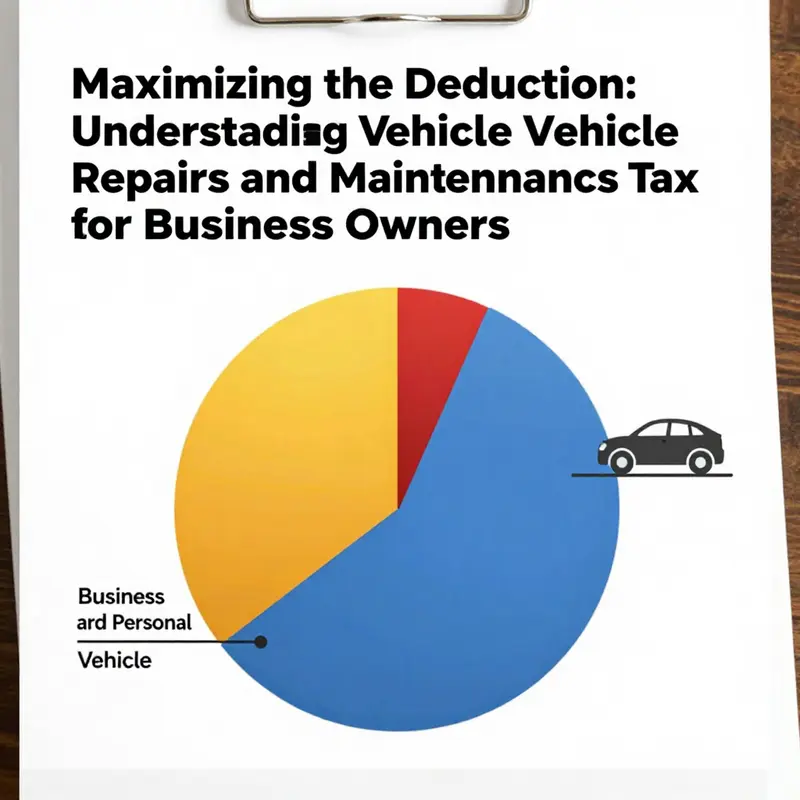
A vehicle you rely on for work is more than a transportation tool; it is a nuanced, recurring business expense that sits at the intersection of tax rules and everyday use. For many self-employed professionals, freelancers, or small-business owners, repairs and maintenance become potential deductions, but only if the vehicle’s primary use is for business and the costs are properly documented. This is where the practical art of tracking your miles and your receipts blends with the precise language of tax codes. The core idea is simple in theory: you can deduct the portion of expenses that corresponds to the time your vehicle was used for business. The challenge—and the value—comes from translating that business use into a rigorous, defensible percentage that stands up to scrutiny if the IRS ever questions the numbers.
At the heart of the calculation is the concept of business use percentage. The IRS requires you to keep detailed records that substantiate how much of the vehicle’s use is devoted to business purposes. When a vehicle serves both business and personal roles, the deduction is proportional to the business share of total use. If you drive 10,000 miles in a year and 6,000 miles are for business, the business-use percentage is 60%. That 60% applies to the repair and maintenance costs you decide to deduct, along with other business-related vehicle expenses if you choose the actual expense method. It is not a blanket deduction; it is a carefully apportioned claim based on verifiable usage. For a clearer sense of what counts as maintenance, see What is vehicle maintenance.
There are two broad paths you can take to claim vehicle-related deductions. The first is the standard mileage rate method, which simplifies the process by allowing you to deduct a fixed rate per business mile driven. Under this method, you don’t separately deduct the actual repair costs at all—the per-mile rate is intended to cover operating costs, including maintenance, fuel, and depreciation, at least for the business portion of the mileage. The second path is the actual expense method. This approach requires you to tally every business-related cost—fuel, oil changes, insurance, interest on a vehicle loan, depreciation, and yes, repairs and maintenance—and then apply your business-use percentage to those totals. The consequence of choosing the actual expense method is that you can deduct the precise share of each expense that corresponds to business use, which often yields a larger deduction if your vehicle has substantial maintenance costs or if you use the vehicle heavily for business.
The practical distinction matters not only for the numbers but for the way you keep records. If you opt for the standard mileage method, you should maintain a basic log of business miles along with the date, destination, and purpose of each trip, so that the miles claimed have a clear business justification. If you elect the actual expense method, you must compile more granular records, including receipts for every repair and maintenance service, fuel receipts, insurance invoices, loan statements, and depreciation schedules. Either approach requires meticulous documentation, but the actual expense method rewards businesses with higher maintenance costs or heavy business use by allowing a precise allocation of each expense to business tasks. The goal is to ensure that the IRS can see, in plain terms, how the business needs of the vehicle translated into costs incurred.
Consider a practical scenario to illuminate the process. Suppose your total vehicle mileage for the year is 10,000 miles, with 6,000 miles dedicated to client visits, site travel, and other business tasks. Under the business-use percentage of 60%, 60% of the repair and maintenance costs would be deductible if you use the actual expense method. If you spent $4,000 on maintenance and repairs during the year, you could deduct $2,400 as a business expense. That calculation is straightforward, but the underlying records must be precise. You would need lines of documentation that tie each maintenance event to a business activity or period, and you would allocate the corresponding portion of the cost to the business use. The other 40% of the costs would be treated as personal expenses and would not be deductible. This same 60/40 principle applies to other deductible costs you track for the vehicle when using the actual expense method, such as fuel and insurance, provided those costs are clearly linked to business use.
Diving deeper into the methods helps anchor the concept in practical steps. With the standard mileage rate method, you calculate your deduction by multiplying the number of business miles driven by the IRS-per-mile rate for the year. For example, if the standard rate is 60 cents per mile and you drove 6,000 business miles, your deduction would be $3,600, encompassing costs that would otherwise be covered by a more detailed accounting of actual expenses. The advantage here is simplicity: you don’t need to track every receipt for every maintenance item. The drawback is that you cannot separately deduct the costs of repairs and maintenance that would otherwise be claimable under the actual expense method, at least for the business-use portion of the miles.
When you choose the actual expense method, you are effectively building a ledger of every expense that touches the vehicle and then applying the business-use percentage to those costs. Repairs and maintenance become legitimate line items in that ledger, alongside fuel, oil changes, insurance, and interest on a loan used to acquire the vehicle. Depreciation is another factor that enters the actual expense equation for many taxpayers, particularly when the vehicle is owned rather than leased. It is important to recognize that only the business portion of these expenses is deductible; the personal-use portion remains non-deductible. If you drive the vehicle 70% for business, 30% for personal use, you would apply that 70% to each applicable cost to determine your deductible amount under the actual expense method.
The recordkeeping discipline is essential to support your deduction, regardless of which method you adopt. The IRS emphasizes that you must be able to substantiate the business use of your vehicle with clear records. A robust log should include dates, destinations, the purpose of each trip, and the odometer readings at the start and end of the year and for individual trips if needed. These data points help prove the business use percentage in case of an audit and ensure that your deductions align with the actual business activity your vehicle supported. In addition to mileage logs, receipts and invoices related to maintenance, repairs, and other vehicle expenses should be organized and preserved. When using the actual expense method, a well-kept set of receipts for each maintenance or repair event strengthens the legitimacy of the business-use allocation and can prevent disputes about whether a particular charge qualifies as a deductible expense.
A subtle but important nuance lies in the interaction between business use and personal use that can arise in everyday life. For example, a client meeting in a nearby city may occur on a day when you also run a personal errand. In such cases, it is the business purpose of the trip that matters for deductibility, and receipts or logs must reflect the business reason for the travel. If you have a mixed-use trip in which part of the mileage is for business and part is for personal reasons, the appropriate approach is to allocate the costs based on the proportion of business miles driven during that trip or, more generally, to apply the business-use percentage to the total cost of the vehicle expenses for the year. Documentation should clearly separate the business portion from the personal portion, so you can demonstrate that the deduction aligns with the actual use pattern.
The IRS provides formal guidance on these concepts, and its publications offer detailed examples and checks for documentation. You can find explicit language about deducting repair and maintenance costs for vehicles used in business in Publication 463, which covers travel, entertainment, gifts, and car expenses. For a direct resource you can consult online, see IRS Publication 463. The guidance emphasizes that the deductible costs for repairs and maintenance are tied to the vehicle’s business use, reinforcing the need for precise, organized records that distinguish business from personal use. What is vehicle maintenance can serve as a practical primer for understanding which services qualify as routine maintenance versus improvements, which can influence how you categorize and document expenses.
As you assemble your tax framework for the year, a few best practices emerge from the combination of the two methods and the need for clear documentation. First, decide early in the year which method you intend to use, and consistently apply it throughout the year. The choice affects how you manage receipts and logs and can influence the total deduction you can claim. Second, maintain a comprehensive mileage log that records every business trip and its purpose. Even if you primarily rely on the standard mileage rate, a backup log can help corroborate your business use if future questions arise. Third, collect and organize receipts for all vehicle-related expenses, including maintenance and repairs, even those that seem minor. The cumulative effect of these costs can be substantial when you apply the business-use percentage under the actual expense method.
Finally, keep in mind that tax rules can be nuanced and subject to change. The basic principle—deducting the business-use portion of vehicle repairs and maintenance—remains a steady anchor, but the exact calculations, thresholds, and documentation requirements can vary by year and by the taxpayer’s overall situation. If your business expands or your vehicle’s usage shifts, revisit your method choice and documentation strategy to ensure your deductions stay accurate and defensible. The goal is not simply to minimize taxes in the short term, but to maintain a clear, auditable trail that reflects how your vehicle serves your business needs across the year. In that sense, the chapter on vehicle repairs and maintenance becomes less of a rigid rule set and more of a practical framework for translating daily work into legitimate, well-supported deductions.
For a concise summary of the core concept—deducting repair and maintenance costs in proportion to business use—consider returning to the foundational idea of the business-use percentage and the two primary methods. The numbers and the paperwork hinge on that simple proportion, but the real work is in the careful, ongoing documentation that keeps your deduction accurate and defensible. By treating your vehicle as a business asset with a clear purpose and a transparent usage pattern, you can make repair and maintenance expenses an integral, legitimate part of your tax strategy rather than a gray area to be avoided. In practice, this means a steady habit of logging miles, preserving receipts, and choosing a method that aligns with your actual costs and business needs. In doing so, you turn the ordinary maintenance you perform on your vehicle into a well-justified business deduction that reflects how you work on the road, not just how you drive on weekends. For authoritative guidelines, see IRS Publication 463.
Beyond Repairs: How Related Vehicle Expenses Can Be Tax-Deductible When Your Car Supports Your Business

When you think about vehicle costs in a business context, repairs and maintenance often take center stage. Yet the tax code recognizes a broader set of expenses tied to the same vehicle, provided you use the vehicle for business purposes. This chapter moves beyond the obvious repair bills to illuminate how related costs—fuel, oil, insurance, registration, depreciation, parking, and tolls—can be deductible in proportion to the vehicle’s business use. The guiding principle is straightforward: the more the vehicle serves your work, the more you can deduct, but only to the extent of that business use. The practical challenge lies in keeping clear, verifiable records that separate business from personal miles and expenses. In this regard, the IRS emphasizes the importance of documentation, noting that deductions must be supported by credible evidence. After all, nothing short of a careful log, receipts, and a well-documented purpose for each trip will stand up to scrutiny when a return is examined or an audit is considered.
For many self-employed professionals, the vehicle is not just a means of transport but a working tool. It carries clients, transports tools and samples to job sites, or ferries paperwork between locations. In such setups, repair and maintenance costs are not merely incidental expenses; they are integral to keeping the business moving. The rules allow a deduction for the portion of these costs that corresponds to business use. Personal miles erase any claim to their share. If a car is used 60 percent of the time for business and 40 percent for personal use, the deductible portion of the total repair and maintenance costs typically aligns with that 60 percent. The same proportional logic applies to the other related costs that accompany business travel, turning the repair bill into just one piece of a larger, business-use puzzle.
A comprehensive approach to deductible vehicle expenses begins with understanding what counts as maintenance and what counts as a deductible business cost. Routine maintenance—oil changes, filter replacements, brake servicing, tire rotations, and other wear-and-tear services—often accompanies a vehicle used for business. When these services are performed, the costs may be partially deductible in proportion to business use. Similarly, fuel costs tied to business trips are deductible in full or in part depending on the business share of total vehicle use. The same holds for insurance premiums that cover the vehicle; a business-use portion of the premium can qualify as a deduction. Registration or license fees, paid to keep the vehicle legally on the road, are deductible to the extent that they relate to business use. The same proportional logic applies to depreciation when the actual expense method is used. Depreciation represents the gradual write-off of the vehicle’s cost over time and can be allocated based on the business-use percentage, a step that requires careful calculation and documentation.
To ground this discussion in practical terms, consider the list of related expenses that often accompany business driving: gas, oil, insurance premiums, registration fees, depreciation (under the actual expense method), and parking or tolls. Each item can be deductible to the extent that it relates to business activities. If your vehicle is 60 percent for business and 40 percent personal, you would typically claim 60 percent of each of these costs as a deduction. This means that a business trip that requires filling the tank and paying a toll could become part of a larger deduction calculation rather than a single line item. The essential discipline is to maintain a consistent method for calculating the business-use share across all related expenses so that the deduction is fair, defendable, and aligned with IRS guidance.
Maintaining robust records is the keystone of a credible deduction. A mileage log is often the backbone of the documentation, capturing the date, purpose of the trip, starting point, destination, and the miles driven. Receipts for fuel, oil changes, services, insurance, registration, and parking or tolls should be organized and retained. A clear trail showing how you allocated miles between business and personal use helps substantiate the deduction should the IRS ever request it. Beyond simply tallying miles, it can be helpful to document the business activity that justified each trip: client meetings, site visits, transporting samples, or moving equipment between job sites. In this way, your records tell a story about how the vehicle supports the business, which strengthens your position if the deduction is ever questioned.
If you seek a concise grounding on what maintenance encompasses and how it fits into broader vehicle expenses, a helpful resource is a dedicated overview that explores the fundamentals of vehicle maintenance. For readers who want a quick reference on maintenance basics, consult What is Vehicle Maintenance. This resource outlines the kinds of routine work that keep a vehicle dependable and safe, which often intersect with deductible business use when the vehicle serves in a work capacity. This linkage between maintenance tasks and deductible business use is exactly where the practicalities of the tax rules begin to take shape in your day-to-day budgeting.
When you move from understanding to applying these rules, you’ll encounter two methodological paths the IRS recognizes for vehicle expenses: the actual expense method and, for some expenses, the standard mileage rate method. The discussion here centers on the actual expense method, which allows you to deduct a portion of a broad set of costs—gas, oil, insurance, registration, depreciation, parking, and tolls—based on the business-use percentage. Depreciation, in particular, is a nuanced area under this method. You may deduct a portion of the vehicle’s depreciation over the years, again proportional to business use. This is not a one-line calculation; it requires careful tracking of the vehicle’s cost, the year’s usage, and how the anniversary of purchase and any subsequent improvements affect your deduction. The practical upshot is that you must be precise about which costs you are including, how you allocate them, and how the business-use percentage is applied across all eligible items.
The overarching principle remains simple yet powerful: the more your vehicle functions as a tool for your business, the more you can legitimately deduct, provided your documentation is meticulous. Personal use, by contrast, does not generate a deduction. If you own a vehicle that serves both purposes, the split in use determines how much of each expense qualifies for deduction. This approach protects the deduction from being inflated by personal use and keeps your tax reporting aligned with the spirit of the rules. For many readers, this means setting up a straightforward system at the outset of a tax year: establish a clear method for tracking business miles, collect receipts for all related expenses, and periodically verify that the allocation remains consistent with actual usage. A well-maintained system minimizes end-of-year stress and reduces the risk of disputes during the filing process.
Within the broader landscape of tax planning, it’s worth noting how related vehicle expenses fit with other business deductions. Gas, oil, insurance, registration, and parking or tolls do not stand alone; they are components of a comprehensive approach to vehicle-related deductions that mirrors the realities of how you use your car for work. If your business requires frequent travel, these costs can accumulate quickly, making the business-use percentage a critical driver of your overall deduction. The key is consistency and substantiation: apply the same percentage to all eligible expenses, keep all supporting documents, and be prepared to explain how each trip served the business. This is where the habit of diligent record-keeping pays dividends, not only at tax time but in the confidence you gain when presenting your numbers to a tax professional or in the event of an audit.
For readers who want to anchor these concepts in official guidance, the tax authority’s vehicle-expense publication provides the detailed rules and examples you need to navigate specific scenarios. It is the benchmark against which any calculation should be checked, ensuring that your interpretation aligns with current guidelines and that you have the right documentation to support your deductions. As you build your records, you can incorporate links to relevant resources that illuminate maintenance, maintenance-related costs, and how to think about vehicle expenses in business terms. In the end, the goal is not to maximize deductions through guesswork, but to create a credible, auditable trail that reflects how your vehicle truly supports your business.
Ultimately, the logic of deductible related vehicle expenses is a practical extension of the fundamental idea that business costs are deductible when they are ordinary and necessary to operate the business. Vehicle use is no exception. By combining careful recordkeeping with a clear understanding of business use, you can ensure that your tax return accurately reflects the costs of keeping your vehicle in service for work. The resulting picture is one of responsible stewardship: you claim what you are entitled to, proportionate to business reliance on the vehicle, while leaving room for the personal aspects that may coexist with the work you do.
As you prepare for tax filing, remember that the road to a defensible deduction runs through documentation and consistency. Maintain a mileage log that records the purpose of each trip, keep every receipt, and apply the business-use percentage uniformly across all deductible items. This disciplined approach not only aligns with IRS expectations but also clarifies your own budgeting: you will know exactly how much of the vehicle’s operating costs are tied to business activities and how much is a personal expense. And if the year brings changes—new clients, broader service areas, or a different work arrangement—that same framework adapts. You may need to recalculate the business-use percentage or adjust the allocation of certain costs, but with solid records, the process remains straightforward.
For readers who want a concise anchor on maintenance and related costs in one place, consult What is Vehicle Maintenance. This resource helps you distinguish routine maintenance from other vehicle-related expenses and think through how those items intersect with business use. Keeping this distinction clear from the outset helps ensure your deductions are accurate, consistent, and ready for the tax year when the time comes to file. And for a formal, authoritative reference that directs you to the exact rules and documentation requirements, refer to the official IRS guidance on vehicle expenses: IRS Publication 463.
Wheels, Wages, and Deductions: Mastering IRS Rules for Vehicle Repairs and Maintenance

The notion that vehicle repairs and maintenance can be tax deductible sits at the intersection of pragmatism and policy. For the self-employed professional who uses a vehicle to meet clients, transport tools, or travel between job sites, the costs tied to keeping that vehicle in service do not vanish simply because they are necessary. They become, under the right conditions, legitimate business deductions. The idea, at its core, is straightforward: only the portion of the expenses that corresponds to business use should be deductible. But the path from a simple car bill to a clean deduction is shaped by precise rules, careful recordkeeping, and an honest assessment of how the vehicle actually functions in the business workflow. The Internal Revenue Service offers guidance on travel, vehicle expenses, and the appropriate documentation in its travel and vehicle expense publications. Keeping the rules front and center helps you avoid the pitfalls of mixing personal convenience with business necessity and ensures that you are claiming only what you are entitled to under the law.
From a practical standpoint, the starting point is use. If your vehicle serves primarily business purposes, you can deduct the costs associated with repairs and maintenance that are necessary to keep the vehicle running for those business activities. The key qualifier is primary use. If the majority of the vehicle’s miles are devoted to business—attending client meetings, driving to job sites, or transporting business equipment—the expenses tied to the vehicle’s upkeep during those business-related periods can be allocated to the business. In real terms, this means a proportional deduction. If business use accounts for 60 percent of the vehicle’s total use, then roughly 60 percent of the repair and maintenance costs are deductible. The remaining 40 percent, tied to personal use, sits outside the deduction. The same proportional principle applies to other related costs such as fuel, oil changes, insurance premiums, and the interest on a vehicle loan, provided these expenses are linked to business use. It is a simple arithmetic that has to be backed by solid documentation.
That documentation is not optional. The IRS emphasizes detailed records to substantiate your deduction claims. A well-maintained log of business miles, paired with receipts for repairs and maintenance, forms the bedrock of a credible deduction. When you claim a deduction, you are effectively telling a story about how the vehicle serves the business. The log should include dates, miles driven for business purposes, the nature of the trip, and the corresponding expenses. Receipts should be matched to the events or periods they support. If a repair covered several months or years, a clear record that ties the expense to the maintenance needs arising from business driving becomes essential. This is not about pedantic recordkeeping for its own sake; it is about building a defensible case should the IRS ever question the deduction.
Beyond repairs and maintenance, the structure of vehicle expenses offers two practical methods: the actual expense method and the standard mileage rate. The actual expense method invites you to tally every deductible cost tied to the vehicle—gas, oil changes, maintenance, tires, insurance, depreciation or lease payments, and interest on a loan—and then allocate the total by business use percentage. The standard mileage rate, by contrast, simplifies the calculation by assigning a fixed amount per business mile driven. Historically, the standard mileage rate includes the cost of depreciation and other fixed expenses, though there are nuances based on vehicle type, leasing arrangements, and prior elections. Deciding between these approaches hinges on the specifics of your situation: how accurately you track miles, how variable your maintenance costs are, and whether you expect high or low mileage in a given year. Some business owners find that the actual expense method provides a larger deduction when maintenance costs trend high due to heavy usage or if the vehicle is older and requires more frequent servicing. Others prefer the simplicity of the mileage method, especially when their accounting resources are limited or when maintenance is relatively stable year to year.
The rules also recognize that maintenance is more than a single repair bill. Routine items like oil changes, brake servicing, tire rotations, battery replacements, and scheduled inspections are part of the ongoing stewardship of a vehicle used for business. In a well-run business, these routine costs are anticipated as part of the vehicle’s operating budget. When business use of the vehicle is clear, these routine maintenance costs are deductible in the proportion that aligns with business miles. Major repairs—such as engine work, transmission service, or any repair that restores the vehicle to its functional condition after a business-related incident—are likewise deductible to the extent they restore use for business miles. The distinction between routine maintenance and major repairs matters not in how you categorize them, but in how you document them and demonstrate their link to business use. A disciplined approach to categorizing and allocating these expenses pays off at tax time, reducing the risk of misallocation or inadvertent personal expense shifting.
In addition to the mechanical and operational factors, there is a structural layer to consider: why your vehicle is used for business in the first place. If you are self-employed and you rely on your vehicle as a tool to generate income, the vehicle becomes a business asset. The cost of maintaining that asset—its repairs, its tires, and its fuel efficiency—has a direct impact on your ability to earn, which is precisely why these costs qualify as business deductions under the right conditions. The proportional deduction principle recognizes that you are working with a blended asset: some of the vehicle’s use is business, some is personal. The line between the two is not merely a matter of intention; it is a matter of miles and days. For example, a professional who uses the car for client visits and project sites for six months of the year and for personal travel the rest of the year will see a corresponding division of deductible costs. This proportional approach extends to the vehicle’s financing costs as well. If you own the vehicle and finance it, interest and depreciation are treated as part of the actual expense method, allocated to business use. If you lease, the lease payments must be allocated by business use, and allowable portions still apply under the same proportional framework.
Recordkeeping, more than anything else, determines whether you can claim these deductions without attracting scrutiny. The IRS encourages meticulous documentation, and this carries practical implications for your accounting system. A clean, well-organized set of records reduces the cognitive overhead when tax time arrives and serves as a robust defense if your filings are ever reviewed. Digital records can be particularly efficient: scanned receipts, consolidated mileage logs, and a single spreadsheet that maps each trip to its business purpose are all assets in a tax audit scenario. Keeping a separate business log alongside your personal travel can help you maintain the needed separation and prevent commingling of expenses.
Choosing between the actual expense method and the standard mileage rate also depends on how your business recordkeeping translates into year-to-year consistency. Some years yield higher deductions because of sudden increases in mileage or major maintenance events, while other years may be comparatively dull. The flexibility to choose the method that yields a better deduction in a given year is a practical advantage, especially for small business owners who are balancing multiple tax considerations. It is important to note that once you select a method for a vehicle for a tax year, you may be required to continue with that method for the life of that vehicle or for a defined period, with certain exceptions. Before you settle on a method, review the interplay with other payment structures, such as depreciation schedules or leasing terms, to avoid inadvertently limiting your overall deduction.
For readers who want a more precise sense of what counts as vehicle maintenance in a business context, and to see where maintenance fits within the broader spectrum of vehicle expenses, there is value in stepping back to a foundational understanding of maintenance itself. What exactly constitutes maintenance versus a repair can sometimes blur, especially when a modern vehicle’s systems integrate diagnostics and preventive care. A clear working definition helps you classify expenses accurately and prevents misclassification. In this regard, it can be helpful to revisit core concepts about maintenance and vehicle care: regular servicing, parts replacement that preserves or restores function, and proactive measures that prevent breakdowns. This framework supports both the actual expense method and the mileage method by ensuring every item is evaluated through the lens of business relevance and usage. For a concise overview of what counts as vehicle maintenance, you can explore this resource on vehicle maintenance: What is vehicle maintenance.
Ultimately, the question of whether a repair or maintenance expense is deductible hinges on the nexus between the expense and business use. If the expense is incurred to maintain or improve a vehicle that you use to generate income, and you can sufficiently document that use, then the deduction is there for the taking—proportionate to business use. The IRS does not require you to defend every receipt with a full narrative of every business trip; rather, it expects you to be able to demonstrate that the expense was necessary for business operations and that you have kept records that justify the business-use percentage. When you have a reliable tracking system—an open ledger of miles, a file of repair receipts, and a clear method for allocating costs by business use—you gain confidence in your tax position. You also gain a kind of financial clarity: you understand how your vehicle contributes to your revenue, where maintenance savings matter most, and how best to plan for future upkeep within your business budget. The bottom line is simple but powerful: repairs and maintenance that keep your business vehicle running can be deductible, but only to the extent they serve business purposes and are supported by solid records. In the end, the vehicle is not just a mode of transport; it is a business tool whose stewardship is reflected in your tax strategy and your financial discipline.
Final thoughts
In summary, understanding the tax deductibility of vehicle repairs and maintenance can provide significant savings for self-employed individuals. By maintaining meticulous records, accurately distinguishing between business and personal use, and being aware of related expenses, business owners can take full advantage of these deductions. Navigating the IRS guidelines ensures compliance while maximizing benefits, setting you up for greater financial success. Armed with this knowledge, you can ensure that you are making the most of available tax deductions related to your vehicle.