
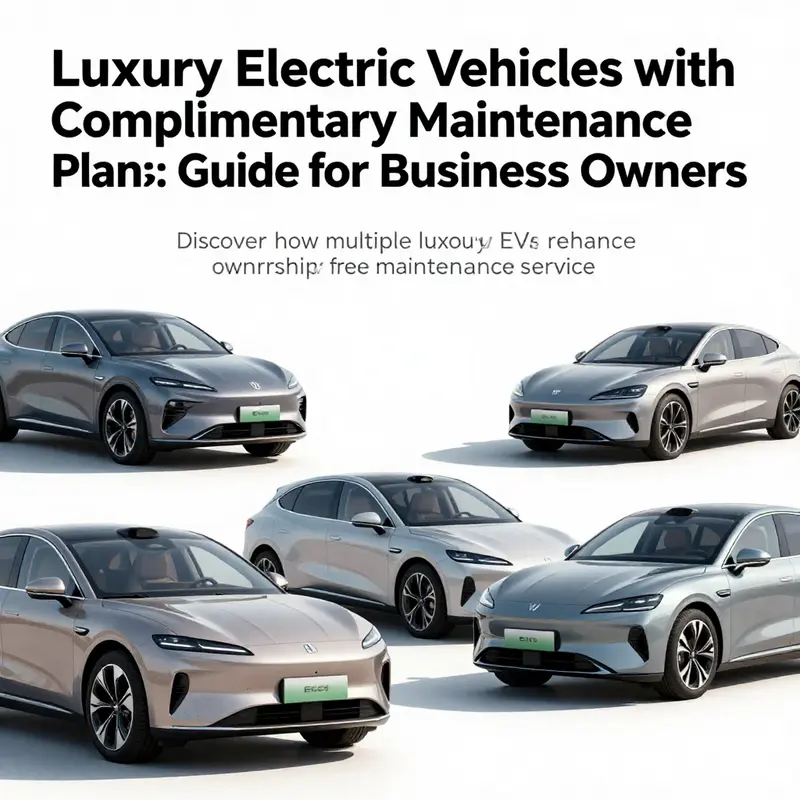
The rise of electric vehicles (EVs) has transformed the automotive landscape, offering not just environmental benefits but also unique ownership experiences, particularly in the luxury segment. Business owners seeking reliable transport solutions understand the importance of minimizing operational costs. Complimentary maintenance plans, often included in luxury EVs, can significantly enhance the value of ownership over time. This article will explore leading models like the Lexus RZ, Audi’s Q4 e-tron and Q5 e-tron, the Mercedes-Benz EQB and EQA, and innovative service offerings from brands like NIO and Polestar, providing insight into how these features contribute to the overall appeal of luxury EVs for business operations.
The Quiet Value Proposition: Complimentary Maintenance in Luxury Electric Vehicles
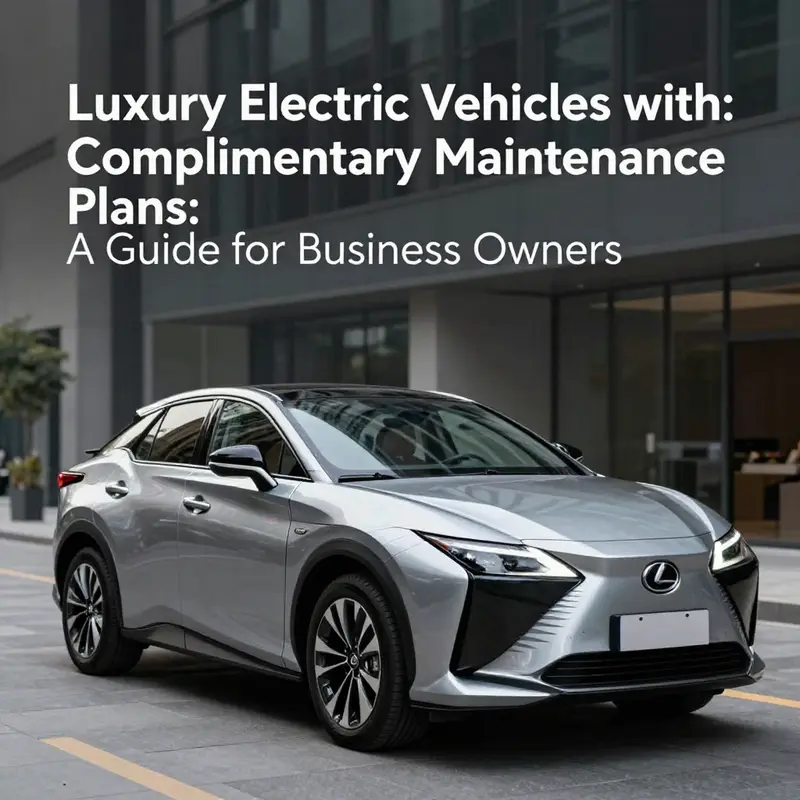
The rapid rise of luxury electric vehicles has shifted buyers’ attention from peak horsepower to the total ownership experience. In this space, complimentary maintenance plans are increasingly shaping how people perceive value, reliability, and long-term affordability. It is not merely a perk bundled at the point of sale; it is a signal that a brand commits to steady, predictable upkeep and to the smooth operation of high-end technology over time. For buyers who intend to keep their vehicle for many years, such plans can translate into real savings and less friction in day-to-day ownership. Yet the way these programs are designed matters as much as the idea itself. They vary by model family, by region, and by the type of electrified powertrain, making a careful reading of the coverage essential to truly understand the value on offer.
Across the premium segment, there is a discernible pattern: manufacturers increasingly attach maintenance coverage to a broad swath of routine care—inspections, fluid replenishment, filter changes, brake components, and diagnostics—so that owners navigate fewer out-of-pocket expenses for services that are necessary to keep the car operating at peak levels. For models that blend traditional hybrid technology with electric propulsion, the coverage often extends to a suite of wear items that standardize maintenance in the early years, helping to stabilize ownership costs during the period when the vehicle is most likely to accumulate mileage. This approach makes sense: hybrids share moving parts with conventional powertrains, yet plug-in powertrains add high-voltage systems and complex cooling needs that require specialized attention. When a brand offers six years or a substantial mileage threshold for free maintenance on hybrid variants, the intent is clear—reduce the burden on the driver and reinforce confidence in the reliability of the brand’s engineering.
Turning to fully electric configurations, the picture becomes more nuanced. There is not always a formal, universal free maintenance arrangement for every electric model across all markets. Nevertheless, the broader industry trend in the luxury segment is to provide stronger aftersales guarantees that cover more than generic warranty terms. In practice, this means plans that wrap together essential preventive service with a long-term promise: keep the drivetrain, battery systems, cooling loops, and software in good health without the owner facing the routine costs that might previously come with regular servicing. The effect is twofold. First, owners of high-end EVs appreciate the peace of mind that consistent, scheduled care offers, especially as these vehicles rely on sophisticated software and battery management processes. Second, brands reap a loyalty dividend when owners feel supported over years of operation, creating a natural pathway to future purchases within the same house.
The logic behind these programs extends beyond the immediate savings. Maintenance coverage speaks to a broader philosophy of stewardship. Luxury brands that present a well-structured aftersales plan aren’t merely selling a vehicle; they are selling an ongoing, predictable relationship. This is particularly powerful in markets where premium buyers expect elevated service experiences to accompany high-ticket purchases. A complimentary maintenance package is thus a tangible expression of that relationship, promising scheduled attention to the systems most critical to performance and safety. Yet the value to the consumer hinges on transparency: what is included, for how long, and under what conditions? The most compelling offerings are those that cover the core maintenance tasks drivers are most likely to encounter—brake fluid changes, tire maintenance, battery health checks, and essential filter replacements—while clearly delineating any exclusions such as accidental damage or wear stemming from misuse. Only with such clarity can a potential owner assess the true lifetime cost savings and the practical convenience of the plan.
Regional variation is an inherent reality in any global premium brand’s strategy. In some markets, service packages extend beyond simple scheduled maintenance to include on-site visits, mobile service options, and even remote diagnostics. The goal is to minimize downtime and ensure a seamless ownership experience, particularly in urban settings where a trip to a dealership can be time-consuming. In other regions, the coverage resembles a more traditional maintenance contract, focusing on the essentials and leaving higher-cost repairs to the standard warranty framework. This mosaic reflects differences in regulatory environments, service-network maturity, and the logistical realities of maintaining advanced electric drivetrains, high-voltage systems, and software control units. For buyers, it means that a plan that looks generous in one country may look more modest in another, and that regional due diligence is essential when evaluating an offer.
To make sense of what matters most when comparing programs, it helps to adopt a practical lens. First, duration and mileage are critical. A longer horizon translates into more years of protection and steadier budgeting. Second, the scope of included items matters as much as the title of the plan. Owners should map the included services to the maintenance realities of their driving profile—how often they drive, over what terrain, and under which climate conditions. Third, the accessibility and convenience of the service experience—availability of on-site maintenance, mobile service, or guaranteed service windows—can be as valuable as the financial terms. Finally, readers should consider the broader ecosystem in which the maintenance plan sits: does it pair with an extended warranty, software update access, and a responsive customer-support experience? When these elements align, the maintenance package shifts from a nice-to-have add-on to a meaningful driver advantage, influencing both current ownership satisfaction and future decisions about replacing the vehicle.
The conversation about maintenance in the luxury EV space is also a conversation about relative costs and the risk profile of ownership. Electric drivetrains reduce several recurring maintenance tasks that plague internal combustion engines, notably the absence of oil changes and some engine-related service. That does not eliminate maintenance entirely, though. Battery health, thermal management, charging-system integrity, and high-voltage safety require specialized attention. The sophistication of the service network and the expertise of technicians thus become a central part of any credible complimentary maintenance program. In that light, a program that bundles preventive care with robust service access can materially improve the ownership experience, particularly for buyers who value predictability and convenience as much as performance and luxury. For household budgeting, a well-structured plan converts potential surprise costs into a predictable annual expense, smoothing the cost curve of owning a premium EV over multiple years.
From a broader industry perspective, the trend toward stronger maintenance commitments signals how premium automakers view the electric transition. It is less about offering a free tune-up and more about communicating a long-term partnership with customers as the technology matures. Even as the market experiments with different delivery models—some brands emphasizing on-site care, others focusing on extensive in-network coverage—the underlying objective remains consistent: reduce friction, reinforce confidence, and demonstrate that the brand stands behind its engineering for the long haul. In markets where electrification is still in an early phase, these programs may help accelerate adoption by making the economics of ownership easier to grasp and by differentiating the experience from that of non-premium EVs. In established markets, they contribute to a cohesive brand promise that extends beyond the showroom and into years of dependable use.
For readers who want a practical perspective on where electric vehicles stand in terms of maintenance, emerging analyses suggest that EVs typically require less routine maintenance than traditional gas-powered cars. The degree of this advantage varies by model and use, but the overall pattern is one of lower maintenance intensity coupled with new priorities centered on battery health and charging infrastructure. This nuance matters for evaluating complimentary maintenance: a plan that protects the items most likely to be affected by normal wear, and that provides convenient access to service, can substantially enhance the ownership experience. The broader conclusion is that maintenance programs are shaping expectations in the luxury EV segment just as range and performance have, reinforcing the idea that premium ownership should be comprehensive, predictable, and seamless over time.
For those seeking guidance on how to interpret these programs against personal needs, a practical starting point is to compare the maintenance scope directly with the vehicle’s expected use. A buyer who plans heavy commuting in urban environments may prize mobile service and quick-turn maintenance; a buyer who travels long distances might value broader coverage with access to a nationwide service network. In all cases, understanding the fine print—what is included, what is excluded, and where service can be performed—is essential. The best programs are not merely about zero cost for a few visits; they embody a commitment to ongoing care that preserves performance, safety, and luxury for years to come.
To further explore the comparative question of maintenance intensity between electric and traditional powertrains, see a concise examination of whether electric vehicles require less maintenance. It provides a framework for weighing maintenance plans in the context of total ownership costs and the evolving aftersales landscape. Do Electric Vehicles Require Less Maintenance?
Looking ahead, the economics of complimentary maintenance in luxury EVs will hinge on battery longevity, the resilience of charging ecosystems, and the ability of service networks to scale alongside expanding model lineups. As OEMs refine their platform architectures and invest in certified technician training, it is reasonable to anticipate more expansive and more consistent maintenance guarantees across regions. In practice, this evolution will likely blur the line between maintenance as a cost control mechanism and maintenance as a core element of the luxury ownership experience. In the end, the strongest programs will be those that best align with a buyer’s expectations for reliability, convenience, and a transparent sense of value that endures for years after the initial purchase. For readers who want to verify the official stance on complimentary maintenance programs, the authoritative source remains the automaker’s own channels. The terms, durations, and coverage specifics are published by the maker and can vary by region. The official maintenance page for the program details provides the most reliable guidance on what to expect in a given market.
External resource:
https://www.lexus.com.cn/zh-cn/owners/services/complimentary-maintenance.html
Low Maintenance, High Luxury: The Maintenance Cost Advantage in Premium Electric SUVs
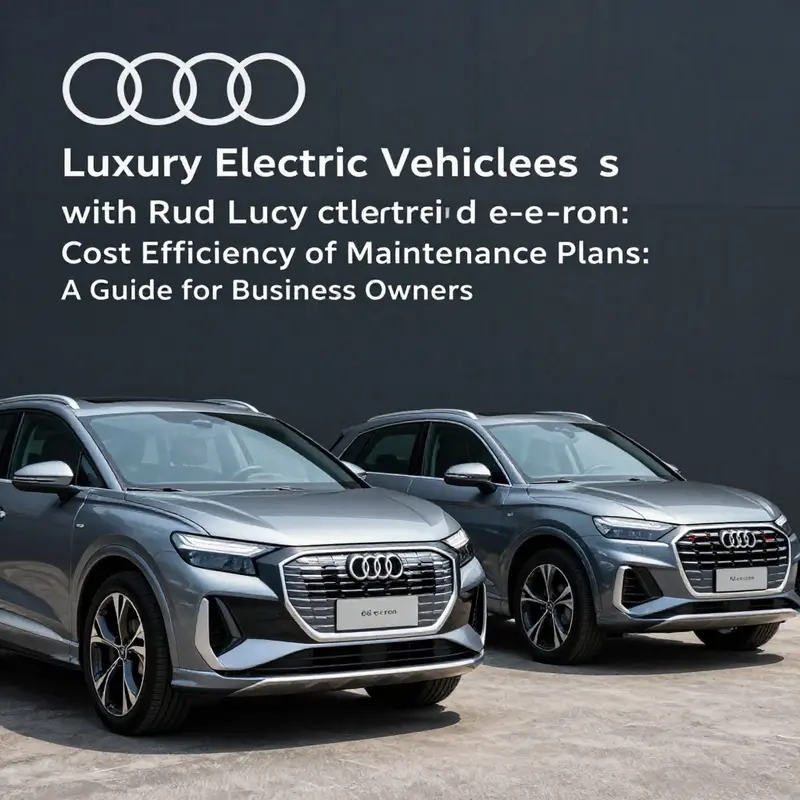
Across the luxury electric SUV segment, maintenance cost is a subtle yet powerful lever shaping the ownership experience. Brands in this space frequently pair complimentary maintenance plans with strong battery warranties, crafting a value proposition that reassures buyers they can enjoy premium driving without a spiraling service bill. The practical upshot is a routine cost profile that feels almost detached from the usual anxieties of owning a high-end vehicle. This chapter focuses on what that looks like in real terms, using data drawn from a leading European premium maker’s compact and mid-size electric SUVs. While the brands and models are not named here, the pattern is unmistakable: a low, predictable maintenance footprint combined with robust warranty coverage that cushions the long-burn costs of ownership. The numbers matter because they reveal a narrative about total cost of ownership that aligns with the expectations of luxury buyers who want prestige without perpetual premium maintenance bills.
For the smaller premium electric SUV and its larger kin, the reported maintenance outlay over a six-year horizon sits surprisingly low. Total maintenance costs hover around five hundred dollars, amounting to roughly eighty-three dollars per year. That is a striking contrast to conventional internal combustion engine rivals and, more importantly, to the stereotype that luxury prestige equates to extravagantly high upkeep. The implication is not merely a one-off mitigation; it reflects a broader structural advantage of electric drivetrains: fewer moving parts mean fewer routine interventions. The warranty framework that accompanies these figures amplifies the value story. A standard comprehensive warranty typically covers three years or 100,000 kilometers, offering broad protection for feverish warranty items and cosmetic wear that might otherwise erode the perception of value. In addition, the battery—the heart of any electric vehicle—receives an extended assurance window of eight years or 160,000 kilometers. That combination of coverage significantly shifts the risk calculus for owners, turning the maintenance bill from an existential worry into a manageable, predictable expense.
Another dimension that matters in practice is the presence of promotional maintenance offers. In some markets, manufacturers have introduced time-limited incentives such as three years of free maintenance for customers who take delivery before a cutoff date. When these promotions are active, the guaranteed cost of ownership for the first several years can dip even further—often bringing the six-year maintenance cost close to or below the one-off figure of five hundred dollars. The combination of a low baseline maintenance cost, a robust battery warranty, and attractive promotions creates a compelling case for buyers who value a luxurious ownership experience without the baggage of frequent shop visits or surprise service bills. It is also worth noting that the maintenance cost calculation typically reflects routine, scheduled services rather than repairs tied to accidents or abnormal wear. In other words, the numbers illustrate a baseline of care that keeps the vehicle in optimal condition under normal use while protecting against the most economically consequential battery-related concerns.
What underpins this favorable maintenance picture? At the most fundamental level, electric powertrains reduce the frequency and complexity of routine service tasks. There is no engine oil to change, no oil filters to replace, and no exhaust system to corrode over time. The absence of these components translates into fewer service visits and lower service loads. The maintenance program that accompanies these premium models concentrates on essential inspections that actually matter for longevity: periodic checks of the battery pack to ensure cell health and thermal management remain within design parameters, routine verification of high-voltage systems for safety, coolant level checks to maintain thermal stability, and the replacement of common consumables like air and cabin filters. These are straightforward, cost-efficient tasks that do not require the kind of specialized, high-labor interventions associated with many traditional vehicles. The net effect is a maintenance regimen that is easier to administer, less expensive to execute, and highly reliable in predicting what the next service interval will demand.
The shared architecture between the smaller and larger models in this premium lineup reinforces the consistency of the maintenance narrative. Because both vehicles rely on the same fundamental electric drivetrain and platform design, their service profiles converge. The absence of divergent mechanical architectures means that estimating maintenance costs becomes more straightforward for owners and reviewers alike. In practical terms, a buyer can reasonably expect parity in how often the vehicles need service and how much those visits cost over comparable horizons. This structural alignment also reduces the complexity of ownership for brand enthusiasts who appreciate the continuity of design language, engineering philosophy, and service expectations across model lines. The reliability of the maintenance story thus grows stronger, not only because the cost numbers are favorable but because the underlying engineering supports a predictable, manageable ownership journey.
From a consumer’s perspective, the financial calculus of maintenance intersects with broader ownership benefits. The combination of low maintenance outlays and substantive warranty coverage directly influences the total cost of ownership, a critical consideration for buyers who place a premium on long-term value. The luxury segment often signals exclusivity through design, materials, and performance; maintenance programs are the practical counterpart that preserves this value over time. When predictability, safety, and reliability are bundled with a relatively modest annual upkeep and a long warranty on the battery, the perceived and real costs of ownership align more closely with the luxury experience customers expect. In this sense, the maintenance story becomes an integral part of the product proposition: it reassures buyers that luxury can come with disciplined, manageable costs over the years ahead.
Of course, the nuances matter. Complimentary maintenance plans typically cover routine services and wear expected under normal use, while exclusions apply for accidents, damage from misuse, or wear beyond what is considered ordinary. Prospective owners should scrutinize the plan details to understand which items are included, what the limits are on service visits, and whether the plan is transferable as the vehicle changes hands. Yet even with these caveats, the overall maintenance framework in this segment demonstrates how a luxury EV can deliver a high-end ownership experience without imposing an unwieldy service burden. The maintenance equation, in other words, can be a deliberate design choice that complements the premium driving experience rather than a hidden friction within ownership costs.
The broader implications extend beyond the six-year window and the two specific models described in the data. They resonate with a growing body of analyses that recognize electric vehicles, particularly in the luxury space, as offering lower maintenance costs on average than their internal combustion counterparts. The reduced complexity of the powertrain, along with durable battery warranties and targeted service plans, positions premium EVs as financially sensible choices for buyers who wish to enjoy top-tier performance and refinement without sacrificing long-term economic predictability. This alignment between luxury and value challenges outdated assumptions about the upkeep of premium cars and invites a more nuanced comparison with traditional high-end gasoline-powered models.
To connect this analysis with a broader public discussion, it is helpful to consider a commonly asked question about electric vehicles: do they require less maintenance over the life of the vehicle? The answer, supported by the figures and plans discussed here, points toward a cautious yes for routine maintenance, especially in the early years of ownership. The drivetrain simplicity, combined with strong warranty coverage and occasional maintenance promotions, creates a compelling baseline that reduces the financial friction of owning a luxury electric SUV. For readers who want to explore this question further, see a detailed exploration of maintenance considerations in electric vehicles: Do electric vehicles require less maintenance?.
As this chapter moves forward, the maintenance narrative for luxury electric vehicles will intersect with other facets of ownership, including charging infrastructure, depreciation considerations, and the evolution of servicing networks for high-end EVs. But the core takeaway remains clear: there are premium electric SUVs on the market where maintenance plans and battery warranties combine to lower long-term ownership costs, preserving both prestige and practicality. In the end, the maintenance cost story is not a peripheral detail; it is a central element of how luxury electric vehicles deliver value, reassurance, and a compelling total ownership proposition for discerning buyers.
External reference: https://www.audiusa.com/vehicles/electric/q4-e-tron/maintenance-warranty.html
The Quiet Benefit in the Premium Lane: Complimentary Maintenance in Luxury Electric SUVs
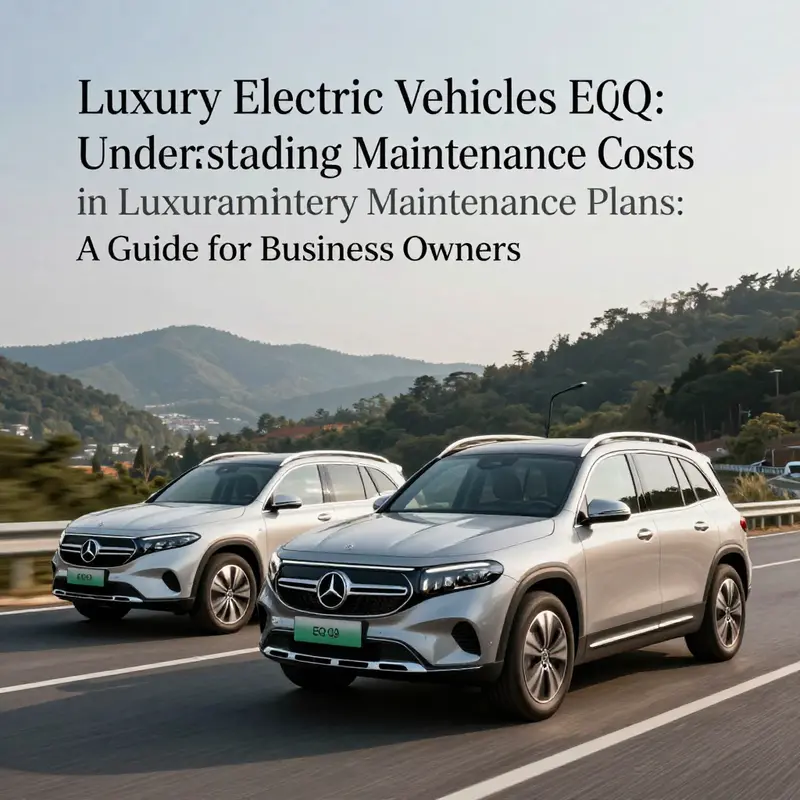
When luxury and technology share the same chassis, ownership can become more than a status symbol or a showroom dream. It can evolve into a disciplined, predictable experience where the costs of upkeep are not an unwelcome surprise but a built-in advantage. This is especially true in the realm of premium electric SUVs, where manufacturers increasingly bundle maintenance into the purchase package. The practical upshot is simple: less fear about the bill, more focus on the drive. In this chapter, we examine how complimentary maintenance programs—particularly those offered on certain compact and mid-size luxury electric models—reshape the total cost of ownership and the perceived value of owning a high-end EV. The lens is not only the immediate sticker price but the long arc of maintenance, service accessibility, and the everyday realities of charging and insurance that accompany a luxury electric lifestyle. Among the clearest illustrations of this trend are programs that promise six years or a generous mileage threshold for basic maintenance, with coverage that includes essential checks of the components most crucial to an EV’s reliability and comfort. These plans are designed to reduce the friction of ownership and to reinforce a sense of care that complements the premium experience buyers expect from a luxury brand. While the specific terms vary by model and region, the underlying logic is consistent: a strong maintenance proposition can meaningfully lower the long-term expense of ownership and strengthen customer loyalty by removing a meaningful recurring cost from the equation. And it is in this alignment of cost certainty and performance certainty that the value proposition of luxury EVs becomes most compelling for prospective buyers who weigh expensive features against the realities of upkeep. The most telling case studies belong to models from a prominent premium manufacturer that has long paired refined engineering with a proactive service philosophy. In their compact electric lineup, owners can expect a comprehensive free maintenance policy spanning six years or a substantial distance, whichever milestone comes first. This policy covers the routine checks that every owner would want to see performed—battery and cooling system inspections, air filter condition checks, and the general diagnostics that confirm everything is operating within the expected parameters. The emphasis is on preventing issues before they disrupt daily life, and on ensuring that the vehicle’s core systems—especially those governing thermal management and cabin air quality—receive regular attention. For many owners, this is less about avoiding service visits and more about eliminating the guesswork that can accompany ownership. If you are footed with a monthly decision about how to allocate budget for high-end vehicles, the value of such a maintenance program becomes clearer when you map it against the alternative: in many luxury segments, maintenance and service can become a meaningful annual line item, even before you drive a mile. The core maintenance interval for the covered plan tends to be modest in scope yet critical in effect. Brake fluid replacement is typically highlighted as a required service every tens of thousands of kilometers, and the quoted price—often in the vicinity of several hundred dollars including labor—serves as a practical reminder that EVs, while simpler in some mechanical respects, still demand regular attention to cooling loops, seals, and the fluid lines that support reliable braking, steering, and overall safety. The beauty of a complimentary plan is that it places these costs squarely within the ownership package, making it easier for buyers to forecast annual expenses with confidence. The emotional payoff is subtle but real: a sense of reward for choosing a brand that stands behind its own engineering with transparent, fixed-cost servicing. It is also a narrative that resonates with current or prospective EV customers who are accustomed to the volatility of maintenance bills in the luxury segment, where the word “premium” often carries an implicit premium for service as well. The practical implications extend beyond the service bay. Electricity costs, for instance, remain a major part of the running expense equation for electric vehicles. Real-world patterns show that annual electricity costs for a mid-sized EV can be substantial, particularly when charging at public fast-charging stations or in regions with higher electricity rates. When estimated on a typical annual distance of about 20,000 kilometers, drivers might see annual electricity costs that fall within a broad band—roughly between $1,600 and $3,700. The lower end reflects predominantly home charging with a favorable rate, while the higher end accounts for frequent or fast charging, which accepts higher per-kilowatt rates. Even with these electricity costs, the total cost of ownership can be very favorable when the maintenance burden is largely removed or minimized by a complimentary program. Insurance, as many buyers discover, often behaves differently from maintenance in the EV context. The modern electric drivetrain and battery do introduce a category of specialized coverage—sometimes referred to as three-electric system protection—that can nudge annual premiums upward. In some premium models, this can translate into a noticeable premium relative to gas-powered equivalents, particularly in the early years of ownership when insurers assess the risk profile and the cost to repair or replace high-tech components. Yet even after this premium is accounted for, the total annual ownership cost may still sit within a favorable range compared with a closely matched internal-combustion counterpart. The numbers vary by region, insurer, and driving history, but the broader trend is consistent: complimentary maintenance lowers one side of the ownership equation, while insurance sensitivity to advanced components raises another. The balance, as observed in practice, often tilts toward a favorable overall cost profile for luxury EVs when the maintenance program is included from day one. In these discussions, it is also important to acknowledge the practical limits of complimentary maintenance. Plans cover routine services and inspections that are aligned with manufacturer guidelines and preventive care. They do not extend to repairs arising from accidents or wear that falls outside the defined normal usage, nor do they cover major repairs or replacement of parts that are not part of the regular maintenance cycle. Buyers often appreciate the clarity of this boundary, which helps set expectations and avoids ambiguity in the event of a serious incident or a wear-and-tear scenario that might require more extensive intervention. The protective value of the maintenance plan is thus twofold: it reduces recurring out-of-pocket expenses and it signals a manufacturer’s confidence in the long-term reliability of the vehicle’s fundamental systems. The specific case of a premium compact electric SUV family, where the provision of a six-year or substantial mileage window for free basic maintenance is a core benefit, illustrates this dynamic well. The model range in question is designed to pair urban practicality with long-haul comfort, and the maintenance program aligns with the lifestyle that many buyers demand from a premium brand. The result is a more predictable financial trajectory during the early years of ownership, when the vehicle’s depreciation curve begins to take shape and service intervals become a routine part of the schedule rather than an unexpected cost. For readers weighing the decision to buy into a luxury EV, this is a meaningful factor. It is not merely a matter of monthly payments or the headline price; it is about the total ownership experience—the ease of maintenance, the certainty of costs, and the confidence that comes with a brand’s service architecture standing behind the vehicle. A broader reflection on the maintenance landscape for electric premium models reveals a trend toward transparency and convenience. In many markets, the question of maintenance costs is increasingly decoupled from the perception of luxury alone and tied to the practical realities of ownership. Buyers now have access to clear maintenance calendars, predictable service charges, and the reassurance that routine care is covered for a substantial portion of ownership. The existence of such programs invites a closer comparison with other premium brands, where maintenance could be more fragmented or costlier over the life of the vehicle. It also prompts a deeper look at how maintenance interacts with other cost factors, such as charging strategy. The question of whether electric vehicles require less maintenance in the first place—an inquiry often asked by prospective buyers—receives a nuanced answer. There is little doubt that EVs reduce certain categories of maintenance, notably those associated with internal combustion engines, exhaust systems, and frequent oil changes. But EVs introduce their own maintenance considerations—coolant for the battery and thermal management systems, brake system wear due to regenerative braking in many driving regimes, and electronics that demand firmware updates and diagnostics. The relative simplicity of the drivetrain is real, and the maintenance plan accentuates that simplicity by emphasizing preventive care. For those exploring the broader landscape, it is useful to read discussions that synthesize these points and contrast them with maintenance expectations for traditional gas-powered luxury SUVs. A good starting point is a concise exploration of whether electric vehicles require less maintenance overall, which can be found in a dedicated resource that weighs the responsibilities of EV ownership against the historical burden of servicing high-end petrol vehicles. Do Electric Vehicles Require Less Maintenance? This kind of analysis helps frame the maintenance conversation not as a single factor but as part of a structured equation that includes electricity costs, insurance, depreciation, and your personal usage pattern. In that sense, the maintenance program serves as a tangible, actionable lever you can adjust as part of your ownership strategy. It is also a signal about the brand’s confidence in the longevity of its EV platform—a confidence that resonates with buyers who value a sense of long-term partnership with their vehicle as much as the pleasure of the drive. As you consider the practical implications of these programs, you should also look at the official guidance that governs service and maintenance in practice. Official maintenance policies provide important context about what is covered, what is not, and how customers can schedule and access service. For readers who want to ground their expectations in primary sources, the contemporary guidance from major premium brands outlines the structure of maintenance offerings, the cadence of inspections, and the expected service content. In this sense, the maintenance plan is not a marketing abstraction but a real-world framework that shapes the ownership journey. To go beyond the narrative of benefits and into the factual landscape, it is useful to consider the broader service ecosystem, including how customers book appointments, how parts availability affects service times, and how dealer networks influence the convenience of obtaining care. For a concise reference to the brand’s own maintenance philosophy and service infrastructure, see the official service and maintenance framework for electric vehicles from the brand’s own site. External resource: https://www.mercedes-benz.com/en/vehicles/electric-vehicles/service-maintenance/
Redefining Luxury EV Maintenance: Proactive Care, Battery Swaps, and Transparent Servicing

A luxury electric vehicle experience is increasingly defined not just by acceleration or interior materials, but by the kind of care that follows the purchase. In this new paradigm, maintenance becomes a seamless extension of the driving experience rather than a set of scheduled inconveniences. The premium brands that have begun to redefine this space treat after-sales service as a living system that travels with the car, adapts to its usage, and anticipates needs before they become interruptions. Rather than a catalog of separate services, the offering has evolved into an integrated ecosystem where insurance, maintenance, diagnostics, and on-demand support are orchestrated through digital channels, with the customer at the center. This shift taps into a broader shift in luxury: ownership that is less about owning a possession and more about enjoying a high-value, low-friction lifestyle around that possession. The result is not merely a maintenance plan but a promise of reliability, predictability, and convenience that aligns with the elevated expectations of premium buyers.
At the heart of this transformation are two distinct approaches that echo the broader market’s trend toward service-centric ownership. One path emphasizes exceptional coverage built around the car’s unique powertrain and battery architecture, including a sophisticated support network that can respond rapidly when things go awry. The other path prioritizes clarity, simplicity, and software-driven maintenance, turning the manual into a living guide and letting the car itself guide the owner through care milestones. Although the two approaches diverge in operational detail, they share a common objective: transform maintenance from a potential pain point into a value proposition that enhances residual value, uptime, and daily convenience. In this sense, maintenance becomes a core feature of the vehicle, not an afterthought tacked onto the end of a lease or ownership term.
The first approach, which centers on a comprehensive, technology-enabled support system, reimagines what happens when a vehicle experiences trouble on the road. Imagine a premium model that leverages a nationwide battery swap network to minimize downtime. If the battery needs a quick swap or a diagnostic check, the system can deploy a mobile service team to the driver’s location, often within minutes. This ecosystem goes beyond the swap itself. It includes a coordinated chain of services—on-site diagnostics, remote monitoring, and rapid towing arrangements if required—designed to keep the vehicle on the road with minimal disruption. The model borrows heavily from a hotel-stay philosophy: if a roadside issue requires a longer fix, the network can arrange accommodations and ongoing support so the owner’s life remains uninterrupted. The objective is to remove the friction traditionally associated with car trouble and to replace it with a streamlined, almost invisible service experience.
Beyond the dramatic promise of battery swaps and on-demand roadside support lies a more subtle but equally impactful set of capabilities. Preventive maintenance, enabled by remote diagnostics and continuous software monitoring, becomes a proactive shield rather than a reactive fix. In practice, that means regular checks and anticipatory service windows scheduled not by regional calendars but by data patterns—tire wear, brake fluid degradation, battery health indicators, cabin air quality metrics, and even software-driven recalibrations. On-site repairs when feasible, and thoughtful, quick-touch interventions when not, reduce downtime and preserve the driving experience. Some premium programs go further, offering complimentary or seamlessly integrated benefits such as minor cosmetic touch-ups and cosmetic care like scratch repair, provided within the maintenance ecosystem. These touches, small as they may seem, reinforce the sense that the ownership journey is cared for end-to-end rather than as a series of one-off repairs.
Crucially, the focus in this model is transparency. A distinctive characteristic is cost clarity in a field where maintenance costs can vary with usage, region, and driving style. Owners are not confronted with opaque bills for routine services; instead, they receive predictable baselines for common maintenance items—brake fluid changes, tire rotations, battery diagnostics, air and cabin filters, and typical software update cycles—along with clear explanations of any deviations caused by unusual usage or environmental conditions. The aim is to reduce the surprise factor that often accompanies long-term ownership. This clarity supports prudent budgeting and strengthens trust between the brand and the owner, reinforcing the premium promise that maintenance costs are manageable, understandable, and aligned with the vehicle’s real needs.
A second pathway to the same destination emphasizes reduction in friction through simplification and digital enablement. In this approach, maintenance is framed as a set of straightforward tasks that can be managed entirely through an official app and a well-documented maintenance guide. The owner interacts with the vehicle’s service needs through a clean interface that presents a maintenance timeline, upcoming service reminders, and the expected costs associated with each milestone. The emphasis is not merely on what must be done, but on when and how it fits into daily life. Software updates play a central role here, with the promise of free or heavily subsidized hardware and software upgrades during the initial ownership period to keep the car at peak performance without additional visits or downtime.
In the simpler, app-driven model, the maintenance process becomes a guided routine. Owners can schedule services, receive real-time status updates, and access transparent cost breakdowns. The aim is to turn maintenance from a potentially perplexing matrix of parts and labor into a predictable, almost routine part of ownership—an expectation that aligns with the broader consumer shift toward digital self-service. By coupling this clarity with a policy of minimal intervention, the brand communicates confidence in its engineering and in the durability of its powertrain and chassis components. This is maintenance as an empowerment tool: owners understand what is needed, when it needs to happen, and how much it will cost, which in turn reduces anxiety about long-term costs and performance.
These two paths—rapid, technology-enabled service ecosystems and streamlined, software-guided maintenance—are not mutually exclusive. They are complementary expressions of a broader philosophy: making maintenance a built-in advantage of luxury electric mobility. When a vehicle combines a responsive support network with a transparent, data-driven maintenance cadence, the owner feels protected by a system that is designed to prevent unexpected downtime and to optimize performance across the vehicle’s life. This duality mirrors a larger trend in luxury brands, where after-sales care becomes a differentiating feature that can justify premium pricing or even offset higher initial costs with lower total ownership expenses over time. The upshot is clear: a premium EV is not just about what you drive, but about how you are cared for when you are not driving it, or when you are traveling between trips that demand a reliable, high-quality experience.
From a consumer psychology standpoint, the appeal lies in the sense of control and reassurance. A driver who understands the maintenance milestones and sees a transparent cost forecast experiences less cognitive load when making decisions about usage, charging patterns, or scheduling. In the most advanced versions of this model, the car itself becomes an active participant in the care of its own health. Alerts can be framed in terms of actionable steps, not alarm bells, and the app can propose optimal times for service that fit the owner’s calendar. It is a mature form of ownership that aligns with a luxury consumer’s expectations for efficiency, predictability, and hospitality-like service.
The practical implications extend beyond the drive experience. A robust maintenance ecosystem can contribute to higher uptime, better resale value, and stronger brand loyalty. When service is part of a cohesive, data-informed program, it becomes a selling point that reduces the perceived risk of owning a premium EV. In dense urban markets or regions with rapid adoption of electrified luxury, those advantages are amplified by the speed of response and the breadth of coverage—the ability to deploy a service team, arrange temporary mobility, and provide a continuum of care that travels with the customer across cities and countries. The differentiator is not merely what is offered, but how reliably and effortlessly it is delivered.
Of course, no system is perfect in every context. Maintenance programs, even those that are digital-first or battery-centric, must acknowledge constraints such as regional service capacity, variations in coverage, and the boundaries of what is considered routine maintenance versus repair. Some plans may exclude incidents arising from accidents or wear beyond normal use, and regional differences can shape the frequency and scope of service. Yet even with these caveats, the overarching narrative remains compelling: luxury EV ownership is increasingly defined by a proactive, integrated approach to care that blends physical service with digital transparency. The most impactful programs treat maintenance as a living ecosystem rather than a static contract, and they invite owners to participate in a collaborative care journey rather than a passive, episodic service experience.
This evolution matters for the broader article on whether luxury electric vehicles offer complimentary maintenance plans. When service is embedded in a holistic ecosystem that emphasizes predictability, convenience, and proactive health monitoring, the line between complimentary maintenance and long-term value blurs in a favorable way. Owners enjoy less hassle and more assurance that their vehicle remains in peak condition, which translates into a lower total cost of ownership over time, even if the explicit maintenance package is not free in the traditional sense. The value is realized in uptime, reduced risk, and a premium ownership experience that keeps pace with the pace of digital life. As the industry experiments with pricing, coverage, and the balance between hardware and software updates, these models illuminate a path toward a more confident, thoughtful, and experience-rich form of luxury mobility.
For readers seeking a practical touchstone as they compare offerings, consider how such programs describe their coverage and how they translate that coverage into everyday life. Do they promise rapid response, on-site care, and the convenience of a single point of contact? Do they offer preventive maintenance driven by remote diagnostics? Do they present clear, itemized cost structures that reduce surprises at the service bay? These questions help reveal whether a maintenance framework truly acts as a differentiator or merely as a convenience fee wrapped in glossy marketing. The most compelling narratives combine both: a frictionless user journey that is anchored by robust technical foundations, a dependable service network, and a philosophy that maintenance is an enabler of the luxury driving experience rather than a cost to bear.
As this chapter winds through these themes, the common thread remains evident. In the luxury EV space, after-sales care is becoming inseparable from the vehicle’s identity. It is part of what makes a car feel special, not just a machine that moves you from place to place. Whether through a battery network that minimizes downtime or through a transparent maintenance app that clarifies every step and price, the future of premium electric mobility is one where care is as intentional as design. And in this future, the ownership journey is less about ticking boxes on a maintenance schedule and more about enjoying a continuous, high-quality relationship with the brand—one that protects, informs, and enhances the experience of driving.
Internal link for further context: Vehicle Tricks hub.
External resource for broader maintenance guidance: External maintenance guide.
Final thoughts
In conclusion, luxury electric vehicles equipped with complimentary maintenance plans present an attractive option for business owners looking to optimize their transportation investments. Models like the Lexus RZ, Audi’s Q4 and Q5 e-tron, and the Mercedes-Benz EQB and EQA not only offer cutting-edge technology and luxury but also come with maintenance plans that simplify ownership. Furthermore, innovative services from companies like NIO and Polestar enhance the overall customer experience, ensuring that business owners can focus on their operations without the added concern of maintenance expenses. As the market for luxury EVs continues to grow, understanding these benefits can empower business owners to make informed decisions that align with their operational needs.