
As the automotive industry evolves, understanding the fundamentals of motor vehicle engineering and maintenance becomes essential for business owners. Addressing this knowledge not only enhances operational efficiency but also aligns with growing customer expectations for quality service. This article delves into key aspects of motor vehicle engineering, combining theoretical insights with practical applications. Each chapter will progressively build your understanding and skills, starting with the essential principles of engine construction and functionality, transitioning into practical repair skills, emphasizing safety protocols, and finally exploring advanced diagnostic techniques critical for modern automotive practices.
Foundations in Motion: Translating Fundamentals into Practical Vehicle Engineering and Maintenance
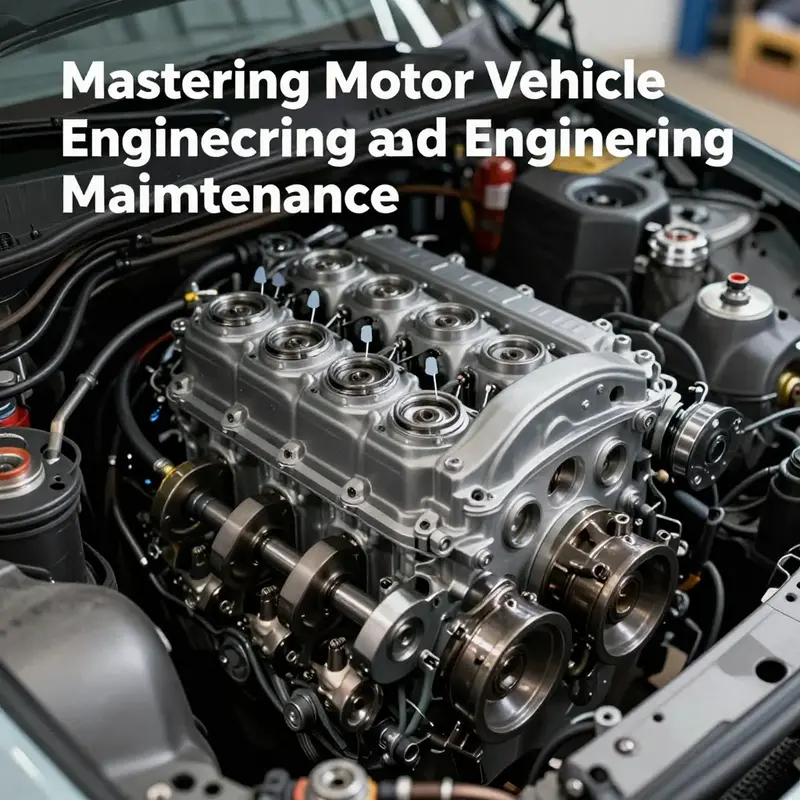
Foundations in Motion traces how the seemingly abstract principles of engineering become the concrete, visible routines of maintenance and repair. The practical textbook by Bonnick and Newbold frames motor vehicle engineering as a disciplined blend of theory, hands-on craft, and professional judgment. It is not enough to know how a piston moves or how a brake caliper clamps; one must understand how those actions ripple through an entire vehicle, from the safest stopping distance to the most efficient fuel use. The fundamentals, therefore, are not a dry ledger of parts but a living map that guides technicians as they diagnose, repair, and optimize real machines in workplaces that span classrooms, workshops, and roadways. In this light, the core concepts become a language that translates design intention into dependable performance. The aim of this chapter is to carry that language forward, weaving mechanical principles with electrical, electronic, and software influences that increasingly determine how a vehicle behaves, travels, and endures. It is a narrative about coherence: the way an engine’s torque, a transmission’s gear ratios, a suspension’s stiffness, and an ECU’s logic converge to produce safe, comfortable, and economical mobility.
At the heart of motor vehicle engineering lies a simple truth: modern vehicles are not monolithic components but integrated systems. A fault in one area can cascade through others, changing the feel of the steering, the bite of the brakes, or the mood of an engine as it wakes from idle. The book’s approach aligns with this view. It invites students and practitioners to move seamlessly between theory and practice, to test ideas in the shop as readily as in the classroom. In real-world settings—whether a training bay, a college workshop, or a professional repair bay—the goal is competence that translates into reliability, safety, and customer trust. The narrative here leans on several threads that recur across the engineering and maintenance literature: the fundamentals of engine operation, the variety of drivetrain configurations, the mechanics of braking and suspension, the growing dominance of electrical control systems, and the diagnostic technologies that reveal hidden faults without disassembling everything in sight. Each thread, while distinct, feeds the others, creating a holistic picture of how modern vehicles function and how they should be serviced.
To begin with, engine systems form the most visible interface between a vehicle and its driver. Internal combustion engines, with their intricate choreography of pistons, valves, and timing, have long served as the core of propulsion. Yet the contemporary landscape also embraces electric motors and hybrid configurations. The shift toward electric mobility adds a new layer to the traditional engine discussion. Electric motors deliver high torque at low speeds, with performance characteristics that can reshape weight distribution and drivetrain layout. The practical implication for maintenance is clear: technicians must be fluent in both conventional engine mechanics and electric propulsion concepts. When a vehicle must move from rest, the choice of propulsion technology—whether a refined ICE, a mid-drive motor, or a combined system—determines how torque is delivered to the wheels, how heat is managed, and how the vehicle responds to different road conditions. In mid-drive arrangements, for instance, the motor’s position near the chain or drive unit emphasizes torque delivery and weight balance, influencing cornering behavior and efficiency on inclines. These nuances are not academic; they inform routine service, such as heat management checks, lubrication schedules, and wear assessment of bearings and shafts.
Equally central is the transmission and drivetrain configuration. Vehicles today explore a spectrum of layouts, from traditional mechanical transmissions to electric-driven systems and hybrid architectures with multiple power paths. The discussion of torque output on inclines, for example, highlights how the same vehicle can feel vastly different depending on gear selection, motor torque curves, and drivetrain losses. In a practical context, this means that a technician’s diagnosis must consider the entire drive chain: engine or motor, fuel or energy supply, transmission, differential, and rolling resistance. The aim is to interpret symptoms—such as hesitations, vibrations, or uneven acceleration—not in isolation but as signals from a coupled system. The challenge is to translate these signals into precise corrective actions, whether it is selecting an appropriate gear, addressing a misfire, or recalibrating a control unit so that the torque curve aligns with the driver’s needs and the vehicle’s safety margins.
Braking systems exemplify the bridge between physics and safety. The fundamentals explain why a handbrake stops a wheel from turning and why hydraulic pressure increases linearly with pedal effort up to a limit. Over time, wear, temperature, and electronic aids such as ABS and traction control modify the behavior of braking beyond the simple ideal model. In the maintenance workshop, the act of inspecting brake components becomes a diagnostic exercise: is the friction material within specification, are rotors true, is hydraulic fluid contaminated, or has an ABS sensor degraded? The physical principles—friction coefficients, heat dissipation, and hydraulic amplification—remain constant, while their manifestations in a live system change with vehicle usage, weather, and load. The practitioner learns to merge measurement with judgment, noting pedal feel, checking for scrapes and heat discoloration on rotors, and validating sensor data with a calibrated diagnostic tool. The end goal is not merely stopping power but predictable, repeatable braking performance under diverse conditions, from normal urban driving to emergency maneuvers on wet roads.
Suspension and steering complete the picture of ride and control. A vehicle’s chassis must isolate occupants from road imperfections while preserving tire contact and steering fidelity. The design of suspension components—springs, dampers, linkages, and anti-roll devices—translates road texture into manageable motions, while steering geometry defines how inputs from the driver are translated into wheel movement. In maintenance, this translates into a series of checks for wear, lubrication, and alignment. Worn bushings or misaligned wheels can rob steering precision and increase tire wear, undermining safety and comfort. In the broader context, suspension tuning interacts with load distribution, tire characteristics, and even electronic stability controls. Modern vehicles rely on ECUs to monitor suspension status, adjust damping in adaptive systems, and coordinate with braking, traction, and steering control. The integration here is not incidental; it is a deliberate design choice that requires technicians to understand both mechanical function and software commands.
Electrical and electronic control units (ECUs) tie the mechanical world to the digital one. The contemporary vehicle is a networked organism, with dozens of sensors feeding data into control units that govern fuel injection, ignition timing, emissions, energy recovery, braking balance, and comfort features. Understanding how ECUs operate—and how they communicate via networks such as CAN (Controller Area Network)—is essential for diagnosing faults that travel across subsystems. The diagnostic challenge is to distinguish a sensor anomaly from a genuine actuator failure and to determine whether a fault is local or systemic. Diagnostic tools and software become extensions of a technician’s senses, revealing data trends, error codes, and live parameter values that illuminate the condition of the engine, transmission, or electrical architecture. The growing role of software in vehicle behavior means technicians must interpret data streams with nuance, recognize when a software update is warranted, and understand the safety and regulatory implications of modern vehicle electronics.
A practical philosophy underpins all these domains: connect theory to real-world practice through methodical investigation, disciplined safety, and informed judgment. This philosophy is visible in the educational resources that shape the field. Hillier’s Fundamentals of Motor Vehicle Technology, for instance, provides a structured backbone for mechanical systems and their evolution, offering both conceptual clarity and hands-on application. Another layer of practical work comes from workbook resources designed for Level 3 learners in light-vehicle repair and maintenance, which focus on building the actual competencies required by industry qualifications such as NVQs and technical certificates. The emphasis on progressing from foundational theory to increasingly challenging applications mirrors the typical path of a workshop-based program: students begin with basic concepts, apply them in controlled exercises, then tackle real-world faults in simulated repair scenarios. The alignment with industry standards—particularly the IMI 600 series NVQ framework—helps ensure that the knowledge remains relevant to today’s professional environment and adaptable to tomorrow’s mobility landscape.
The rise of electric mobility reshapes the fundamentals in meaningful ways. Electric motors, and specifically mid-drive configurations, bring new performance curves, heat management demands, and packaging considerations. The torque profiles of electric drives differ from those of traditional engines, enabling brisk acceleration at low speeds and sustained efficiency on gradients. Weight distribution shifts that accompany battery placement influence suspension tuning and tire wear, while the absence of exhaust-induced heat requires different thermal strategies. Yet these changes do not replace the core skills. They expand them. A technician who can reason about energy flow, heat exchange, control loops, and fault diagnostics across both ICE and electric propulsion is better prepared for the broad spectrum of modern vehicles. In many respects, the future of mobility demands a broader literacy: the ability to interpret data from a CAN network, to understand how a motor controller interprets driver input, and to adjust mechanical components so that the electrical and electronic systems operate within intended tolerances.
This broader literacy also carries implications for the workplace and for how maintenance is taught and practiced. The integration of software and safety protocols means that technicians must adopt disciplined approaches to health, safety, and risk assessment in every task. Proper lockout procedures, awareness of battery hazards, and an understanding of software-embedded fault modes are not add-ons; they are core responsibilities. The educational materials highlighted in this chapter emphasize a balanced pedagogy: cultivate solid mechanical intuition, then couple it with diagnostic ingenuity and software awareness. The result is a professional who can navigate the gray areas where a fault appears to be purely mechanical but hides behind an electronic control strategy, or conversely, where a software fault manifests as a mechanical performance anomaly.
For readers seeking to deepen their practical understanding, consider starting with fundamental concepts of maintenance and then expanding into diagnostic methodologies. A practical maintenance philosophy begins with a clear definition of what vehicle maintenance involves, as discussed in What is vehicle maintenance?. This anchor serves as a reminder that maintenance is not simply about correcting major failures; it is about preserving intended performance, safety margins, and the vehicle’s usable life through planned, evidence-based action. The approach described here, grounded in theory yet proven in the shop, enables technicians to anticipate wear, schedule interventions, and communicate with customers in terms that are understandable and actionable. It also supports a seamless transition to the next phase of learning, where diagnostics become more sophisticated and the vehicle’s software ecosystem grows ever more complex.
In summary, the fundamentals of motor vehicle engineering and maintenance are not static. They evolve as powertrains diversify, as control strategies become more sophisticated, and as vehicles integrate more tightly with information networks. The practical chapter that follows builds on this foundation by presenting diagnostic strategies, tool usage, and case-based reasoning that align with industry practices and educational standards. It shows how to translate a fault tree into a repair plan, how to interpret live data with a critical eye, and how to balance safety, efficiency, and customer expectations in every job. By thinking in terms of integrated systems rather than isolated components, technicians gain a holistic capability: to keep vehicles operating safely and reliably in a world where propulsion, control, and communication are increasingly inseparable. The journey from fundamental principles to hands-on competence is not merely a path of knowledge transfer; it is a professional apprenticeship that empowers practitioners to shape the future of mobility while delivering dependable service today.
To continue this journey with practical contexts and industry-ready methodologies, readers may consult further resources that bridge theory and practice, such as the foundational texts and workbooks cited earlier. And for ongoing exploration of the broader field, a respected compilation of automotive fundamentals and technologies offers a deeper dive into evolving systems and their interactions. For a broader perspective on the core concepts introduced here, see Hillier’s Fundamentals of Motor Vehicle Technology, which provides a structured overview of mechanical systems and their evolution, along with practical applications that reinforce the design-to-service continuum. External resource: Hillier’s Fundamentals of Motor Vehicle Technology.
From Workshop Floors to Cutting-Edge Diagnostics: Mastering Practical Skills in Motor Vehicle Engineering and Maintenance

The art of keeping machines in motion rests on a single, enduring truth: theory without practice is a map without terrain. In the realm of motor vehicle engineering and maintenance, that terrain is a sprawling workshop floor where ideas become actions, and where the rhythm of a technician’s fingers on a wrench is as informative as any textbook diagram. The practical skills described in foundational texts map closely to the lived experience of diagnosing, repairing, and servicing vehicles in real time. Their value lies not only in understanding engine cycles, braking hydraulics, or electrical circuits, but in translating that knowledge into reliable, safe, and efficient vehicle performance. This translation—this bridging of mind and hands—defines a practitioner’s competence. It is also why a systematic emphasis on practical training is a defining feature of modern automotive education and a cornerstone of a career that extends beyond repair into design, development, and innovation.
A practical approach to motor vehicle engineering begins with the recognition that vehicles today are more complex than ever. Engines coexist with electronic control units, sensors, software updates, and networked communication protocols. The core ideas about heat transfer, fuel-air mixtures, combustion efficiency, and mechanical tolerances still matter. Yet the way we verify, adjust, and optimize these ideas has transformed. Diagnostic software, thermal imaging, data logging, and vehicle networks now accompany torque wrenches and feeler gauges. In this environment, a robust educational pathway must blend traditional mechanics with contemporary electronics, data analysis, and safety protocols. The practical skills chapter in Bonnick and Newbold’s well-regarded manual embodies this blend, iterating a progression from fundamental theory to increasingly sophisticated real-world applications. The result is not a checklist of tasks but a cultivated ability to observe, hypothesize, test, and confirm in the face of uncertainty—precisely the competence that a shop floor demands and a manufacturer expects.
The learning architecture that supports these outcomes is as important as the content itself. An internship or apprenticeship model provides the essential bridge from classroom to workplace. In real-world settings, students encounter the tactile realities of a service environment: the layout of a workshop, the flow of parts through a service department, and the ethical framework that governs customer interaction. Consider an industrial training scenario modeled on a contemporary automotive environment. Trainees move through a sequence of workstation activities where they diagnose a vehicle’s fault, identify the required tools, manage parts inventory, and communicate findings to a mentor or supervisor. Such immersive learning is more than technique repetition; it cultivates professional judgment, situational awareness, and a respect for process and safety protocols. The value of this approach lies in its ability to connect theoretical constructs—thermodynamics, fluid dynamics, electrical theory—with concrete consequences in a real vehicle, such as fuel efficiency, braking reliability, or safe start-up under cold conditions.
In practice, modern training pays special attention to the evolving technology landscape, including new energy vehicles (NEVs) and intelligent connected technologies. The shift toward electrification has broad implications for skill sets, toolkits, and operational mindsets. A technician no longer needs to be a specialist in combustion alone; they must also understand electric drivetrains, battery management systems, thermal considerations for high-voltage components, and the peculiarities of high-energy storage safety. Training programs increasingly provide access to advanced laboratories equipped with suspensions and chassis dynamometers, battery analyzers, high-voltage safety simulators, and network emulation platforms. This environment reinforces the principle that hands-on experience must be aligned with theoretical grounding. It is not enough to know the sequence of a diagnostic algorithm; one must also recognize how that algorithm behaves under intermittent sensor data, aging components, or software updates that alter feedback loops. The practical skill set, then, expands to include data interpretation, fault isolation under uncertain conditions, and strategic decision-making about when to repair versus replace a component.
Equally critical is the integration of safety as a core competency, not an afterthought. Health and safety norms govern every move on the shop floor. From risk assessment during maintenance to the safe handling of electrical systems and hydraulic fluids, the professional must internalize procedures that protect both themselves and the vehicle occupants. Safety training is not a barrier to speed; it is the framework that ensures speed does not become carelessness. This mindset aligns with the broader professional context in which engineers operate: adherence to standardized procedures, ethical client interactions, and transparent reporting of findings. A robust practical program therefore embeds safety into every task, from the initial inspection and diagnostic testing to the final documentation and handover to the customer.
The work of diagnosing a vehicle is a nuanced practice in observation and testing. A skilled technician learns to listen for anomalies—an unusual vibration, a change in steering effort, or a dimming of instrument indicators—and to interpret what those signals imply about underlying systems. The diagnostic process often begins with noninvasive checks: visual inspection, listening for audible clues, and quick measurements of temperature, pressure, and response times. As the investigation deepens, the practitioner deploys a suite of diagnostic tools—multimeters, oscilloscope traces, scan tools, infrared thermography, and system simulators. Each tool provides a different lens on the same problem, and the real artistry lies in synthesizing these streams of data into a coherent hypothesis. The narrative of this practice is not about memorizing fault codes; it is about understanding the physical and electrical relationships within the vehicle, how those relationships change with wear, and how software feedback can mask or reveal the true state of the system.
A practical program also emphasizes the organizational and ethical dimensions of professional life. Students learn to navigate workshop logistics, including effective parts management, documentation, and customer communication. The ability to describe a fault, quantify its impact, and propose a service plan with time and cost estimates is essential to a productive service department. In real-world settings, the best technicians do more than fix cars; they manage expectations, explain the rationale behind recommended repairs, and ensure that work aligns with both safety standards and regulatory requirements. This broader competency is essential in an era when vehicles increasingly resemble mobile computing platforms. The technician becomes a hybrid professional, fluent in mechanical reasoning and software-aware troubleshooting, able to coordinate with peers from software engineering, electrical engineering, and product lifecycle teams as needed.
The educational pathway that underpins these capabilities is frequently anchored by international standards and collaborative partnerships. The automotive sector is global, and the best training programs reflect that reality by weaving in cross-border perspectives, shared competencies, and exposure to a spectrum of vehicle architectures. This global orientation helps engineers anticipate design trends, regulatory shifts, and market needs that transcend a single country. It also reinforces the importance of continual learning, because the pace of innovation in vehicle technologies—particularly in powertrain electrification, autonomous systems, and connectivity—requires professionals who can adapt, relearn, and retool throughout their careers.
As a result, practical training becomes a dynamic blend of hands-on practice, laboratory inquiry, professional ethics, and strategic thinking. The practical skills described in the referenced chapter present not merely a catalog of procedures but a framework for professional growth. Trainees who internalize this approach emerge with a readiness to contribute across a range of sectors: automotive manufacturing, NEV development, smart vehicle technology, rail transit systems, and research institutions. Their versatility reflects a modern truth about motor vehicle engineering: specialization remains valuable, but flexibility and a deep, practice-based understanding of how systems interact are what sustain long-term relevance and employability.
For readers seeking to connect the theory with everyday practice, it helps to anchor the discussion in a core resource that frames maintenance as a coherent discipline. A resource such as the article on practical maintenance skills—developed in response to evolving educational demands—offers a lens on how hands-on training translates into workforce readiness, even amid disruptions such as global health challenges. This broader perspective is valuable for educators and students alike, reminding us that the ultimate aim of practical instruction is not only to fix problems but to cultivate a professional mindset that anticipates issues, prioritizes safety, and communicates clearly with clients and teammates.
In the same spirit, a convenient reference point on maintenance philosophy can be found in accessible, patient explanations of what maintenance entails and why it matters. For instance, a concise examination of the question What is vehicle maintenance can provide a useful baseline for newcomers and veterans alike, highlighting the routine patterns that underlie successful fault prevention and component longevity. This link serves as a practical entry point into a broader conversation about lifecycle management, preventative care, and the professional judgment required to allocate resources effectively. What is vehicle maintenance.
The path from classroom concepts to workshop competence is rarely linear. It moves through cycles of observation, hypothesis, testing, and refinement, all conducted within a culture that prioritizes safety, ethics, and continuous improvement. As tools become more sophisticated and vehicles more interconnected, the technician’s frame of reference expands to include data literacy, cyber-physical awareness, and teamwork across disciplines. Yet the core of practical competence remains deceptively simple: observe carefully, test systematically, and act with responsibility. When this approach is internalized, maintenance and repair become not merely a series of fixes but a disciplined practice that sustains mobility, safety, and confidence in the vehicles we rely on every day.
External perspectives reinforce the rationale for this approach, especially in times when traditional hands-on experiences face constraints. For example, research into practical skills development during the Covid-19 pandemic highlights how hands-on training adapted to new realities without sacrificing the essential goal of workforce readiness. The resilience and adaptability demonstrated in that period underscore the value of immersive learning environments that can flex to changing conditions while preserving the authenticity of practical work. To explore those insights, readers may consult a scholarly discussion on practical skills development of automotive engineers during challenging times, which examines how curricular design, remote simulations, and safe in-person experiences can be balanced to maintain preparedness and skill acquisition. This external resource offers constructive lessons for both educators and industry partners seeking to sustain a high standard of practical training under diverse circumstances: https://www.researchgate.net/publication/342806575PracticalSkillsDevelopmentofAutomotiveEngineersinTimeofTheCovid-19Pandemic.
In sum, the practical skills narrative is not a static inventory of tasks but a living, evolving discipline. It requires a pedagogy that honors the fundamentals while embracing new tools, new materials, and new ways of thinking about how a vehicle behaves as a system. It asks educators to design experiences that reflect real-world complexity and industry expectations, and it asks students to cultivate professional habits that will carry them far beyond a single repair job. The chapters that articulate this philosophy are valuable precisely because they translate abstract theory into the language of the shop floor—the language of observations, measurements, decisions, and accountable outcomes. They remind us that the future of motor vehicle engineering will be built not only on who can read a circuit diagram, but on who can interpret that diagram in the context of a living machine, with a customer relying on its reliability and safety every time the ignition is turned.
As the article continues to explore the broader landscape of automotive engineering and maintenance, readers will encounter further discussion of how institutions align curricula with industry needs, how students acquire practical experience through partnerships and internships, and how professionals transition from technical routines to informed leadership in maintenance operations and vehicle development. The journey from the bench to the boardroom may be indirect, but its destination remains consistent: a career grounded in solid competence, ethical practice, and an enduring commitment to keeping people and goods reliably on the move.
Guarding the Garage: Embedding Health and Safety in Motor Vehicle Engineering and Maintenance

Health and safety are not add-ons in motor vehicle engineering; they are the throughline of every procedure, every decision, and every test that unfolds in a workshop or training bay. In the practical framework offered by Bonnick and Newbold, safety emerges not as a pile of rules but as a disciplined habit that binds theory to work reality. This approach mirrors real-world engineering where the margin for error is small, but the margin for negligence is large. A chapter in a practical textbook that aspires to prepare readers for genuine maintenance environments must therefore weave safety into the fabric of diagnostic reasoning, component handling, and the moment-to-moment judgments technicians make as they engage complex mechanical and electrical systems. When safety is perceived as a daily responsibility rather than a discrete checklist, the result is not only a safer workplace but a more reliable maintenance program whose quality is visible in the consistency of outcomes over time.
Central to this ethos is the recognition that health and safety begin with personal protective equipment (PPE) and the disciplined routine of donning and doffing it correctly. PPE is more than a formality; it is the first line of defense against a spectrum of hazards that accompany modern vehicle maintenance. Gloves shield hands from chemical exposure and sharp edges; goggles guard eyes from splashes and dust; helmets and sturdy footwear contribute to protection when lifting heavy components or navigating cluttered spaces. Yet PPE works best when it is part of a broader culture that respects correct handling practices and anticipates the kinds of incidents that can occur in a busy workshop. The practical implication is not simply to wear protective gear but to understand why that gear is necessary, to inspect it for wear before use, and to replace it when compromised. This mindset positions PPE as an investment in personal well-being and in the continuity of work, because a protected technician is less likely to suffer injuries that halt maintenance programs or compromise diagnostic integrity.
Safe handling procedures extend beyond the individual to the materials and systems technicians routinely encounter. Modern vehicles are repositories of hazardous substances—batteries, fuels, refrigerants, and a range of chemical cleaners—that demand careful storage, handling, and disposal. The literature emphasizes training in spill response, proper ventilation, and waste management to minimize exposure risks and environmental impact. In practice, this means designing a workspace with clearly labeled storage areas, accessible spill kits, and segregated waste containers. It also means technicians develop a habit of checking material safety data sheets before using chemicals, using secondary containment where appropriate, and never mixing incompatible substances. These practices are not abstract safety measures; they are concrete steps that reduce the likelihood of chemical burns, inhalation hazards, or reactive spills that could jeopardize a maintenance project and the safety of bystanders.
Routine training emerges as the cornerstone that sustains safety over time. A well-designed safety program is incremental, building competence through repeated exposure to procedures, drills, and real-world simulations. Regular refreshers keep hazard recognition sharp and ensure that emergency procedures remain familiar to all levels of staff. Training should cover not only the mechanics of operating equipment but also the recognition of evolving hazards—high-voltage electric components in modern propulsion systems, for example, or the safe handling of refrigerants used in climate control systems. In the maintenance context, the most effective programs blend theoretical updates with practical, task-focused practice. A technician who has rehearsed lockout/tagout procedures, for instance, is less likely to perform risky work when a system unexpectedly powers up or stores residual energy. The aim is a culture in which learning is continuous, incidents are analyzed to prevent recurrence, and new staff quickly acquire a robust safety toolkit that grows with their skill set.
The work environment itself plays a decisive role in safety outcomes. Ventilation is not merely a comfort feature; it dampens the accumulation of fumes and improving air quality reduces acute and chronic exposure risks. Proper machine guarding protects workers from moving parts, pinch points, and unexpected equipment startups. Clear evacuation routes, accessible first-aid kits, and accessible fire extinguishers are essential, but so is the undergrowth of the safety ecosystem: orderly tool organization, spill containment readiness, and routine maintenance of hoists and lifts to prevent mechanical failures that could cause injuries. A safe environment is not a static state but a continuously audited condition, where checks are performed, deficiencies are addressed promptly, and the workspace itself communicates safety expectations through well-marked zones, signage, and standardized workflows.
Safety is rarely achieved by a single program or a lone rule; it requires systemic thinking that extends beyond the workshop. The broader safety picture in motor vehicle engineering and maintenance integrates policy, road design, enforcement, and public awareness. On the policy side, stricter inspection regimes and maintenance standards can push up the baseline safety of vehicles, reducing the likelihood that mechanical faults contribute to accidents. Safer road design—better sightlines, improved shoulders, and clearer lane markings—complements vehicle maintenance by reducing exposure to preventable hazards and by providing safer environments for maintenance activities that occur roadside or in temporary work zones. Enforcement of traffic laws reinforces disciplined driving behavior, which in turn reduces the risk of incidents that would otherwise place heavy demand on maintenance resources and safety protocols. Public awareness campaigns then propagate a culture of safety among users, making it more likely that drivers, pedestrians, and cyclists understand and respect the limits of both vehicle performance and human capabilities.
A holistic approach to safety thus extends into engineering education and professional practice. As R. Brooks notes in his scholarly contribution to the field, embedding health and safety into engineering curricula helps cultivate a culture of safety that transcends the classroom and informs daily practice. This aligns with the overarching aim of a practical instructional text to place safety at the center of problem solving rather than relegating it to a separate appendix of rules. In this sense, the chapter’s message is that safety is not an add-on to mechanical competence but a dimension of competence itself. The practical implication for students and apprentices is a habit of considering the safety implications of every task from the moment a vehicle is selected for diagnostic work to the moment a repair is completed and tested under controlled conditions.
This orientation toward safety dovetails with the chapters that focus on the core knowledge areas of engine, braking, electrical, and transmission systems. The safety lens helps readers translate abstract theory into responsible practice. For instance, when diagnosing electrical faults in high-voltage or energised systems, the decision to isolate power sources adheres to a precise sequence that protects both technician and equipment. When evaluating braking systems, the risk calculus includes not only the likelihood of component failure but also the potential consequences of a fault during road tests. The same logic guides the handling of fuels and lubricants, where the risk of fire or fumes is weighed against the necessity of conducting a repair under controlled conditions. In this way, safety becomes a continuous thread through the learner’s journey—from concept to inspection, from fault isolation to verification, and from the bench to the road.
The practical workshop, then, must be designed to support ongoing safety learning without inhibiting productive work. This means ergonomically arranged tool stations, unobstructed movement paths, and equipment that is regularly inspected for safety compliance. It also means creating an environment where near-misses are shared openly and analyzed without blame, so corrective actions can be implemented quickly. When technicians understand that safety improvements—however small—contribute to consistent performance and predictable maintenance outcomes, they are more likely to engage with safety protocols as a shared responsibility rather than an imposition. Instructors and managers play a crucial role by modeling safe behavior, reinforcing best practices through positive feedback, and ensuring that training translates into actions that become second nature under the pressures of real-world work.
In practice, the integration of safety with hands-on maintenance is reinforced by the literature’s emphasis on linking theory with realistic work contexts. The book emphasizes health and safety as a component of everyday tasks—engine tests, disassembly and reassembly procedures, battery handling, refrigerant service, and diagnostics in cramped or hazardous environments. The practical takeaway is clear: learning is most effective when it mirrors the conditions technicians will encounter in the workplace. Training scenarios should simulate the moment when a fault is detected, the energy sources must be isolated, the correct PPE is donned, and the procedure is carried out with deliberate attention to the potential consequences of error. A well-designed curriculum thus moves beyond memorizing a sequence of steps to cultivating a mindset that anticipates risk, communicates clearly with team members, and acts decisively when confronted with uncertainty.
From this standpoint, the chapter also invites readers to consider how safety relates to operational efficiency. In the long run, safety practices reduce downtime, prevent costly injuries, and preserve the integrity of components that would otherwise be damaged by rushed or careless work. The relationship between safety and efficiency is not a paradox but a mutually reinforcing dynamic: well-protected workers who follow safe procedures complete tasks more consistently and with higher quality, which in turn reduces repetitive repairs and rework. This is particularly important in settings that aim to prepare students for a regulated, professional pathway aligned with modern national qualifications. The IMI 600 series NVQ-based framework, which the foundational text aligns with, underscores that professional competence is inseparable from safe practice. A learner who internalizes this truth will approach diagnostics not only as a quest for the root cause but as a disciplined process that safeguards people and equipment alike.
Practically speaking, readers can translate these principles into everyday workshop routines. Begin with a structured start-of-shift briefing that highlights any safety observations, planned tasks, and potential hazards in the day’s workload. Follow with a short hazard assessment for each major task, identifying the PPE requirements, stepwise control measures, and emergency procedures relevant to the task. Maintain a dynamic checklist that technicians can update as conditions change, ensuring that safety remains a living practice rather than a static document. When tasks involve hazardous materials or energized systems, adopt a standardized lockout/tagout protocol, verify energy isolation, and perform a controlled test before proceeding. The aim is to cultivate an environment where safety questions are asked early and answered with explicit actions rather than assumptions. In this way, the chapter’s guidance becomes a practical manual for turning safety concepts into reliable technical performance.
To connect theory with practice in accessible, reader-friendly terms, consider how maintenance literacy ties into broader safety outcomes. The literature on maintenance culture emphasizes that disciplined, well-documented practices improve both safety and efficiency, and readers are encouraged to explore this perspective further in relation to everyday maintenance decisions. See how this plays out in real-world maintenance narratives by exploring related discussions that highlight how routine maintenance decisions translate into tangible safety benefits for the road and for the workshop. For instance, a concise discussion on how regular maintenance can influence fuel economy and emissions is a reminder that safety and stewardship of resources are interwoven in the fabric of responsible vehicle care. For a broader view on how maintenance practices contribute to safety and efficiency, you can explore further reading on how vehicle maintenance saves on gas expenses.
how-vehicle-maintenance-saves-on-gas-expenses. This internal reference helps situate the safety-focused practices described here within a wider maintenance literacy that learners will encounter as they progress through the course material and into professional life. The synergy between safe practice and technical proficiency is not accidental; it is the product of structured training, continuous improvement, and a shared commitment to doing work that protects people as much as it protects the vehicle’s integrity.
As readers move from the workshop into more complex systems, the safety conversation also broadens to include how engineering decisions interact with public policy and societal behavior. The holistic approach recognizes that even the most robust mechanical safety design cannot compensate for unsafe driving or unsafe maintenance practices carried out on roads and in service areas. By integrating safety into the educational narrative, the chapter reinforces that maintenance expertise and road safety are two faces of the same mission: reducing risk while maintaining performance. The student learns to read the vehicle as a system in which safety is built into every flux—electrical, mechanical, thermal, and human factors—and to treat the vehicle not merely as a machine to be repaired but as a system whose sustained safety depends on the technician’s competence, the work environment, and the regulatory landscape.
In closing, the practical chapter does not pretend that safety is easy or automatic. It presents safety as a cultivated discipline that requires attention, training, and ongoing reflection. It integrates core technical knowledge with health and safety practice, showing how PPE, safe handling, routine training, and an alive work environment cohere within a systemic safety framework. It also invites readers to think beyond the shop floor, recognizing that road safety, infrastructure design, enforcement, and public education shape the safety outcomes that technicians strive to influence every day. The result is a cohesive, applied understanding of safety that supports both skill development and responsible professional conduct, ensuring that the next generation of automotive technicians can protect themselves, their colleagues, and the driving public while delivering high-quality maintenance and reliable performance.
External resource for further reading: https://www.taylorfrancis.com/chapters/edit/10.1201/9781003465345-7/health-safety-motor-vehicle-engineering-maintenance-r-brooks
Diagnostics in Practice: Turning Vehicle Codes and Real-Time Data into Reliable Maintenance
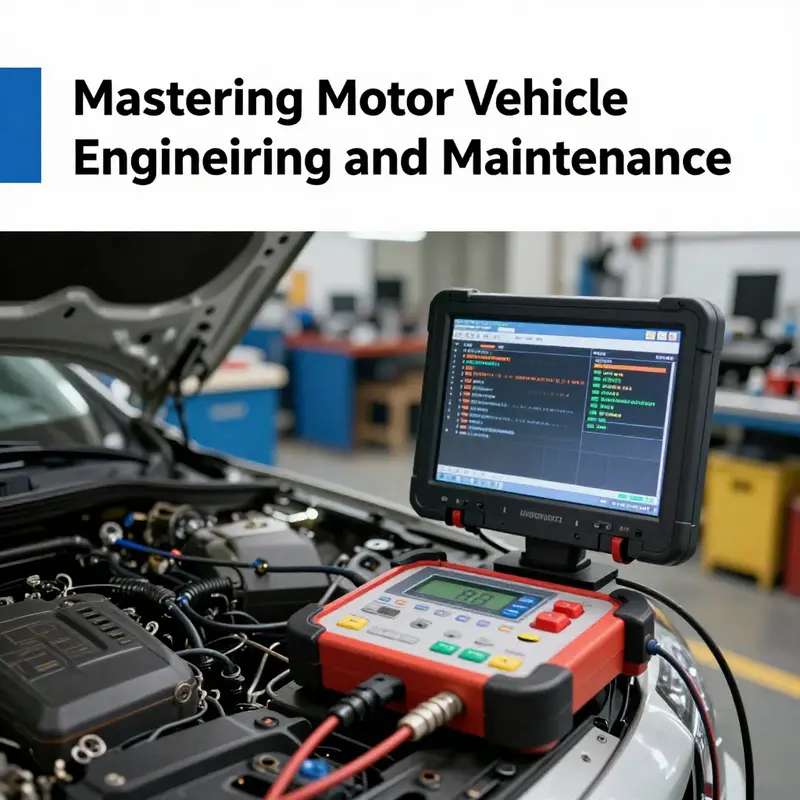
Vehicles today are complex systems where sensors, control units, and software work together. This chapter explains how diagnostic codes, live data, and reproducible test procedures come together to deliver reliable maintenance. It covers the diagnostic workflow: collect data, interpret fault codes in context, verify with tests, and document outcomes. It emphasizes safety, clear communication with customers, and the essential role of standardized diagnostic norms that enable consistent results across makes and models. The integration of AI and data analytics can aid pattern recognition and prognosis, but human reasoning and hands-on verification remain crucial. Practical guidelines include structured data collection, controlled test scenarios, and rigorous documentation to support future troubleshooting and warranty considerations. The goal is to equip readers with a disciplined, repeatable approach to fault finding that balances theory, tools, and practical constraints in real-world service environments.
Final thoughts
A comprehensive grasp of motor vehicle engineering and maintenance lays the foundation for business success in the automotive sector. By understanding engineering fundamentals, honing practical repair skills, adhering to health and safety regulations, and mastering diagnostic techniques, business owners can ensure operational excellence. These key areas not only enhance service quality but also foster customer trust and loyalty, ultimately leading to sustained growth and profitability in the automotive service industry.