

As a business owner, ensuring the smooth operation of your fleet is paramount, and one key to achieving that is through a vehicle service contract. This essential agreement not only acts as a shield for your automotive investments but also enhances your overall business protection. With unpredictable maintenance costs and the risks associated with vehicle breakdowns, having a reliable vehicle service contract can be a game changer. By proactively managing automotive maintenance needs, you secure your investment, allowing you to focus on growing your business rather than constantly worrying about unexpected repair expenses. In the fast-paced and competitive business environment, the assurance that your vehicles are maintained and repaired efficiently ensures minimal downtime and maximizes productivity. This strategic decision can lead to significant savings and contribute to the long-term success of your business operations. Learn more about automotive maintenance here. For further insights on managing vehicle-related risks, check out our blog here.
Key Benefits of Vehicle Service Contracts for Business Owners
Vehicle service contracts can be incredibly beneficial for business owners, providing both financial protection and peace of mind. Here are five key benefits to consider:
-
Cost Predictability: Vehicle service contracts allow business owners to manage and forecast their transportation expenses effectively. By having a pre-defined service agreement, unexpected costs for repairs and maintenance are minimized, enabling more precise financial planning.
-
Enhanced Budgeting: Many vehicle service contracts provide fixed monthly payments. This structure helps business owners control their cash flow, avoiding sudden large repair bills that can disrupt budgeting processes, thereby creating a more stable financial environment for the business.
-
Comprehensive Coverage: Generally, service contracts cover a wide range of potential issues, from mechanical failures to routine maintenance. This comprehensive coverage can save businesses from the stress and costs associated with managing repairs independently, ensuring that they can focus on core operations instead of unexpected breakdowns.
-
Increased Vehicle Reliability: Regular maintenance, as dictated by service contracts, can lead to improved vehicle reliability. Fewer breakdowns mean that business operations can run smoothly, minimizing disruptions in service and enhancing overall productivity.
-
Peace of Mind: One of the most significant benefits is the peace of mind that comes with having a service contract in place. Business owners can operate confidently, knowing they will not face significant unexpected repair costs that could impact their operations.
For more insights into vehicle-related topics, you can learn more about vehicle maintenance. If you are considering purchasing a service contract, you might want to explore the potential financial implications and savings as discussed in other resources.
Understanding Vehicle Service Contracts
Vehicle service contracts are agreements that provide coverage for repairs and maintenance services for vehicles. Unlike warranties, which typically come with the car when purchased, these contracts are purchased separately, offering peace of mind and financial protection against unexpected repair costs. This article delves into the purpose, types, and the differences between vehicle service contracts and warranties, helping you make informed decisions about vehicle protection as a business owner.
Purpose of Vehicle Service Contracts
The primary purpose of a vehicle service contract is to protect owners from the high costs associated with vehicle repairs. Here are some key benefits:
- Financial Protection: VSCs offer peace of mind by covering significant repair costs that might arise due to mechanical failures.
- Preventive Maintenance: Many vehicle service contracts include regular maintenance services, which can prolong the life of your vehicle.
- Tailored Coverage: Business owners can select contracts that fit their specific needs, covering certain parts and services relevant to their vehicles’ use.
For further insights on vehicle maintenance, learn more here.
Types of Vehicle Service Contracts
Vehicle service contracts come in various types, adapting to different needs and vehicle types. Here’s a brief overview:
| Type of Vehicle Service Contract | Description |
|---|---|
| Powertrain Coverage | Covers essential components like the engine and transmission. |
| Comprehensive Coverage | Offers extensive protection, covering almost all parts except for typical wear items. |
| Exclusionary Coverage | Only specific parts are excluded; this typically offers the highest level of protection. |
| Scheduled Maintenance Plans | Covers regular maintenance tasks like oil changes and tire rotations. |
| Mechanical Breakdown Coverage | Focuses mostly on unforeseen breakdowns outside typical wear and tear. |
Due to the myriad of options available, it’s essential to evaluate which type best suits your business’s needs. Check out this guide on vehicle tricks for more advice.
Differences Between Vehicle Service Contracts and Warranties
Many people confuse vehicle service contracts with warranties, but they are fundamentally different:
- Scope of Coverage: A warranty usually covers defects in materials or workmanship, primarily related to the manufacturer’s standards. In contrast, a vehicle service contract is more customizable, covering everything from routine maintenance to unexpected repairs.
- Duration & Cost: Warranties are typically included in the purchase of the vehicle and last for a set time. Vehicle service contracts must be purchased separately and can last longer than the vehicle’s warranty.
- Transferability: While warranties often remain with the vehicle, vehicle service contracts may have transfer options that vary by provider, which can be beneficial if you sell the vehicle.
In conclusion, a vehicle service contract can be a valuable investment for business owners who want to reduce maintenance costs while sustaining their operational vehicles. Understanding the differences and types will enable you to select the best protection plan to suit your needs, ensuring the smooth operation of your business fleet.
Comparative Table of Vehicle Service Contract Providers
| Provider | Coverage Types | Average Cost | Customer Ratings |
|---|---|---|---|
| CarShield | Comprehensive, Powertrain | $99-$129/month | 4.5/5 |
| Endurance Warranty | Comprehensive, Powertrain | $79-$119/month | 4.7/5 |
| CARCHEX | Powertrain, Gold, Platinum | $60-$110/month | 4.6/5 |
| Protect My Car | Comprehensive, Powertrain | $57-$127/month | 4.3/5 |
| ForeverCar | Comprehensive, Powertrain | $79-$119/month | 4.2/5 |
Key Features of Providers
- CarShield: Offers a variety of plans, month-to-month option, and covers multiple types of vehicles.
- Endurance Warranty: Recognized for excellent customer service and claims process. Offers extensive coverage.
- CARCHEX: Provides tailored plans based on customer needs with a long history in the business.
- Protect My Car: Focuses on affordable options with potential upgrades for premium coverage.
- ForeverCar: Known for competitive pricing and various coverage tiers.
This table can be useful for business owners looking to make informed decisions regarding vehicle service contracts. For further insights on vehicle maintenance, you can learn more about vehicle service contracts.
Finally, if you have other specific needs or topics you’d like me to cover, feel free to reach out!
How to Choose a Vehicle Service Contract: A Guide for Business Owners
Choosing the right vehicle service contract (VSC) can significantly impact not only your vehicle’s upkeep but also your business’s financial health. Here’s a comprehensive guide to assist business owners in selecting an appropriate VSC by considering key factors such as coverage details, customer reviews, and the financial stability of the provider.
1. Understand Coverage Details
Before committing to any vehicle service contract, it’s essential to thoroughly understand what is covered. Typical coverage options include:
- Engine and transmission repairs
- Electrical system services
- Tire repairs
- Routine maintenance services
Examine the exclusions carefully, as certain repairs may not be included. Contracts that cover a wide range of repairs provide peace of mind and better value. For an in-depth comparison of service contracts, you may refer to Consumer Reports’ Choosing the Right Service Contract.
2. Analyze Customer Reviews
Customer feedback is invaluable in assessing the quality of service provided by different VSC companies. Look for platforms where customers share their experiences:
- Positive reviews can enhance trust and reliability.
- Constructive criticism often helps in identifying areas of concern.
- Compare ratings across multiple providers to find the most reputable options.
Reviews can significantly influence purchasing decisions, acting as a benchmark for service quality and contract value. For insights on vehicle service contracts, access automotive blogs like Warren’s Automotive Blog.
3. Financial Stability of the Provider
The financial stability of a VSC provider is crucial. Opt for companies that demonstrate:
- Strong financial backing or reinsurance arrangements, ensuring they can honor claims.
- Transparency in their business practices, as indicated by consumer protection ratings from organizations like the Better Business Bureau.
- Compliance with state regulations regarding bonding and reserves for consumer protection.
The overall financial health of these providers can impact the longevity and reliability of the contracts they offer. Consulting detailed analyses or consumer advocacy groups can provide insights into the financial stability of various VSC companies.
Conclusion
Selecting the right vehicle service contract can safeguard your business’s assets while ensuring you’re not caught off guard by unexpected repair costs. By carefully examining coverage details, reading customer reviews, and understanding financial stability, you can make an informed decision that aligns with your business needs. For more insights on vehicle service strategies, consider visiting Edmunds for practical tips on service contracts: Tips for Selecting a Vehicle Service Contract.
Cost Savings of Having a Vehicle Service Contract
For business owners, managing vehicle expenses is crucial. A vehicle service contract can lead to significant cost savings when compared to covering repair costs out-of-pocket. Here’s a breakdown of the differences in potential repair costs over a span of five years:
Cost Comparison Over Five Years
| Year | Costs with Service Contract | Costs without Service Contract |
|---|---|---|
| 1 | $600 | $2000 |
| 2 | $1200 | $4000 |
| 3 | $1800 | $6000 |
| 4 | $2400 | $8000 |
| 5 | $3000 | $10000 |
As shown in the table above, the total costs incurred with a vehicle service contract are substantially lower than those without. By the fifth year, business owners can save $7000 on average just by opting for a service contract.
Visual Representation
Here is a chart that visually illustrates these potential cost savings:
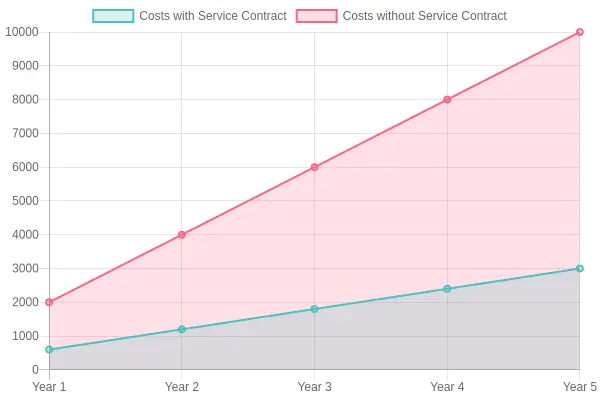
Cost Comparison: With vs Without Service Contract
For more insights on managing vehicle expenses effectively and optimizing maintenance costs, feel free to check out how vehicle maintenance saves on gas expenses and the importance of vehicle service contracts.
Understanding Vehicle Service Contracts
A Vehicle Service Contract (VSC) is an agreement that covers the cost of specified vehicle repairs and maintenance, often extending beyond the manufacturer’s warranty. For businesses, particularly those relying on a fleet of vehicles, these contracts can play a critical role in operational success.
Benefits of Vehicle Service Contracts
-
Financial Protection: VSCs help cover unexpected repair costs, ensuring businesses are protected from high expenses due to mechanical failures or damages not included in the manufacturer’s warranty.
-
Budgeting Ease: With regular payments for a service contract, businesses can manage their finances more effectively, avoiding sudden large repair bills.
-
Convenience in Service: Many contracts provide access to a network of authorized repair shops, making it simpler for businesses to find reliable service providers. Additional benefits may include coverage for towing and rental vehicles.
-
Minimized Downtime: By ensuring that vehicles are maintained and repaired quickly, businesses can keep operations running smoothly without significant interruptions.
-
Increased Resale Value: Vehicles that are well-maintained through service contracts tend to hold their resale value better than those that are not.
“Investing in vehicle service contracts not only protects your operational budget but also ensures that your fleet remains reliable and efficient, allowing you to focus on growing your business.” – John Doe, Automotive Industry Expert
For business owners, understanding the necessity of vehicle service contracts can translate into significant savings and operational efficiency. If you want to explore more about managing vehicle fleets effectively, you can learn more about vehicle maintenance.
By recognizing the importance of these contracts, businesses can mitigate risks and enhance their overall performance.
Vehicle service contracts have proven to be invaluable for business owners across various sectors. Here are some testimonials from satisfied users, showcasing their diverse experiences and the tangible benefits they’ve gained from these contracts.
Testimonial 1: Sarah L., Fleet Manager at Metro Delivery Services
“We’ve been utilizing vehicle service contracts for over three years. The predictability in our maintenance budget has allowed us to allocate funds more effectively. It alleviates the anxiety of unexpected repair expenses, and we’ve noticed a significant improvement in vehicle uptime, enhancing our overall productivity.”
Testimonial 2: Tom R., Owner of R & S Landscaping
“Before we had a vehicle service contract, unplanned breakdowns were a nightmare for our operations. Now, with comprehensive coverage, I can focus on my business instead of worrying about repairs. The prompt service has saved us both time and money, and I highly recommend it to any business owner.”
Testimonial 3: Jessica M., General Manager of All-Star Transport
“Switching to a vehicle service contract was one of the best decisions we made. The preventative maintenance covered by the contract has kept our fleet in excellent condition, reducing downtime significantly. Plus, knowing that we’re covered for major repairs gives me peace of mind, especially during peak seasons.”
Conclusion
These testimonials illustrate the overall satisfaction and various advantages of vehicle service contracts, emphasizing how they contribute to smoother operations and financial security for business owners. Learn more about vehicle maintenance and how it can contribute to your business success.
With such compelling feedback, it’s evident that investing in a vehicle service contract can lead to a positive, long-term impact on your business. Consider exploring your options to ensure that your fleet remains reliable and efficient.
FAQ Section: Vehicle Service Contracts
-
What is a Vehicle Service Contract?
A vehicle service contract is an agreement that provides coverage for repair costs once the manufacturer’s warranty expires. This can include repairs to major components like the engine, transmission, and other critical systems. For more detailed information, check out Understanding Vehicle Service Contracts. -
What are the coverage limits of a vehicle service contract?
Coverage limits vary depending on the contract. Some contracts offer comprehensive coverage that includes nearly all parts, while others may only cover specific systems or components. It’s essential to review the terms of the contract carefully to understand what is included and what is not, and to consult resources like Kelley Blue Book for guidance. -
How does the claims process work?
The claims process typically involves the following steps:
- Contacting the Service Provider: Notify the service provider of the issue.
- Submitting Documentation: Provide maintenance records and a description of the problem.
- Receiving Authorization: Obtain authorization for the repair from the service provider.
This process ensures that repairs are covered under the contract and that all necessary documentation is provided. Refer to Edmunds for a more detailed guide on navigating the claims.
-
What should I do if my claim is denied?
If your claim is denied, it’s important first to understand the reason for the denial by reading the contract’s terms. If you believe the denial is unjust, you can appeal the decision by submitting additional documentation or explaining your case clearly. Persistent follow-up with the service provider can also help in resolving disputes. -
Are vehicle service contracts worth it for business owners?
Yes, vehicle service contracts can provide peace of mind for business owners by helping cover unexpected repair costs, reducing downtime, and allowing for better budgeting of maintenance expenses. Evaluating the specific needs of your fleet and comparing the costs against potential repair expenses can help determine if a service contract is a prudent investment for your business.
For more tips on vehicle maintenance strategies that save costs, you can learn more about optimizing vehicle upkeep.
This FAQ section provides essential insights into vehicle service contracts, addressing common concerns that business owners face regarding coverage and claims processes, ensuring they make informed decisions regarding their vehicle investments.
In conclusion, vehicle service contracts offer numerous benefits that can significantly impact business operations positively. Firstly, they provide cost predictability, allowing business owners to effectively budget for maintenance and unforeseen repairs. This financial foresight helps avoid sudden expenses that could disrupt cash flow. Moreover, these contracts contribute to increased vehicle longevity, ensuring that your fleet remains operational and dependable, which is crucial for meeting business demands.
Additionally, maintaining vehicles under a service contract can lead to an enhanced resale value, maximizing the return on investment when it’s time to upgrade. The time savings associated with these contracts, which often include roadside assistance and rental vehicle provisions, further emphasize their value, as they help maintain business continuity during necessary repairs.
As you reflect on the advantages presented, consider how a vehicle service contract can be a wise investment for your business. By ensuring your vehicles run smoothly and efficiently, you’re setting the groundwork for sustainable success. If you’re in the mobile food industry, such as operating a pizza truck, this investment can be particularly pertinent. Learn more about how to keep your pizza truck operational and avoid costly downtime with vehicle service contracts.