
Understanding the maintenance history of your vehicle is essential for business owners, as it can significantly impact operational efficiency and budgeting. In an age where transparency and reliability are paramount, knowing how to effectively track and access maintenance records is more important than ever. This guide delves into three prominent methods: utilizing third-party platforms that aggregate maintenance data, reaching out to original dealerships for authoritative service history, and tapping into insurance records for insights on accident repairs. Together, these strategies equip business owners with a thorough understanding of their vehicle’s maintenance lifecycle, ensuring informed decision-making and financial prudence.
From VIN to Clear History: Harnessing Trusted Third-Party Platforms to Uncover a Vehicle’s Maintenance Record
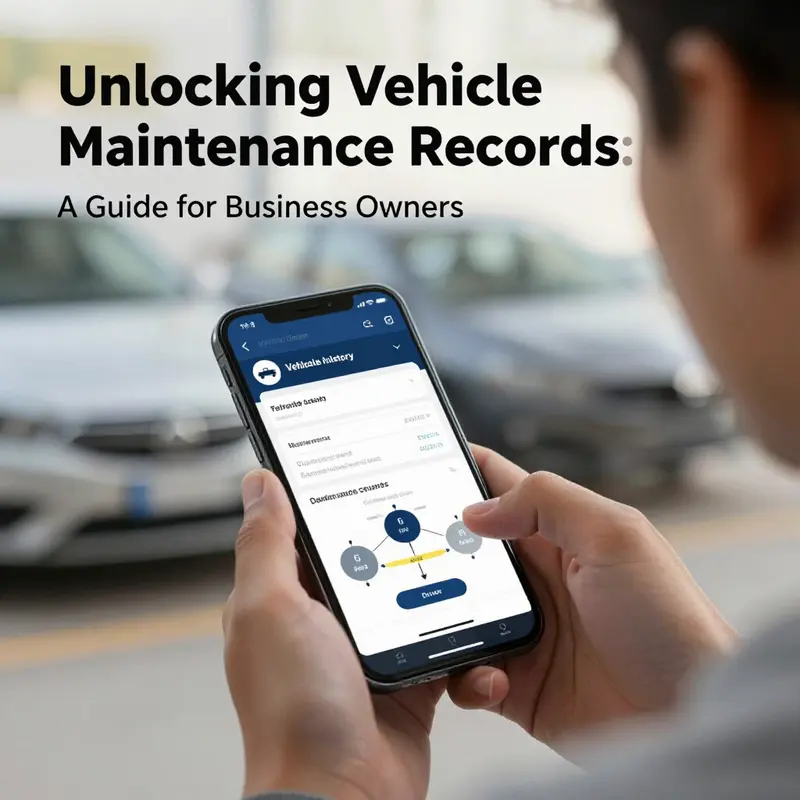
When you set out to understand a car’s past, the maintenance history becomes more than a ledger of oil changes and tire rotations. It acts as a narrative of how the vehicle has aged, how well it has been cared for, and how likely it is to offer reliable service in the years ahead. In many markets, the most efficient way to piece together that narrative is through trusted third-party platforms that aggregate data from multiple sources. These platforms are particularly valuable because they resolve the stubborn reality of data silos: a maintenance record saved in one dealership system may sit in another network’s vault, invisible to anyone outside that circle. The result is not just convenience; it is a more complete, trustworthy view of a vehicle’s maintenance trajectory. In the context we are examining, a leading third‑party platform accessible through a familiar messaging ecosystem has become a standard tool for both individual owners and professional dealers. This platform, which operates by consolidating information from authorized dealerships and large repair shops across a broad region, provides a single, coherent maintenance report that traverses brands, service centers, and service types. The process is anchored by the vehicle’s VIN, a 17-character key that remains stable across ownership, and, in many cases, a scan of official registration documents. The promise of this method is straightforward: a concise, data-rich report that captures not only scheduled maintenance but also the more consequential repairs and service events that shape a car’s reliability over time. For buyers, this information can transform a seemingly average vehicle into a well-vetted choice; for sellers, it equips them with an auditable record that can bolster trust and reduce negotiation friction. The value, then, lies not in a single data point but in the broad mosaic of maintenance history that a trusted third-party platform can assemble. To begin, you need a practical understanding of how to access and interpret the data, because the best tool is only as good as your ability to use it accurately. The platform’s workflow is built to be approachable for both laypeople and industry professionals, and the steps are deliberately streamlined to minimize friction during a critical moment—when you are considering a used car purchase or need to verify a vehicle you already own. The most reliable platform in this space is designed to function within a popular, widely used digital ecosystem, which in turn lowers the barrier to entry for a broad user base. By leveraging the vast data network behind the scenes, the platform can deliver a detailed maintenance log in a matter of minutes, rather than hours or days spent chasing paper records from multiple locations. In practice, that speed matters: when you are judging a vehicle’s value or deciding whether to purchase, a rapid, comprehensive history gives you the confidence to move forward or step back with clarity. At its core, the method is this: you provide a unique identifier for the vehicle, typically the VIN, and you authorize the platform to retrieve maintenance and repair data from participating service providers. The platform then processes the data, cross-references records from many sources, and presents a consolidated report that highlights the maintenance events, the services performed, and any notable anomalies or unresolved issues. This is not merely a list; it is a narrative that reveals patterns of care, attention to preventative maintenance, and potential red flags that deserve careful attention before a decision is made. The strength of this approach becomes particularly evident when you compare it to more traditional avenues of inquiry. A single dealership or a single insurer can provide only a portion of the story. If a car has changed hands across multiple owners or if it has been serviced across different brands, a brand-specific maintenance log might appear incomplete. The third-party platform, by aggregating data from a wide network of sources, mitigates this risk and offers a more robust foundation for decision making. The entry point into this ecosystem is straightforward: you access the platform through a widely used digital channel, typically a mobile app or a social messaging interface. In the scenario described here, you would open the relevant app, locate the official mini-program or public account dedicated to vehicle history, and select the option that corresponds to maintenance and repair records. From there, you supply the vehicle’s VIN, which should be verified for accuracy against the registration certificate or the windshield sticker, and initiate the query. The platform will then retrieve the data, perform a verification pass, and deliver a report within minutes. The speed of this process is not merely a matter of convenience; it is a critical factor when you are evaluating a vehicle on a tight timeline, such as during a showroom visit or a private sale. The report itself is designed to be multidimensional. It does not limit itself to routine maintenance tasks like oil changes or brake inspections. Instead, it captures a wide spectrum of information: the dates of service events, the exact services performed, the specific parts replaced, and the identifiers of the service providers, including whether the work was performed at an authorized dealership or a recognized independent shop. In addition to routine maintenance, the platform’s data set can include more consequential records, such as accident repairs, insurance claims, and the status of the vehicle in relation to liens or seizures, all of which bear on the car’s condition and ownership history. The inclusion of insurance claims and accident repairs is particularly important for buyers who want a clear sense of the vehicle’s exposure to significant damage, quality of repairs, and the potential long-term implications for reliability. A vehicle could have received a thorough repair following a major collision, with parts replaced and workmanship certified; without a third-party history that aggregates such data, that narrative might not be apparent from a standard maintenance log alone. Equally valuable is the platform’s capacity to surface less obvious, yet highly relevant details, such as mileage consistency and potential odometer irregularities. Odometer accuracy is a sensitive and essential dimension of vehicle history, and when mileage discrepancies appear across maintenance logs and other records, they warrant deeper scrutiny. A credible third-party report will flag mileage alignment issues, enabling you to pursue further investigation with the seller or service providers. The reliability of the report rests on the breadth of the data network—the more sources the platform draws from, the more credible the history becomes. A well-connected platform will capture entries from a broad array of authorized 4S shops, large independent repair networks, and sometimes even regional service centers that may not publish to every brand’s official system but contribute to the platform’s data pool. This multi-source approach addresses a common pitfall: a maintenance event that occurred at a non-affiliated shop might not appear in a brand’s official service history but could still be captured by a comprehensive third-party aggregator. For buyers, this holistic perspective wipes away some of the anxiety that accompanies purchasing a used vehicle. It shifts the evaluation from a handful of anecdotal receipts to a data-driven story that highlights maintenance regularity, timely service, and the presence or absence of major repairs. For sellers, it provides a credible, verifiable record that can substantiate the car’s upkeep, reduce questions about the vehicle’s condition, and support a fair asking price. The third-party platform’s value proposition extends beyond the initial purchase decision. Owners who have inherited a vehicle, or who bought a car after a long period of private ownership, often face the challenge of reconstructing a maintenance timeline from scattered receipts and a sporadic memory of service events. A consolidated report allows them to identify patterns—such as recurring oil changes, timing belt or chain interventions, transmission service, or cooling-system maintenance—that may not be obvious when receipts are viewed in isolation. This, in turn, supports responsible vehicle ownership: recognizing when a car is approaching the end of a maintenance cycle, planning for upcoming items like brake or tire replacement, and budgeting for anticipated costs. The practical steps to use the platform are simple, but the benefits are substantial. First, ensure the VIN you intend to query is accurate; a single incorrect digit can lead to a wrong report or a failure to retrieve data at all. The VIN is typically found on the windshield’s lower corner, on the vehicle registration certificate, and in some cases within the door jamb or engine bay plate. If you have access to the registration documents, you can also capture a clear photo and upload it to the platform, which further reduces the risk of human error. After initiating the search, give the system a few minutes to compile the data. In practice, the processing time is often short—between three and five minutes—because the platform routinely runs automated cross-checks, references multiple data sources, and formats the result into a readable, comprehensive report. When the report is ready, you will see a structured presentation that highlights key maintenance events, includes service details such as labor hours and parts replaced when that information is available, and indicates the service centers involved. The most valuable sections are those that summarize the maintenance cadence over the vehicle’s life: a chronological sequence that helps you trace how regularly the car has been serviced, identify any “gaps” in the maintenance schedule, and observe whether the timing of major replacements aligns with the manufacturer’s recommended intervals or with the vehicle’s observed wear and tear. It is essential to understand that no single source is perfectly complete. Even a robust third-party platform has limitations, which is why prudent buyers and sellers rely on cross-checking the results with other sources. If the platform reveals a potentially critical gap in maintenance, or if it flags a significant repair not fully documented, you should verify with the original dealership that serviced the vehicle or with the insurer that processed related claims. This cross-verification is not a sign of distrust; it is a responsible due diligence step that helps ensure you interpret the data correctly. In practice, you can pursue three parallel lines of verification. One is to contact the original dealership if the vehicle has a long-standing relationship with a single brand’s network. Brand-authorized shops tend to maintain the most granular level of detail—down to exact part numbers, specific warranty conditions, and technician notes. The second line is to check with the vehicle’s insurer, especially if the report indicates an accident or a major repair history. Insurance claim records provide independent confirmation of events and add context that maintenance logs alone cannot supply. The third line involves your own documentation. If you have personal receipts and invoices, you should reconcile them against the platform’s entries. This comparison can uncover discrepancies that warrant closer examination, such as a service performed by an uncertified technician, a missing parts replacement, or a misrecorded date. The value of having a comprehensive, multi-source history also becomes evident when you prepare to resell the car. A well-documented maintenance narrative reassures buyers that the vehicle has been cared for consistently and transparently. In some markets, this type of documentation can influence negotiation posture, affect financing eligibility in some scenarios, and even impact insurance terms. For those who want to deepen their understanding, a practical path is to read about maintenance concepts more broadly. The idea of maintenance itself encompasses not just routine servicing but also the strategic timing of replacements and the choice of components based on the vehicle’s age and usage. A concise primer can help you interpret a maintenance report more effectively and recognize patterns that might otherwise go unnoticed. For example, knowing what constitutes standard preventive maintenance versus a repair-triggered event can clarify whether a service entry should be treated as routine or as a potential early sign of a broader issue. To further connect the dots, you can explore foundational information about vehicle maintenance through a dedicated resource that presents the broader context of car care. What is vehicle maintenance? This primer helps you translate the jargon of service descriptions into meaningful decisions about ownership, budgeting, and resale value. What is vehicle maintenance? The integration of this knowledge with the platform’s data creates a more confident decision-making framework. It is also worth noting that while third-party platforms offer a powerful lens on a vehicle’s history, you should remain mindful of privacy considerations and the possibility of gaps in data coverage. The data you receive may reflect only what is reported to the participating networks, and there might be intervals or independent service events that go unrecorded if they occurred at unregistered shops or in jurisdictions with limited reporting. When you encounter an incomplete report, consider it a starting point for a targeted inquiry rather than a final verdict. In such cases, the combination of a third-party history with direct confirmations from the seller, the dealership, and, where applicable, insurers provides the most robust foundation for an informed decision. Another practical takeaway concerns the timing of obtaining a history report. If you are in the market for a used vehicle, it is prudent to request the maintenance history before entering negotiations or scheduling a test drive. A ready-made report can streamline the evaluation and help you allocate your time more efficiently. If you are a current owner seeking to document your vehicle’s care, you can leverage the same platform to generate a maintenance digest for your records. A well-organized digital report can simplify future resale, improve transparency with prospective buyers, and serve as a personal tracker for upcoming maintenance milestones. As you weigh the options, remember that this approach does not replace direct, in-person checks. A test drive, a professional mechanical inspection, and a careful examination of the vehicle’s overall condition remain essential components of due diligence. The maintenance history complements these checks by revealing the underlying story of how the car has been treated and maintained over time. In integrating this information into your decision-making process, you can position yourself to make more informed, confident choices. The result is not simply a catalog of past events but a nuanced understanding of a vehicle’s reliability trajectory, its maintenance discipline, and the likelihood of future expenses. In the broader arc of vehicle ownership, third-party maintenance histories thus become a critical asset, enabling clearer communication between buyers and sellers and supporting more transparent transactions. They transform a potentially opaque past into an accessible, data-driven narrative that anyone can read, interpret, and act on. For readers who want to continue building their skills, the next steps involve practicing with real-world queries, cross-verifying across sources, and applying these insights to your own vehicle decisions. In doing so, you reinforce the habit of treating maintenance data not as a bureaucratic requirement but as a practical lens for optimizing reliability, budgeting, and peace of mind on the road.
Tracing the Original Dealership Ledger: Uncovering a Vehicle’s Maintenance History
The maintenance history of a vehicle is more than a calendar of services; it is a narrative of how a car aged and what it endured. For many buyers and owners, the most credible, authoritative account lives in the original dealership’s ledger—the Dealer Management System that recorded every visit, every repair, every part change, and every technician who touched the car. When a vehicle has spent its life within a single brand’s authorized service network, those records form a gold standard. They reveal not only the what of maintenance but the when and the how, including exact part numbers, labor times, and even the signatures of the people who performed the work. In a used-car evaluation, this level of detail can be the difference between a cautious decision and a confident one. The dealership ledger is not a rumor; it is a documented history maintained in a digital system designed to track reliability, warranty coverage, and ongoing care. The challenge, of course, is how to access that ledger without stepping into a maze of bureaucratic hurdles or personal privacy concerns. The route that many discover to be the most straightforward, most authoritative, and most efficient begins with a direct connection to the original dealership or to an authorized service center for the brand.
To understand why this method holds such weight, imagine tracing every service entry from the moment the car left the lot. The dealership’s digital records capture more than routine maintenance. They log the exact repair tasks performed during visits, the precise part numbers replaced, and the amount of labor billed for each service. If a timing belt was replaced or a brake system was refreshed, the DMS will often show the scheduled maintenance interval, the OEM service bulletin referenced, and the technician who completed the work. A well-maintained log can even reveal subtleties that a casual owner might overlook, such as recurring issues addressed under warranty, or patterns that hint at developing problems. This is not a general summary; it is a granular account that can be cross-verified across visits and across service campaigns. It is the kind of documentation that buyers crave when they want to validate a vehicle’s history or when warranty claims are part of a purchase agreement.
The approach is practical and grounded in simple steps. Start with the dealership where the vehicle was originally purchased or where it has received most of its regular service. This target is logical because the brand’s authorized network maintains a continuous thread of records across that network. The first contact should be by phone or in person, whichever maximizes your chances of a complete response. In many cases, a visit to the service department will yield the clearest outcome, but a well-prepared phone call can also suffice. You will likely encounter a service advisor or records specialist who understands the required workflow and the privacy protections that govern access to maintenance data. The key to success is clarity and patience: you need to convey who you are, why you want access to the records, and what you intend to do with the information.
Gathering the essential materials before you reach out reduces back-and-forth and speeds up the process. The VIN—Vehicle Identification Number—is your most valuable identifier. It uniquely ties the vehicle to its service history in the dealership’s DMS. When you present the VIN, the staff can locate the vehicle’s file quickly, cross-check dates, and pull the appropriate maintenance entries. In addition to the VIN, you should be prepared to demonstrate ownership or legitimate authority to view the records. This typically requires a government-issued ID, and, if you are acting on behalf of someone else, documentation such as a power of attorney or written authorization from the owner. Some dealerships may request the vehicle’s registration or title to verify ownership, especially if records are sensitive or contain personal notes about the vehicle’s previous owner. If you are the current owner, carrying proof of ownership alongside your ID is usually sufficient and streamlines the process.
The exact content of the records can vary. The DMS within a brand’s network is designed to be comprehensive, but access is not always panacea. At a minimum, you should expect a chronological log of service visits, including service dates, odometer readings at the time of service, and a description of the maintenance performed. A detailed report will often itemize labor hours, billable labor rates, and the precise parts used, complete with part numbers. In some instances, the record may indicate the technician’s initials, which can be a helpful cue if you plan to discuss a particularly complex repair with the service manager. If the car participated in any campaigns or recalls related to maintenance, those notes might appear in the same file, linked to a service visit or to a specific component. The depth of data can be especially helpful for evaluating the condition of critical systems—engine, transmission, suspension, braking—and for planning upcoming maintenance based on what has already been done.
Yet, even this highly authoritative source has its boundaries. The most important limitation to acknowledge is scope. The dealership ledger is ideally complete for services performed within that brand’s authorized network. It may not capture visits to independent shops or to service centers that carry another brand’s vehicles or aftermarket franchises. If the car has seen work outside the brand’s network, those entries will not appear in the DMS, or they may appear only as a brief note if the service data has been retroactively uploaded. This means that while the dealership records can be extraordinarily rich for a vehicle that has lived mostly in one ecosystem, they may provide an incomplete picture for a car that has shuffled between brands or between independent garages. The prudent path, therefore, is to treat the dealership ledger as a cornerstone rather than a solitary source. By design, it is the most authoritative source for the brand’s own network, but the full maintenance narrative often requires triangulation with other sources.
That triangulation is where the broader ecosystem of maintenance history comes into play. The most convenient and comprehensive method, particularly when you are evaluating a used car, is to consult a trusted third-party vehicle history platform that aggregates data from multiple sources, including the manufacturer’s authorized network, independent repair facilities, and sometimes insurance records. This approach is powerful because it provides a more holistic view of the vehicle’s life. You can think of it as a bridge between the absolute trustworthiness of the original dealership records and the practical reality that a car often visits a variety of service providers over its lifetime. The third-party platform’s report can reveal maintenance events that never touched a single dealership’s DMS, while still validating the major items that show up in the dealership ledger. For the buyer, this synthesis reduces uncertainty and helps you form a more complete risk assessment before purchase. For the seller, it provides a credible, consolidated history that can accelerate negotiations and build trust with a prospective buyer.
To maximize the usefulness of contacting the dealership, you should approach the interaction as a collaborative data-gathering effort. Start by describing your objective in practical terms: you want to understand the full maintenance history to confirm the vehicle’s care regimen and to anticipate future maintenance needs. It’s helpful to provide a rough timeline: when the car was first sold, the typical service intervals recommended by the brand, and any known major components that were replaced over time. If the vehicle has a long service history, ask the staff whether they can export or print the maintenance entries into a readable report. Some dealerships can provide a PDF copy of the maintenance history, while others may offer an on-site printout that you can take with you. If the request is granted, review the document carefully for consistency. Ensure that dates align with odometer readings and that part numbers match the parts listed in the service entries. If you notice inconsistencies, ask for clarification or a more detailed breakdown. A cautious, methodical approach helps you avoid misinterpretations that might lead to incorrect conclusions about the car’s condition.
In many cases, the dealership will require an in-person visit or a formal written authorization to release the records, especially if you are requesting a complete history for a vehicle you do not own. In these situations, plan ahead and be prepared for the possibility of a small fee, which some service departments charge to generate copies or to email electronic records. Fees, when they exist, are usually modest and reflect the administrative cost of compiling a comprehensive file from the DMS. If cost is a concern, you can negotiate or ask if the dealership can provide a summarized version of the history instead of a full, itemized report. Even a concise, well-organized summary can illuminate whether recurring maintenance has occurred, which systems were serviced most often, and whether any significant repairs were performed under warranty. The fundamental point remains: the dealership’s records deliver a level of precision that is rarely matched by informal notes or memory alone.
For owners who are not the registered buyers—perhaps a family member or a prospective buyer—privacy and authorization become more than formalities; they are safeguards that ensure data is shared appropriately. The dealership will typically verify identity and ownership, and they may require written authorization if you are acting on behalf of someone else. This process protects the vehicle’s history from accidental or unauthorized disclosure, a principle that is essential in the digital age where service data can reveal sensitive information about prior ownership, accident history, and vehicle status. The careful handling of these records also helps the dealership manage its risk and maintain the integrity of the data within the DMS. When you experience delays, remain courteous and persistent. A well-managed service department will recognize the legitimate interest in the car’s history and will work with you to establish a clear, compliant path to access.
As you consider integrating dealership records with other sources, you may find it valuable to reflect on how maintenance history informs the broader narrative of a vehicle’s reliability. A clean, brand-specific service record is a strong signal of responsible ownership, diligent maintenance, and the presence of a well-documented care plan. Conversely, gaps in maintenance or repeated visits for the same issue can point to trends worth investigating with a qualified mechanic. When you see correlations—such as a sequence of brake-service entries coinciding with high mileages or with the appearance of related sensor warnings—you gain a more nuanced understanding of the vehicle’s health. This insight is particularly important if you are evaluating a used car for long-term ownership, a scenario in which the cost of potential future repairs can be significant. It also matters when warranty claims are part of the purchasing equation, because dealers and manufacturers often rely on the maintenance record to determine eligibility and to validate service milestones.
In all scenarios, it is wise to view the original dealership’s records as a foundational element of due diligence. They establish a credible baseline and serve as a touchstone against which other sources—third-party history reports, insurance claim records, and personal receipts—can be compared. The combination of a robust dealership history with corroborating data from ancillary sources provides the most reliable portrait of a vehicle’s past. This integrated approach helps you distinguish a well-maintained vehicle from one that has a patchy service history or, worse, a history that hides critical issues. The process requires a careful balance of asking the right questions, preparing the correct documentation, and engaging with the dealership in a respectful, collaborative way. When you do this, you are not simply obtaining a stack of pages; you are assembling a credible, verifiable story about the car’s life that will inform decisions for years to come.
To strengthen your understanding as you navigate these conversations, consider a concise primer on what maintenance actually covers and why different types of service matter. Understanding the scope of maintenance—what is routine service, what constitutes major repairs, and how maintenance intervals are defined—helps you interpret the records you receive. It also clarifies what you should expect to see in a well-kept history. For readers seeking a compact reference, see the explainer that outlines the categories of maintenance and their significance. It provides a framework to interpret the ledger entries without getting lost in the terminology. This context does not substitute for the dealership’s precise records, but it does empower you to read and question with greater confidence. What is vehicle maintenance?
The pathway to accessing original dealership maintenance history is not a one-size-fits-all solution, yet it remains the most authoritative route for brand-specific data. By establishing a direct line to the dealership’s records team, presenting the necessary identification and ownership documentation, and approaching the request as a collaborative data-gathering exercise, you can obtain a detailed, verifiable maintenance narrative. This can be invaluable for making an informed decision when purchasing a used car, for validating warranty claims, or for simply understanding how well the vehicle has been cared for over time. In many cases, the information you obtain will also reveal nuances that third-party reports may miss, such as a rare, one-off service that was performed only at a dealership in a specific region or a rare diagnostic test that flagged an emerging issue before it became a bigger problem. The dealership ledger, accessed with the right preparation and the appropriate permissions, offers a trustworthy anchor for assessing a vehicle’s maintenance history and, by extension, its future reliability.
The next step in building a comprehensive view of a vehicle’s past is to triangulate the dealership data with other sources. Third-party vehicle history platforms, insurance records, and even the owner’s own receipts can fill in gaps and corroborate key details. Each source has its own strengths and limitations, and together they create a more resilient picture. As you proceed, keep in mind that the goal is not to overwhelm yourself with data but to assemble a coherent, verifiable narrative that helps you make a sound decision about the vehicle’s value and condition. With patience and careful documentation, you can turn the dealership ledger into a trustworthy compass that guides you through the complexities of maintenance history.
External reading: https://vehicletricks.com/blog/how-much-does-it-cost-to-wrap-a-jeep-wrangler-cost-breakdown-tips/
Tracking the Car’s Past: Accessing Insurance Records to Uncover Maintenance History
When you’re evaluating a vehicle, especially a used one, the maintenance history isn’t just a list of services; it’s a narrative about how the car was cared for, how it aged, and how robustly its systems were monitored over time. Insurance records, in particular, can illuminate chapters that maintenance logs alone might miss. They can reveal not only accidents and repairs but also the scale of the repairs, the quality of parts used, and whether the vehicle has endured significant events that might influence its long-term reliability. The reason this information matters is simple: a car that has weathered substantial insurance claims often carries hidden wear or stress that isn’t always obvious from a road test or a dealer-maintained log. Reading insurance history alongside maintenance entries helps you discern whether a car’s upkeep has kept pace with its needs or whether key components have been replaced or rebuilt in response to damage. It is the kind of due diligence that protects buyers, builds confidence for sellers, and provides a clearer baseline for maintenance planning after purchase.
Accessing insurance records for maintenance history sits at the intersection of data aggregation, regulatory access, and practical verification. On one hand, there are third-party tools that pool information from multiple insurers, repair shops, and service providers to deliver a consolidated view of a vehicle’s life. These tools are designed to be fast and user-friendly, letting you enter a VIN or upload a registration image and receive a detailed report within minutes. On the other hand, you have more traditional avenues, such as requesting records directly from insurers or from the service departments of the shops that serviced the car. Both paths have their strengths and caveats, and when used together they provide a well-rounded picture. To ground this discussion in practical steps, imagine you’re assessing a car you’re considering purchasing or you’re preparing a vehicle you intend to market. The moment you pull the VIN from the windshield or the registration certificate, you begin a process of triangulating data from several sources to confirm what actually happened under the skin of the vehicle.
A robust insurance history report can reveal the full spectrum of a car’s experiences. It can show accident and claim history and indicate whether the vehicle has been consistently insured, which is often a proxy for ongoing ownership and care. It can confirm the status of compulsory insurance and any commercial coverage that might have covered more extensive repairs. Beyond that, it can surface whether maintenance and repair work were performed at 4S shops or independent repair facilities, and it can include notes on maintenance-related events—such as timing belt changes, brake system overhauls, suspension work, or cooling-system rebuilds—that are tied to insurance claims because the repairs were needed after incidents. It can even flag potential red flags, such as signs of odometer tampering or undisclosed modifications, which are critical when you’re trying to judge the car’s true history and current condition.
To navigate this landscape effectively, you don’t need to become a data scientist. You need a strategy that begins with reliability and ends with cross-confirmation. Start with a third-party vehicle history tool that aggregates information from multiple sources. These platforms are designed for speed and breadth; they pull data from insurers, repair shops, and sometimes official registries to present a single, comprehensive report. When you use it, you’ll typically enter the vehicle’s 17-digit VIN or upload a clear photo of the registration certificate. The goal is to obtain a detailed, chronological history that includes accident and claims data, insurance status, and maintenance or repair records from participating shops. The reports often show precise service dates, the specific procedures performed, parts replaced, and even notes about potential issues that were left unresolved at the time of service. A well-constructed report may also include information about modifications or odometer readings that could influence your assessment of value and reliability. The appeal of this approach is clear: it accelerates due diligence, reduces the number of phone calls and in-person visits, and provides a broad, cross-sourced perspective that a single insurer or shop cannot offer on its own.
In discussing how to use these third-party tools, remember to work with VIN accuracy. A single incorrect digit can derail an entire search, leading you to a different vehicle or returning no results at all. The VIN is a stable key to the vehicle’s identity across all sources, and double-checking it against the windshield sticker and the registration certificate is a non-negotiable step. Once you’ve confirmed the VIN, the platform will typically present a detailed report that includes a landscape of the vehicle’s insurance and maintenance history. You’ll see whether the vehicle has been involved in major incidents, whether the claims were settled with substantial repairs, and how those repairs were documented. You’ll also gain a window into maintenance patterns: how regularly the vehicle was serviced, whether maintenance was completed at authorized dealerships or independent shops, and if there were any repeated parts replacements that might signal a durable issue developing over time. These insights are especially valuable when you’re weighing the decision to purchase or when you’re preparing a vehicle for resale, as they provide context for the maintenance numbers that appear in the logs.
From there, it’s prudent to corroborate the third-party report with direct sources. Insurance claims data, while richly informative, does not always capture every minor service event or routine maintenance that didn’t trigger a claim. That’s where cross-referencing with the local vehicle administration or traffic management bureau can add a layer of assurance. These authorities maintain records of ownership, insurance status, and sometimes major incidents tied to a vehicle’s history. A quick inquiry, typically with proof of identity and vehicle details, can help verify the information surfaced by third-party reports and confirm that the VIN corresponds to the same vehicle you’re examining. If you know the insurer that provided coverage in the past, contacting them directly can also be informative, particularly when you’re trying to distinguish between standard maintenance entries and repairs that followed an accident. The caveat here is privacy and process: insurers often have privacy protections and may require authorization or a legitimate interest to release historical claims data. Having a clear purpose, such as a legitimate vehicle purchase or sale, can help when navigating these privacy boundaries, and it’s important to approach these inquiries with courtesy and patience.
Within this landscape, there are specific kinds of information that frequently surface in insurance histories and that can be expert signals for a buyer. First, accident and repair history is perhaps the most consequential. Major repairs documented by insurers can indicate structural or mechanical stress that persists beyond the visible repairs themselves. Second, the insurance status—both compulsory and any commercial coverage—gives you a sense of how consistently the vehicle was insured, a proxy for ownership continuity and the likelihood that regular maintenance was performed. Third, the platform’s ability to surface maintenance and repair records from 4S shops is especially valuable in markets that rely on brand-specific service networks. When such records exist, they often provide part numbers, labor costs, and even technician signatures, which collectively sketch a high-fidelity view of what actually happened under the hood. Fourth, the tool’s capacity to flag odometer tampering or to note vehicle modifications can be a critical red flag for a car that has moved through multiple owners or jurisdictions. Finally, lien status can matter because vehicles with liens may have limited access to complete maintenance data, or the data might be partitioned across different custodians. Each of these data points adds texture to the maintenance history, turning a simple ledger into a robust narrative you can rely on when making an informed decision.
Even as these third-party tools broaden your access to data, you should treat any single source with healthy skepticism. No system is perfect, and data fragmentation is common across markets and formats. The best practice is cross-checking the findings with more than one source. For instance, you might compare the third-party report with what you find by contacting the original dealership network or with the insurer’s summary of claims history, if accessible. The goal is not to litigate every item; it is to triangulate key events and confirm when multiple sources align. If there is a discrepancy, you can pursue a targeted inquiry with the source most likely to possess the definitive record—for example, the dealership that serviced the vehicle regularly during a specific period or the insurer that handled the claim. Where possible, you should also check the vehicle’s current maintenance schedule against the maintenance history. A well-maintained car should show consistency between reported services and the vehicle’s performance indicators, such as a smooth engine operation, stable temperature readings, and timely, scheduled replacements of wear items.
Beyond the concrete records, there is a qualitative layer to reading insurance histories. Consider how the car’s upkeep aligns with the typical lifecycle of its components. A vehicle that shows regular, timely maintenance coupled with insurance-covered repairs for unexpected incidents often reveals a responsible owner who prioritized keeping the car in good condition. Conversely, a sparse or inconsistent record can signal potential gaps in maintenance that might manifest as reliability issues down the line. If a history shows a cluster of large repairs that occurred within a short window, you’ll want to investigate whether those repairs addressed root causes or merely replaced worn parts without correcting underlying problems. These nuances matter because maintenance history is not just about past expenses; it’s about whether those expenses translated into durable, dependable performance on the road.
To embed a practical reminder into your approach, it helps to think of maintenance history as a layered document rather than a single ledger. The lowest layer is the basic upkeep—oil changes, filter replacements, tire rotations, and standard inspections. The middle layer includes repairs driven by wear and tear or evolving performance needs—brake jobs, transmission service, cooling-system work, and suspension overhauls. The top layer comprises events that carry more risk, such as major collision repairs or claims that required structural work. Insurance histories are most useful when they illuminate these layers, allowing you to connect routine maintenance with any larger events that required coverage. When you combine these insights with a careful physical inspection and a test drive, you gain a well-rounded sense of the vehicle’s health and anticipated maintenance costs.
For those who want a quick anchor in understanding how to interpret these sources, there is a foundational resource that explains the broader concept of maintenance in vehicles. It can help you translate the data you gather into actionable maintenance expectations. See the resource here for a grounded overview: What is Vehicle Maintenance. As you review the documents, allow room for the possibility that not every event will be perfectly documented, and that some owners may have kept only limited receipts. In such cases, the most dependable strategy is to triangulate between a third-party data composite, the authoritative records from a dealership network where the car was serviced, and, when possible, direct information from the insurer. The aim is not to produce a flawless history but to assemble a credible, multi-source narrative that informs both your buying decision and your future maintenance planning.
Retaining control of the process also means planning how you will use the information after you’ve obtained it. If you are the buyer, you can use the history to negotiate a price that reflects the car’s true condition and the expected maintenance footprint. If you are the seller, you can preempt questions by proactively sharing records and explaining any gaps with context, such as privacy restrictions or gaps in coverage when the vehicle changed ownership. Either way, your credibility as a seller or a buyer grows with your willingness to present a transparent, corroborated history that centers both maintenance activity and insurance events. The ability to explain why a particular repair was performed, or why a service was delayed, can make all the difference in how a history report is interpreted by a prospective buyer. And when discussions move toward a hands-on evaluation, you’ll find that a well-documented record set can shorten the due-diligence phase and accelerate the path to a fair, informed outcome.
In practice, this approach to accessing insurance records is most effective when integrated into a broader due-diligence routine. Start by confirming the VIN and assembling a file of available records from any source you can access. Then run a multi-source check using a third-party history platform to obtain a consolidated snapshot. Next, corroborate the key events with direct inquiries to the dealer or insurer as needed. Finally, compare the maintenance needs suggested by the history with the car’s current condition, which you can verify through a professional inspection if necessary. This sequence helps you separate signal from noise and ensures that the conclusions you draw about maintenance history rest on a solid foundation of corroborated data. It also keeps you prepared to act quickly if the history reveals red flags that could affect your decision or the vehicle’s resale value.
If you’re exploring how to apply these ideas in a real-world scenario, keep in mind that access to insurance data can vary by region and by the privacy framework governing vehicle records. In some markets, the data you can access is broad and user-friendly, while in others, it may require formal authorization or may be limited to certain stakeholders. Regardless of the jurisdiction, a disciplined, cross-source approach remains the best way to build confidence in a vehicle’s maintenance history. By leveraging the strengths of third-party aggregation, verifying with the insurer or the dealership network, and supplementing with personal records, you can assemble a reliable, readable history that clarifies what has been done to the car and what remains ahead. The end result is a more informed purchase, a clearer maintenance plan, and a stronger basis for negotiating value. And with maintenance history in hand, you’ll approach the vehicle’s future needs with a more precise sense of the time and resources you’ll need to keep it running smoothly.
To weave this into the broader article on finding maintenance records, remember that insurance history is not a stand-alone solution. It is a complementary source that enriches the maintenance narrative, especially when paired with direct dealership records and well-organized personal receipts. The best outcomes come from approaching the task with a mindset of verification, cross-checking, and thoughtful interpretation of what the data actually says about how the car has lived its life. In this way, insurance records become more than just a set of numbers; they become a trustworthy, dynamic map of maintenance, resilience, and future reliability. For readers who want a concise primer on maintaining a vehicle’s upkeep, the linked resource above offers a solid foundation, while the subsequent sections of this chapter will continue to guide you through the practical steps of collecting, interpreting, and using insurance-related maintenance information to make informed decisions about any car in your sights.
As you proceed, keep in mind that the goal is not to overwhelm yourself with data, but to distill the most meaningful signals from the noise. A well-structured history report should answer a few key questions: Has the car been regularly serviced? Were major repairs required after an accident, and if so, were they completed with quality parts and proper documentation? Is there evidence of consistent insurance coverage that aligns with ownership and maintenance timelines? Are there any red flags—such as odometer discrepancies, unusual repair clustering, or inconsistencies between records and the vehicle’s current condition—that warrant closer scrutiny? If you can answer these questions with reasonably assured confidence, you will have turned insurance history into a practical, decision-ready asset rather than a cautionary tale. The journey from VIN to a credible maintenance narrative is a path of careful data collection, critical reading, and deliberate cross-checking. It is also a reminder that a vehicle’s history is not a static document but a living record of care, risk, and resilience that deserves thoughtful attention when you buy, sell, or simply decide how to care for your own car in the years ahead.
External resources can further expand your understanding and give you additional avenues to validate maintenance records. For a broader context on how maintenance principles translate into real-world care, you can consult the external resource linked at the end of this chapter. If you want to ground your approach in a practical, everyday understanding of maintenance concepts, consider the referenced overview as a solid starting point. And, when you’re ready to integrate maintenance concepts with the data you gather from insurance histories, you’ll find that your evaluation becomes more precise, your negotiations more confident, and your ownership decisions more informed. The end result is a vehicle narrative you can trust, built from multiple strands of information that together tell a clearer story than any single source could.
External resource: https://weixin.qq.com/k/6B3b8d0f5c9a4f5e
Final thoughts
Accessing your vehicle’s maintenance history doesn’t have to be an overwhelming process. By leveraging trusted third-party platforms, reaching out to original dealerships, and consulting with insurance companies, business owners can gain a comprehensive view of their vehicle’s health and service history. This knowledge not only fosters better decision-making regarding maintenance and budgeting but also enhances the longevity and reliability of your fleet. Equip yourself with these tools, and ensure your business vehicles are always running optimally.