
Effective vehicle maintenance is crucial for business owners managing fleets or individual cars. Proper documentation through a maintenance form not only ensures compliance but also aids in tracking vehicle health, budgeting for repairs, and enhancing the longevity of vehicles. This guide will navigate you through the essential components of a vehicle maintenance form. You will learn how to accurately record vehicle information, describe maintenance activities in detail, and precisely document all relevant service expenses. Each section is designed to build on the last, creating a comprehensive approach to vehicle management.
The Cornerstone of Service: Capturing Accurate Vehicle Information on a Maintenance Form
The Cornerstone of Service: Capturing Accurate Vehicle Information on a Maintenance Form
A maintenance form is more than a simple checklist. It is a living record that travels with a vehicle from shop to shop and year to year. Precision at the start matters as much as the work performed. The most reliable records begin with a careful, unwavering commitment to capturing accurate vehicle information. When this data is correct, it reduces back-and-forth, narrows the chances of misdiagnosis, and strengthens the trust between owner and technician. In practice, accuracy starts with the basics—the identifiers that uniquely reference a vehicle—and expands to the owner’s details, the precise description of the vehicle, and the current state of the odometer. This chapter walks through those core elements, showing how purposeful attention to each field creates a backbone for everything that follows.
First comes the license plate number. It is the most immediate signpost on a maintenance form. The plate number must match the vehicle’s registration exactly, character for character, including any hyphens or regional formatting. Any deviation—an omitted digit, an extra space, a misread letter—can cascade into a misfiled record, incorrect history, or even compatibility issues with the vehicle’s service history. The habit of copying plate data verbatim from the official document eliminates ambiguity at the moment of service and supports future retrieval. It also sets a standard for other fields that depend on the plate as a primary reference point when cross-checking records across different service providers or fleets. As a practice, treat the license plate as the anchor that ties all subsequent information to the vehicle, the one field that every reader will expect to be perfectly precise.
Then there is the owner or primary user. For private vehicles, this means the owner’s full name and a reliable contact address, as well as a phone number or email. The address can be a simple street line or a more complete routing detail, but it should be sufficient to reach the owner if later questions arise about the work performed or the charges incurred. For fleets, the approach expands: identify the department and the primary user or operator, and link that person to a central contact point. The distinction matters, not only for accountability but also for reporting and warranty considerations that fleets inevitably encounter. In any case, the owner’s information acts as a human compass within the form. A precise name and dependable contact channel reduce the risk of miscommunication and ensure that any follow-up questions can be resolved quickly without introducing delay or frustration.
The vehicle details that accompany the owner’s information follow a similar logic of precision. The brand and model should be listed in their full, official designation. If the form is used across multiple service locations or for multiple vehicles within a single account, consistent naming avoids duplicates and mismatches in the vehicle’s service history. The Vehicle Identification Number, or VIN, is the second orbit around the vehicle’s identity—an alphanumeric code that uniquely marks the machine. Enter the VIN exactly as it appears on the windshield’s corner or the vehicle’s registration documents, double-checking each character to prevent a single incorrect digit from rendering the entire record dubious. The engine number, while sometimes overlooked, deserves equal attention. It can be located in a few standard places, depending on the vehicle design, and it serves as another cross-check against the documents. Verifying the engine number against official paperwork or a visible stamp in the engine bay reduces the likelihood of misfiled service histories, especially in cases where vehicles share similar VINs but have different engine configurations. By correlating VIN and engine number, a service history is grounded in the vehicle’s physical identity, not just the paperwork that travels with it.
The date of purchase or original acquisition is a detail that sometimes sits in the background but plays a critical role in the long arc of maintenance planning. In many records, the purchase date informs warranty windows, service intervals, and the expected life cycle of components. Including this datum with care allows future technicians to interpret the maintenance timeline in the appropriate context. It is not merely historical trivia; it is a cue to anticipate wear patterns, to project intervals for major replacements, and to assess whether a vehicle has benefited from prior, perhaps non-standard, maintenance regimes. The purchase date, like the plate and VIN, sits at the intersection of identity and history, helping to ensure that the record speaks with continuity rather than with disjointed fragments.
Beyond identity, the current ownership and contact details connect the maintenance narrative to accountability and communication. This is where the form’s practical function becomes evident: the person who signs off on the work should have a clear channel to discuss findings, costs, and any recommended future action. The entry should also identify the owner’s preferred method of contact and the best times for a callback. A missing or outdated contact point can turn a straightforward service into a delay-filled back-and-forth, which in turn can affect the owner’s confidence in the service provider. As such, this portion of the form should be checked with the same care given to the VIN. It is easy to overlook a comma in an address or a wrong digit in a phone number, but the resulting delay can ripple through scheduling, invoicing, and future maintenance planning.
The broader context of accurate vehicle information becomes even more evident when a form is used in a fleet setting, where multiple vehicles circulate under one management. In that scenario, standardizing how each field is completed increases compatibility across the fleet’s maintenance ecosystem. It simplifies reporting, audits, and the comparison of service histories across similar vehicle configurations. The discipline of precise naming—whether for the vehicle’s model line, the VIN, or the engine number—reduces confusion during cross-shop transfers and ensures that a technician’s notes attach to the correct asset. When the form reflects a single, consistent approach to identity data, it becomes a powerful instrument for traceability and governance across the entire maintenance lifecycle.
As you fill these initial sections, keep in mind that the information serves not only the shop’s needs but also the vehicle’s long-term care. The form becomes a reference point for diagnostics, warranty claims, resale value assessments, and preventative planning. The accuracy of the license plate, owner details, vehicle identity, and purchase context creates a stable platform for everything that follows—from the description of work performed to the costs and the final verification steps. In practice, this means developing a habit: read each field aloud as you fill it, cross-check against the source document, and pause to confirm that every entry aligns with the vehicle in front of you rather than with a memory or an estimate. This habit may require a moment of careful attention, but it pays dividends in clarity, speed, and trust when the vehicle returns for future service.
To connect this focus on accuracy with broader maintenance understanding, consider the foundational role of maintenance records in building a reliable knowledge base for any vehicle. A well-kept form is easier to audit, easier to share with authorized parties, and easier to reference when questions arise about prior repairs or service history. It supports both the current service encounter and future planning. The more precise the initial data, the less time is wasted later on reconciling discrepancies. A single, correct VIN entry can prevent parts mismatches and incorrect service recommendations. A precise purchase date can illuminate the vehicle’s expected service window for major components. A clear owner contact ensures timely notifications about recalls, updates, or required inspections. All of these benefits flow from disciplined data entry at the outset of the maintenance process.
If you are building or standardizing your form system, one practical measure is to maintain a short list of fields that must be verified before the technician proceeds to the service description. The verifier’s role is not to rewrite the form but to confirm that the data entered matches the source documents. This verification step can be as simple as a quick cross-check against the vehicle’s registration, the vehicle’s docs kept in the glove compartment, and the owner’s contact details on file. The goal is to reduce ambiguity before any work is identified. In the end, the maintenance form should feel like a precise map rather than a rough sketch. The map helps everyone along the chain—from the technician performing a service to the owner who will revisit the record years later when replacing or upgrading the vehicle.
For readers who want to explore how this foundational information feeds into the overall maintenance picture, there is a broader discussion of maintenance concepts that situates these fields within a larger framework. What is vehicle maintenance? That question frames the intent behind the entire record: to protect the vehicle, to support informed decisions about care, and to establish a traceable pattern of service activity. If you want a concise reinforcement of why these questions matter and how they connect to the day-to-day decisions made in a workshop, you can consult a well-regarded overview of maintenance concepts, which explains how routine care and strategic replacements extend a vehicle’s life and improve reliability. What is vehicle maintenance
In practical terms, the accuracy described here translates into a disciplined workflow at the desk. It means developing a routine that treats identity and ownership data as sacred fields that cannot be approximated or rounded to the nearest digit. It means cross-checking numbers, reading the plate aloud, and confirming the VIN against the vehicle’s official records. It means recognizing when a detail is uncertain and marking it for verification rather than guessing. The cost of guessing is not merely a clerical error; it risks misidentification of the vehicle, incorrect part matching, and misaligned future service directives. The discipline of accuracy turns a maintenance form from a passive document into an active instrument that guides thoughtful decision-making.
As you move forward into the more detailed sections of the form—the descriptions of work performed, the parts used, and the financials—the memory of this initial precision will help maintain cohesion across the entire record. It will reassure owners that the service has been performed with care and that every critical identifier aligns with the vehicle in service. It also creates a streamlined handoff to future technicians who will rely on clear identity data to diagnose, repair, and recommend future maintenance intervals. The form becomes a shared language across people and time, built on the unglamorous but essential practice of getting the basics right from the first line. If you want to see how this foundational precision sits within a broader maintenance philosophy, refer to the general overview of vehicle maintenance concepts linked above for context and continuity.
Internal link: For a broader framing of why maintenance matters and how it fits into everyday vehicle care, see What is vehicle maintenance.
External reference: For additional guidance on standardized maintenance record templates and filling guides, you can consult an industry overview that outlines a structured approach to these records. https://www.autocar.co.uk/vehicles/maintenance-record-template-guide
Detail-Driven Maintenance Descriptions: Writing Clear, Verifiable Vehicle Service Records
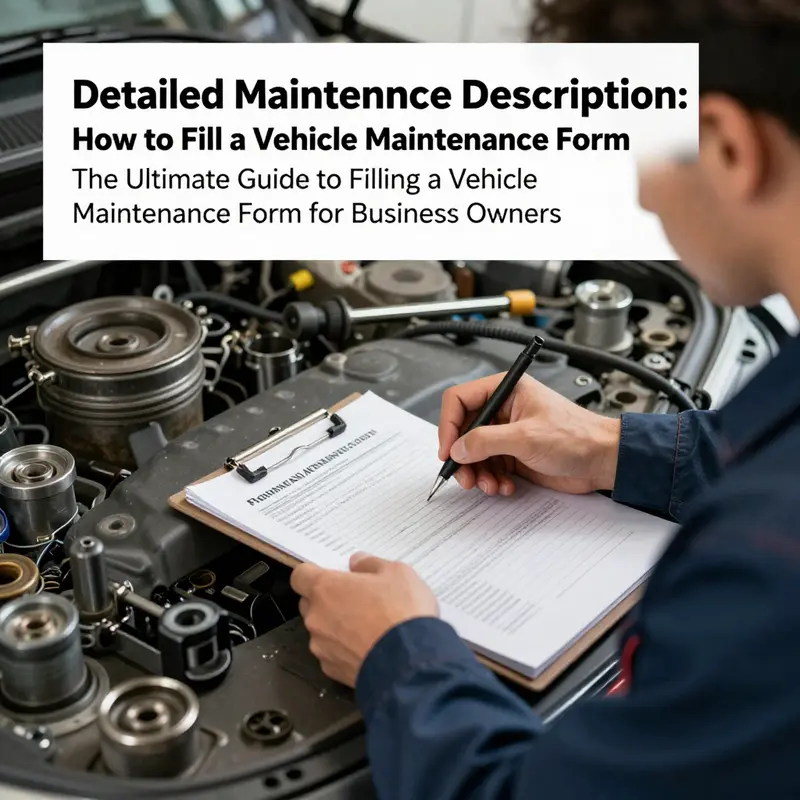
The moment a technician writes down a maintenance description, the form stops being a simple record and becomes a navigable map for safety, maintenance history, and future decisions. A well-crafted maintenance description does more than justify a bill; it creates a traceable lineage of what a vehicle has experienced, how it was handled, and why certain parts, fluids, or procedures were chosen. In this chapter, we lean into the heart of the form: the Detailed Maintenance Description. The goal is to move from vague notations to precise, actionable language that can be understood by service personnel, inspectors, insurers, or a future owner. This clarity matters not just for accuracy, but for accountability, resale value, and long term vehicle management. As you read, you will sense how the description principle threads through routine maintenance and through the more complex landscape of repairs and diagnostics. The approach is methodical, yet fluid enough to adapt to different service centers and different vehicle brands, because the underlying logic rests on universals: specificity, traceability, and documentation discipline.
Begin with the recognition that the maintenance description sits alongside the vehicle information and the cost breakdown as a triad of essential data. Without precise vehicle identifiers and a transparent cost record, the description loses its anchor. With the anchor in place, the narrative can breathe. Routine maintenance descriptions can be concise yet exact; repairs demand a careful, phenomenon-to-action-to-part sequence that leaves little room for ambiguity. The following is a unified approach that keeps the language consistent, the details complete, and the record useful for the life of the vehicle.
When you describe routine maintenance, the aim is to capture what you did, why you did it, and what you used to do it. The service type should be labeled clearly—oil change, tire rotation, brake inspection, or fluid top-up—and then the specific actions should unfold in a logically ordered list. For example, an oil change should read with precision: replaced engine oil with synthetic 5W-30, API SP; installed OEM air filter; replaced cabin air filter; topped off windshield washer fluid; checked all fluid levels; reset maintenance reminder. Each item should be explicit, leaving no guesswork for the reader about what was performed. When listing parts, names, brands, models, and quantities are not merely helpful; they are essential. A line like Oil: Castrol Syntech 5W-30, 4 L is more valuable than simply oil changed. The same applies to filters, hoses, gaskets, and any consumables that accompanied the service. If an OEM part was used, note Original Equipment as part of the entry; if a branded aftermarket part was selected, record the precise brand and model. This level of detail does two things at once: it creates a transparent cost basis and it protects against questions about warranty coverage or later claims that the wrong part type was used.
In practice, routine maintenance narratives should flow with natural progress. Start with the service type, move to the sequential actions performed, and then enumerate the parts and materials in the order they were engaged during the job. The labor time follows naturally after the actions and parts, providing a clear map of the effort involved. For example: Service Type: Oil Change and Filter Replacement. Specific Actions Taken: drained old oil; replaced oil filter; added 4 liters of synthetic 5W-30; replaced cabin air filter; inspected brake fluid level; rotated tires; reset service indicator. Parts Used: Oil: Castrol 5W-30, 4 L; Oil Filter: mfg brand, model number; Cabin Filter: mfg brand, model; Air Filter: mfg brand, model; Other Materials: gasket sealant used in plug drain if applicable; Labor Time: 1.25 hours. In this simple sequence, specificity replaces vague phrases, and the traceability of which parts were touched becomes self-evident on the page.
For repairs and diagnostics, the narrative must ascend to a slightly different cadence. The starting point is the reported issue, described in precise terms. Instead of saying the car doesn’t run well, you would write engine misfire at idle or loss of power under load. The diagnostic steps then become the bridge between problem and solution: the tools used, the checks performed, and the data gathered. This structure—Phenomenon, Action, Part—serves as a reliable template for the write-ups that accompany repairs. It reduces miscommunication and helps any reviewer to reconstruct the workflow without needing the original technician’s notes. For instance, a repair entry might read: Phenomenon observed: engine misfire on cylinder 3; Diagnostic Steps: scanned DTCs with an OBD-II tool, tested coil packs and spark plugs, performed compression test; Action Taken: replaced spark plug in cylinder 3 (NGK ILK-R4), replaced ignition coil on cylinder 3, cleaned throttle body, reset ECU; Parts Replaced: Spark Plug NGK ILK-R4, Ignition Coil brand and model; Labors involved: 1.5 hours; Quality Check performed after test drive.
The power of a well-constructed description reveals itself in the details that follow the narrative—every part that was touched, every tool that was used, and every assumption that underpinned the decision. The language should be standardized, not idiosyncratic. This standardization means choosing verbs that reflect the concrete action performed rather than subjective judgments. Replace vague terms like fixed, checked, or looked at with precise verbs: replaced, inspected, tested, cleaned, calibrated, torqued to spec, filled to recommended level, and so on. In the same breath, maintain a consistent level of specificity. If you name a part, you can reasonably name its brand and model number; if a brand is not known or if a generic part is used, indicate that clearly and descriptively. If an OEM part is used, make that explicit. If a non-OEM part is used, note both the brand and model and the rationale for its selection when relevant to durability or performance.
This approach is not just about the present moment. It is also about future reliability. A maintenance description that includes the parts and brands used, along with the exact service actions, forms a reliable record for warranty claims, future maintenance planning, and potential resale considerations. The more thorough the description, the easier it is for a future technician to evaluate wear patterns, identify whether a certain component might need replacement based on its life cycle, and understand how current repairs influence upcoming service needs. For this reason, many service templates encourage the inclusion of a line item for each part replaced, the quantity, the unit price, and the total cost of that part, even when the price is subsequently rolled into a labor line. The separation helps with audits and was designed to improve clarity across multiple departments, from the service desk to the parts department to the customer’s file.
To illustrate how this should read in practice, imagine you are documenting a routine maintenance event that also involved a minor ancillary repair discovered during inspection. You would begin with the routine maintenance entry, followed by a succinct note about the ancillary issue and the corrective action taken. The narrative would maintain a steady voice, with clear delineation between tasks and outcomes. For example: Routine maintenance: oil and filter change, tire rotation, brake inspection; Specific Actions Taken: drained engine oil; replaced with synthetic 5W-30; replaced engine oil filter; rotated all four tires; brake components visually inspected with no wear beyond service limits; Specific Parts Used: Oil: Castrol Edge 5W-30, 4 L; Filter: OEM or specified brand, model; Brake inspection tools; Tire rotation tools; Ancillary repair discovered during inspection: minor oil seepage at valve cover gasket; Action Taken: resealed valve cover gasket; Parts Used: Valve cover gasket kit, gasket sealant; Labor Time: 1.75 hours for maintenance plus 0.5 hours for gasket reseal; Cost Details: Parts Cost totaled to X; Labor Cost Y; Total Cost Z. This integrated entry captures both routine care and a small, yet important, repair, preserving the continuity of the vehicle’s service history.
Beyond the narrative itself, the form’s structure invites an organized, almost audit-like presentation of the data. The parts section should name each component, the exact model where possible, and the quantity used. If a part has a branded identifier, specify it; if an OEM replacement was installed, document Original Equipment. This level of detail prevents ambiguity about what was replaced and why. It also makes it possible to summarize a vehicle’s service history across multiple visits with confidence. The narrative should complement the parts list rather than duplicate it. In other words, the prose explains the why and the what, while the parts list provides the concrete inventory for procurement and future reference.
The language itself benefits from consistency. Terms like replaced, installed, and calibrated carry a precise technical meaning that reduces misinterpretation. When describing actions, you may also want to mention standards or specifications that guided the service. For instance, if you replaced brake pads, you could note the material type and the rotor condition, or if you used a specific lubricant, you could reference the API rating or viscosity grade. While you do not need to become a ledger, a well-constructed description quietly carries the weight of accountability. The best descriptions withstand the test of time and are legible to someone who did not witness the service, whether they are another technician or a future owner who reads the file during a warranty review or a resale appraisal.
As you weave the narrative through the page, you may also find it natural to incorporate a brief justification for discretionary decisions. If a particular part was replaced preemptively due to wear beyond typical service intervals, a succinct justification helps future readers understand the rationale. If a diagnostic tool reported a fault that could not be replicated under test conditions, a note explaining the uncertainty and the subsequent recommendation can prevent misinterpretation. This is not about over-explaining every choice; it is about offering enough context so the record remains informative, not opaque. The goal is a living document that travels with the vehicle across owners and across shops, preserving the story of how each service event contributed to safety, reliability, and performance.
An often overlooked yet important aspect is the integration with the broader maintenance record. The Detailed Maintenance Description does not exist in isolation. It ties into the vehicle’s odometer reading, the service date, and the cost breakdown. When you describe labor time, ensure it aligns with the shop’s labor rate and the actual hours billed. If the service was performed in parallel with another diagnostic task or a separate specialist, you may need to note the involvement of other technicians, time allocations, and the role of each contributor. Clear cross-referencing between narrative and cost sections can save time during audits and guarantee that the historical record presents a cohesive picture rather than a disjointed collection of fragments.
With this framework, you can approach the writing of the Detailed Maintenance Description with confidence. You begin by anchoring the narrative in specific facts, then you build a logical sequence of actions and parts, and finally you present the economic dimension in a transparent line-by-line fashion. The result is a document that communicates not only what happened, but why it happened, how it was implemented, and what it implies for the road ahead. This is the essence of a high-quality maintenance record: a trustworthy, searchable, and future-ready account of a vehicle’s care.
To connect this approach to practical reading and ongoing learning, you can explore resources that reinforce consistent language and standardized terminology. For instance, a focused guide on maintenance record formats can provide templates and checklists that align with industry expectations. As you develop your own forms, bring in external templates as reference points to ensure your internal standard matches broader best practices. If you want to see a real-world example of how a well-structured entry reads, browse the Vehicle Tricks blog for a concise case study on service narratives and parts documentation. The following link offers additional context and examples from practitioners who emphasize clarity and accountability in service records: vehicletricks.com/blog/vehicle-tricks/.
In addition to internal references, you may want to access official resources that define the expected layout and content for maintenance documentation. An external resource known for guiding professional templates is the U.S. Department of Transportation’s maintenance form template. This external template, aligned with widely recognized standards, helps ensure your records meet formal requirements and are suitable for audits, warranties, or insurance claims. You can review it here: https://www.dot.gov/maintenance-form-template. Using this template as a benchmark can improve consistency across your organization and reduce the likelihood of missing essential fields during a service event.
As you implement the Detailed Maintenance Description in your forms, remember that the objective is not to create a rigid, prescriptive paragraph that only serves a filing requirement. The aim is to produce a living narrative that travels with the vehicle, informs future decisions, and stands up to scrutiny by technicians, managers, and owners who will rely on it. The balance between narrative clarity and factual precision is the fulcrum of a robust maintenance record. When you achieve that balance, the form ceases to be a bureaucratic artifact and becomes a practical tool—one that helps you track maintenance intervals, anticipate future needs, and preserve the vehicle’s performance and safety long into the future.
For readers who want to see an example in action, consider how you might translate a typical service event into the described format. You can imagine a routine maintenance entry that details the oil and filter change, then a brief note about a minor, non-critical sensor warning discovered during inspection. The final description would name every part replaced, every brand and model used, the exact time spent, and the precise costs associated with each element. The prose would remain straightforward and unambiguous, and the structure would ensure that any reviewer could reconstruct the service process without guessing or filling gaps. This is the standard you should strive for—consistency, accountability, and clarity that survive the passage of time and the turnover of staff.
In closing, the Detailed Maintenance Description is more than a line in a form. It is a narrative anchor for your vehicle’s care history, a tool for inspection readiness, and a foundation for informed decisions about future service. By translating actions into explicit statements, naming every part with accuracy, and tying the prose to verifiable data such as dates, mileages, and costs, you create a document that endures. Your vehicle’s maintenance record becomes not merely a ledger, but a functional guide that supports safety, performance, and peace of mind across the years ahead. For practitioners and lay readers alike, this approach makes the science of maintenance readable, practical, and trustworthy. And as you continue to fill out new forms, you will find that the Detailed Maintenance Description is less about repeating chores and more about telling the vehicle’s story with precision and care.
The Exact Ledger: Mastering Precision in Filling a Vehicle Maintenance Form
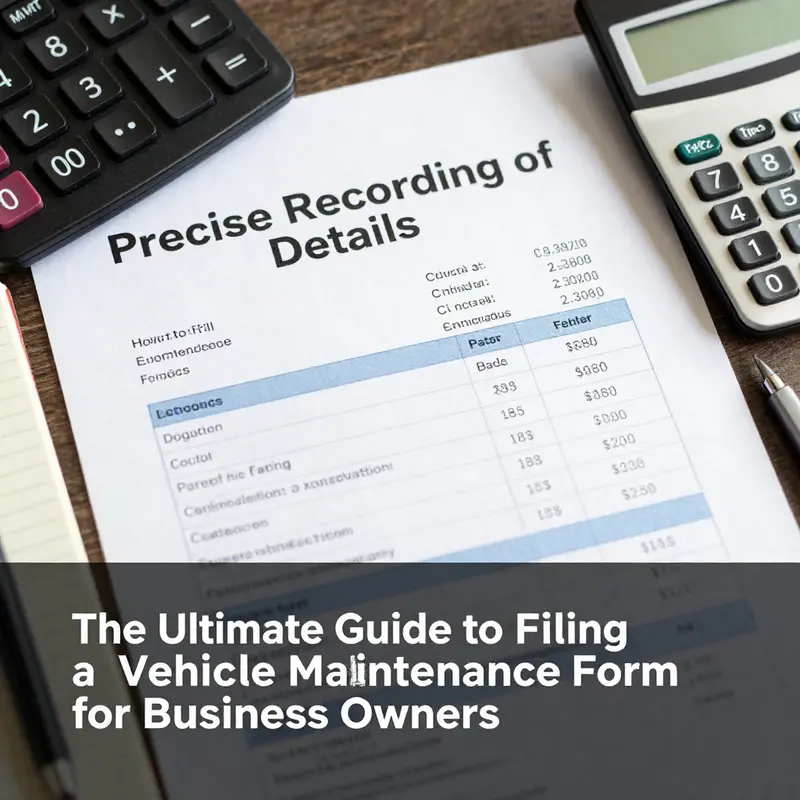
A vehicle maintenance form is more than a sheet of paper; it is a durable record of a vehicle’s life, a traceable history that travels with the machine through the years. When filled with care, it becomes a reliable reference for future work, a tool that supports warranty claims, and a persuasive asset at resale. Precision matters because the details connect repairs to intervals, parts to service, and costs to accountability. In this chapter we move beyond checklists and into a disciplined practice of recording every detail with clarity and consistency. The aim is not to create a perfect-looking document but to produce a document that can be understood by anyone who touches the vehicle in the years to come, from the technician who performs the next service to the insurer reviewing a claim. The guidance draws from established practice and the best available templates, yet it remains adaptable to real-world workflows and the realities of busy service bays. If you are new to this discipline, picture the form as a ledger for a living asset, one that grows in value when it reflects truth rather than ambiguity. If you are experienced, use this chapter to tighten gaps and refine the language, so every entry contributes to a coherent, navigable history.
The essence of precise recording begins with the foundation: accurate vehicle identification. The VIN, a 17-character code, is the vehicle’s fingerprints on paper. It must be entered exactly as it appears on the registration certificate or the VIN plate mounted on the driver’s side dashboard and visible through the windshield. Any deviation—an incorrect digit, a mistaken letter, or an omitted character—can mislink the record to another vehicle and undermine the entire history. Likewise, the license plate number must align with the official registration documents, not just the plate you see on the street. Beyond these identifiers, a precise entry includes the full make, model, and year as officially designated by the manufacturer. Saying simply “Toyota Camry” is helpful culturally, but in a maintenance log you want the exact specification, such as “Camry LE 2023,” to ensure technicians retrieve the correct service procedures and parts compatibility. This triad of VIN, license plate, and exact make/model anchors the record and prevents the cascade of confusion that can follow even small data errors.
Once the vehicle is correctly identified, the next horizon of precision is the date and odometer reading. Record the service date in a standardized format, ideally YYYY-MM-DD, to remove interpretive ambiguity. The odometer reading at the time of service should be captured with the instrument cluster as the source of truth—never estimate based on memory. That single digit or tens-of-miles discrepancy can ripple through maintenance intervals and warranty windows, leading to misaligned service recommendations and questions about the vehicle’s care history. The precise pairing of date and mileage allows you to map intervals, such as oil changes, brake inspections, and tire rotations, to the time and wear the vehicle experienced. It also gives future technicians a clear picture of the vehicle’s usage pattern, which can influence recommendations for preventive work before a small issue becomes a larger one.
With identification and timing secured, the heart of precise recording appears in the maintenance actions section. This is where the form evolves from a logbook into a narrative of care. Avoid vague terms like merely “service” or “check-up.” Instead, describe each specific action taken. For routine maintenance, enumerate the tasks by name and order—things like “Oil and filter change,” “Brake fluid inspection,” or “Tire rotation.” For repairs, adopt the structured logic of Phenomenon – Action – Part. Begin with a brief statement of what was observed or diagnosed (the phenomenon), follow with the action taken to address it, and conclude with the parts involved. This triad helps any reviewer follow the chain of reasoning that led to the service and makes the record auditable later. When listing parts replaced, you should include the part’s identification as precisely as possible: the part name and, where available, the exact model or part number. If an original equipment manufacturer part was used, note it as Original Equipment. In a real-world setting where brand names are common, a cautious approach is to reference non-branded descriptors or generic placeholders if a policy forbids naming specific brands in your records. For example, you might record “Oil filter (Brand A, Model XYZ123)” or, when using an OEM equivalent, “OE-part: Oil filter.” For fluids, specify type and volume, such as “Synthetic 5W-30 motor oil, 4.0 liters,” to avoid questions about specification later. The service provider’s identity—shop name and location, along with the technician’s name—rooted in this section, gives a human face to the entry and a line of accountability that can be traced if questions arise.
The precise articulation of what was done is only meaningful when paired with the detailed documentation of costs. A transparent costs section requires an itemized breakdown that separates parts, labor, and any other materials. Enter the cost of each replaced component, the labor charge (often shown as hours times a rate), and the costs of ancillary items such as gaskets, sealants, or fluids used in the process. The totals should be computed clearly, with a final total that sums the parts, labor, and materials. State the currency used—USD, EUR, or another monetary unit—to avoid misinterpretation in cross-border contexts or when records are shared with leasing companies or insurers. A strong cost entry not only clarifies the charges for the customer, but it also protects the service provider by preventing later disputes born of ambiguous pricing. When labor is billed in hours, specify the exact time—e.g., “1.5 hours @ $85 per hour.” If you work with a flat-rate system, reflect that approach transparently so there is no confusion about what was included in the quoted price and what was added during the actual job.
Verification and confirmation elevate precision from mere accuracy to verifiability. Completion status must be marked as Completed, with the exact completion time recorded. A quality check stamp or sign-off from a supervisor reinforces the integrity of the work and the entry itself. After the work is completed, the customer should review the form to verify that the description and cost breakdown align with what they were charged and what was performed. The client’s signature then confirms consent and understanding, and it acts as a safeguard against post-issue disputes. If any discrepancy is found during this review, it should be addressed immediately, ideally with a revised entry or a supplementary note that documents agreed changes. This stage closes the loop on the process and ensures that the maintenance form remains a trustworthy artifact over time.
Beyond the mechanics of data capture, there are practical considerations that help your form stay legible and durable across years and miles. Use consistent terminology throughout the record so a future reader can move through the document without re-learning your shorthand. Avoid acronyms unless they are universally understood within your organization or sector, and consider providing a brief glossary if your form is shared across multiple teams. Whether you print and handwrite entries or populate a digital template, clarity is paramount. If handwriting is involved, use legible script and block any sections that require follow-up with a brief, orderly note. If you work digitally, adopt a structured template that mirrors the DVSA’s recommended fields and ensures that each field has a defined data type. Either path benefits from a disciplined approach to version control and storage: keep a copy in a secure location, label it with the vehicle’s identifier and date, and maintain a simple index that lets you locate specific entries with a quick search.
The alignment with best practices is not merely a matter of form; it is a matter of utility. A precise maintenance log is invaluable when you need to verify the vehicle’s history for warranty claims, future diagnostics, or a potential sale. It helps you demonstrate that preventive care has been performed at appropriate intervals and under appropriate conditions. It also supports insurers evaluating a claim by providing a robust picture of maintenance that may bear on liability, fault, or coverage. For private owners, a well-kept log removes the friction that often accompanies questions about a vehicle’s upkeep and can help substantiate maintenance-related assertions during negotiations with buyers. For fleets, the discipline of precise recording translates into predictable maintenance cycles, better lifecycle management, and clearer cost tracking across dozens or hundreds of vehicles.
To reinforce the practical workflow, consider how a real form would read when someone new picks it up. The opening lines would verify the vehicle identity with the VIN and license plate, then list the service date and odometer. The next lines would narrate the maintenance actions in precise terms: Oil change using a synthetic oil of the correct specification, oil filter replaced with an OEM-equivalent part, air filter inspection, cabin air filter inspection, tire rotation pattern documented, and brake components checked with no replacement required. If a component was replaced, the entry would specify the exact part name, the part number if available, and whether it was OE or a standard aftermarket equivalent. The fluids section would note 4.0 liters of synthetic oil added, along with the grade and viscosity. The cost section would itemize the price of the oil, the filter, and any other materials, then apply the labor hours and hourly rate, producing a clear total. The service provider line would reveal the shop name and location, with the technician’s name. The completion status would be marked as Completed, the time of completion captured, and a supervisor’s sign-off appended. A brief customer review line would capture the customer’s confirmation that the work matches the description and cost, followed by the customer’s signature to seal the record.
In practice, you may encounter sections that require adaptation to your organizational guidelines or local regulatory expectations. If you interface with an external template, such as a government-issued maintenance log, you will find fields that mirror those described here, with spaces allocated for each data point that matters. The fundamental principle remains constant: fill every field with exactness, use unambiguous language, and document every decision with traceable evidence. This approach turns maintenance history into a dependable roadmap rather than a series of loosely connected notes. When someone examines the sheet years later, they should be able to reconstruct what happened, why it happened, and how much it cost, all from the single source in front of them.
For those who want a concise primer on the philosophy behind these practices, I recommend reading a short overview on vehicle maintenance principles. What is Vehicle Maintenance? This resource outlines the core ideas behind maintaining a vehicle as a durable asset, emphasizing the value of well-kept records as part of responsible ownership. You can explore it here: What is Vehicle Maintenance.
As you aim for consistency, it’s worth noting that the exact fields and the level of detail may vary depending on whether you are maintaining a private vehicle, a small commercial fleet, or a dealership roster. Regardless of scale, the logic holds: precise identification, precise timing, precise description, precise cost, verified completion, and a traceable service provider. Taken together, these elements form a robust audit trail that supports quality, accountability, and trust. If you keep returning to these five anchors whenever you fill a maintenance form, you will gradually turn a routine administrative task into a disciplined practice that adds long-term value to the vehicle and to the organization that cares for it.
For those seeking an official, standards-aligned template, consult a government or regulatory body that publishes a vehicle maintenance log. The UK Driver and Vehicle Standards Agency (DVSA) offers a free, downloadable maintenance log template designed for both private and commercial vehicles. This resource includes the key fields discussed and is regularly updated to reflect best practices. You can access the official template here: https://www.gov.uk/government/publications/vehicle-maintenance-log. The DVSA template provides a reliable baseline for how to structure information and ensures you are aligned with recognized industry practices as you cultivate your own precise recording habits.
In sum, mastering the precise recording of details on a vehicle maintenance form is less about clever phrasing and more about consistent discipline. It is about translating the moment of service into a durable record that can endure time, cross-reference with future work, and support the vehicle’s ongoing health and value. When you approach each entry with the intention to be specific, transparent, and verifiable, you transform a routine administrative task into a powerful tool for vehicle stewardship. The form becomes not a one-time document but a living ledger that accompanies the vehicle through many miles, many weather conditions, and countless roads.
External resource: For official guidance and templates, see the DVSA maintenance log resource: https://www.gov.uk/government/publications/vehicle-maintenance-log
Final thoughts
Filling out a vehicle maintenance form accurately is integral to effective vehicle management for businesses. By ensuring each detail is meticulously recorded—from vehicle information to maintenance descriptions and cost breakdowns—you not only enhance transparency but also facilitate informed decision-making for your fleet. This comprehensive approach will empower you to monitor vehicle conditions effectively, anticipate maintenance needs, and control costs. As you implement these practices, you’ll find that maintaining your vehicles becomes more manageable, ultimately contributing to the success of your business.